Shalom friends. Many people today are living in a state of bewilderment and anxiety over of the release of the Coronavirus (i.e., Covid-19), particularly because of the mixed messages and disinformation propagated by the mass media about its existential threat. Because of this engineered uncertainty, however, various governmental bureaucracies have arrogated dictatorial powers, and such overreach has resulted in forced lockdowns of various public places, the attrition of civil liberties, massive unemployment, the implosion of the private sector economy, among other things. In a matter of months a radical revolution has surreptitiously taken place, wherein the once great United States of America has devolved into a techno-fascist state that surveils not only the behavior of its “citizens,” but their biochemistry as well… In today’s climate of irrational fear, you can be labeled an “enemy of the state” simply for asking for justification regarding the latest “official edict” handed down by faceless overlords. The relentless propaganda campaign has had a “totalizing” effect on the culture: those who dare to question the efficacy of masks or the safety of untested mRNA vaccines, for example, face social ostracism (“banning”), job loss, and even threats of violence. The chill of political suppression and tyranny is in the air…
In light of this political morass – and the cultural rot that marks the thinking of the world today- we need logical clarity and courage to face reality. As I have said many times over the years, the important thing is not to “lose your mind” by forgetting what is real… In this audio podcast (recorded back in March of 2020) I discuss the struggle of faith and how we find peace by accepting the sovereignty and greatness of the LORD. I hope to remind you that Adonai Tzeva’ot, the LORD over all, has matters completely in hand, and to find faith that He will help you persevere in these days of testing.
God allows the wicked to rise in order to test his people… God’s strength however, is made perfect in weakness, and therein lies the paradox: “Lord, we do not know what to do, but our eyes are upon You” (2 Chron. 20:12). The battle belongs to the Lord!
Faith separates us from the visible and temporal realm to reveal the invisible and eternal realm — faith hears (shema) the “yes” of the LORD in the midst of worldly dissipation and despair. Today’s “Daily Dvar” broadcast discusses the walk of faith and how we need to remain focused on what is real in the midst of the ups and downs of our daily lives. I hope you find it helpful…
“Hear O Israel, the Lord is our God, the Lord is one” (Deut. 6:4). These famous words, usually referred to as “the Shema” (from the Hebrew word “hear”), distill the central affirmation of faith for the Jewish people, and indeed the Shema is often the very first word of Torah that a Jewish child learns. During its recitation in the synagogue, Orthodox Jews pronounce each word very carefully and cover their eyes with their right hand. Many Jews recite the Shema at least twice daily: once in the morning and once in the evening. The text of the Shema is meticulously written on a small scroll which is then rolled up and put inside a mezuzah. In a sefer Torah, or a handwritten Torah scroll, the two Hebrew letters Ayin (ע) and Dalet (ד) are enlarged in the opening sentence of the Shema. Together, these letters form the word ’ed (עֵד), which means “witness,” suggesting that the Shema is a testimony of the sovereignty of God and our primary duty to love Him with our whole being.
The very first occurrence of the word “Torah” (תּוֹרָה) in the Scriptures refers to the faith of Abraham (Gen. 26:5), and the second occurs in our reading for this week (i.e., parashat Bo) regarding the ordinance of Passover: “There shall be one law (תּוֹרָה) for the native and for the stranger who sojourns among you” (Exod. 12:49). There is a link here. Recall that Abraham lived before the time of the Exodus, of course, and therefore he obeyed the “Torah of Passover” by means of the Akedah (the sacrifice of his beloved son Isaac and the substitution of the lamb of God upon the altar). Abraham’s faith revealed that the inner meaning of Torah is that the “righteous shall live by faith” (Hab. 2:4, Rom. 1:17), that is, by trusting God’s justification of the sinner (Heb. 11:17-19). The Torah of Passover likewise teaches that redemption from death is possible through the exchange of an innocent sacrificial victim. The blood of the lamb was “a sign” of imputed righteousness obtained entirely by faith – with no “leaven,” or human works, added. This is the “korban” principle of “life-for-life” that underlies the sacrificial system of the Mishkan (i.e., Tabernacle) as well. Ultimately all true Torah points to Yeshua, the Lamb of God, who is the divinely appointed Redeemer and promised Slayer of the Serpent…
This week’s Torah portion (the first of the Book of Exodus) is called Shemot (שְׁמוֹת, “names”) because it begins with a list of the “names” of the descendants of Jacob who came to dwell in the land of Goshen: וְאֵלֶּה שְׁמוֹת בְּנֵי יִשְׂרָאֵל הַבָּאִים מִצְרָיְמָה / “These are the names of the sons of Israel who came to Egypt” (Exod. 1:1). Now while it’s true that the Torah here lists the various names of the sons of Jacob, this portion of Torah more importantly refers the Names (plural) of the LORD God of Israel Himself.
To see this, let’s consider the central story of this portion of Torah, namely, the commissioning of Moses at the Burning Bush (see Exod. 3:1-20). Note that the Torah states that it was the Angel of the LORD (i.e., Malakh Adonai: מַלְאַךְ יהוה) who appeared to Moses בְּלַבַּת־אֵשׁ מִתּוֹךְ הַסְּנֶה / “in a flame of fire out of the midst of a bush” (Exod. 3:1-2). But then the Torah goes on to say that the LORD (יהוה) saw Moses drawing near to the bush while God (i.e., Elohim: אֱלהִים) called out to him. God (i.e., Elohim) then commanded Moses to remove his sandals and identified Himself as the “God of Abraham (i.e., Elohei Avraham: אֱלהֵי אַבְרָהָם), the God of Isaac (i.e., Elohei Yitzchak: אֱלהֵי יִצְחָק), and the God of Jacob (i.e., velohei Ya’akov: אֱלהֵי יעֲקב).” In this short and dramatic account we have several Names of God presented – the Angel of the LORD, the LORD, God (Elohim), and the “God of Abraham, the God of Isaac, and the God of Jacob” – all of which refer to the One true God!
We often see what we want to see… From our Torah portion this week (i.e., parashat Toldot) we read: “And Jacob was simmering stew when Esau came in from the field, famished” (Gen. 25:29). The Midrash Rabbah comments that Esau saw the stew and asked why it was being cooked. He was told that it was a traditional mourner’s meal because his grandfather Abraham had just died. Upon hearing this, Esau quickly became offended that one so righteous as Abraham had died and exclaimed: “If that’s the case, there is no reward for one’s good deeds, and no repair from death…” In this way Esau’s offence over sorrow and suffering moved him to reject reality as being inherently unjust, and by this logic he justified his godless lifestyle… Because bitterness took root within his heart, Esau despised his birthright and spurned the very significance of his life (Heb. 12:15-16).
The Haftarah for parashat Toldot begins: “I have loved you,” says the LORD. But you say, “How have you loved us?” “Is not Esau Jacob’s brother?” declares the LORD. “Yet I have loved Jacob but Esau I have hated. I have laid waste his hill country and left his heritage to jackals of the desert” (Mal. 1:1-3; cp. Rom. 9:9-13). Some people may find God’s sovereign choice objectionable, though we know there is no unrighteousness in God’s decrees and ways (Deut. 32:4; Psalm 18:30; James 1:17, etc.). Therefore Yeshua told his followers, “You did not choose me, but I chose you and appointed you to go forth and bear fruit…” (John 15:16). Religious pride recoils at these words, thinking, “I don’t want to be chosen by God; I want to be in control; I want to choose God first.” The ego seeks some reason for revelation, some merit that commends the self to God. It’s hidden assumption is, “thank you, God, that I am not like other men” (Luke 18:11). The choice of God is scandalous because it is based on God’s love, not our own (1 John 4:19). We were spiritually reborn, not as the result of anything in the realm of nature, nor even through our personal decision, but solely on account of God’s sovereign prerogative (John 1:13). This is the message of the choice of Jacob over Esau in our Torah portion this week. Regarding this the New Testament comments: “Though they (i.e., Jacob and Esau) were not yet born and had done nothing either good or bad — in order that God’s purpose of election might stand (ἵνα ἡ κατ᾽ ἐκλογὴν πρόθεσις τοῦ θεοῦ μένῃ), not because of works but because of the One who calls, Rebekah was told, “the older will serve the younger” (Rom. 9:11-12). The carnal ego is quick to look for reasons that God chooses people, looking for merit or considering their worldly potential, though it is idolatrous to elevate the self this way. “Not by might nor by power, but by my spirit, says the LORD of Hosts” (Zech. 4:6). We don’t seek to please God so that we can be chosen; we are chosen so that we can seek to please him… God’s grace and love for us is always the starting point: “Lord, teach us to pray,” that is, choose words for us, the groaning of your Spirit, in accordance with your perfect will…
Over the years I have repeatedly affirmed the “salvation is of the LORD” (לַיהוָה הַיְשׁוּעָה), and therefore we are not saved “by works of righteousness (מַעֲשֵׂי הַצְּדָקָה) that we have done, but solely on account of the mercy given to us in God our Savior (אֱלהִים מוֹשִׁיעֵנוּ; Titus 3:4-5). Grace excludes all boasting (Eph. 2:9; Rom. 4:4). We believe that God justifies the ungodly (helpless) by trusting in his heart of compassion (Rom. 4:1-8). God loves us with “an everlasting love” (i.e., ahavat olam: אַהֲבַת עוֹלָם) and draws us in chesed (חֶסֶד, i.e., His faithful love and kindness). As it is written: “I love you with an everlasting love; therefore in chesed I draw you to me” (Jer. 31:3). Note that the word translated “I draw you” comes from the Hebrew word mashakh (מָשַׁךְ), meaning to “seize” or “drag away” (the ancient Greek translation used the verb helko (ἕλκω) to express the same idea). As Yeshua said, “No one is able to come to me unless he is “dragged away” (ἑλκύσῃ) by the Father (John 6:44). God’s chesed seizes us, scandalizes us, takes us captive, and leads us to the Savior… Spiritual rebirth is a divine act, “not of blood nor of the will of the flesh nor of the will of man, but of God” (John 1:13). In everything – including human reason itself – the LORD God Almighty is preeminent. Dear friend, if God has chosen you to be in covenant with him, then you are indeed one of the “chosen people.”
Therefore we can affirm the great benediction given in our Scriptures: “Blessed be the God and Father of our Adonai, Yeshua the Messiah, who has blessed us in Messiah with every spiritual blessing in the heavenly places, even as he chose us in him before the foundation of the world (καθὼς ἐξελέξατο ἡμᾶς ἐν αὐτῷ πρὸ καταβολῆς κόσμου), that we should be holy and blameless before him. In love he predestined us (προορίσας ἡμᾶς) for adoption as sons through Yeshua the Messiah, according to the purpose of his will, to the praise of his glorious grace, with which he has blessed us in the Beloved; in whom we have redemption through his blood, the forgiveness of our trespasses, according to the riches of his grace, which he lavished upon us, in all wisdom and insight…” (Eph. 1:3-8).
It is the fruit of his Spirit, not the fruit of our own that matters (Gal. 5:22-23). As Yeshua said, “it is the Spirit who gives life; the flesh is no help at all” (John 6:63). We are God’s workmanship, created in the Messiah for good works, which God prepared beforehand that we should walk in them” (Eph. 2:10). We are able to live for God through the agency of His love and sustaining grace, all for the sake of the glory of His Name. “For from Him and through Him and to Him are all things. To Him be glory forever. Amen” (Rom. 11:36).
Some of us seem far more concerned with how others see than how God sees us… We strive to manage a public image crafted for others but lose the substance of what is real. Trying to control how we are seen by others is exhausting, however, since it implies that we must find our value in their (conditional) approval rather than from a deeper source. The emotional need for approval is a form of cruel bondage: We take ourselves too seriously, we deny who we really are, and we believe we are never good enough. Over time we become anxious and easily offended people… “Am I now trying to gain the approval of people, or of God?” (Gal. 1:10).
“Trust in the LORD with all your heart, and do not rely on your own understanding” (Prov. 3:5). Note the contrast between trusting and understanding in this familiar verse. Trust is a matter of heart, the decision to let go, whereas understanding is analytical, “objective,” a matter of physical seeing. Human reason may help you discern the “what” of faith, but it is powerless to waken the soul, to breath life into heart, and to impart passion to seek God’s Presence as your greatest need and your utmost good. That only comes through the painful awareness of your own sinful condition, the inner conviction that you are utterly undone and without hope apart from the real presence of God in your life…
THE VERY FIRST PROPHECY OF THE TORAH concerns the promise of the coming “seed of the woman” who would vanquish the serpent (nachash) that had originally tempted and deceived Eve (Gen. 3:15). This prophecy is sometimes called the proto-euangelion (“first gospel”), since it is the starting point of all subsequent prophecy and redemptive history revealed in the Scriptures. Indeed, since the mystery of the Incarnation of the Son of God is foreshadowed here, this prophecy is linked to the original woman, Eve. Just as Eve became a carrier of the corruption of human nature by heeding the voice of the tempter, so she would be the carrier of God Himself for the deliverance of mankind through the advent of the Redeemer. In the tragic aftermath of the transgression of the first man and woman, then, God first announced His unfailing redemptive love for the human race that would culminate in the birth, sacrifice, and resurrection of Yeshua our Savior and Deliverer – “born of a woman, born under the law” (Gal. 4:4).
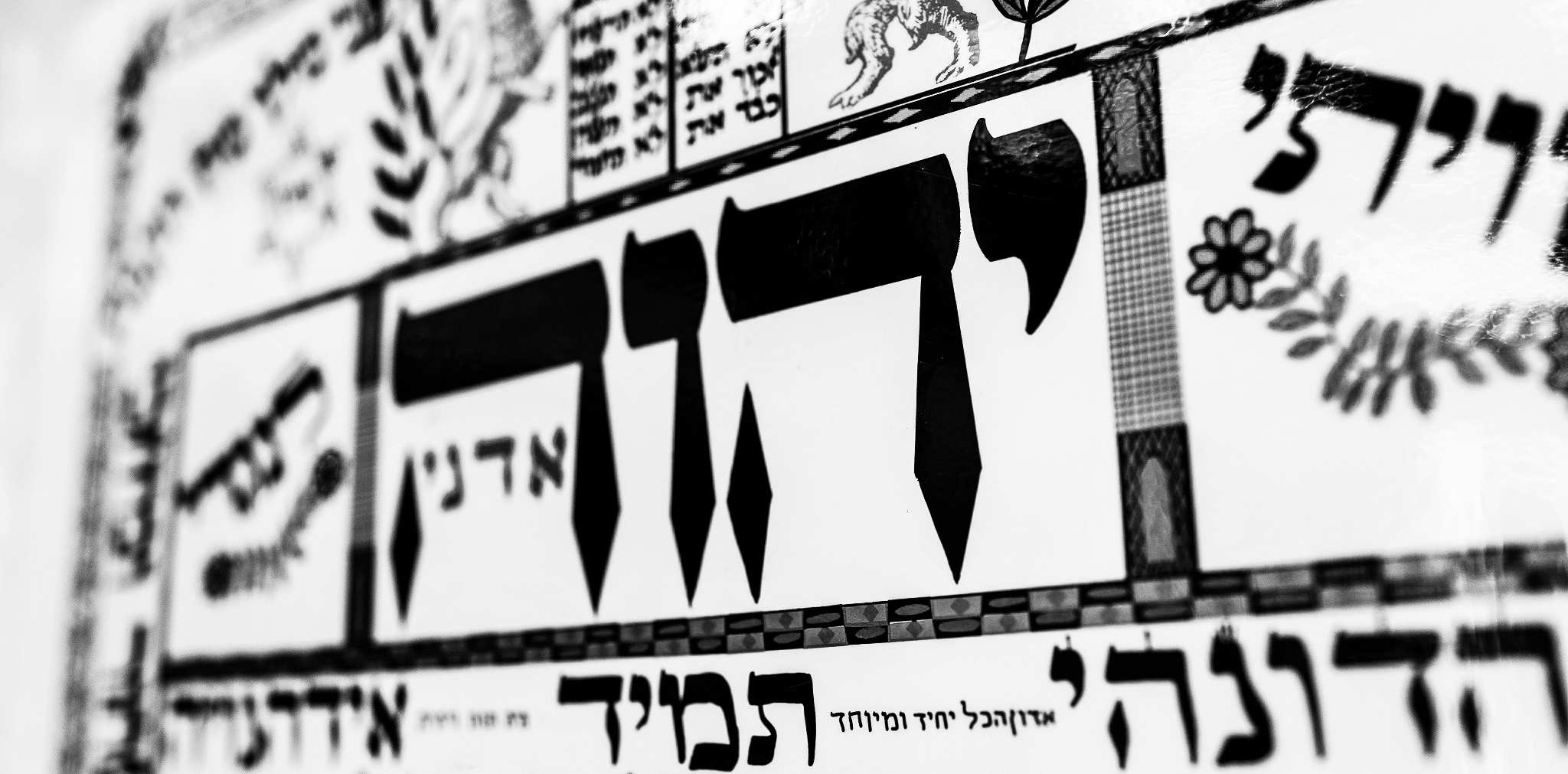


 “Hear O Israel, the Lord is our God, the Lord is one” (Deut. 6:4). These famous words, usually referred to as “the Shema” (from the Hebrew word “hear”), distill the central affirmation of faith for the Jewish people, and indeed the Shema is often the very first word of Torah that a Jewish child learns. During its recitation in the synagogue, Orthodox Jews pronounce each word very carefully and cover their eyes with their right hand. Many Jews recite the Shema at least twice daily: once in the morning and once in the evening. The text of the Shema is meticulously written on a small scroll which is then rolled up and put inside a mezuzah. In a sefer Torah, or a handwritten Torah scroll, the two Hebrew letters Ayin (ע) and Dalet (ד) are enlarged in the opening sentence of the Shema. Together, these letters form the word ’ed (עֵד), which means “witness,” suggesting that the Shema is a testimony of the sovereignty of God and our primary duty to love Him with our whole being.
 The very first occurrence of the word “Torah” (תּוֹרָה) in the Scriptures refers to the faith of Abraham (Gen. 26:5), and the second occurs in our reading for this week (i.e.,
  This week’s Torah portion (the first of the Book of Exodus) is called


 Some of us seem far more concerned with how others see than how God sees us… We strive to manage a public image crafted for others but lose the substance of what is real. Trying to control how we are seen by others is exhausting, however, since it implies that we must find our value in their (conditional) approval rather than from a deeper source. The emotional need for approval is a form of cruel bondage: We take ourselves too seriously, we deny who we really are, and we believe we are never good enough. Over time we become anxious and easily offended people… “Am I now trying to gain the approval of people, or of God?” (Gal. 1:10).
 “Trust in the LORD with all your heart, and do not rely on your own understanding” (Prov. 3:5). Note the contrast between trusting and understanding in this familiar verse. Trust is a matter of heart, the decision to let go, whereas understanding is analytical, “objective,” a matter of physical seeing. Human reason may help you discern the “what” of faith, but it is powerless to waken the soul, to breath life into heart, and to impart passion to seek God’s Presence as your greatest need and your utmost good. That only comes through the painful awareness of your own sinful condition, the inner conviction that you are utterly undone and without hope apart from the real presence of God in your life…
 THE VERY FIRST PROPHECY OF THE TORAH concerns the promise of the coming “seed of the woman” who would vanquish the serpent (nachash) that had originally tempted and deceived Eve (Gen. 3:15). This prophecy is sometimes called the proto-euangelion (“first gospel”), since it is the starting point of all subsequent prophecy and redemptive history revealed in the Scriptures. Indeed, since the mystery of the Incarnation of the Son of God is foreshadowed here, this prophecy is linked to the original woman, Eve. Just as Eve became a carrier of the corruption of human nature by heeding the voice of the tempter, so she would be the carrier of God Himself for the deliverance of mankind through the advent of the Redeemer. In the tragic aftermath of the transgression of the first man and woman, then, God first announced His unfailing redemptive love for the human race that would culminate in the birth, sacrifice, and resurrection of Yeshua our Savior and Deliverer – “born of a woman, born under the law” (Gal. 4:4).