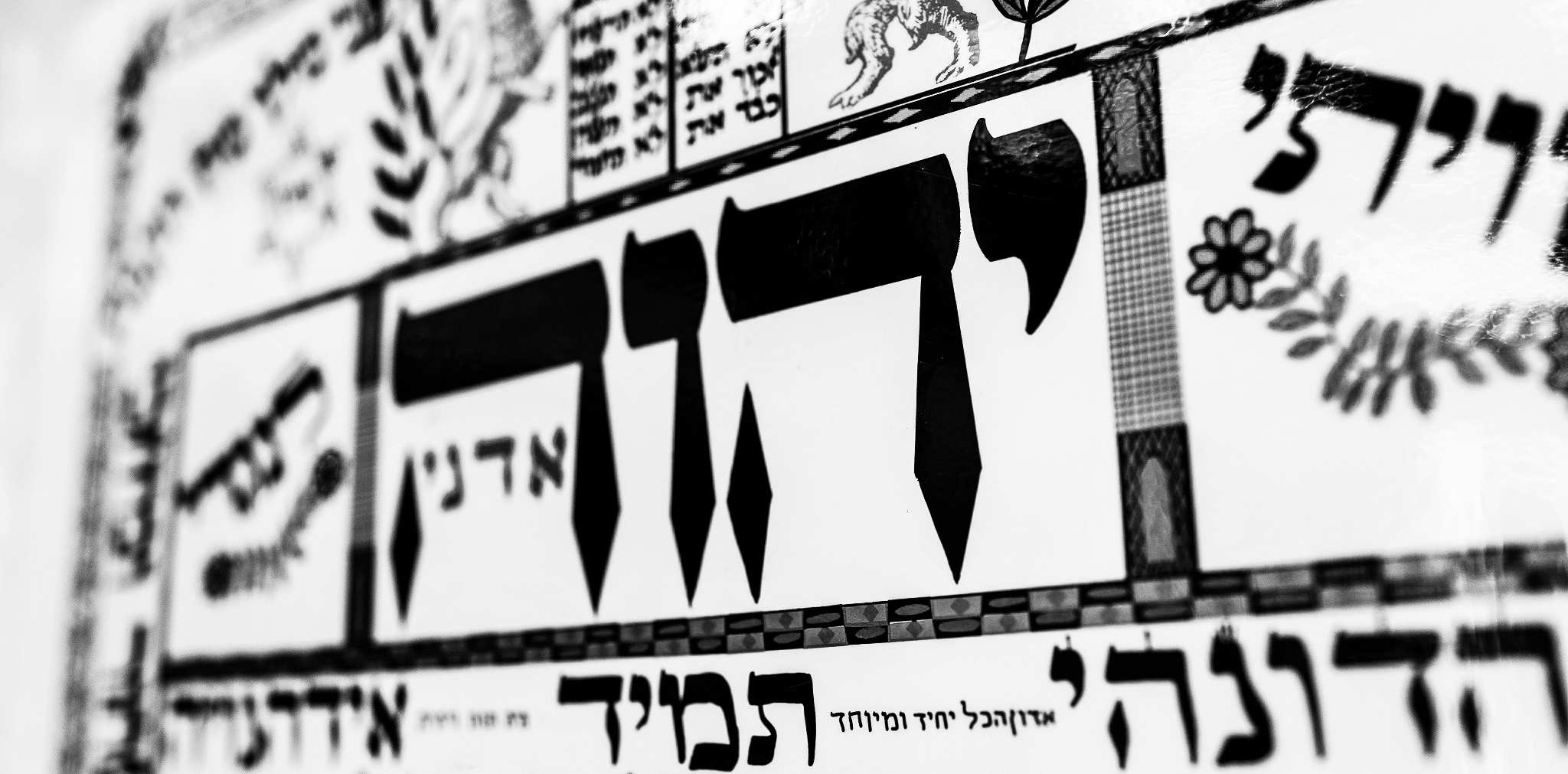
 “Let them make me a mikdash (“holy place,” “sanctuary”), that I may dwell in their midst” (Exod. 25:8). Though this verse refers to the physical mishkan (i.e., “Tabernacle”), it more deeply refers to the duty of the heart to sanctify the Name of God and bring a sense of holiness to the inner life. This requires that we focus the mind and heart to honor the sacredness of life, taking “every thought captive” to the truth of God in Messiah (2 Cor. 10:5). Since our minds and hearts are gateways to spiritual revelation, we must be careful to not to abuse ourselves by indulging in sloppy thinking or unrestrained affections. God holds us responsible for what we think and believe (Acts 17:30-31), and that means we have a duty to honor moral reality and truth. There is an “ethic of belief,” or a moral imperative to ascertain the truth and reject error in the realm of the spiritual. Since God holds us responsible to repent and believe the truth of salvation, He must have made it possible for us to do so (“ought” implies “can”). And indeed, God has created us in His image and likeness so that we are able to discern spiritual truth. He created us with a logical sense (rationality) as well as a moral sense (conscience) so that we can apprehend order and find meaning and beauty in the universe He created. All our knowledge presupposes this. Whenever we experience anything through our senses, for example, we use logic to categorize and generalize from the particular to the general, and whenever we make deductions in our thinking (comparing, making inferences, and so on), we likewise rely on logic. We have an innate intellectual and moral “compass” that points us to God.
Category: Podcasts
Shavuah Tov podcasts on the weekly Torah reading
Faith in Perilous Times…
[ Back in March of 2020 — over 18 months ago now — I had forewarned of the danger of the rise of fascism based on the engineered threat of Covid-19, and here we are today, with the stage set for rise of the “Man of Sin” and the advent of the End of Days…. ]
.

Shalom friends. For the last year and a half we have seen the world in a state of confusion and even dread over of the Coronavirus (i.e., Covid-19), particularly because of the mixed messages and disinformation propagated by the mass media about its “polymorphous” threat. Because of this uncertainty, however, various governmental agencies have arrogated dictatorial powers, and such overreach has resulted in forced lockdowns of various public places, the suspension of civil liberties, massive unemployment, the implosion of the private sector economy, among other things. In a matter of months a radical revolution has taken place, wherein the once great United States of America has devolved into a fascist state that surveils not only the behavior of its “citizens,” but now their very biochemistry as well… In today’s climate of irrational fear, you can be labeled an “enemy of the state” simply for asking for justification regarding the latest “official edict” handed down by unaccountable overlords. The relentless propaganda campaign has had a “totalizing” effect on the culture: those who dare to question the efficacy of masks or the safety of untested mRNA vaccines, for example, face social ostracism (“banning”), job loss, and even threats of violence. The chill of political suppression and tyranny is in the air.
In light of this political situation – and the cultural rot that marks the thinking of the world today – we need logical clarity and courage to face reality. As I have said many times over the years, the important thing is not to “lose your mind” by forgetting what is real… In this audio podcast (recorded back in March of 2020) I discuss the struggle of faith and how we find peace by accepting the sovereignty and greatness of the LORD. I hope to remind you that Adonai Tzeva’ot, the LORD over all, has matters completely in hand, and to find faith that He will help you persevere in these days of testing.
God allows the wicked to rise in order to test his people… God’s strength however, is made perfect in weakness, and therein lies the paradox: “Lord, we do not know what to do, but our eyes are upon You” (2 Chron. 20:12). The battle belongs to the Lord!

Podcast:

Parashat Re’eh Podcast..
 Our Torah portion this week (i.e., parashat Re’eh) begins, “See (רְאֵה), I give before you today a blessing and a curse: the blessing (הַבְּרָכָה), if you obey the commandments of the LORD your God, which I command you today, and the curse (הַקְּלָלָה), if you … turn aside from the way that I am commanding you today, to go after other gods that you have not known” (Deut. 11:26-28).

We obtain God’s blessing (i.e., berakhah: בְּרָכָה) when we obey the LORD, and our decision to obey manifests the blessed state of walking before the Divine Presence (the direct object marker et (את) before the word “the blessing” alludes to the blessings of “Aleph to Tav,” that is from Yeshua, as described in Lev. 26:3-13). As King David said, “I have set (שִׁוִּיתִי) the LORD always before me…” (Psalm 16:8). David made a choice to “set” the LORD before his eyes, for he understood that opening his eyes to Reality was the only path of real blessing.
On the other hand, we obtain God’s curse (i.e., kelalah: קְלָלָה) when we close our eyes and “forget” that the LORD is always present…. Suppressing God’s truth invariably leads to idolatry, that is, to self exaltation. Note that the root word for the word “curse” (kalal) means to be treated as of little account, and therefore “ratifies” the rebellious heart’s attitude toward God. This is middah keneged middah – we are ignored by the LORD as we ignore Him, just as we seen by Him when we truly seek His face (Isa. 55:6-7). So we see that the blessing or the curse really comes from our own inward decision, and God establishes the path we have chosen. As King David said, “God supports my lot” (Psalm 16:5), and Solomon wrote, “The heart of man plans his way, but the LORD directs his steps” (Prov. 16:9).
Parashat Re’eh Podcast:

The Fear of the LORD… (podcast)
 “The fear of the LORD is the first principle of knowledge, but fools despise wisdom and correction” (Prov. 1:7). In this “Daily Dvar” broadcast (see audio below) I discuss how reverence or respect is axiomatic for a genuinely good life. Fearing God expresses the confidence that life is a sacred trust and that each soul is answerable to the Creator. Such godly reverence infers that nothing is trivial or inconsequential, and that all things will be accounted before the bar of divine truth. I hope you will find it helpful, friends.

Dvar Podcast:
.
Torah of the Vine…
 In today’s “Daily Dvar” broadcast (link below) I discuss the “Torah of the Vine,” that is, the analogy of the Vine and the branches that Yeshua taught his disciples: “If anyone does not live in me, he is cast off as a branch, and withers…” (John 15:6). We find life only as we remain connected to the Source and Conduit of life, who is the Messiah, the Savior and LORD. True life grows out a heart connection with Yeshua, and without that connection our lives become vain and yield no eternal significance. I hope you find it encouraging, friends.
…
The Great Day of the LORD…
 Life in this evil world can be suffocating at times. And though we may not be under the oppression of a cruel Pharaoh, we are affected by the “princes of this age” who spurn the message of the Messiah’s redemption and love, and we are still subjected to bondage imposed by taskmasters who defy the LORD and who seek to enslave us by means of lies, propaganda, and threats of violence… The devil is still at work in the hearts and minds of many of his “little Pharaohs” that serve the world system. Nevertheless “there is no fear in love” (אין פַּחַד בָּאַהֲבָה), especially since we know that ein od milvado — there is no real power apart from the LORD (i.e., He is the only true Power in the universe). Indeed, Yeshua is elyon lemalkhei-aretz (עֶלְיוֹן לְמַלְכֵי־אָרֶץ) – the “Ruler of the princes of the earth” (Rev. 1:5) – and that means that they will answer to Him (Psalm 2). If you belong to the Messiah you are not part of this world and its matrix of deception but instead serve the King of Kings (Col. 1:13; Acts 26:18; 1 Pet. 2:9). Therefore set your thoughts on things above, not on things of this world (Col. 3:2). In the end all things born of the lie will be exposed and forever put away from us (Eccl. 12:14). ”The great Day of the LORD is near; it is near and hastening quickly” (Zeph. 1:14). “For though the vision awaits its appointed time; it hastens to the end — it will not lie. If it seems slow, wait for it; it will surely come; it will not delay” (Hab. 2:3).
Hebrew Lesson:

Shadows and Substance…
 Our faith separates us from the visible and temporal realm to reveal the invisible and eternal realm — faith hears (shema) the “yes” of the LORD in the midst of worldly dissipation and despair. This “Daily Dvar” broadcast discusses the walk of faith and how we need to remain focused on what is real in the midst of the ups and downs of our daily lives. I hope you find it helpful…
Dvar Podcast:

Righteousness by Faith…
 It is not “I obey, therefore I am accepted,” but rather, “I am accepted, and that is the obedience (ὑπακούω) of faith.” The opposite of sin is not virtue but faith, as Paul said: πᾶν δὲ ὃ οὐκ ἐκ πίστεως, ἁμαρτία ἐστίν, “whatever does not proceed from faith is sin” (Rom. 14:23). Putting it the other way around, trust is the means of attaining God’s righteousness and blessing (Eph. 2:8, Rom. 3:20-27). Paul calls this the “law of faith” (i.e., torat ha’emunah: תּוֹרַת הָאֱמוּנָה). Accepting that God is “for you” and “with you,” and trusting that you are accepted — despite your unacceptability — is the first and most fundamental step of faith, since this honors the love and blessing of God. It is not your wisdom or cleverness that enlightens your way in the truth, however, but the miracle of disclosure from heaven. It is all a gift: you need God to even see that you need God! Right thinking is indeed a path to God, but it is the givenness of truth that enables the seeker to seek; it is the reality of the Teacher (the Savior) that is all-important. By itself true belief does not conjure divine favor, and indeed it may hide the deeper truth that the heart exists in untruth despite the head’s “true” doctrine. Likewise, while goodness is indeed a path to God, true goodness is found in God’s righteousness that makes the way right for the trusting heart… Genuine obedience to the truth of God – inner connectedness rather than merely outer obedience – marks the divine mercy of transformation.
“Not by works of righteousness (מַעֲשֵׂי הַצְּדָקָה) which we have done, but according to his mercy he saved us (ἀλλὰ κατὰ τὸναὐτοῦ ἔλεον ἔσωσεν ἡμᾶς), by the washing of regeneration, and renewing of the Holy Spirit (רוּחַ הַקּדֶשׁ), whom he poured out on us richly through Yeshua our Savior, so that being justified by His grace we might become heirs according to the hope of eternal life” (Titus 3:5-7). The meaning of the gospel is, among other things, that you believe in the love of God that forever heals us through the life of Yeshua. To those who have ears to hear, this is the deeper meaning of “shabbat” (שַׁבָּת), chaverim!
Dangers of Lawlessness (Podcast)…
 Those who know the Lord Yeshua understand that He is none other than the very Lawgiver and King of Israel, and it was He who spoke to Moses at Sinai regarding the moral will of God. His is the Voice of God (קוֹל אֱלהִים) speaking from the midst of the fire (Deut. 4:33). Yes of course (and thank God) that Yeshua is also our Savior who graciously died for us to be pardoned from the verdict of the law, but he did NOT die so that we should continue to sin but rather to be delivered from sin’s power in our lives…. We are never “perfected” in this life, and each of us will struggle with sin, but we should never allow sin to become a regular practice, and we should never live a secret and double life of hypocrisy… If we struggle, fair enough — we need to be honest, confess the truth, and get help, but we should never hide the truth about who we really are, since that leads to sickness of the heart and self-destructive despair. May God have mercy and help us all be on guard from the deceptions of the enemy of our souls.
In the following podcast (see link below) I reflect on Psalm 119:97 and review some of the reasons why the Torah of the LORD is vital for followers of Yeshua the Messiah. I hope you will find it helpful, chaverim.

What are you Seeking?
 “Love not the world, neither the things that are in the world; if any one loves the world, the love of the Father is not in him” (1 John 2:15). The best way to keep a prisoner from escaping is to make sure he never knows he’s in prison (Dostoevsky). We may abstain from overt forms of worldliness, but when we subconsciously accept the unspoken assumptions and values of this world, we become functional idolaters. Worldliness seeks its comfort in the present hour; it has its own mythology and religious worship.
Test yourself by thinking about what concerns you most. What takes up most of your attention? What do you really want? Where do you look to find value, significance, and worth? What can’t you live without? Do you desire romantic love? A political change? Are you addicted to entertainment? fantasy-thinking? the internet? your phone, or perhaps your work? Do want your own way and feel frustrated when other demands arise? Do you wrestle with pride? lust? covetousness? Are you tempted by fear or anxiety? Do you make an idol out of your career and “providing for your family?” Or do you perhaps seek religious “observance” or new experiences to justify your spiritual life? What “barns” are you filling today, friend? (Luke 12:16-20). God sees all things, of course; He knows those who “hide deep from the LORD,” whose deeds are in the dark, and think, “Who sees us? Who knows us?” (Isa. 29:15). Yeshua lamented: “This people draws near to me with their mouth, and honors me with their lips; but their heart is far from me” (Matt. 15:8). The LORD says, “Return! Turn from your idols of the heart (i.e., gilgulim, vain repetitions, addictions, reincarnation, illusions, etc.), and be grounded in what is real (Ezek. 14:6). God understands that we are only healed – that is, made whole – when we order our affections aright within our souls. We cannot enjoy the truth about life if we are living a lie. As C.S. Lewis once said, “God cannot give us a happiness and peace apart from Himself because it is not there” (Mere Christianity).