Our Torah portion for this week (Vaetchanan) includes some of the most foundational texts of the Jewish Scriptures, including the Ten Commandments, the Shema (the duty to love God and study His Torah), and the commandments of tefillin and mezuzot. In addition, in this portion Moses predicts the worldwide exile and the eventual redemption of the Jewish people in acharit hayamim (the prophesied “End of Days”).
We always read this portion of the Torah on the Sabbath that follows Tishah B’Av, called Shabbat Nachamu (שבת נחמו), the “Sabbath of Comfort,” since the haftarah speaks about God’s future consolation in the coming kingdom of God (“Comfort ye, comfort ye my people [Isa. 40:1]). With the advent of this special Sabbath, we have just seven weeks to prepare for the new year (i.e, Yom Teruah) and the High Holidays – a “jubilee” season that heralds the return of Yeshua… In addition, on the 15th day of the month of Av we will celebrate chag ha-ahavah (חַג הָאַהֲבָה), or “the holiday of love.” Since it marks the “last” festival of the Jewish year, prophetically the 15th of Av (called Tu B’Av) pictures our marriage to the Lamb of God (Seh Elohim), the LORD Yeshua our beloved Messiah. On a soon-coming day those who belong to the LORD and are faithful to follow His ways will be blessed with the unspeakable joy of an eternally intimate relationship with Him. This is heaven itself – to be in the Presence of the LORD and to be regarded as His beloved (Rev. 19:6-9).
Our Torah portion this week (Vaetchanan) says: “But you who have cleaved to the LORD your God are all alive today” (Deut. 4:4). The Hebrew word devakut (דְּבָקוּת) means “cleaving” and refers to communion with God. This word comes from the root word davak (דָּבַק), meaning to “cling” or “stick” (the Modern Hebrew word for “glue” is devek (דֶבֶק) which also comes from the same root).
The sages comment that we can cleave to God only one day at a time. As Yeshua said: “Take therefore no thought for tomorrow: for tomorrow shall take thought for the things of itself. Sufficient for the day its own trouble” (Matt. 6:34). One day at a time.
The LORD gives us daily bread (לֶחֶם חֻקֵּנוּ) so that we may persevere for this day. “For he is our God, and we are the people of his pasture and the sheep of his hand today — if you hear his voice” (Psalm 95:7). Today, if you hear his voice, do not harden your heart (Heb. 3:15). “Take care, brothers, lest there be in any of you an evil, unbelieving heart, leading you to fall away from the living God, but encourage one another every day, as long as it is called “today,” so that none of you may be hardened by the deceitfulness of sin” (Heb. 3:12-13).
Our Torah reading for this week (i.e., parashat Devarim) is the very first portion from the Book of Deuteronomy (i.e., Sefer Devarim: ספר דברים), which is always read on the Sabbath that immediately precedes the somber holiday of Tishah B’Av (תשעה באב). In Jewish tradition, this special Sabbath is called “Shabbat Chazon” (שַׁבַּת חַזוֹן), “the Sabbath of Vision,” since the Haftarah that is read (i.e., Isa. 1:1-25) comes from the vision of the prophet Isaiah (ישעיהו הנביא) regarding the destruction of the Holy Temple in Jerusalem. In both Jewish tradition and liturgy, teshuvah (repentance) and viduy (confession of sin) are the themes of this preparatory Sabbath.
The book of Devarim (i.e., דברים, “words” or “things”), is so named from the phrase eleh ha’devarim (“these are the words…”) found in its opening verse. In our English Bibles, Sefer Devarim (ספר דברים) is known as the Book of “Deuteronomy,” from a Greek word meaning “second (or repeated) law” (δευτερονόμιον), a term used to translate the phrase mishneh ha-Torah (“copy of the Torah,” Deut. 17:18). Generally speaking, this book represents Moses’ “farewell address” to Israel, where he reviews and summarizes the history and the laws given to the people and repeatedly warns that obedience will bring blessing while disobedience will bring disaster. The series of personal discourses (or sermons) in this book all have the tone of rebuke and admonition, and indeed some sages say it resembles a sort of “deathbed blessing” not unlike Jacob’s blessing given to his sons.
This week we read a “double portion” of Torah to conclude Sefer Bamidbar, or “the Book of Numbers.” Our first Torah portion, parashat Mattot (מַטּוֹת, “tribes”), begins with the LORD giving laws regarding the making of vows (nedarim). After this, the Israelites were commanded to wage war against the Midianites for seducing the people to sin at the incident of “Baal Peor.” During the ensuing battle, the wicked sorcerer Balaam was killed, as well as five tribal kings of the land of Midian. Our second Torah portion, parashat Masei (מַסְעֵי, “journeys”), provides the boundaries of the land of Canaan that were to be initially occupied by the Israelites. Note that these borders are not the same as those described earlier to Abraham (see Gen. 15:18-21), since that area will be given to Israel only after our Messiah Yeshua returns to establish Zion during the Millennial Kingdom (see Ezek. 47:15-48:35). During that coming time, Jerusalem (i.e., Zion) will be the center of the earth and renamed as “Adonai Shammah” (יְהוָה שָׁמָּה), “the LORD is there.”
“Joy is at the end of it, after all. Astonishment and joy are what our faith finally points to, and even Paul … after he had come through his years of suffering, and at the end, licking his wounds in a Roman lock-up wrote: “Rejoice in the Lord always. Again I will say, rejoice” (Phil. 4:4). But it is at the end that he wrote it. Rejoice is the last word and can be spoken only after the first word.” – Frederick Buechner
The Torah teaches that a personal, all-powerful, and all-loving God exists and solely created the universe “yesh me’ayin” (יֵשׁ מְאַיִן), or out of nothing. As his crowning creative achievement, God created free moral agents – both angels and man – who could choose to do what is good or what is evil. For reasons that are not entirely clear, however, some of the angels chose to rebel against God (chief among them Lucifer, later renamed Satan), and these angels, in turn, conspired to seduce human beings to do likewise. When Adam and Eve disobeyed God’s moral law, they effectively joined the angelic rebellion. The consequence of this was catastrophic, and the mankind “fell” away from God as their King into a state of alienation and exile called “spiritual death.”
Since God had created man to exercise lawful dominion over the earth (שׁגח), however, as the steward and “federal head” of creation, the effect of his apostasy affected not only his life, but also that of the entire created order itself, as Satan then usurped the authority given to man and began his reign of terror upon the earth. With the spiritual and moral order usurped, mankind was under the hegemony of Satan, and anarchy resulted. The natural order likewise broke down and dissipated. The original transgression of man therefore affected not only his relationship with God but also that of the entire created order itself. Natural evils and chaos erupted as the earth became a rebel outpost from the original Kingdom of God. Satan enthroned himself as the “god of this world” (ὁ θεὸς τοῦ αἰῶνος τούτου) and humanity has subsequently suffered under his tyranny of deception and malice ever since.
Now this general account of the origin of evil may be considered philosophically, and indeed it is often discussed in such terms, since the main objection to the idea that an all-powerful and all-loving Creator exists is the concurrent existence of evil, and in particular, pain and suffering that seems to be omnipresent in the world. How could such a God allow evil in his creation? And doesn’t the prevalence of such evil impugn faith in God?
The contrary challenge being made here is that the following four propositions: 1) God exists; 2) God is all-powerful, 3) God is all-loving, and 4) evil exists are together logically incompatible and therefore one (or more) of them must be false. So the first order of business regarding this critical challenge is to consider each proposition (and its negation) to determine its credibility (or lack thereof), and then, after better understanding the meaning of the propositions, to decide if they are really inconsistent or not.
As for the first proposition, namely, that God “exists,” we need to consider various rational arguments for the existence of God, for instance, the cosmological argument (argument from cause), the teleological argument (argument from design), the ontological argument (the a priori argument), the argument from intuitions of beauty, morality, and logic, the argument from mystical experiences, arguments from fulfilled prophecies, evidences for the historical reliability of the Scriptures, and so on. Working through these arguments is beyond the scope of this short article, since my goal here is to briefly explore how “evil” and the existence of God are not only compatible, but are in indeed complementary to sound theology.
Regarding the second premise that God is all-powerful, we must consider the definition of “God” and then the definition of “omnipotence.” First we can define God as “that being than which no greater can be conceived,” which implies that God is maximal in all perfections, and that includes the idea that God is unlimited in his power and capabilities. God’s omnipotence means that no other being can thwart or surpass his will or desire. Moreover, whereas other forms of being are “contingent,” that is, they can pass out of existence, God is a “necessary” being that cannot not exist, since existence itself is an inherent good.
The truth that God is almighty or all-powerful is further attested by the witness of the Jewish Scriptures which collectively affirm that the LORD alone is the Sovereign Creator over all that exists (Gen. 1:1). God is regarded as the “potentate” or owner of reality (1 Chron. 29:11; 1 Tim. 6:15) and that nothing is beyond his power to accomplish (Psalm 115:3; Jer. 32:17; Luke 1:37). God is also omniscient, or all-knowing (Psalm 139; 147:5; 1 John 3:20) and omnipresent, or everywhere present and fully conscious (Psalm 139:7; Jer. 23:24; Isa. 6:3; Matt. 28:20). These attributes imply that God is one, and that there is no other god or power apart from the LORD (אֵין עוֹד מִלְבַדּו), who alone is the Master of the universe (ריבונו של עולם), the peerless and supreme authority over all (Deut. 4:35; 4:39; 32:39; Isa. 43:10; 44:6; 45:18, etc.).
Furthermore, God is rationally understood (or defined) to be “that being than which no greater can be conceived,” that is, the Supreme Being, the Source of all that exists, and the consummate power that originated the universe. By definition this implies that God is “maximal” in his perfections, unlimited in his capabilities and designs, and utterly sacred, that is, entirely unique and without rival. Therefore God’s omnipotence, omniscience, omnipresence, and other attributes, are intrinsic to his essence (מַהוּת אֱלהִים) and cannot be separated or diminished. God is therefore YHVH (יהוה), the LORD who is ehyeh (אהיה), the great “I am” whose consciousness transcends all of space-time and sustains it by the word of his power.
The third premise is that God is all-loving or “omnibenevolent.” This again follows from the axiom that the Supreme Being is maximal in his perfections, and that includes all the moral perfections intuited by the human heart. Affirming that God is all-loving implies his agency as the source and meaning of goodness and love. As we will consider later, it is possible for the universe to exist without evil, but it is impossible for evil to exist without goodness, since goodness is intrinsic to being in itself. A perfect being includes the attribute of being good.
The Torah describes the LORD as morally perfect and upright in all his ways: The LORD is “the Rock, his work is perfect, for all his ways are justice. A God of faithfulness and without iniquity, just and upright is he” (Deut. 32:4). Moreover, again rationally understood, if God is not all-good, then there must be some limitation of his being, something that constrains his will, some defect or deficiency in his character, which violates the condition that God is than which no greater can be conceived.
Some atheistic philosophers, such as Friedrich Nietzsche, have made the claim that God is “beyond good and evil,” a sort of “pantheistic” promiscuity that transcends limiting categories of consciousness. God is likened to a cosmic force that cannot be defined using any analogy to human experience. This implies that moral truths are relative and, in an absolute sense, illusory. The Scriptures attest, to the contrary, that God is good, and that we can know what is good (and what is evil) because we have intuitions of conscience and the logic of transcendental values as part of being created in God’s “image” and likeness.
The last premise is that evil exists, which is considered self-evident to common sense. Pain, suffering, and loss cannot be rationalized as some sort of an illusion or theologically justified as part of the “will of God.” To say that evil is only “apparently” so, or that what we call “evil” is a misinterpretation of a “deeper” reality, is an affront to human pathos, suppressing the voice of suffering and pain and relegating it to meaninglessness. On the contrary, with common sense we affirm that evil exists, and indeed its reality is the essential objection that God is all-powerful and all-loving. After all, if God is all-powerful, then he can do anything, and if he is all-good, then he will do what is best. Why, then, does evil exist?
The problem for the skeptic or unbeliever is nevertheless defining what evil is, and perhaps more tellingly, defining what “good” means. If God is “beyond good and evil,” or an impersonal cosmic force that is indifferent to moral values, then on what grounds can the objection be made that God is not good? The skeptic might just as well take up the argument with brute nature and its “evolutionary carnage” than with God… No, the unbeliever wants to blame God for creating (or allowing) evil by appealing to some sort of “super-transcendental” value of cosmic justice, yet this is another appeal to a standard that is esteemed as “good.” C.S. Lewis addressed this problem for the skeptic this way: “My argument against God was that the universe seemed so cruel and unjust. But how had I got this idea of just and unjust? A man does not call a line crooked unless he has some idea of a straight line. What was I comparing this universe with when I called it unjust?”
I might add here that those theologies that emphasize God’s power over his other attributes of goodness, justice, and so on, regard him as an “impassive” and unstoppable power or mind that foreordains and predestines all things — both good and bad — without compassionate regard to the will and welfare of his creatures. This Stoic idea ultimately makes God into a form of “Fate,” an irresistible force that decrees all things. A theology that stresses divine sovereignty over his other attributes (such as empathetic awareness) violates the unity of God’s perfections. While it is true that God is sovereign and omnipotent, he “empties himself” to allow human choice and responsibility to have a real influence in his providential designs.
So, in light of the forgoing considerations it seems evident that we can rationally affirm that: 1) God exists; 2) God is all-powerful, 3) God is all-loving, and 4) evil exists, and that there is no logical inconsistency in affirming all four propositions together.
That said, the existence of evil is still problematic, though not in a way that impugns or questions God’s existence, power, or goodness, and it is this problematic tension that evokes the mystery or “riddle” of life, since it rejects both a fatuous optimism that regards this to be the “best of all possible worlds” as it also rejects a dejected pessimism that regards life as a senseless nightmare. To paraphrase Chesterton, neither extreme aligns well with reality, since it is evident that “not everything is right; not everything is wrong, and not everything is both right and wrong, but what is wrong has no right to be so” (Everlasting Man).
If we know what ought to be, if we have some intuition of goodness, beauty, justice, truth, and so on, yet we live to the contrary, then the more fundamental problem comes from our disregard of the moral order of reality, and not from the consequences of such disobedience. If “what ought to be” should constrain “what is,” and “what is” does not conform to the ideal, the inner contradiction is a problem of the will.
Evil, then, is not intrinsic to reality, but is an “invasion” and a perversion of what is real. The world is “fallen” and infected with evil because of the sin of Adam and Eve, and before that, the sin of Satan who turned away from God to become the “prince of darkness.” Satan seeks to “devour” the souls of people by blinding their eyes through deception “so they will not receive the love of the truth in order that they might be saved” (2 Thess. 2:10). Apparently it is Satan’s great desire to enslave people and consign them to partake of his own dreadful fate. As it is written: “If the gospel is veiled, it is veiled to those who are perishing, whose minds the god of this age has blinded, who do not believe, lest the light of the gospel of the glory of Messiah, who is the image of God, should shine on them (2 Cor. 4:3-4).
In this connection we note that there is another category of person who both willfully does what is evil and disregards the existence of God as his Creator and moral Lawgiver. This is a person who does not care about morality and who has abandoned himself to pursuing selfish pleasure as his “highest good.” For such a pragmatically debased soul, evil becomes a “lifestyle choice” (or a demand, as it is usually expressed), and defiance of God is its “religion” and existential posture. The evil person calls good evil and evil good; he is so lost to moral truth that he no longer cares to know the difference between what is right and what is wrong. Everything is “excused” as he casts himself away from the light of the divine Presence…
The subject of what is evil is complex, of course. It should be noted that those who most often complain against evil in the world are often oblivious of their own moral failures and evil actions. People tend to overlook their own evil because they want to deny their sinful condition and ignore their responsibility to do what is good. This “oversight” is the work of the devil who lures people into passivity and blaming others. The devil seeks to instill a sense of hopelessness over the evil and injustice that he incites, hardening people’s hearts so that they feel powerless to protest. The devil also provides ready-made excuses for suppressing the voice of conscience by offering historical, impersonal, and “scientific” explanations for their bad behavior, often using a medical model that is decidedly naturalistic in its biases.
As people listen to the devil’s lies, they grow numb inside, slowly drifting away from what is real. Perversions are tolerated as “normal”; values are vitiated and disregarded. Everything is “relative” and any truth claim is cynically regarded with suspicion. Anarchy and nihilism fill the void of God’s direction and love. The devil “loves” people and has a plan for their lives… And this is why we must fight against evil – resisting it with all our heart, soul, mind, and strength. Passivity in the face of evil makes us accomplices of it presence.
We overcome evil by loving the truth and doing good (Rom. 12:21). The truth here refers to knowledge of moral and spiritual reality, not merely empirical descriptions. The truth includes the language of “oughtness” and the pursuit of ideals, not just a report of the supposed “facts.” “When evil things have become evil, good things really become good. There are some men who are dreary because they do not believe in God but there are many others who are dreary because they do not believe in the devil” (Chesterton).
Ironically enough, the real danger is not just unbelief in God, but unbelief in the devil as well. The two go together, for without consciousness of evil and its existential threat, most people will never look for the truth of goodness and the realm of the divine. Indeed evil jolts us awake to the reality of the devil and turns our hearts to God for deliverance. As Yeshua taught us to pray: “Our Father in Heaven … deliver us from the evil one” (Matt. 6:13).
The blind spot of the devil is that his wickedness indirectly testifies to the goodness, glory, and salvation of God. And undoubtedly this is by God’s own design as he takes hold of the tongue of the “dumb donkey” to make him confess God’s truth (Num. 22:28-ff). Like the evil fool Haman the Agagite, the devil will be hung on the gallows of his own making (Esther 7:10). “The LORD has made everything for a purpose; even the wicked for the day of evil” (Prov. 16:4). As the LORD said to Pharaoh: “For this purpose I have raised you up, to show you my power, so that my name may be proclaimed in all the earth” (Exod. 9:16). The judgment of God upon evil vindicates his righteousness and truth. As Louis Berkoff once wrote: “God is holy in everything that reveals Him, in His goodness and grace as well as in His justice and wrath.”
But again, evil is not necessary but accidental (and parasitical) to reality. The world can happily exist without evil, though it cannot exist at all without the good. A divided house shall not stand, and therefore God allows the envy and malice of Satan to bring about his own destruction. And indeed, the day is coming when evil will finally be separated and removed from God’s creation like chaff that is threshed from the wheat.
This world is not our home, and God’s salvation is vast in its scope. Not only does Yeshua save us from our blindness of heart and our slavery to sin, not only does he free us from the verdict of the law, from the “legal” argument of the devil, he liberates us so that we belong to God and he promises us a future that will be eternally free from the very presence of evil itself. In this life we may still sometimes sin as we learn to “put on the new nature” that comes from above (Eph. 4:21-24), but our essential spiritual identity has radically changed, and we made partakers of eternal life. The day draws near when our redemption will be complete and the lost paradise of Eden will be forever restored: “For, behold, I create new heavens and a new earth: and the former shall not be remembered, nor come into mind” (Isa. 65:17). Amen, therefore “according to his promise we are waiting for new heavens and a new earth in which righteousness dwells” (2 Pet. 3:13). Halevai. May that come speedily, and in our days.
Shalom friends. Our Torah reading this week honors Aaron’s grandson Pinchas (“Phinehas”), who, during the tragic rebellion at Baal Peor, zealously removed evil from Israel by driving a spear through a tribal prince who was brazenly cavorting with a Midianite princess in defiance of God’s law. On account of Pinchas’ zeal for the truth of Torah, God stopped the plague and Israel was delivered from destruction… As we will see, Pinchas reveals great truths about Yeshua the Messiah and how he became the mediator of the New Covenant of the LORD.
In addition to an overview of the Torah portion, I discuss the Three Weeks of Sorrow leading up to the somber holiday of Tishah B’Av as well as the significance of the Jewish holidays (mo’edim).
The Spirit of God cries out, “choose life that you may live!” (Deut. 30:19), which implies that is our responsibility to believe in the Reality of God, to trust in his providential care, to affirm that “all is well and all manner of thing shall be well,” and to understand that our present struggle is designed by heaven to help us grow in grace and the knowledge of the truth (1 Pet. 3:16).
In this Daily Dvar podcast, I discuss the challenge of faith and how we can draw closer to the Lord despite the ambiguity and challenges we regularly face.
A discussion about “Taryag Mitzvot,” or the 613 commandments of Torah , and how they are to be understood by followers of Yeshua the Messiah by Hebrew for Christians.
Our Torah portion for this week (i.e., parashat Balak) is named after a fretful Moabite king (בָּלָק) who sought to curse the Jewish people by hiring the services of a wicked Midianite “prophet” named Balaam (i.e., bil’am: בִּלְעָם). King Balak’s plan was to employ Balaam’s sorcery (i.e., kashafut: כַּשָׁפוּת) against the Israelites to prevent them from entering the Promised Land. Similar to the delicious irony that befell the villain Haman in the Book of Esther, however, King Balak’s scheme was upended, and the curse he sought to put on the Jewish people was repeatedly pronounced as a blessing by Balaam instead. After several foiled attempts, Balak fretfully dismissed the prophet, but before departing from the dejected king, Balaam ironically prophesied the destruction of the Moabites and the victorious establishment of Israel.
The shameful story of Balaam reveals that “there is no enchantment against Jacob, no divination against Israel” (Num. 23:23). Ein od milvado (אֵין עוֹד מִלְבַדּו) – no weapon or scheme devised against God will ever prosper (Isa. 54:15-17).
In the second part of the “Shavuah Tov” audio broadcast for this parashat Chukat I go into further detail by considering: 1) the significance of the mysterious Red Heifer (פרה אדומה) sacrifice, 2) the gospel message of the nachash nachoshet (the “bronze serpent”), and 3) the sin of Moses… Please note that that this H4C podcast continues the discussion for Parashat Chukat Podcast (part 1).
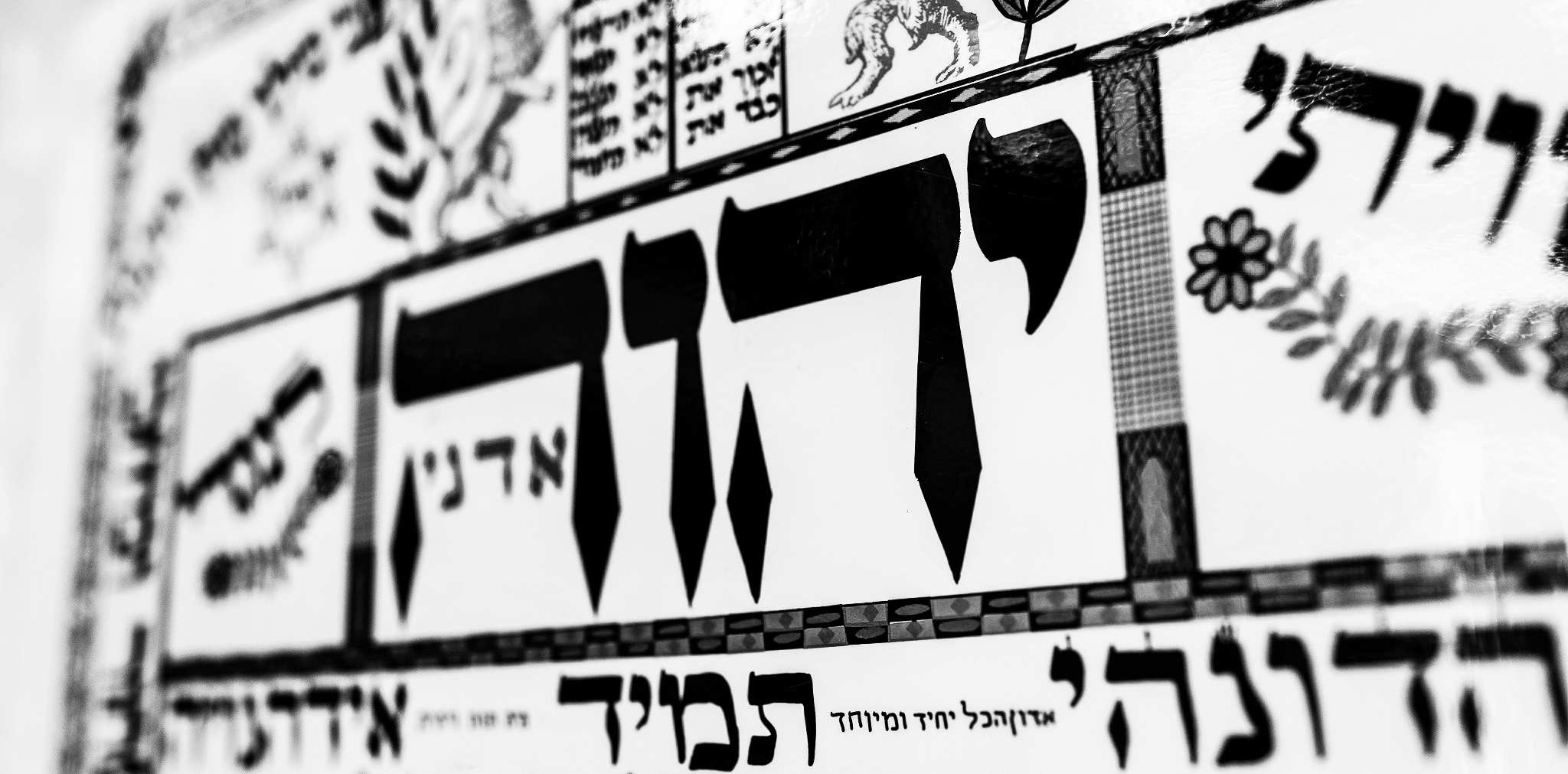
 Our Torah portion for this week (Vaetchanan) includes some of the most foundational texts of the Jewish Scriptures, including the Ten Commandments, the Shema (the duty to love God and study His Torah), and the commandments of tefillin and mezuzot. In addition, in this portion Moses predicts the worldwide exile and the eventual redemption of the Jewish people in acharit hayamim (the prophesied “End of Days”).

 Our Torah portion this week (
 Our Torah reading for this week (i.e.,

 This week we read a “double portion” of Torah to conclude Sefer Bamidbar, or “the Book of Numbers.” Our first Torah portion,


 The Torah teaches that a personal, all-powerful, and all-loving God exists and solely created the universe “yesh me’ayin” (יֵשׁ מְאַיִן), or out of nothing. As his crowning creative achievement, God created free moral agents – both angels and man – who could choose to do what is good or what is evil. For reasons that are not entirely clear, however, some of the angels chose to rebel against God (chief among them Lucifer, later renamed Satan), and these angels, in turn, conspired to seduce human beings to do likewise. When Adam and Eve disobeyed God’s moral law, they effectively joined the angelic rebellion. The consequence of this was catastrophic, and the mankind “fell” away from God as their King into a state of alienation and exile called “spiritual death.”
 Shalom friends. Our Torah reading this week honors Aaron’s grandson

 The Spirit of God cries out, “choose life that you may live!” (Deut. 30:19), which implies that is our responsibility to believe in the Reality of God, to trust in his providential care, to affirm that “all is well and all manner of thing shall be well,” and to understand that our present struggle is designed by heaven to help us grow in grace and the knowledge of the truth (1 Pet. 3:16).


 Our Torah portion for this week (i.e.,
 In the second part of the “Shavuah Tov” audio broadcast for this parashat