Our Torah portion this week (parashat Emor) lists the eight main holidays revealed in the Holy Scriptures. In the Torah, these “holidays” are called “appointed times” (i.e., mo’edim: מוֹעֲדִים), a word which comes from the Hebrew root meaning witness (עֵד). Other words formed from this root include edah (עֵדָה), a congregation, edut (עֵדוּת), a testimony, and so on. The related verb ya’ad (יָעַד) means to meet, assemble, or even to betroth. The significance of the holy days, then, is for the covenant people of the LORD to bear witness to God’s love and faithfulness.
“Speak to the people of Israel and say to them, ‘These are the appointed times of the LORD (מוֹעֲדֵי יְהוָה) that you shall proclaim as holy convocations (מִקְרָאֵי קדֶשׁ); they are My appointed times'” (Lev. 23:2).
Note that these hallowed times – the very first of which is the weekly Sabbath – are “of the LORD,” meaning they should be regarded as appointments given by God Himself to help draw us closer to Him, to reveal prophetic truth, and to remind ourselves of His great plan for our lives. God did not give us the Torah in vain, friends, neither does He speak out of two sides of his his mouth… Yeshua was the Voice of the LORD speaking the words of Torah to Israel at Sinai, and therefore every “jot and tittle” (kotzo shel yod: קוֹצוֹ שֶׁל יוֹד) is indeed relevant to our lives as his followers (Matt. 5:18-19).
For the Torah portion Acharei Mot I will discuss Yom Kippur and its themes, particularly in reference to the atonement given in the Messiah Yeshua, as well as parashat Ha’azinu, the Torah portion we always read between Rosh Hashanah and Yom Kippur. This audio is also applicable for those studying the Jewish High Holidays.
Our Torah reading for this week, parashat Kedoshim, begins with the call for us to be “holy” or “set apart” on account of our relationship with LORD God: “Be ye holy, for I the LORD your God am holy” (Lev. 19:2). Holiness is perhaps best understood as a sense of the awe and sacredness inherent in the apprehension of Reality and Grace. The portion then goes on to define the expression of holiness in our relationship God and with others.
For example, though it is inevitable (and psychologically necessary) that we make judgments about other people, the Torah states, be’tzedek tishpot amitekha, “in righteousness shall you judge your neighbor” (see also John 7:24), which implies that we must use the “good eye” (ayin tovah) when we think of other people. Indeed, the focal point and the very heart of what practical holiness represents is stated as ve’ahavta le’re’akha kamokha – “You shall love your neighbor as yourself.” Note that the direct object of the verb (ahav – to love) is your neighbor.
But who, exactly, is my neighbor? Some have claimed that the word rea (neighbor) refers only to one’s fellow Jew – not to others at large in the world. However this is obviously false, since the “stranger” (ger) is explicitly identified to be an object of our love (Lev 19:34). And note that Yeshua the Messiah answered this question by turning it around. Instead of attempting to find someone worthy of neighborly love, I am asked to be a worthy and loving neighbor myself (Luke 10:29-37).
What is the goal of our relationship with God? What is the point? Is it some form of escapism from the suffering we all experience, as Karl Marx cynically wrote, the “opiate” of the masses (”hopium”) intended to insulate us from the truth of our mortal and ultimately hopeless condition? Or is it rather the most radical and fundamental need of the human heart, the very reason for our existence, and the ultimate truth for which we are willing to give up our lives and die?
Yeshua taught that the purpose of a relationship with God was to discover divine life by knowing the truth of God revealed in him. He said to his disciples: “This is eternal life (חַיֵּי עוֹלָם) that they may know you the only true God, and Yeshua the Messiah whom you have sent” (John 17:3). Knowing God in this way means understanding his heart and character, and learning to become “mature” (i.e., τέλειον, “complete, whole, finished”) through your union with the Messiah (Col. 1:28; Eph. 4:13). Practically speaking we “put on” a new spiritual nature (our “new self”) which is created after the likeness of God (כִּדְמוּת אֱלהִים) in true righteousness and holiness (Eph. 4:24). We know and believe who we are as God’s beloved children (Rom. 8:29). This is a matter of faith, indeed, but it is also a matter of the will. We must line up our attitudes and emotions in light of the truth of reality…
Immature emotions are out of alignment with what is real, evidencing disordered affections based on illusions. “Putting away childish things” (1 Cor. 13:11) means surrendering or letting die (καταργέω) self-centered emotions and desires, letting go of self-pity or bitterness, and refusing to blame others. Spiritual maturity implies humility, denying yourself, a word that means to stop thinking about yourself (from α-, “not,” +ῥέω, “to speak”), and living the truth by sharing God’s redemptive vision and mission for others. We must be careful, however, not to drift away, since it is possible to “forget” the truth that once guided our way; and it is possible to become dull of hearing, shortsighted, and to stop growing in relationship with God (Heb. 2:1). Spiritual truth is not merely intellectual but existential: we must earnestly pursue (διώκω) our heavenly calling (Phil 3:14) and this requires the daily and ongoing decision to live before the LORD our God (Psalm 16:8). The invitation to “choose this day whom you will serve” (Josh. 24:15) implies that is your choice – and your responsibility – to draw near to God (James 4:8). We can do this by studying and memorizing Scripture, meditating, praying, and sharing our hope with others. Above all we must ask God for the gift of the Holy Spirit to “bear us up into maturity” (i.e., ἐπὶ τὴν τελειότητα φερώμεθα, Heb 6:1) so that we may learn from our Master who calls us to be joined to his yoke and learn from him (Matt. 11:29).
Note: A “yoke” is a wooden crosspiece fastened over the necks of two animals that joins them together. Yokes are typically used to train one animal in the work of plowing or pulling a cart or as a way to team animals together for more efficient work. When Yeshua says “take my yoke (i.e., עוֹל / ζυγός) upon you and learn from me, for I am gentle and lowly in heart, and you will find rest for your souls” (Matt. 11:29), the metaphor implies that you will be joined or connected together with him to help cultivate the kingdom of God. Yeshua’s yoke, however, is not like the yoke of various forms of “religion” that lead to slavery, but the source of a fruitful life that produces love, joy, and peace….
In my audio podcast for Yom HaShoah (Holocaust Remembrance Day) I discuss some of the philosophical influences that led to the atrocities of the attempted genocide of the Jewish people, including the rise of the Idealism of G.W. Hegel and the pragmatic concept of the “dialectic” that was used to negate the value of the individual in preference to the collective…. Hegel directly influenced Karl Marx and his godless materialism and social revolutionary theories, and in general it may be said that German idealism led both to the nihilism of Friedrich Nietzsche and to barbarity of Adolf Hitler’s national socialism.
It is written in our Torah (Tazria): “When a person (i.e., adam: אָדָם) has on the skin of his body a swelling (שְׂאֵת) or a scab (סַפַּחַת) or a bright spot (בְּהֶרֶת)… he shall be brought to the priest” (Lev. 13:2). Here the sages note three common afflictions that befall the “children of Adam”: swelling (arrogance), scabs (worldly vanity, from a word that means to join together), and bright spots (representing the light of carnal reasoning to understand the ways of God). When we see only the affliction, we must go to the priest – to one who helps mediate the Divine Presence – to see how deep the affliction is… Symbolically, since we are all priests to one another (see Exod. 19:6; 1 Pet. 2:5,9; Rev. 1:6), we share our afflictions with one another, allowing ourselves to be seen, and to confess our need for healing. We are only as sick as the secrets we keep, and therefore we are encouraged to share our struggles with one another: “Therefore, disclose (ἐξομολογέω, lit. ‘confess out’) your sins to one another and pray (εὔχομαι) for one another, that you may be healed…” (James 5:16).
Followers of Yeshua are intended by God to be healers (Luke 9:1). The most common word for healing in the New Testament is therapeuo (θεραπεύω), a word that means to serve, to care for, and to restore to health. Unlike some ministers who draw crowds to demonstrate the power of miraculous “faith healing,” true spiritual healers take the time to listen to others, to hear their inward pain, and to extend compassion and grace to them. They help open the inner eyes of the heart by extending hope and a new vision about what is real… Indeed, lasting healing focuses less on being cured than on finding hope that will never die.
The Torah connects disease (i.e., tza’arat) with evil speech and thinking. Healing comes through doing teshuvah, that is, by confessing our sin and turning to God for forgiveness, as it says: “He forgives all your iniquities, he heals all your diseases” (Psalm 103:3).
This week’s Torah reading, called Shemini (“eighth”), continues the account of the seven-day ordination ceremony for the priests that was described earlier in parashat Tzav. During each of these “seven days of consecration,” Moses served as the first High Priest of Israel by offering sacrifices and training the priests regarding their duties. On the eighth day however, (i.e., Nisan 1), and just before the anniversary of the Passover, Aaron and his sons began their official responsibilities as Israel’s priests. It is no coincidence that the inauguration of the sanctuary is directly connected to the Passover, since the daily sacrifice of the Lamb served as an ongoing memorial of the Exodus from Egypt — and indeed the laws of sacrifice form the central teaching of the Torah itself. In this connection, we again note that the central sacrifice of the Tabernacle was that of a defect-free lamb offered every evening and morning upon the altar in the outer court, along with matzah (unleavened bread) and a wine offering, signifying the coming of the true Passover Lamb of God and his great sacrifice for us.
Note that this audio broadcast also includes discussion about Yom HaShoah, or Holocaust Remembrance Day as well as the Hebrew month of Iyyar and its significance in the countdown to the climactic holiday of Shavuot (“weeks” or “Pentecost”).
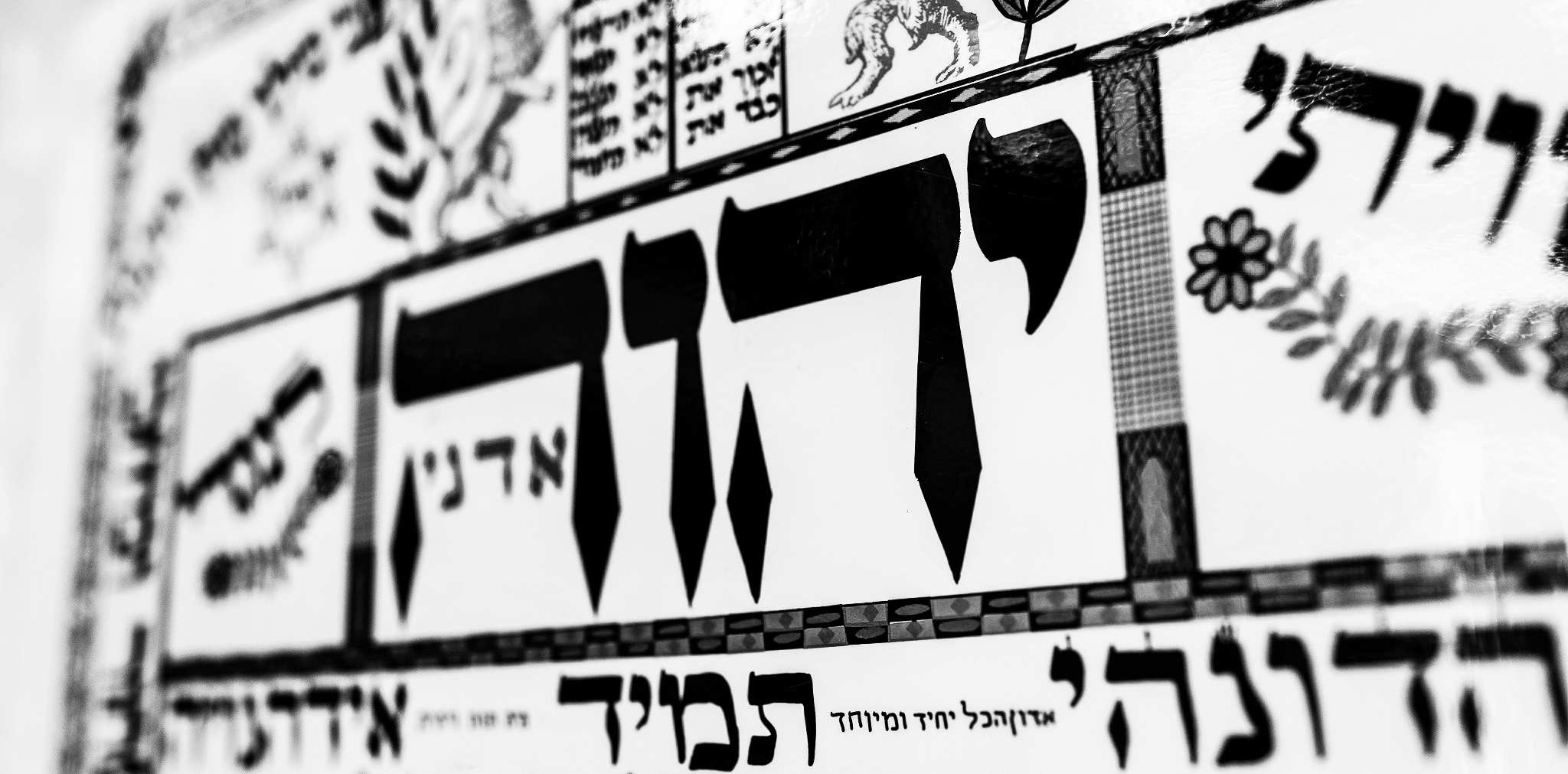
 Our Torah portion this week (parashat Emor) lists the eight main holidays revealed in the Holy Scriptures. In the Torah, these “holidays” are called “appointed times” (i.e., mo’edim: מוֹעֲדִים), a word which comes from the Hebrew root meaning witness (עֵד). Other words formed from this root include edah (עֵדָה), a congregation, edut (עֵדוּת), a testimony, and so on. The related verb ya’ad (יָעַד) means to meet, assemble, or even to betroth. The significance of the holy days, then, is for the covenant people of the LORD to bear witness to God’s love and faithfulness.

 For the Torah portion

 Our Torah reading for this week,


 In my audio podcast for


 It is written in our Torah (
 This week’s Torah reading, called