V’zot HaBerakhah (“this is the blessing”) is the final portion of the Torah, which records Moses’ last words to the people just before his death. It is always read just after the festival of Sukkot on the holiday called “Simchat Torah.” After reading this portion, we will “rewind the scroll” back to Parashat Bereshit to begin reading the Torah all over again. We do this every year because Talmud Torah – the study of Torah – never ends! A true student of Scripture cannot claim to have completed the study of the Torah, for the implications of such study extend forever. And so the cycle continues, over and over in a continuous chain of study, ever widening, and all encompassing.
A verse from Torah recalls Yeshua’s words that “every scribe who has been trained for the kingdom of heaven is like a master of a house, who brings out of his treasure what is new and what is old” (Matt. 13:53). The medieval sage Rashi noted that the phrase, “And it shall come to pass if you hear” in Deut. 11:13, i.e., ve’hayah im shamo’a tishme’u (וְהָיָה אִם־שָׁמעַ תִּשְׁמְעוּ), is grammatically puzzling, since it the Hebrew reads “if you hear, you will hear,” which suggests that as we listen attentively to the words of Torah, we will hear more, and we will encounter spiritual connections and applications that are new and ready for this hour. The early sages commented: “If you listen to the old, you will listen to the new” (Berachot 40a). Focusing our attention on the commandments even while in exile is likened to practice for the world to come, since then they will not be new to you when the final redemption appears. Happy and blessed are all those who love the Torah (Psalm 1:1-2). More light comes as we live in the truth (John 13:17). As Yeshua also said: “For to the one who has, more will be given, and he will have an abundance, but from the one who has not, even what he has will be taken away” (Matt. 13:12).
Instead of fretting over the tests and struggles we inevitably face in this life, we might look for reasons to be grateful, for how else can we come to know that the Lord is with us apart from his ongoing deliverance? We ask the Lord for our daily bread (לֶחֶם חֻקֵּנוּ), but I wonder if we are not starving ourselves with fear of the future… Daily bread cannot be stored or hoarded lest it become spoiled and rotten (Exod. 16:20). We must live today in complete trust before the Lord our God, who is forever faithful and true. He it is who said, “Don’t be anxious about tomorrow, for tomorrow has its own troubles. Live one day at a time” (Matt. 6:34). It makes no sense to worry about the future if the LORD is the Good Shepherd who tenderly watches over your way (Psalm 23:1).
In this “Shavuah Tov” audio broadcast I discuss both the Jewish High Holidays — and how they relate to us as followers of Yeshua the Messiah — as well as the weekly Torah portion we will read for Shabbat Shuvah, namely parashat Vayeilech. I hope you will find it helpful. L’Shanah Tovah u’Metukah b’Yeshua Meshicheinu, chaverim! – “to a good and sweet year in our Messiah Yeshua, friends.”
Our Torah reading for this week, parashat Nitzavim (פרשת ניצבים), is always read on the Shabbat immediately before the solemn holiday of Rosh Hashanah, and therefore it is the last portion read before the new Jewish year (see Exod. 23:16). In many synagogues, the opening and concluding paragraphs of parashat Nitzavim are also read during the Yom Kippur morning service.
Nitzavim begins: “You are standing here today, all of you, before the LORD your God (אַתֶּם נִצָּבִים הַיּוֹם כֻּלְּכֶם לִפְנֵי יְהוָה אֱלהֵיכֶם) … so that you may enter into the sworn covenant of the LORD your God, which the LORD your God is making with you today, that he may establish you today as his people, and that he may be your God, as he promised you, and as he swore to your fathers, to Abraham, to Isaac, and to Jacob” (Deut. 29:10-13). After this Moses went on to review Israel’s history and prophetic future — i.e., the great prophecy of the Diaspora and Return of the people — and then he solemnly appealed for all those who believed to turn to the LORD for life: “I call heaven and earth to witness against you today, that I have set before you life and death, blessing and curse. Therefore choose life, that you and your offspring may live” (Deut. 30:19).
In addition to an overview of the Torah reading, I discuss the fall holidays of the Torah’s calendar, particularly the significance of Rosh Hashanah for followers of Yeshua the Messiah.
In this audio podcast I discuss the the 40 day “Season of Teshuvah” or repentance leading up to the Jewish High Holidays as well as the weekly Torah portion, parashat Ki Tavo, which includes instructions for the people to ratify the Sinai covenant in the promised land by means of a special covenant renewal ceremony performed in the valley between Mount Ebal and Mount Gerazim. During this ceremony blessings for obedience and curses for disobedience would be declared, and Moses warned the people by providing a seemingly endless description of terrible consequences that would befall the Jewish people if they disobeyed the terms of the Sinai covenant (Deut. 28:15-68).
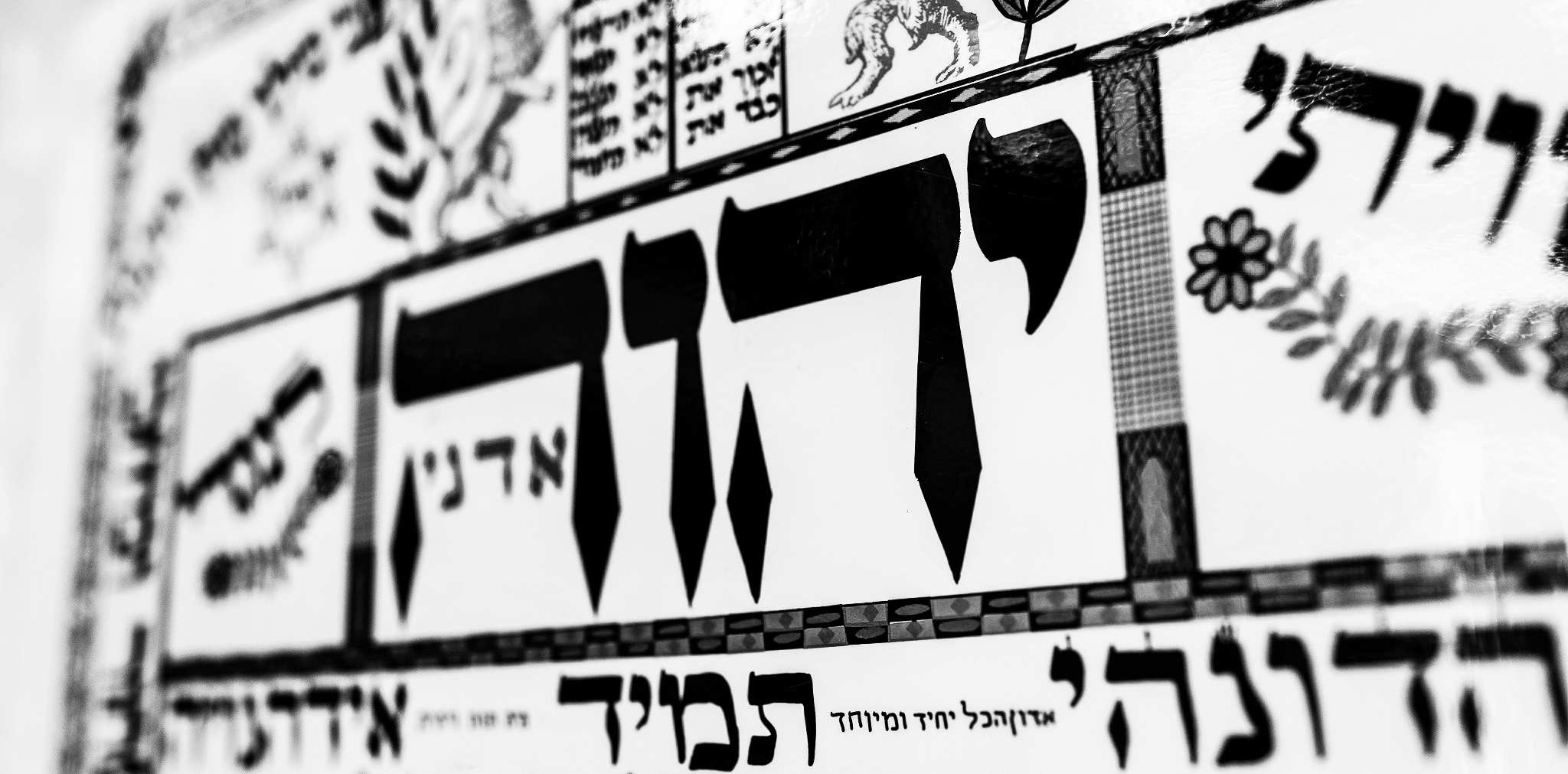
The goal of the devil, the “prince of the power of the air,” has always been to enslave people in dark places of fear, anger, bitterness, and pain. His primary weapon is deception, that is, various lies by which he captivates people and makes them tools for his evil purposes. We are able to resist the power of the lie by submitting to the truth about Reality (James 4:7). God’s Name YHVH (יהוה) means “Presence” and “Love,” and there is no power in heaven or earth that can overrule His hand. Therefore even if the prophesied “End of Days” were to begin this very hour, our responsibility is to focus on the Divine Presence and to walk in His truth and love. As King David said, “I have set the LORD always before me; because He is at my right hand, I shall not be shaken” (Psalm 16:8).
…
Encourage yourself by remembering that there is a future of healing and deliverance coming to us, though we must abide in the shadow of its substance for a bit longer: “For behold, the Day is coming (הַיּוֹם בָּא), burning like an oven, when all the arrogant and all evildoers will be stubble. The Day that is coming shall set them ablaze, says the LORD of hosts, so that it will leave them neither root nor branch. But for you who fear my Name, the Sun of Righteousness (שֶׁמֶשׁ צְדָקָה) shall rise with healing in its wings. You shall go out skipping like calves released from the stall. And you shall tread down the wicked, for they will be ashes under the soles of your feet, on the day when I act, says the LORD of hosts” (Mal. 4:1-3).
This awesome passage from the Book of Malachi primarily applies to the Second Coming of Yeshua and the great “Day of the LORD” (יוֹם יהוה). The “Sun of Righteousness,” shemesh tzaddik (שֶׁמֶשׁ צְדָקָה), refers to Messiah son of David, the risen life-giving Healer of God. Of Him it is said, “The LORD God is a sun and a shield” (Psalm 84:11) and “the LORD shall be to thee an everlasting Light (אוֹר עוֹלָם), and thy God thy glory; thy sun shall no more go down, for the Lord shall be thine everlasting light” (Isa. 60:19-20). The Divine Light will shine on those who receive God’s righteousness, that is, on those who put their trust in the One who said, ‘I am the Light of the world’ (John 8:12). Amen, the righteous will forever testify: “For with you is the fountain of life; in your light do we see light” (Psalm 36:9).
Our Torah reading for this week (i.e., parashat Ki Teitzei) identifies 74 of the Torah’s 613 commandments (more than any other), which again invites the question of whether we are obligated to follow the law code of Moses or not… In this Shavuah Tov broadcast, I explore how we are to understand the law in light of the salvation given in Yeshua the Messiah. I hope you will find it both provocative and helpful.
In last week’s Torah reading (i.e., Shoftim), Moses defined an extensive system of justice for the Israelites and pointed to the coming Messiah who would be the rightful King of Israel: “The LORD your God will raise up for you a prophet like me from among you, from your brothers — it is to him you shall listen” (Deut. 18:15). In this week’s portion (i.e., parashat Ki Teitzei: כי־תצא), Moses returns to the immediate concern of life in the promised land by providing additional laws to be enforced regarding civil life in Israel. In fact, Jewish tradition (following Maimonides) identifies no less than 74 of the Torah’s 613 commandments in this portion (more than any other), covering a wide assortment of rules related to ethical warfare, family life, burial of the deceased, property laws, the humane treatment of animals, fair labor practices, and honest economic transactions.
Of particular interest to us is the law regarding capital offenses and the instruction that one who was executed and “hanged on a tree” (עַל־עֵץ) is under the curse of God (Deut. 21:22-23). According to the Talmud (Nezakim: Sanhedrin 6:4:3), the Great Sanhedrin (סַנְהֶדְרִין גְדוֹלָה) decided that “a man must be hanged with his face towards the spectators” upon a wooden stake, with his arms slung over a horizontal beam. It should be noted that while this is technically not the same thing as the gruesome practice of Roman crucifixion, the reasoning based on this verse was apparently used to justify the execution of Yeshua (Mark 15:9-15; John 19:5-7; 15). The exposed body was required to be buried before sundown to keep the land from being defiled. Besides the shame of this manner of death, the one so executed would be unable to fall to their knees as a final act of repentance before God, thereby implying that they were under the irrevocable curse of God (קִלְלַת אֱלהִים).
In this audio podcast I discuss the the forty day “Season of Teshuvah” or repentance leading up to the Jewish High Holidays as well as the weekly Torah portion, parashat Shoftim, which discusses adjudication of legal matters among the people of Israel. In addition I look at Moses’ great prophecy of “the Prophet” to come, namely the Messiah of Israel, and how this Prophet is clearly Yeshua as revealed in the New Testament writings. Throughout this broadcast I hope to encourage you to turn and draw near to God while you still have time…
 V’zot HaBerakhah (“this is the blessing”) is the final portion of the Torah, which records Moses’ last words to the people just before his death. It is always read just after the festival of Sukkot on the holiday called “Simchat Torah.” After reading this portion, we will “rewind the scroll” back to Parashat Bereshit to begin reading the Torah all over again. We do this every year because Talmud Torah – the study of Torah – never ends! A true student of Scripture cannot claim to have completed the study of the Torah, for the implications of such study extend forever. And so the cycle continues, over and over in a continuous chain of study, ever widening, and all encompassing.

 A verse from Torah recalls Yeshua’s words that “every scribe who has been trained for the kingdom of heaven is like a master of a house, who brings out of his treasure what is new and what is old” (Matt. 13:53). The medieval sage Rashi noted that the phrase, “And it shall come to pass if you hear” in Deut. 11:13, i.e., ve’hayah im shamo’a tishme’u (וְהָיָה אִם־שָׁמעַ תִּשְׁמְעוּ), is grammatically puzzling, since it the Hebrew reads “if you hear, you will hear,” which suggests that as we listen attentively to the words of Torah, we will hear more, and we will encounter spiritual connections and applications that are new and ready for this hour. The early sages commented: “If you listen to the old, you will listen to the new” (Berachot 40a). Focusing our attention on the commandments even while in exile is likened to practice for the world to come, since then they will not be new to you when the final redemption appears. Happy and blessed are all those who love the Torah (Psalm 1:1-2). More light comes as we live in the truth (John 13:17). As Yeshua also said: “For to the one who has, more will be given, and he will have an abundance, but from the one who has not, even what he has will be taken away” (Matt. 13:12).
 Instead of fretting over the tests and struggles we inevitably face in this life, we might look for reasons to be grateful, for how else can we come to know that the Lord is with us apart from his ongoing deliverance? We ask the Lord for our daily bread (לֶחֶם חֻקֵּנוּ), but I wonder if we are not starving ourselves with fear of the future… Daily bread cannot be stored or hoarded lest it become spoiled and rotten (Exod. 16:20). We must live today in complete trust before the Lord our God, who is forever faithful and true. He it is who said, “Don’t be anxious about tomorrow, for tomorrow has its own troubles. Live one day at a time” (Matt. 6:34). It makes no sense to worry about the future if the LORD is the Good Shepherd who tenderly watches over your way (Psalm 23:1).
 In this “Shavuah Tov” audio broadcast I discuss both the Jewish High Holidays — and how they relate to us as followers of Yeshua the Messiah — as well as the weekly Torah portion we will read for Shabbat Shuvah, namely parashat Vayeilech. I hope you will find it helpful. L’Shanah Tovah u’Metukah b’Yeshua Meshicheinu, chaverim! – “to a good and sweet year in our Messiah Yeshua, friends.”
 ding for this week, parashat Nitzavim (פרשת ניצבים), is always read on the Shabbat immediately before the solemn holiday of Rosh Hashanah, and therefore it is the last portion read before the new Jewish year (see Exod. 23:16). In many synagogues, the opening and concluding paragraphs of parashat Nitzavim are also read during the Yom Kippur morning service.
 In this audio podcast I discuss the the 40 day “Season of Teshuvah” or repentance leading up to the
  The goal of the devil, the “prince of the power of the air,” has always been to enslave people in dark places of fear, anger, bitterness, and pain. His primary weapon is deception, that is, various lies by which he captivates people and makes them tools for his evil purposes. We are able to resist the power of the lie by submitting to the truth about Reality (James 4:7). God’s Name YHVH (יהוה) means “Presence” and “Love,” and there is no power in heaven or earth that can overrule His hand. Therefore even if the prophesied “End of Days” were to begin this very hour, our responsibility is to focus on the Divine Presence and to walk in His truth and love. As King David said, “I have set the LORD always before me; because He is at my right hand, I shall not be shaken” (Psalm 16:8).


 In last week’s Torah reading (i.e.,
  In this audio podcast I discuss the the