The Hebrew word for “world” or “age” is olam (עוֹלָם), which is derived from a root verb (עָלַם) that means “to conceal” or “to hide.” God “hides” His face from us so that we will seek Him, and that means pressing through ambiguity of this world to discern and take hold of the truth. Therefore King David said, בַּקְּשׁוּ פָנָיו תָּמִיד/ bakeshu fanav tamid: “Seek His face continually” (Psalm 105:4). Note that the Hebrew gematria (numerical value) for the word “fanav” (i.e., “His face”) is the same as that for the word “olam.” When we truly seek God’s face (i.e., His Presence), that is, “do teshuvah,” we are able to discern the underlying purpose for our lives in this age… As it is written in our Scriptures: “Blessed is the one who endures temptation, for when he is tried, he shall receive the crown of life (עֲטֶרֶת הַחַיִּים) that the LORD has promised to those who love him” (James 1:12). The present age, then, constitutes a test that God providentially designs to lead us to the “crown of life,” and we are made happy when we go through its fires and are not consumed. Indeed, only those who love the Lord will be able to withstand the fires… The “crown of life” symbolizes that we have truly received the purpose for which we were created and that we are identified with God’s own passion and love. The light of the crown represents the Divine Presence within us, the Life that overcomes despair on our behalf.
…
“It is not the path which is the difficulty; rather, it is the difficulty which is the path.” The ancient Greek version of the Torah (i.e., the Septuagint) translates this verse, “Seek the LORD and be strengthened; seek His face through everything (διὰ παντός).” The LORD God gives us “inner strength” (i.e., ἐγκράτεια, from εν-, “in” + κράτος, “strength” or “power”) when we yield to “the power of His might” (ἐν τῷ κράτει τῆς ἰσχύος αὐτοῦ) (Gal. 5:22-23; Eph. 6:10). Therefore we must remember God’s power and glory, for “He is the LORD our God (הוּא יְהוָה אֱלהֵינוּ); His judgments are in all the earth” (Psalm 105:7).
Sin is not the result of not knowing what is right, but rather of being unwilling to understand such, and therefore is the refusal to do what is right. It is not the result of ignorance but rebellion. Sin doesn’t say “I can’t” but rather “I won’t,” and therefore it is a matter of the will, the heart, the secret desires of the soul… Just as grace is inaccessible for someone who refuses to be honest with himself, so is forgiveness. If a person refuses to confess the truth about his condition, salvation itself is impossible, since God literally cannot save the soul that denies its need for Him. Therefore the Scripture does not vainly declare: “Whoever conceals his transgressions will not prosper, but the one who confesses and forsakes them will find mercy” (Prov. 28:13).
…
A person who “conceals” or “covers” his sin denies it, either by outright disavowal or by explaining it away by offering self-deceptive excuses. This person simply cannot prosper – in the spiritual sense of the word – because he is not living in reality… Indeed, his conscience is burdened with a “secret ban,” an inner voice of condemnation that must be suppressed and squelched. It is only the person who comes to the light, who acknowledges the truth of his sin and who is anxious to be free of its effects, who will be shown mercy (i.e., rachamim (רַחֲמִים), which comes from the word rechem (רֶחֶם), “womb”).
Note that God alone has the prerogative to cover or atone for sin, as an expression of His grace, but it is never fitting for someone to atone for his own sin in order to exonerate himself. God’s anger over sin is not appeased when sin is minimized, dismissed, excused, or rationalized away (though the LORD delights when we overlook the offenses of others). This is because all sin is an offense against God and represents a breach of the relationship between the sinner and God. Your sin, in other words, hurts not only yourself and other people, but most significantly, it wounds the very heart of God Himself by causing a breach or separation in your relationship with Him. Therefore we see Yeshua forgiving others for sins they have committed against other people as if He were the offended party in the sin. As C.S. Lewis once wrote, “He told people that their sins were forgiven, and never waited to consult all the other people whom their sins had undoubtedly injured. He unhesitatingly behaved as if He was the party chiefly concerned, the person chiefly offended in all offenses. This makes sense only if He really was the God whose laws are broken and whose love is wounded in every sin” (Mere Christianity, 1952).
In this evil world, it may sometimes seem that crime “pays,” but certainly not before the Divine Presence, and in the world to come, every word and deed will be fully accounted before the bar of God’s justice and truth. But even in this world, the sinner is secretly haunted by his conscience; he is driven to madness, hidden despair, and lives in dread and anxiety over the truth he conceals… It has been said that the problem with “getting away with it” is that you indeed “get away with it,” meaning that your sin will follow you as doggedly as your own shadow in this world… Ultimately sin is a form of cowardice, since it hides in fear from the light of truth. Unconfessed sin leads to anxiety, paranoia, and weakness of the soul…
I mentioned recently that one of the reasons God revealed the Ten Commandments was because it was His way of saying, “I know who you really are, I see you…” This is why the people drew back in terror, because they realized that God saw the inner condition of their heart, exposed it, and shined the light of moral truth upon it. Nonetheless it is a great and ongoing credit to the Jewish people that they were willing to receive the revelation at Sinai, since it demonstrates that they were genuinely willing to be honest with themselves. Despite their many subsequent failures, they still revered the truth of God’s Torah and meticulously preserved the revelation for future generations (Rom. 3:1-2).
A person who denies or excuses his sin simply cannot prosper – in the spiritual sense of the word – because he refuses to live in reality… Confessing the truth about yourself – owning your behavior, taking personal responsibility, refusing to blame others, and so on, leads to real prosperity, spiritual blessing and true inner peace.
“If I ascend to heaven, you are there; if I descend to the depths, behold, you are there too” (Psalm 139:8). The sages note the use of the adverbs “there” and “here” in this verse, saying that when a person feels like he has ascended to great heights, the LORD will be “there” (שָׁם), that is, distant from him, but when he is humble and low, the LORD will be “here” (הִנֵּה), that is, right at his side (Isa. 57:15). This is the “upside-down” way of beholding the Kingdom of Heaven. Can a camel go through the eye of a needle? No more than a ‘rich man’ can find life through his own ventures (Matt. 19:23-24). The only way to enter life is to disown your riches (i.e., your self-sufficiency) by becoming “impoverished in spirit.” This is the narrow way that leads to life (Matt. 7:14). You have to let go of the “baggage” of your worldly ego… Yeshua teaches that only by emptying ourselves can we be made full; only by mourning ourselves can we find comfort, and only by hungering and thirsting for God’s righteousness can we find inner satisfaction…
People tend to believe what they want to believe until they are faced with reality, and therefore God orchestrates tests and challenges to awaken people from their illusions to make them confront their need for deliverance. Such afflictions are called yissurim shel ahavah, “troubles of love.” For example, regarding their affliction in Egypt, the Torah states that the people groaned because of their slavery and then cried out to heaven for help: “And God heard their groaning; he remembered his covenant … and God saw the people of Israel, and God knew” (Exod. 2:24-25). Note the pattern: The people cried out for help; God heard (וַיִּשְׁמַע); he remembered (וַיִּזְכּר), he saw (וַיַּרְא); and he knew (וַיֵּדַע)… God knows our profound need for Him. Affliction teaches us that wishful thinking is unable to sustain the weight of reality, and only God Himself can truly save us…
Intellectually you “know” God is present, but there are moments of unknowing that obscures your hope. You “know” God is as close as your breath but there are breathless moments where you feel abandoned to your suffering…. Then you have to walk the darkness of trust.
…
Where it says, “How long shall I take counsel in my soul, having sorrow in my heart daily” (Psalm 13:2), the sages remark that just as long as we take counsel in our own soul there will be despair, since only after we realize that no further counsel can help do we give up and confess our need for God’s salvation. Therefore just as Abraham saw the divine light by closing his eyes to this world, so we must trust in the LORD with all our heart by refusing to lean on our own understanding (Prov. 3:5).
The Scriptures declare that though the “outward self” (ὁ ἔξω ἡμῶν ἄνθρωπος) inevitably wastes away (διαφθείρω), the “inner self” (ὁ ἔσω ἡμῶν) is being renewed (ἀνακαινόω, i.e., “raised up in newness of life”) day by day (2 Cor. 4:16), which implies that we have nothing to fear regarding our perpetuity and acceptance as God’s beloved children. Therefore we do not “lose heart” (lit., act badly, from ἐκ, “out” + κακός, “badly”). Despite the shadows of this world, we take hold of the words of our Savior, who said: “I give you eternal life, and you will never be destroyed (ἀπόλλυμι), and no one will snatch you out of my hand” (John 10:28). And in another place he likewise said, “Everyone who lives and believes in me shall never die (οὐ μὴ ἀποθάνη)” (John 11:26).
…
God has redeemed you, friend, and has called you by name; he knows you intimately, and you belong to Him. God does not call groups, but rather individuals. The Spirit calls out, “follow me…” The Lord never leaves nor forsakes those who trust in Him, even if they should face waters that seem to overwhelm or fires that seem to devour and consume.
How we deal with trouble and suffering (i.e., tzuris) makes all the difference. We may be tempted to bitterness over our lives, but then what? To paraphrase Soren Kierkegaard, the way of life is how more than it is what. You may be powerless to control reality, but you are nevertheless responsible for how you respond to it. Check your attitude. Do you chose to live in lament over a healing that has not yet happened, or perhaps regard yourself as a hapless victim? Or will you attempt to justify your suffering as a means of personal atonement, accepting it passively as a “good child” or martyr? Does your suffering stretch your heart, or does it cause you to shrink back in fear or self-pity?
In this connection, recall that when the Jews came to Marah, they “could not drink the water because it was bitter” (Exod. 15:23). The Hebrew, however, could be read, “they could not drink the water because they (i.e., the people) were bitter (כִּי מָרִים הֵם). The problem is often not “out there” but within the heart (Matt. 15:19-20). How we choose to see, in other words, says more about us than it does the external world. If you make the mistake of reading the daily news and taking it seriously, you will see only ugliness, and you run the risk of becoming hardhearted. Worldly despair eclipses apprehension of the Presence of God….
We have to use ayin tovah, “a good eye,” whenever we encounter the inevitable (and ubiquitous) adversities of life. Instead of seeing ourselves as victims of undeserved trouble, and instead of harboring resentment over the past and entertaining fear of the future, we must learn to see adversity in the light of faith that teaches lessons about finding resilience and hope. Faith affirms that adversity has an end that is ultimately good. Faith will not bow the knee to dark visions and live in dread of worldly fate.
It’s been said, “hurt people hurt people,” which means that if healing is not found for our woundedness, our pain will likely “leak out” as depression and hostility toward others… Finding inner peace is therefore crucial lest we become poisoned through a “root of bitterness” that defiles many (Heb. 12:15). The worst sort of prison is the one we make for ourselves, by choosing to be taken captive by fear and anger. May the Lord show us mercy and help us grow in grace and in the knowledge of his heart in all things. Amen.
Truth matters. I don’t mean “opinion” here, but real, objective, hard-core truth. Truth reveals reality. Aristotle defined it this way: “To say of what is that it is not, or of what is not that it is, is false, while to say of what is that it is, and of what is not that it is not, is true” (Metaphysics). Genuine knowledge (γνῶσις), as opposed to illusion, depends on truth, since knowledge constitutes justified true belief, whereas illusion (and opinion) does not. The Greek word for truth is aletheia (ἀλήθεια, from α[not] + λήθω [to hide]) which implies the revelation of being. The Hebrew word for truth is emet (אֱמֶת), which is related to the idea of fidelity or correspondence with reality (אָמַן).
How you think about life has implications. You are responsible to think clearly. God’s hidden attributes are clearly apprehended by the mind so that people who deny spiritual reality are without excuse (Rom. 1:19-20). If you think a map will faithfully guide you to the right place, you will use it; if you think it leads to an opposite end, you will not. Thinking one way leads you to success, whereas the other way leads to failure. The Scriptures state: “there is a way that seems right to a person, but its end is the way to death” (Prov. 14:12).
…
Truth (אֱמֶת) apart from God who is Alef (א) leads to death (מֵת). Sincerity of conviction is no test of truth since you can be sincere and sincerely wrong. How many have perished in this world because they believed they were on the right course when in fact they were not? Yeshua made bold the claim that there was no way to know the heart of God apart from him… there is salvation is no other. Either he spoke the truth or he did not; either he can be trusted for the direction (תּוֹרָה) of your life or he cannot; either he expresses the Salvation of God or he does not. The issue of truth demands that we must choose whom we will serve…
One of the great Hebrew names of God is El Elyon (אֵל עֶלְיוֹן), often translated as “God Most High.” The name first appears in the Torah regarding the mysterious figure of Malki-Tzedek (מַלְכִּי־צֶדֶק), the timeless king and priest of Zion who served “bread and wine” to our father Abraham – alluding to the sacraments later used to commemorate our redemption (Gen. 14:18). As the timeless king and priest of God, Malki-Tzedek is a “theophany,” or a revelation of the LORD our God Yeshua before He emptied Himself and made his descent to this world (Phil. 2:7; Heb. 7:3). Yeshua is our great King of Kings and High Priest of the New Covenant, a better covenant that restores the kingship and priesthood back to God Himself (Heb. 7:12).
…
Now the Hebrew term “Elyon” itself (עֶלְיוֹן) comes from a root word (עָלָה) that means “to ascend” or “to lift up.” For instance, an “olah offering” (עלָה) is a whole burnt offering that ascends upward to heaven, and “aliyah” (עֲלִיָּה) means “going up” to the land of Israel. The word “Elyon,” then, expresses the truth that the LORD is the Resurrected One who overcame all the powers of hell and utterly vanquished death’s power. In other words, Elyon is a name for the LORD our God Yeshua.
The sages say that Moses wrote Psalm 91 as he dwelt in the secret place (סֵתֶר) of the Most High God, in the “midst of the dark cloud” (Exod. 24:18), a place of sacred and holy concealment. The thick clouds are a “hiding place” for him (Job 22:14). Notice that the one who “abides” in the secret of the Most High dwells in an ascended place of rest – being lifted up above the surrounding madness of this fallen world of flux and shadows. The Hebrew word means to lodge or to “sleep” (לִין), connecting it metaphorically with death and resurrection. By dwelling in the death and resurrection of Yeshua, God will shield you with His Presence and make evil powerless before you.
Since God hides Himself in this world (Isa. 45:15), we must humbly seek His face to enter into the place of His holy concealment in all things. God is Elyon – High above – but He dwells “with the lowly and the broken of heart” (Isa. 57:15). Therefore the LORD our God is called Shaddai (שַׁדַּי) – our Sustainer, Provider, Refuge, and Home. Just as we can be surrounded by the “shadow of death” (tzal mavet), so we can be surrounded by the “shadow of Shaddai” (tzal Shaddai). Like a powerful eagle brooding over her chicks, so Shaddai covers you with wings of protection (Psalm 91:4).
When you “abide” in the secret of Elyon – the Ascended One – you are concealed by the dark clouds of His Glory, and the Presence of Shaddai overshadows you… The LORD will save you from the ensnaring trap and from the devastating pestilence (Psalm 91:3). By abiding in the truth that God’s Presence pervades all things at all times – you become a “stranger” (גֵּר) with the LORD in this world, a “sojourner” (תּוֹשָׁב) who awaits the recompense of the wicked and the healing of the world at the end of the age. “You will tread on the lion and the adder; the young lion and the serpent you will trample underfoot” (Psalm 91:13).
I’ve mentioned before that the Hebrew word “mitzvah” (מִצְוָה) is often translated as “commandment,” though its basic idea is about our connection to God (i.e., the root צוה means to “bind” or “unite”). Being connected with the Almighty means making time to get alone to talk with him, relating to him as your Heavenly Father, and trusting that he genuinely esteems you as his beloved child. Whatever else you may think about the commandments of God, this idea of a love connection is foundational and essential. The very first of the Ten Commandments is Anochi Adonai Elohekha (אָנכִי יְהוָה אֱלהֶ֑יךָ), “I am the Lord your God,” which invites you to open your heart to receive the touch of the Spirit of God. There is no love like that of the Lord, but you simply can’t feel that love if you don’t speak to Him, pouring out your heart and clinging to the truth of his love for you….
Pouring your heart out to God in an honest, spontaneous, and intensely personal way is called “hitbodedut” (הִתְבּוֹדְּדוּת) in Hebrew. After we “talk our hearts out” before the Lord, in our emptiness we can begin to truly listen, as it says, “In returning and rest you shall be saved; in quietness and in trust shall be your strength” (Isa. 30:15). Only after we sigh deeply and surrender are we receptive to the voice of the Spirit’s whisper. אַשְׁרֵי כָּל־חוֹכֵי לוֹ – “Blessed are all those who wait for Him” (Isa. 30:18). We wait, we abide, we persevere — even when God seems to “take his time” or does not immediately intervene in ways we might apprehend. We do not lose heart, for we find strength when we trust in God’s love… The Light of the world still shines: Yeshua, be my inner word, my heart, and my groaning for life today, and forevermore, amen.
Since the essence of Torah is connection to God, the greatest blessing is to be filled with the desire to draw close to him, to experience “hunger and thirst” (i.e., visceral yearning) for God’s presence and touch. Holy desire – expressed in the yearning of heartfelt prayer – is therefore a state of true blessedness, and the more desperate our need for God the more blessed we are. It is our desire, our holy need that creates a bond of connection between our soul and its Creator, and that is the deeper meaning of “mitzvah.” As Yeshua said: “Blessed are those who hunger and thirst for righteousness, for they shall be satisfied” (Matt. 5:6).
…
We are to pray to God with all our heart (מכל הלב), but that must include the broken heart, too – that is, the broken parts of ourselves that must be recollected and mended before the passion of God’s healing love. We “lift up our soul” to the LORD – all of ourselves – as we pour out our heart before God. Our feelings are important in prayer – the ingredient added to our petitions that quicken the heart and focus the will…. “Return, O Israel, to the LORD your God” (Hos. 14:2) means returning to the place of heartfelt faith – where the LORD is your God, and you are his beloved child.
Ambivalence has been defined as wanting two different and opposing things at the same time, and therefore is a state of inner conflict… For example, you may want to be kind and loving toward someone who has hurt you, but you may also harbor resentment or even want revenge; or you may want to abstain from a forbidden pleasure, yet you find yourself inwardly hungering for it anyway. When we feel pulled in two different directions or have mixed feelings, we are being called near to God to find help.
…
Note that the word se’afeem (סֵעֲפִים) is translated as παρανόμους (paranomous) in the LXX, literally, “one who reasons around the Torah,” that is, a lawless person quick to excuse himself from the demands and truth of God’s moral will and authority… Some translations render this word as “frivolous-minded,” “light-minded,” or “vain,” though the Hebrew word comes from a root (סעף) that means to split or to divide, fork-like, like branches of trees waved with the wind to and fro (compare James 1:8-9; 4:8; 1 Kings 18:21).
The contrast is between ambivalence, or being “two-soulled” (δίψυχος), and the desire for the truth of God’s Torah that unifies the soul. To be undivided, wholehearted, pure of heart, and so on, means to abhor all fantasies of imagination or thought that lead us away from the Divine Presence. “Take every thought captive” (2 Cor. 10:5). We must always be on guard lest we be seduced from our heart’s focus and direction (Heb. 4:1).
Consider temptation to be a “rabbit hole” that leads to discovery about what you really need. Take your temptation to the LORD and ask Him to fill the void, to strengthen your heart, to heal the inner divide, and so on. God already knows what’s happening within your adulterous heart, so come before Him in prayer to find healing and help in your temptation (Heb 4:16). If we ask anything according to God’s will, he hears us and will help us (1 John 5:14). Often we experience ambivalence and temptation because we do not know what we really need or even want. “Disordered loves” arise when we set the heart’s affections on the transitory, the ephemeral, and the unabiding — rather than on the Eternal.
Where it is written, “cast all your anxiety on him because he cares for you” (1 Pet. 5:7), the word translated “anxiety” (μέριμνα) comes from a Greek verb (μερίζω) that means to be fragmented or divided into parts and pieces. We bring our brokenness to God – including those distractions that tear us away from Him and that make us inwardly fragmented – in order to receive God’s care for us. Today choose to regard your brokenness as an invitation to come before God for healing; never let it be a source of shame that keeps you from coming to the LORD for help! We are not to be ignorant of Satan and his devices… Despite our many sins, frailties, and our own inner ambivalence, we know that God alone is our healer, our deliverer, and the lover of our souls. The Lord is near to those who call upon Him in the truth.
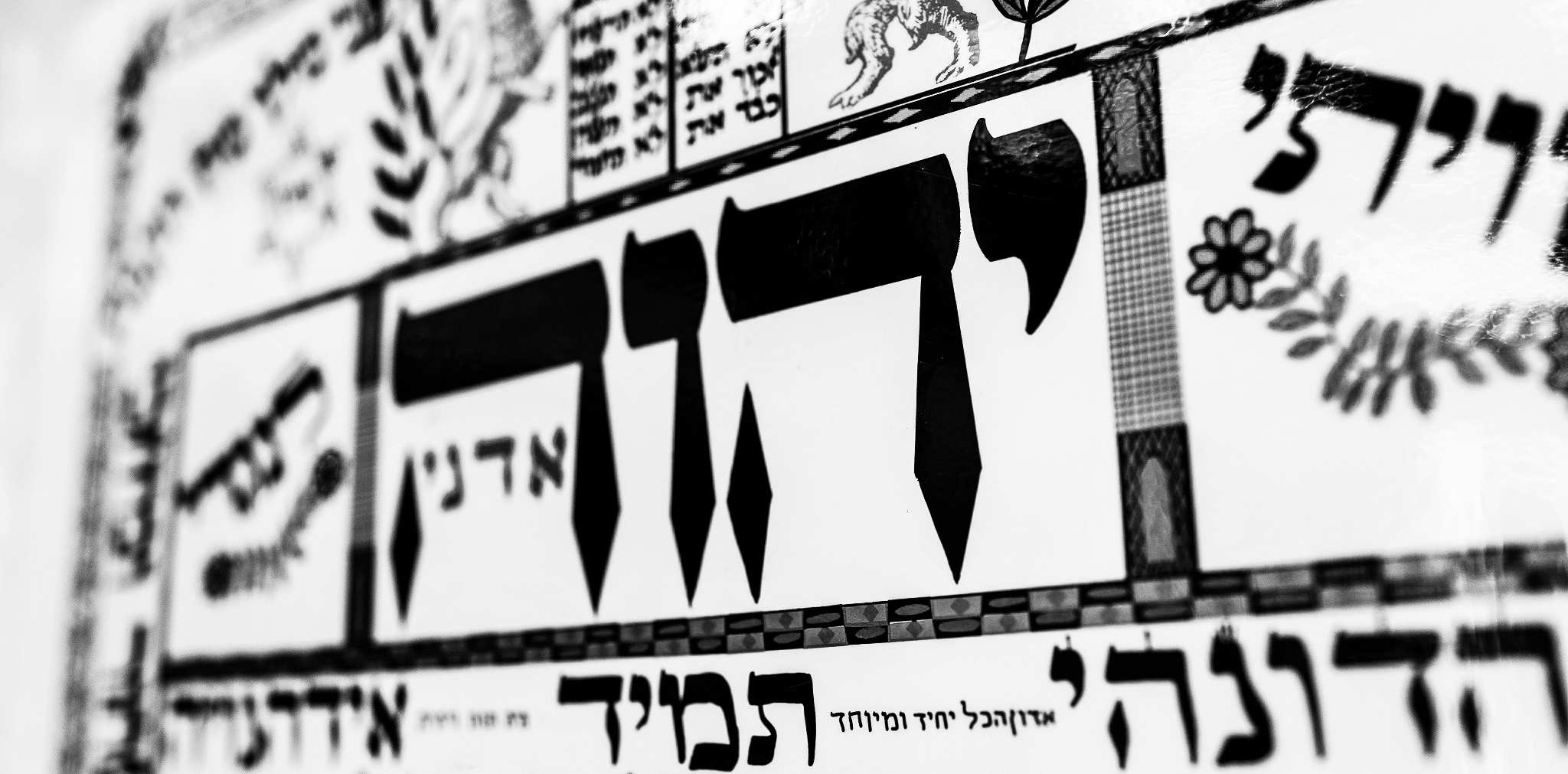
 The Hebrew word for “world” or “age” is olam (עוֹלָם), which is derived from a root verb (עָלַם) that means “to conceal” or “to hide.” God “hides” His face from us so that we will seek Him, and that means pressing through ambiguity of this world to discern and take hold of the truth. Therefore King David said, בַּקְּשׁוּ פָנָיו תָּמִיד/ bakeshu fanav tamid: “Seek His face continually” (Psalm 105:4). Note that the Hebrew gematria (numerical value) for the word “fanav” (i.e., “His face”) is the same as that for the word “olam.” When we truly seek God’s face (i.e., His Presence), that is, “do teshuvah,” we are able to discern the underlying purpose for our lives in this age… As it is written in our Scriptures: “Blessed is the one who endures temptation, for when he is tried, he shall receive the crown of life (עֲטֶרֶת הַחַיִּים) that the LORD has promised to those who love him” (James 1:12). The present age, then, constitutes a test that God providentially designs to lead us to the “crown of life,” and we are made happy when we go through its fires and are not consumed. Indeed, only those who love the Lord will be able to withstand the fires… The “crown of life” symbolizes that we have truly received the purpose for which we were created and that we are identified with God’s own passion and love. The light of the crown represents the Divine Presence within us, the Life that overcomes despair on our behalf.
 Sin is not the result of not knowing what is right, but rather of being unwilling to understand such, and therefore is the refusal to do what is right. It is not the result of ignorance but rebellion. Sin doesn’t say “I can’t” but rather “I won’t,” and therefore it is a matter of the will, the heart, the secret desires of the soul… Just as grace is inaccessible for someone who refuses to be honest with himself, so is forgiveness. If a person refuses to confess the truth about his condition, salvation itself is impossible, since God literally cannot save the soul that denies its need for Him. Therefore the Scripture does not vainly declare: “Whoever conceals his transgressions will not prosper, but the one who confesses and forsakes them will find mercy” (Prov. 28:13).
 “If I ascend to heaven, you are there; if I descend to the depths, behold, you are there too” (Psalm 139:8). The sages note the use of the adverbs “there” and “here” in this verse, saying that when a person feels like he has ascended to great heights, the LORD will be “there” (שָׁם), that is, distant from him, but when he is humble and low, the LORD will be “here” (הִנֵּה), that is, right at his side (Isa. 57:15). This is the “upside-down” way of beholding the Kingdom of Heaven. Can a camel go through the eye of a needle? No more than a ‘rich man’ can find life through his own ventures (Matt. 19:23-24). The only way to enter life is to disown your riches (i.e., your self-sufficiency) by becoming “impoverished in spirit.” This is the narrow way that leads to life (Matt. 7:14). You have to let go of the “baggage” of your worldly ego… Yeshua teaches that only by emptying ourselves can we be made full; only by mourning ourselves can we find comfort, and only by hungering and thirsting for God’s righteousness can we find inner satisfaction…
 People tend to believe what they want to believe until they are faced with reality, and therefore God orchestrates tests and challenges to awaken people from their illusions to make them confront their need for deliverance. Such afflictions are called yissurim shel ahavah, “troubles of love.” For example, regarding their affliction in Egypt, the Torah states that the people groaned because of their slavery and then cried out to heaven for help: “And God heard their groaning; he remembered his covenant … and God saw the people of Israel, and God knew” (Exod. 2:24-25). Note the pattern: The people cried out for help; God heard (וַיִּשְׁמַע); he remembered (וַיִּזְכּר), he saw (וַיַּרְא); and he knew (וַיֵּדַע)… God knows our profound need for Him. Affliction teaches us that wishful thinking is unable to sustain the weight of reality, and only God Himself can truly save us…

 The Scriptures declare that though the “outward self” (ὁ ἔξω ἡμῶν ἄνθρωπος) inevitably wastes away (διαφθείρω), the “inner self” (ὁ ἔσω ἡμῶν) is being renewed (ἀνακαινόω, i.e., “raised up in newness of life”) day by day (2 Cor. 4:16), which implies that we have nothing to fear regarding our perpetuity and acceptance as God’s beloved children. Therefore we do not “lose heart” (lit., act badly, from ἐκ, “out” + κακός, “badly”). Despite the shadows of this world, we take hold of the words of our Savior, who said: “I give you eternal life, and you will never be destroyed (ἀπόλλυμι), and no one will snatch you out of my hand” (John 10:28). And in another place he likewise said, “Everyone who lives and believes in me shall never die (οὐ μὴ ἀποθάνη)” (John 11:26).
 How we deal with trouble and suffering (i.e., tzuris) makes all the difference. We may be tempted to bitterness over our lives, but then what? To paraphrase Soren Kierkegaard, the way of life is how more than it is what. You may be powerless to control reality, but you are nevertheless responsible for how you respond to it. Check your attitude. Do you chose to live in lament over a healing that has not yet happened, or perhaps regard yourself as a hapless victim? Or will you attempt to justify your suffering as a means of personal atonement, accepting it passively as a “good child” or martyr? Does your suffering stretch your heart, or does it cause you to shrink back in fear or self-pity?
 Truth matters. I don’t mean “opinion” here, but real, objective, hard-core truth. Truth reveals reality. Aristotle defined it this way: “To say of what is that it is not, or of what is not that it is, is false, while to say of what is that it is, and of what is not that it is not, is true” (Metaphysics). Genuine knowledge (γνῶσις), as opposed to illusion, depends on truth, since knowledge constitutes justified true belief, whereas illusion (and opinion) does not. The Greek word for truth is aletheia (ἀλήθεια, from α[not] + λήθω [to hide]) which implies the revelation of being. The Hebrew word for truth is emet (אֱמֶת), which is related to the idea of fidelity or correspondence with reality (אָמַן).
 One of the great Hebrew names of God is El Elyon (אֵל עֶלְיוֹן), often translated as “God Most High.” The name first appears in the Torah regarding the mysterious figure of Malki-Tzedek (מַלְכִּי־צֶדֶק), the timeless king and priest of Zion who served “bread and wine” to our father Abraham – alluding to the sacraments later used to commemorate our redemption (Gen. 14:18). As the timeless king and priest of God, Malki-Tzedek is a “theophany,” or a revelation of the LORD our God Yeshua before He emptied Himself and made his descent to this world (Phil. 2:7; Heb. 7:3). Yeshua is our great King of Kings and High Priest of the New Covenant, a better covenant that restores the kingship and priesthood back to God Himself (Heb. 7:12).
 I’ve mentioned before that the Hebrew word “mitzvah” (מִצְוָה) is often translated as “commandment,” though its basic idea is about our connection to God (i.e., the root צוה means to “bind” or “unite”). Being connected with the Almighty means making time to get alone to talk with him, relating to him as your Heavenly Father, and trusting that he genuinely esteems you as his beloved child. Whatever else you may think about the commandments of God, this idea of a love connection is foundational and essential. The very first of the Ten Commandments is Anochi Adonai Elohekha (אָנכִי יְהוָה אֱלהֶ֑יךָ), “I am the Lord your God,” which invites you to open your heart to receive the touch of the Spirit of God. There is no love like that of the Lord, but you simply can’t feel that love if you don’t speak to Him, pouring out your heart and clinging to the truth of his love for you….

 Ambivalence has been defined as wanting two different and opposing things at the same time, and therefore is a state of inner conflict… For example, you may want to be kind and loving toward someone who has hurt you, but you may also harbor resentment or even want revenge; or you may want to abstain from a forbidden pleasure, yet you find yourself inwardly hungering for it anyway. When we feel pulled in two different directions or have mixed feelings, we are being called near to God to find help.
