The goal of the devil, the “prince of the power of the air,” has always been to enslave people in dark places of fear, anger, bitterness, and pain. His primary weapon is deception, that is, various lies by which he captivates people and makes them tools for his evil purposes. We are able to resist the power of the lie by submitting to the truth about Reality (James 4:7). God’s Name YHVH (יהוה) means “Presence” and “Love,” and there is no power in heaven or earth that can overrule His hand. Therefore even if the prophesied “End of Days” were to begin this very hour, our responsibility is to focus on the Divine Presence and to walk in His truth and love. As King David said, “I have set the LORD always before me; because He is at my right hand, I shall not be shaken” (Psalm 16:8).
…
Encourage yourself by remembering that there is a future of healing and deliverance coming to us, though we must abide in the shadow of its substance for a bit longer: “For behold, the Day is coming (הַיּוֹם בָּא), burning like an oven, when all the arrogant and all evildoers will be stubble. The Day that is coming shall set them ablaze, says the LORD of hosts, so that it will leave them neither root nor branch. But for you who fear my Name, the Sun of Righteousness (שֶׁמֶשׁ צְדָקָה) shall rise with healing in its wings. You shall go out skipping like calves released from the stall. And you shall tread down the wicked, for they will be ashes under the soles of your feet, on the day when I act, says the LORD of hosts” (Mal. 4:1-3).
This awesome passage from the Book of Malachi primarily applies to the Second Coming of Yeshua and the great “Day of the LORD” (יוֹם יהוה). The “Sun of Righteousness,” shemesh tzaddik (שֶׁמֶשׁ צְדָקָה), refers to Messiah son of David, the risen life-giving Healer of God. Of Him it is said, “The LORD God is a sun and a shield” (Psalm 84:11) and “the LORD shall be to thee an everlasting Light (אוֹר עוֹלָם), and thy God thy glory; thy sun shall no more go down, for the Lord shall be thine everlasting light” (Isa. 60:19-20). The Divine Light will shine on those who receive God’s righteousness, that is, on those who put their trust in the One who said, ‘I am the Light of the world’ (John 8:12). Amen, the righteous will forever testify: “For with you is the fountain of life; in your light do we see light” (Psalm 36:9).
It’s an old custom to read (or to sing) the Book of Psalms during the month of Elul. In the famous Song of Moses, it is written: וַיּאמְרוּ לֵאמר אָשִׁירָה לַיהוָה / “and they spoke, saying: ‘I will sing to the LORD’ (Exod. 15:1). This phrase can be formed into an acronym for Elul (אלול), and the sages therefore reasoned that hearing the Psalms were vital during the Season of Repentance and Days of Favor.
Of all the great Psalms, however, Psalm 27 is considered the central one of the season of teshuvah. The midrash on the Psalms states that the word ori (אוֹרִי), “my light,” refers to Rosh Hashanah (based on Psalm 37:6) whereas the word yishi (יִשְׁעִי), “my salvation” (lit. “my Jesus”) refers to the atonement given on Yom Kippur. King David also mentions that God would hide him in his sukkah (בְּסֻכּה) in the time of trouble, referring to the holiday of Sukkot (Psalm 27:5). Therefore since it alludes to all three of the fall holidays, Psalm 27 is regarded as the thematic Psalm for the High Holidays of the Jewish year.
Our Torah reading for this week (i.e., parashat Ki Teitzei) identifies 74 of the Torah’s 613 commandments (more than any other), which again invites the question of whether we are obligated to follow the law code of Moses or not… In this Shavuah Tov broadcast, I explore how we are to understand the law in light of the salvation given in Yeshua the Messiah. I hope you will find it both provocative and helpful.
In last week’s Torah reading (i.e., Shoftim), Moses defined an extensive system of justice for the Israelites and pointed to the coming Messiah who would be the rightful King of Israel: “The LORD your God will raise up for you a prophet like me from among you, from your brothers — it is to him you shall listen” (Deut. 18:15). In this week’s portion (i.e., parashat Ki Teitzei: כי־תצא), Moses returns to the immediate concern of life in the promised land by providing additional laws to be enforced regarding civil life in Israel. In fact, Jewish tradition (following Maimonides) identifies no less than 74 of the Torah’s 613 commandments in this portion (more than any other), covering a wide assortment of rules related to ethical warfare, family life, burial of the deceased, property laws, the humane treatment of animals, fair labor practices, and honest economic transactions.
Of particular interest to us is the law regarding capital offenses and the instruction that one who was executed and “hanged on a tree” (עַל־עֵץ) is under the curse of God (Deut. 21:22-23). According to the Talmud (Nezakim: Sanhedrin 6:4:3), the Great Sanhedrin (סַנְהֶדְרִין גְדוֹלָה) decided that “a man must be hanged with his face towards the spectators” upon a wooden stake, with his arms slung over a horizontal beam. It should be noted that while this is technically not the same thing as the gruesome practice of Roman crucifixion, the reasoning based on this verse was apparently used to justify the execution of Yeshua (Mark 15:9-15; John 19:5-7; 15). The exposed body was required to be buried before sundown to keep the land from being defiled. Besides the shame of this manner of death, the one so executed would be unable to fall to their knees as a final act of repentance before God, thereby implying that they were under the irrevocable curse of God (קִלְלַת אֱלהִים).
An essential and basic principle of Bible interpretation is succinctly stated in the axiom: “a text without a context is a pretext,” and therefore we must endeavor to understand the New Testament in light of the Torah, not the other way around… Without the context of Torah, the meaning and terms of the New Testament will be obscure and subject to misunderstanding. Indeed, we must remember that the Messiah was “embedded” in the Jewish culture of his day (Gal. 4:4-5), and was fluent in Torah reading and study (Luke 4:16-21; John 4:22). Moreover, Yeshua plainly said that the Jewish Scriptures testify of Him: “And beginning with Moses and all the Prophets, he interpreted to them in all the Scriptures the things concerning himself” (Luke 24:27; John 5:39). We study Torah to know Yeshua, the “Living Torah” better, as he said: “Therefore every scribe who has been trained for the kingdom of heaven is like a master of a house, who brings out of his treasure what is new and what is old” (Matt. 13:52).
Some people claim that Jesus spoke Aramaic, not Hebrew. Well, consider this. If the king of the Jews was required to “make a copy of sefer Torah,” then surely Yeshua, the great King of the Jews, the Mashiach, read Hebrew and understood kotzo shel yod (קוֹצוֹ שֶׁל יוֹד) – “every jot and tittle” of its meaning (see Matt. 5:17-19). Indeed, Yeshua knew the traditional Hebrew blessings, prayers, and hymns (Matt. 26:26-30); he chanted Hebrew in synagogue (Luke 4:16), and he reasoned with the sages in Jerusalem as a young boy (Luke 2:42-27). Surely the King of the Jews spoke lashon hakodesh, the holy language of Hebrew!
There is the great danger of squandering and dissipating our lives… Examine yourself; consider what really moves you. Be careful not to deceive yourself by “reasoning around the truth” (i.e., παρα + λογίζομαι), as James the Righteous puts it (James 1:22). Many people fool themselves by assuming they know or understand what is good, but they confine this ideal to a matter of opinion rather than experiencing it as a matter of the will…
According to philosopher Hannah Arendt, the lack of moral thought and reflection creates the “banality of evil,” that is, the unthinking acceptance of evil so that it is no longer regarded as outrageous or strange. People deaden their conscience by refusing to honestly engage questions such as: “What is goodness?” “Is evil real?” “Do we have an obligation to observe moral truth?” “What is the good life?” “How should we live?” “Do our actions really matter?” “Will God judge my life?” and so on. On the other hand, our culture has been so shocked by the ongoing practice of lawlessness and wickedness that people have lost their sense of shame. We are no longer shocked and outraged when we hear of the latest crimes or abuses of power in our postmodern world…. We must be careful, however, not to become evil by despising what is evil. For instance, we may feel so outraged and threatened by the evil actions of others that we deny their humanity, thereby becoming the very thing we hate.
The spiritual danger here is being “pulled apart” in opposite directions, dissipating the soul so that it will not be unified, focused and directed. Both loving and hating the good is a state of painful inner conflict, ambivalence, and self-contradiction. “Who can bring a clean thing out of an unclean? there is not one” (Job 14:4), yet this is our starting point: “I find it to be a law that when I want to do right, evil lies close at hand” (Rom. 7:21). We are often willing and unwilling, or neither willing nor unwilling, and this makes us inwardly divided, weak, fragmented, anxious, and “soulless.” An honest faith that “wills one thing” binds the soul into a unity, or an authentic “self.” As King David said, “One thing have I asked of the LORD, that will I seek after: that I may dwell in the house of the LORD all the days of my life, to gaze upon the beauty of the LORD and to inquire in his temple” (Psalm 27:4).
The way to be healed of a divided heart is to earnestly make a decision: “Draw near to God, and he will draw near to you” (James 4:8). There are no conditions given here — other than your raw need to connect with God for help. “Purify your hearts, you double-minded ones” (δίψυχοι, lit. “two-souled ones”); make up your mind and be unified within your heart: “How long will you go limping between two different opinions?” (1 Kings 18:21). You are invited to come; God has made the way; your place at the table has been set and prepared.
God responds to those who sincerely cry out to him (Psalm 145:18). He is “near to the brokenhearted and saves the crushed in spirit” (Psalm 34:18). Indeed, salvation is as close as your own mouth and heart (Rom. 10:8-13). But how many are the days of your life? How many opportunities for you to make up your mind? How long will you go “limping” between two opinions? Therefore choose this day whom you will serve. Make the first step; open your heart, and the LORD will then help you make the wholehearted decision to “seek the LORD while He may be found; call upon Him while He is near.” Amen.
Some people imagine spirituality as a climb upward, an “ascent of the soul” that aims to reach God through the performance of good deeds or religious rituals. But God does not say “at the end of the way you will find me,” but rather, “I AM the way, the very road under your feet, the Place (הַמָּקוֹם) where you are, the Bridge to the Father (John 14:6). “For all things come from You (כִּי־מִמְּךָ הַכּל), and from your hand we give to you” (1 Chron. 29:14). The LORD is Present in every “here” and every “now,” the Source of all we are. And no matter what our circumstances, we will find God if we search “bekhol levavkha” – with all our being, as it is written: “You will seek me and find me, when you seek me with all your heart.”
The principle of the self-life, the ego, religious observance, “doing the law,” etc., is a spiritual dead-end because we are without life, without power. The word is this: God gives strength to the weary, to the faint, to those who are without potency or power. But this means that we first must be emptied, broken, and stripped of our self-sufficiency before the strength of God is manifest in us: “My power is made perfect (τελειοῦται) in weakness” (2 Cor. 12:9). None of this flatters the ego. God’s way is first to break us, to make us weaker and weaker, so that he can then fill us with the miraculous divine nature. Like all sacrifices that were brought to the altar, we must pass through death to life by means of our union with the Messiah at the cross… It is only after the cross that it may be said, “It is no longer ‘I’ who lives; now it is Messiah who lives His life in me” (Gal. 2:20). There is indeed strength, power, and victory – but such comes after the cross, after we reckon carnal energy as useless. “Not by might, nor by power, but by My Spirit, says Adonai Tzeva’ot” (Zech. 4:6).
Repentance means that we believe that the kindness of God can give life to our dead hearts. Repentance is therefore first of all a matter of faith, of believing in the miracle of God. And though it is a great gift from heaven, repentance requires honesty and acknowledgment of the truth. We must confess our inner poverty, our neediness, and mourn over the loss and hurt caused by our sin (Matt. 5:3-5). Repentance turns away from our attempts to defend or justify ourselves and instead turns to God to heal our separation from Him (Rom. 8:3-4). This turning of the heart to God for healing and life is the essence of teshuvah wherein our old nature is buried and all things are made new (2 Cor. 5:17).
…
It is no small thing to believe the message of Yeshua, and indeed, it involves a passionate inwardness that scandalizes the rational mind. Our father Abraham is extolled as the model of righteous faith, but he was tested to sacrifice the moral law (e.g., “thou shalt not murder”) when he lifted up the knife to slay his beloved son Isaac. Faith requires you to change your everyday thinking, to go beyond natural expectations, to “walk on water.” In the case of Yeshua, we are confronted with the “Absolute Paradox,” namely, the God-Man, the Infinite-made-Finite, the Holy-made-Profane, the Sinless-made-Sin, who says to you: “I AM the resurrection and the life. Whoever believes in me, though he die, yet shall he live, and everyone who lives and believes in me shall never die. Do you believe this?” (John 11:25-26). You will never die; you will never hunger; you are made whole through my brokenness; you will be cleansed by my defilement, and so on. It’s not just hard to believe, it’s impossible, which is why it is a miracle of God to be saved (Matt. 19:26). “It is the Spirit that gives life; the flesh is no help at all” (John 6:33). The difference is Yeshua: Salvation is of the LORD. We are enabled to love and know God by means of his inner life and spirit, not by means of good intentions or religious zeal. Faith itself is a miracle, the power of God….
Philosopher Soren Kierkegaard once said that life must be lived forward, but it can only be understood backward, and consequently the present hour provides the only real opportunity you have to examine the present state of your soul… Therefore “repent one day before you die,” and that day is today, since no one knows the day or the hour of his death. The midrash notes that the word Elul(אֶלוּל), when read backward, spells lulei (לוּלֵא), meaning “if not” or “were it not for…”, which suggests that the last month of the Jewish year serves as a season to examine ourselves, to confess our sins, and to resolve to more completely turn toward the Divine Presence before the new year… Indeed the gematria (i.e., letter value) of the name Elul (1+30+6+30) is the same as the Hebrew word binah (בִּינָה), “understanding,” or the ability to discern between (בֵּין) truth and error. During this season of teshuvah, then, we ask the Lord to impart to us greater understanding about how to “live forward” by returning to him “bekhol levavkha,” with all our hearts…
…
For more information, see the Elul pages on the Hebrew for Christians website.
In our Torah portion for this week (Shoftim) we read: “You shall be wholehearted with the LORD your God” (Deut. 18:13). Note that the word “wholehearted” in this verse (i.e., tamim: תָּמִים) is often translated as “perfect” or “blameless” in many Bible versions, though it is better to understand the word to connote being made “complete” or “whole.” When God said to Abraham, “I am El Shaddai; walk before me and be tamim (Gen. 17:1), he was not saying “be perfect” or “don’t ever make a mistake,” but rather be fully engaged, that is, to walk before God passionately, sincerely, with all his heart, and by doing so to “walk out” the relationship with full assurance that he is accepted and beloved by God. Likewise when Yeshua said “Be therefore perfect as your Father who is in heaven is perfect” (Matt. 5:48), he meant that we should be complete, finished, and “made whole” by knowing and receiving the overflowing love and light of God.
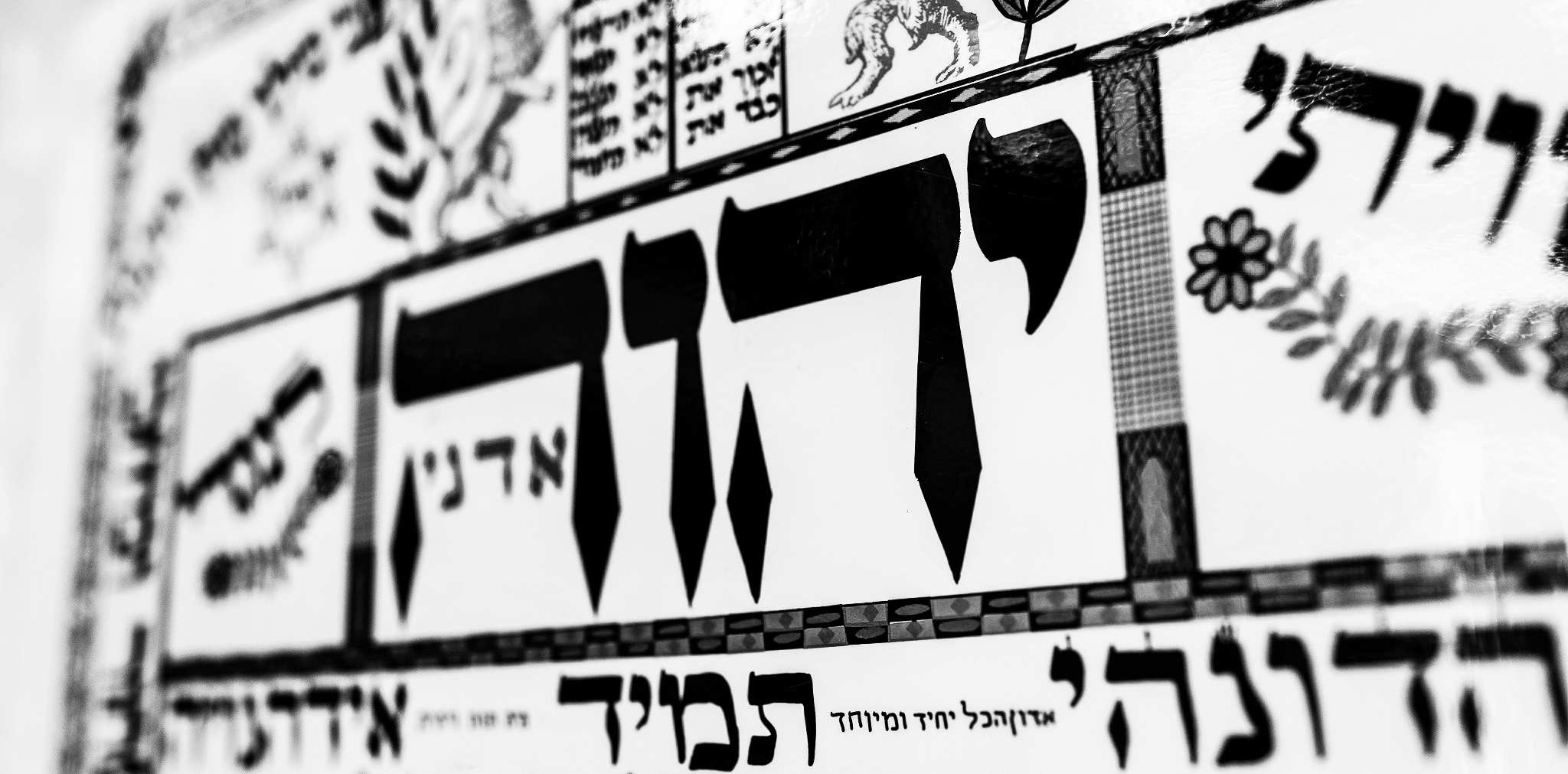
 The goal of the devil, the “prince of the power of the air,” has always been to enslave people in dark places of fear, anger, bitterness, and pain. His primary weapon is deception, that is, various lies by which he captivates people and makes them tools for his evil purposes. We are able to resist the power of the lie by submitting to the truth about Reality (James 4:7). God’s Name YHVH (יהוה) means “Presence” and “Love,” and there is no power in heaven or earth that can overrule His hand. Therefore even if the prophesied “End of Days” were to begin this very hour, our responsibility is to focus on the Divine Presence and to walk in His truth and love. As King David said, “I have set the LORD always before me; because He is at my right hand, I shall not be shaken” (Psalm 16:8).


 In last week’s Torah reading (i.e.,

 There is the great danger of squandering and dissipating our lives… Examine yourself; consider what really moves you. Be careful not to deceive yourself by “reasoning around the truth” (i.e., παρα + λογίζομαι), as James the Righteous puts it (James 1:22). Many people fool themselves by assuming they know or understand what is good, but they confine this ideal to a matter of opinion rather than experiencing it as a matter of the will…
 Some people imagine spirituality as a climb upward, an “ascent of the soul” that aims to reach God through the performance of good deeds or religious rituals. But God does not say “at the end of the way you will find me,” but rather, “I AM the way, the very road under your feet, the Place (הַמָּקוֹם) where you are, the Bridge to the Father (John 14:6). “For all things come from You (כִּי־מִמְּךָ הַכּל), and from your hand we give to you” (1 Chron. 29:14). The LORD is Present in every “here” and every “now,” the Source of all we are. And no matter what our circumstances, we will find God if we search “bekhol levavkha” – with all our being, as it is written: “You will seek me and find me, when you seek me with all your heart.”
 Repentance means that we believe that the kindness of God can give life to our dead hearts. Repentance is therefore first of all a matter of faith, of believing in the miracle of God. And though it is a great gift from heaven, repentance requires honesty and acknowledgment of the truth. We must confess our inner poverty, our neediness, and mourn over the loss and hurt caused by our sin (Matt. 5:3-5). Repentance turns away from our attempts to defend or justify ourselves and instead turns to God to heal our separation from Him (Rom. 8:3-4). This turning of the heart to God for healing and life is the essence of teshuvah wherein our old nature is buried and all things are made new (2 Cor. 5:17).
 Philosopher Soren Kierkegaard once said that life must be lived forward, but it can only be understood backward, and consequently the present hour provides the only real opportunity you have to examine the present state of your soul… Therefore “repent one day before you die,” and that day is today, since no one knows the day or the hour of his death. The midrash notes that the word
