 We are being educated for eternity, and the life of faith is a long lesson in obedience — learning to suffer God’s will, to accept whatever happens, and to endure in hope. Practically speaking this means “laying aside” your desires and surrendering yourself — all that is within you — in trust of God’s plan for your life, even (and especially) in the most harrowing of moments… Indeed, in light of suffering what we really need is perseverance, or what the New Testament calls hupomone (ὑπομονή), a word that means “remaining [μένω] under [ὑπο]” the Divine Presence while being tested (the word “suffer” comes from the Latin word sufferre, from sub- (under) + ferre, to carry, and therefore denotes “bearing under” difficulty). Laying aside our desires is a form of suffering that calls for patience and wisdom as we learn to endure our own frailty and to trust God for what is best…
For the child of God there are no “disappointments” in life, since God directs our steps and uses every circumstance for our ultimate good: “The steps of a good man are ordered by the LORD, though he fall, he shall not be utterly cast down…” (Psalm 37:3-4). To plead with God for some deliverance, to beseech him for the life of a beloved child or spouse; to cry out from the depths for mercy in the face of loss, as when beside a fresh grave – and to there affirm the threefold affirmation of kaddish: “The Lord gave, and the Lord has taken away; blessed be the name of the Lord” (Job 1:21) – is to learn the lesson of obedience – surrendering to God’s will, refusing to despair even in the midst of our sorrows….
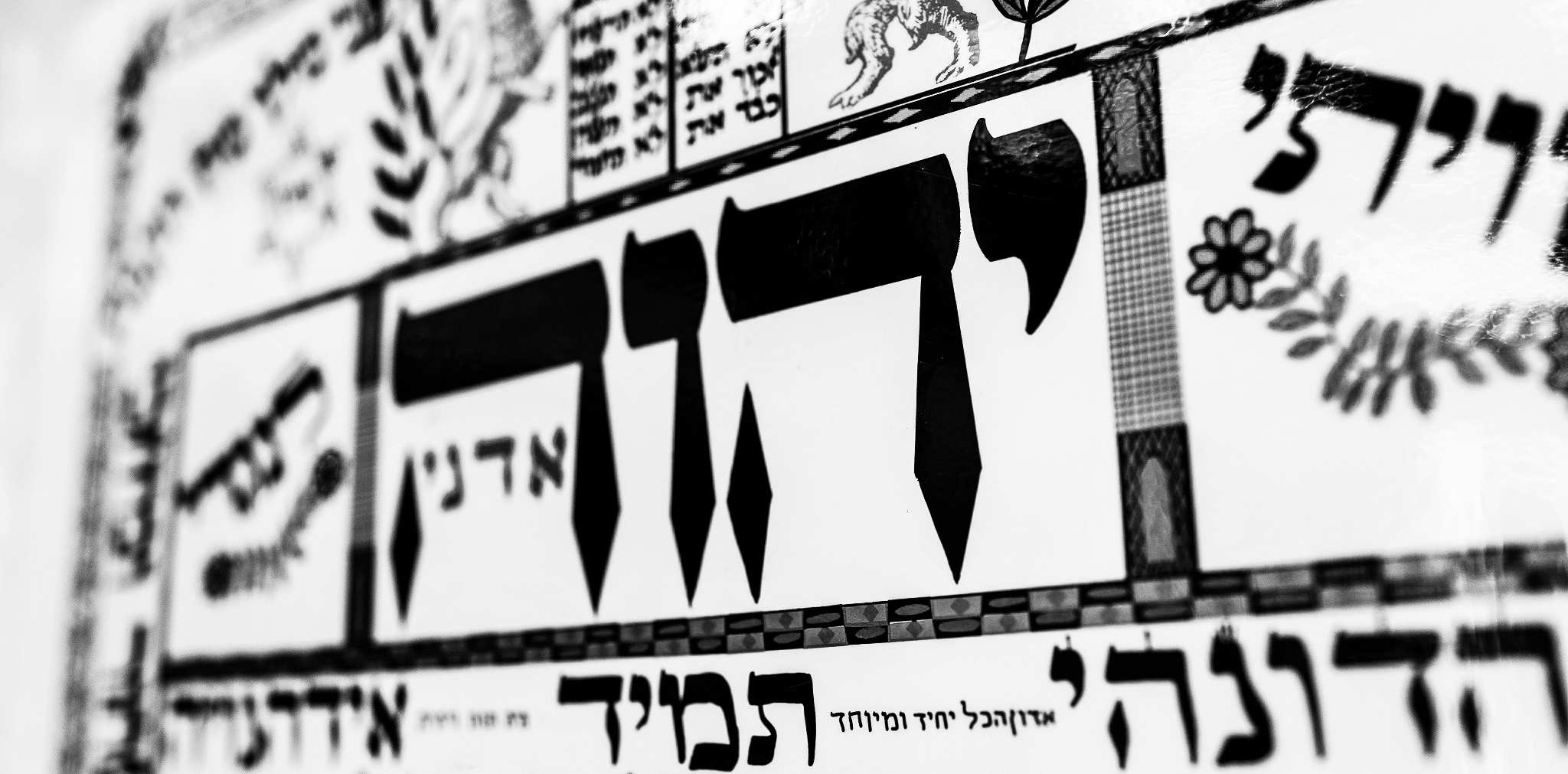
Hebrew Lesson:


 It is not “I obey, therefore I am accepted,” but rather, “I am accepted, and that is the obedience (ὑπακούω) of faith.” The opposite of sin is not virtue but faith, as Paul said: πᾶν δὲ ὃ οὐκ ἐκ πίστεως, ἁμαρτία ἐστίν, “whatever does not proceed from faith is sin” (Rom. 14:23). Putting it the other way around, trust is the means of attaining God’s righteousness and blessing (Eph. 2:8, Rom. 3:20-27). Paul calls this the “law of faith” (i.e., torat ha’emunah: תּוֹרַת הָאֱמוּנָה). Accepting that God is “for you” and “with you,” and trusting that you are accepted — despite your unacceptability — is the first and most fundamental step of faith, since this honors the love and blessing of God. It is not your wisdom or cleverness that enlightens your way in the truth, however, but the miracle of disclosure from heaven. It is all a gift: you need God to even see that you need God! Right thinking is indeed a path to God, but it is the givenness of truth that enables the seeker to seek; it is the reality of the Teacher (the Savior) that is all-important. By itself true belief does not conjure divine favor, and indeed it may hide the deeper truth that the heart exists in untruth despite the head’s “true” doctrine. Likewise, while goodness is indeed a path to God, true goodness is found in God’s righteousness that makes the way right for the trusting heart… Genuine obedience to the truth of God – inner connectedness rather than merely outer obedience – marks the divine mercy of transformation.
 Consider for a moment how your thinking defines your inner reality and the quality of your spiritual life. Thinking is inextricably linked to faith, and therefore we are responsible not only for what we believe, but for how we think (Acts 17:30-31). Sinful thinking creates “negative energy” that brings pain to yourself and others. Left unchallenged, such impaired cognitive function leads to slavery of the mind, hopeless addictions of thought, and distressing captivity. The first step to freedom is to confess our sin, acknowledging the reality of our own negativity – and bringing that truth to the light. Therefore teshuvah – turning to God – involves cheshbon hanefesh (חֶשְׁבּוֹן הַנֶּפֶשׁ), accounting for our soul and yielding it to the love of God for rectification: “If we confess our sins, he is faithful and just to forgive us our sins and to cleanse us from all unrighteousness” (1 John 1:9). For freedom we have been set free, and that means freedom from the power of the lie. If we are blind to our own sin, we cannot confess the truth to find healing (James 5:16).
 “Your heavenly Father knows what you need before you ask him” (Matt. 6:8). We sometimes pray for what we think we need but overlook what we really need. For instance, we may pray for health, material blessing, and opportunity, but what we really need is the ability to trust, the willingness to surrender our lives to God without qualification, and the grace to see the good in others and not their faults. These needs are just as real as our need for food and clothing, since apart from grace to extend empathy and love toward others, we will never be truly happy. Love “overlooks” a multitude of sins; it looks beyond the present moment to see with compassion, kindness, and empathy… What we really need, then, is to be after God’s own heart, to see other people as God sees them, and to overlook matters that offend or feed our sense of pride. This is what we truly need, and therefore we trust that the Lord our God mercifully “decodes” our apparent petitions to express what the Spirit of God groans and sighs on our behalf (Rom. 8:26).

 Did you know that one of the most frequently occurring commandments of Torah is to love the stranger? The commandment is repeated in various forms over 30 times in the Jewish Scriptures, for instance: “You shall love your neighbor as yourself: I am the LORD” (Lev. 19:18); “You shall treat the stranger who sojourns with you as the native among you, and you shall love him as yourself, for you were strangers in the land of Egypt: I am the LORD your God” (Lev. 19:34); “Love the stranger, therefore, for you were sojourners in the land of Egypt” (Deut. 10:19); “You shall not wrong a sojourner or oppress him, for you were sojourners in the land of Egypt” (Exod. 22:21); “When a stranger sojourns with you in your land, you shall not do him wrong” (Lev. 19:33); “Do not oppress the stranger” (Zech. 7:10); “Cursed be anyone who perverts the justice due the stranger” (Deut. 24:19); “The stranger shall be as the native born children of Israel among you” (Ezek. 47:22), “There shall be one law for the native and for the stranger who sojourns among you”(Exod. 12:49; Num. 15:16), and so on. Clearly the LORD does not want people to feel ostracized, excluded, or otherwise left out of His providential and loving plans… Indeed, the message of the universal love of God is at the heart of the gospel itself, hearkening back to God’s earliest promises to redeem humanity and restore paradise lost. “Religion,” tribalism, prejudice, ethnic pride, and so on, are anathema to the Kingdom of God.
 The receiving of the Torah (מתן תורה) must take place each and every day, as it says, “Trust in the LORD ‘bekhol libekha’ (בְּכָל־לִבֶּךָ) – with all your heart; and know Him ‘bekol derakhekha’ (בְּכָל־דְּרָכֶיךָ), in all your ways” (Prov. 3:5-6). The giving of the Torah is described as a “loud and never-ending voice” (Deut. 5:22), though it is our constant responsibility to shema – to receive the invitation of God’s heart.
 We read in our Scriptures: “You shall keep my decrees and my judgments, the pursuit of which man shall live: I am the LORD” (Lev. 18:5). The Kotzker Rebbe advised reading this verse as “You shall keep my decrees and judgments to bring life into them,” meaning that we should bring all our heart, soul, and strength into the teaching of Torah. The commandments nourish the soul as food does the body. Just as we seek to season our food to make it flavorful, so we seek to observe the truth with conviction and joy. “May the beauty of the LORD our God be upon us: and establish the work of our hands upon us; yea, establish the work of our hands” (Psalm 90:17).
 In the Sermon on the Mount Yeshua warned that our righteousness should exceed that of the religious leaders of his day (Matt. 5:20), and he went on to say: “be perfect, as your heavenly Father is perfect” (Matt. 5:48). Here we note that the Greek word translated “perfect” (τέλειος) may mean “mature” or “fully developed” more than morally flawless, though regarding moral and spiritual practice this distinction is not clear cut, especially if by “mature” we mean godly in character, as the context of Yeshua’s statement clearly implies (see Matt. 5:1-48). The Hebrew word translated as “perfect” (תָּמִים) can also mean “complete,” but it can connote being “wholehearted,” “sound,” or even healed (שָׁלֵם). So the question arises, does the word “perfect” mean “flawless” or “healed” — or perhaps both?