The fifth section of the book of Exodus (Exod. 18:1-20:23) begins with the account of how Moses’ father-in-law “Jethro” (Yitro in Hebrew) met up with Moses near Mount Sinai, giving him advice and direction about how to establish a judicial system for the Israelites, and then goes on to provide the account of the revelation of the Ten Commandments by God at Mount Sinai. This event, called mattan Torah, or the giving of the Torah, is central to the entire account of our redemption as the children of God, since it provides revelation not only about our basic spiritual and moral obligations, but also provides the vision of the altar of the lamb of God that was to be offered every day both in remembrance of the Passover redemption and also to foretell the coming our Yeshua our Messiah, the sacrificial “Lamb of God” who takes away the sins of the world.
In this audio podcast, I discuss the basic narrative of parashat Yitro and explore some of the more prominent themes regarding the giving of the Torah at Sinai, the meaning of the imperative language and the idea of a commandment, the importance of a heart connection with God, and more.
Last week’s Torah portion (i.e., parashat Bo) described how the Israelites were finally delivered from their cruel bondage in Egypt after God issued the decisive plague during the time of Passover. In this week’s portion (i.e., parashat Beshalach), the Israelites began their journey home, after 430 years of exile. Instead of leading them along a direct route to the Promised Land, however, the LORD directed them south, toward the desert, where the Glory of God appeared as a Pillar of Cloud by day and as a Pillar of Fire by night to lead them on their way. When Pharaoh heard that the Israelites were at the border of the desert, however, he perversely decided to pursue them and bring them back to Egypt. God then redirected the people to camp near the edge of the Sea of Reeds, where the Egyptian army finally caught up with them. Dramatically, the Israelites were caught between the sea on one side, and Pharaoh’s army on the other…
Our Torah reading for this week, called parashat Bo, begins with God commanding Moses “to go” (i.e., bo: בּא) before the Pharaoh to announce further apocalyptic judgments upon Egypt. The purpose of this power encounter was to vindicate God’s justice and redemptive love for his people, that is, his deliverance or salvation, by overthrowing the tyranny of unjust human oppression. Pharaoh’s nightmare of “one little lamb” outweighing all the firstborn of Egypt was about to be fulfilled….
In our Torah for this week (i.e., parashat Va’era), the LORD told Moses that He was about to fulfill His promise to Abraham, Isaac, and Jacob by giving the Israelites the land of Canaan, and that he had heard the “groaning of the people of Israel whom the Egyptians held as slaves” (Exod. 6:5). The LORD (יהוה) was now coming down to earth to fight and save his people! Israel would now know that He alone is their Savior and God. The “showdown” between the LORD (יהוה) and the so-called “gods” of Egypt was imminent, and God therefore encouraged the people with precious promises: “I AM the LORD (אֲנִי יְהוָה) and I will bring you out from under the burdens of the Egyptians, and I will deliver you from their bondage, and I will redeem you with an outstretched arm and with great judgment; and I will take you to me for a people and I will be to you a God” (these are the “four expressions of redemption” we recite during the Passover Seder every year).
Despite these wonderful promises, however, the people were unable to listen because of their “shortness of breath” (מִקּצֶר רוּחַ) on account of their harsh slavery. The LORD then told Moses: “Go in, tell Pharaoh king of Egypt to let the people of Israel go out of his land,” and the great showdown between the LORD and the gods of Egypt began. However, even after repeatedly witnessing the series of miraculous plagues issued in the Name of the LORD, the despot remained proud and unmoved, thereby setting the stage for the final devastating plagues upon the land of Egypt and the great Passover redemption of Israel.
The Book of Exodus (סֵפֶר שְׁמוֹת) begins directly where the book of Genesis left off, by listing the “names” (shemot) of the descendants of Jacob who came down to Egypt to dwell in the land of Goshen. Over time Jacob’s family flourished and multiplied so greatly that the new king of Egypt – who did not “remember” Joseph – regarded the Israelites as a political threat and decided to enslave them.
The king’s oppression did not curb their growth, however, and he therefore commanded the Hebrew midwives to kill all newborn Jewish boys. When the midwives refused to obey, however, the Pharaoh made a formal decree that all newborn boys were to be forcibly drowned in the Nile river.
In this audio summary, I discuss the first portion of the Book of Exodus, parashat Shemot, as well as the significance of the secular New Year and our approach to understanding the holidays in general.
Our Torah reading for this week, parashat Vayechi (ויחי), recounts how the great patriarch Jacob adopted Joseph’s two sons (Ephraim and Manasseh) as his own children. When Jacob blessed the boys, however, he intentionally reversed the birth order by putting the younger before the older, signifying that the old struggle he had faced as a child was over, and he now understood things differently. And note Ephraim and Manasseh’s reaction: the older did not envy the younger, nor did the younger boast over the older. The family had apparently learned that blessing from God is for the good of all, and that there is no real blessing apart from genuine humility that esteems the welfare of others.
Following this, Jacob was ready to summon his family to hear his final words. Among other things, he foretold how the Messiah would come from the line of Judah and then instructed his sons to bury him only in the promised land, and not in Egypt (Gen. 49:10-12; 49:29-32).
After his death, Joseph and his brothers, with various dignitaries of Egypt, formed a funeral procession and returned to Canaan to bury Jacob in the Cave of Machpelah in Hebron. After the funeral, they returned to Egypt, but Joseph’s brothers feared that he would now repay them for their former betrayal and threw themselves on his mercy. Joseph reassured them that they had no reason to fear him and reminded them that God had overruled their earlier intent by intending him to be a blessing to the whole world (Gen. 50:20).
The portion ends with the account of the death of Joseph, who made the sons of Israel promise to take his bones with them when the LORD would bring them back to the land of Canaan (alluding to the great Exodus to come). Joseph’s faith in the Jewish people’s return to the Promised Land is summarized by his statement: “God will surely remember you” (Gen. 50:24). He died at age 110, was embalmed and placed in a coffin in Egypt, full of faith that he would be raised from the dead in the land promised to Abraham, Isaac, and Jacob.
In our Torah portion for this week, parashat Vayigash, Benjamin stood before Joseph accused of the theft of a chalice, while Judah “drew near” (vayigash) and vicariously offered to bear the penalty for his brother, pleading with Joseph to spare his father the loss of yet another son. Joseph was so moved by Judah’s act of mesirat nefesh (self-sacrifice) that he decided the time had finally come for him to reveal his identity to his brothers. After clearing the room, he began speaking in Hebrew and said, אֲנִי יוֹסֵף הַעוֹד אָבִי חָי, “I am Joseph, is my father still alive?” When the brothers drew back in shock and dismay, Joseph said, “Draw near to me, please” (from the same verb nagash) and then explained how God providentially brought him to Egypt to save the family’s life….
The revelation of Joseph and his reconciliation with his brothers is a prophetic picture of the acharit hayamim (end of days) when the Jewish people will come to understand that Yeshua is indeed the One seated at the right hand of the majesty on high as Israel’s Deliverer. At that time Yeshua will speak comforting words to His long lost brothers and restore their place of blessing upon the earth. Indeed, the entire story of Joseph is rich in prophetic insight regarding our Lord and Savior. Vayigash (וַיִּגַּשׁ) means “and he drew near,” referring first to Judah’s intercession for the sins of his brothers, and then to Joseph’s reciprocal desire for the brothers to draw near to him (Gen. 44:18, 45:4). Joseph initiated the reconciliation by saying, גְּשׁוּ־נָא אֵלַי / g’shu na elai – “Please draw near to me,” and indeed there is a play on the verb nagash (נָגַשׁ), “draw near,” throughout this story.
Yeshua is depicted both in Judah’s intercession (as the greater Son of Judah who interceded on behalf of the sins of Israel) and in Joseph’s role as the exalted Savior of the Jewish people in time of tribulation. When Joseph disclosed himself and asked, “Is my father alive,” we hear Yeshua evoking the confession of faith from the Jewish people: “I am Yeshua: do you now understand that My Father is alive?” Upon His coming revelation, all Israel will confess that indeed God the Father is “alive” and has vindicated the glory of His Son.
In our Torah portion for Chanukah week, parashat Miketz (i.e., Gen. 41:1-44:17) we will read how imprisoned Joseph successfully interpreted Pharaoh’s dreams and suddenly rose to power in Egypt. Because of a famine in the land of Canaan, however, his brothers (who had earlier betrayed him) came to Egypt in search of food. A disguised Joseph then tested his brothers to see whether they were the same people who had callously sold him into slavery, or whether they had undergone teshuvah (repentance).
The eventual revelation of Joseph and his reconciliation with his brothers is a prophetic picture of acharit ha-yamim (the “End of Days”) when Israel, in Great Tribulation, will come to accept Yeshua as Israel’s true deliverer. Presently, the veil is still over the eyes of the Jewish people and they collectively regard Yeshua as an “Egyptian” of sorts. In this connection, I list some of the ways that Joseph is a “type” or foreshadowing of the coming Yeshua as the Suffering Servant (see “Mashiach ben Yosef”).
At Sinai we heard the voice of God (קוֹל אֱלהִים) speaking from the midst of the Fire (Deut. 4:33), an event that foreshadowed the great advent of the King and Lawgiver Himself, when the Eternal Word (דְבַר־יְהוָה) became flesh and dwelt with us (Phil. 2:6-7; John 1:1,14). Any theology that regards God as entirely transcendent (i.e., God is beyond any analogy with the finite) will have a problem with divine immanence (i.e., God is inherent and involved within the finite), since the highness, holiness, and perfection of God will make Him seem distant, outside of us, far away, and unknown…
Incarnational theology, on the other hand, manifests the magnificent humility and nearness of God to disclose the divine empathy. Indeed, the LORD became Immanuel (עִמָּנוּ אֵל), “God with us,” to share our mortal condition, to know our pain, and to experience what it means to be wounded by sin, to be abandoned, alienated, forsaken.
Last week’s Torah (i.e., Vayishlach) recounted how Jacob had wrestled with a mysterious Angel before returning to the Promised Land to be reconciled with his brother Esau. No longer named Ya’akov (“heel holder” [of Esau]), but Yisrael (“prince of God”), a transformed Jacob finally returned to Hebron to see his father Isaac, nearly 34 years after he had left home. However, on the way back home his beloved wife Rachel died while giving birth to his twelfth son Benjamin.
This week’s portion (i.e., parashat Vayeshev) begins with Jacob living back in the land that God had promised to give to Abraham and Isaac with his 12 sons, but the narrative quickly turns to Jacob’s “favorite” son Joseph, who was seventeen years old at the time. The Torah states that Jacob loved Joseph more than all his other sons since he was “the son of his old age” (בֶּן־זְקֻנִים) and he was the firstborn son of his beloved wife Rachel. Indeed, Jacob made him an ornamented tunic to indicate his special status in the family.
As the favored son, Joseph’s job was expected to oversee the activities of Jacob’s other sons (i.e., Dan, Naphtali, Gad, and Asher) and to bring “reports” about their activities back to Jacob. However, this role as the overseer and “favored son” was too much for the other brothers, and they became jealous of him and hated him.
To make matters worse, Joseph related two prophetic dreams (חֲלֹמוֹת נְבוּאִים) to his brothers that foretold that he was destined to rule over them, increasing their envy and hatred of him (the implication of the dreams was that all of Jacob’s family would become subservient to him). Jacob rebuked Joseph for arousing his brothers’ hatred, but he inwardly took note and waited for the fulfillment of the dreams.
The portion then records that one day the brothers went out to pasture their herds but when they saw their brother Joseph coming to check on them, they conspired to kill him, though later they reconsidered and decided to sell him to some slave traders instead. After Joseph was taken away, the brothers sought to deceive Jacob by staging his son’s death – dipping his special tunic into goat’s blood and telling him that he had been maimed and killed by a wild animal…
Meanwhile Joseph was taken into the land of Egypt and sold as a slave to a man named Potiphar (פּוֹטִיפַר) who was a captain of Pharaoh’s guard. The LORD was with Joseph” (יְהִי יְהוָה אֶת־יוֹסֵף) however, and blessed everything he did. In fact, he was soon promoted to be the head of Potiphar’s entire household affairs.
Unfortunately Joseph caught the eye of Potiphar’s wife (“Zuleika”), who then began enticing him to have an affair with her. Though he steadfastly refused her advances, she became indignant over her rejection and falsely accused him of attempted rape. Potiphar was understandably outraged (at his wife?) and threw Joseph into the royal prison, but again God showed him favor there and soon was appointed to a position of authority within the prison administration.
The reading ends with two prophetic episodes in Joseph’s life that eventually would bring him to the attention of the Pharaoh himself. While in prison, Joseph met Pharaoh’s wine steward and chief baker, both of whom were incarcerated for offending the king (according to Rashi, a fly was found in the goblet prepared by the butler, and a pebble was found in the baker’s confection). Both men had disturbing dreams which Joseph correctly interpreted: in three days, he told them, the wine steward would be released but the baker would be hanged. Joseph then asked the wine steward to advocate for his release with Pharaoh. Joseph’s predictions were fulfilled, but the wine steward forgot all about Joseph…
Note that this Torah reading is prophetic regarding Yeshua the Messiah. Joseph’s jealous brothers stripped him of his “coat of many colors” and threw him into a pit — a providential event that eventually led to the deliverance of the Jewish people by the hand of a “disguised savior.” Indeed, the life of Israel’s chosen son Joseph foreshadowed the two advents of Yeshua our Messiah: the first as the LORD’s Suffering Servant (עֶבֶד יַהְוֶה), and second as the Great Deliverer (הַגּוֹאֵל הַגָּדוֹל) of the Jewish people during tribulation…
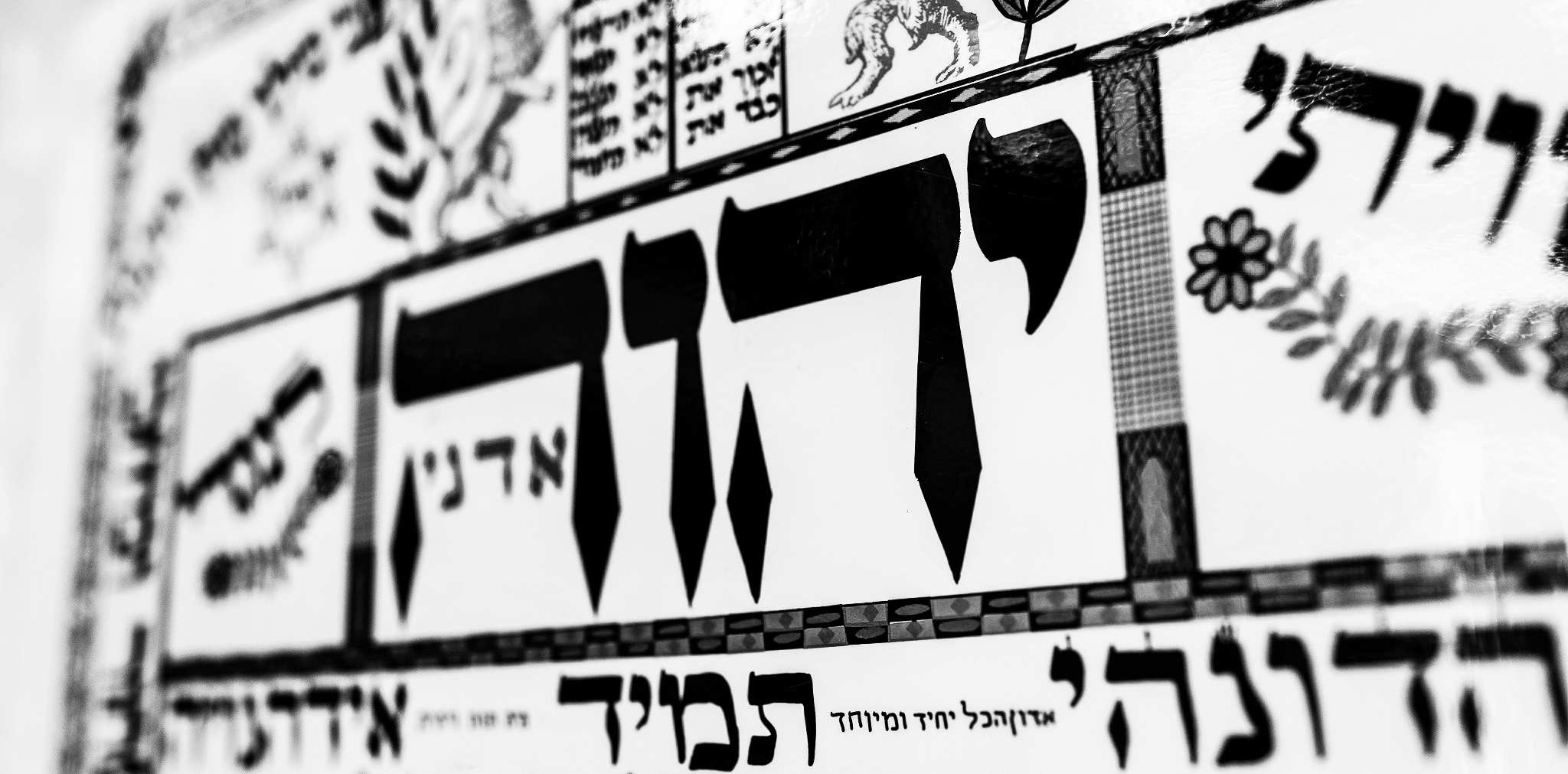
 The fifth section of the book of Exodus (Exod. 18:1-20:23) begins with the account of how Moses’ father-in-law “Jethro” (Yitro in Hebrew) met up with Moses near Mount Sinai, giving him advice and direction about how to establish a judicial system for the Israelites, and then goes on to provide the account of the revelation of the Ten Commandments by God at Mount Sinai. This event, called mattan Torah, or the giving of the Torah, is central to the entire account of our redemption as the children of God, since it provides revelation not only about our basic spiritual and moral obligations, but also provides the vision of the altar of the lamb of God that was to be offered every day both in remembrance of the Passover redemption and also to foretell the coming our Yeshua our Messiah, the sacrificial “Lamb of God” who takes away the sins of the world.

 Last week’s Torah portion (i.e.,

 Our Torah reading for this week, called
 In our Torah for this week (i.e.,


 The
The 

 Our Torah reading for this week,
 In our Torah portion for this week,
 In our Torah portion for


 Last week’s Torah (i.e.,