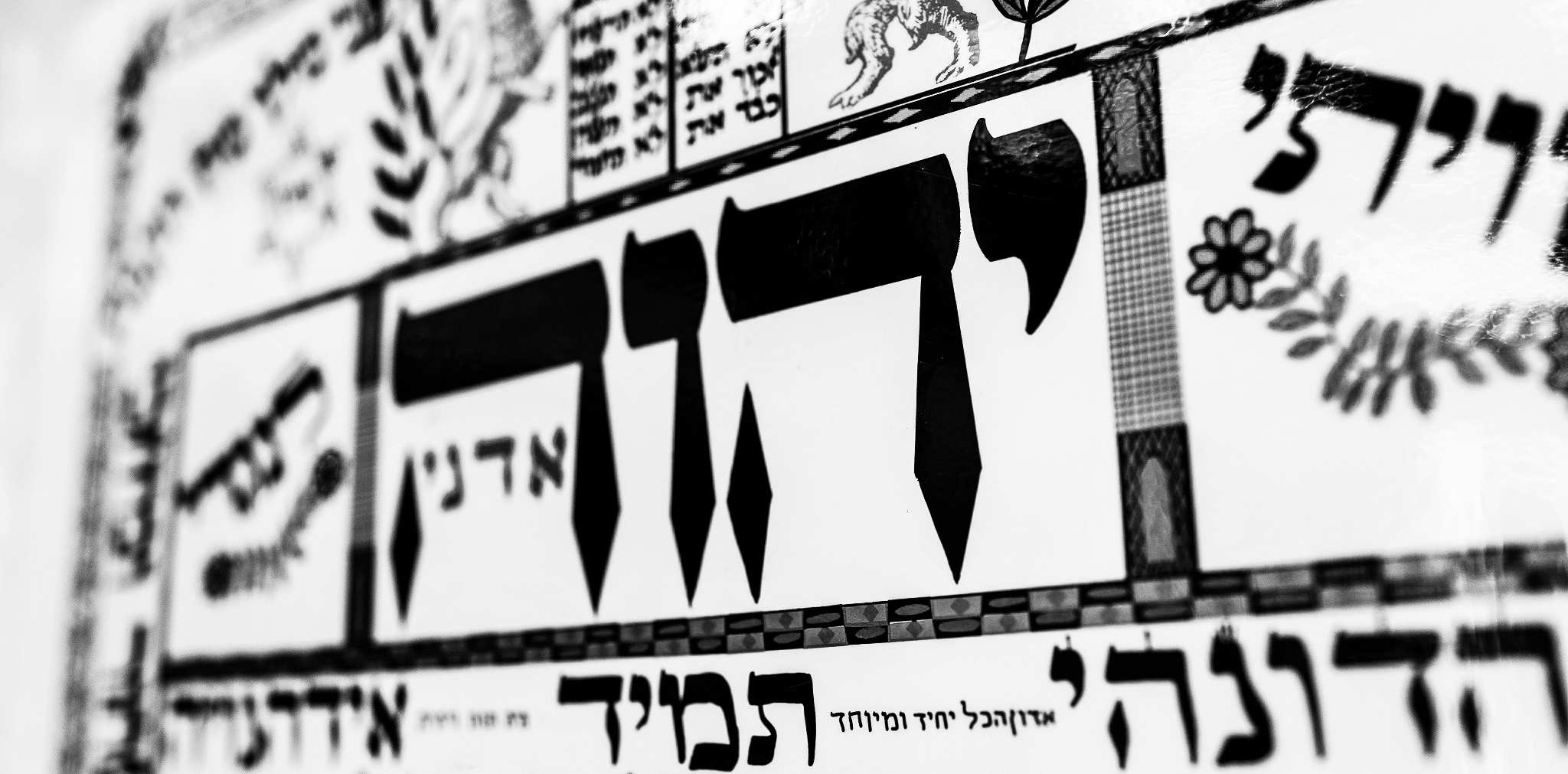
 From our Torah portion for this week (Ki Tavo) we read: “And all these blessings shall come upon you and overtake you, if you hear (shema) the Voice of the LORD your God” (Deut. 28:2). The language here is unusual, as if these blessings would seize you like an army takes an enemy stronghold. The sages comment that God’s blessings can “overtake” you in a way that may hide their true purpose for your good (Rom. 8:28). At such times we do not understand they are a concealed mercy (רַחֲמִים נִסְתָר) designed for our benefit. Therefore king David affirmed his confidence despite being surrounded by trouble. Where it is written, “Surely goodness and mercy shall follow me all the days of my life” (Psalm 23:6), the verb translated “shall follow me” (i.e., יִרְדְּפוּנִי) comes from a root word that means “to pursue,” as a hunter chases after his prey. David was sure that God’s lovingkindness would “hound” him as he made his way through this world – even in the dark places, even in “the valley of the shadow of death” (בְּגֵיא צַלְמָוֶת) – where God’s rod and staff would there comfort him and shepherd his way (Psalm 23:4). Therefore we we pray: “May your love, O LORD, be upon us, as we hope in You.”

…
Whatever the heart seeks, it will find. We are constantly “asking, seeking, and knocking” (Matt. 7:7), even if we are often unaware of our heart’s search. The one who pursues righteousness will find it, just as evil will come to the one who searches after it (Prov. 11:27). As it is written, “Those who worship worthless idols forsake the love (i.e., chesed: חֶסֶד) that could be theirs” (Jonah 2:8). David understood that as he pursued God, God’s love would pursue him; as we seek, so we are sought by God; as we draw near to God, so He will draw near to us (James 4:8).
The prophet Hosea likewise cried out: “Let us know; let us press on to know (i.e., נִרְדְּפָה, “pursue after”) the LORD; His going out is sure as the dawn; He will come to us as the showers, as the spring rains that water the earth” (Hos. 6:3). May God help us pursue him be’khol levavkha – with all our heart – because He has promised, “You will seek me and find me, when you seek me with all your heart” (Jer. 29:13). And may the love of the LORD indeed be upon us, even as we put our hope in Him. Amen.
 Perhaps you (like me) once learned Psalm 19:7 as, “The law of the LORD is perfect, converting the soul.” However, the Hebrew text might better be translated as, “The instruction (i.e., Torah) of the LORD is perfect, returning the soul.” This is the message of teshuvah (תְּשׁוּבָה), or “repentance,” of course. We turn away from ourselves to discover that only the love of God given in Yeshua gives life to our dead hearts (Mark 1:15). Teshuvah is therefore first of all a matter of faith, of trusting in the miracle of God. And though it is indeed a great gift from heaven, it requires that we pass through the “narrow gate” of humility by confessing the truth about who we are (Matt. 7:13). We turn away from our pride; we acknowledge our inner poverty, our neediness, and we mourn over the loss and hurt caused by our sin. Teshuvah turns us away from our attempts to defend or justify ourselves and instead turns to God to heal our separation from love (Rom. 8:3-4). The miracle of love buries our old nature and transforms us into a new creation (2 Cor. 5:17).
 When asked how many commandments are in the Torah, most Jews will answer 613, based on Jewish tradition (the number 613 is sometimes called “taryag” (תריג), an abbreviation for the letters Tav (400) + Resh (200) + Yod (10) + Gimmel (3) = 613). Despite several attempts made over the centuries, however, there has never been a definitive list of these commandments, and of those who tried to compile such, no two agree… Some say the number 613 comes from a fanciful midrash that teaches that since there are 365 days in a year (corresponding to the 365 negative commandments) and 248 “parts” of the body (corresponding to the positive commandments), each day we should use our body to serve God. Regardless of the exact count, however, the Talmud followed the Apostle Paul by understanding all the Torah’s commandments to be derived from the Ten Commandments given at Sinai, the most basic of which is the very First Commandment, namely, “I AM the LORD your God (אָנכִי יְהוָה אֱלהֶיךָ) who brought you out of Egypt, out of the house of slavery” (Exod. 20:2). This foundational commandment was later restated by the prophet Habbakuk as: וְצַדִּיק בֶּאֱמוּנָתוֹ יִחְיֶה / “The righteous person will live by faith in God” (Hab. 2:4; Gal. 3:11; Heb. 10:38). Indeed, Yeshua taught us the law of faith in God’s love, which preempts, overrules, and informs all the others…
 One of the great Hebrew names of God is El Elyon (אֵל עֶלְיוֹן), often translated as “God Most High.” The name first appears in the Torah regarding the mysterious figure of Malki-Tzedek (מַלְכִּי־צֶדֶק), the timeless king and priest of Zion who served “bread and wine” to our father Abraham – alluding to the sacraments later used to commemorate our redemption (Gen. 14:18). As the timeless king and priest of God, Malki-Tzedek is a “theophany,” or a revelation of the LORD our God Yeshua before He emptied Himself and made his descent to this world (Phil. 2:7; Heb. 7:3). Yeshua is our great King of Kings and High Priest of the New Covenant, a better covenant that restores the kingship and priesthood back to God Himself (Heb. 7:12).
 The goal of the devil, the “prince of the power of the air,” has always been to enslave people in dark places of fear, anger, bitterness, and pain. His primary weapon is deception, that is, various lies by which he captivates people and makes them tools for his evil purposes. We are able to resist the power of the lie by submitting to the truth about Reality (James 4:7). God’s Name YHVH (יהוה) means “Presence” and “Love,” and there is no power in heaven or earth that can overrule His hand. Therefore even if the prophesied “End of Days” were to begin this very hour, our responsibility is to focus on the Divine Presence and to walk in His truth and love. As King David said, “I have set the LORD always before me; because He is at my right hand, I shall not be shaken” (Psalm 16:8).


 In last week’s Torah reading (i.e.,

 Some people imagine spirituality as a climb upward, an “ascent of the soul” that aims to reach God through the performance of good deeds or religious rituals. But God does not say “at the end of the way you will find me,” but rather, “I AM the way, the very road under your feet, the Place (הַמָּקוֹם) where you are, the Bridge to the Father (John 14:6). “For all things come from You (כִּי־מִמְּךָ הַכּל), and from your hand we give to you” (1 Chron. 29:14). The LORD is Present in every “here” and every “now,” the Source of all we are. And no matter what our circumstances, we will find God if we search “bekhol levavkha” – with all our being, as it is written: “You will seek me and find me, when you seek me with all your heart.”