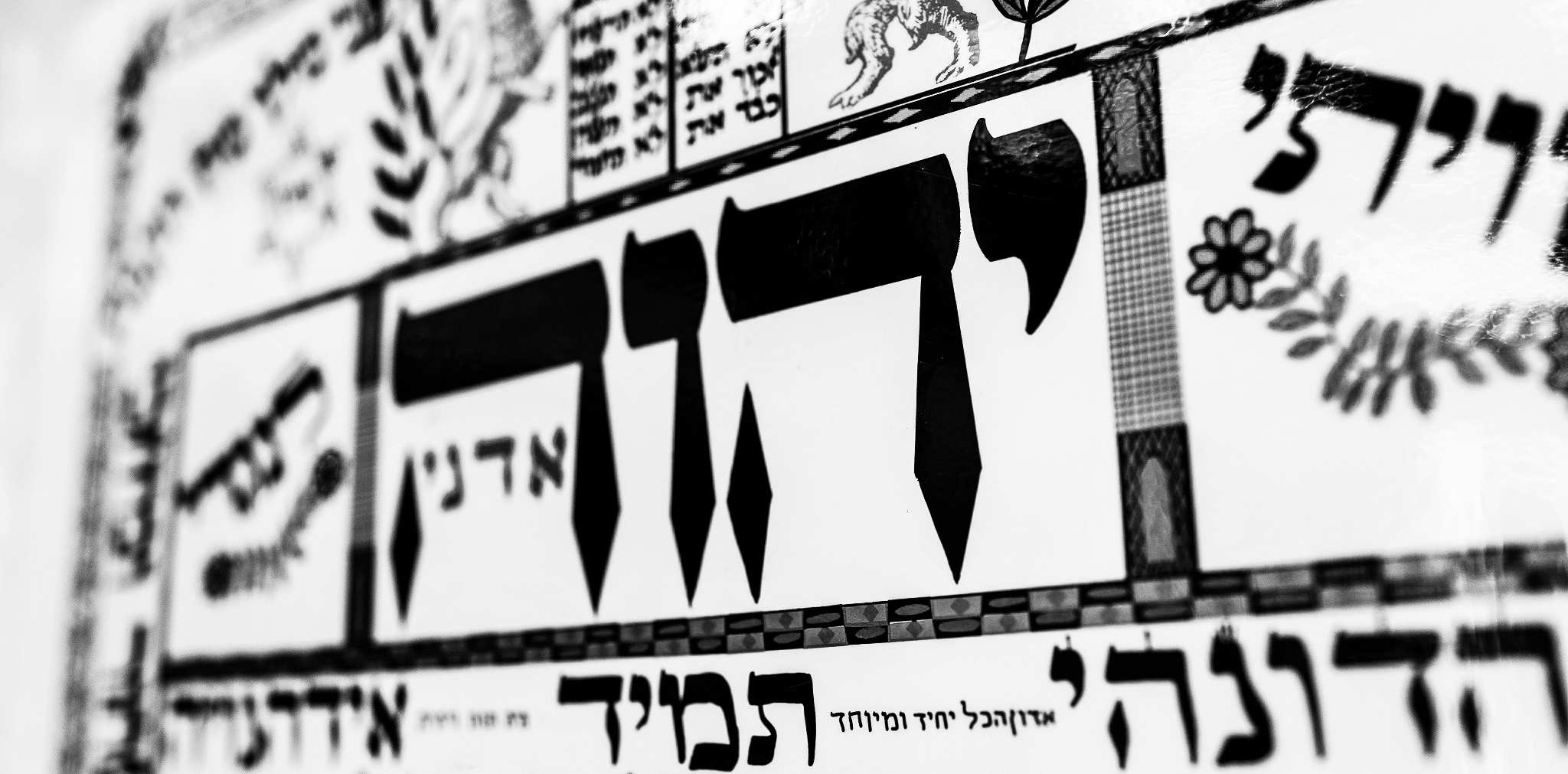
 The Book of Ecclesiastes (i.e., megillat Kohelet) is read during the holiday of Sukkot, though you might be surprised to learn that many of the early sages did not want it included as part of the Jewish Scriptures. After all, the philosophy of Kohelet – that we are incapable of fully understanding the purposes of the world, and therefore much of what we think is important is really havel havalim (הֲבֵל הֲבָלִים), “vanity of vanities” – is contrary to a theology of reward and punishment found in the writings of Moses. This question is not unlike the Book of Job and the mysterious question as to why the righteous suffer… It is to their credit that the sages finally decided to include the scroll as part of the accepted canon, however, since it takes great humility to admit that we must continue to seek God, despite uncertainty and transience of this world. Indeed, we read this book to remind us that lasting meaning and purpose is not found in life lived “under the sun” but rather in knowing and serving God. Solomon therefore concludes his existential reflection as follows: “Fear God and keep his commandments: ki zeh kol-ha’adam (כִּי־זֶה כָּל־הָאָדָם), “for this is the whole man” (Eccl. 12:13), which suggests that those who revere the LORD and obey His Word will be healed of despair and inner vanity…
Category: Torah Study
Selected verses from the Torah for Hebrew study
Sukkah of the Heart…
The word sukkot (סֻכּוֹת) is the plural of the Hebrew word sukkah (סֻכָּה), meaning a “booth” or “hut.” In traditional Judaism, a sukkah is a temporary structure used for “living in” (i.e., primarily eating meals or entertaining guests) throughout the week-long holiday. The purpose of the sukkah is to remind us of how God tenderly cared for the Israelites as they made their trek through the dangers of the desert. God spoke endearingly to Israel: “Follow me into the wilderness, into an unsown land” (Jer. 2:2).
The Scriptures state, “The LORD upholds all who are falling and raises up all who are bowed down” (Psalm 145:14). It has been said that the word sukkah can be understood as an acronym formed from the words someikh Adonai (סוֹמֵךְ יְהוָה), “the LORD upholds,” kol (כָּל), “all,” and ha’nofe’leem (הַנּפְלִים), “the ones who fall.” This suggests that those who make a sanctuary within their hearts, trusting in God’s indwelling Presence, will be upheld and kept from falling (Jude 1:24). God knows many need this truth to be made real in this hour…
The Kotzer Rebbe said that the verse, “this is my God, and I will praise him, my father’s God, and I will exalt him” (Exod. 15:2), may be understood as, “this is my God, and I will make a dwelling for Him within me.” Though the LORD is forever enthroned in heaven as our Creator, King, and Deliverer, we still must make a dwelling within us. He stands at the door and knocks. “Where does God dwell,” it is asked, “but where He is given a dwelling place, a sanctuary, a throne within the heart?”
Psalm 145:14 Hebrew reading lesson (click):

…
Getting Ready for Sukkot…
On the Torah’s calendar, there is a quick transition from the somber time of the Jewish High Holidays (Rosh Hashanah through Yom Kippur) to the week-long celebration of the festival of Sukkot (called “Tabernacles” in the Christian tradition). If the High Holidays focus on the LORD as our Creator, our Judge, and the One who atones for our sins, then Sukkot is the time when we joyously celebrate all that He has done for us. Prophetically understood, the seven days of Sukkot picture olam haba, the world to come, and the Millennial Kingdom reign of Mashiach ben David. If Yeshua was born during Sukkot (i.e., conceived during Chanukah, the festival of lights), then another meaning of the “word became flesh and ‘tabernacled with us” (John 1:14) extends to the coming kingdom age, when He will again “sukkah” with his people during the time of his reign from Zion.
Since it represents the time of ingathering of the harvest, Sukkot prophetically prefigures the joyous redemption and gathering of the Jewish people during the days of the Messiah’s reign on earth (Isa. 27:12-13; Jer. 23:7-8). Indeed all of the nations that survived the Great Tribulation will come together to worship the LORD in Jerusalem during the Feast of Sukkot (Zech. 14:16-17). The holiday season therefore provides a vision of the coming Kingdom of God upon the earth, when the Word will again “tabernacle with us.”

The festival of Sukkot is celebrated for seven days (i.e., from Tishri 15-21) during which we “dwell” in a sukkah — a tent or “booth” of temporary construction, with a roof covering (schach) of raw vegetable matter (i.e., branches, bamboo, etc.). The sukkah represents our dependence upon God’s shelter for our protection and divine providence. We eat our meals in the sukkah and recite a special blessing (leshev Ba-Sukkah) at this time.
.
..
Sukkot is called “z’man simchateinu,” the “season of our joy.” Indeed, in ancient Israel, the joy of Sukkot was so renowned that it came to be called simply “the Feast” (1 Kings 12:32). Sukkot was a time when sacrifices were offered for the healing of the nations (Num. 29:12-40), and it was also a time when (on Sabbatical years) the Torah would be read publicly to all the people (Deut. 31:10-13).
From a spiritual perspective, Sukkot corresponds to the joy of knowing your sins were forgiven (during Yom Kippur) and also recalls God’s miraculous provision and care after the deliverance from bondage in Egypt (Lev. 23:43). Prophetically, Sukkot anticipates the coming kingdom of the Messiah Yeshua wherein all the nations shall come up to Jerusalem to worship the LORD during the festival (see Zech. 14:16). Today Sukkot is a time to remember God’s Sheltering Presence and Provision for us for the start of the New Year.

Naming the Sacred…
 I had mentioned that on Yom Kippur the High Priest would enter the Holy of Holies and there present the sacrificial blood upon the cover of Ark of the Covenant to make atonement for Israel.
During this solemn ritual the priest would invoke the sacred name of the LORD (i.e., יהוה) while saying his prayers for the people. Since this was the only time the High Priest could enter the Holy of Holies and utter “shem ha’gadol,” the great Name of God, Yom Kippur also came to known as the “Day of the Name” (יום השם).
Perhaps because the Yom Kippur ritual is so mysterious and exciting, the question naturally arises as to how the priest would pronounce the sacred name YHVH (יהוה). Is YHVH pronounced “Yahveh”? or “Yahweh”? or perhaps “Yehovah”? (the morpheme YAH is clearly attested). Consulting the original manuscripts does not settle the issue because they were written without vowels, and the scribes who later added the vowel points (i.e., nekudot) changed the pointing for YHVH to avoid saying it in vain. Christians sometimes feel a bit frustrated or anxious when they consider this, especially because various religious cults claim to have discovered the phonetics of God’s “real” name and use it a sort of “shibboleth” or password for acceptance into their societies…
To seriously attempt to answer the question about God’s name, however, requires thinking a bit about the philosophy of language, and in particular understanding that a name (of any kind) is a symbol intended to point to a reality. Every name (spoken, written, or otherwise represented) is a sign that is intended to signify something. Names “point” to things, and every name (or term) encapsulates a cluster of ideas that summarize, describe, and define what that thing is as opposed to other things (genus and difference). The Name for God, then, would point to or signify the Reality the name stands for, though in the case of God who is the Supreme Being, no one name can fully express the Reality signified since God is Infinite and beyond our full comprehension. That is why Yeshua has a name that no one knows but himself (see Rev. 19:12). Indeed the name YHVH (יהוה) is derived from the Hebrew verb hayah (היה), meaning “to be,” which implies that the Reality signified transcends spatio-temporal categories and therefore is “ein sof” (אין סוף), beyond all reckoning and therefore ineffably mysterious (2 Chron. 6:18; Psalm 40:5; 145:3; Job 9:10, Rom. 11:33, etc.).
Ha’azinu – Yom Kippur Podcast…
 In this special “High Holiday” audio presentation, I discuss the holiday of Yom Kippur and its themes, particularly in reference to the atonement given in the Messiah Yeshua, as well as parashat Ha’azinu, the Torah portion we always read between Rosh Hashanah and Yom Kippur. The Ha’azinu is an amazing prophetic song (“shirah”) written by Moses just before he died. Written nearly 1,500 years before the advent of Yeshua, Moses foresaw the climatic events of Israel’s history — its past, present, and most notably its future, including the future time of redemption and atonement at the End of the Age.
I hope you find this podcast helpful, chaverim. Shanah Tovah b’Yeshua!

…
Blessing of Godly Wisdom…
 It is written in our Scriptures: “My child, if you receive my words and treasure up my commandments with you, making your ear attentive to wisdom and inclining your heart to understanding; yes, if you cry out for insight and raise your voice for understanding, if you seek it like silver and search for it as for hidden treasures, then you will understand the fear of the LORD (יראת יהוה) and find the knowledge of God (דעת אלהים). For the LORD gives wisdom; from his mouth come knowledge and understanding; he stores up sound wisdom for the upright; he is a shield to those who walk wholeheartedly before Him” (Prov. 2:1-7).

…
The Prophetic Calendar…

The spring festivals (i.e., Passover, Firstfruits, and Shavuot) have been perfectly fulfilled in the first coming of Yeshua as Mashiach ben Yosef, and the fall festivals (Teruah, Yom Kippur, and Sukkot) will be fulfilled in His second coming as Mashiach ben David. Since the first advent fulfilled all of the spring mo’edim to the smallest of details, we believe that His second advent portends similar fulfillment as revealed in the fall mo’edim.
After the summer of harvest (John 4:35), the very first fall festival on the Jewish calendar is Yom Teruah (יוֹם תְּרוּעָה), which is a picture of the “catching away” of kallat Mashiach (the Bride of Messiah) for the time of Sheva Berachot (the seven “days” of blessing that follows the traditional marriage ceremony). Then will come the Great Tribulation and Yom Adonai – the Day of the LORD (יוֹם יְהוָה). The heavenly shofar blasts heard at Sinai will be reissued from Zion. First will be the gathering together of those who follow the Messiah (i.e., those declared tzaddikim because they trust in the merit of Yeshua’s sacrifice), and then God’s war against Satan and the world system will begin, culminating in the long-awaited coronation of the King of King of Kings – Melech Malchei Ha-Melachim (מֶלֶךְ מַלְכֵי הַמְּלָכִים).
Divine Absence and Teshuvah…
 From our Torah reading for Rosh Hashanah (i.e., Vayeilech) the LORD foretold Moses’ death and the people’s subsequent apostasy from the faith: “This people will rise and whore after the foreign gods among them in the land that they are entering, and they will forsake me and break my covenant that I have made with them” (Deut. 31:16). The Lord then continued: “And then my anger will be kindled against them in that day, and I will forsake them and hide my face from them, and they will be devoured…. And I will surely hide my face in that day because of all the evil that they have done, because they have turned to other gods” (Deut. 31:17-18).
The phrase hester panim (הֶסְתֵר פָּנִים) means “hiding of the face.” It is often used when discussing the Book of Esther, where God’s Name isn’t mentioned even once, yet the hidden Presence is realized in the outcome of the story. In this sense of the term, hester panim is somewhat like the sun on an overcast day: Just because you don’t see it doesn’t mean it isn’t there. God’s providential care for us is at work at all times, whether we perceive it or not.
Teshuvah of Seeking…
 In the Torah portion for Rosh Hashanah (i.e., parashat Vayeilech), Moses announced his impending death and transferred the leadership of the Jewish nation to Joshua (יְהוֹשֻׁעַ), a type of Messiah who would bring Israel into the promised land. Moses continued his speech, and foresaw that despite his appeals the people would turn away from the covenant, which would cause God’s face to turn away: “And hiding I will hide My face on that day, because of all the evil they have committed” (Deut. 31:18). The sages note this verse is grammatically unusual because of the double use of the word “hide” (i.e., הַסְתֵּר אַסְתִּיר פָּנַי). God hides the fact that He is in hiding… If you do not know that God is “hiding,” you will not seek for Him; and if you feel within your heart that God is hiding, you are invited to return to Him, as King David said, “For you have said to my heart, ‘Seek my face;’ and my heart has said to You, ‘Your face, O LORD, will I seek.’
Teshuvah’s Confession…
 From our Torah (Nitzavim) we read: “The word is very near you; it is in your mouth and in your heart, so that you can do it” (Deut. 30: 14). What “word” is this other than the confession of faith in the LORD? Faith is the key, since it responds to God’s voice and receives the message of hope within the heart… Faith is a matter of the will: of choosing to receive the blessing, accepting that you are accepted, and trusting God’s passion for your life. “Consider Abraham; he believed God and it was credited to him as righteousness” (Gal. 3:6). Faith itself is the obedience of Torah, the necessary precondition for all that follows. “I am the LORD your God” (אָנכִי יְהוָה אֱלהֶיךָ) is the very First Commandment. When we turn to the LORD, we esteem him as truthful, just, wise, compassionate, and worthy of our trust. “Let us then with confidence (μετὰ παρρησίας) draw near to the throne of grace (כִּסֵּא הֶחָסֶד), that we may receive mercy and find grace to help in time of need” (Heb. 4:16). Faith is teshuvah’s confession of the reality of love…
The students of the maggid of Zlotchov once asked him, “In the Torah we read that our father Abraham kept all the laws (Gen. 26:5), but how could this be, since they had not yet been given to him?” The maggid replied, “All that is needed is to love God. If you are about to do something and you think it might lessen your love, then you know it’s a sin; but if you think it will increase your love, then you know it’s in keeping with God’s will. That’s what Abraham did.” Amen. Faith is the confession of God’s love. Abraham was justified by faith because he trusted in God’s love more than anything else, and that is the essence of Torah. “Now abide faith, hope, love, these three, but the greatest of these is love” (1 Cor. 13:13).

- Song 6:3 Hebrew page (pdf)
…