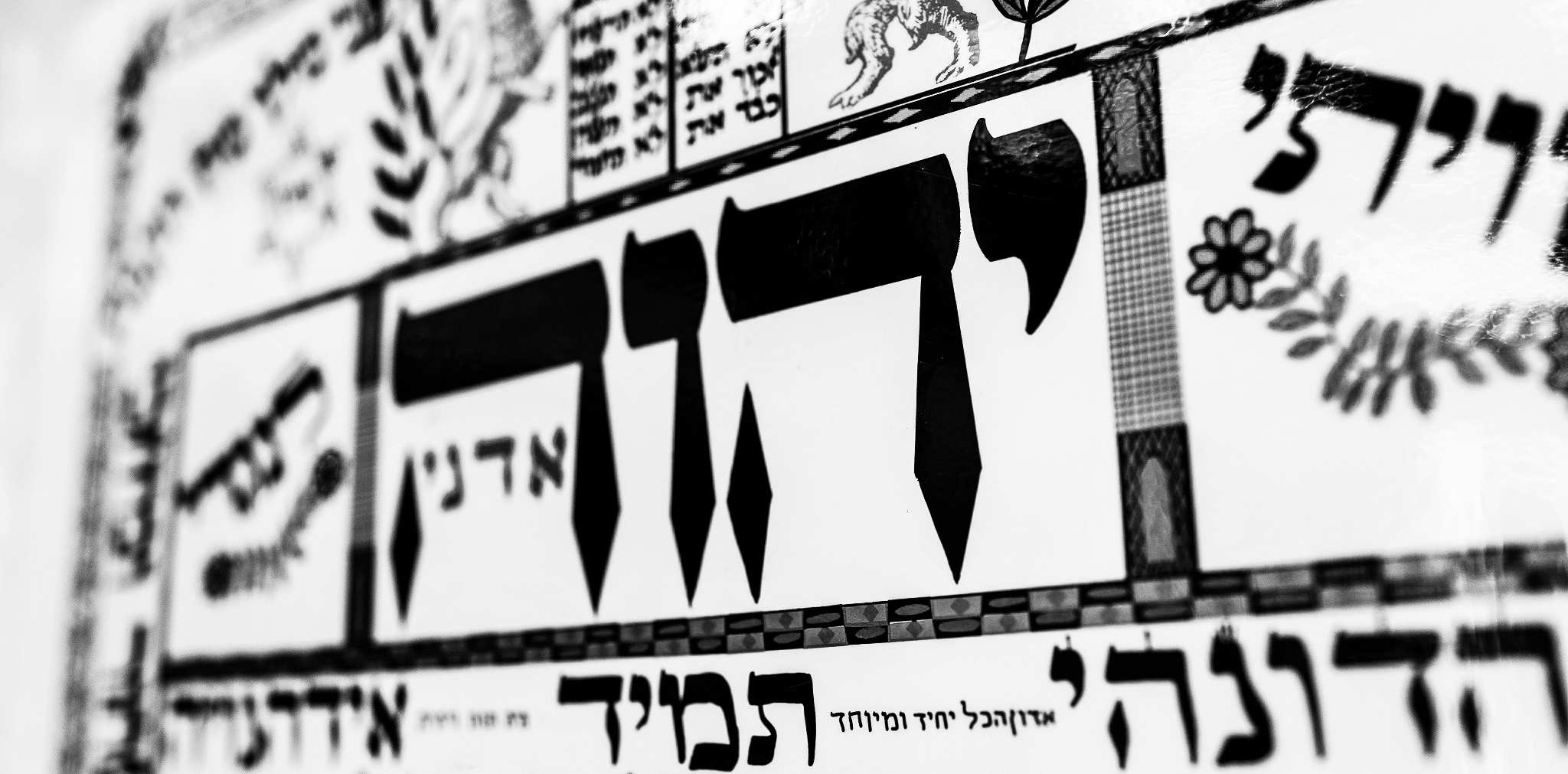
 “This is the thing that the LORD commanded you to do, so that the glory of the LORD may appear to you: Draw near to the altar and offer your sin offering and your burnt offering and make atonement for yourself” (Lev. 9:6-7). Have you considered why you were born into this world? What is your purpose, destiny, and end? The Torah states that you were personally created by Almighty God, who breathed out the breath of life (נִשְׁמַת חַיִּים) into you, and then redeemed your life so you could know the glory of God and spiritual reality. As it is written: “Worthy are you, our Lord and God, to receive glory and honor and power, for you created all things, and by your desire they existed and were created” (Rev. 4:11). God creates all things for his glory and purposes, which indeed is the first blessing recited over the bride and groom in a traditional Jewish wedding: בָּרוּךְ אַתָּה יְהוָה אֱלהֵינוּ מֶלֶךְ הָעוֹלם שֶׁהַכּל בָּרָא לִכְבוֹדו / “Blessed are you Lord our God king of the universe, who has created all things for his glory.” The purpose of life is to know and love God, to walk in His light and truth, and to glorify his compassion and grace forever…
At a traditional Jewish wedding the groom places the ring on his bride’s finger and says: Harei, at mekudeshet li (הרי את מקודשׁת לי): “Behold, you are sacred to me.” Love and holiness are interconnected, since the beloved is set apart as sacred and treasured. May God help us see the wonder of His love for our lives: “Do not be conformed to the passions of your former ignorance, but as he who called you is holy, you also be holy in all your conduct, since it is written, “You shall be holy, for I am holy” (1 Pet. 1:14-16).
Hebrew Lesson:

 Although
  The Book of Leviticus (ספר ויקרא) is the third of the Torah, representing another stage in our spiritual journey. Genesis reveals both our divine origin but also our tragic fallenness, and the book ends with our need for deliverance from bondage to Egypt. Exodus reveals that we are liberated from slavery by trusting in the provision of God demonstrated by the sacrifice of the Passover lamb, and the book ends with the climax of the revelation of Torah given at Sinai, namely, the building of the Mishkan (Tabernacle) where the the need for blood atonement was enshrined. Indeed blood atonement is the central theme of the central book of Torah, i.e., Leviticus, where we are called to draw near to God through sacrificial rites, the foremost of which was the ongoing offering (i.e., korban tamid: קרבן תמיד) of a defect-free male lamb, together with unleavened bread and wine. The LORD called this “My offering, My bread” (Num. 28:1-8). In other words, the center of the Torah is the altar that constantly prefigured the Lamb of God who would be offered up to secure our eternal redemption (John 1:29; Heb. 9:11-12).
 Our Master said: “For the bread of God (לֶחֶם אֱלהִים) is the One who comes down from heaven to give life to the world” (John 6:33). This is the Bread of Presence, literally, the “Bread of [his] Face” (לֶחֶם פָּנִים) that was prefigured in the manna that fell in the desert and in the rituals of the Tabernacle (Exod. 25:30). It was in the Holy Place, in the light of the Menorah, that the “bread of his face” was to be eaten… At his last Passover Seder with his students, Yeshua said “this is my body” (τοῦτό ἐστιν τὸ σῶμά μου), and made analogy between physical and the spiritual. We metaphorically “eat his flesh and drink his blood,” by seeing Him as our altar, our bridge before the Father. Just as the heart is the means by which blood is distributed to the body, so with the love of God expressed in our Lord Yeshua. He is the Divine Center of all of life: the true Tabernacle, the Word made flesh. He is the true Bread of Life (לחֶם הַחַיִּים), and we receive spiritual strength when we abide in his Torah (תּוֹרָה) and his life (John 15:5).
 I had mentioned
 The goal of the great Sinai revelation was not to simply impart a set of moral or social laws, but rather to “accommodate” the Divine Presence in the midst of the people. This is not to suggest that the various laws and decrees given to Israel were unimportant, of course, since they reflect the holy character and moral will of God. Nonetheless, the climax of the revelation of the Torah – its goal or purpose or “end” – was the revelation of the altar which prefigured the sacrificial work of the Lamb of God. Indeed, the central sacrifice upon this altar was the daily sacrifice (i.e., korban tamid: קָרְבַּן תָּמִיד) of a defect-free male lamb with unleavened bread and wine. The LORD calls this “My offering, My bread…” (see Num. 28:1-8). In other words, the service and ministry of the Mishkan (i.e., Tabernacle) constantly foreshadowed the coming Lamb of God who would be offered upon the altar “made without hands” to secure our eternal redemption (Heb. 9:11-12). The sacrifice of the lamb is therefore central to the meaning and purpose of the Torah.
 The first verse of the Book of Leviticus is usually translated: “And the LORD called to Moses and spoke to him,” where the subject of the verb vayikra (וַיִּקְרָא), “and he called,” has an implied antecedent, which if expressed would read: “And the LORD called to Moses and the LORD spoke to him…”
 “Whoever battles with monsters had better see to it that it does not turn him into a monster” (Nietzsche). A God-fearing man once complained to a sage that he was tormented by evil desire and had become despondent over it. The sage listened intently and then said, “Guard yourself from such despondency above all else, for it is worse than sin. When the yetzer [evil impulse] awakens desire in us, it is not concerned with plunging us into sin, but with plunging us into despair by way of our sinning.”
 The
The 
 Passover is the archetypal picture of the redemption of God. Its theme goes back to the very beginning, to the orchard of Eden itself, when Adam and Eve disobeyed God and ate from the forbidden tree. Because of their transgression, our original ancestors incurred the plague of death and were exiled from the Divine Presence, though God graciously promised to heal them through the coming Seed of the woman – the Savior who would crush the head of the serpent and break the fangs of his venomous sting (Gen. 3:15). Soon after making this great promise, God clothed our primordial parents with the skin of a sacrificed lamb (Gen. 3:21), linking their coming deliverance with the “Lamb of God slain from the foundation of the world” (1 Pet. 1:18-20). The very first “Passover” was in the garden. The story extends to the world to come, too, where in the redeemed paradise of God we will celebrate the victory of the Lamb who was slain for our redemption (Rev. 5:12-13, Rev. 19:7).