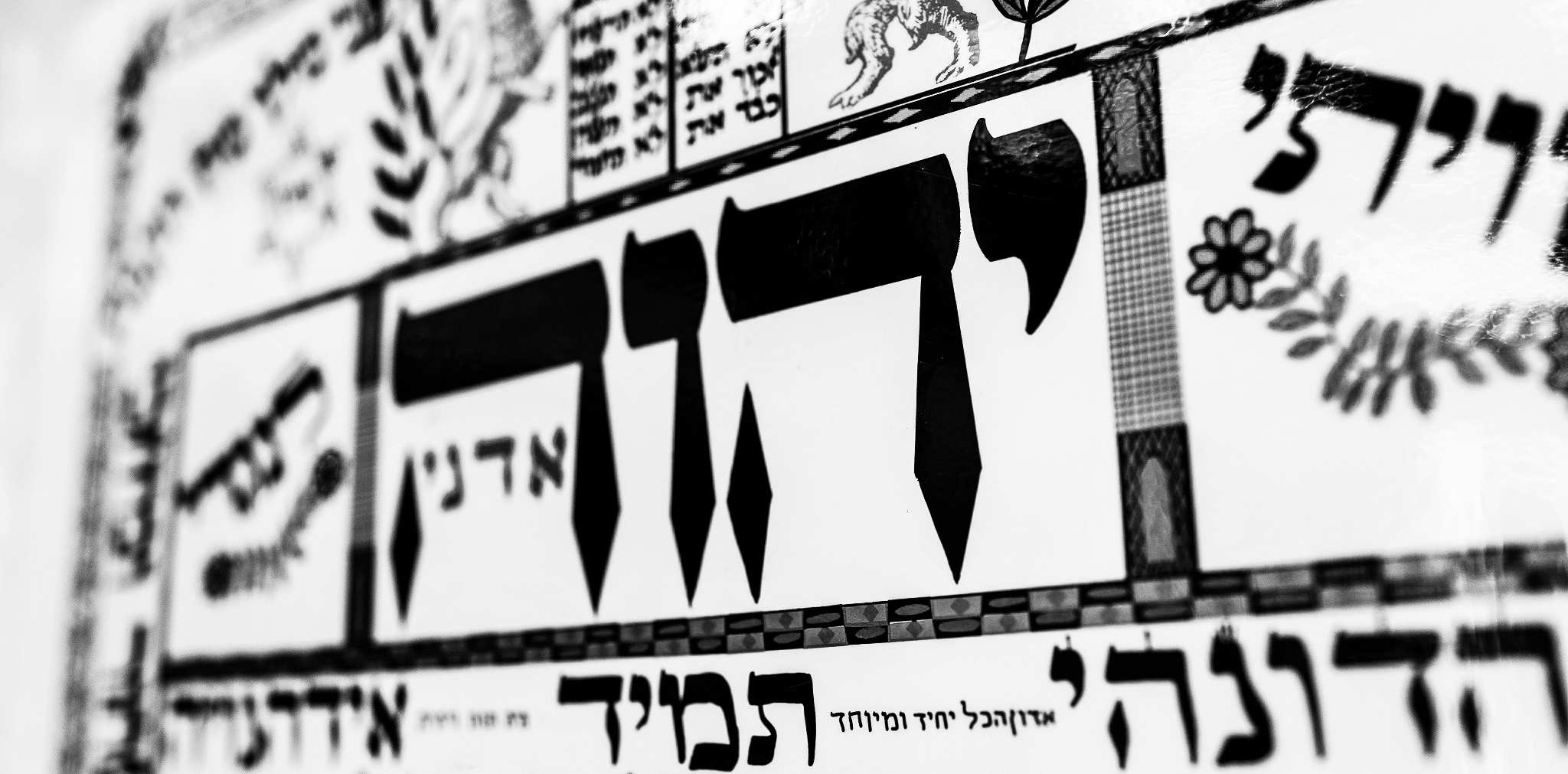
 The last month of the Jewish calendar (counting from Tishri) is called Elul (אֱלוּל), which (this year) begins at sundown on Monday, September 2nd, 2024. Traditionally, Rosh Chodesh Elul marks the beginning of a forty day “Season of Teshuvah” that culminates on the solemn holiday of Yom Kippur. The month of Elul is therefore a time set aside each year to prepare for the Yamim Nora’im, the “Days of Awe,” by getting our spiritual house in order.
During this time we make additional effort to repent, or “turn [shuv] toward God.” In Jewish tradition, these 40 days are sometimes called Yemei Ratzon (יְמֵי רָצוֹן) – “Days of Favor,” since it was during this time that the LORD forgave the Jewish nation after the sin of the Golden Calf (Pirke d’Reb Eliezar). Some of the sages liken these 40 days to the number of days it takes for the human fetus to be formed within the womb.
The advent of the “Season of Teshuvah” reminds us that we all fail, that we all are broken people, and that errors and mistakes are part of our daily spiritual life… We journey toward humility and compassion rather than struggle for perfection; we confess our need for forgiveness and seek reconciliation with all those we might have harmed… During this season it is common enough to hear messages about our need to turn and draw near to God for life, but it is equally important to remember that God turns and draws near to the brokenhearted for consolation. As it is said, the Lord is near to the nishbar lev (נִשְׁבָּר לֵב), the one with a broken and crushed heart (Psalm 34:18).
Brokenness is the means through which God performs some of His deepest work within our hearts. A.W. Tozer once said, “It is doubtful whether God can bless a man greatly until he has hurt him deeply.” Likewise Alan Redpath once wrote, “When God wants to do an impossible task, he takes an impossible individual – and crushes him.” William James called this deep work of the spiritual life Zerrissenheit, a term that roughly can be translated as “torn-to-pieces-hood,” or a state of being utterly broken and in disarray… The brokenhearted live in day-to-day dependence upon God for the miracle…

Psalm 34:18 Hebrew page (pdf)

Note that the word “Elul” (אֱלוּל) may be read as an acronym for the phrase, ani le’dodi ve’dodi li (אֲנִי לְדוֹדִי וְדוֹדִי לִי), “I am my beloved’s, and my beloved in mine” (Song 6:3), to encourage to become full of desire for the Beloved of our soul…
 Our Torah portion this week (i.e.,

 The 15th of Av (i.e.,
 Shalom chaverim. In this “Daily Perush” audio I provide an exegesis and reading of a significant phrase in King Solomon’s great prayer at the dedication of the First Temple, namely, “Behold heaven and the heaven of heavens cannot contain you” (2 Chron. 6:18), and I then go on to reflect a bit on the meaning of these words in relation to the destruction of the Temple in Jerusalem. Please note that this topic is primarily designed for those who are studying Biblical Hebrew. I hope you will find it helpful. – John
 The Book of Lamentations is an acrostic (i.e., alphabetical) poem that begins with the Hebrew letter Aleph (א) in the word “eichah” (אֵיכָה), which also marks the Hebrew name of the book (מגילת איכה). “How (eichah) lonely sits the city that once was full of people!” (Lam. 1:1). The sages note that this word “how” (i.e., eichah) could also be read as “where are you?” (i.e., ayeka: אַיֶּכָּה), God’s first word spoken to Adam after he broke covenant in the Garden (Gen. 3:9). Note that God’s question is often our own: “Where are you God? Are you here, in the midst of this tedious moment? Do you know my loneliness, my ache for love? Do you understand the troubles of my heart? Do you know my pain?”
 Our Torah portion this week (
 The
The 
 Life isn’t easy, and even believers can get angry at God at times. For example, we may feel disappointed or resentful when bad things happen to us or to those whom we love, especially if we had prayed for God’s intervention and help regarding the matter. Seemingly unanswered prayer can make us feel lonely and afraid about what is happening to us. We may begin to second-guess our faith or wonder if God really listens to us. We must be careful and ask God for solace and wisdom lest we turn numb inside..

 Our Torah portion for this week,
 I am suffering, friends…. feeling exhausted in prayers for healing. I feel alone with my sorrows and relentless pain; I am in darkness as I wonder why the Lord has allowed such afflictions to come upon me. My agony arises not from unbelief, for I am fully persuaded and entirely convinced that the Lord can simply “say the word” and I shall be healed, despite my worthless condition… Yet my vexations remain; they torment me in their persistence; I cry out for mercy yet there is no relief… “How long with you forget me, O LORD, forever?” With tears I cry out “Lord I believe; help thou my unbelief” (Mark 9:23-24). In a flash of distress I feel like I am on the border of death itself, as David cried out: “the snares of death encompass me; the pangs of Sheol laid hold on me; I suffer distress and anguish…”