Our Torah portion for this week (i.e., parashat Balak) is named after a fretful Moabite king (בָּלָק) who sought to curse the Jewish people by hiring the services of a wicked Midianite “prophet” named Balaam (i.e., bil’am: בִּלְעָם). King Balak’s plan was to employ Balaam’s sorcery (i.e., kashafut: כַּשָׁפוּת) against the Israelites to prevent them from entering the Promised Land. Similar to the delicious irony that befell the villain Haman in the Book of Esther, however, King Balak’s scheme was upended, and the curse he sought to put on the Jewish people was repeatedly pronounced as a blessing by Balaam instead. After several foiled attempts, Balak fretfully dismissed the prophet, but before departing from the dejected king, Balaam ironically prophesied the destruction of the Moabites and the victorious establishment of Israel.
The shameful story of Balaam reveals that “there is no enchantment against Jacob, no divination against Israel” (Num. 23:23). Ein od milvado (אֵין עוֹד מִלְבַדּו) – no weapon or scheme devised against God will ever prosper (Isa. 54:15-17).
In the State of Israel, “Jerusalem Day” (i.e., Yom Yerushalayim: יום ירושלים) commemorates the re-unification of old city of Jerusalem on June 7th, 1967 during the infamous Six Day War. In 1968 the Chief Rabbinate of Israel declared Iyyar 28 to be a holiday to thank God for answering the 2,000-year-old expression of hope recited by Jews throughout the world: “Next Year in Jerusalem.” On March 23, 1998, the Knesset passed the Jerusalem Day Law, making it a national holiday.
Jerusalem is central to the Jewish heart. The Hebrew word “Zion” (ציון) is mentioned over 160 times in the Scriptures. That’s more than the words faith, hope, love, and countless other key words… And since Zion is a poetic form of the word Jerusalem (ירושׁלם), the number of occurrences swells to nearly 1,000! Since it’s the most frequently occurring place name in all the Scriptures, it’s no overstatement to say that God Himself is a Zionist…. “Out of Zion, the perfection of beauty, God shines forth” (Psalm 50:2). “The LORD loves the gates of Zion more than all the dwellings of Jacob. Glorious things are said of you, O City of God” (Psalm 87:2-3). Indeed, Yeshua called Jerusalem the “City of the great King” (Psalm 48:2; Matt 5:35): It is the place where He was crucified, buried, resurrected, and ascended to heaven; and is it furthermore the place where He will return to earth (Zech. 14:1-9).
In light of all this, how can we forget Zion, “the city of the living God, the heavenly Jerusalem” (Heb. 12:22)? Is she not “our mother” (Gal. 4:26)? Are we not her citizens, indeed, her exiles in this age? As the psalmist said, “If I forget you, O Jerusalem, let my right hand forget its skill! Let my tongue stick to the roof of my mouth, if I do not remember you, if I do not set Jerusalem above my highest joy!” (Psalm 137:5-6).
The famous words, “Pray for the peace of Jerusalem” (Psalm 126:6) reveals prophetic truth about our Savior and Messiah. The word sha’alu (שאלו) means “you ask” (as in ask a sheilah, a question), and the word shalom (שׁלוֹם) is the name of Yeshua, the Prince of Peace (i.e., Sar Shalom: שר־שלום). The word “Jerusalem” means “the teaching of peace” (jeru– comes from the same root as the word Torah [ירה], which means “teaching”). The command, “sha’alu shelom Yerushalayim” can therefore be construed, “ask about the Prince of Peace and His Teaching.” Amen. Yeshua the Messiah is indeed the rightful King of Jerusalem (Matt. 5:35) who is coming soon to establish Zion and to reign over all the earth (Isa. 62:7).
The goal of the Sinai revelation was not only the giving of the Ten Commandments to the Israelites but enshrining the Divine Presence within their hearts… In our Torah portion for this week (i.e., Parashat Terumah), we read how God asked the people to offer “gifts from the heart” to create a “place” for Him: “Let them make for me a sanctuary that I may dwell in their midst” (Exod. 25:8).
The Hebrew word for “sanctuary” is mikdash (מִקְדָּשׁ), which comes from the root word kadash (קָדַשׁ), “to be set apart as sacred.” A mikdash is therefore a “set apart space,” or a “holy place” that represents something profoundly treasured – a place of beauty and worship, a refuge, a place of rest. Other words that share this root idea include kedushah (holiness), kiddushin (betrothal), kaddish (sanctification), kiddush (marking sacred time), and so on. When God said, “Let them make for me a mikdash,” then, he was inviting the people to make a sacred place within their hearts for His Presence to be manifest…. The “materials” required to make this place – gold, silver, brass, red and purple yarns, fine linens, oils, spices, precious stones, etc. – were ultimately from the heart, expressed in free-will offerings given to God.
In this audio broadcast I step through the Torah portion and add Hebrew insights to help you better understand the Jewish roots of your faith in Yeshua, the Jewish Messiah. I hope you will find it helpful.
The ancient Greek philosophers sought for “salvation” (Σωτηρία), which they generally understood as freedom from the fear of death… Therefore Socrates sought to dispel mythical superstition by regarding philosophy as the “practice for death,” by which he meant that reflecting upon this “shadowy world” would instill a profound hunger for the eternal (and ideal) world, and he therefore advised that, since we all must die, we ought to prepare ourselves now for eternity, by focusing the mind on what is most essential, real, and beautiful.
The Jewish sages likewise later affirmed, “This world is like a corridor before the World to Come; prepare yourself in the corridor, that you may enter into the hall” (Avot 4:21), which implies that the great commandment is דִּרְשׁוּנִי וִחְיוּ – “Seek Me and live” (Amos 5:4), as the prophet Isaiah (7th century BC) cried out, “Seek the LORD while he may be found; call upon him while he is near” (Isa. 55:6).
Therefore Yeshua (יֵשׁוּעַ) is justly named “our salvation” (יְשׁוּעָתֵנוּ), since it is by his hand that we are delivered from bondage to the fear of death (Heb. 2:14-15). The resurrection of Yeshua utterly overthrows the power of death (i.e., the devil), and eternally secures our welcome in the world to come.
Do not let your heart be troubled; have faith in God, for he “prepares a place for you” on the other side of the veil of this temporal world (John 14:1-3). “Whoever is born of God conquers the world (νικᾷ τὸν κόσμον), and this is the overcoming power that conquers the world, even our faith” (1 John 5:4).
As Yeshua testified: “I AM the resurrection and the life (אָנכִי הַתְּקוּמָה וְהַחַיִּים). The one who trusts in me will live, even though he dies; and whoever lives and believes in me will never, no, not ever, die (οὐ μὴ ἀποθάνῃ εἰς τὸν αἰῶνα). Do you believe this?” (John 11:25-26).
Yeshua’s words indicate there are two distinct senses of the word “death,” namely physical death (temporal) and spiritual death (eternal). Though we may indeed die physically, that does not imply that we will die spiritually, since we are given eternal (spiritual) regeneration and life by the miracle of God’s love…
We press on in hope, dear friends: “For our light and momentary troubles are achieving for us an eternal glory that far outweighs them all. So we fix our eyes not on what is seen, but on what is unseen. For what is seen is temporary, but what is unseen is eternal. Now we know that if the earthly tent we live in is destroyed, we have a building from God, an eternal house in heaven, not built by human hands. Meanwhile we groan, longing to be clothed with our heavenly dwelling (2 Cor. 4:17-5:1-2).
God our Savior “is able to keep you from stumbling and to present you blameless before the presence of his glory with great joy” (Jude 1:24). May God help us persevere in hope, remembering the glory that lies ahead! Amen.
In our Torah reading for this week, called parashat Toldot (תוֹלדת), we learn that Isaac and Rebekah had been married for twenty years but were still without an heir to carry on the family line… Finally their prayers were answered and Rebekah conceived, though not without complications. When Rebekah inquired of the LORD about her travail, God told her that she was carrying twins that would be heads of two rival nations, but the younger child would in fact become the promised heir of the chosen people.
Our Torah reading for this week, parashat Vayera (פרשת וירא),is very dramatic and extraordinarily prophetic. Among other things (including the miraculous birth of Isaac, the fiery judgment upon Sodom and Gomorrah, the fate of Hagar’s son Ishamel, and so on), the reading includes what I have called the “Gospel according to Moses,” that is, Moses’ account of how the patriarch Abraham was tested by God to offer his “only begotten son” (בֵּן יָחִיד) Isaac as a whole-burnt offering sacrifice on Mount Moriah — the place of the future Temple. This astonishing story is referred to as the Akedah (עֲקֵדָה), or Akedat Yitzchak (עֲקֵידָת יִצְחָק) – the “binding of Isaac” (Gen. 22:1-18). As Abraham lifted up his knife to slay his beloved son, at the very last moment, the Angel of the LORD (מַלְאַךְ יהוה) stopped him from going through with the sacrifice, and a ram “caught in a thicket” was offered as the vicarious substitute. Upon offering the sacrifice Abraham named the sacred location Adonai-Yireh (יהוה יִרְאֶה), “the LORD will provide/see” (from the 3ms imperfect of ra’ah (רָאָה), “to see”).
The binding of Isaac perfectly illustrates both the principle of sacrificial love and the principle that we must first unreservedly believe in that love in order to understand the ways of the LORD. Those who believe in Yeshua further understand the Akedah as a foreshadowing of the ultimate sacrifice the heavenly Father would give on our behalf. Unlike Abraham, God the Father actually offered His only begotten Son (בֵּן יָחִיד) at Moriah in order to make salvation available for all who will believe (John 3:16-18; 1 John 4:9). As Abraham himself confessed: אֱלהִים יִרְאֶה־לּוֹ הַשֶּׂה / Elohim yireh-lo haseh (“God will provide for himself the lamb”). Later Yeshua told the leaders of Israel that Abraham had “seen His day” and understood the deeper meaning of the Akedah sacrifice (John 8:56).
As I’ve mentioned over the years, the very first occurrence of the word love in the Scriptures (i.e., ahavah: אַהֲבָה) refers to Abraham’s love for his “only” son who was to be sacrificed as a burnt offering on Moriah (the very place of the crucifixion of Yeshua), a clear reference to the gospel message (Gen. 22:2; John 3:16). Some scholars have noted that the word ahavah comes from a two-letter root (הב) with Aleph (א) as a modifier. The root means “to give” and the Aleph indicates agency: “I” give (i.e., “the Father gives”). Love is essentially an act of sacrificial giving… The quintessential passage of Scripture regarding love (αγαπη) in the life of a Christian is found 1 Corinthians 13: “Love seeks not its own…”
Whereas Akedat Yitzchak foreshadowed God’s provision for the coming Temple, Akedat Yeshua (i.e., the crucifixion of Yeshua at Moriah) was the altar where the justice and chesed (love) of the Father fully met (Psalm 85:10). For more on this incredibly rich subject, please see the articles, “The Passion of Isaac” and “The Sacrificed Seed.”
There is rational, intuitive, and empirical evidence to believe that the universe was created in time by a transcendental power that is the source of all value, meaning, purpose, and so on. Martin Heidegger asked, “Why is there something rather than nothing,” which is not a question about a possible cause for an observed effect, but is a question about the underlying cause of any possible existence at all. The Scriptures reply: “For God’s invisible attributes, namely, his eternal power and divine nature from the creation of the world, have been clearly perceived, because they are understood through what has been made, so people are without excuse” (Rom 1:20).
THE VERY FIRST PROPHECY OF THE TORAH concerns the promise of the coming “seed of the woman” who would vanquish the serpent (nachash) that had originally tempted and deceived Eve (Gen. 3:15). This prophecy is sometimes called the proto-euangelion (“first gospel”), since it is the starting point of all subsequent prophecy and redemptive history revealed in the Scriptures. Indeed, since the mystery of the Incarnation of the Son of God is foreshadowed here, this prophecy is linked to the original woman, Eve. Just as Eve became a carrier of the corruption of human nature by heeding the voice of the tempter, so she would be the carrier of God Himself for the deliverance of mankind through the advent of the Redeemer. In the tragic aftermath of the transgression of the first man and woman, then, God first announced His unfailing redemptive love for the human race that would culminate in the birth, sacrifice, and resurrection of Yeshua our Savior and Deliverer – “born of a woman, born under the law” (Gal. 4:4).
In this “Shavuah Tov” audio broadcast I discuss both the Jewish High Holidays — and how they relate to us as followers of Yeshua the Messiah — as well as the weekly Torah portion we will read for Shabbat Shuvah, namely parashat Vayeilech. I hope you will find it helpful. L’Shanah Tovah u’Metukah b’Yeshua Meshicheinu, chaverim! – “to a good and sweet year in our Messiah Yeshua, friends.”
Our Torah reading for this week, parashat Nitzavim (פרשת ניצבים), is always read on the Shabbat immediately before the solemn holiday of Rosh Hashanah, and therefore it is the last Torah portion read before the new Jewish year (see Exod. 23:16). In many synagogues, the opening and concluding paragraphs of parashat Nitzavim are also read during the Yom Kippur morning service.
Nitzavim begins: “You are standing here today, all of you, before the LORD your God (אַתֶּם נִצָּבִים הַיּוֹם כֻּלְּכֶם לִפְנֵי יְהוָה אֱלהֵיכֶם) … so that you may enter into the sworn covenant of the LORD your God, which the LORD your God is making with you today, that he may establish you today as his people, and that he may be your God, as he promised you, and as he swore to your fathers, to Abraham, to Isaac, and to Jacob” (Deut. 29:10-13). After this Moses went on to review Israel’s history and prophetic future — i.e., the great prophecy of the Diaspora and Return of the people — and then he solemnly appealed for all those who believed to turn to the LORD for life: “I call heaven and earth to witness against you today, that I have set before you life and death, blessing and curse. Therefore choose life, that you and your offspring may live” (Deut. 30:19).
In addition to an overview of the Torah reading, I discuss the fall holidays of the Torah’s calendar, particularly the significance of Rosh Hashanah for followers of Yeshua the Messiah.
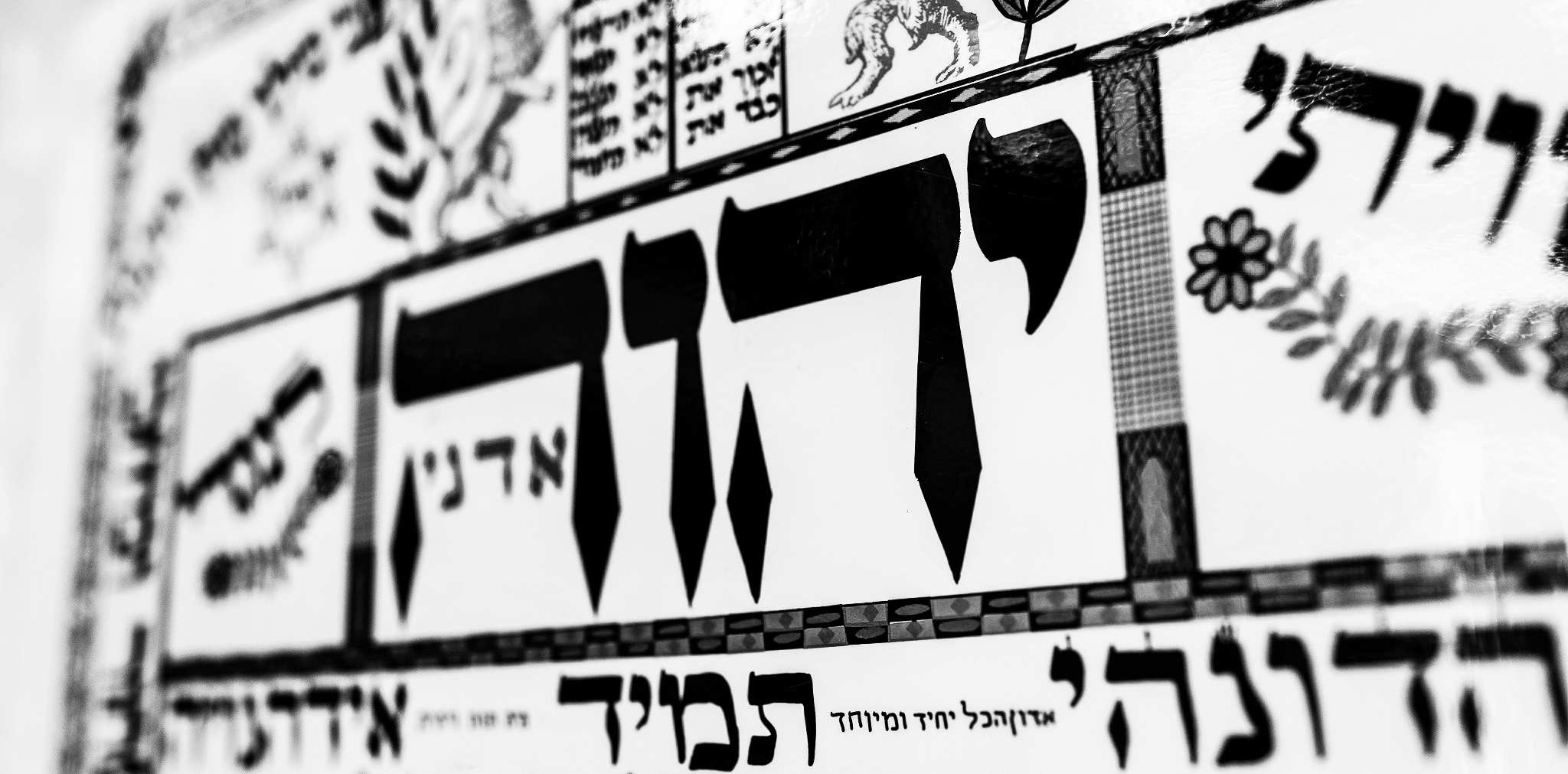
 Our Torah portion for this week (i.e., parashat Balak) is named after a fretful Moabite king (בָּלָק) who sought to curse the Jewish people by hiring the services of a wicked Midianite “prophet” named Balaam (i.e., bil’am: בִּלְעָם). King Balak’s plan was to employ Balaam’s sorcery (i.e., kashafut: כַּשָׁפוּת) against the Israelites to prevent them from entering the Promised Land. Similar to the delicious irony that befell the villain Haman in the Book of Esther, however, King Balak’s scheme was upended, and the curse he sought to put on the Jewish people was repeatedly pronounced as a blessing by Balaam instead. After several foiled attempts, Balak fretfully dismissed the prophet, but before departing from the dejected king, Balaam ironically prophesied the destruction of the Moabites and the victorious establishment of Israel.

 In the State of Israel, “Jerusalem Day” (i.e., Yom Yerushalayim: יום ירושלים) commemorates the re-unification of old city of Jerusalem on June 7th, 1967 during the infamous Six Day War. In 1968 the Chief Rabbinate of Israel declared Iyyar 28 to be a holiday to thank God for answering the 2,000-year-old expression of hope recited by Jews throughout the world: “Next Year in Jerusalem.” On March 23, 1998, the Knesset passed the Jerusalem Day Law, making it a national holiday.
 The goal of the Sinai revelation was not only the giving of the Ten Commandments to the Israelites but enshrining the Divine Presence within their hearts… In our Torah portion for this week (i.e.,

 The ancient Greek philosophers sought for “salvation” (Σωτηρία), which they generally understood as freedom from the fear of death… Therefore Socrates sought to dispel mythical superstition by regarding philosophy as the “practice for death,” by which he meant that reflecting upon this “shadowy world” would instill a profound hunger for the eternal (and ideal) world, and he therefore advised that, since we all must die, we ought to prepare ourselves now for eternity, by focusing the mind on what is most essential, real, and beautiful.
 In our Torah reading for this week, called

 Our Torah reading for this week,

 There is rational, intuitive, and empirical evidence to believe that the universe was created in time by a transcendental power that is the source of all value, meaning, purpose, and so on. Martin Heidegger asked, “Why is there something rather than nothing,” which is not a question about a possible cause for an observed effect, but is a question about the underlying cause of any possible existence at all. The Scriptures reply: “For God’s invisible attributes, namely, his eternal power and divine nature from the creation of the world, have been clearly perceived, because they are understood through what has been made, so people are without excuse” (Rom 1:20).


 In this “Shavuah Tov” audio broadcast I discuss both the Jewish High Holidays — and how they relate to us as followers of Yeshua the Messiah — as well as the weekly Torah portion we will read for Shabbat Shuvah, namely parashat Vayeilech. I hope you will find it helpful. L’Shanah Tovah u’Metukah b’Yeshua Meshicheinu, chaverim! – “to a good and sweet year in our Messiah Yeshua, friends.”
 ding for this week,
