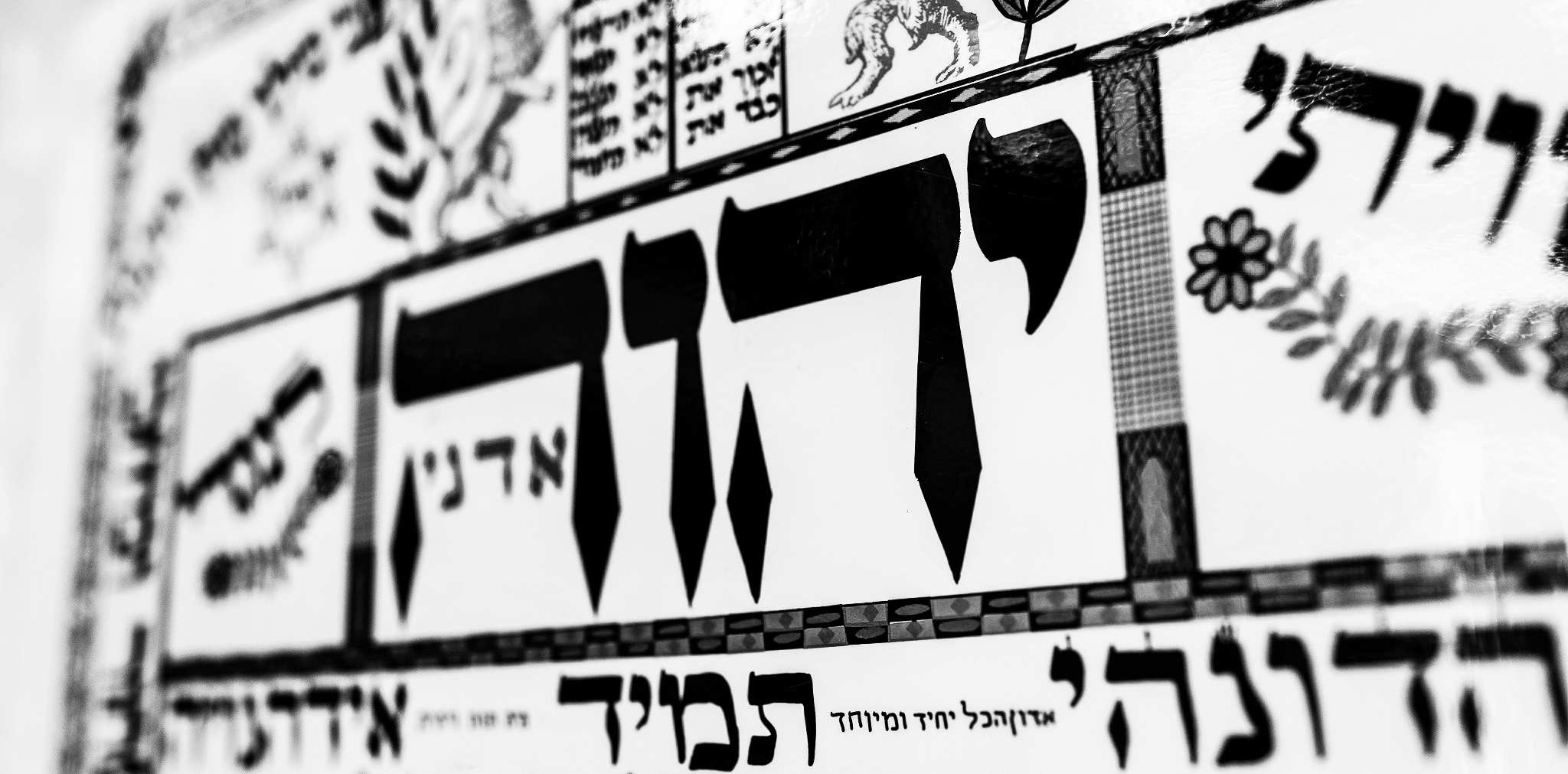
 “Our Lord Jesus oftentimes said, ‘This I am. This I am. I am what you love. I am what you enjoy. I am what you serve. I am what you long for. I am what you desire. I am what you intend. I am all that is'” (Julian of Norwich). Amen to such beautiful words. And we should attend to stirring of our hearts, our deepest desires, since they ultimately find their end in God. As C.S. Lewis noted, our longing for a love which no experience in this world can fully satisfy is a sign that were made for God’s eternal love.
You seek beauty, peace, love, and life, but the Lord says that he is the substance and heart of all these things… The lilies of the field do not toil but are arrayed in God’s pleasure and design; the birds do not store up their food in barns but are sustained to take wing in the winds of God’s hovering presence. Every hair on your head is numbered; there is not a word on your tongue unheard by your Heavenly Father.
Imagine, if you will, Yeshua saying the following words, all of which are attested in the holy Scriptures: “I am the bread of life. I am the substance of what satisfies your hunger. I am essential for life. I am the manna that comes down from heaven to feed you and make you forever alive. I give you sustenance and strength; I will give you living water that will be like an oasis for your heart – the Spirit of Life that will comfort you. Blessed are those who hunger and thirst for righteousness, for they shall be satisfied. I alone can satisfy your deepest needs and longings. I am Life itself, the source and blessing of all that is good and worthy and true.
I am the light of the world. I give to you the light of life. My presence will guide your way. I will turn your darkness into light. In me is the fountain of life; in my light you shall receive light… I will give you a heart to know me. I am the Word of God: the Voice and revelation of the LORD, the Source of all truth. I am the LORD who brings you out of the darkness of your bondage; I am the one who redeems you, the one who atones for you, the one who suffers and dies for you to remove what separates you from God’s Presence. I am the Father who receives you with open arms; I sacrifice the fattened calf to celebrate the blessing of your life… I am the LORD your healer; I sanctify you in my love.
I am the gateway to life. I am the door that opens to the Kingdom of Heaven. I am the way to know the Father’s heart; I express the truth of God in who I am; I am the resurrection of God: No one can enter the kingdom apart from me. I am the LORD and there is no Savior apart from me. Do not be afraid: I will hold your right hand; it is I who say to you, “Fear not, I am the one who helps you.” I am the Good Shepherd who faithfully guards each one of his flock.
I am your way to connect with God. I am the true Vine. Live in me and I will live in you. I will never leave nor forsake you. Draw near to me: lean upon my bosom. I will teach you what love means. Find comfort in my love for you. Then you will be able to love others and glorify the truth of my heart’s passion for all people.”
Yeshua is the way, the truth, and the love for which our heart cries out. In Him we “live and move and have our being.” He is the Alef and Tav, the First and the Last, the Beginning and the End, and the Sacred Center of all that exists. His heart is our “all in all,” the fullness of all that will ever mean anything at any time. “I am my beloved’s and my beloved is mine; he grazes among the lilies.” May you open your heart and draw near to him today. Amen.

- Jer. 31:3b Hebrew page (pdf)
 When Yeshua said that the truth would “set us free” (ἐλευθερώσει), he was referring to the acceptance of the Witness of Divine Reality (i.e., the Word, Breath, Spirit, Voice, Message, Meaning, and Love of God) that delivers us from the lies we habitually tell ourselves (or that we receive from others). If you “persevere in my word” (μείνητε ἐν τῷ λόγῳ τῷ ἐμῷ) he said, “then you are my disciples indeed, and you will know the truth, and the truth will set you free” (ἡ ἀλήθεια ἐλευθερώσει ὑμᾶς, John 8:31-32). In other words, as we identify with his vision and redemptive mission, we will “be free indeed” from the tohu va’vohu (Gen. 1:2) – the “chaos and unreality” – that inescapably besets the way of the lie… We will be delivered from vanity and delusions of this world and its diseased affections; we will be set free from the need to justify ourselves by religion (perfectionism); we will no longer crave other people’s approval; we will not be moved by the mass media and its pressures; we will find courage to face our challenges without resorting to escapism; and we will learn how to experience peace even when we encounter frustrations.
 It is good to praise and trust in the LORD despite our afflictions, and indeed, suffering itself presents an invitation to come before God in prayer (James 5:13). Suffering offers us a nisayon (נִסָּיוֹן), a test, for our hearts to be exercised in ways otherwise rendered impossible should the path of our lives be attended without real struggle…
 The Torah teaches that a personal, all-powerful, and all-loving God exists and solely created the universe “yesh me’ayin” (יֵשׁ מְאַיִן), or out of nothing. As his crowning creative achievement, God created free moral agents – both angels and man – who could choose to do what is good or what is evil. For reasons that are not entirely clear, however, some of the angels chose to rebel against God (chief among them Lucifer, later renamed Satan), and these angels, in turn, conspired to seduce human beings to do likewise. When Adam and Eve disobeyed God’s moral law, they effectively joined the angelic rebellion. The consequence of this was catastrophic, and the mankind “fell” away from God as their King into a state of alienation and exile called “spiritual death.”
 During an intense bout of sickness that nearly took her life, Julian of Norwich said that God showed her a “little secret” about an ordinary hazelnut. As she considered the vision of the hazelnut, she wondered, “What may this be?” and God answered her heart’s pondering: “It is all that is made…”
 Many of our deepest anxieties come from the fear of death, whether we are conscious of this or not… Death represents fear of the unknown, fear of being abandoned, fear of being rejected, fear of being separated from others, and so on. I am so glad Yeshua gives us eternal life, which for me is not so much about immortality of the soul as it is being loved and accepted by God… That is what “at-one-ment” means, after all (John 17:22-23). Because God loves and accepts us, we trust Him to be present for us, even in the darkest of hours, on the other side of the veil, where he there “prepares a place for us” (John 14:2). As Yeshua said, “I tell you the solemn truth, the one who hears my message and believes the One who sent me has eternal life (חַיֵּי עוֹלָם) and will not be condemned, but has passed (i.e., μετά + βαίνω, lit., “crossed over” [עָבַר]) from death to life” (John 5:24). God’s love “crosses over” from death to life and now forever sustains me.
 “Whoever endures to the end will be saved” (Matt. 24:13). Here Yeshua speaks regarding “endurance” (ὑπομονή), or the ability to hold fast to your faith despite hardship and suffering… There is a risk – a very real danger – of turning away from God, and therefore we are warned to “continue in the faith” and not to “drift away” from the blessing of our salvation (Col. 1:23; Heb. 2:1-3). It is not sufficient to simply accept the message of the gospel, or to intellectually assent to its truth, because truth is something lived, fought out in our conflicts and in our temptations…
 The very first prophecy of the Torah concerns the promise of the coming “Seed of the woman” who would vanquish the serpent (nachash) that had originally tempted and deceived Eve (Gen. 3:15). This prophecy is sometimes called the proto-euangelion (“first gospel”), since it is the starting point of all subsequent prophecy and redemptive history revealed in the Scriptures. Indeed, since the mystery of the Incarnation of God the Son (the “Son of Man”) is foreshadowed here, this prophecy is linked to the original woman, Eve. Just as Eve became a carrier of the corruption of human nature by heeding the voice of the tempter, so she would be the carrier of God Himself for the deliverance of mankind through the advent of the Redeemer. In the tragic aftermath of the transgression of the first man and woman, then, God first announced His unfailing redemptive love for the human race that would culminate in the birth, sacrifice, and resurrection of Yeshua our Savior and Deliverer – “born of a woman, born under the law” (Gal. 4:4).
 The walk of faith refers to trusting in the Presence and love of God for your soul, even though you will suffer and experience various hardships in your life. Yes, we receive comfort from heaven and consolation through the Spirit of God, and yes we are given heavenly wisdom to know the truth that sets us free in Yeshua, however in this life we “see through a glass darkly,” which literally means “in a riddle” (ἐν αἰνίγματι). A riddle is an analogy given through some resemblance to the truth, though quite often the correspondences are puzzling and obscure. Hence, “seeing through a glass darkly” means perceiving obscurely or imperfectly, looking “through” something else instead of directly apprehending reality. We see only a reflection of reality, and our knowledge in this life is indirect and imperfect. This is contrasted with the “face to face” (פָּנִים אֶל־פָּנִים) vision and clarity given in the world to come, when our knowledge will be clear and distinct, and the love of God will be fully manifest to us and no longer hidden. Realizing this should make us humble whenever we consider our faith. “Now we know in part, but then shall we know in whole” (1 Cor. 13:12). We often do not have the “answers” for suffering, though “seeing through a glass darkly” means we have the means to trust God despite the present hour.
 We must humble ourselves and renounce anger, for the “wrath of man does not work the righteousness of God” (James 1:20). Therefore “let go of anger and forsake outrage, for indignation leads to evil within the heart, and evildoers will be cut off” (Psalm 37:8-9). After all, before the eyes of heaven, who are we to take offense at others? Is not all our self-justified outrage a symptom of pride and arrogance? Despite all our sins and the times we angered the LORD we still ask, “Bless us, our Father; let your light shine upon us with favor…” And yet when we get slightly upset at a friend we restrain from showing him a shining face? Know the spiritual principle: As we are to others, so we are to ourselves: middah keneged middah (“like for like”); as we judge others, so we put ourselves before the bar of divine judgment, measure for measure (Matt. 7:1-2). Forgiveness means asking of ourselves what we are asking of God, and the same is true of love. When Yeshua taught us to “forgive us as we forgive,” He taught that our forgiveness (of others) is a measure of our own understanding of the forgiveness (of God). Conversely, demanding perfection from others means appealing to God to judge of our lives… Friends, we should focus on the Eternal; we should believe the blessed promise of God; we should anticipate the great Coming Day of ultimate healing – and then our hearts may be quieted. Remember that nothing happens on its own; everything comes from above, and this too will keep you from outrage and bitterness…