Our Torah rea ding for this week, parashat Nitzavim (פרשת ניצבים), is always read on the Shabbat immediately before the solemn holiday of Rosh Hashanah, and therefore it is the last portion read before the new Jewish year (see Exod. 23:16). In many synagogues, the opening and concluding paragraphs of parashat Nitzavim are also read during the Yom Kippur morning service.
Nitzavim begins: “You are standing here today, all of you, before the LORD your God (אַתֶּם נִצָּבִים הַיּוֹם כֻּלְּכֶם לִפְנֵי יְהוָה אֱלהֵיכֶם) … so that you may enter into the sworn covenant of the LORD your God, which the LORD your God is making with you today, that he may establish you today as his people, and that he may be your God, as he promised you, and as he swore to your fathers, to Abraham, to Isaac, and to Jacob” (Deut. 29:10-13). After this Moses went on to review Israel’s history and prophetic future — i.e., the great prophecy of the Diaspora and Return of the people — and then he solemnly appealed for all those who believed to turn to the LORD for life: “I call heaven and earth to witness against you today, that I have set before you life and death, blessing and curse. Therefore choose life, that you and your offspring may live” (Deut. 30:19).
In addition to an overview of the Torah reading, I discuss the fall holidays of the Torah’s calendar, particularly the significance of Rosh Hashanah for followers of Yeshua the Messiah.
Read more “Nitzavim Shavuah Tov Podcast”
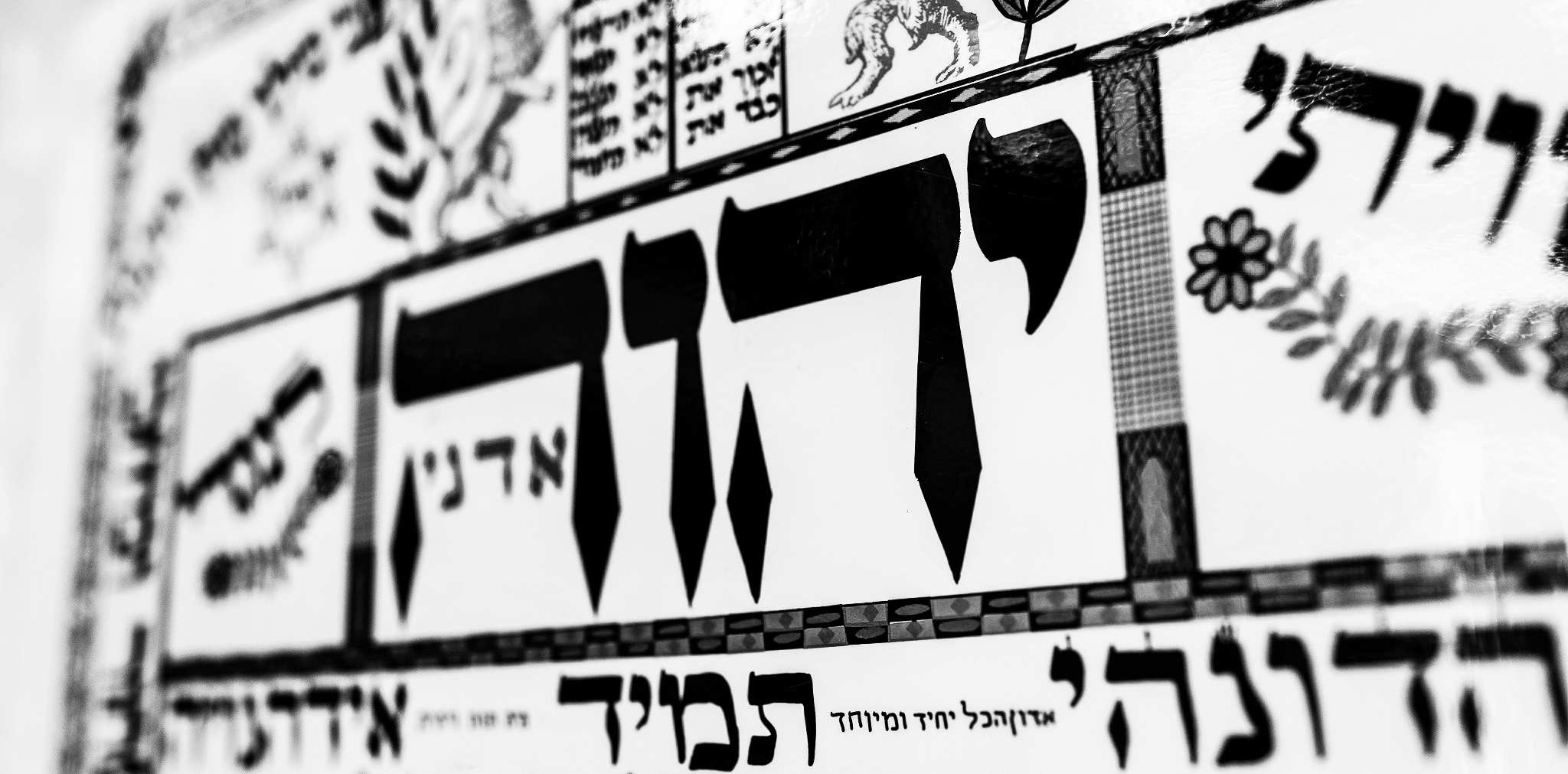
 God’s Name is “I-AM-with-you-always,” imanu-El (עִמָּנוּ אֵל) – always in the midst of you, your heart, your Center (Matt. 28:20; Isa. 41:10, Psalm 23:4, etc)…. The LORD is so named because he is never without his own, and we are who we are in relation to his presence in our lives. Yeshua is not simply the Lord of the past or the Lord of the future, but the Lord of this moment, this “here” and this “now.” He is the same yesterday, today, and forever – the breath of life, our sustaining hope, the Shepherd of our souls… Whatever else may come of this day, this is the day that the LORD has made, and we find peace in God’s Presence… Let us look to Him in this hour!
 “Seek the LORD while he may be found, call upon him while he is near: Let the wicked forsake his way, and the unrighteous man his thoughts: and let him return unto the LORD, and he will have mercy upon him; and to our God, for he will abundantly pardon” (Isa. 55:6-7). But how will we seek if we do not believe? And how will God be found unless God makes it possible for us to find Him? Hashivenu. We first believe the invitation to return is for us, and the moment we believe we draw near, which is to say God reveals himself to the heart of faith. If you feel devoid of God’s presence, heed David’s words to “set the LORD” before you (Psalm 16:8). Ask God for help to truly know Him and have confidence that he will indeed heal you. No prayer offered according to his heart will ever go unanswered (1 John 5:14-15). “The greatest honor we can give to the Almighty is to live gladly because of the knowledge of his love” (Julian Norwich). As Yeshua promised: “Whoever has my commandments and keeps them, he it is who loves me. And he who loves me will be loved by my Father, and I will love him and manifest myself to him” (John 14:21). Note that the Greek word translated “manifest” means to “shine inside” (i.e., ἐμφανίζω, from ἐν, “in” and φαίνω, “shine”), indicating that the revelation would be inward light of the Presence of Messiah himself (Χριστὸς ἐν ὑμῖν, ἡ ἐλπὶς τῆς δόξης, Col. 1:27). God calls you so that you might find him to be the greatest love of your life, and as you receive that love, as you embrace it as your own, the love of Messiah will become inwardly visible to you. This comes from a place of surrender and acceptance. As Paul Tillich said, “Sometimes in a moment of weakness light breaks into darkness, and it is as though a voice says, ‘You are accepted; you are accepted… Do not seek for anything; do not perform anything; do not intend anything. Simply accept the fact that you are accepted.’ If that happens to you, then you experience grace, and everything will be transformed.” Ultimately teshuvah is about salvation and transformation – beauty from ashes – and the love of God…
 In the Torah we find that the word “love” (i.e., ahavah) first appears regarding Abraham’s passion for his son: “Take your son, your only son Isaac, whom you love (אֲשֶׁר־אָהַבְתָּ), and go to the land of Moriah, and offer him there as a burnt offering on one of the mountains of which I shall tell you” (Gen. 22:2). After journeying to the place, Abraham told his child that God would provide a lamb (אֱלהִים יִרְאֶה־לּוֹ הַשֶּׂה), and then bound Isaac, laid him upon an altar, and raised his knife to slay him (Gen. 22:8-10). At the very last moment, the Angel of the Lord called out: “Abraham! Abraham! Do not lay your hand on the lad or do anything to him, for now I know that you fear God, seeing you have not withheld your son, your only son (בֵּן יָחִיד), from me” (Gen. 22:11-12). Abraham then “lifted up his eyes” and saw a ram “caught in a thicket” which he offered in place of his son. Abraham then named the place Adonai-Yireh (יהוה יִרְאֶה), “the LORD who provides” (Gen. 22:14). The sacrifice of the lamb for Isaac portrayed the coming sacrifice of Yeshua, the great “Lamb of God” (שֵׂה הָאֱלהִים) who would be offered in exchange for the trusting sinner (John 1:29). Indeed the story of how God provided the lamb at Moriah (and later during the Passover in Egypt) foreshadowed the greater redemption given in Messiah at the “Passover cross,” and may be understood as the “Gospel according to Moses” (Luke 24:27; John 5:46). Therefore, Rosh Hashanah, or the Day of Judgment (יוֹם הַדִּין), is all about our Messiah, and the sound of the shofar reminds us of the Lamb of God who was offered in our place…
 In this “Shavuah Tov” audio broadcast I discuss both the Jewish High Holidays — and how they relate to us as followers of Yeshua the Messiah — as well as the weekly Torah portion we will read for Shabbat Shuvah, namely parashat Vayeilech. I hope you will find it helpful. L’Shanah Tovah u’Metukah b’Yeshua Meshicheinu, chaverim! – “to a good and sweet year in our Messiah Yeshua, friends.”
 Do any of you struggle with bitterness and chronic grief from being hurt in life? It is hard to forgive when we have been betrayed or seriously wounded by others… Perhaps you were abandoned as a child or suffered terrible betrayal from a friend or spouse. How do we get past the heartache? How can we move past the pain? There are no easy answers, and deliverance from evil comes at different stages for different people, but bitterness is essentially rooted in unforgivenes
 To be a human being is a paradox, caught between the realms of the infinite and nothingness; a union of endless possibility yet terminating limitation. Man desires to live forever but is conscious that one day he will die. He is an incongruity – a mix of flesh and spirit, saint and sinner, good and evil, angel and animal… A spirituality that demands for us to be always happy, always “up,” is therefore dishonest, since the truth is grounded in what is real, and that includes both the miserable and the tragic as well as the joyful and sublime. It’s not that there is no difference between good and evil within the heart, but both are part of who we really are. It is the bittersweet struggle, the process of walking as “saintly sinners,” “holy fools,” “dying immortals,” and so on, that defines us. We must embrace our brokenness, in order to become whole; there is no healing without true confession of our need. Therefore we come to the paradoxical cross – the place of utter pain, separation, and death – to find atonement, acceptance and life.
 It’s vital to remember that one of the main tactics of the devil is to cast a spell over you to induce a sense of forgetfulness and apathy… The devil wants you to forget that you are a child of the King. The entire venture of teshuvah (repentance) presupposes that you are created b’tzelem Elohim – in the image of God – and therefore you have infinite value and dignity. This is all the more evident in light of the awesome ransom that Yeshua paid to reconcile your soul with God. So what is the greatest sin you can commit in your life? To forget what God has done for you… Remaining asleep, unmindful of your true identity is one of the most tragic things of life. Therefore
  From our Torah for this week (i.e., Ki Tavo) we read: “Cursed is anyone who does not uphold the words of this Torah to do them” (Deut. 27:26). This is because God is God, ultimate reality is non-negotiable, and we are entirely and eternally accountable for all that we do (Matt. 12:36; Heb. 4:13). “Each person’s deeds will become manifest, for the Day will disclose it, because it will be revealed by fire, and the fire will test what sort of deeds each one has done” (1 Cor. 3:13). There is a Scroll that attests the reality of all truth, and the life of every soul created by God is recorded therein (Rev. 20:12).