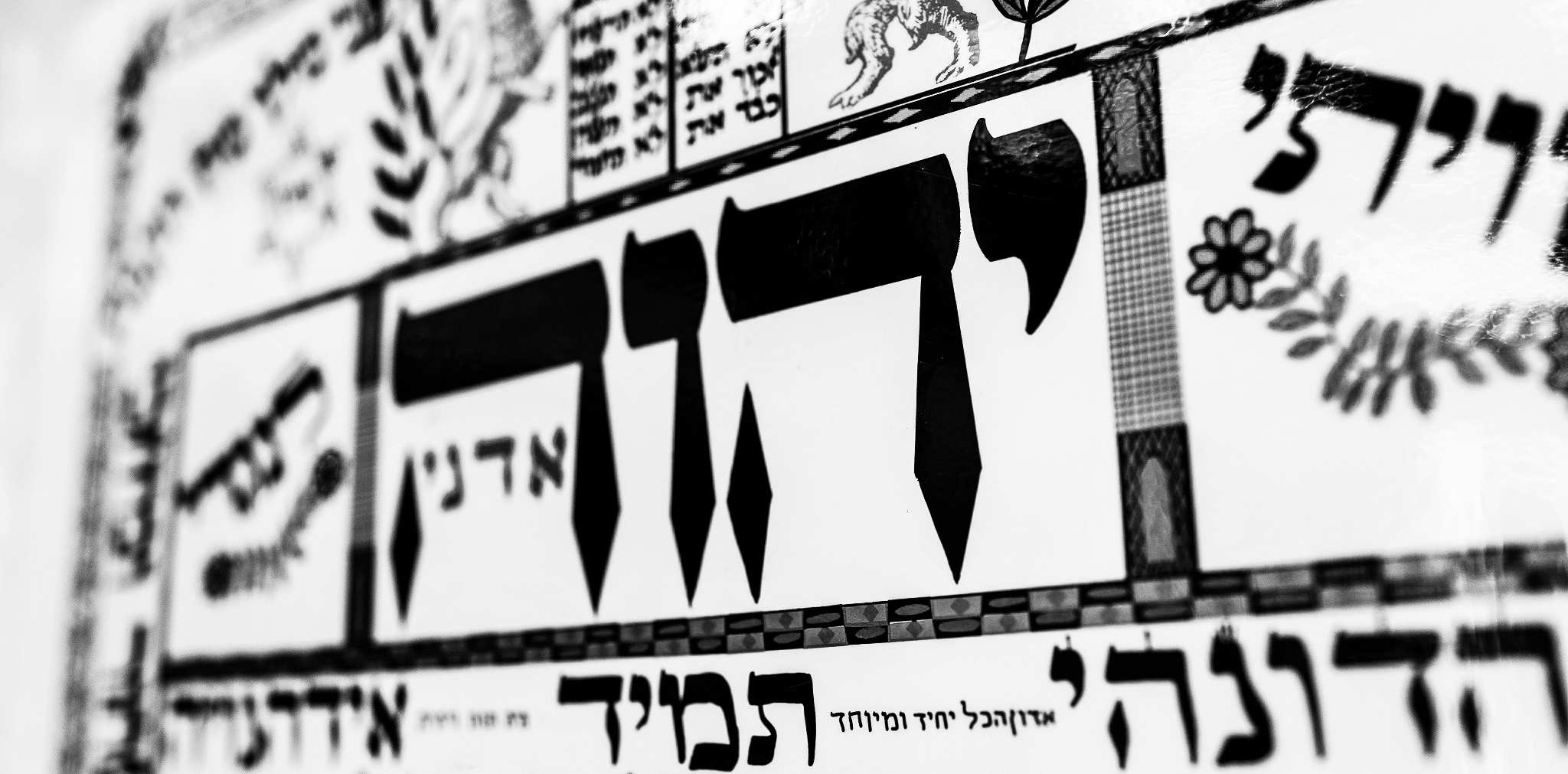
 Today is the 15th of Av (i.e., Tu B’Av), the “holiday of love.” Just as Yom Kippur originally celebrated the reconciliation of Israel to the LORD after the sin of the Golden Calf, so Tu B’Av originally celebrated the reconciliation of Israel for the Sin of the Spies. Therefore both the fifteenth of Av and Yom Kippur became joyous times celebrating forgiveness and restoration to the LORD. The Babylonian Talmud (Ta’anit 31a) quotes Shimon ben Gamliel as saying, “Israel had no holidays as joyous as the fifteenth of Av and the Day of Atonement, when the maidens of Israel would go out and dance in the vineyards… What were they saying: Young man, consider whom you choose to be your wife…”
Divine Light and Healing…
 The Torah begins with the the famous words “in the beginning [God] created” (בראשׁית ברא) which some sages say can be read as “it was created for the head” (בראשׁ יתברא), referring first of all to the Messiah who is the head over all (Col. 2:10), but also to the intellect or mind that reflects the image of God. Recall that the first act of creation was that of light: “God said, ‘Let there be light, and there was light” (Gen. 1:3). Now light itself is a mysterious thing – a “wave” or a “substance” depending on how you consider it – a connection between the spiritual and the physical realms.
The Very First Verse…
Learn to read and understand Genesis 1:1, the very first verse of the Torah and indeed of the Holy Scriptures:

…
The fear of the LORD
“The fear of the LORD is the first principle of knowledge, but fools despise wisdom and correction” (Prov. 1:7). In this “Daily Dvar” broadcast I discuss how reverence or respect is axiomatic for a genuinely good life. Fearing God expresses the confidence that life is a sacred trust and that each soul is answerable to the Creator. Such godly reverence infers that nothing is trivial or inconsequential, and that all things will be accounted before the bar of divine truth. I hope you will find it helpful, friends.

…
Be not afraid…
Learn Isaiah 41:10 in Hebrew.

…
“Fear not, for I am with you; be not dismayed, for I am your God,
I will strengthen you; yea, I will help you; yea, I will uphold you
with the right hand of my righteousness.” (Isa. 41:10)
…
Gratitude and Seeing
 From our Torah this week (i.e., parashat Eikev) we read: “And you shall bless the LORD your God for the good…” (Deut. 8:10). Whenever we derive benefit or enjoyment from something we are to bless (i.e., thank) God for his goodness. Indeed the Hebrew term for gratitude is hakarat tovah (הַכָּרַת טוֹבָה), a phrase that means “recognizing the good.” The heart looks through the eye, and therefore how we see is ultimately a spiritual decision: “If your eye is “single” (i.e., ἁπλοῦς, sincere, focused),” Yeshua said, “your whole body will be filled with light” (Matt. 6:22). When we see rightly, we are awakened to God’s Presence in the little things of life, those small miracles and “signs and wonders” that constantly surround us. The good eye of faith sees hundreds of reasons to bless God for the gift of life (1 Cor. 10:31; 1 Thess 5:18; Psalm 103:1-5). The LORD is “enthroned among the blessings of His people” (Psalm 22:3).
You enlarge my heart…
 In our Torah portion this week (i.e., parashat Eikev) we read: “But now, Israel, what does the LORD your God ask from you … but to love him with all your heart and with all your soul?” (Deut. 10:12). But how are we able to love God be’khol levavka (בְּכָל־לְבָבְךָ) – “with all our heart” – and be’khol nafshekha (וּבְכָל־נַפְשֶׁךָ) – “with all our soul,” apart from healing of the brokenness that makes our hearts divided and sick? That is what the redemption from Egypt was about: we were personally chosen by God, redeemed by his grace, led out from from cruel bondage, only to be led into the desert, away from the world, where we slowly began to understand that we were valued, cared for, and beloved of God. We believed in the possibility of promise, of covenant… Only then could we hear the request from heaven: “Now love Me…” In other words, we can only truly love God by knowing we are beloved by God, and the invitation to love him is a response of his great passion for you (1 John 4:19). Accept that you are accepted in the heart of the Beloved (Eph. 1:4-6).
There is no other…
Learn to read Deuteronomy 4:39 in Hebrew:

…
Lamentations 5:21 (Hashivenu)
Learn Lamentations 5:21 in Hebrew:

.
I AM that I AM…
Read Exodus 3:14a in Hebrew:
