Instead of fretting over the tests and struggles we inevitably face in this life, we might look for reasons to be grateful, for how else can we come to know that the Lord is with us apart from his ongoing deliverance? We ask the Lord for our daily bread (לֶחֶם חֻקֵּנוּ), but I wonder if we are not starving ourselves with fear of the future… Daily bread cannot be stored or hoarded lest it become spoiled and rotten (Exod. 16:20). We must live today in complete trust before the Lord our God, who is forever faithful and true. He it is who said, “Don’t be anxious about tomorrow, for tomorrow has its own troubles. Live one day at a time” (Matt. 6:34). It makes no sense to worry about the future if the LORD is the Good Shepherd who tenderly watches over your way (Psalm 23:1).
It is written that “a joyful heart (לֵב שָׂמֵחַ) is good medicine” (Prov. 17:22). Where it says, “Serve the LORD with gladness” (Psalm 100:2), the sages note that “with gladness” (בְּשִׂמְחָה) contains the same letters as the word “thought” (מַחֲשָׁבָה), which suggests that happiness is found by thinking worthy thoughts. As the apostle admonished: “Think on these things” (Phil. 4:8). We find spiritual happiness when we choose to be thankful. This is called hakarat tovah (הַכָּרַת טוֹבָה), a phrase that means recognizing or being aware of the good. Cultivate a sense of wonder. Look at the sky often, for it is the “daily bread of the eyes.” Albert Einstein once said, “There are two ways to live your life; one is as though nothing is a miracle, and the other is as though everything is.” Happiness is a choice, a decision to see the good, to open your eyes to wonder, and to turn away from negative, fearful visions. The Torah of the LORD rejoices the heart (Psalm 19:8); let the heart of those who seek the LORD be glad (Psalm 105:3).
“Strive to enter through the narrow door. For many, I tell you, will seek to enter and will not be able” (Luke 13:24). The narrow door is the way of humility, assuming a low position, crawling, if you will, and making yourself small… It is the way of the cross of Messiah, confessing the truth of our condition and trusting in God alone for deliverance.. The narrow door is the way of faith – trusting God’s compassion and righteousness given on your behalf. The large, wide-open door is designed for the crowd and its various idols. Beware of the world that seeks to assimilate the soul: beware of becoming part of the crowd! The individual is lost and overwhelmed in the midst of the crowd and its momentum. The crowd assimilates the soul, laughs at the notion of individual responsibility, and abandons itself to the gravity of purely natural forces… The life of faith, on the other hand, refuses to regard the individual human heart as a triviality. Faith is an individual struggle, a walk into unknowing; it is the way of the sojourner who feels uneasy in this world of shadows… God is always with us and helps us stay strong and resolute, even as we struggle through the darkness of this age. Press on, chaverim! Do not lose sight of your high calling in Yeshua. The day and the hour draw near!
Regarding the holiday of Sukkot (“Tabernacles”) the Torah states, ve’samchta be’chagekha – “you shall rejoice in your holiday” and ve’hayita akh same’ach – “you shall have nothing but joy” (Deut. 16:14-15). But how can Torah command us to rejoice? “How shall we sing the LORD’S song in a strange land?” (Psalm 137:4). Can we be forced to dance, sing, and make merry? Holocaust survivor Elie Wiesel wrote, “Ve’samchta be’chagekha (וְשָׂמַחְתָּ בְּחַגֶּךָ) is said to be the most difficult commandment of the Torah, but I could never understand why. Only during the war did I understand. Those Jews who, in the course their journey to the end of hope, managed to dance on Simchat Torah… taught us how Jews should behave in the face of adversity. For them, ve’samchta be’chagekha was one commandment impossible to observe — yet they observed it” (Joseph Lookstein: “On Man’s Prayer,” 1980). In this connection, let me add that these words are ultimately prophetic: “you shall rejoice; you shall have nothing but joy….” That day is coming, when our tears are wiped away and our wounds are forever healed. Chag Sukkot Same’ach, friends.
The Book of Ecclesiastes (i.e., megillat Kohelet) is read during the holiday of Sukkot, though you might be surprised to learn that many of the early sages did not want it included as part of the Jewish Scriptures. After all, the philosophy of Kohelet – that we are incapable of fully understanding the purposes of the world, and therefore much of what we think is important is really havel havalim (הֲבֵל הֲבָלִים), “vanity of vanities” – is contrary to a theology of reward and punishment found in the writings of Moses. This question is not unlike the Book of Job and the mysterious question as to why the righteous suffer… It is to their credit that the sages finally decided to include the scroll as part of the accepted canon, however, since it takes great humility to admit that we must continue to seek God, despite uncertainty and transience of this world. Indeed, we read this book to remind us that lasting meaning and purpose is not found in life lived “under the sun” but rather in knowing and serving God. Solomon therefore concludes his existential reflection as follows: “Fear God and keep his commandments: ki zeh kol-ha’adam (כִּי־זֶה כָּל־הָאָדָם), “for this is the whole man” (Eccl. 12:13), which suggests that those who revere the LORD and obey His Word will be healed of despair and inner vanity…
Among other things, the holiday of Sukkot reminds us that God’s people are “strangers” in this world; they are literally estranged and live as “resident aliens” — here, yet not here…. We wander; we are lonely; we yearn for our heavenly home. Life in this world is “olam ha’sheker,” the false world — full of deception, troubles, and struggle. Thus Abraham said to the sons of Chet: “I am a ‘stranger and sojourner’ (גֵּר־וְתוֹשָׁב) among you; sell me a burial site…” (Gen. 23:4), and likewise David confessed: “For we are strangers with You, mere transients like our fathers; our days on earth are like a shadow without abiding (1 Chron. 29:15). Faith affirms that underlying the surface appearance of life is a deeper reality that is ultimately real and abiding. It “sees what is invisible” (2 Cor. 4:18) and understands (i.e., accepts) that the “present form of this world is passing away” (1 Cor. 7:31). The life of faith therefore calls us to live as toshavim – sojourners – who are at an infinite “distance” from the world of appearances and who seek the Eternal. Sukkot means we ache with a divine “homesickness” as we look forward to our real home in heaven (Heb. 11:9-10). “O You who are at home deep within my heart, enable me to join you deep in my heart.”
1 Chron. 29:15 Hebrew reading lesson (click):
…
Chag Sukkot Sameach and Shabbat Shalom, my fellow sojourners in Messiah’s hope…
The root idea of the word “sukkah” means to cover or surround, as in hedge of protection. The Hebrew root is used when Moses asked to behold God’s glory and the meaning of the name YHVH (יהוה), and God said, “Behold there is a place by me where you shall stand on the rock, and while my glory overtakes you I will cover you with my hand (וְשַׂכּתִי כַפִּי עָלֶיךָ) until I have passed by (Exod. 33:21-21). The hand of God (יַד־יְהוָה) is our sukkah, and indeed the LORD writes our names upon his palms and sets us as a seal upon his heart (Isa. 49:16; Sol. 8:6). Likewise David affirmed that God would treasure you within his sukkah and elevate you upon the Rock that is Messiah: “For he will hide me in his cloud (sukkah) in the time of trouble he will conceal me in the secret of his presence (tent), on the Rock he will raise me up” (Psalm 27:5).
Psalm 27:5 Hebrew reading lesson (click):
…
The LORD will conceal or “treasure you” (the word tzafan [צָפַן] means to prize as a treasure) in his Sukkah, that is, cover you with the Cloud of his Glory… in the day of trouble he will conceal you in his tent, that is, ba’makom – within his Dwelling place, under the shadow of his wings he protect you; he will elevate you upon the Rock which is Messiah (1 Cor. 10:4).
Since God’s Name (יהוה) means “Presence,” “Breath,” “Compassion,” “Love,” “Healing,” and so on, we are surrounded by his Sukkah at all times… In other words, you don’t have to be in a physical sukkah to be in His sukkah! May God open our eyes to see his glory! Sukkot Sameach be’Yeshua (סוכות שמחה בישוע) – Happy Sukkot in Yeshua!
The word sukkot (סֻכּוֹת) is the plural of the Hebrew word sukkah (סֻכָּה), meaning a “booth” or “hut.” In traditional Judaism, a sukkah is a temporary structure used for “living in” (i.e., primarily eating meals or entertaining guests) throughout the week-long holiday. The purpose of the sukkah is to remind us of how God tenderly cared for the Israelites as they made their trek through the dangers of the desert. God spoke endearingly to Israel: “Follow me into the wilderness, into an unsown land” (Jer. 2:2).
The Scriptures state, “The LORD upholds all who are falling and raises up all who are bowed down” (Psalm 145:14). It has been said that the word sukkah can be understood as an acronym formed from the words someikh Adonai (סוֹמֵךְ יְהוָה), “the LORD upholds,” kol (כָּל), “all,” and ha’nofe’leem (הַנּפְלִים), “the ones who fall.” This suggests that those who make a sanctuary within their hearts, trusting in God’s indwelling Presence, will be upheld and kept from falling (Jude 1:24). God knows many need this truth to be made real in this hour…
The Kotzer Rebbe said that the verse, “this is my God, and I will praise him, my father’s God, and I will exalt him” (Exod. 15:2), may be understood as, “this is my God, and I will make a dwelling for Him within me.” Though the LORD is forever enthroned in heaven as our Creator, King, and Deliverer, we still must make a dwelling within us. He stands at the door and knocks. “Where does God dwell,” it is asked, “but where He is given a dwelling place, a sanctuary, a throne within the heart?”
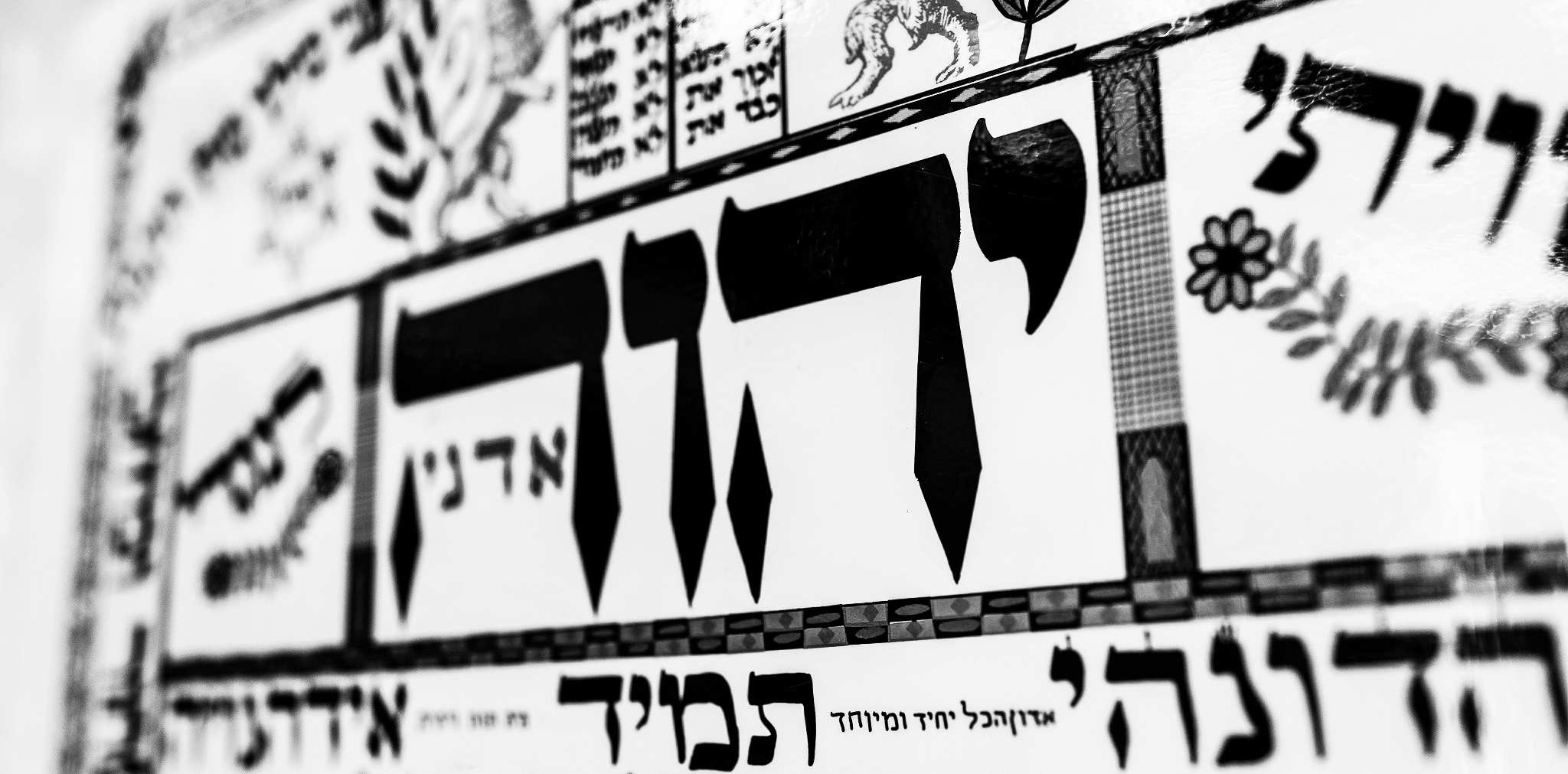
The Third Commandment states: lo tissa et shem Adonai Elohekha lashav, “You shall not lift up (lit. “carry”) the Name of the LORD your God in vain” (Exod. 20:7). Note that the Hebrew word lashav (לַשָּׁוְא), usually translated “in vain” in English, means in an empty or thoughtless manner (the LXX translates it as ἐπὶ ματαίῳ, “worthlessly” or “thoughtlessly”), though the word might also be rendered as “for show,” that is, insincerely or for sake of others. Obviously “lifting up the Name” of God ‘lashav’ includes invoking the Divine Presence in profane and vulgar ways, but it also includes “lip-service” expressions of faith, mechanical confessions, heartless acts of service, and so on. “Lifting up the Name” should never be used as a “weapon” against others, nor should it ever be used to justify or practice violence. You cannot “call upon God’s Name” in the truth without first exercising genuine reverence by recognizing the sacredness of life, the value of other people, and the LORD’s all-consuming glory, love, and power…
Reverencing the Name of the LORD means being in a personal, vital, and all-important relationship with the truth. The Holy Spirit is called the Spirit of Truth (רוּחַ הָאֱמֶת). This means understanding God’s character as “merciful and gracious, slow to anger, and abounding in steadfast love and faithfulness, extending kindness to the thousandth generation, forgiving iniquity, transgression, and sin” (Exod. 34:6-7). Since the Hebrew idea of word (דָּבָר) is coextensive with truth (i.e., “thing”), Yeshua is called the Word of God (דְּבַר אֱלהִים) who represents the Name of God to all who trust in Him (John 17:26, Heb. 1:3). Indeed Yeshua is the true Name of God, the “substance” (being) of God, the “exact imprint and representation of His nature,” and so on. “His eyes are like a flame of fire, and on his head are many diadems, and he has a name written that no one knows but himself. He is clothed in a robe dipped in blood, and the name by which he is called is ‘The Word of God” (Rev. 19:12-13).
 Instead of fretting over the tests and struggles we inevitably face in this life, we might look for reasons to be grateful, for how else can we come to know that the Lord is with us apart from his ongoing deliverance? We ask the Lord for our daily bread (לֶחֶם חֻקֵּנוּ), but I wonder if we are not starving ourselves with fear of the future… Daily bread cannot be stored or hoarded lest it become spoiled and rotten (Exod. 16:20). We must live today in complete trust before the Lord our God, who is forever faithful and true. He it is who said, “Don’t be anxious about tomorrow, for tomorrow has its own troubles. Live one day at a time” (Matt. 6:34). It makes no sense to worry about the future if the LORD is the Good Shepherd who tenderly watches over your way (Psalm 23:1).
 It is written that “a joyful heart (לֵב שָׂמֵחַ) is good medicine” (Prov. 17:22). Where it says, “Serve the LORD with gladness” (Psalm 100:2), the sages note that “with gladness” (בְּשִׂמְחָה) contains the same letters as the word “thought” (מַחֲשָׁבָה), which suggests that happiness is found by thinking worthy thoughts. As the apostle admonished: “Think on these things” (Phil. 4:8). We find spiritual happiness when we choose to be thankful. This is called hakarat tovah (הַכָּרַת טוֹבָה), a phrase that means recognizing or being aware of the good. Cultivate a sense of wonder. Look at the sky often, for it is the “daily bread of the eyes.” Albert Einstein once said, “There are two ways to live your life; one is as though nothing is a miracle, and the other is as though everything is.” Happiness is a choice, a decision to see the good, to open your eyes to wonder, and to turn away from negative, fearful visions. The Torah of the LORD rejoices the heart (Psalm 19:8); let the heart of those who seek the LORD be glad (Psalm 105:3).
 “Strive to enter through the narrow door. For many, I tell you, will seek to enter and will not be able” (Luke 13:24). The narrow door is the way of humility, assuming a low position, crawling, if you will, and making yourself small… It is the way of the cross of Messiah, confessing the truth of our condition and trusting in God alone for deliverance.. The narrow door is the way of faith – trusting God’s compassion and righteousness given on your behalf. The large, wide-open door is designed for the crowd and its various idols. Beware of the world that seeks to assimilate the soul: beware of becoming part of the crowd! The individual is lost and overwhelmed in the midst of the crowd and its momentum. The crowd assimilates the soul, laughs at the notion of individual responsibility, and abandons itself to the gravity of purely natural forces… The life of faith, on the other hand, refuses to regard the individual human heart as a triviality. Faith is an individual struggle, a walk into unknowing; it is the way of the sojourner who feels uneasy in this world of shadows… God is always with us and helps us stay strong and resolute, even as we struggle through the darkness of this age. Press on, chaverim! Do not lose sight of your high calling in Yeshua. The day and the hour draw near!
 Regarding the holiday of
 A view inside our Sukkah. Chag Sukkot Sameach, friends!


 The Book of Ecclesiastes (i.e., megillat Kohelet) is read during the
  Among other things,


 The
The 