Faith sees the invisible light, the truth of love that overcomes all the powers of darkness, hate, and fear. “I believe. I believe in the sun even when it is not shining; I believe in love even when feeling it not; and I believe in God, even when God is silent” (from an anonymous poem found on the wall of a cellar in Cologne, Germany, where some Jews hid from the Nazis).
The spirit testifies that there is “unfinished business,” that there is more than meets the eye, that evil will not have the last word, and that tears will one day forever be wiped away. Despite the ambiguity, faith “hopes against hope” that the LORD God will intervene and bring everlasting healing to us all. As it says, “Let him who walks in darkness and has no light trust in the Name of the LORD (יִבְטַח בְּשֵׁם יְהוָה) and rely on his God.”
Faith is a sort of “holy protest” over the state of the world: “How long, O LORD, forever?” Eventually God will wipe away every tear and make all things right… Bittachon (trust) is a word for this world, which says, “Though he slay me, I will trust in him…” Those who call upon the LORD can trust not only in concealed good behind ambiguous appearances (“all things work together for good”) but also in a future, real, substantive good that will one day be clearly manifest for us all. Meanwhile, may God keep us from such depth of sorrow that leads to sickness, darkness and despair. Amen.
When Abraham sought a place to bury his wife Sarah, he said to the Hittites chieftains: “I am a stranger and sojourner among you…” (Gen. 23:4). The righteous invariably feel like strangers to this world, since they are only passing through, and their focus is on the invisible “city that has foundations, whose designer and builder is God” (Heb. 11:10). Likewise they are as sojourners, not at home in this world, because their faith sees through the vanity and deceit of the present world, and therefore they regard themselves as on a journey to the place of truth and holiness where God abides. The wicked, on the other hand, regard life in this world as all that exists, and therefore they “absolutize” the moment and forfeit the blessing of the eternal (Matt. 16:26). Abraham regarded himself as a “stranger and sojourner” (גֵּר־וְתוֹשָׁב) because the people of his world considered themselves as “owners” and “permanent residents” who sought their inheritance in the here and now. Abraham was a “resident” of someplace higher, however, and understood this world to be a corridor to the next. The sages comment on this paradox: God says to man, ‘If you see yourself as a permanent resident in this world, then I will be a stranger to you; if, however, you see yourself as a stranger to this world, then I will be a Dwelling Place for you.”
“There is a way that seems right to a person, but its end is the way of death” (Prov. 16:25). There is the “seeming way” and the way of truth, and woe to the soul that cannot discern the difference! The spiritual danger here is that there is a way that seems right; as if all is well, and yet it leads to death… O the dread of ever hearing: “I never knew you (לֹא יָדַעְתִּי אתה); depart from me you who practice lawlessness” (Matt. 7:23).
It is lawlessness (ἀνομία) to reject the Torah of God that commands us to follow Messiah and know him in all our ways – including the ways of our struggles, our calls for justice, and so on… “Justice, justice you shall pursue” (צֶדֶק צֶדֶק תִּרְדּף) implies that any means to justice must be just themselves. Indeed Yeshua plainly warned us that those who willfully reject moral sense do not know him and therefore will be judged as outsiders of the truth of God. The way of the LORD (דֶּרֶךְ יְהוָה) is “to show mercy and judgment (Gen. 18:19). Amen. “If you know that He is righteous, you may be sure that everyone who practices righteousness (πᾶς ὁ ποιῶν τὴν δικαιοσύνην) has been born of him” (1 John 2:29).
As Yeshua plainly testified before Pilate: “For this purpose I was born and for this purpose I have come into the world — to bear witness to the truth. Everyone who is of the truth listens to my voice” (John 18:37). “Blessed are those who wash their robes, so that they may have the right to the Tree of Life and that they may enter the city by the gates. Outside are all those who love and practice the lie…” (Rev. 22:14-15).
In this audio podcast (from 2020 at the outset of the Antifa and BLM violence in the USA), I discuss the meaning and importance of the “law” in the life of those who purport to be followers of the Messiah:
Christian (and Jewish) theology insists that truth matters, and knowing the truth about God is absolutely essential for life itself. Nothing is more important. Nothing is more vital. “This is eternal life (חַיֵּי עוֹלָם), that they may know you, the only true God (אֶל־אֱמֶת), and Yeshua the Messiah (יֵשׁוּעַ הַמָּשִׁיחַ) whom you have sent (John 17:3). The truth sets us free; it is the unbreakable seal that bears witness of reality. In the Gospel of John it is recorded that Yeshua said, “I am the way, the truth, and the life” (i.e., ᾽Εγώ εἰμι ἡ ὁδὸς καὶ ἡ ἀλήθεια καὶ ἡ ζωή). The Greek word translated “truth” in this verse is aletheia (ἀλήθεια), a compound word formed from an alpha prefix (α-) meaning “not,” and lethei (λήθη), meaning “forgetfulness.” (In Greek mythology, the “waters of Lethe” induced a state of oblivion or forgetfulness.) Truth is therefore a kind of “remembering” something forgotten, or a recollecting of what is essentially real. Etymologically, the word aletheia suggests that truth is also “unforgettable” (i.e., not lethei), that is, it has its own inherent and irresistible “witness” to reality. In that sense light is a metaphor for truth: “The light shines in the darkness, and the darkness has not overcome it” (John 1:5). There can be no truth apart from moral reality. People may lie to themselves, but ultimately truth has the final word.
In the Scriptures it is written: “You shall not worship the LORD your God in that way” (Deut. 12:4), which referred to various Canaanite practices of idolatry based on mystery, ignorance and superstition. Unlike religious cults that were based on vain speculations, however, Jews are duty-bound to carry out God’s will as expressed by the truth of divine revelation. Our father Abraham was given revelation of Torah (Gen. 26:5) and at Sinai moral truth was enshrined in the Ten Commandments (Exod. 24:12; Deut. 5:22).
A basic assumption of Torah is that “ought implies can,” or that we are genuinely responsible to know and to do moral truth (Rom. 1:18-20). Unlike the ancient “mystery religions” that abandoned themselves by “celebrating” the lower nature, God insists on overruling our base impulses and finding peace in the midst of the struggle to live in righteousness (Gal. 5:16-17). Therefore we do not understand the Hebrew word “shalom” (שָׁלוֹם), or “peace,” to mean the absence of strife, but rather “wholeness,” “completeness,” and “healing” — the integration of the heart and mind that comes through catharsis and personal struggle (Gen. 32:28). Faith does not mean passivity, but protest — “arguing” for (and sometimes with) heaven, reminding God of his promises, lamenting over the divine absence; finding courage to oppose the status quo, and repeatedly appealing to heaven “be’khol levaveinu” (בְּכָל־לְבָבֵנוּ) — with all our hearts — precisely because we believe that our prayers can affect even the divine decrees… True faith confesses to “move mountains into the sea” (Mark 11:23) and refuses to let go of God until it receives the promised blessing to become “Israel” (Gen. 32:26).
Note: As many of you know, “tzedakah” (צדקה) refers to our duty to “do righteousness” (i.e., la’asot tzedakah: לעשות צדקה) which can take the form of good works or deeds (i.e., ma’asei tovim: מעשה טובים), doing acts of kindness (i.e., gemilut chassidim: גמילות חסדים), studying Torah (i.e., talmud Torah: תלמוד תורה), engaging in prayer (i.e., avodat ha’lev: עבודת הלב), and offering charity (i.e., mattan tzedakah: מתן צדקה). Living in accordance with the righteousness of Messiah (צדקת משיח) yields a life of peace, inner quiet, and confidence that comes from the Spirit of God.
“Unless you turn (shuv) and become like children, you will never (οὐ μὴ) enter the kingdom of heaven” (Matt. 18:3). Such is the importance of simple trust in God… Indeed Yeshua repeatedly taught us to trust God as “Abba,” our Father (אַבָּא אָבִינוּ). He taught that we are warmly accepted as part of his family; that we are under his constant care; and that we live within his household as beloved children… And even though God is utterly transcendent, the Infinite One (אין סוף) and Creator of all worlds, he humbles himself to feed the birds of the air, to water lilies of the field, and to count the number of hairs on your head (Psalm 113:5-6). He is as close as your next breath; he leans upon your bosom at the table; he anticipates what you need before you ask him… The “fear of the Lord” is that you might fail knowing his great love for you — that you will forget or lose sight of your true identity in lesser things. Therefore affirm the truth that you are loved with an unending and everlasting love, that you are safe, that you are surely accepted, and that nothing can ever separate you from the power of love. God your Father hears you, he knows you, and he loves you bekhol levavo (בְּכָל־לְבָבוֹ) – “with all his heart.”
May we know God as our beloved Abba. “For you did not receive the spirit of slavery to fall back into fear, but you have received the Spirit of adoption by whom we cry, “Abba! Father!” The Spirit bears witness with our spirit that we are children of God, and if children, then heirs – heirs of God and fellow heirs with Messiah – even if we may suffer together with him to the end that we may also be glorified together with him” (Rom. 8:15-17). Amen…
Being “blameless” (i.e., tamim: תמים) in God’s sight means more than just not being guilty. That idea is a bit “neutral,” don’t you think? How would you feel if a judge said to you “Not guilty!” at the bar of judgment but then sent you on your way, with no further thought of you? The idea of being blameless means more than being exonerated or declared innocent: it is a matter of being drawn into God’s love and blessing for you; it is the state wherein you are not only forgiven by God, but accepted, welcomed, wanted, and (if you will pardon the simplification) even “liked” by Him. It is the state of grace given in Yeshua; the blessing of knowing His heart.
God loves us with “an everlasting love” (i.e., ahavat olam: אַהֲבַת עוֹלָם) and draws us in chesed (חֶסֶד, i.e., His faithful love and kindness). As it is written: “I love you with an everlasting love; therefore in chesed I draw you to me” (Jer. 31:3).
Gratitude is essential to the life of faith… We read in the Torah: “And you shall bless the LORD your God for the good” (Deut. 8:10). Whenever we derive benefit or enjoyment from something we are to bless (i.e., thank) God for his goodness. Indeed the Hebrew term for gratitude is hakarat tovah (הַכָּרַת טוֹבָה), a phrase that means “recognizing the good.” The heart looks through the eye, and therefore how we see is ultimately a spiritual decision: “If your eye is “single” (i.e., ἁπλοῦς, sincere, focused),” Yeshua said, “your whole body will be filled with light” (Matt. 6:22). When we see rightly, we are awakened to God’s Presence in the little things of life, those small miracles and “signs and wonders” that constantly surround us. The good eye of faith sees hundreds of reasons to bless God for the precious gift of life (1 Cor. 10:31).
“Give thanks to the LORD for He is good; his love endures forever” (Psalm 136:1); “give thanks to the LORD always” (Col. 3:17; Eph. 5:20; 1 Thess. 5:18)… Gratitude is foundational to our lives as followers of Yeshua. Indeed there are really only two prayers we ever offer to God, namely “Help, LORD!” and “Thank you, LORD.” Meister Eckhart once remarked that if the only prayer you said in your entire life was, “thank you,” that would suffice… Genuine prayer ultimately resolves to an expression of thanks. We are to “praise the Bridge that carries us over” into the Presence and Love of God, and that Bridge is Yeshua our Lord.
The “thank offering” mentioned in the Torah (i.e., zevach ha-todah: זֶבַח הַתּוֹדָד) is also mentioned in the New Testament. In the Book of Hebrews were are instructed to “continually offer up a sacrifice of thanks (זֶבַח תּוֹדָה) to God, that is, the fruit of lips that acknowledge his Name” (Heb. 13:15). It is interesting to note that the Greek verb used to “offer up” (i.e., ἀναφέρω) is used to translate the Hebrew verb “to draw near” (karov) in Leviticus. In other words, the “offering up of thanks” for the sacrifice of Yeshua functions as “korban” and draws us near to God. Thanking God for personal deliverance constitutes “right sacrifices” (זִבְחֵי־צֶדֶק) as we draw near to God in the hope of His love (Psalm 4:5; Heb. 7:19).
Though it is important to guard our sincere convictions and to be passionate about what we believe, we must nevertheless be careful to walk in humility before the mystery of life… After all, much is inscrutable to us, much is beyond our understanding, and therefore, if we are honest, we should be reverent before the “sacred secrecy” of everything. Fanaticism and intolerance (whether secular or religious) is motivated by willful ignorance of the marvelous complexities that pervade existence. The fanatic invariably seeks to reduce life to a simple formula, recipe, and a generalization. The humble person, on the other hand, freely confesses that they “walk by faith, not by sight” — by hearing the Word of God and heeding what the Spirit of God is saying to the heart… For now we “see through a glass darkly,” which literally means “in an enigma” (ἐν αἰνίγματι). An enigma (or riddle) is an analogy given through some resemblance to the truth, though quite often the correspondences are puzzling and obscure. Hence, “seeing through a glass darkly” means perceiving obscurely or imperfectly, looking “through” something else instead of directly apprehending reality. We see only a reflection of reality, and our knowledge in this life is indirect and imperfect. This is contrasted with the “face to face” (פָּנִים אֶל־פָּנִים) vision and clarity given in the world to come, when our knowledge will be clear and distinct, and the truth of God will be fully manifest and no longer hidden. Being “face to face” with reality means being free of the riddles, the analogies, the semblances, etc., which at best adumbrate our way.. Such reflection should make us humble whenever we share our faith. “Now we know in part, but then shall we know in whole” (1 Cor. 13:12). Let therefore repeat that an honest theology must find a place for mystery, for “seeing through a glass darkly,” and for the apprehension of awe and wonder.
“There was a time when I had all the answers. My real growth began when I discovered that the questions to which I had the answers were not the important questions…. A genuine faith must recognize the fact that it is through a dark glass we see; though by faith we do penetrate sufficiently to the heart of the mystery so as not to be overwhelmed by it. A genuine faith resolves the mystery of life by the mystery of God. It recognizes that no aspect of life or existence explains itself, even after all known causes and consequences have been traced. All known existence points beyond itself. To realize that it points beyond itself to God is to assert that the mystery of life does not dissolve life into meaninglessness….” (Reinhold Niebuhr)
Since the LORD God is called the Infinite One (אֵין סוֹף) whose understanding is without limit (Psalm 147:5), we must use analogies, metaphors, symbols, allusions, parables, poetry, and other linguistic devices (as well art and music) to convey spiritual truth and meaning. We compare (συγκρίνω) spiritual things with spiritual (1 Cor. 2:13). Some of the classical “mystics” have said the way to God is through the transcendence of words altogether, though most of them use imagery and poetry to speak about “ineffable” reality. Others, like Soren Kierkegaard, use “indirect communication” to evoke the decision to believe, to find hope, and to walk by faith. The truth can be found, not by means of humanistic learning, but by special revelation and encounter with the Truth of God.
After all, much is inscrutable to us, much is beyond our understanding, and therefore, if we are honest, we should be reverent before the “sacred secrecy” of everything.” – jjp
“No one ever told me that grief felt so much like fear” (C.S. Lewis). We naturally feel sorrow when we experience loss in our lives, though we may experience a sort of consternation, too, since the very ground beneath our feet may seem to fall away, us leaving us feeling alienated and terribly alone. Over time our grief can make us numb and disconnected. We draw inward, afraid that whatever we love will be taken from us… As someone once confided: “Each loss makes a little hole in you; after awhile, they all add up, and there’s just a gaping hole where your heart used to be.”
We must go through the desert before we can live the promise. Since experiencing loss is part of life in a fallen world, we must first acknowledge our troubles and sorrows. “Don’t call me Naomi (“my delight”) but Mara (“bitterness”), for the Almighty has dealt very bitterly with me (כִּי־הֵמַר שַׁדַּי לִי מְאֹד). I went out full, but the LORD hath brought me home empty” (Ruth 1:20-21). Once we give voice to our pain (and that might have to be done over and again) the heart can reopen to hope once again. We then can turn to God and learn to live in the moment, trusting him to help us through the troubles of the day (Matt. 6:34).
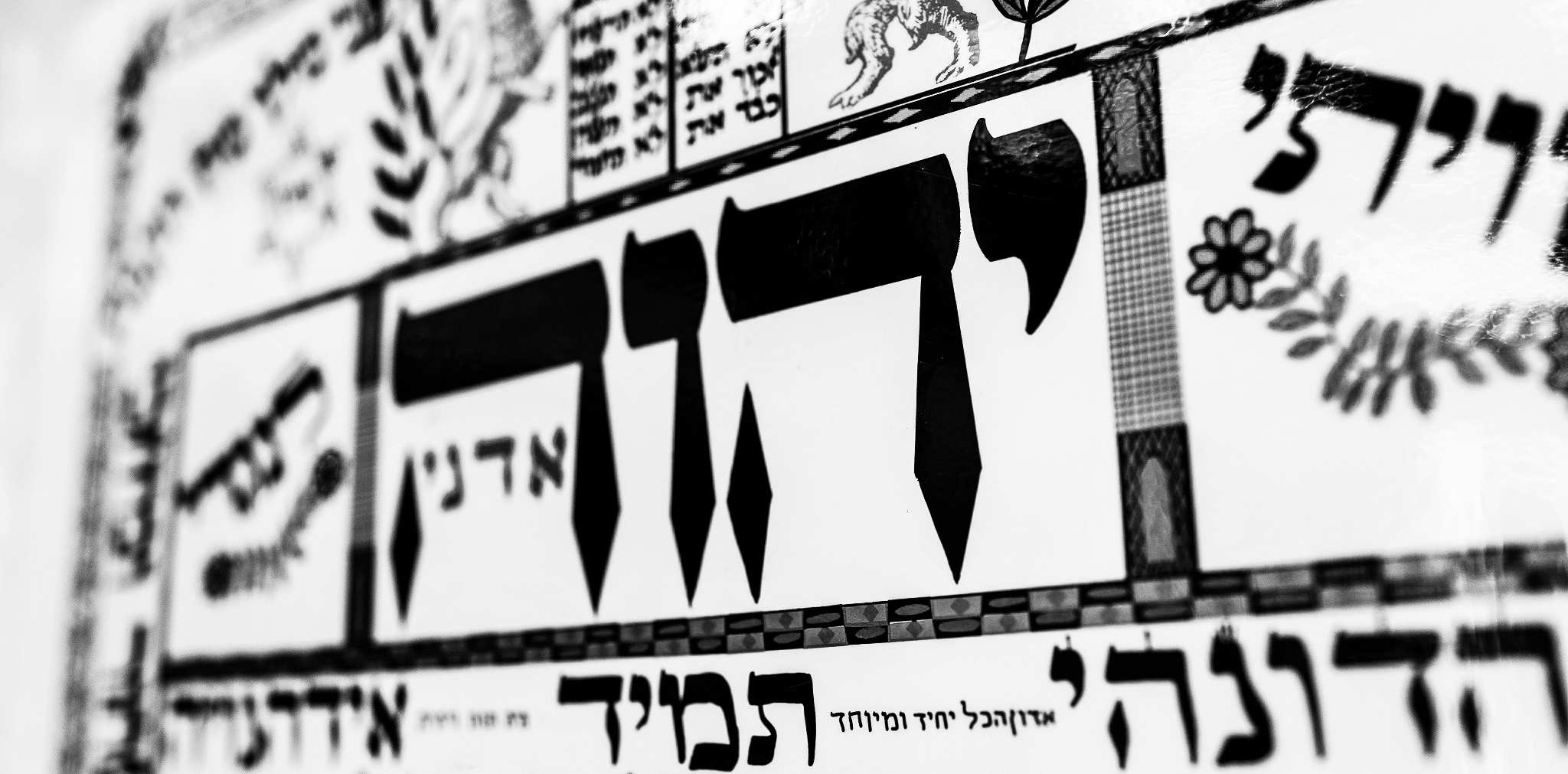
 Faith sees the invisible light, the truth of love that overcomes all the powers of darkness, hate, and fear. “I believe. I believe in the sun even when it is not shining; I believe in love even when feeling it not; and I believe in God, even when God is silent” (from an anonymous poem found on the wall of a cellar in Cologne, Germany, where some Jews hid from the Nazis).
 When Abraham sought a place to bury his wife Sarah, he said to the Hittites chieftains: “I am a stranger and sojourner among you…” (Gen. 23:4). The righteous invariably feel like strangers to this world, since they are only passing through, and their focus is on the invisible “city that has foundations, whose designer and builder is God” (Heb. 11:10). Likewise they are as sojourners, not at home in this world, because their faith sees through the vanity and deceit of the present world, and therefore they regard themselves as on a journey to the place of truth and holiness where God abides. The wicked, on the other hand, regard life in this world as all that exists, and therefore they “absolutize” the moment and forfeit the blessing of the eternal (Matt. 16:26). Abraham regarded himself as a “stranger and sojourner” (גֵּר־וְתוֹשָׁב) because the people of his world considered themselves as “owners” and “permanent residents” who sought their inheritance in the here and now. Abraham was a “resident” of someplace higher, however, and understood this world to be a corridor to the next. The sages comment on this paradox: God says to man, ‘If you see yourself as a permanent resident in this world, then I will be a stranger to you; if, however, you see yourself as a stranger to this world, then I will be a Dwelling Place for you.”
 (Originally published July 11, 2020)

 Christian (and Jewish) theology insists that truth matters, and knowing the truth about God is absolutely essential for life itself. Nothing is more important. Nothing is more vital. “This is eternal life (חַיֵּי עוֹלָם), that they may know you, the only true God (אֶל־אֱמֶת), and Yeshua the Messiah (יֵשׁוּעַ הַמָּשִׁיחַ) whom you have sent (John 17:3). The truth sets us free; it is the unbreakable seal that bears witness of reality. In the Gospel of John it is recorded that Yeshua said, “I am the way, the truth, and the life” (i.e., ᾽Εγώ εἰμι ἡ ὁδὸς καὶ ἡ ἀλήθεια καὶ ἡ ζωή). The Greek word translated “truth” in this verse is aletheia (ἀλήθεια), a compound word formed from an alpha prefix (α-) meaning “not,” and lethei (λήθη), meaning “forgetfulness.” (In Greek mythology, the “waters of Lethe” induced a state of oblivion or forgetfulness.) Truth is therefore a kind of “remembering” something forgotten, or a recollecting of what is essentially real. Etymologically, the word aletheia suggests that truth is also “unforgettable” (i.e., not lethei), that is, it has its own inherent and irresistible “witness” to reality. In that sense light is a metaphor for truth: “The light shines in the darkness, and the darkness has not overcome it” (John 1:5). There can be no truth apart from moral reality. People may lie to themselves, but ultimately truth has the final word.
 In the Scriptures it is written: “You shall not worship the LORD your God in that way” (Deut. 12:4), which referred to various Canaanite practices of idolatry based on mystery, ignorance and superstition. Unlike religious cults that were based on vain speculations, however, Jews are duty-bound to carry out God’s will as expressed by the truth of divine revelation. Our father Abraham was given revelation of Torah (Gen. 26:5) and at Sinai moral truth was enshrined in the Ten Commandments (Exod. 24:12; Deut. 5:22).
 “Unless you turn (shuv) and become like children, you will never (οὐ μὴ) enter the kingdom of heaven” (Matt. 18:3). Such is the importance of simple trust in God… Indeed Yeshua repeatedly taught us to trust God as “Abba,” our Father (אַבָּא אָבִינוּ). He taught that we are warmly accepted as part of his family; that we are under his constant care; and that we live within his household as beloved children… And even though God is utterly transcendent, the Infinite One (אין סוף) and Creator of all worlds, he humbles himself to feed the birds of the air, to water lilies of the field, and to count the number of hairs on your head (Psalm 113:5-6). He is as close as your next breath; he leans upon your bosom at the table; he anticipates what you need before you ask him… The “fear of the Lord” is that you might fail knowing his great love for you — that you will forget or lose sight of your true identity in lesser things. Therefore affirm the truth that you are loved with an unending and everlasting love, that you are safe, that you are surely accepted, and that nothing can ever separate you from the power of love. God your Father hears you, he knows you, and he loves you bekhol levavo (בְּכָל־לְבָבוֹ) – “with all his heart.”
 Being “blameless” (i.e., tamim: תמים) in God’s sight means more than just not being guilty. That idea is a bit “neutral,” don’t you think? How would you feel if a judge said to you “Not guilty!” at the bar of judgment but then sent you on your way, with no further thought of you? The idea of being blameless means more than being exonerated or declared innocent: it is a matter of being drawn into God’s love and blessing for you; it is the state wherein you are not only forgiven by God, but accepted, welcomed, wanted, and (if you will pardon the simplification) even “liked” by Him. It is the state of grace given in Yeshua; the blessing of knowing His heart.
 Gratitude is essential to the life of faith… We read in the Torah: “And you shall bless the LORD your God for the good” (Deut. 8:10). Whenever we derive benefit or enjoyment from something we are to bless (i.e., thank) God for his goodness. Indeed the Hebrew term for gratitude is hakarat tovah (הַכָּרַת טוֹבָה), a phrase that means “recognizing the good.” The heart looks through the eye, and therefore how we see is ultimately a spiritual decision: “If your eye is “single” (i.e., ἁπλοῦς, sincere, focused),” Yeshua said, “your whole body will be filled with light” (Matt. 6:22). When we see rightly, we are awakened to God’s Presence in the little things of life, those small miracles and “signs and wonders” that constantly surround us. The good eye of faith sees hundreds of reasons to bless God for the precious gift of life (1 Cor. 10:31).
 Though it is important to guard our sincere convictions and to be passionate about what we believe, we must nevertheless be careful to walk in humility before the mystery of life… After all, much is inscrutable to us, much is beyond our understanding, and therefore, if we are honest, we should be reverent before the “sacred secrecy” of everything. Fanaticism and intolerance (whether secular or religious) is motivated by willful ignorance of the marvelous complexities that pervade existence. The fanatic invariably seeks to reduce life to a simple formula, recipe, and a generalization. The humble person, on the other hand, freely confesses that they “walk by faith, not by sight” — by hearing the Word of God and heeding what the Spirit of God is saying to the heart… For now we “see through a glass darkly,” which literally means “in an enigma” (ἐν αἰνίγματι). An enigma (or riddle) is an analogy given through some resemblance to the truth, though quite often the correspondences are puzzling and obscure. Hence, “seeing through a glass darkly” means perceiving obscurely or imperfectly, looking “through” something else instead of directly apprehending reality. We see only a reflection of reality, and our knowledge in this life is indirect and imperfect. This is contrasted with the “face to face” (פָּנִים אֶל־פָּנִים) vision and clarity given in the world to come, when our knowledge will be clear and distinct, and the truth of God will be fully manifest and no longer hidden. Being “face to face” with reality means being free of the riddles, the analogies, the semblances, etc., which at best adumbrate our way.. Such reflection should make us humble whenever we share our faith. “Now we know in part, but then shall we know in whole” (1 Cor. 13:12). Let therefore repeat that an honest theology must find a place for mystery, for “seeing through a glass darkly,” and for the apprehension of awe and wonder.
 “No one ever told me that grief felt so much like fear” (C.S. Lewis). We naturally feel sorrow when we experience loss in our lives, though we may experience a sort of consternation, too, since the very ground beneath our feet may seem to fall away, us leaving us feeling alienated and terribly alone. Over time our grief can make us numb and disconnected. We draw inward, afraid that whatever we love will be taken from us… As someone once confided: “Each loss makes a little hole in you; after awhile, they all add up, and there’s just a gaping hole where your heart used to be.”