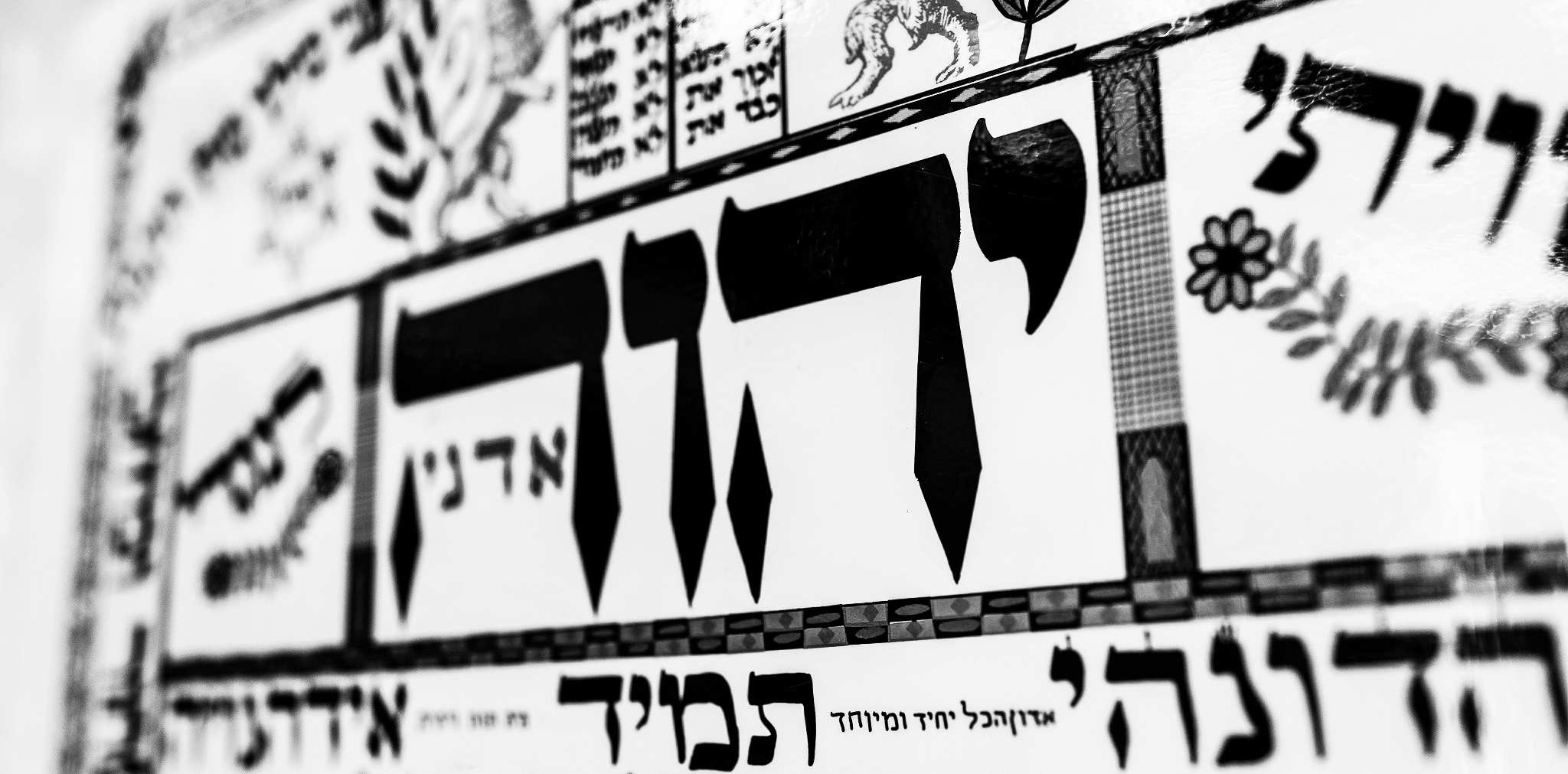
 Our Torah portion for this week (i.e., parashat Balak) is named after a fretful Moabite king (בָּלָק) who sought to curse the Jewish people by hiring the services of a wicked Midianite “prophet” named Balaam (i.e., bil’am: בִּלְעָם). King Balak’s plan was to employ Balaam’s sorcery (i.e., kashafut: כַּשָׁפוּת) against the Israelites to prevent them from entering the Promised Land. Similar to the delicious irony that befell the villain Haman in the Book of Esther, however, King Balak’s scheme was upended, and the curse he sought to put on the Jewish people was repeatedly pronounced as a blessing by Balaam instead. After several foiled attempts, Balak fretfully dismissed the prophet, but before departing from the dejected king, Balaam ironically prophesied the destruction of the Moabites and the victorious establishment of Israel.
The shameful story of Balaam reveals that “there is no enchantment against Jacob, no divination against Israel” (Num. 23:23). Ein od milvado (אֵין עוֹד מִלְבַדּו) – no weapon or scheme devised against God will ever prosper (Isa. 54:15-17).
Balak Podcast:

 In the second part of the “Shavuah Tov” audio broadcast for this parashat
 Our Torah portion this week (i.e.,
 The Spirit of God cries out, “choose life that you may live!” (Deut. 30:19), which implies that is our responsibility to believe in the Reality of God, to trust in his providential care, to affirm that “all is well and all manner of thing shall be well,” and to understand that our present struggle is designed by heaven to help us grow in grace and the knowledge of the truth (1 Pet. 3:16).

 “Wherever you go, there you are…” You can’t escape from yourself; you can’t run away from who you are, and therefore your relationship with yourself is as inescapably eternal as your relationship with God. Indeed how you relate to yourself expresses your relationship with God (Luke 15:17). If you are self-abusive, if your life is a “living hell,” you must first of all face yourself and quit denying the condition of your heart. The LORD delivers through the wound; he does not offer you “Nirvana” to extinguish who you really are… If you have a critical spirit, if you cast eyes of suspicion upon others, then understand this reveals your own self-rejection and leads to the hell of never accepting yourself…
 Shavuah tov, chaverim. Last week’s Torah portion (
 Our Torah portion this week (i.e.,
 Our Torah portion for this week,
 In this audio podcast I discuss the role of tradition in our understanding of the Torah and the Holy Scriptures. Though this is a somewhat complex subject, it is comprehensible if we take the time to carefully think through some of the issues. Among other things I consider the philosophical idea of the “Tao” as described by C.S. Lewis in relation to human conscience, the intuitive idea of the moral law as empirically expressed in various world cultures, and the argument that objective values are implied in any statement of right and wrong. I also consider the role and influence of tradition regarding the revelation of the law of God given at Mount Sinai, the subsequent preservation and transmission of the written words of Scripture, the creation of the biblical canon, and how both Yeshua and the Apostle Paul accepted and ministered in the context of the theological traditions of their day. I hope you might find it helpful…


 Shavuah Tov, chaverim! This week we will read the last two portions of the great Book of Leviticus (ספר ויקרא), namely,