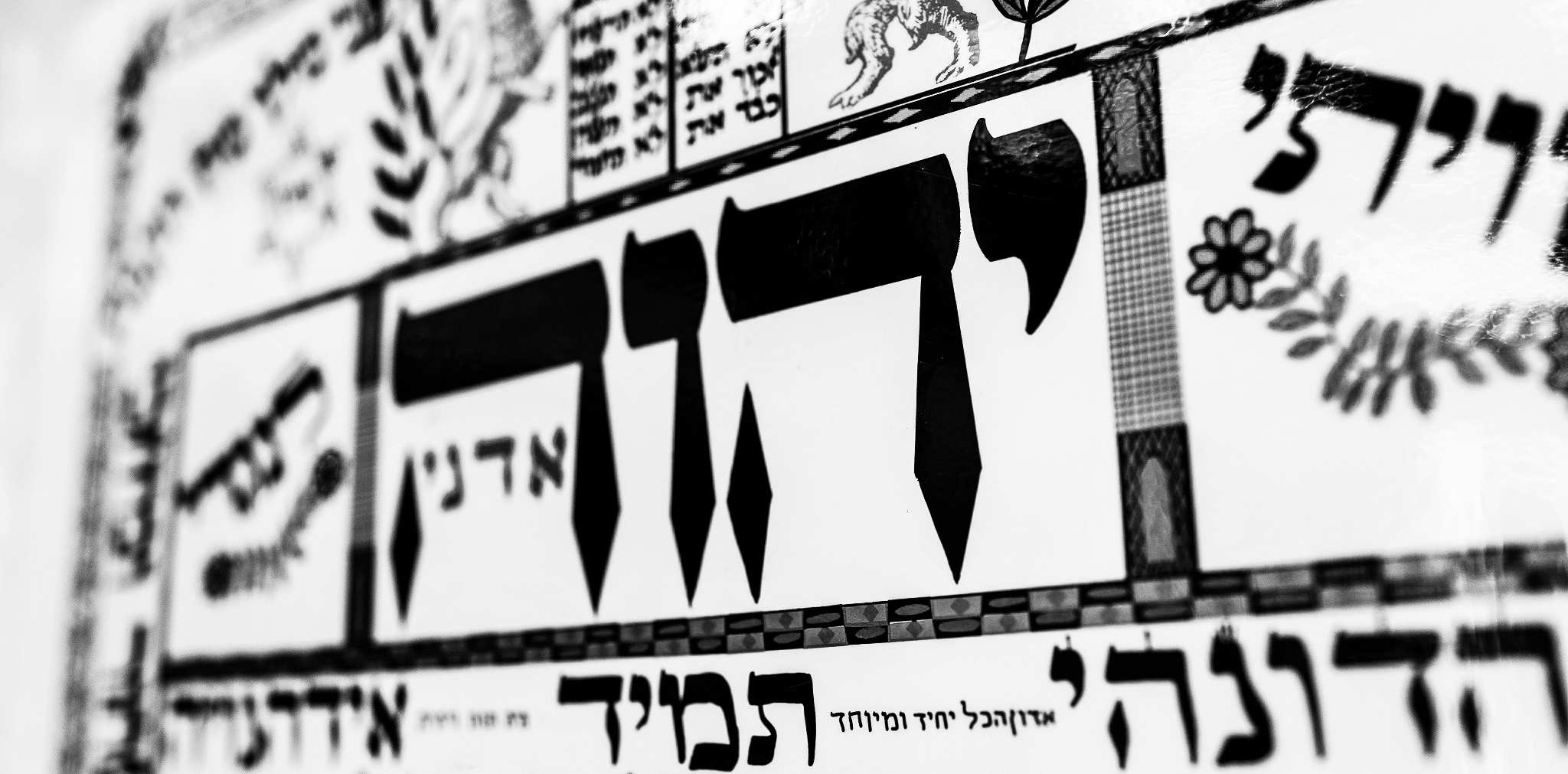
 Our Torah reading for this week, called parashat Bo, begins with God commanding Moses “to go” (i.e., bo: בּא) before the Pharaoh to announce further apocalyptic judgments upon Egypt. The purpose of this power encounter was to vindicate God’s justice and redemptive love for his people, that is, his deliverance or salvation, by overthrowing the tyranny of unjust human oppression. Pharaoh’s nightmare of “one little lamb” outweighing all the firstborn of Egypt was about to be fulfilled….
Knowing God’s Heart…
 If you can’t detect God’s hand in your circumstances, then trust His heart… The heart of faith affirms: gam zu l’tovah (גַּם זוּ לְטוֹבָה): “this too is for good,” particularly when the present hour may be shrouded in darkness… Whenever I am confused about life (which is often enough), I try to remember what God said to Moses after the tragic sin of the Golden Calf: “I will make all my goodness pass before you and will proclaim before you my Name, ‘The LORD’ (יהוה). And I will be gracious to whom I will be gracious, and will show mercy on whom I will show mercy” (Exod. 33:19). God’s character does not change: the LORD is the same “yesterday, today, and forever.” The meaning of the Name, however, cannot be known apart from understanding the need of the heart…

Parashat Va’era (podcast)…
 In our Torah for this week (i.e., parashat Va’era), the LORD told Moses that He was about to fulfill His promise to Abraham, Isaac, and Jacob by giving the Israelites the land of Canaan, and that he had heard the “groaning of the people of Israel whom the Egyptians held as slaves” (Exod. 6:5). The LORD (יהוה) was now coming down to earth to fight and save his people! Israel would now know that He alone is their Savior and God. The “showdown” between the LORD (יהוה) and the so-called “gods” of Egypt was imminent, and God therefore encouraged the people with precious promises: “I AM the LORD (אֲנִי יְהוָה) and I will bring you out from under the burdens of the Egyptians, and I will deliver you from their bondage, and I will redeem you with an outstretched arm and with great judgment; and I will take you to me for a people and I will be to you a God” (these are the “four expressions of redemption” we recite during the Passover Seder every year).

Despite these wonderful promises, however, the people were unable to listen because of their “shortness of breath” (מִקּצֶר רוּחַ) on account of their harsh slavery. The LORD then told Moses: “Go in, tell Pharaoh king of Egypt to let the people of Israel go out of his land,” and the great showdown between the LORD and the gods of Egypt began. However, even after repeatedly witnessing the series of miraculous plagues issued in the Name of the LORD, the despot remained proud and unmoved, thereby setting the stage for the final devastating plagues upon the land of Egypt and the great Passover redemption of Israel.

Parashat Va’era Podcast:

Parashat Shemot (podcast)…
 The Book of Exodus (סֵפֶר שְׁמוֹת) begins directly where the book of Genesis left off, by listing the “names” (shemot) of the descendants of Jacob who came down to Egypt to dwell in the land of Goshen. Over time Jacob’s family flourished and multiplied so greatly that the new king of Egypt – who did not “remember” Joseph – regarded the Israelites as a political threat and decided to enslave them.
When the king’s oppression did not curb their growth, however, he commanded the Hebrew midwives to kill all newborn Jewish boys. When the midwives refused to obey, however, the Pharaoh decreed that all newborn boys were to be forcibly drowned in the Nile river.

In this audio summary, I discuss the first portion of the Book of Exodus, parashat Shemot, as well as the significance of the secular New Year and our approach to understanding the holidays in general.
Parashat Shemot Podcast:

Parashat Vayechi Podcast…
 Our Torah reading for this week, parashat Vayechi (ויחי), recounts how the great patriarch Jacob adopted Joseph’s two sons (Ephraim and Manasseh) as his own children. When Jacob blessed the boys, however, he intentionally reversed the birth order by putting the younger before the older, signifying that the old struggle he had faced as a child was over, and he now understood things differently. And note Ephraim and Manasseh’s reaction: the older did not envy the younger, nor did the younger boast over the older. The family had apparently learned that blessing from God is for the good of all, and that there is no real blessing apart from genuine humility that esteems the welfare of others.
Following this, Jacob was ready to summon his family to hear his final words. Among other things, he foretold how the Messiah would come from the line of Judah and then instructed his sons to bury him only in the promised land, and not in Egypt (Gen. 49:10-12; 49:29-32).
After his death, Joseph and his brothers, with various dignitaries of Egypt, formed a funeral procession and returned to Canaan to bury Jacob in the Cave of Machpelah in Hebron. After the funeral, they returned to Egypt, but Joseph’s brothers feared that he would now repay them for their former betrayal and threw themselves on his mercy. Joseph reassured them that they had no reason to fear him and reminded them that God had overruled their earlier intent by intending him to be a blessing to the whole world (Gen. 50:20).
The portion ends with the account of the death of Joseph, who made the sons of Israel promise to take his bones with them when the LORD would bring them back to the land of Canaan (alluding to the great Exodus to come). Joseph’s faith in the Jewish people’s return to the Promised Land is summarized by his statement: “God will surely remember you” (Gen. 50:24). He died at age 110, was embalmed and placed in a coffin in Egypt, full of faith that he would be raised from the dead in the land promised to Abraham, Isaac, and Jacob.
Vayechi Audio Podcast:

Preparing for Eternity….
 The ancient Greek philosophers sought for “salvation” (Σωτηρία), which they generally understood as freedom from the fear of death… Therefore Socrates sought to dispel mythical superstition by regarding philosophy as the “practice for death,” by which he meant that reflecting upon this “shadowy world” would instill a profound hunger for the eternal (and ideal) world, and he therefore advised that, since we all must die, we ought to prepare ourselves now for eternity, by focusing the mind on what is most essential, real, and beautiful.
The Jewish sages likewise later affirmed, “This world is like a corridor before the World to Come; prepare yourself in the corridor, that you may enter into the hall” (Avot 4:21), which implies that the great commandment is דִּרְשׁוּנִי וִחְיוּ – “Seek Me and live” (Amos 5:4), as the prophet Isaiah (7th century BC) cried out, “Seek the LORD while he may be found; call upon him while he is near” (Isa. 55:6).
Therefore Yeshua (יֵשׁוּעַ) is justly named “our salvation” (יְשׁוּעָתֵנוּ), since it is by his hand that we are delivered from bondage to the fear of death (Heb. 2:14-15). The resurrection of Yeshua utterly overthrows the power of death (i.e., the devil), and eternally secures our welcome in the world to come.
Do not let your heart be troubled; have faith in God, for he “prepares a place for you” on the other side of the veil of this temporal world (John 14:1-3). “Whoever is born of God conquers the world (νικᾷ τὸν κόσμον), and this is the overcoming power that conquers the world, even our faith” (1 John 5:4).
As Yeshua testified: “I AM the resurrection and the life (אָנכִי הַתְּקוּמָה וְהַחַיִּים). The one who trusts in me will live, even though he dies; and whoever lives and believes in me will never, no, not ever, die (οὐ μὴ ἀποθάνῃ εἰς τὸν αἰῶνα). Do you believe this?” (John 11:25-26).
Yeshua’s words indicate there are two distinct senses of the word “death,” namely physical death (temporal) and spiritual death (eternal). Though we may indeed die physically, that does not imply that we will die spiritually, since we are given eternal (spiritual) regeneration and life by the miracle of God’s love…
We press on in hope, dear friends: “For our light and momentary troubles are achieving for us an eternal glory that far outweighs them all. So we fix our eyes not on what is seen, but on what is unseen. For what is seen is temporary, but what is unseen is eternal. Now we know that if the earthly tent we live in is destroyed, we have a building from God, an eternal house in heaven, not built by human hands. Meanwhile we groan, longing to be clothed with our heavenly dwelling (2 Cor. 4:17-5:1-2).
God our Savior “is able to keep you from stumbling and to present you blameless before the presence of his glory with great joy” (Jude 1:24). May God help us persevere in hope, remembering the glory that lies ahead! Amen.

Parashat Vayigash (podcast)
 In our Torah portion for this week, parashat Vayigash, Benjamin stood before Joseph accused of the theft of a chalice, while Judah “drew near” (vayigash) and vicariously offered to bear the penalty for his brother, pleading with Joseph to spare his father the loss of yet another son. Joseph was so moved by Judah’s act of mesirat nefesh (self-sacrifice) that he decided the time had finally come for him to reveal his identity to his brothers. After clearing the room, he began speaking in Hebrew and said, אֲנִי יוֹסֵף הַעוֹד אָבִי חָי, “I am Joseph, is my father still alive?” When the brothers drew back in shock and dismay, Joseph said, “Draw near to me, please” (from the same verb nagash) and then explained how God providentially brought him to Egypt to save the family’s life….
The revelation of Joseph and his reconciliation with his brothers is a prophetic picture of the acharit hayamim (end of days) when the Jewish people will come to understand that Yeshua is indeed the One seated at the right hand of the majesty on high as Israel’s Deliverer. At that time Yeshua will speak comforting words to His long lost brothers and restore their place of blessing upon the earth. Indeed, the entire story of Joseph is rich in prophetic insight regarding our Lord and Savior. Vayigash (וַיִּגַּשׁ) means “and he drew near,” referring first to Judah’s intercession for the sins of his brothers, and then to Joseph’s reciprocal desire for the brothers to draw near to him (Gen. 44:18, 45:4). Joseph initiated the reconciliation by saying, גְּשׁוּ־נָא אֵלַי / g’shu na elai – “Please draw near to me,” and indeed there is a play on the verb nagash (נָגַשׁ), “draw near,” throughout this story. Yeshua is depicted both in Judah’s intercession (as the greater Son of Judah who interceded on behalf of the sins of Israel) and in Joseph’s role as the exalted Savior of the Jewish people in time of tribulation. When Joseph disclosed himself and asked, “Is my father alive,” we hear Yeshua evoking the confession of faith from the Jewish people: “I am Yeshua: do you now understand that My Father is alive?” Upon His coming revelation, all Israel will confess that indeed God the Father is “alive” and has vindicated the glory of His Son.
Vayigash Audio Podcast:

The Advent of Messiah…

At Sinai we heard the voice of God (קוֹל אֱלהִים) speaking from the midst of the Fire (Deut. 4:33), an event that foreshadowed the great advent of the King and Lawgiver Himself, when the Eternal Word (דְבַר־יְהוָה) became flesh and dwelt with us (Phil. 2:6-7; John 1:1,14). Any theology that regards God as entirely transcendent (i.e., God is beyond any analogy with the finite) will have a problem with divine immanence (i.e., God is inherent and involved within the finite), since the highness, holiness, and perfection of God will make Him seem distant, outside of us, far away, and unknown…
Incarnational theology, on the other hand, manifests the magnificent humility and nearness of God to disclose the divine empathy. Indeed, the LORD became Immanuel (עִמָּנוּ אֵל), “God with us,” to share our mortal condition, to know our pain, and to experience what it means to be wounded by sin, to be abandoned, alienated, forsaken. It is God’s own bittul hayesh (בִּטּוּל הַיֵּשׁ) – his self-nullification for the sake of love and truth. The “Eternal made flesh” bridges the gap between the realm of Ein Sof (אין סוף), the infinitely transcendent One, and the finite world of people lost within their sinful frailty. Of course we believe Adonai Echad (יְהוָה אֶחָד) – that the “LORD is One” – both in the sense of being exalted over all things but also in the sense of being compassionately involved in all things (Rom. 11:36). We therefore celebrate the giving of the Torah both at Sinai and especially at Bethlehem with the birth of Messiah. We celebrate that God is indeed the King and Ruler over all, but we further affirm that God’s authority and rule extends to all worlds – including the realm of our finitude and need…
As I’ve mentioned elsewhere, the climax of Sinai was the revelation of the Sanctuary. The two tablets of the law, summarizing the Ten Commandments, were stored inside the famous Ark of the Covenant (אֲרוֹן בְּרִית־יְהוָה), a sacred “three-in-one” box placed in the innermost chamber of the Tabernacle called the Holy of Holies (קדֶשׁ הַקֳּדָשִׁים). As such, the Ark served as kisei ha-kavod (כִּסֵּא הַכָּבוֹד), the Throne of Glory itself. Upon the cover (or crown) of the Ark (i.e., the kapporet) were fashioned two cherubim (i.e., angel-like figures) that faced one another (Exod. 25:17-18). According to the Talmud (Succah 5b), each cherub had the face of a child – one boy and one girl – and their wings spread heavenward as their eyes gazed upon the cover (Exod. 25:20). It was here that God’s Voice would be heard during the Yom Kippur service, when sacrificial blood was sprinkled upon the crown to symbolize the atonement of sin secured through Messiah, the Word that became flesh for us… In the very heart of the Sanctuary, then, we see the Word of God and the sacrificial blood.
The LORD God Almighty was clothed with human skin: our flesh, our bones… The miracle of the incarnation is the Absolute Paradox, as Kierkegaard said, wherein the infinite and the finite meet in mystery of the Divine Presence. Here God “touches a leper,” eats with sinners and prostitutes, sheds human tears, and suffers heartache like all other men… The gloriously great God, the very Creator of the cosmos, has “emptied Himself” to come in the form of a lowly servant (δοῦλος) – disguised to the eyes of the proud and hardhearted, but is revealed as High Priest to those who are genuinely broken and in profound need. The LORD God is God over all possible worlds, and that includes both the celestial realms of the heavens but also the world of the fallen, the ashamed, the alienated, and the lost… God’s infinite condescension reveals and augments the majesty of His infinite transcendence. There is no world – nor ever shall there be such – where the LORD God Almighty does not reign and have preeminence.
Do not suppose for a moment that the Torah of Moses does not teach “incarnational” theology. Since God created human beings in his image and likeness, the “anthropomorphic language” of Scripture is meaningful. The LORD reveals himself in human terms – using human language, expressing human emotions, and so on, as it says: Moses spoke to God panim el panim – “face to face” (Deut. 34:10). The Torah always has to take on human form – the Word made flesh – for the sake of human beings who live in flesh and blood reality…
The greatest expression of God’s word is found in the Presence of Yeshua. This is the Word of God that “tabernacles” with us, full of grace and truth (John 1:14). Yeshua is the “Living Torah,” Immanuel (עִמָּנוּ אֵל), “God with us,” who enters our world to rescue us from death. Our Scriptures state that “in these last days God has spoken to us by his Son, whom He appointed the Heir of all things, through whom also He created the worlds” (Heb 1:2). Note that the Greek construction for the phrase translated, “by his son” is ἐλάλησεν ἡμῖν ἐν υἱῷ, which literally means “he spoke to us in Son” — that is, in the language or voice of the Son of God Himself… God speaks the language “of Son” from the midst of the fire revealed at Zion. “Therefore, since we are receiving a kingdom that cannot be shaken, let us be thankful, and so worship God acceptably with reverence and awe (μετὰ αἰδοῦς καὶ εὐλαβείας) – for our God is Esh Okhelah – a Consuming Fire” (Heb. 12:28-29).
Hebrew Lesson
Isaiah 7:14b Hebrew reading:

- Isaiah 7:14b Hebrew page (pdf)
Addendum: Consider further the metaphorical and anthropomorphic language of the Scriptures: God “sees,” God “hears,” the “hand of the LORD” saves, etc. Without an implied incarnational theology, there would be no language that we could comprehend about God who is the Infinite One that transcends all things… God gets angry; God feels sorrow; God is jealous; God is a lover, etc. all these metaphors bring the language of heaven into the world of humanity… The Spirit that imparts revelation does so inside a human brain and is translated into human apprehension. Yeshua is the Substance of the shadowy talk of analogical language; he embodies God-life before us…. Yeshua is the Word of God made flesh — able to touch us, know us, share in our suffering, heal us of our sin-sickness, etc.
Parashat Miketz
 In our Torah portion for Chanukah week, parashat Miketz (i.e., Gen. 41:1-44:17) we will read how imprisoned Joseph successfully interpreted Pharaoh’s dreams and suddenly rose to power in Egypt. Because of a famine in the land of Canaan, however, his brothers (who had earlier betrayed him) came to Egypt in search of food. A disguised Joseph then tested his brothers to see whether they were the same people who had callously sold him into slavery, or whether they had undergone teshuvah (repentance).
The eventual revelation of Joseph and his reconciliation with his brothers is a prophetic picture of acharit ha-yamim (the “End of Days”) when Israel, in Great Tribulation, will come to accept Yeshua as Israel’s true deliverer. Presently, the veil is still over the eyes of the Jewish people and they collectively regard Yeshua as an “Egyptian” of sorts. In this connection, I list some of the ways that Joseph is a “type” or foreshadowing of the coming Yeshua as the Suffering Servant (see “Mashiach ben Yosef”).
Miketz Podcast:

The Torah of Wrestling… (podcast)
 Yeshua somberly warned those who professed faith: “Not everyone who says to me, ‘Lord, Lord,’ will enter the kingdom of heaven, but the one who does the will of my Father who is in heaven. On that day many will say to me, ‘Lord, Lord, did we not prophesy in your name, and cast out demons in your name, and do many mighty works in your name?’ And then will I declare to them, ‘I never knew you; depart from me, you workers of lawlessness'” (Matt. 7:21-23). Despite the practice and profession of their faith, these people were strangers to God… They had a false sense of assurance, believing that they were “serving God” while they really were not… So the essential question here is whether Yeshua truly knows you. You may know a lot about God, religion, spirituality, and yet you may remain unknown by him… So where do you find life? What are you loving? Where are you going?
“Not everyone who says to me, ‘Lord, Lord,’ will enter the kingdom of heaven, but the one who does the will of my Father who is in heaven” (Matt. 7:21). Yet what is the will of the Father but to trust in Messiah for life (John 6:40)? “What must we do, to be doing the works of God?” Yeshua answers: “This is the work of God, that you believe in the One whom he has sent” (John 6:28-29). The Torah of God centers on trusting the Messiah (Titus 3:5-7).
On that day many will say to me, ‘Lord, Lord, did we not … do many mighty works in your name?’ And then will I say to them, ‘I never knew you; depart from me, you workers of lawlessness’ (Matt. 7:22-23). From this we see that good works – even those done in the name of Messiah – are insufficient for life, and that something more is needed… That “something more” is the reality of relationship with him. However, even Yeshua’s sacrifice on the cross can’t bring you into relationship with him apart from receiving it for your healing… By faith you encounter Yeshua clothed in your flesh, your sin, and suffering death for you. “As long as Christ remains outside of us we are separated from him.”
Some people feel frightened when they consider all this, but fear arises only if we miss Yeshua’s point… Good works can’t save you, even those performed in the Savior’s name… What saves you is trusting in God’s great love for your life: “This is the work of God, to trust in the One whom God has sent [for you]” (John 6:28-29). Genuine salvation is “from the LORD,” that is, comes as a result of his loving intervention on your behalf (Titus 3:5-7; Eph. 2:8-10). This is the will of the Father, the true Torah of the LORD, namely, to honor the Messiah and know him by faith… You trust him for eternal life, you believe that he bears your sins, you seek to know his heart, and you desire to share your life with him. It is lawlessness to reject the Torah of the LORD that commands us to follow Messiah and know him in all our ways – including the ways of our struggles, our fears, and so on… Each of us must wrestle alone, in the dark places of fear, to find our new name from God (Gen. 32:24). Is the blessing for you or not? The essential thing is to know (and more importantly) to be known by Yeshua…. It is a matter of trust, of sharing your heart, being real with him, walking with him, loving him… “This is the work of God, to trust in the One whom God has sent [for you].” Trusting in the Lord means accepting that you are truly loved (and made safe) because of who God is…
The gospel is “the power of God for salvation to everyone who believes, to the Jew first and also to the Greek” (Rom. 1:16). It is a miracle of being in a right relationship with God. We are pursued by his love, and he haunts us until we surrender to his will… Like Jonah we first must be “swallowed up” in consciousness of our own rebellion before we realize we are undone, that we are without remedy apart from God’s intervention and deliverance. We start there – in the “belly of the fish” – and later are resurrected to go forth by God’s mercy and grace. As we look to Yeshua, as we lean on him, he reveals more of himself to us. He gives us the grace and strength we need; he is always enough…
Whether Yeshua is living in you (and you are living in Him) is the most important question of your life upon which everything else turns. The great mystery is “Christ in you, the hope of glory” (Col. 1:27). As Ravenhill once said, “I don’t ask people if they’re saved anymore; I look them straight in the eye and say, “Does Christ live inside you?” Indeed, He is present right now — for you — in this very moment… Are you connected with Him in the truth? Are you drawing life from His life? Do you really live in Yeshua? “God is making his appeal through us. We implore you on behalf of Messiah, be reconciled to God” (2 Cor. 5:20).
Each of us must wrestle alone, in the dark places of fear, to receive our new name from God (see Gen. 32:24). Again I ask: Is the blessing for you or not? Are you willing to be loved and accepted by him? What is your name? What do you call yourself? You cannot know God apart from his love, yet for some people that is exactly where the struggle lies… Look within your heart; test yourself; do you believe God cares for you? Take hold of the promise and do not let go until you know who you are in his love. “To the one who conquers I will give some of the hidden manna, and I will give him a white stone, with a new name written on the stone that no one knows except the one who receives it” (Rev. 2:17).
Affirmations of Faith
Repeat these affirmations from the Scriptures:
.
- I am a beloved child of God (John 1:12; Eph. 5:1; Rom. 8:15)
. - I am fully known by God and he accepts me unconditionally (Eph. 1:6)
. - Yeshua died so I could live (2 Cor. 5:21)
. - I am safe because of God’s love for me (John 5:24; 10:28-30; Rom. 15:7)
. - God is always with me (Isa. 41:10; Matt. 28:20; John 6:37; Heb. 7:25)
. - The Lord will never leave me nor forsake me (Heb. 13:5; Deut. 31:6; Psalm 23:6)
. - Nothing can separate me from God’s unfailing and invincible love (Rom. 8:35-39)
. - I am not condemned (John 3:18; 5:24; Rom. 8:1)
. - I have crossed over from death to life (John 5:25; John 8:51; John 10:28)
. - I am saved and will not come to shame (Rom. 10:9-13; Psalm 27:1)
. - I am forgiven and declared righteous (2 Cor. 5:21; Rom 1:17; Rom. 3:24)
. - I am chosen by God to know him (John 15:16; Col. 3:12; Eph. 1:11; Rom. 8:29-30)
. - I am secure by the power of God (Jude 1:24-25; Rom. 8:29-30; 16:25; Phil. 1:6)
. - God hears my prayer and meets my needs (Psalm 4:3; Phil. 4:19; 1 John 5:14-15)
. - I have peace with God (Rom. 5:1; Rom. 16:20; 1 Cor. 1:3; Phil 4:7)
. - God cares for me and doesn’t want me anxious (1 Pet. 5:7; Phil. 4:6; John 14:1)
. - God himself prepares a place for me (John 14:1-4)
. - I am welcome at God’s table (Matt. 22:1-14)
. - God delights to hear my voice (Matt. 7:7-8; Luke 11:9; Heb. 4:16; Psalm 33:1)
. - I am no longer a slave to fear or to sin (Rom. 6:6; Gal. 5:1)
. - I am set free to love; I am healed of my hardness of heart (John 8:36; Col. 2:11)
. - I am a new creation, subject to the law of the Spirit of life (2 Cor. 5:17; Rom. 8:2)
. - I am a vessel of the Holy Spirit, a messenger of grace (1 Cor. 3:16; John 14:17)
. - I am blessed with every blessing in Messiah (Eph. 1:3)
. - God imparts to me wisdom and light (Eph. 5:8; John 8:12; Col. 1:13; Psalm 27:1)
. - Even if I physically die, I will live forever with God (John 11:25-26)
. - I can do all things through Messiah who strengthens me (Phil. 4:13)
. - and so on and on… l’olam va’ed … forever and ever!
.
The blessing is there for you, though you might need to wrestle in faith to fully take hold of your identity in Christ. May God help you answer to the new name he calls out to you…

Torah of Wrestling Podcast:
