Our Torah reading for this week (i.e., parashat Devarim) is the very first portion from the Book of Deuteronomy (i.e., Sefer Devarim: ספר דברים), which is always read on the Sabbath that immediately precedes the somber holiday of Tishah B’Av (תשעה באב). In Jewish tradition, this special Sabbath is called “Shabbat Chazon” (שַׁבַּת חַזוֹן), “the Sabbath of Vision,” since the Haftarah that is read (i.e., Isa. 1:1-25) comes from the vision of the prophet Isaiah (ישעיהו הנביא) regarding the destruction of the Holy Temple in Jerusalem. In both Jewish tradition and liturgy, teshuvah (repentance) and viduy (confession of sin) are the themes of this preparatory Sabbath.
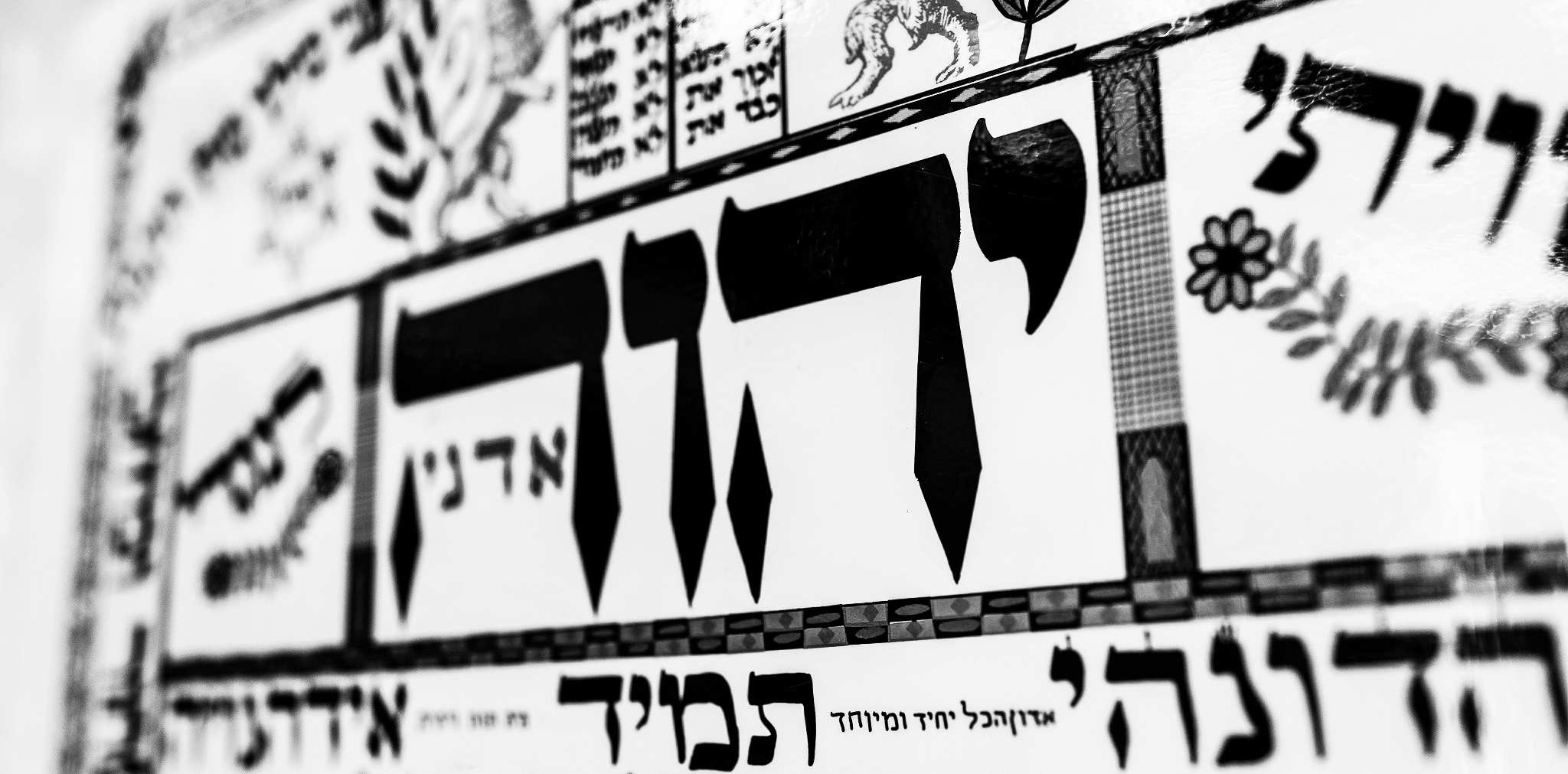
In the Scriptures God’s Name is revealed as YHVH (יְהוָה), which means “He is Present.” The Name is formed from the words hayah (“He was”), hoveh (“He is”), and yihyeh (“He will be”): הָיָה הוֶה וְיִהְיֶה, indicating God’s omnipresence. Note that all the letters of the Name are “vowel letters,” which mean they evoke breath and life. This is the Name revealed to Moses thousands of years before the advent of other religions (Exod. 3:14), and indeed it is the Name associated with the nishmat chayim (נִשְׁמַת חַיִּים), the “breath of life,” imparted to Adam in the orchard at Eden (Gen. 2:4). It is therefore the original Name of God “breathed out” to mankind. The Name Yeshua (יֵשׁוּעַ) means “YHVH saves.” There is no other Savior beside Him, there is no other Name, there is no other LORD. “For I am the LORD your God, the Holy One of Israel, your Savior.” Only Yeshua the Messiah can deliver you from the wrath to come (1 Thess. 1:10).
Many people live in regret over the past or in dread of the future. The Hebrew name of God, the Tetragrammaton (יהוה), means: “He is Present.” We can only find God now, today, at this hour. Today if you hear His voice… Yeshua said, “The kingdom of heaven is within you” (מַלְכוּת הָאֱלהִים בְּקִרְבְּכֶם), that is, is to be found within the heart of faith (Luke 17:21).
The question is asked why the Torah was written without vowels, punctuation marks, and so on. The lack of vowels implies that we must bring breath (i.e., ruach, spirit) to our reading of the words; the lack of punctuation implies that we must be humble and rely on others to help us read with understanding. In other words, we must bring our heart to the reading and be open-minded to receive revelation.
We need the power of the Holy Spirit to read correctly, and the Holy Spirit reveals the Living Word and glory of Yeshua: “It is the Spirit who gives life; the flesh is no help at all. The words that I have spoken to you are spirit and life” (John 6:63).
This week we read a “double portion” of Torah to conclude Sefer Bamidbar, or “the Book of Numbers.” Our first Torah portion, parashat Mattot (מַטּוֹת, “tribes”), begins with the LORD giving laws regarding the making of vows (nedarim). After this, the Israelites were commanded to wage war against the Midianites for seducing the people to sin at the incident of “Baal Peor.” During the ensuing battle, the wicked sorcerer Balaam was killed, as well as five tribal kings of the land of Midian. Our second Torah portion, parashat Masei (מַסְעֵי, “journeys”), provides the boundaries of the land of Canaan that were to be initially occupied by the Israelites. Note that these borders are not the same as those described earlier to Abraham (see Gen. 15:18-21), since that area will be given to Israel only after our Messiah Yeshua returns to establish Zion during the Millennial Kingdom (see Ezek. 47:15-48:35). During that coming time, Jerusalem (i.e., Zion) will be the center of the earth and renamed as “Adonai Shammah” (יְהוָה שָׁמָּה), “the LORD is there.”
Shalom friends. Our Torah reading this week honors Aaron’s grandson Pinchas (“Phinehas”), who, during the tragic rebellion at Baal Peor, zealously removed evil from Israel by driving a spear through a tribal prince who was brazenly cavorting with a Midianite princess in defiance of God’s law. On account of Pinchas’ zeal for the truth of Torah, God stopped the plague and Israel was delivered from destruction… As we will see, Pinchas reveals great truths about Yeshua the Messiah and how he became the mediator of the New Covenant of the LORD.
In addition to an overview of the Torah portion, I discuss the Three Weeks of Sorrow leading up to the somber holiday of Tishah B’Av as well as the significance of the Jewish holidays (mo’edim).
Our Torah portion for this week (i.e., parashat Balak) is named after a fretful Moabite king (בָּלָק) who sought to curse the Jewish people by hiring the services of a wicked Midianite “prophet” named Balaam (i.e., bil’am: בִּלְעָם). King Balak’s plan was to employ Balaam’s sorcery (i.e., kashafut: כַּשָׁפוּת) against the Israelites to prevent them from entering the Promised Land. Similar to the delicious irony that befell the villain Haman in the Book of Esther, however, King Balak’s scheme was upended, and the curse he sought to put on the Jewish people was repeatedly pronounced as a blessing by Balaam instead. After several foiled attempts, Balak fretfully dismissed the prophet, but before departing from the dejected king, Balaam ironically prophesied the destruction of the Moabites and the victorious establishment of Israel.
The shameful story of Balaam reveals that “there is no enchantment against Jacob, no divination against Israel” (Num. 23:23). Ein od milvado (אֵין עוֹד מִלְבַדּו) – no weapon or scheme devised against God will ever prosper (Isa. 54:15-17).
I don’t usually post about politics, as most of you know, though in the United States on July 4th we commemorate the Declaration of Independence and the establishment of a Constitutional Republic — matters that many today discount and some even want to overthrow. So this is an opportune time to think about the significance of “Independence Day” and whether it is something we should indeed honor and celebrate…
In this “Daily Dvar” broadcast (see link below) I discuss the meaning and significance of the Fourth of July “Independence Day” observed the United States, particularly in light of the radical agenda to deconstruct American values and to incite a “second American revolution” at the hands of Antifa and globalists. I recorded this back in 2020 but I am reposting it because the issues are even more relevant today. I hope you find it helpful, chaverim.
The Spirit of God cries out, “choose life that you may live!” (Deut. 30:19), which implies that is our responsibility to believe in the Reality of God, to trust in his providential care, to affirm that “all is well and all manner of thing shall be well,” and to understand that our present struggle is designed by heaven to help us grow in grace and the knowledge of the truth (1 Pet. 3:16).
In this Daily Dvar podcast, I discuss the challenge of faith and how we can draw closer to the Lord despite the ambiguity and challenges we regularly face.
Our Torah portion this week (i.e., parashat Chukat) begins, zot chukatha-Torah (זאת חֻקַּת הַתּוֹרָה), “this is the decree of Torah” (Num. 19:2). The language here is both striking and unique, suggesting that what follows, namely, the ritual of the parah adumah (פרה אדומה) or “red heifer,” is nothing less than “the seminal decree” of the entire Torah… If we think about the meaning of the mysterious decree of the red heifer, however, we will realize that its ashes were used to create the “waters of separation” (i.e., mei niddah: מֵי נִדָּה) to cleanse people from contact with death (i.e., separation). To fulfill God’s vital decree, however, required sacrificial love, since the priest who offered this service would become defiled (separated) for the sake of the healing of others… The Hebrew word for love is ahavah (אַהֲבָה), from a root verb (יָהַב) that means “to give.” Love means giving of yourself to benefit another person (John 15:13). The central decree of Torah, then, beyond our ability to rationally understand, is that God’s love is so great that it is willing to become dust and ashes on our behalf so that we might find blessing and life.
This Shavuah Tov broadcast also provides detailed discussion about the mitzvot (commandments) of the written Torah, including the subcategories of chukkim (decrees), mishpatim (rules or judgments), eidot (testimonials, holidays) with a discussion of the oral tradition’s corresponding categories of halakhah (oral law) and its subcategories of gezeirot (“fences”), takkanot (case laws), and minhagim (customs). Throughout special attention is given to how Yeshua the Messiah is the Substance and Inner Meaning of all true Torah, and how sacrificial love is the idea of the Red Heifer itself.
In the second part of the “Shavuah Tov” audio broadcast for this parashat Chukat I go into further detail by considering: 1) the significance of the mysterious Red Heifer (פרה אדומה) sacrifice, 2) the gospel message of the nachash nachoshet (the “bronze serpent”), and 3) the sin of Moses… Please note that that this H4C podcast continues the discussion for Parashat Chukat Podcast (part 1).
Our Torah portion this week (i.e., Korach) centers on the rebellion of Korah, a man who questioned God’s authority and who arrogantly sought to “intrude” into the office of the priesthood. It is noteworthy that his rebellion is explicitly mentioned only once in the New Testament – in the Book of Jude – as an example of the fate that awaits those false teachers who likewise spurn God’s law. False teachers within the church are likewise dangerous because they deny the truth of Torah and redefine our duties before God. Jude identifies then as spiritual impostors who “work from the inside” to confound or obscure the truth of what salvation means. Such a charlatan may appear to be a genuine believer, but he or she aims to sow confusion and sin among God’s children; they are the proverbial “wolves in sheep’s clothing” (Matt. 7:15). Jude’s warning is especially important for us in this present hour, because it is foretold that in the time immediately preceding the coming of the Messiah, spiritual deception and unbridled godlessness would greatly increase (2 Tim. 3:1-5). At any rate, test the spirits and seek God’s face always, dear friends. I sincerely hope this audio broadcast encourages you.
 Our Torah reading for this week (i.e., parashat Devarim) is the very first portion from the Book of Deuteronomy (i.e., Sefer Devarim: ספר דברים), which is always read on the Sabbath that immediately precedes the somber holiday of Tishah B’Av (תשעה באב). In Jewish tradition, this special Sabbath is called “Shabbat Chazon” (שַׁבַּת חַזוֹן), “the Sabbath of Vision,” since the Haftarah that is read (i.e., Isa. 1:1-25) comes from the vision of the prophet Isaiah (ישעיהו הנביא) regarding the destruction of the Holy Temple in Jerusalem. In both Jewish tradition and liturgy, teshuvah (repentance) and viduy (confession of sin) are the themes of this preparatory Sabbath.
 In the Scriptures God’s Name is revealed as YHVH (יְהוָה), which means “He is Present.” The Name is formed from the words hayah (“He was”), hoveh (“He is”), and yihyeh (“He will be”): הָיָה הוֶה וְיִהְיֶה, indicating God’s omnipresence. Note that all the letters of the Name are “vowel letters,” which mean they evoke breath and life. This is the Name revealed to Moses thousands of years before the advent of other religions (Exod. 3:14), and indeed it is the Name associated with the nishmat chayim (נִשְׁמַת חַיִּים), the “breath of life,” imparted to Adam in the orchard at Eden (Gen. 2:4). It is therefore the original Name of God “breathed out” to mankind. The Name Yeshua (יֵשׁוּעַ) means “YHVH saves.” There is no other Savior beside Him, there is no other Name, there is no other LORD. “For I am the LORD your God, the Holy One of Israel, your Savior.” Only Yeshua the Messiah can deliver you from the wrath to come (1 Thess. 1:10).

 This week we read a “double portion” of Torah to conclude Sefer Bamidbar, or “the Book of Numbers.” Our first Torah portion,
 Shalom friends. Our Torah reading this week honors Aaron’s grandson

 Our Torah portion for this week (i.e.,

 I don’t usually post about politics, as most of you know, though in the United States on July 4th we commemorate the Declaration of Independence and the establishment of a Constitutional Republic — matters that many today discount and some even want to overthrow. So this is an opportune time to think about the significance of “Independence Day” and whether it is something we should indeed honor and celebrate…
 The Spirit of God cries out, “choose life that you may live!” (Deut. 30:19), which implies that is our responsibility to believe in the Reality of God, to trust in his providential care, to affirm that “all is well and all manner of thing shall be well,” and to understand that our present struggle is designed by heaven to help us grow in grace and the knowledge of the truth (1 Pet. 3:16).

 Our Torah portion this week (i.e.,
 In the second part of the “Shavuah Tov” audio broadcast for this parashat
 Our Torah portion this week (i.e.,