 In our Torah for this week (i.e., Vaetchanan), Moses recalled the awesome revelation of the Torah at Sinai, describing how the mountain “burned with fire unto the heart of heaven” (בּעֵר בָּאֵשׁ עַד־לֵב הַשָּׁמַיִם) when the Ten Commandments were inscribed upon the two tablets of testimony: “And you came near and stood at the foot of the mountain, while the mountain burned with fire unto the heart of heaven, wrapped in darkness, cloud, and gloom. Then the LORD spoke to you out of the midst of the fire. You heard the sound of words, but saw no form; there was only a voice. And he declared to you his covenant, which he commanded you to perform, that is, the Ten Commandments, and he wrote them on two tablets of stone” (Deut. 4:11-13).
Category: Torah Study
Selected verses from the Torah for Hebrew study
Return to the Lord…

Turn us back, O Lord…
 The Scroll of Lamentations (מגילת איכה) is traditionally recited during the solemn holiday of Tishah B’Av to remember the destruction of the Holy Temple and other tragedies that have befallen the Jewish people. During the Tishah B’Av service at the synagogue, when the cantor reaches the second to last verse of the book, he says “Hashivenu,” pauses, and then the congregation recites the verse in unison: Hashivenu Adonai, eleykha ve’nashuvah; chadesh yamenu ke’kedem: “Turn us back to Yourself, O LORD, and we shall be turned; renew our days as of old” (Lam. 5:21). Often this verse is repeated and sung to a haunting melody as the scroll is returned to the Ark.
Learn Lamentations 5:21 in Hebrew:

…
…
For more on Tishah B’Av see
https://hebrew4christians.com
…
Return to your heart…

God’s Ineffable Name…
 There are two places in the Torah when God explicitly revealed the meaning of the name YHVH (יהוה) to Moses. Both occurred at Sinai. The first occurred at the outset of Moses’ ministry (at the burning bush when he was commissioned to be Israel’s deliverer), and the second occurred after incident of the Golden Calf during the time of the revelation of the law at Sinai. It was only after Moses despaired and confessed the people’s need for salvation that the LORD instructed him to meet him again at a place (i.e., makom: מָקוֹם) on the top of Sinai, where He would descend in the cloud to “declare His Name” (Exod. 33:17-34:7). This dramatic experience of revelation was later called middot ha-rachamim, or the revelation of the attributes of God’s mercy, which prefigured the New Covenant…
Surrounding Presence…
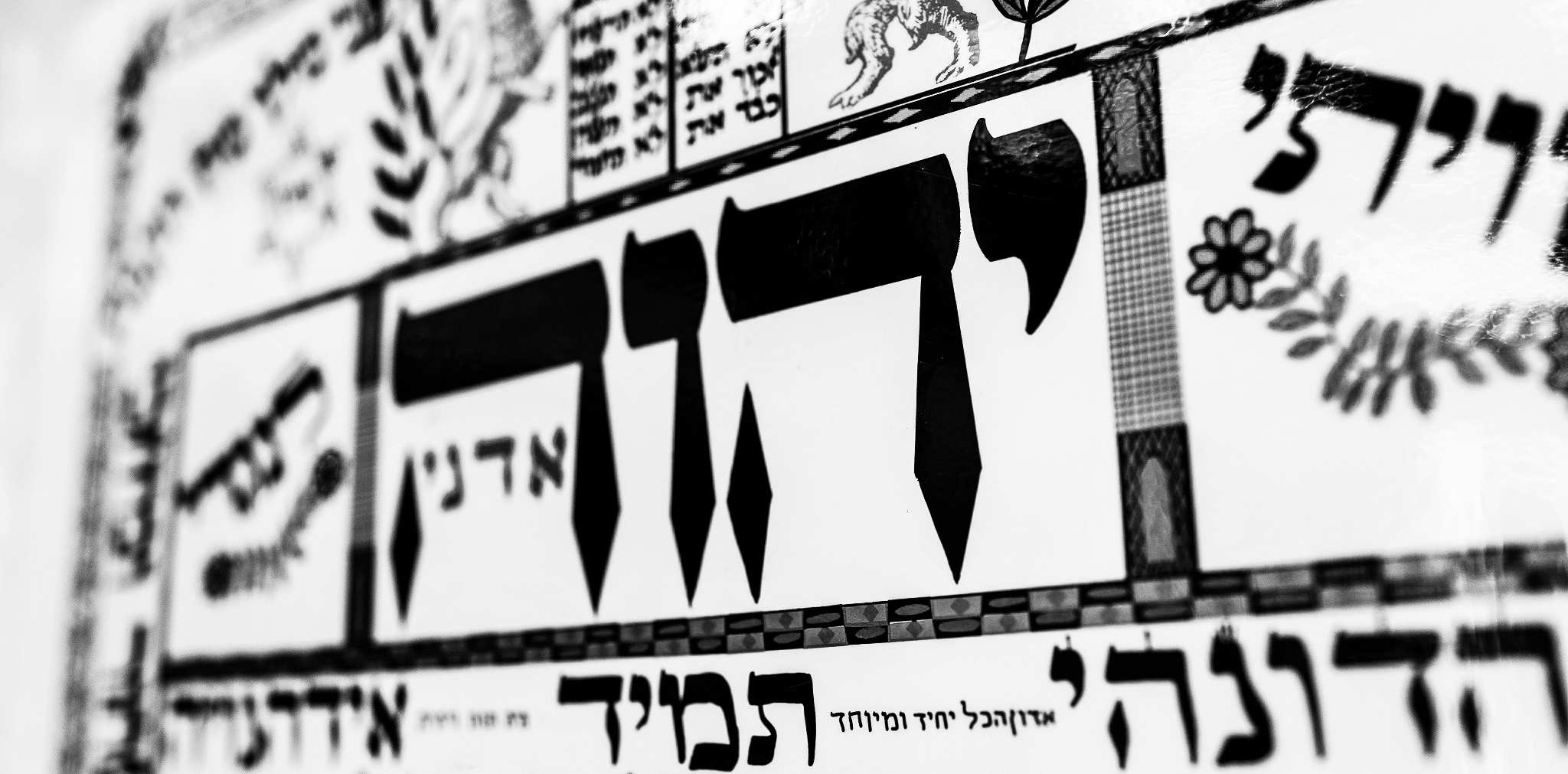
 The Name of God, YHVH (יהוה), means “Presence” (Exod. 3:13-14), “Breath” (Gen. 2:7; Num. 16:22), “Life” (Deut. 30:20), and “Love” (Exod. 34:6-7), but it also means “I-AM-WITH-YOU-ALWAYS” (אני תמיד איתך), teaching us that God is an ever-present help for us (Psalm 46:1). The Name YHVH means that “God was (i.e., hayah: היה), God is (i.e., hoveh: הוֶה), and God always will be (i.e., veyihyeh: וְיִהְיֶה),” which implies that He is ever present and not restricted by time or space. Moreover, God is called havayah (הֲוָיָה), which means He is continually sustaining creation by the Word of His power: “In Him we live, move, and have our being” (Acts 17:28; Heb. 1:3). As it is poetically expressed in the Psalms, “Behind and before you cover me; You lay your hand upon me” (Psalm 139:5).
 ..
..
“Behind and before you cover me.” The word “behind” translates the adjective achor (אָחוֹר), a word related to the word acharon (אַחֲרוֹן), “west,” though it also refers to something later (אַחֲרֵי), such as a later place or time (אַחֲרִית). In Hebrew, the word generally means “backward” (לאחור) or “behind” (מאחור). God’s got your back, friend… Note further that the word translated “before” is kedem (קֶדֶם), a preposition that means “east” but also refers to the primordial beginning, the dawn. The root verb kadam (קָדַם) means to “meet” in initial contact. God is always present for you, friend, and that includes times and days that lie ahead, in the distant future… “As far as the east is from the west,” so far does God’s compassion and love cover you, surround you, and sustain you (Psalm 103:12).
“You cover me.” The verb tzartani (צַרְתָּנִי) comes from the root tzur (צור) that means to encircle, to press upon, to “pressurize,” as by relentlessly attacking a stronghold. The image is that God “hems us in,” that is, He surrounds us and shelters us with His Presence – so that we cannot escape: You are under God’s supervision and protection, friend… And while the root tzur can imply tzuris (trouble, affliction), in this context it is used to picture the Lord securing our station, preserving, protecting, and defending our way. “You lay your hand upon me.” God’s personal and providential hand is at work in your life – He is HaMashgiach hagadol (הַמָּשְׁגִיחַ הַגָּדוֹל) – the Great Overseer of the universe, and that means your way is as sure and secure as the very power that God’s own will affords. Amen.
