 We are warned not to destroy ourselves by allowing bitterness, anger, or fear to consume our hearts. In our Torah this week (Eikev) we read: “And you shall not bring an abominable thing (תּוֹעֵבָה) into your house and become devoted to destruction like it” (Deut. 7:26). The sages of the Mishnah said that yielding to rage is equivalent to idol worship and should never be brought into the home. Indeed, rage is linked with avodah zarah (עבודה זרה) – idolatry – because it exalts the ego and claims that the Lord can’t (or won’t) help you in your moment of testing or need. Read more “Idolatry and Rage…”
Category: Torah Study
Selected verses from the Torah for Hebrew study
Thou Shalt be Satisfied!
 Our Torah portion this week (Eikev) includes the remarkable commandment: “And you shall eat and be satisfied” (Deut. 8:10), which means that God desires for us to receive the goodness of life itself. “Taste and see that the LORD is good.” Addictions, cravings, lusts, etc., arise from a refusal to be satisfied, by hungering for more than the blessing of the present moment. “My people have committed two evils: they have forsaken me, the fountain of living waters, and hewed out cisterns for themselves, broken cisterns that can hold no water” (Jer. 2:13). The living waters are present for us, but we will only find them if we open our hearts to the wonder of God in this moment. We can “break the spell” of continual dissatisfaction, of the power of greed, ambition, and so on, when we discover that our constant hunger is really a cry for God and His blessing. This is the blessed “hunger and thirst” given by the Spirit (Matt. 5:6). Our sense of inner emptiness is an invitation to come to the waters and drink life. So come to God’s table and ask the Lord Yeshua to give you the water that will satisfy your heart’s true thirst for life…
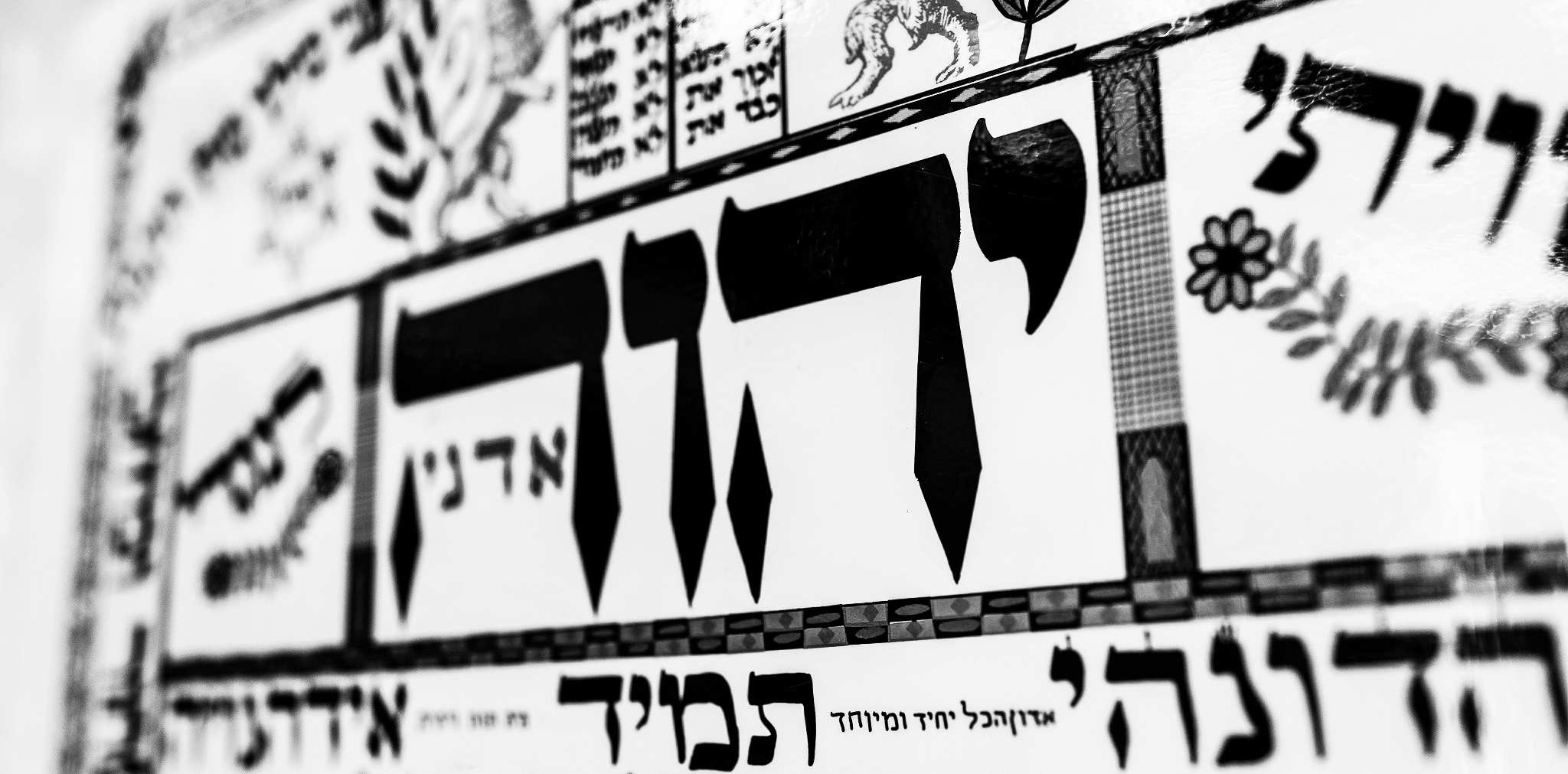
The Great King Over all the Earth…
Learn Psalm 47:2 in Hebrew:

…
Don’t let the godless despair of this fallen world define your reality, friends… The LORD God is on the throne and all things will eternally answer to Him (Heb. 4:13). He works all things together for your good and for His glory. Amen.
…
Romance and Tu B’Av
 Today is the 15th of Av (i.e., Tu B’Av), the “holiday of love.” Just as Yom Kippur originally celebrated the reconciliation of Israel to the LORD after the sin of the Golden Calf, so Tu B’Av originally celebrated the reconciliation of Israel for the Sin of the Spies. Therefore both the fifteenth of Av and Yom Kippur became joyous times celebrating forgiveness and restoration to the LORD. The Babylonian Talmud (Ta’anit 31a) quotes Shimon ben Gamliel as saying, “Israel had no holidays as joyous as the fifteenth of Av and the Day of Atonement, when the maidens of Israel would go out and dance in the vineyards… What were they saying: Young man, consider whom you choose to be your wife…”
Gratitude and Seeing
From our Torah this week (i.e., parashat Eikev) we read: “And you shall bless the LORD your God for the good…” (Deut. 8:10). Whenever we derive benefit or enjoyment from something we are to bless (i.e., thank) God for his goodness. Indeed the Hebrew term for gratitude is hakarat tovah (הַכָּרַת טוֹבָה), a phrase that means “recognizing the good.” The heart looks through the eye, and therefore how we see is ultimately a spiritual decision: “If your eye is “single” (i.e., ἁπλοῦς, sincere, focused),” Yeshua said, “your whole body will be filled with light” (Matt. 6:22). When we see rightly, we are awakened to God’s Presence in the little things of life, those small miracles and “signs and wonders” that constantly surround us. The good eye of faith sees hundreds of reasons to bless God for the gift of life (1 Cor. 10:31; 1 Thess 5:18; Psalm 103:1-5). The LORD is “enthroned among the blessings of His people” (Psalm 22:3).
You enlarge my heart…
 In our Torah portion this week (i.e., parashat Eikev) we read: “But now, Israel, what does the LORD your God ask from you … but to love him with all your heart and with all your soul?” (Deut. 10:12). But how are we able to love God be’khol levavka (בְּכָל־לְבָבְךָ) – “with all our heart” – and be’khol nafshekha (וּבְכָל־נַפְשֶׁךָ) – “with all our soul,” apart from healing of the brokenness that makes our hearts divided and sick? That is what the redemption from Egypt was about: we were personally chosen by God, redeemed by his grace, led out from from cruel bondage, only to be led into the desert, away from the world, where we slowly began to understand that we were valued, cared for, and beloved of God. We believed in the possibility of promise, of covenant… Only then could we hear the request from heaven: “Now love Me…” In other words, we can only truly love God by knowing we are beloved by God, and the invitation to love him is a response of his great passion for you (1 John 4:19). Accept that you are accepted in the heart of the Beloved (Eph. 1:4-6).
The Whole Commandment
 “The whole commandment that I am commanding you this day you shall observe and do, so that you may live…” (Deut. 8:1). The Hebrew phrase kol ha’mitzvah (כל־המצוה), here translated as “the whole commandment,” refers to the heart attitude, or the inner passion of the soul. Some have linked the word “commandment” (מצוה) with the word “connection” (צוותא), suggesting that God’s commandments are the means by which we cleave to Him, as is written: “this is the love of God (אהבת אלהים), that we hold fast to his commandments” (1 John 5:3). The commandments are “for life” (Lev. 18:5), which means they serve as the call of the Beloved to rise to something far greater…
Grappling with Faith
Our Torah reading for this week is called “Eikev” (עֵקֶב), a word often translated “because,” though it literally means “heel,” and therefore recalls Jacob (יעקב) the “heel-holder” who wrestled with the pain of his past to learn to bear the name Israel (יִשְׂרָאֵל), the “prince of God” (Gen. 32:28)… Like Jacob, we must grapple to believe that the covenant of God’s love and acceptance is meant for us, too… Read more “Grappling with Faith”
Eikev: Shavuah Tov Podcast
In our Torah reading for this week (i.e., parashat Eikev), Moses continues his farewell address to Israel by saying, “And because (עֵקֶב) you listen to these rules and keep and do them, the LORD your God will keep with you the covenant and the love that he swore to your fathers” (Deut. 7:12). Note that the word eikev (עֵקֶב), often translated “because,” literally means “heel,” which recalls Jacob (יעקב) the “heel-holder” who wrestled with the pain of his past to learn to bear the name Israel (יִשְׂרָאֵל), the “prince of God” (Gen. 32:28)… And like Jacob, we must grapple to believe that the covenant of God’s love and acceptance is for us, too… Read more “Eikev: Shavuah Tov Podcast”
Praying to Pray…
 We read in the Torah (Vaetchanan) “And I pleaded (ואתחנן) with the LORD at that time, to say…” (Deut. 3:23), which implies that we must first pray in order to be able to pray, that is, we make ourselves ready to pray by finding the inner freedom and grace to groan before the LORD…. If you can’t find the words to pray, then plead with the LORD and ask for the Holy Spirit to groan on your behalf (Rom. 8:26). “Ask, and it will be given to you; seek, and you will find; knock, and it will be opened to you” (Matt. 7:7). “O Lord, open my lips, and my mouth will show forth your praise” (Psalm 51:15).