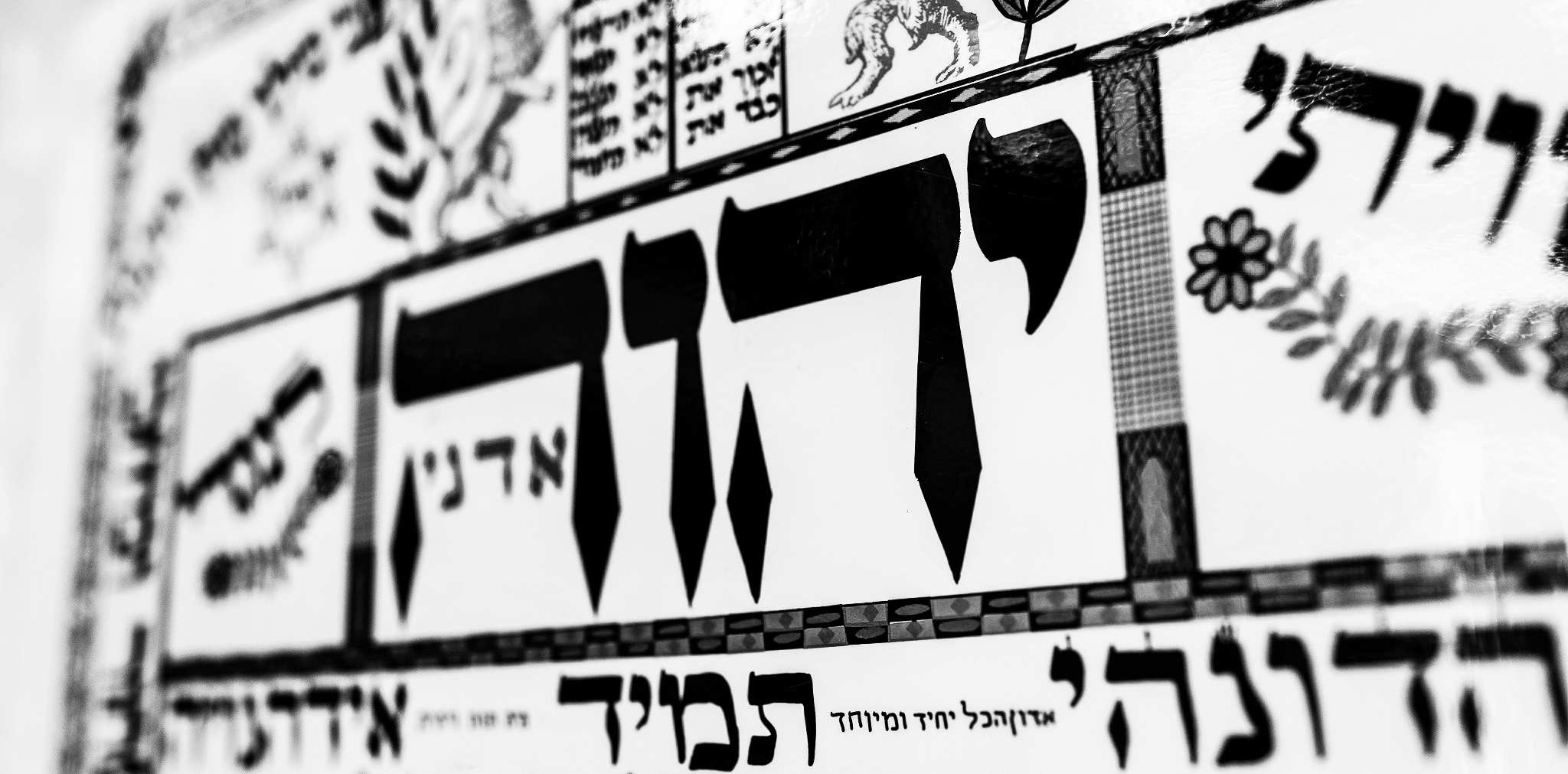
 King David says in Psalm 27:4, “One thing have I asked of the LORD, that will I seek” (אַחַת שָׁאַלְתִּי מֵאֵת־יְהוָה אוֹתָהּ אֲבַקֵּשׁ). Notice that David asked for just one thing – not many things. He did not come with a litany of requests. He was not “double minded.” David realized that what is most important is to have a seeking a heart, or rather, a heart that seeks that which is most important, and therefore he asked for the gift of focus and the pursuit of truth. He desired the “pearl of great price.” Note further that the verb translated “I will seek” (avakesh) comes from the root word bakash (בָּקַשׁ) meaning “to wish” or “to desire.” The verse could therefore be read as, “The one thing I ask from the Lord is for godly desire – for the will to “behold the sweetness of the Lord, and to inquire in His Presence.” This is a prayer for the highest we may attain. The “one thing” David asked for was a heart made alive to perceive the wonder of God.
So what do you value and love the most? What determines the direction of your heart? Augustine of Hippo said “my love is my gravity,” by which he meant that his desire draws him forth and reveals who is really is. What you love — your desire, your heart’s longing, your treasure, is your ultimate concern and what you secretly worship. “All who ask receive; all who seek find” (Matt. 7:7). Since not all matters of love are equally able to satisfy the true needs of the heart, however, we must be careful about what we desire and what we are seeking, for what you seek, you will find.
What we desire “bekhol levavkha” changes us; it affects us deeply; it takes us on a journey and ultimately manifests who we are. The more we love God, the more godly we will become, though the more we love pleasures and worldly matters, the more vain and empty we will become… The question is constantly being asked of our hearts – what do you really love? Be aware of what you are seeking, friend, for that will become your destiny…
Hebrew Lesson:

 Those who deny that objective truth exists (or those who deny that something may be known about reality) are themselves making a truth claim, namely the claim that there is no such thing as objective truth (or that real knowledge of the world is not possible). This self-inflicted incoherence is a sign of irrationalism, of course, the abandonment of reason, which perhaps is the ulterior motive for such manner of thinking, after all. The person who denies truth does so to escape the demands of truth – to flee from personal responsibility before moral and spiritual Reality. It is a form of “wish-fulfillment” to say that people are not responsible for what they believe and how they live their lives. Hence our culture’s obsessive “busyness,” its craving for ongoing diversion, entertainment, fantasy, escapism, and so on.
 “May the LORD lift up his face upon you and give you peace” (Num. 6:26). That is, may the LORD “lift up his face” (יִשָּׂא יְהוָה פָּנָיו) toward you in welcome, and may his countenance be radiant with joy over you. May his face be “toward you,” not turned away or hidden… When God turns toward you, he imparts the blessing without which all other blessings are beholden, namely, his peace (i.e., shalom). After all, what good is worldly prosperity or temporal pleasure apart from God’s blessing of peace? To have shalom (שָׁלוֹם) is to be made shalem (שָׁלֵם) – made whole, complete, secure, happy – and therefore the peace of God (שְׁלוֹם הָאֱלהִים) is assuredly the most essential blessing.
 The LORD spoke to Moses, saying, “Speak to Aaron and his sons, saying, ‘Thus you shall bless the people of Israel, saying: “May Adonai bless you and keep you from illusions; may Adonai shine divine light upon you; may Adonai reveal his presence to you.’ So shall they put my Name upon the people of Israel, and I will bless them” (Num. 6:22-27). The question is asked why the kohanim (priests) were needed to confer God’s blessing, and what is meant by the idea of God “setting his Name” upon the people. The sages reply that the blessing is bestowed by a mediator to show that all things flow from the Holy One, and there is no one who can rightly say, “by my strength and my power alone has this come to pass” (Deut. 8:17). Therefore the blessing is graciously given to those who simply open their hearts to receive it: “May Adonai bless you; may Adonai shine divine light upon you; may Adonai reveal his Presence to you…” Everything that comes to us comes in God’s Name, as it is written: “Every good gift and every perfect gift is from above, coming down from the Father of Lights (אֲבִי הָאוֹרוֹת) with whom there is no variation or shadow due to change” (James 1:17). The blessing of God (בִּרְכַּת יָהּ) is to “bear His Name” by being filled with the strength of His Presence, walking in the flow of His power, completely in union with His will… Bearing the Name of the LORD means being surrendered and identified with his heart in all things.

 Yeshua taught us to be focused and to refrain from using “vain repetitions” (i.e., βατταλογέω – “babbling words”) in our prayers, since our Father knows what we need before we ask Him (Matt. 6:7-8). What He wants is “us” – all our heart and hunger for life – not some formula or recipe of words to appeal to him. Don’t worry about the verbiage of your prayers, then, but attend to the inner groan of your heart (Rom. 8:26). “When you pray, rather let thy heart be without words than thy words be without heart” (John Bunyan). Ultimately prayer is a kind of teshuvah (תְּשׁוּבָה), a word often translated as “repentance,” though it’s more accurately understood as turning (shuv) to God in response to His call. Sometimes you just come and present yourself in God’s presence, without words, without requests… You just sigh, or let your heart groan in silence. The point, of course, is that you come to the Lord to do real business with Him, not to play games or to offer “lip service.” Are we really “showing up” when we pray?

 There is a great war going on, but it’s not a war waged with conventional weapons. This is the war for the souls of human beings, and every person alive is currently engaged in it… There is no place of neutrality in this war, and you cannot escape from the conflict. The enemy is now at the gate, the battle lines drawn. Pastors are being arrested around the world for holding church services; civil liberties and freedoms are being striped away from us in the name of state “security” for the “greater good.” Passivity or indifference is not an option, and therefore each of us must choose. We are either going forward or going backward; we are either drawing near or pulling away (Rev. 3:16). The question is now made urgent: מי ליהוה אלי – mi Adonal aylai? “Who is on the Lord’s side?”
 The Apostle Paul (רבי פאולוס השליח) taught that we are not to be “conformed” (συσχηματίζω) to the pattern of this fallen world but rather be “transformed” (μεταμορφόω) by renewing our minds, so that by testing we may discern what is the will of God (Rom. 12:2). Note that the word translated “conformed” in this verse means to accept the world’s scheme (σχῆμα) of understanding things, that is, to passively go along with the world’s matrix of lies, wishful thinking, propaganda, etc. The word translated as “transformed,” on the other hand, means to be metamorphosed or radically changed into a different kind of nature with a different source of being itself. Such transformation comes from having our minds “renewed” — the word used in this verse (i.e., ἀνακαινόω) means being “made new on the inside,” and therefore renewal is the gift of teshuvah (turning to God). Understand, then, that the foundation of all transformation of inner character and outward conduct comes from the miracle of having a renewed mind. I use the word “miracle” quite intentionally, since by itself “right thinking” is powerless to help the sinner truly change his ways, and therefore something more – new life and healing power from heaven, is needed.
 God’s people are “strangers” in this world; they are literally “e-stranged” and live as “resident aliens” — here, yet not here…. We wander; we are lonely; we yearn for our heavenly home. Life in this world is “olam ha’sheker,” the false world — full of deception, troubles, and struggle. Here there is no lasting hope, no abiding…
 The revelation of God in Yeshua means that Ultimate Reality — that is, the transcendental source of all that exists — is intensely personal, intimately knowable, and full of love. “Metaphysics” (i.e., that which is “really real”) is therefore not about an impersonal force known in objective relationship (i.e., a “what”) but a personal agency and creative mind known in subjective relationship (i.e., a “who”). The Scriptures teach that what is ultimately real (אהיה אשׁר אהיה) is the Ultimate Person of the LORD (אני יהוה). In Him we “live and move and have our being” (Acts 17:28).