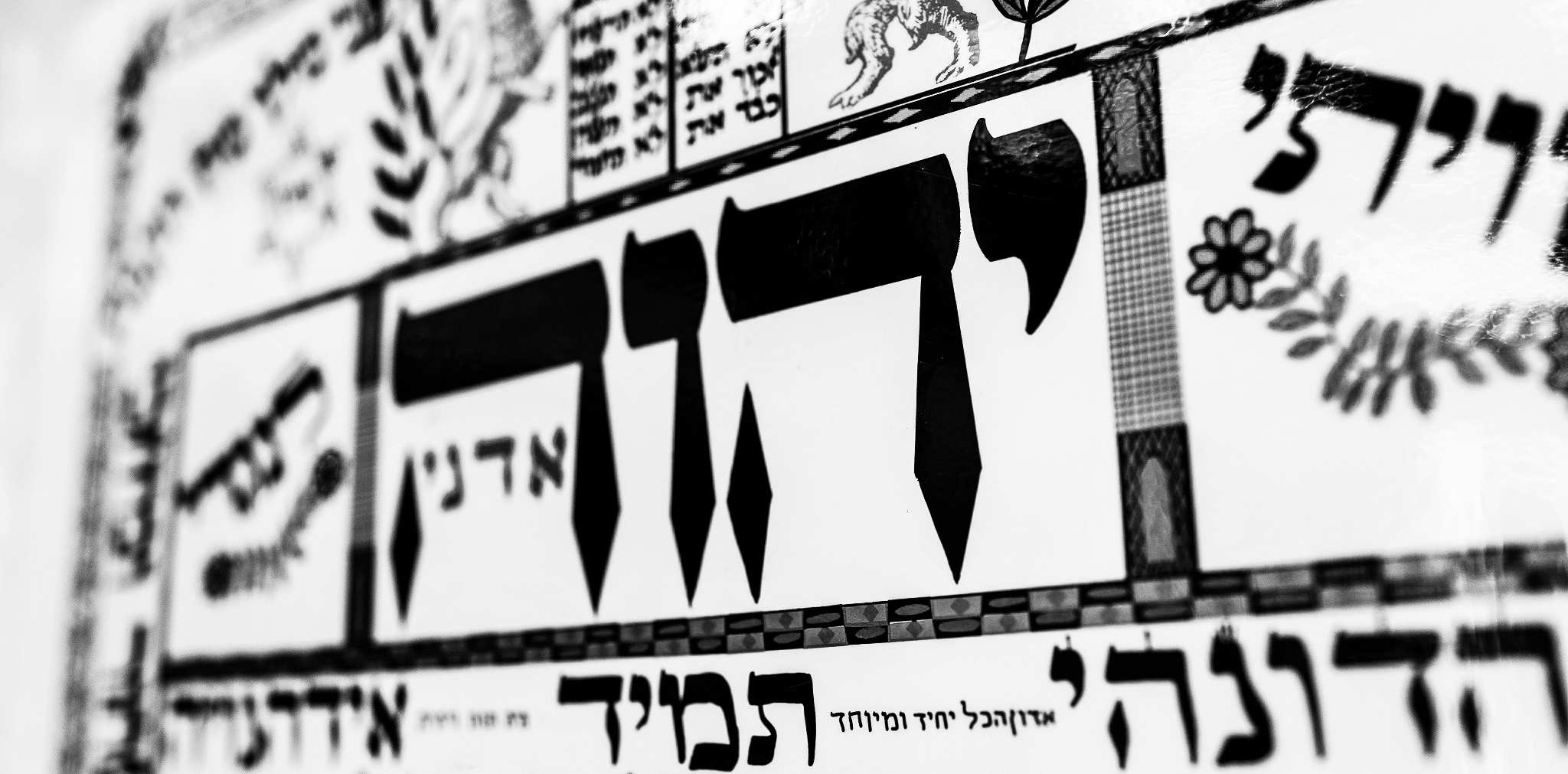
 The Ten Commandments (i.e., עֲשֶׂרֶת הַדִבְּרוֹת, literally, “the ten declarations”) may be summarized this way: 1) “I AM your only deliverer, the One who loves and chooses you; 2) love me exclusively; 3) regard my love as sacred; 4) rest in me; 5) honor your life and its history. Do no harm to others: 6) forsake anger, 7) abandon lust, 8) respect others, 9) abhor lying, and 10) refuse greed and envy. Know that you belong to me and that you are accepted. Love others as you are also loved.
The “heart of the law” is the Torah of love, just as the “law of love” is the Torah of the Gospel (John 15:12). “Teach me the whole Torah, a heathen said, while I stand on one foot. Shammai cursed and drove the man away. He went to Hillel. Hillel said, What is hateful to you, do not do to anyone else: that is the whole Torah. The rest will follow – go now and learn it.” As the Apostle Paul taught: “For the whole law is fulfilled in one word: Ve’ahavta: “You shall love your neighbor as yourself” (Gal. 5:14). Love does no wrong to a neighbor; therefore love is the fulfilling of the law” (Rom. 13:10).
The sages have said that when the Holy One spoke to the people of Israel, each one felt personally spoken to by God, and thus it says in the singular, ‘I am the Eternal One, your God’” (Midrash Shemot Rabbah). Indeed the very first commandment given at Sinai was to accept the reality of our personal deliverance by the LORD: “I am the LORD your God, who brought you (singular) out of the land of Egypt, out of the house of slavery” (Exod. 20:2). In fact, God used the second person singular (not plural) for all the verbs throughout the Ten Commandments: “you (singular) shall have no other gods beside me”; “you (singular) shall not take the Name of the LORD your God in vain,” and so on. The very first commandment, however, is the starting point for all that follows. Until you are personally willing to accept the LORD as your God and to trust Him as your own Deliverer and King, the rest of the commandments are not likely to be heeded.
Hebrew Lesson:

.
God began the Ten Commandments by saying, “I AM the LORD your God, who brought you out of the land of Egypt, the house of slavery” (Exod. 20:2), rather than saying, “I AM the LORD your God, Creator of heaven and earth” (Gen. 1:1). The LORD refers to himself as our Savior first, since creation is designed to demonstrate His redemptive love given through Yeshua, the “Lamb slain from the foundation of the world” (Rev. 13:8; 1 Pet. 1:18-20; Eph. 1:4; 2 Tim. 1:9). “All things were created by Him (i.e., Yeshua), and for Him” and in Him all things consist (συνεστηκεν, lit. “stick together”) (Col. 1:16-17). Creation therefore begins and ends with the love of God as manifested in the Person of Yeshua our Messiah, the great Lamb of God… He is the Center of Creation – the Aleph and Tav – the Beginning and the End (Isa. 44:6; Rev. 1:17). All the world was created for the Messiah: “For from him and through him and to him are all things. To him be glory forever. Amen” (Rom. 11:36).
Ten Matters of Heart Podcast:

 There is a gap between the “real” and the “ideal,” between our present sense of exile and our hope that one day we will be in our heavenly home; there is an inherent and ongoing dualism we experience as we sojourn through our days. On the one hand, if we make time to reflect on what is “real,” we will eventually encounter the “Parmenidean” realm of “being,” that is, the totality of sheer existence, the inescapable presence that surrounds and pervades any “thing” whatsoever: the “ground” of existence; the timeless sense of unity, perfection, and so on. The heart’s response to this awareness is humble acceptance – to surrender to all that is — in wonder over the miracle of consciousness and the sheer gift of life itself. The “real” is what “is” and that is a monolithic mystery…
 From our Torah reading this week (i.e.,
 The Book of Exodus begins, ve’eileh shemot (וְאֵלֶּה שְׁמוֹת), “and these are the names” (of the sons of Israel). God call each person by name to make the journey… Indeed, God calls each star by its own name (Gen. 22:17, Psalm 147:4) and yet He also knows each lily of the field and sparrow that flutters its wings (Matt. 6:28-30, 10:29). As Yeshua said, even the hairs on your head are all numbered (Matt. 10:30). In Jewish theology, the term hashgachah pratit (הַשְׁגָּחָה פְּרָטִית) refers to God’s personal supervision of our lives (hashgachah means “supervision,” and pratit means “individual” or “particular”). Since God is the Master of the Universe, His supervision and providence reaches to the smallest of details of creation – from subatomic particles to the great motions of the cosmos. Of particular interest, however, are those whom He created be’tzelem Elohim: in His image and likeness. The LORD is called אלהֵי הָרוּחת לְכָל־בָּשָׂר / Elohei ha-ruchot lekhol-basar: “The God of the spirits of all flesh” (Num. 16:22), and that means that every spirit ultimately answers to Him.
 Simply knowing about God is insufficient for a transformed life; something more is needed, namely, receptivity of the heart – a sense of concern, a hunger and a thirst for life, and the willingness to believe in the truth of love. Yeshua taught that the condition of our heart is revealed by how we hear. Without charity and a deep sense of concern, loss will inevitably occur: “Take heed therefore how you hear: for whoever has will be given more, but whoever does not have, even what he thinks he has will be taken from him” (Luke 8:18). Just as the “good eye” (העין הטובה) that searches for what is good, so the “good ear” listens to the word of hope; and just asthe evil eye (העין הרעה) searches for what is evil, so the “evil ear” attends to the message of loss and despair. As we inwardly receive the truth of Yeshua, more truth is revealed; but if we resist, untruth will take root and grow….
 At the outset of the new civil year, let us recall the ancient
 It is tragic that so many people go about their lives as if God doesn’t exist… Instead of soberly acknowledging that their days are numbered in this world, they subconsciously assume they will live forever, and they steadfastly ignore any idea of judgment to come. Yeshua warned us, however, that “nothing is hidden except to be made manifest; nor is anything secret except to come to light” (Mark 4:22). We should tremble before such words. Each of us will give account for what we have done with the time given us (Heb. 9:27; 2 Cor. 5:10; Matt. 12:36). Moses therefore prayed to God: “Teach us to number our days, that we may apply our hearts unto wisdom” (Psalm 90:12). Each soul is given a finite amount of time in this world, and therefore Moses asked God to teach us how to live in light of our ultimate end… For this we need wisdom, which primarily consists of knowledge of the holy (דַעַת קְדשִׁים) and the experience of the awe of the LORD (יִרְאַת יְהוָה, Prov. 9:10). Note then the connection between learning to “number our days” and apprehending the sacredness of life. As we learn to esteem our days, so we discover wisdom for our sojourn to eternity. Reflecting on the brevity of life awakens us to consciously reflect upon the course of our lives and to distill the ultimate concerns of our hearts.

 The Book of Lamentations is an acrostic (i.e., alphabetical) poem that begins with the Hebrew letter Aleph (א) in the word “eichah” (אֵיכָה), which also marks the Hebrew name of the book. “How (eichah) lonely sits the city that once was full of people!” (Lam. 1:1). The sages note that this word “how” (i.e., eichah) could also be read as “where are you?” (i.e., ayeka: אַיֶּכָּה), God’s first word spoken to Adam after he broke covenant in the Garden (Gen. 3:9). Note that God’s question is often our own: “Where are you? Where are you, God? Are you here, in the midst of this tedious moment? Do you know my loneliness, my ache for love? Do you understand the troubles of my heart?” And yet how many people have faith that God’s call is one of comfort and restoration? God uses our loneliness (“how lonely…”) to search our hearts, asking each of us, ayeka – “Where are you?” “Why have you turned away from me and chosen a state of exile?” Our haunting sense of God’s absence impels us to seek for him… God awaits our only possible response, “Hashivenu!” — an imperative (urgent appeal) for the grace to repent: “Turn us back to yourself, O LORD, so that we may return to you; renew our days as of old” (Lam. 5:21).
 Though the world system corrupts the message of the birth of Messiah for the sake of avarice and greed, take a moment to reflect on its ongoing spiritual significance, namely, that God emptied Himself (κένωσις) of His regal glory and power to become your Savior and High Priest, able to fully sympathize with your weakness, frailty, shame, and chronic sinfulness (Heb. 4:15-16; Phil 2:7-8). Almighty God, the Presence of Love, the Heart of Reality, clothed himself in human flesh and bone to become Immanu’el (עִמָּנוּ אֵל) – “God with us” – so that we could be touched by Him, healed by Him, and redeemed by Him… In light of this, it is only fitting we should join the refrain of heavenly host: “Glory to God in the highest, and upon earth peace, good will among all people!” (Luke 2:14). Amen! Yeshua is the Eternal Sign and Wonder of the LORD God Almighty…

 Surely our great need is to have heart, to find strength, resolution, and steadfast determination to walk boldly during these heartless and depraved days (2 Tim. 3:1-5). We are not without God’s help, of course. Yeshua told us that the Ruach HaKodesh (רוּחַ הַקּדֶשׁ) would be “called alongside” (παράκλητος) to comfort us on the journey. The English verb “comfort” literally means “to give strength” (from com- [“with”] and fortis [“strong”]), an idea similarly expressed by the verb “encourage,” that is, to “put heart [i.e., ‘core’] within the soul.” In Hebrew, the word courage is expressed by the phrase ometz lev (אמֶץ לֵב), meaning “strong of heart,” denoting an inner quality of the will rather than of the intellect. Ometz lev means having an inner resolve, a passion, and a direction. The sages say “the mind is the eye, whereas the heart is the feet.” May God be our Light and Salvation as we walk through the surrounding darkness…