 Let me begin this entry by quoting a passage of Scripture from the New Testament that admonishes us to remember our shared heritage with the Jewish people:
“Brethren, I do not want you to be unaware that all our fathers were under the cloud, all passed through the sea, all were baptized into Moses in the cloud and in the sea, all ate the same spiritual food, and all drank the same spiritual drink. For they drank of that spiritual Rock that followed them, and that Rock was Messiah. But with most of them God was not well pleased, for their bodies were scattered in the desert. Now these things became our examples, to the intent that we should not lust after evil things as they also lusted. And do not become idolaters as were some of them. As it is written, “The people sat down to eat and drink, and rose up to play.” Nor let us commit sexual immorality, as some of them did, and in one day twenty-three thousand fell; nor let us tempt Messiah, as some of them also tempted, and were destroyed by serpents; nor complain, as some of them also complained, and were destroyed by the destroyer. Now all these things happened to them as examples, and they were written for our admonition, upon whom the ends of the ages have come. Therefore let him who thinks he stands take heed lest he fall” (1 Cor. 10:1-12).
Amen. “The secret things belong to the LORD our God, but those things which are revealed belong to us and to our children forever, that we may do all the words of this law” (Deut. 29:29).
The very first word of the Bible — the very first utterance of revelation — is the Hebrew word “beresheet” (בְּרֵאשִׁית), which is commonly translated as “in the beginning” (Gen. 1:1). Note then that the Bible begins the account of creation using a word about time… That might seem a bit unsurprising or even trite, a little bit like saying “Once upon a time…” but it clearly indicates the significance of time in relation to the divine revelation given to us…
As we learn Torah, which is the foundation of the other Scriptures of the Bible (including the New Testament), we repeatedly are instructed to sanctify (i.e., honor) certain occasions throughout the year. These are called “appointed times,” or mo’edim in Hebrew, from a root word (יָעַד) that means to assemble together, to meet, and even to betroth… The first occurrence of the root occurs in the account of the creation when God said: “Let there be lights in the firmament of the heavens to divide the day from the night; and let them be for signs and seasons (i.e., mo’edim), and for days and years” (Gen. 1:14).
These appointed times were designed by God to be special occasions for human beings to have fellowship with him. Indeed, after God created Adam and Eve in the orchard of Eden, he explained that the Sabbath day was to be set apart in honor of the creation. God also regularly met with Adam and Eve in the “wind of the day” (i.e., לרוּחַ הַיּוֹם, Gen. 3:8) to instruct them about their responsibilities as his stewards of creation. God’s teachings to our primordial ancestors were later preserved as traditions within the godly line of Seth who had observed the “new moon” of the months and commemorated seasonal transitions. Similarly, the earliest forms of Passover celebrated the beginning of spring, Pentecost celebrated the first spring harvest, Sukkot (i.e., Tabernacles) celebrated the fall harvest, and so on. During these special times sacrifices to God were offered and feasts celebrated.
Moses did not write in a vacuum, of course, and he was quite familiar with the heritage of the godly line of Seth handed down through Noah’s son Shem and his descendants. The ancient appointed times were later codified and sanctioned by God when Moses wrote the Torah during the years of the Sinai revelation. Therefore we note the Torah’s calendar is divided into 360 days, 54 weeks, 12 months, 4 seasons, and 2 half-years.
There are two distinct “new years” on the Torah’s calendar: one in the spring, on the first day of the month of Nisan, called “Rosh Chodashim” (Exod. 12:2; Deut. 16:1), which marks the season of the redemption from Egypt, and the other in the fall, precisely six full months later, on the first day of the month of Tishri, called “Yom Teruah” (Num. 29:1), a day to be celebrated by shouting (teruah) and the sounding of shofars and trumpets (Lev. 23:24).
Now the new year in the spring remembers the Exodus from Egypt (Passover) and the crossing of the sea, culminating in the 49 day (seven week) countdown to the giving of the law at Sinai (Shavuot / Pentecost), whereas the new year in the fall remembers God as our Creator, our Judge, the one who purifies us from sin (Yom Kippur), as well as the one who restores us to fellowship and surrounds us with his love (Sukkot / Tabernacles). (Note that the eight days of Passover in the spring correspond with the eight days of Sukkot in the fall.)
It has been said that the liturgy of the Jew is the calendar, and the two new years, then, serve as two “axes” upon which turn the theme and tone of the calendar year. For instance, we begin getting ready for the Passover every year just after the holiday of Purim. We then plan our house cleaning, the removal of chametz, and we review the story of the exodus from Egypt to ready ourselves for the Passover. During Passover we abstain from leaven and begin the countdown for seven weeks until we reach the jubilee of Shavuot, or “Pentecost” – recalling how God gave us the law at Sinai and made covenant with us to be his holy people.
The intervening summer months offer time for reflection, recalling the various tragedies that befell the Jewish people, such as the incident of the Golden Calf (Exod. 32:4) the tragic “Sin of the Spies” (Num. 14:22-34), and (later) the destruction of the Holy Temple (2 Kings 25; Jer. 52:12-16). The summer culminates in the sixth month of the calendar, called the month of “Elul.” During this month we focus on “teshuvah” or turning back to God in repentance… Sermons are given admonishing us to repent; our Torah portions warn of the “great rebuke” (i.e., tochachah) that Moses warned would come if we turned away from God, and so on.
Because of this, Rosh Hashanah (another name for Yom Teruah) became associated with the time of divine judgment – the advent of Yom Adonai (יוֹם יְהוָה), or the “Day of the LORD” – wherein each soul would be examined by God in relation to his or her teshuvah and the decree established whether their soul would live or die in the forthcoming year…. Customs arose about making amends with others and joining in corporate confession of sin at this time.
According to Jewish tradition, on Rosh Hashanah the destiny of the righteous, the tzaddikim, are written in sefer ha’chayim, the Book of Life, and the destiny of the wicked, the resha’im, are written in sefer ha’mavet, the Book of Death. However, most people will not be inscribed in either book, but have ten days — until Yom Kippur — to repent before sealing their fate. Hence the term “Aseret Yemei Teshuvah” (עֲשֶׂרֶת יְמֵי תְּשׁוּבָה) – the Ten Days of Repentance arose in the tradition. On Yom Kippur, then, everyone’s name will be sealed in one of the books.

Read more “The Relevance of Rosh Hashanah…”
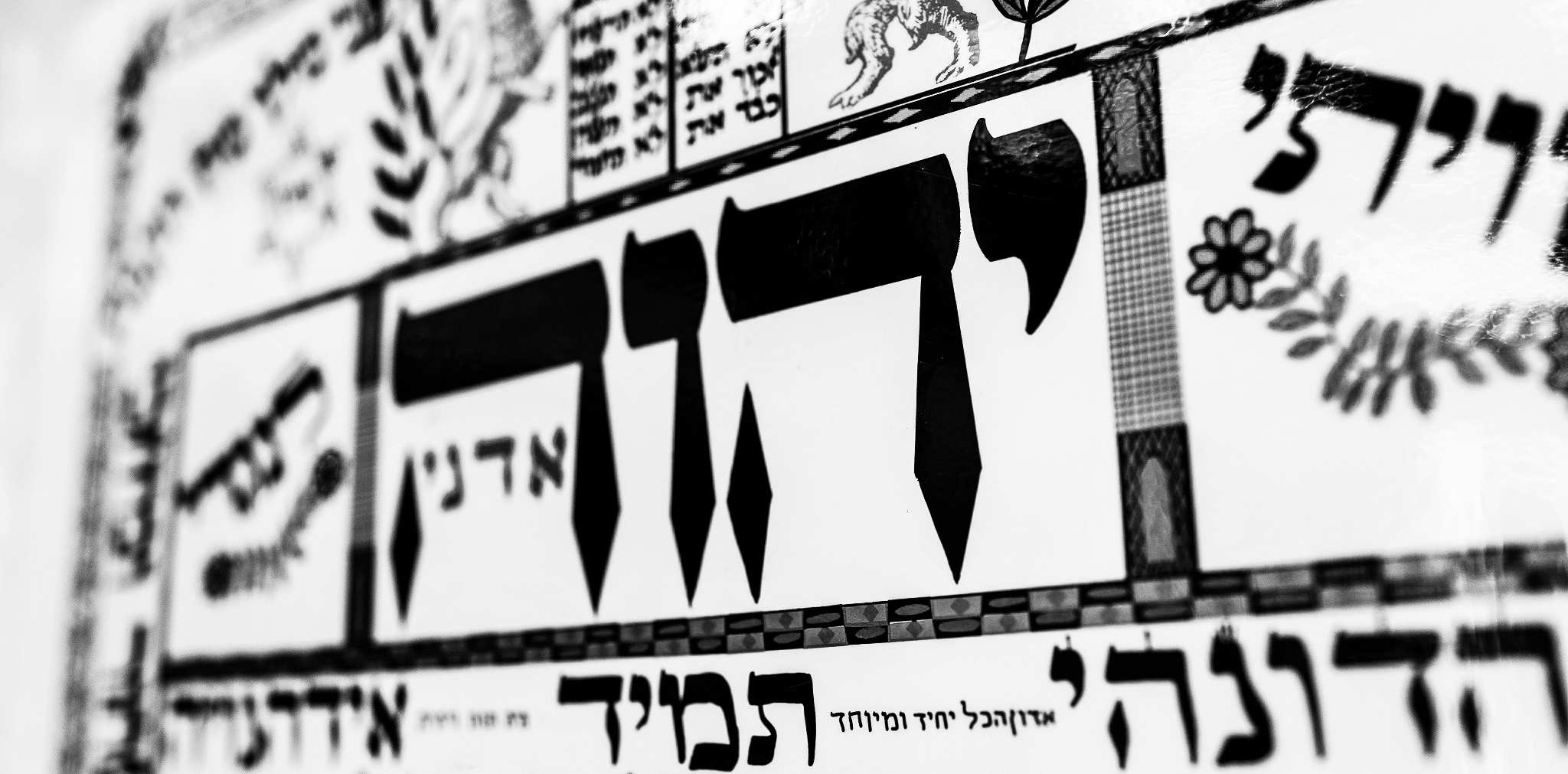
 Our Torah reading for this week, parashat Vayera (פרשת וירא),is very dramatic and extraordinarily prophetic. Among other things (including the miraculous birth of Isaac, the fiery judgment upon Sodom and Gomorrah, the fate of Hagar’s son Ishamel, and so on), the reading includes what I have called the “Gospel according to Moses,” that is, Moses’ account of how the patriarch Abraham was tested by God to offer his “only begotten son” (בֵּן יָחִיד) Isaac as a whole-burnt offering sacrifice on Mount Moriah — the place of the future Temple. This astonishing story is referred to as the Akedah (עֲקֵדָה), or Akedat Yitzchak (עֲקֵידָת יִצְחָק) – the “binding of Isaac” (Gen. 22:1-18). As Abraham lifted up his knife to slay his beloved son, at the very last moment, the Angel of the LORD (מַלְאַךְ יהוה) stopped him from going through with the sacrifice, and a ram “caught in a thicket” was offered as the vicarious substitute. Upon offering the sacrifice Abraham named the sacred location Adonai-Yireh (יהוה יִרְאֶה), “the LORD will provide/see” (from the 3ms imperfect of ra’ah (רָאָה), “to see”).


 …
…
 There is rational, intuitive, and empirical evidence to believe that the universe was created in time by a transcendental power that is the source of all value, meaning, purpose, and so on. Martin Heidegger asked, “Why is there something rather than nothing,” which is not a question about a possible cause for an observed effect, but is a question about the underlying cause of any possible existence at all. The Scriptures reply: “For God’s invisible attributes, namely, his eternal power and divine nature from the creation of the world, have been clearly perceived, because they are understood through what has been made, so people are without excuse” (Rom 1:20).


 Many of our deepest anxieties come from the fear of death, whether we are conscious of this or not… Death represents fear of the unknown, fear of being abandoned, fear of being rejected, fear of being separated from others, and so on. I am so glad Yeshua gives us eternal life, which for me is not so much about immortality of the soul as it is being loved and accepted by God… That is what “at-one-ment” means, after all (John 17:22-23).
 In this special “High Holiday” audio presentation, I discuss the holiday of
 In this “Shavuah Tov” audio broadcast I discuss both the Jewish High Holidays — and how they relate to us as followers of Yeshua the Messiah — as well as the weekly Torah portion we will read for Shabbat Shuvah, namely parashat Vayeilech. I hope you will find it helpful. L’Shanah Tovah u’Metukah b’Yeshua Meshicheinu, chaverim! – “to a good and sweet year in our Messiah Yeshua, friends.”
 ding for this week,
