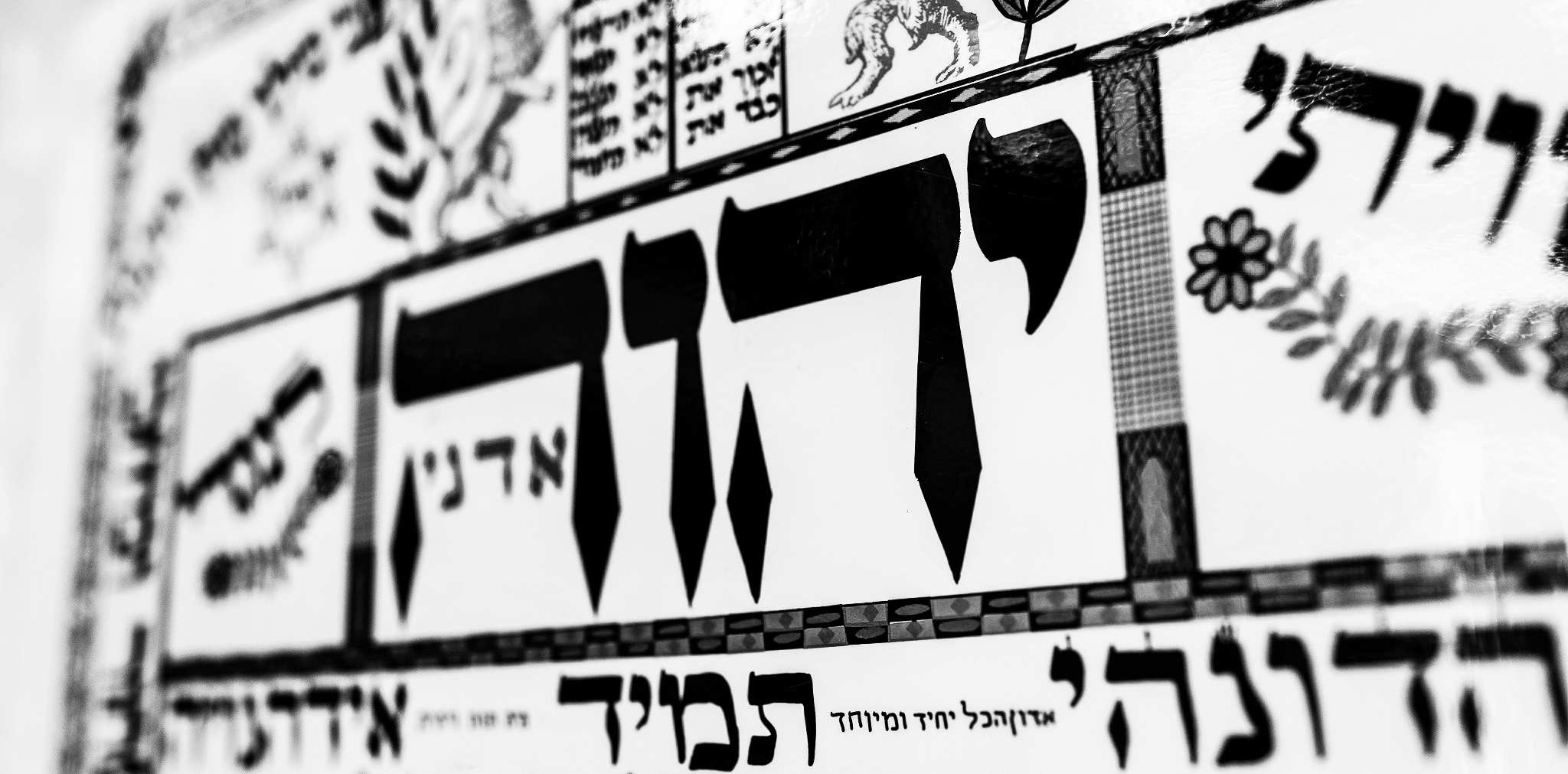
 Our Torah portion for this week (i.e., parashat Naso) includes the famous blessing that Aaron and his sons (i.e., the priests) were instructed to recite over the people of Israel: “The LORD bless you and guard you; the LORD make his face to shine upon you and be gracious to you; the LORD lift up his countenance upon you and give you peace” (Num. 6:24-26). The Hebrew text of the blessing begins with three words, is comprised of three parts, invokes the divine Name three times, and is therefore appropriately called “the three-in-one blessing” (שלוש בברכה אחת). Notice that the words are spoken in the grammatical singular rather than plural because they are meant to have personal application, not to be a general benediction over a crowd of people. The phrase, “The LORD lift up His face toward you…” (יִשָּׂא יְהוָה פָּנָיו אֵלֶיךָ) pictures the beaming face of a parent as he lifts up his beloved child in joy… The repetitive construction of God “lifting up His face” (יְהוָה פָּנָיו אֵלֶיך) suggests that God’s compassion now flows outward to the child in superabundant grace. Undoubtedly Yeshua recited this very blessing over his disciples when he ascended back to heaven, though of course He would have spoken it in the grammatical first person: “I will bless you and keep you (אני אברך אותך ואשמור לך); I will shine upon you and will be gracious to you; I will lift up my countenance upon you, and give you my shalom” (Luke 24:50-51).
Podcast:

 Our Torah portion for this week,
 In the State of Israel, “Jerusalem Day” (i.e., Yom Yerushalayim: יום ירושלים) commemorates the re-unification of old city of Jerusalem on June 7th, 1967 during the infamous Six Day War. In 1968 the Chief Rabbinate of Israel declared Iyyar 28 to be a holiday to thank God for answering the 2,000-year-old expression of hope recited by Jews throughout the world: “Next Year in Jerusalem.” On March 23, 1998, the Knesset passed the Jerusalem Day Law, making it a national holiday.
 Shavuah Tov, chaverim! This week we will read the last two portions of the great Book of Leviticus (ספר ויקרא), namely,
 Our Torah portion this week (
 According to tradition, Moses descended from Sinai (with the second set of tablets) on
 Our Torah reading for this week is
 “Let them make me a mikdash (“holy place,” “sanctuary”), that I may dwell in their midst” (Exod. 25:8). Though this verse refers to the physical mishkan (i.e., “Tabernacle”), it more deeply refers to the duty of the heart to sanctify the Name of God and bring a sense of holiness to the inner life. This requires that we focus the mind and heart to honor the sacredness of life, taking “every thought captive” to the truth of God in Messiah (2 Cor. 10:5). Since our minds and hearts are gateways to spiritual revelation, we must be careful to not to abuse ourselves by indulging in sloppy thinking or unrestrained affections. God holds us responsible for what we think and believe (Acts 17:30-31), and that means we have a duty to honor moral reality and truth. There is an “ethic of belief,” or a moral imperative to ascertain the truth and reject error in the realm of the spiritual. Since God holds us responsible to repent and believe the truth of salvation, He must have made it possible for us to do so (“ought” implies “can”). And indeed, God has created us in His image and likeness so that we are able to discern spiritual truth. He created us with a logical sense (rationality) as well as a moral sense (conscience) so that we can apprehend order and find meaning and beauty in the universe He created. All our knowledge presupposes this. Whenever we experience anything through our senses, for example, we use logic to categorize and generalize from the particular to the general, and whenever we make deductions in our thinking (comparing, making inferences, and so on), we likewise rely on logic. We have an innate intellectual and moral “compass” that points us to God.

 In
In 
