This week’s Torah reading, called Shemini (“eighth”), continues the account of the seven-day ordination ceremony for the priests that was described earlier in parashat Tzav. During each of these “seven days of consecration,” Moses served as the first High Priest of Israel by offering sacrifices and training the priests regarding their duties. On the eighth day however, (i.e., Nisan 1), and just before the anniversary of the Passover, Aaron and his sons began their official responsibilities as Israel’s priests. It is no coincidence that the inauguration of the sanctuary is directly connected to the Passover, since the daily sacrifice of the Lamb served as an ongoing memorial of the Exodus from Egypt — and indeed the laws of sacrifice form the central teaching of the Torah itself. In this connection, we again note that the central sacrifice of the Tabernacle was that of a defect-free lamb offered every evening and morning upon the altar in the outer court, along with matzah (unleavened bread) and a wine offering, signifying the coming of the true Passover Lamb of God and his great sacrifice for us.
Note that this audio broadcast also includes discussion about Yom HaShoah, or Holocaust Remembrance Day as well as the Hebrew month of Iyyar and its significance in the countdown to the climactic holiday of Shavuot (“weeks” or “Pentecost”).
In this shorter audio podcast I provide an introductory overview of Sefer Vayikra (the Book of Leviticus) as well as a brief introduction to parashat Vayikra. For more information about the details of the Torah portion, see the audio podcast for parashat Vayikra….
The Book of Exodus (סֵפֶר שְׁמוֹת) begins directly where the book of Genesis left off, by listing the “names” (shemot) of the descendants of Jacob who came down to Egypt to dwell in the land of Goshen. Over time Jacob’s family flourished and multiplied so greatly that the new king of Egypt – who did not “remember” Joseph – regarded the Israelites as a political threat and decided to enslave them. When the king’s oppression did not curb their growth, however, he commanded the Hebrew midwives to kill all newborn Jewish boys. When the midwives refused to obey, however, the Pharaoh decreed that all newborn boys were to be forcibly drowned in the Nile river.
In this audio summary, I discuss the first portion of the Book of Exodus, parashat Shemot, as well as the significance of the secular New Year and our approach to understanding the holidays in general.
Our Torah reading for this week, parashat Vayechi (ויחי), recounts how the great patriarch Jacob adopted Joseph’s two sons (Ephraim and Manasseh) as his own children. When Jacob blessed the boys, however, he intentionally reversed the birth order by putting the younger before the older, signifying that the old struggle he had faced as a child was over, and he now understood things differently. And note Ephraim and Manasseh’s reaction: the older did not envy the younger, nor did the younger boast over the older. The family had apparently learned that blessing from God is for the good of all, and that there is no real blessing apart from genuine humility that esteems the welfare of others.
Following this, Jacob was ready to summon his family to hear his final words. Among other things, he foretold how the Messiah would come from the line of Judah and then instructed his sons to bury him only in the promised land, and not in Egypt (Gen. 49:10-12; 49:29-32).
After his death, Joseph and his brothers, with various dignitaries of Egypt, formed a funeral procession and returned to Canaan to bury Jacob in the Cave of Machpelah in Hebron. After the funeral, they returned to Egypt, but Joseph’s brothers feared that he would now repay them for their former betrayal and threw themselves on his mercy. Joseph reassured them that they had no reason to fear him and reminded them that God had overruled their earlier intent by intending him to be a blessing to the whole world (Gen. 50:20).
The portion ends with the account of the death of Joseph, who made the sons of Israel promise to take his bones with them when the LORD would bring them back to the land of Canaan (alluding to the great Exodus to come). Joseph’s faith in the Jewish people’s return to the Promised Land is summarized by his statement: “God will surely remember you” (Gen. 50:24). He died at age 110, was embalmed and placed in a coffin in Egypt, full of faith that he would be raised from the dead in the land promised to Abraham, Isaac, and Jacob.
At Sinai we heard the voice of God (קוֹל אֱלהִים) speaking from the midst of the Fire (Deut. 4:33), an event that foreshadowed the great advent of the King and Lawgiver Himself, when the Eternal Word (דְבַר־יְהוָה) became flesh and dwelt with us (Phil. 2:6-7; John 1:1,14). Any theology that regards God as entirely transcendent (i.e., God is beyond any analogy with the finite) will have a problem with divine immanence (i.e., God is inherent and involved within the finite), since the highness, holiness, and perfection of God will make Him seem distant, outside of us, far away, and unknown…
Incarnational theology, on the other hand, manifests the magnificent humility and nearness of God to disclose the divine empathy. Indeed, the LORD became Immanuel (עִמָּנוּ אֵל), “God with us,” to share our mortal condition, to know our pain, and to experience what it means to be wounded by sin, to be abandoned, alienated, forsaken. It is God’s own bittul hayesh (בִּטּוּל הַיֵּשׁ) – his self-nullification for the sake of love and truth. The “Eternal made flesh” bridges the gap between the realm of Ein Sof (אין סוף), the infinitely transcendent One, and the finite world of people lost within their sinful frailty. Of course we believe Adonai Echad (יְהוָה אֶחָד) – that the “LORD is One” – both in the sense of being exalted over all things but also in the sense of being compassionately involved in all things (Rom. 11:36). We therefore celebrate the giving of the Torah both at Sinai and especially at Bethlehem with the birth of Messiah. We celebrate that God is indeed the King and Ruler over all, but we further affirm that God’s authority and rule extends to all worlds – including the realm of our finitude and need…
As I’ve mentioned elsewhere, the climax of Sinai was the revelation of the Sanctuary. The two tablets of the law, summarizing the Ten Commandments, were stored inside the famous Ark of the Covenant (אֲרוֹן בְּרִית־יְהוָה), a sacred “three-in-one” box placed in the innermost chamber of the Tabernacle called the Holy of Holies (קדֶשׁ הַקֳּדָשִׁים). As such, the Ark served as kisei ha-kavod (כִּסֵּא הַכָּבוֹד), the Throne of Glory itself. Upon the cover (or crown) of the Ark (i.e., the kapporet) were fashioned two cherubim (i.e., angel-like figures) that faced one another (Exod. 25:17-18). According to the Talmud (Succah 5b), each cherub had the face of a child – one boy and one girl – and their wings spread heavenward as their eyes gazed upon the cover (Exod. 25:20). It was here that God’s Voice would be heard during the Yom Kippur service, when sacrificial blood was sprinkled upon the crown to symbolize the atonement of sin secured through Messiah, the Word that became flesh for us… In the very heart of the Sanctuary, then, we see the Word of God and the sacrificial blood.
The LORD God Almighty was clothed with human skin: our flesh, our bones… The miracle of the incarnation is the Absolute Paradox, as Kierkegaard said, wherein the infinite and the finite meet in mystery of the Divine Presence. Here God “touches a leper,” eats with sinners and prostitutes, sheds human tears, and suffers heartache like all other men… The gloriously great God, the very Creator of the cosmos, has “emptied Himself” to come in the form of a lowly servant (δοῦλος) – disguised to the eyes of the proud and hardhearted, but is revealed as High Priest to those who are genuinely broken and in profound need. The LORD God is God over all possible worlds, and that includes both the celestial realms of the heavens but also the world of the fallen, the ashamed, the alienated, and the lost… God’s infinite condescension reveals and augments the majesty of His infinite transcendence. There is no world – nor ever shall there be such – where the LORD God Almighty does not reign and have preeminence.
Do not suppose for a moment that the Torah of Moses does not teach “incarnational” theology. Since God created human beings in his image and likeness, the “anthropomorphic language” of Scripture is meaningful. The LORD reveals himself in human terms – using human language, expressing human emotions, and so on, as it says: Moses spoke to God panim el panim – “face to face” (Deut. 34:10). The Torah always has to take on human form – the Word made flesh – for the sake of human beings who live in flesh and blood reality…
The greatest expression of God’s word is found in the Presence of Yeshua. This is the Word of God that “tabernacles” with us, full of grace and truth (John 1:14). Yeshua is the “Living Torah,” Immanuel (עִמָּנוּ אֵל), “God with us,” who enters our world to rescue us from death. Our Scriptures state that “in these last days God has spoken to us by his Son, whom He appointed the Heir of all things, through whom also He created the worlds” (Heb 1:2). Note that the Greek construction for the phrase translated, “by his son” is ἐλάλησεν ἡμῖν ἐν υἱῷ, which literally means “he spoke to us in Son” — that is, in the language or voice of the Son of God Himself… God speaks the language “of Son” from the midst of the fire revealed at Zion. “Therefore, since we are receiving a kingdom that cannot be shaken, let us be thankful, and so worship God acceptably with reverence and awe (μετὰ αἰδοῦς καὶ εὐλαβείας) – for our God is Esh Okhelah – a Consuming Fire” (Heb. 12:28-29).
Addendum: Consider further the metaphorical and anthropomorphic language of the Scriptures: God “sees,” God “hears,” the “hand of the LORD” saves, etc. Without an implied incarnational theology, there would be no language that we could comprehend about God who is the Infinite One that transcends all things… God gets angry; God feels sorrow; God is jealous; God is a lover, etc. all these metaphors bring the language of heaven into the world of humanity… The Spirit that imparts revelation does so inside a human brain and is translated into human apprehension. Yeshua is the Substance of the shadowy talk of analogical language; he embodies God-life before us…. Yeshua is the Word of God made flesh — able to touch us, know us, share in our suffering, heal us of our sin-sickness, etc.
In our Torah portion for Chanukah week, parashat Miketz (i.e., Gen. 41:1-44:17) we will read how imprisoned Joseph successfully interpreted Pharaoh’s dreams and suddenly rose to power in Egypt. Because of a famine in the land of Canaan, however, his brothers (who had earlier betrayed him) came to Egypt in search of food. A disguised Joseph then tested his brothers to see whether they were the same people who had callously sold him into slavery, or whether they had undergone teshuvah (repentance).
The eventual revelation of Joseph and his reconciliation with his brothers is a prophetic picture of acharit ha-yamim (the “End of Days”) when Israel, in Great Tribulation, will come to accept Yeshua as Israel’s true deliverer. Presently, the veil is still over the eyes of the Jewish people and they collectively regard Yeshua as an “Egyptian” of sorts. In this connection, I list some of the ways that Joseph is a “type” or foreshadowing of the coming Yeshua as the Suffering Servant (see “Mashiach ben Yosef”).
Though it is good to ask questions about what we believe, to seek for understanding, and to study the Scriptures, we must do so using the principle that “faith seeks understanding,” rather than the converse principle that “understanding seeks faith,” since the latter elevates human reason to be the judge and arbiter of the things of God, a role for which it is both incapable and unsuited (Isa. 55:8-9; Job 9:10; 11:7; Psalm 139:6; Rom. 11:33). God is not a “what” but a “Who,” and that affects the means by which we know him (John 4:24). We certainly can know truth about God, though the instrumentality for attaining such knowledge transcends the abilities of unaided human reason (see Deut. 29:29).
Some people talk about “honest doubt” regarding matters of God, and while there may indeed be occasions to confess the limitations of our ability to understand the mysteries of heaven, we must be on guard not to ply a present lack of “semantic closure” as an excuse for despair that hardens our hearts and justifies our sin… The lower nature’s machinations are so devious that we must be on guard and “test what manner of spirit” you are (Luke 9:55; 1 John 4:1; James 4:4). In the name of “honest doubt” a soul can invent all manner of difficulties of interpretation, the mind may become jaded and agnostic; the heart cools and steps away from the passion of faith… Doubt introduces hesitancy, compromise, and godless misgivings; it is a leech upon the soul, sapping the strength of conviction, weakening the balm of assurance. Be careful. Honest seeking is one thing, but practiced doubt may be an evasive measure – a diabolical ploy meant to distance yourself from responsibility to God’s truth.
Often enough people have a “problem” with faith not because there is insufficient reason to believe — after all, every soul has intuitive awareness of the reality of God’s reality and power (see Rom. 1:19-20; Psalm 19:1-4; Acts 14:17) — but because secret sin lurking within the heart is cherished as the soul’s ultimate concern and most precious value. Such idolatry of heart is the essence of much “doubt,” since faith ultimately is an act of will. “The heart has its reasons that reason knows not of” applies both to the realm of God but to the affections of the selfish heart… In that sense doubt serves as a deal made with the devil – an exchange of a “mess of pottage” for the blessing of God!
Charles Spurgeon once wrote: “It seems that doubt is worse than trial. I had sooner suffer any affliction than be left to question the gospel or my own interest in it” (Vol. 29, Sermons). Amen, the gospel cannot be esteemed apart from personal interest in its truth, for otherwise we are merely toying with its message. You must believe that the truth of God – and being properly related to this truth by means of a trusting relationship – is the most inestimably precious and important matter of your very existence… “Find God or die.” We cannot escape from the double-mindedness of our way apart from sincerely turning to God and asking Him to show us his glory, his beauty, and the wonder of his great love. A divided house cannot stand. The way of deliverance from yourself – to way to be free of enslaving passions and dark desires that fragment the soul – is by means of the miracle of God: “For the flesh has desires that are opposed to the Spirit, and the Spirit has desires that are opposed to the flesh, for these are in opposition to each other, so that you cannot do what you want’ (Gal. 5:17; Rom. 7:15-25), but if you are led by the Spirit, you are free from the law of sin and death and are enabled to live according to a new source of power and life, namely, the law of the Spirit of Life in Messiah Yeshua (Rom. 6:6,14; Gal. 2:20). Living in slavery to sin is to lose yourself – to have no “center,” no self that unifies your heart and focuses your reason for being… It is the hell of no longer believing in anything at all, and especially no longer believing yourself.
Soren Kierkegaard once lamented: “The matter is quite simple. The Bible is very easy to understand. But we Christians are a bunch of scheming swindlers. We pretend to be unable to understand it because we know very well that the minute we understand we are obliged to act accordingly.” There is a very real danger of “thinking about” truth rather than living it. For instance, you might study the Psalms as literature and attempt to understand the nuances of Hebrew poetry, but that is altogether different than reciting the psalms with inner passion, with simple conviction and the earnest desire to unite our heart’s cry with the devotion that gave life to the words… We must read with a heart of faith to unlock the truth that speaks to the heart. If you believe only what you understand, your faith is actually grounded in your own reasoning, not in the Divine Voice of Love…
The way of trust is always a matter of the heart’s passion and hope… The Spirit of God speaks gently: “My child, give me your heart, and let your eyes observe my ways” (Prov. 23:26). When we call God “Abba,” we are not using a formal name that indicates distance, but rather a term that evokes intimate closeness and reliance. Calling out to God as “Abba” signifies that we genuinely accept that God regards us as his beloved child…
V’zot HaBerakhah (“this is the blessing”) is the final portion of the Torah, which records Moses’ last words to the people just before his death. It is always read just after the festival of Sukkot on the holiday called “Simchat Torah.” After reading this portion, we will “rewind the scroll” back to Parashat Bereshit to begin reading the Torah all over again. We do this every year because Talmud Torah – the study of Torah – never ends! A true student of Scripture cannot claim to have completed the study of the Torah, for the implications of such study extend forever. And so the cycle continues, over and over in a continuous chain of study, ever widening, and all encompassing.
In this special “High Holiday” audio presentation, I discuss the holiday of Yom Kippur and its themes, particularly in reference to the atonement given in the Messiah Yeshua, as well as parashat Ha’azinu, the Torah portion we always read between Rosh Hashanah and Yom Kippur. The Ha’azinu is an amazing prophetic song (“shirah”) written by Moses just before he died. Written nearly 1,500 years before the advent of Yeshua, Moses foresaw the climatic events of Israel’s history — its past, present, and most notably its future, including the future time of redemption and atonement at the End of the Age.
I hope you find this podcast helpful, chaverim. Shanah Tovah b’Yeshua!
A message of teshuvah from our Lord: “What do you think? If a man has a hundred sheep, and one of them has gone astray, does he not leave the ninety-nine on the mountains and go in search of the one that went astray? And if he finds it, truly, I say to you, he rejoices over it more than over the ninety-nine that never went astray” (Matt. 18:12-13). Though it involves sorrow, and the pain of being lost, repentance is ultimately about finding joy, and when we return to God, we have reason to rejoice. The Good Shepherd says, “Rejoice with me, for I have found my sheep that was lost. Just so, I tell you, there will be more joy in heaven over one sinner who repents than over ninety-nine righteous persons who need no repentance” (Luke 15:6-7). The Son of Man came to seek and to save the lost: “For thus says the Lord GOD: Behold, I myself will search for my sheep and I will seek them out… I myself will be the Shepherd of my sheep, and I myself will make them lie down, declares the Lord GOD. I will seek the lost, and I will bring back the banished, and I will bind up the injured, and I will strengthen the sick…” (Ezek. 34:11,15-16).
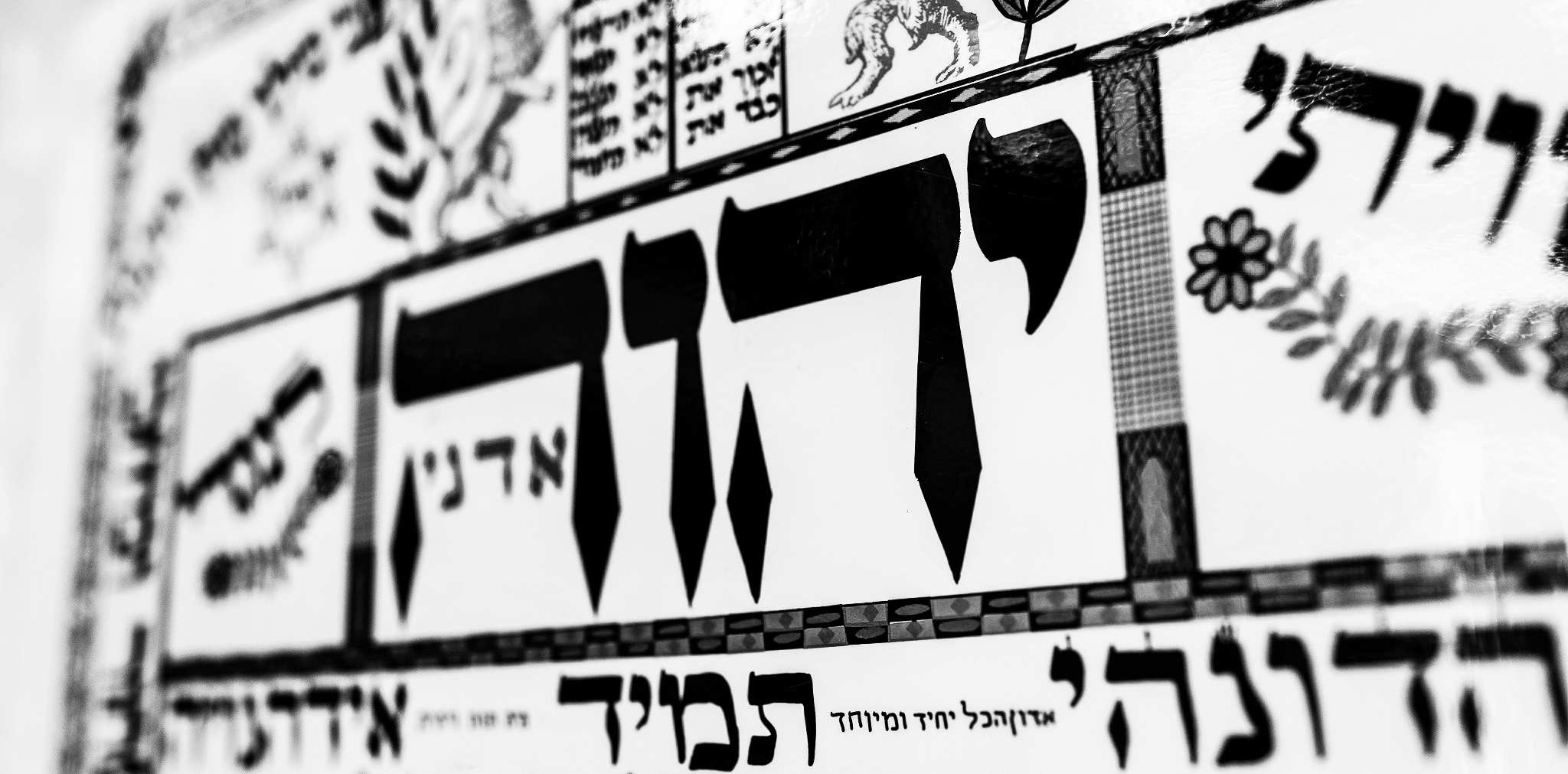
 This week’s Torah reading, called Shemini (“eighth”), continues the account of the seven-day ordination ceremony for the priests that was described earlier in parashat Tzav. During each of these “seven days of consecration,” Moses served as the first High Priest of Israel by offering sacrifices and training the priests regarding their duties. On the eighth day however, (i.e., Nisan 1), and just before the anniversary of the Passover, Aaron and his sons began their official responsibilities as Israel’s priests. It is no coincidence that the inauguration of the sanctuary is directly connected to the Passover, since the daily sacrifice of the Lamb served as an ongoing memorial of the Exodus from Egypt — and indeed the laws of sacrifice form the central teaching of the Torah itself. In this connection, we again note that the central sacrifice of the Tabernacle was that of a defect-free lamb offered every evening and morning upon the altar in the outer court, along with matzah (unleavened bread) and a wine offering, signifying the coming of the true Passover Lamb of God and his great sacrifice for us.
 In this shorter audio podcast I provide an introductory overview of Sefer Vayikra (the Book of Leviticus) as well as a brief introduction to
 The
The 
 Our Torah reading for this week,


 In our Torah portion for
 Though it is good to ask questions about what we believe, to seek for understanding, and to study the Scriptures, we must do so using the principle that “faith seeks understanding,” rather than the converse principle that “understanding seeks faith,” since the latter elevates human reason to be the judge and arbiter of the things of God, a role for which it is both incapable and unsuited (Isa. 55:8-9; Job 9:10; 11:7; Psalm 139:6; Rom. 11:33). God is not a “what” but a “Who,” and that affects the means by which we know him (John 4:24). We certainly can know truth about God, though the instrumentality for attaining such knowledge transcends the abilities of unaided human reason (see Deut. 29:29).


 In this special “High Holiday” audio presentation, I discuss the holiday of
 A message of teshuvah from our Lord: “What do you think? If a man has a hundred sheep, and one of them has gone astray, does he not leave the ninety-nine on the mountains and go in search of the one that went astray? And if he finds it, truly, I say to you, he rejoices over it more than over the ninety-nine that never went astray” (Matt. 18:12-13). Though it involves sorrow, and the pain of being lost, repentance is ultimately about finding joy, and when we return to God, we have reason to rejoice. The Good Shepherd says, “Rejoice with me, for I have found my sheep that was lost. Just so, I tell you, there will be more joy in heaven over one sinner who repents than over ninety-nine righteous persons who need no repentance” (Luke 15:6-7). The Son of Man came to seek and to save the lost: “For thus says the Lord GOD: Behold, I myself will search for my sheep and I will seek them out… I myself will be the Shepherd of my sheep, and I myself will make them lie down, declares the Lord GOD. I will seek the lost, and I will bring back the banished, and I will bind up the injured, and I will strengthen the sick…” (Ezek. 34:11,15-16).