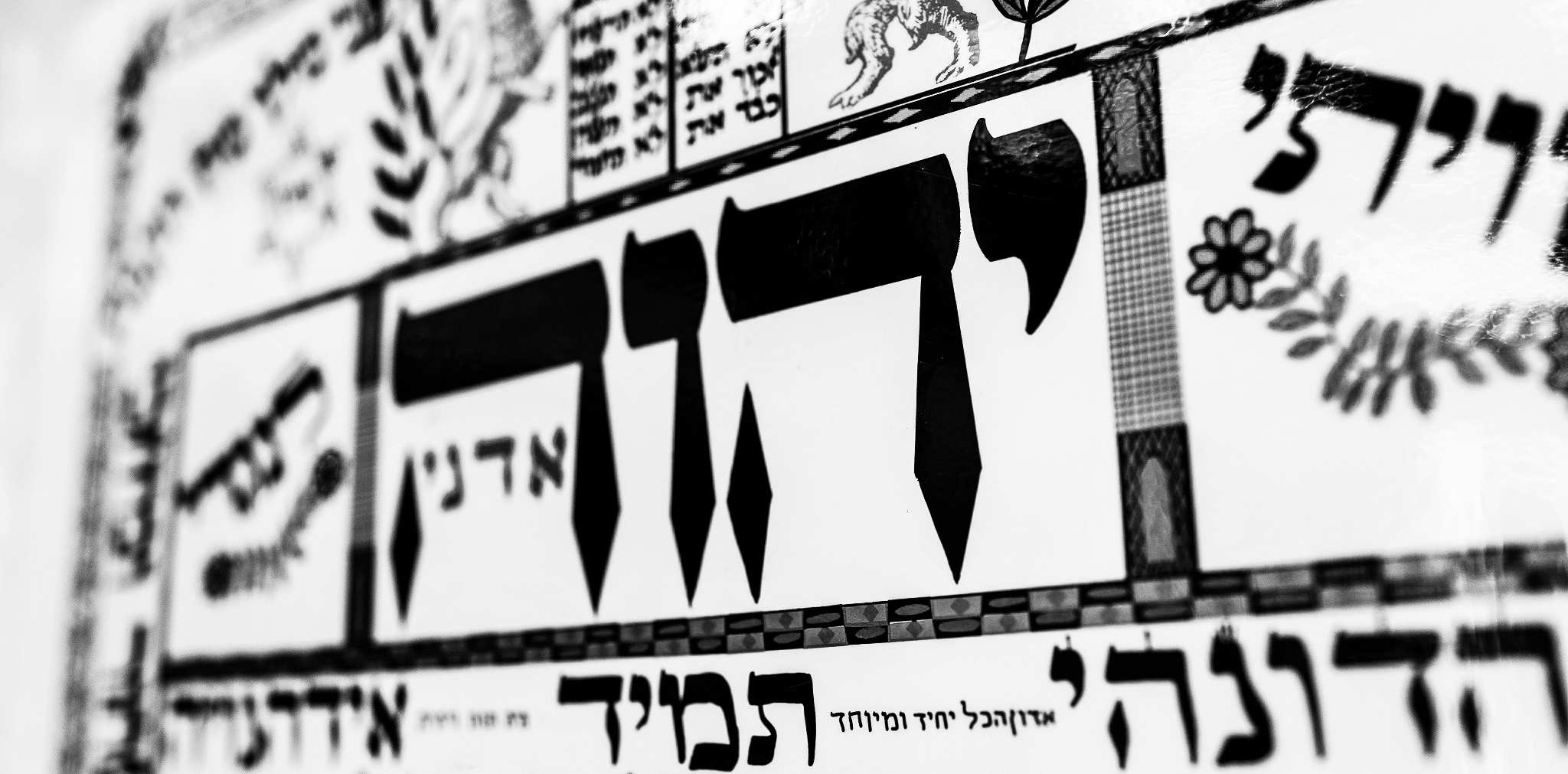
Our Torah reading for this week, parashat Nitzavim (פרשת ניצבים), is always read on the Shabbat immediately before the solemn holiday of Rosh Hashanah, and therefore it is the last Torah portion read before the new Jewish year (see Exod. 23:16). In many synagogues, the opening and concluding paragraphs of parashat Nitzavim are also read during the Yom Kippur morning service.
Nitzavim begins: “You are standing here today, all of you, before the LORD your God (אַתֶּם נִצָּבִים הַיּוֹם כֻּלְּכֶם לִפְנֵי יְהוָה אֱלהֵיכֶם) … so that you may enter into the sworn covenant of the LORD your God, which the LORD your God is making with you today, that he may establish you today as his people, and that he may be your God, as he promised you, and as he swore to your fathers, to Abraham, to Isaac, and to Jacob” (Deut. 29:10-13). After this Moses went on to review Israel’s history and prophetic future — i.e., the great prophecy of the Diaspora and Return of the people — and then he solemnly appealed for all those who believed to turn to the LORD for life: “I call heaven and earth to witness against you today, that I have set before you life and death, blessing and curse. Therefore choose life, that you and your offspring may live” (Deut. 30:19).
In addition to an overview of the Torah reading, I discuss the fall holidays of the Torah’s calendar, particularly the significance of Rosh Hashanah for followers of Yeshua the Messiah.
Yeshua repeatedly took the role of a “stumbling block” to test people’s response to his ministry and message. Most people were offended at Him, of course, and in the end Yeshua was crucified for the sake of their offenses. After His death, the cross itself became the scandal of faith. The Apostle Paul referred to the “offense of the cross” which he did not want removed. But what is the “offense of the cross” and why is the proclamation of the crucified Messiah a scandal (σκάνδαλον) to Jews and foolishness to the Gentiles?
Listen Now:
For more information see “The Offense of the Cross: Further thoughts on Skandalon” on the Hebrew for Christians web site:
In this audio podcast I discuss the the 40 day “Season of Teshuvah” or repentance leading up to the Jewish High Holidays as well as the weekly Torah portion, parashat Ki Tavo, which includes instructions for the people to ratify the Sinai covenant in the promised land by means of a special covenant renewal ceremony performed in the valley between Mount Ebal and Mount Gerazim. During this ceremony blessings for obedience and curses for disobedience would be declared, and Moses warned the people by providing a seemingly endless description of terrible consequences that would befall the Jewish people if they disobeyed the terms of the Sinai covenant (Deut. 28:15-68).
In Jewish tradition this litany of woe is called the “tochachah” (תּוֹכָחָה), a word that means “rebuke” or “reprimand.” Reading the tochachah is difficult and painful, though it serves as a bitter medicine to wake us up and prevent us from falling into a lethal coma. In that sense the tochechah may be regarded as a great blessing, since it shocks us into experiencing the gravity of God’s grace. This is similar to Yeshua’s grave warnings about the dangers of hell. If we refuse to listen or rush past his words, we are missing the substance of God’s lament given through the Hebrew prophets. Sin is a lethal problem, and we must turn to God for healing or we will die. As Blaise Pascal once wrote, “Between heaven and hell is only this life, which is the most fragile thing in the world.” Therefore shuvah! — turn to God and receive the blessing of life!
If you’ve been following the weekly Torah schedule, you will recall that in last week’s Torah reading (i.e., Shoftim), Moses defined an extensive system of justice for the Israelites and pointed to the coming Messiah who would be the rightful King of Israel: “The LORD your God will raise up for you a prophet like me from among you, from your brothers — it is to him you shall listen” (Deut. 18:15). In this week’s portion (i.e., Ki Teitzei: כי־תצא), Moses returns to the immediate concern of life in the promised land by providing additional laws to be enforced regarding civil life in Israel. In fact, Jewish tradition (following Maimonides) identifies no less than 74 of the Torah’s 613 commandments in this portion (more than any other), covering a wide assortment of rules related to ethical warfare, family life, burial of the deceased, property laws, the humane treatment of animals, fair labor practices, and honest economic transactions.
Of particular interest to us is the statement that a man who was executed and “hanged on a tree” (עַל־עֵץ) is cursed of God (Deut. 21:22-23). According to the Talmud (i.e., Nezakim: Sanhedrin 6:4:3), the Great Sanhedrin (סַנְהֶדְרִין גְדוֹלָה) decided that “a man must be hanged with his face towards the spectators” upon a wooden stake, with his arms slung over a horizontal beam. It should be noted that while this is technically not the same thing as the gruesome practice of Roman crucifixion, the reasoning based on this verse was apparently used to justify the execution of Yeshua (Mark 15:9-15; John 19:5-7; 15). The exposed body was required to be buried before sundown to keep the land from being defiled. Besides the shame and degradation of this manner of death, the one so executed would be unable to fall to their knees as a final act of repentance before God, thereby implying that they were under the irrevocable curse of God (קִלְלַת אֱלהִים).
In this connection, we should note that Yeshua was falsely charged with blasphemy before the corrupt Sanhedrin of His day (Matt. 26:65; Mark 14:64; John 10:33) – an offence that was punishable by stoning (Lev. 24:11-16). However, since the Imperial Roman government then exercised legal hegemony over the region of Palestine, all capital cases were required to be submitted to the Roman proconsul for adjudication, and therefore we understand why the Jewish court remanded Yeshua and brought him to be interrogated by Pontius Pilate. Because Roman law was indifferent to cases concerning Jewish religious practices (i.e., charges of blasphemy), however, the priests further slandered Yeshua by illegitimately switching the original charge of blasphemy to that of sedition against Rome. The Sanhedrin undoubtedly rationalized their duplicity because the Torah allowed for an offender to impaled or “hung on a tree” (Num. 25:4), and since they were unable to do carry out this judgment because of Roman rule in the area, they needed Pilate to condemn him to death by crucifixion (Matt. 27:31; Mark 15:13-4; Luke 23:21; John 19:6,15). Note that crucifixion is mentioned elsewhere in the Talmud (Nashim: Yevamot 120b) regarding whether a widow can remarry if her husband had been crucified, as well as by the Jewish historian Josephus. The Talmud furthermore alludes to the death of Yeshua where Yeshua is said to have been crucified on “eve of Passover” (Nezekin: Sanhedrin 43a).
In this audio podcast I discuss the the forty day “Season of Teshuvah” or repentance leading up to the Jewish High Holidays as well as the weekly Torah portion, parashat Shoftim, which discusses adjudication of legal matters among the people of Israel. In addition I look at Moses’ great prophecy of “the Prophet” to come, namely the Messiah of Israel, and how this Prophet is clearly Yeshua as revealed in the New Testament writings. Throughout this broadcast I hope to encourage you to turn and draw near to God while you still have time…
Our Torah portion this week (i.e., parashat Re’eh) begins, “See (רְאֵה), I give before you today a blessing and a curse: the blessing (הַבְּרָכָה), if you obey the commandments of the LORD your God, which I command you today, and the curse (הַקְּלָלָה), if you … turn aside from the way that I am commanding you today, to go after other gods that you have not known” (Deut. 11:26-28).
We obtain God’s blessing (i.e., berakhah: בְּרָכָה) when we obey the LORD, and our decision to obey manifests the blessed state of walking before the Divine Presence (the direct object marker et (את) before the word “the blessing” alludes to the blessings of “Aleph to Tav,” that is from Yeshua, as described in Lev. 26:3-13). As King David said, “I have set (שִׁוִּיתִי) the LORD always before me…” (Psalm 16:8). David made a choice to “set” the LORD before his eyes, for he understood that opening his eyes to Reality was the only path of real blessing.
On the other hand, we obtain God’s curse (i.e., kelalah: קְלָלָה) when we close our eyes and “forget” that the LORD is always present…. Suppressing God’s truth invariably leads to idolatry, that is, to self exaltation. Note that the root word for the word “curse” (kalal) means to be treated as of little account, and therefore “ratifies” the rebellious heart’s attitude toward God. This is middah keneged middah – we are ignored by the LORD as we ignore Him, just as we seen by Him when we truly seek His face (Isa. 55:6-7). So we see that the blessing or the curse really comes from our own inward decision, and God establishes the path we have chosen. As King David said, “God supports my lot” (Psalm 16:5), and Solomon wrote, “The heart of man plans his way, but the LORD directs his steps” (Prov. 16:9).
Shalom chaverim. In this “Daily Perush” audio I provide an exegesis and reading of a significant phrase in King Solomon’s great prayer at the dedication of the First Temple, namely, “Behold heaven and the heaven of heavens cannot contain you” (2 Chron. 6:18), and I then go on to reflect a bit on the meaning of these words in relation to the destruction of the Temple in Jerusalem. Please note that this topic is primarily designed for those who are studying Biblical Hebrew. I hope you will find it helpful. – John
During his earthly ministry, our Lord Yeshua referred to himself as “the True Temple of God” (המקדש האמיתי של אלוהים) that dwelt among us. The Mishkan (Tabernacle) was a temporary dwelling place as was the physical Bet Hamikdash (Temple). As Solomon said, God never could be contained in a house made of stone, cedar and gold (2 Chron. 6:18). These were shadows of a greater Substance that entirely embodied the Temple’s purpose and essential truth (Col. 2:17).
Yeshua told the Pharisees of his day that he was greater than the Temple in Jerusalem (Matt. 12:6) and challenged them: “Destroy this Temple, and in three days I will raise it up” (John 2:19-21). Yeshua is the Shekhinah – the Presence of God – manifested in the temple of human form: “For in him the whole fullness of deity dwells bodily” (Col. 2:9, John 1:1,14).
As the Lamb of God, Yeshua is not only the Kodesh Hakodoshim (Holy of Holies) — embodied within a human heart of flesh — but also the substance and end of all sacrifice (Heb. 10:12). When his flesh was destroyed on the Cross, the curtain of the Temple was likewise rent asunder (Matt. 27:50). Access to the inner sanctum of the LORD was thenceforth available to all who would come in faith. Yeshua alone is the Spirit, Source and the End of the true Temple of God.
Shalom chaverim. In this “Daily Perush” audio I provide an exegesis and reading of a significant phrase in King Solomon’s great prayer at the dedication of the First Temple, namely, “Behold heaven and the heaven of heavens cannot contain you” (2 Chron. 6:18), and I then go on to reflect a bit on the meaning of these words in relation to the destruction of the Temple in Jerusalem. Please note that this topic is primarily designed for those who are studying Biblical Hebrew. I hope you will find it helpful. – John
During his earthly ministry, our Lord Yeshua referred to himself as “the True Temple of God” (המקדש האמיתי של אלוהים) that dwelt among us. The Mishkan (Tabernacle) was a temporary dwelling place as was the physical Bet Hamikdash (Temple). As Solomon said, God never could be contained in a house made of stone, cedar and gold (2 Chron. 6:18). These were shadows of a greater Substance that entirely embodied the Temple’s purpose and essential truth (Col. 2:17).
Yeshua told the Pharisees of his day that he was greater than the Temple in Jerusalem (Matt. 12:6) and challenged them: “Destroy this Temple, and in three days I will raise it up” (John 2:19-21). Yeshua is the Shekhinah – the Presence of God – manifested in the temple of human form: “For in him the whole fullness of deity dwells bodily” (Col. 2:9, John 1:1,14).
As the Lamb of God, Yeshua is not only the Kodesh Hakodoshim (Holy of Holies) — embodied within a human heart of flesh — but also the substance and end of all sacrifice (Heb. 10:12). When his flesh was destroyed on the Cross, the curtain of the Temple was likewise rent asunder (Matt. 27:50). Access to the inner sanctum of the LORD was thenceforth available to all who would come in faith. Yeshua alone is the Spirit, Source and the End of the true Temple of God.
Our Torah reading for this week (i.e., parashat Devarim) is the very first portion from the Book of Deuteronomy (i.e., Sefer Devarim: ספר דברים), which is always read on the Sabbath that immediately precedes the somber holiday of Tishah B’Av (תשעה באב). In Jewish tradition, this special Sabbath is called “Shabbat Chazon” (שַׁבַּת חַזוֹן), “the Sabbath of Vision,” since the Haftarah that is read (i.e., Isa. 1:1-25) comes from the vision of the prophet Isaiah (ישעיהו הנביא) regarding the destruction of the Holy Temple in Jerusalem. In both Jewish tradition and liturgy, teshuvah (repentance) and viduy (confession of sin) are the themes of this preparatory Sabbath.
This week we read a “double portion” of Torah to conclude Sefer Bamidbar, or “the Book of Numbers.” Our first Torah portion, parashat Mattot (מַטּוֹת, “tribes”), begins with the LORD giving laws regarding the making of vows (nedarim). After this, the Israelites were commanded to wage war against the Midianites for seducing the people to sin at the incident of “Baal Peor.” During the ensuing battle, the wicked sorcerer Balaam was killed, as well as five tribal kings of the land of Midian. Our second Torah portion, parashat Masei (מַסְעֵי, “journeys”), provides the boundaries of the land of Canaan that were to be initially occupied by the Israelites. Note that these borders are not the same as those described earlier to Abraham (see Gen. 15:18-21), since that area will be given to Israel only after our Messiah Yeshua returns to establish Zion during the Millennial Kingdom (see Ezek. 47:15-48:35). During that coming time, Jerusalem (i.e., Zion) will be the center of the earth and renamed as “Adonai Shammah” (יְהוָה שָׁמָּה), “the LORD is there.”