At Sinai we heard the voice of God (קוֹל אֱלהִים) speaking from the midst of the Fire (Deut. 4:33), an event that foreshadowed the great advent of the King and Lawgiver Himself, when the Eternal Word (דְבַר־יְהוָה) became flesh and dwelt with us (Phil. 2:6-7; John 1:1,14). Any theology that regards God as entirely transcendent (i.e., God is beyond any analogy with the finite) will have a problem with divine immanence (i.e., God is inherent and involved within the finite), since the highness, holiness, and perfection of God will make Him seem distant, outside of us, far away, and unknown…
Incarnational theology, on the other hand, manifests the magnificent humility and nearness of God to disclose the divine empathy. Indeed, the LORD became Immanuel (עִמָּנוּ אֵל), “God with us,” to share our mortal condition, to know our pain, and to experience what it means to be wounded by sin, to be abandoned, alienated, forsaken.
Last week’s Torah (i.e., Vayishlach) recounted how Jacob had wrestled with a mysterious Angel before returning to the Promised Land to be reconciled with his brother Esau. No longer named Ya’akov (“heel holder” [of Esau]), but Yisrael (“prince of God”), a transformed Jacob finally returned to Hebron to see his father Isaac, nearly 34 years after he had left home. However, on the way back home his beloved wife Rachel died while giving birth to his twelfth son Benjamin.
This week’s portion (i.e., parashat Vayeshev) begins with Jacob living back in the land that God had promised to give to Abraham and Isaac with his 12 sons, but the narrative quickly turns to Jacob’s “favorite” son Joseph, who was seventeen years old at the time. The Torah states that Jacob loved Joseph more than all his other sons since he was “the son of his old age” (בֶּן־זְקֻנִים) and he was the firstborn son of his beloved wife Rachel. Indeed, Jacob made him an ornamented tunic to indicate his special status in the family.
As the favored son, Joseph’s job was expected to oversee the activities of Jacob’s other sons (i.e., Dan, Naphtali, Gad, and Asher) and to bring “reports” about their activities back to Jacob. However, this role as the overseer and “favored son” was too much for the other brothers, and they became jealous of him and hated him.
To make matters worse, Joseph related two prophetic dreams (חֲלֹמוֹת נְבוּאִים) to his brothers that foretold that he was destined to rule over them, increasing their envy and hatred of him (the implication of the dreams was that all of Jacob’s family would become subservient to him). Jacob rebuked Joseph for arousing his brothers’ hatred, but he inwardly took note and waited for the fulfillment of the dreams.
The portion then records that one day the brothers went out to pasture their herds but when they saw their brother Joseph coming to check on them, they conspired to kill him, though later they reconsidered and decided to sell him to some slave traders instead. After Joseph was taken away, the brothers sought to deceive Jacob by staging his son’s death – dipping his special tunic into goat’s blood and telling him that he had been maimed and killed by a wild animal…
Meanwhile Joseph was taken into the land of Egypt and sold as a slave to a man named Potiphar (פּוֹטִיפַר) who was a captain of Pharaoh’s guard. The LORD was with Joseph” (יְהִי יְהוָה אֶת־יוֹסֵף) however, and blessed everything he did. In fact, he was soon promoted to be the head of Potiphar’s entire household affairs.
Unfortunately Joseph caught the eye of Potiphar’s wife (“Zuleika”), who then began enticing him to have an affair with her. Though he steadfastly refused her advances, she became indignant over her rejection and falsely accused him of attempted rape. Potiphar was understandably outraged (at his wife?) and threw Joseph into the royal prison, but again God showed him favor there and soon was appointed to a position of authority within the prison administration.
The reading ends with two prophetic episodes in Joseph’s life that eventually would bring him to the attention of the Pharaoh himself. While in prison, Joseph met Pharaoh’s wine steward and chief baker, both of whom were incarcerated for offending the king (according to Rashi, a fly was found in the goblet prepared by the butler, and a pebble was found in the baker’s confection). Both men had disturbing dreams which Joseph correctly interpreted: in three days, he told them, the wine steward would be released but the baker would be hanged. Joseph then asked the wine steward to advocate for his release with Pharaoh. Joseph’s predictions were fulfilled, but the wine steward forgot all about Joseph…
Note that this Torah reading is prophetic regarding Yeshua the Messiah. Joseph’s jealous brothers stripped him of his “coat of many colors” and threw him into a pit — a providential event that eventually led to the deliverance of the Jewish people by the hand of a “disguised savior.” Indeed, the life of Israel’s chosen son Joseph foreshadowed the two advents of Yeshua our Messiah: the first as the LORD’s Suffering Servant (עֶבֶד יַהְוֶה), and second as the Great Deliverer (הַגּוֹאֵל הַגָּדוֹל) of the Jewish people during tribulation…
Before he could return from his exile, Jacob had to face his fears and wrestle with God. The outcome of the struggle was a blessing, as signified by a new name, “Israel” (יִשְׂרָאֵל), meaning one who who perseveres (שָׂרָה) with God (אֵל). Jacob finally prevailed with God when the power of his faith overcame the pain of his past… Jacob’s story teaches that before we can return from our place of exile, we have to face our fears and wrestle over who we really are.
Gratitude is essential to the life of faith… We read in the Torah: “And you shall bless the LORD your God for the good” (Deut. 8:10). Whenever we derive benefit or enjoyment from something we are to bless (i.e., thank) God for his goodness. Indeed the Hebrew term for gratitude is “hakarat tovah” (הַכָּרַת טוֹבָה), a phrase that means “recognizing the good.” The heart looks through the eye, and therefore how we see is ultimately a spiritual decision: “If your eye is “single” (i.e., ἁπλοῦς, sincere, focused),” Yeshua said, “your whole body will be filled with light” (Matt. 6:22). When we see rightly, we are awakened to God’s Presence in the little things of life, those small miracles and “signs and wonders” that constantly surround us. The good eye of faith sees hundreds of reasons to bless God for the precious gift of life (1 Cor. 10:31).
“Give thanks to the LORD for He is good; his love endures forever” (Psalm 136:1); “Give thanks to the LORD always” (Col. 3:17; Eph. 5:20; 1 Thess. 5:18)… Gratitude is foundational to our lives as followers of Yeshua. Indeed there are really only two prayers we ever offer to God, namely “Help, LORD!” and “Thank you, LORD.” Meister Eckhart once remarked that if the only prayer you said in your entire life was, “thank you,” that would suffice… Genuine prayer ultimately resolves to an expression of thanks. We are to “praise the Bridge that carries us over” into the Presence and Love of God, and that Bridge is Yeshua our Lord.
The “thank offering” mentioned in the Torah (i.e., zevach ha-todah: זֶבַח הַתּוֹדָד) is also mentioned in the New Testament. In the Book of Hebrews were are instructed to “continually offer up a sacrifice of thanks (זֶבַח תּוֹדָה) to God, that is, the fruit of lips that acknowledge his Name” (Heb. 13:15). It is interesting to note that the Greek verb used to “offer up” (i.e., ἀναφέρω) is used to translate the Hebrew verb “to draw near” (karov) in Leviticus. In other words, the “offering up of thanks” for the sacrifice of Yeshua functions as “korban” and draws us near to God. Thanking God for personal deliverance constitutes “right sacrifices” (זִבְחֵי־צֶדֶק) as we draw near to God in the hope of His love (Psalm 4:5; Heb. 7:19).
In our Torah portion this week (parashat Vayetzei), it is written that Jacob “came to a certain place and stayed there that night” (Gen. 28:11). The Hebrew text, however, indicates that Jacob did not just happen upon a random place, but rather that “he came to the place” — vayifga ba’makom (וַיִּפְגַּע בַּמָּקוֹם). The sages therefore wondered why the Torah states ba’makom, “the place,” rather than b’makom, “a place”? Moreover, the verb translated “he came” is yifga (from paga’: פָּגַע), which means to encounter or to meet, suggesting that Jacob’s stop was a divine appointment. Indeed, as we shall see, this special dream or vision revealed the very truth of the Messiah – the Meeting Place of God – to our father Jacob.
Regarding the pagan holiday of “Halloween,” remember that there is no “spell” or evil incantation (i.e., nachash: נַחַשׁ) effective against Jacob, there is no sorcery (i.e., kesem: קֶסֶם) against Israel. At this time it must be said of Jacob and of Israel, ‘Look at what God has done (מַה־פָּעַל אֵל)’ [Num. 23:23]. No weapon formed against God’s people shall prosper (Isa. 54:17), and the curse of the wicked is powerless against the tzaddikim (Prov. 26:2). Ein od milvado (אֵין עוֹד מִלְבַדּו) – God is the only true Power (Deut. 4:35; 1 Chron. 29:11; Rev. 4:11). Satan is an impostor and a foiled usurper. As Yeshua told his followers, “Behold I give to you authority (ἐξουσία) to tread on serpents and scorpions and over all the power of the enemy (καὶ ἐπὶ πᾶσαν τὴν δύναμιν τοῦ ἐχθροῦ), and nothing shall by any means hurt you” (Luke 10:19). Like Balaam and Haman, all who curse God’s people or attempt to foil His plans will be upended… Hallelujah and Amen.
“No weapon that is formed against you shall prosper; And every tongue that accuses you in judgment you will condemn. This is the heritage of the servants of the LORD, And their vindication is from Me,” declares the LORD (Isa. 54:17). The wicked gnash their teeth and accuse the godly, but their words are vain and their end is certain… “Like a fluttering bird or like a flying swallow, so a wanton curse does not come to rest” (Prov. 26:2).
THE VERY FIRST PROPHECY OF THE TORAH concerns the promise of the coming “seed of the woman” who would vanquish the serpent (nachash) that had originally tempted and deceived Eve (Gen. 3:15). This prophecy is sometimes called the proto-euangelion (“first gospel”), since it is the starting point of all subsequent prophecy and redemptive history revealed in the Scriptures. Indeed, since the mystery of the Incarnation of the Son of God is foreshadowed here, this prophecy is linked to the original woman, Eve. Just as Eve became a carrier of the corruption of human nature by heeding the voice of the tempter, so she would be the carrier of God Himself for the deliverance of mankind through the advent of the Redeemer. In the tragic aftermath of the transgression of the first man and woman, then, God first announced His unfailing redemptive love for the human race that would culminate in the birth, sacrifice, and resurrection of Yeshua our Savior and Deliverer – “born of a woman, born under the law” (Gal. 4:4).
V’zot HaBerakhah (“this is the blessing”) is the final portion of the Torah, which records Moses’ last words to the people just before his death. It is always read just after the festival of Sukkot on the holiday called “Simchat Torah.” After reading this portion, we will “rewind the scroll” back to Parashat Bereshit to begin reading the Torah all over again. We do this every year because Talmud Torah – the study of Torah – never ends! A true student of Scripture cannot claim to have completed the study of the Torah, for the implications of such study extend forever. And so the cycle continues, over and over in a continuous chain of study, ever widening, and all encompassing.
In this special “High Holiday” audio presentation, I discuss the holiday of Yom Kippur and its themes, particularly in reference to the atonement given in the Messiah Yeshua, as well as parashat Ha’azinu, the Torah portion we always read between Rosh Hashanah and Yom Kippur. The Ha’azinu is an amazing prophetic song (“shirah”) written by Moses just before he died. Written nearly 1,500 years before the advent of Yeshua, Moses foresaw the climatic events of Israel’s history — its past, present, and most notably its future, including the future time of redemption and atonement at the End of the Age.
I hope you find this podcast helpful, chaverim. Shanah Tovah b’Yeshua!
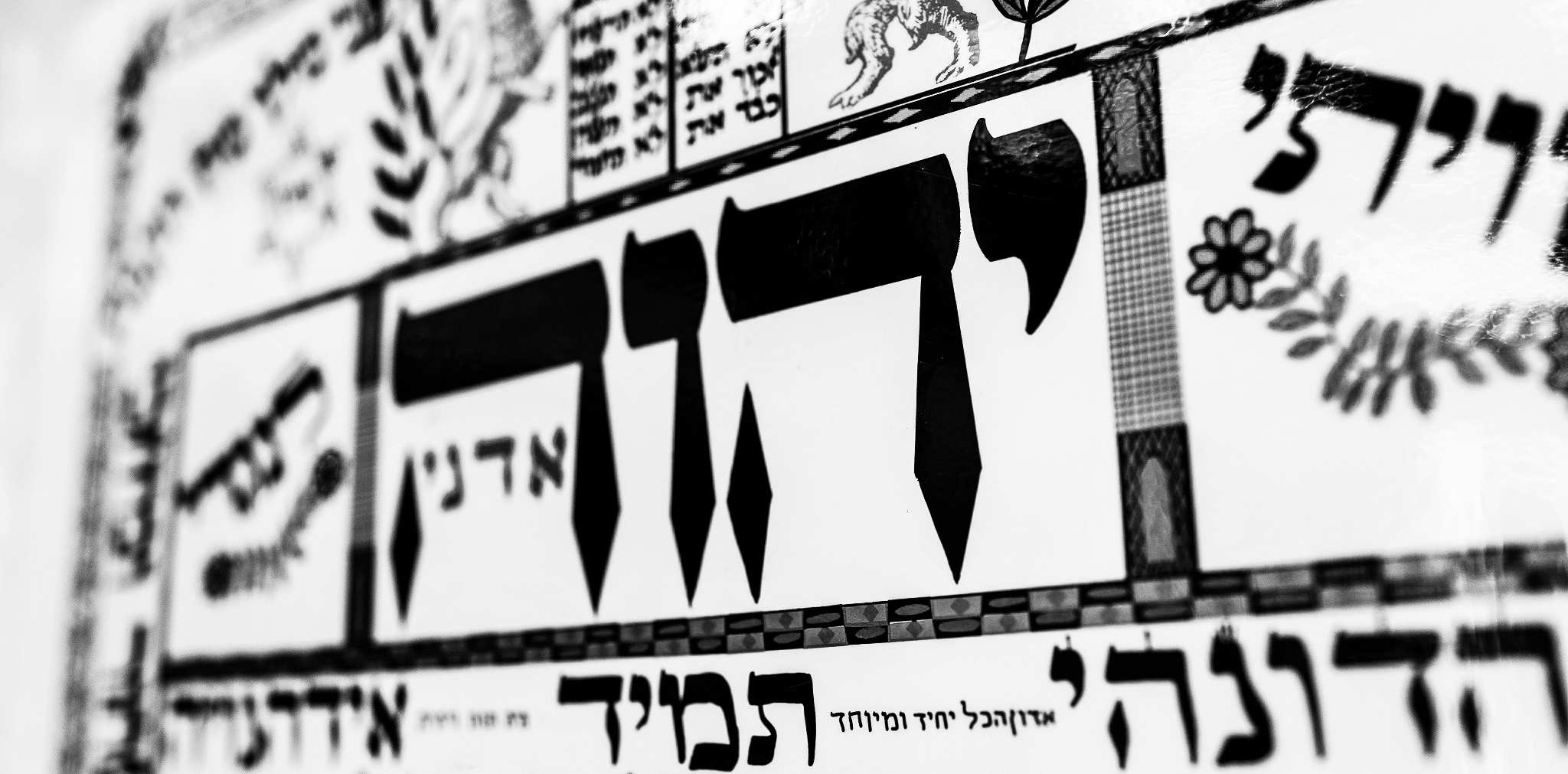
Yom Kippur (or the “Day of Atonement”) was the only time when the High Priest could enter the Holy of Holies and call upon the Name of YHVH (i.e., יהוה) to offer blood sacrifice for the sins of the people. This “life for a life” principle is the foundation of the sacrificial system and marked the great day of intercession made on behalf of God’s people.
For this reason Yom Kippur was also called the “Day of God’s Mercy,” or the “Day of God’s Name (יום השם). This alludes to the revelation of the attributes of God’s Compassion after the sin of the Golden Calf (see Exod. 34:6-7) — a disclosure that foreshadowed the New Covenant.
How much more, then, should Yom Kippur be esteemed as the “Day of Yeshua’s Name” (יום ישוע) since He secured for all of humanity everlasting kapparah (atonement)? Yeshua the Messiah is “Moshia ha’olam” (מוֹשִׁיעַ הָעוֹלָם), the Savior of the world; He alone possesses the “Name above all other Names” (Phil. 2:9-10; Acts 4:12).
It is altogether fitting, then, that God’s “hidden Name” (i.e., shem ha-meforash: שֵׁם הַמְּפרָשׁ) was proclaimed before the cover of the Ark of the Covenant in the Holy of Holies while atonement for our sins was made through the sacrificial blood….
This gives us a whole new perspective on Paul’s words (Rom. 10:9): “if you confess with your mouth that Yeshua is LORD (יהוה) and believe in your heart that God raised Him from the dead (i.e., that his blood was shed and presented on your behalf upon the heavenly kapporet), then you will be saved (that is, you will be reconciled to God and made a partaker of the atoning work of Yeshua).
Surely the Apostle Paul, a zealous rabbi who diligently studied Torah in Jerusalem under Rabbi Gamaliel (who was himself the grandson of the renowned Rabbi Hillel the Elder), understood the theological implications when he stated that the prophecy: “And it shall come to pass that everyone who calls on the Name of the LORD (בְּשֵׁם יְהוָה) shall be saved” (Joel 2:32) referred directly to Yeshua (Rom. 10:10).
 At Sinai we heard the voice of God (קוֹל אֱלהִים) speaking from the midst of the Fire (Deut. 4:33), an event that foreshadowed the great advent of the King and Lawgiver Himself, when the Eternal Word (דְבַר־יְהוָה) became flesh and dwelt with us (Phil. 2:6-7; John 1:1,14). Any theology that regards God as entirely transcendent (i.e., God is beyond any analogy with the finite) will have a problem with divine immanence (i.e., God is inherent and involved within the finite), since the highness, holiness, and perfection of God will make Him seem distant, outside of us, far away, and unknown…

 Last week’s Torah (i.e.,
 Before he could return from his exile, Jacob had to face his fears and wrestle with God. The outcome of the struggle was a blessing, as signified by a new name, “Israel” (יִשְׂרָאֵל), meaning one who who perseveres (שָׂרָה) with God (אֵל). Jacob finally prevailed with God when the power of his faith overcame the pain of his past… Jacob’s story teaches that before we can return from our place of exile, we have to face our fears and wrestle over who we really are.

 Gratitude is essential to the life of faith… We read in the Torah: “And you shall bless the LORD your God for the good” (Deut. 8:10). Whenever we derive benefit or enjoyment from something we are to bless (i.e., thank) God for his goodness. Indeed the Hebrew term for gratitude is “hakarat tovah” (הַכָּרַת טוֹבָה), a phrase that means “recognizing the good.” The heart looks through the eye, and therefore how we see is ultimately a spiritual decision: “If your eye is “single” (i.e., ἁπλοῦς, sincere, focused),” Yeshua said, “your whole body will be filled with light” (Matt. 6:22). When we see rightly, we are awakened to God’s Presence in the little things of life, those small miracles and “signs and wonders” that constantly surround us. The good eye of faith sees hundreds of reasons to bless God for the precious gift of life (1 Cor. 10:31).
 In our Torah portion this week (
 Regarding the pagan holiday of “Halloween,” remember that there is no “spell” or evil incantation (i.e., nachash: נַחַשׁ) effective against Jacob, there is no sorcery (i.e., kesem: קֶסֶם) against Israel. At this time it must be said of Jacob and of Israel, ‘Look at what God has done (מַה־פָּעַל אֵל)’ [Num. 23:23]. No weapon formed against God’s people shall prosper (Isa. 54:17), and the curse of the wicked is powerless against the tzaddikim (Prov. 26:2). Ein od milvado (אֵין עוֹד מִלְבַדּו) – God is the only true Power (Deut. 4:35; 1 Chron. 29:11; Rev. 4:11). Satan is an impostor and a foiled usurper. As Yeshua told his followers, “Behold I give to you authority (ἐξουσία) to tread on serpents and scorpions and over all the power of the enemy (καὶ ἐπὶ πᾶσαν τὴν δύναμιν τοῦ ἐχθροῦ), and nothing shall by any means hurt you” (Luke 10:19). Like Balaam and Haman, all who curse God’s people or attempt to foil His plans will be upended… Hallelujah and Amen.


 THE VERY FIRST PROPHECY OF THE TORAH concerns the promise of the coming “seed of the woman” who would vanquish the serpent (nachash) that had originally tempted and deceived Eve (Gen. 3:15). This prophecy is sometimes called the proto-euangelion (“first gospel”), since it is the starting point of all subsequent prophecy and redemptive history revealed in the Scriptures. Indeed, since the mystery of the Incarnation of the Son of God is foreshadowed here, this prophecy is linked to the original woman, Eve. Just as Eve became a carrier of the corruption of human nature by heeding the voice of the tempter, so she would be the carrier of God Himself for the deliverance of mankind through the advent of the Redeemer. In the tragic aftermath of the transgression of the first man and woman, then, God first announced His unfailing redemptive love for the human race that would culminate in the birth, sacrifice, and resurrection of Yeshua our Savior and Deliverer – “born of a woman, born under the law” (Gal. 4:4).


 In this special “High Holiday” audio presentation, I discuss the holiday of

