 Here is a Hebrew reading lesson (with drash) on Proverbs 3:12, “For whom the LORD loves he reproves, like a father the son in whom he delights.” Click on the Hebrew verse to enlarge it on your screen while listening. Shalom chaverim.

…
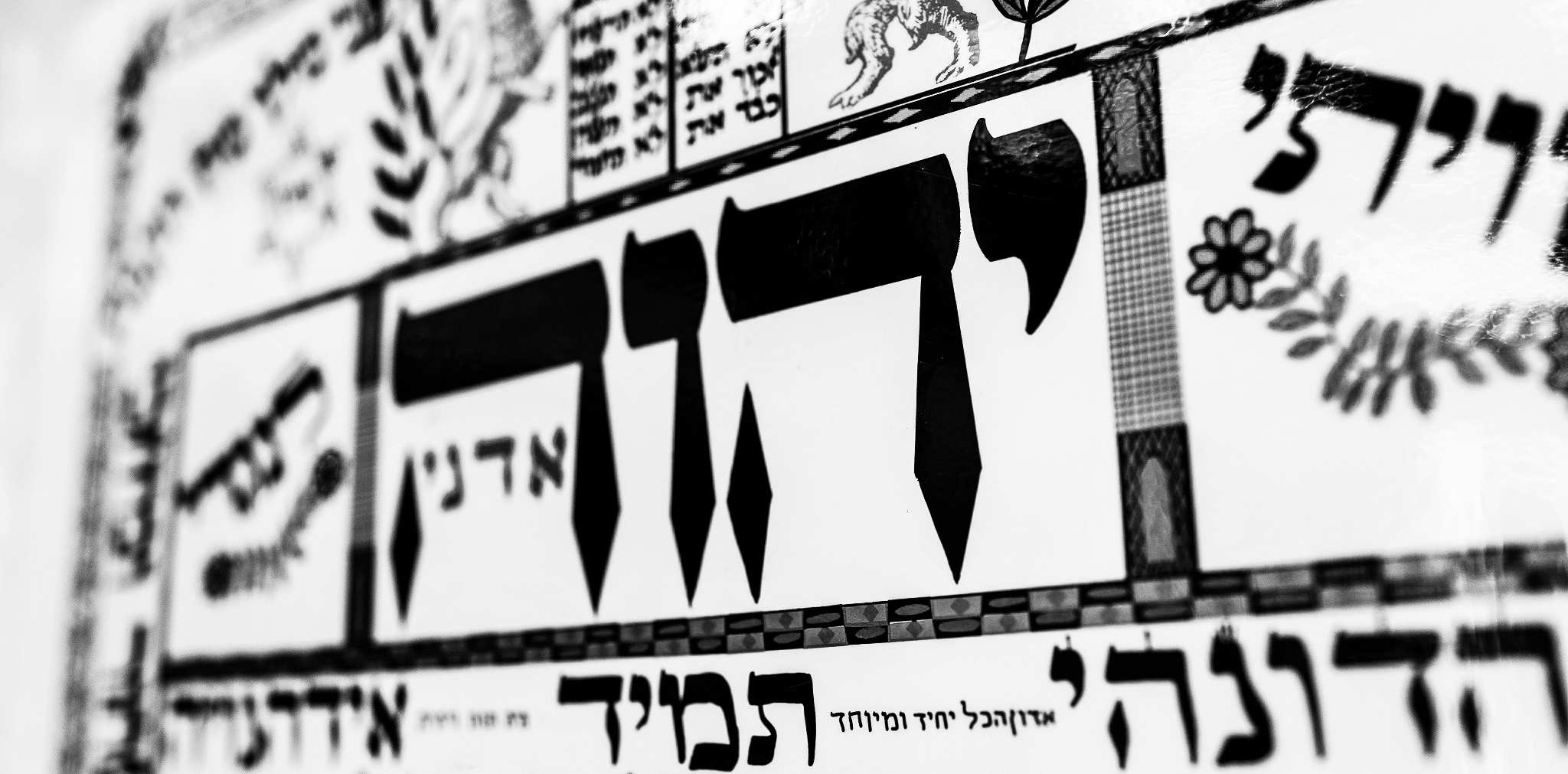
Reading Hebrew exercises and practice verses
Here is a Hebrew reading lesson (with drash) on Proverbs 3:12, “For whom the LORD loves he reproves, like a father the son in whom he delights.” Click on the Hebrew verse to enlarge it on your screen while listening. Shalom chaverim.
…
 The midrash says that the word “bereshit” (בְּרֵאשִׁית) can be arranged to spell shir te’ev (שִׁיר תְּאֵב), meaning the “song of desire.” This is the holy plea sounded by all of creation to be made whole, healed, and ultimately perfected. As it says in our Scriptures: “For the creation was subjected to futility, not willingly, but because of him who subjected it in hope” (Rom. 8:20). Therefore when we take hold of Yeshua’s heart, vision, and mission, we partake in the repair of the world (תיקון עולם) by testifying of God’s healing love given in Messiah. We begin and end our journey to life with the “song of desire” on our lips – that is, with our heart awakened to its need for God. As it says: “The LORD is near to all who call on him, to all who call on him in truth. He fulfills the desire of those who fear him; he also hears their cry and saves them” (Psalm 145:18-19).

…
 The 18th century Torah sage Vilna Gaon taught that the Hebrew word “bereshit” (בְּרֵאשִׁית), which is the very first word of the Bible, may be thought of as an acronym for meaningful spiritual life. The first letter, Bet (בּ), stands for bittachon (בִּטָּחוֹן), a word that means complete trust in God’s love for your life; the next letter, Resh (ר), stands for ratzon (רָצוֹן), or the desire to live according to God’s will; the central letter Aleph (א) stands for ahavah (אַהֲבָה), which is the love for God and for our fellow man (Deut. 6:5; Lev. 19:18); and the letter Shin (שׁ) is for shetikah (שְׁתִיקָה), or “keeping silent,” which is the cardinal virtue of godly self-control and wisdom (James 1:26; 3:1-18; Psalm 34:13; Prov. 13:3, etc.). The letter Yod (י) is for yirah (יִרְאָה), or reverence for God’s authority and dignity; and finally, the letter Tav (ת) is for Torah (תּוֹרָה), the study of which brings transformation and sanctity to your life (Psalm 19:7; Psalm 119:105; Prov. 6:23; Matt. 5:17-19; 2 Tim. 2:15-16).
Torah begins with the word ‘bereshit’ (בְּרֵאשִׁית), which may also be understood to say ‘God created the world for the sake of the beginning.’ All the Creator asks is that you make a beginning, that you turn in the right direction.” Repent and believe — what? Believe that you are loved, you need God’s compassion and healing in your life… Indeed, we never really get past the first steps made in earnestness toward God. In that sense we are “always beginning,” since we never get beyond the need of the heart to turn to God. We are all incomplete, awaiting the end for which we were created, and therefore we are always calling on the LORD, always abiding in Him, always seeking His face… We begin, we end, and in everything Yeshua is the Center of our hearts…
 Surely our great need is to have heart, to find strength, resolution, and steadfast determination to walk boldly during these heartless and depraved days (2 Tim. 3:1-5). We are not without God’s help, of course. Yeshua told us that the Ruach HaKodesh (רוּחַ הַקּדֶשׁ) would be “called alongside” (παράκλητος) to comfort us on the journey. The English verb “comfort” literally means “to give strength” (from com- [“with”] and fortis [“strong”]), an idea similarly expressed by the verb “encourage,” that is, to “put heart [i.e., ‘core’] within the soul.” In Hebrew, the word courage is expressed by the phrase ometz lev (אמֶץ לֵב), meaning “strong of heart,” denoting an inner quality of the will rather than of the intellect. Ometz lev means having an inner resolve, a passion, and a direction. The sages say “the mind is the eye, whereas the heart is the feet.” May God be our Light and Salvation as we walk through the surrounding darkness…

Menachem Mendl once wrote that there are three things fitting for us to do: upright kneeling, motionless dancing, and silent screaming… Not everyone will understand the pain that moves us to seek inner healing, but Gods’ Presence shines for us all…
…
 Our spiritual inheritance is bound up with the Torah: it is part of our story, our history, and our heritage as follows of Yeshua, the Jewish Messiah (see Deut. 33:4; Matt. 5:17-19; Gal. 3:7; Rom. 4:16; Luke 24:27). הַיְשׁוּעָה מִן־הַיְּהוּדִים – “Salvation is of the Jews” (John 4:22). The stories, rituals, and laws of the Torah serve as parables and allegories that inform the deeper meaning of the ministry of Messiah: “Now these things happened to them as an example, but they were written down for our instruction, on whom the end of the ages has come (1 Cor. 10:11). “For whatever was written in former days was written for our instruction, that through endurance and through the encouragement of the Scriptures we might have hope” (Rom.15:4). Therefore you are no longer a stranger or outsider to the great heritage of the LORD (Eph. 2:19). Disciples of Yeshua are called talmidim (תַּלְמִידִים) — a word that comes from lamad (לָמַד) meaning “to learn.” Among other things, then, following the Messiah means becoming a student of the Scriptures He loved and fulfilled (Matt. 5:17-18; Luke 24:44-45). Only after learning from Yeshua as your Teacher will you be equipped to “go to all the nations and teach” others (Matt. 28:19).
You are no longer an “outsider” to the covenants and blessings of Israel, friend (see Eph. 2:19; Gal. 3:26). Being a Jew (i.e., יְהוּדִי, from יְהוּדָה “one who praises”) is really not an ethnic distinction but a matter of genuine faith in the Lord God of Israel. A true Jew is one whose heart has been transformed by the Spirit of the Living God (Rom. 2:28-19). “For in Yeshua the Messiah neither being circumcised nor being uncircumcised matters; what matters is being briah chadashah (בְּרִיאָה חֲדָשָׁה), a new creation (Gal. 6:15). “Therefore, if anyone is in Messiah, he is a new creation. The old has passed away; behold, the new has come” (2 Cor. 5:17). But understand that Yeshua clearly upheld the truth of Torah (Matt. 5:17-21), and therefore Torah is clearly part of your heritage as a follower of Yeshua, the “Christ,” that is, the anointed King (i.e., Messiah) of the Jews… Indeed, the first thing Yeshua did after his resurrection was to teach his followers how the Torah, the writings, and the psalms all bore prophetic witness of Him (Luke 24:27, 44). Moreover Yeshua told his followers that the true prophets of Israel all bore witness of Him (see Matt. 5:11-12). If you love God’s salvation — his Yeshua — then may you proclaim yigdal Elohim – “Let God be magnified” (Psalm 70:4).

…
 Why does God want us to face the truth about death? Why does Moses ask God to teach us to “number of our days?” (Psalm 90:12). The reason is that by nature people deny the reality of death – they hide their eyes from it, ignore it, and pretend it’s not there – so they can continue to live under the illusion that they are in control of their lives, that they are the center, that they are immortal little “gods.” Death threatens the ego and humbles us to confess the truth about life, namely that we are not in control, that we cannot choose to be immortals, that we do not have power to exist in ourselves, and therefore we need life from a different source – spiritual life – wherein we receive a new identity and a new being found in relation to God.
The “natural man” regards death as an offense or as “absurd” because it splits us in two, creating a “divided house” that cannot stand. The ego demands be god-like, important, valued as sacred, etc., yet the prospect of death crushes the aspiration and yields alienation from reality. This creates a painful tension or dualism within the heart where the meaning and purpose of life is lost…. The message of the gospel begins precisely there, however, speaking to broken people who thirst for life but find themselves living on death row – people who are humbled and who understand they cannot heal themselves from the “sickness unto death,” as Kierkegaard used the term. The remedy is not to deny death or to live as if death is not a genuine horror, but to understand it as our natural estate, brought about by sin that exalts the ego over the God who made us.
 A verse from Torah recalls Yeshua’s words that “every scribe who has been trained for the kingdom of heaven is like a master of a house, who brings out of his treasure what is new and what is old” (Matt. 13:53). The medieval sage Rashi noted that the phrase, “And it shall come to pass if you hear” in Deut. 11:13, i.e., ve’hayah im shamo’a tishme’u (וְהָיָה אִם־שָׁמעַ תִּשְׁמְעוּ), is grammatically puzzling, since it the Hebrew reads “if you hear, you will hear,” which suggests that as we listen attentively to the words of Torah, we will hear more, and we will encounter spiritual connections and applications that are new and ready for this hour. The early sages commented: “If you listen to the old, you will listen to the new” (Berachot 40a). Focusing our attention on the commandments even while in exile is likened to practice for the world to come, since then they will not be new to you when the final redemption appears. Happy and blessed are all those who love the Torah (Psalm 1:1-2). More light comes as we live in the truth (John 13:17). As Yeshua also said: “For to the one who has, more will be given, and he will have an abundance, but from the one who has not, even what he has will be taken away” (Matt. 13:12).

 The walk of faith is one of “holy suspense,” trusting that God is on the other side of the next moment, “preparing a place for you” (John 14:3). In the present, then, we live in unknowing dependence, walking by faith, not by sight. For “hope that is seen is not hope; for who hopes for what he sees?” (Rom. 8:24). This is the existential posture of faith – walking in darkness while completely trusting in God’s daily care. Our task at any given moment is always the same – to look to God and to accept His will. This is where time and eternity meet within us, where God’s kingdom is revealed in our hearts. Therefore our Good Shepherd Yeshua taught us: “Don’t be anxious about tomorrow, for tomorrow has its own troubles. Live one day at a time” (Matt. 6:34).
“Yea, even if I walk in the valley of the shadow of death, I will fear no evil, for you are with me” (Psalm 23:4). O God of Light, Light of the world, surely You know my need for light as I look to You, especially when darkness tries to extinguish my hope. Despite my inability to see you now, help me to know that you are with me; let “thy rod and thy staff comfort me” and lead me closer to you. Lord, when I am afraid, quicken the faith you have put within my heart. Be Thou my Shepherd in my darkness, O Lord my God…

The heart of faith senses the LORD’s presence, even in the darkness, and hears the Spirit saying, “I am with you…” Love hopes all things and believes even in the midst of troubles.
I do not see the road ahead of me, I cannot know for certain where it will end. Nor do I really know myself, and the fact that I think I am following your will does not mean I am actually doing so. But I believe the desire to please you does in fact please you, and I hope I have that desire in all that I am doing. I hope that I will never do anything apart from that desire. And I know that if I do this you will lead me by the right road, though I may know nothing about it. Therefore, I will trust you always, though I may seem to be lost and in the shadow of death. I will not fear, for your are ever with me, and you will never leave me to face my perils alone. — Thomas Merton: Seeds of Contemplation
“Who among you fears the LORD and hears (שָׁמַע) the voice of his Servant? Let him who walks in darkness and has no light trust in the Name of the LORD and rely on his God… I will lead the blind in a way that they do not know, in paths that they have not known I will guide them. I will turn the darkness before them into light, the rough places into level ground. These are the things I do, and I do not forsake them” (Isa. 50;10; 42:16).
 Instead of fretting over the tests and struggles we inevitably face in this life, we might look for reasons to be grateful, for how else can we come to know that the Lord is with us apart from his ongoing deliverance? We ask the Lord for our daily bread (לֶחֶם חֻקֵּנוּ), but I wonder if we are not starving ourselves with fear of the future… Daily bread cannot be stored or hoarded lest it become spoiled and rotten (Exod. 16:20). We must live today in complete trust before the Lord our God, who is forever faithful and true. He it is who said, “Don’t be anxious about tomorrow, for tomorrow has its own troubles. Live one day at a time” (Matt. 6:34). It makes no sense to worry about the future if the LORD is the Good Shepherd who tenderly watches over your way (Psalm 23:1).

 It is written that “a joyful heart (לֵב שָׂמֵחַ) is good medicine” (Prov. 17:22). Where it says, “Serve the LORD with gladness” (Psalm 100:2), the sages note that “with gladness” (בְּשִׂמְחָה) contains the same letters as the word “thought” (מַחֲשָׁבָה), which suggests that happiness is found by thinking worthy thoughts. As the apostle admonished: “Think on these things” (Phil. 4:8). We find spiritual happiness when we choose to be thankful. This is called hakarat tovah (הַכָּרַת טוֹבָה), a phrase that means recognizing or being aware of the good. Cultivate a sense of wonder. Look at the sky often, for it is the “daily bread of the eyes.” Albert Einstein once said, “There are two ways to live your life; one is as though nothing is a miracle, and the other is as though everything is.” Happiness is a choice, a decision to see the good, to open your eyes to wonder, and to turn away from negative, fearful visions. The Torah of the LORD rejoices the heart (Psalm 19:8); let the heart of those who seek the LORD be glad (Psalm 105:3).

…