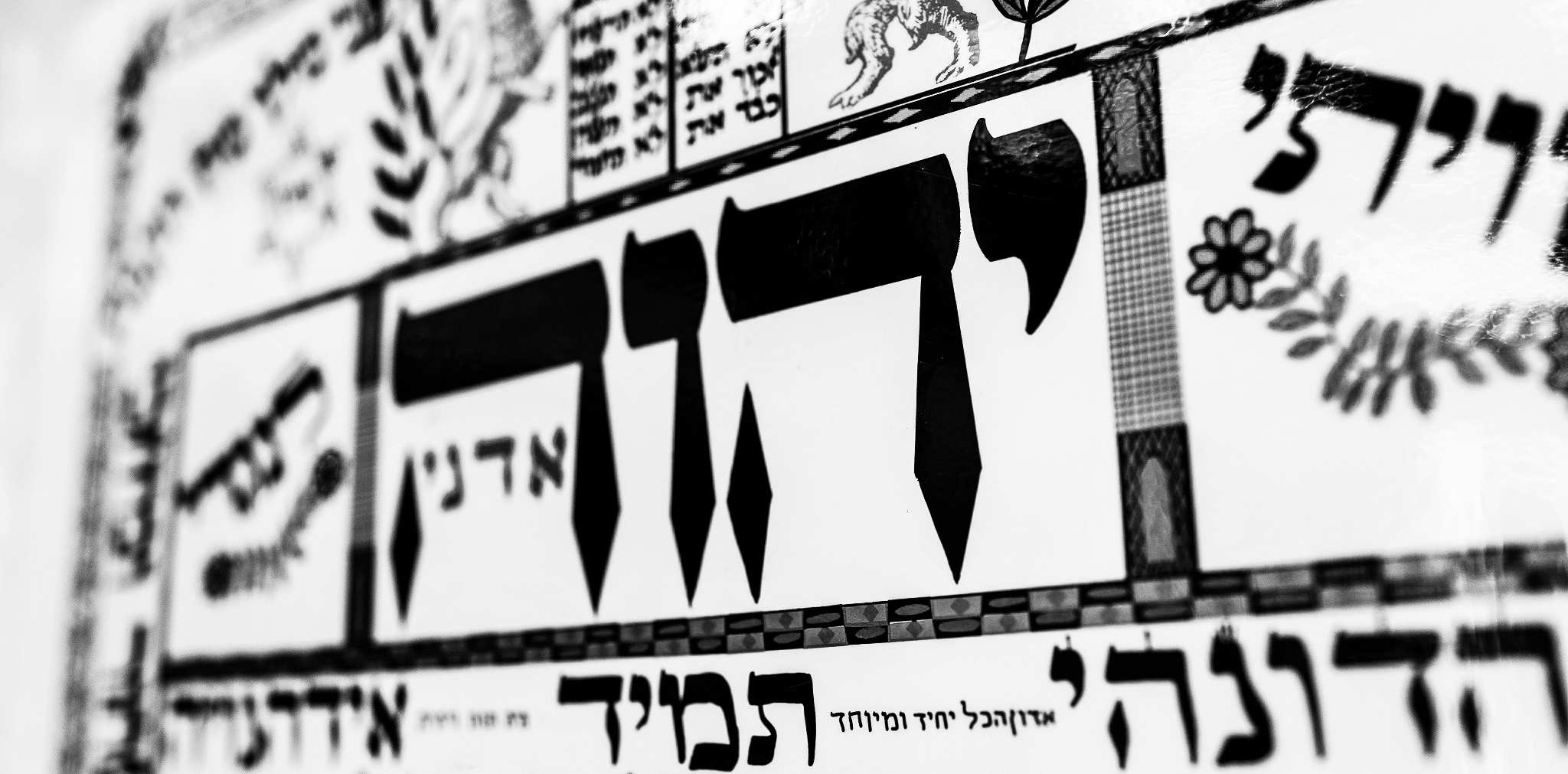
 In our Torah for this week (i.e., parashat Va’era), the LORD told Moses that He was about to fulfill His promise to Abraham, Isaac, and Jacob by giving the Israelites the land of Canaan, and that he had heard the “groaning of the people of Israel whom the Egyptians held as slaves” (Exod. 6:5). The LORD (יהוה) was now coming down to earth to fight and save his people! Israel would now know that He alone is their Savior and God. The “showdown” between the LORD (יהוה) and the so-called “gods” of Egypt was imminent, and God therefore encouraged the people with precious promises: “I AM the LORD (אֲנִי יְהוָה) and I will bring you out from under the burdens of the Egyptians, and I will deliver you from their bondage, and I will redeem you with an outstretched arm and with great judgment; and I will take you to me for a people and I will be to you a God” (these are the “four expressions of redemption” we recite during the Passover Seder every year).

- Exod. 6:3 study page (pdf)
Despite these wonderful promises, however, the people were unable to listen because of their “shortness of breath” (מִקּצֶר רוּחַ) on account of their harsh slavery. The LORD then told Moses: “Go in, tell Pharaoh king of Egypt to let the people of Israel go out of his land,” and the great showdown between the LORD and the gods of Egypt began. However, even after repeatedly witnessing the series of miraculous plagues issued in the Name of the LORD, the despot remained proud and unmoved, thereby setting the stage for the final devastating plagues upon the land of Egypt and the great Passover redemption of Israel.

- Exod. 5:1b study page (pdf)
Parashat Va’era Podcast:

 In our Torah portion for


 Though we believe that God is everywhere and that “in Him we live and move and have our being” (Acts 17:28), God is not experienced through objective observation but must be experienced inwardly, by means of the heart. This is true for two basic reasons. First, God literally cannot be experienced as an “object” both because we are unable to see him in his essence, and also because as the “Ground of Being” he is necessarily beyond the domain of objective measurement or “definite description.” Secondly, God is a spirit who “dwells in unapproachable light, whom no one has ever seen or can see,” which again makes his infinite existence on a different plane altogether, beyond the horizon of human understanding. Therefore Scripture calls God “the King of eternity, immortal, invisible, and full of glory” (1 Tim. 1:17).
 Before he could return from his exile, Jacob had to face his fears and wrestle with God. The outcome of the struggle was a blessing, as signified by a new name, “Israel” (יִשְׂרָאֵל), meaning one who who perseveres (שָׂרָה) with God (אֵל). Jacob finally prevailed with God when the power of his faith overcame the pain of his past… Jacob’s story teaches that before we can return from our place of exile, we have to face our fears and wrestle over who we really are.

 Gratitude is essential to the life of faith… We read in the Torah: “And you shall bless the LORD your God for the good” (Deut. 8:10). Whenever we derive benefit or enjoyment from something we are to bless (i.e., thank) God for his goodness. Indeed the Hebrew term for gratitude is “hakarat tovah” (הַכָּרַת טוֹבָה), a phrase that means “recognizing the good.” The heart looks through the eye, and therefore how we see is ultimately a spiritual decision: “If your eye is “single” (i.e., ἁπλοῦς, sincere, focused),” Yeshua said, “your whole body will be filled with light” (Matt. 6:22). When we see rightly, we are awakened to God’s Presence in the little things of life, those small miracles and “signs and wonders” that constantly surround us. The good eye of faith sees hundreds of reasons to bless God for the precious gift of life (1 Cor. 10:31).
 Our Torah reading for this week,

 Last week’s Torah portion (

 THE VERY FIRST PROPHECY OF THE TORAH concerns the promise of the coming “seed of the woman” who would vanquish the serpent (nachash) that had originally tempted and deceived Eve (Gen. 3:15). This prophecy is sometimes called the proto-euangelion (“first gospel”), since it is the starting point of all subsequent prophecy and redemptive history revealed in the Scriptures. Indeed, since the mystery of the Incarnation of the Son of God is foreshadowed here, this prophecy is linked to the original woman, Eve. Just as Eve became a carrier of the corruption of human nature by heeding the voice of the tempter, so she would be the carrier of God Himself for the deliverance of mankind through the advent of the Redeemer. In the tragic aftermath of the transgression of the first man and woman, then, God first announced His unfailing redemptive love for the human race that would culminate in the birth, sacrifice, and resurrection of Yeshua our Savior and Deliverer – “born of a woman, born under the law” (Gal. 4:4).

