In this shorter audio podcast I provide an introductory overview of Sefer Vayikra (the Book of Leviticus) as well as a brief introduction to parashat Vayikra. For more information about the details of the Torah portion, see the audio podcast for parashat Vayikra….
The first Torah portion for the new Biblical New year is parashat Vayikra (“and he called”), the very first section from the Book of Leviticus (ספר ויקרא). In Jewish tradition, Leviticus is sometimes called the “Book of Sacrifices” (i.e., sefer ha’zevachim: ספר הזבחים) since it deals largely with the various sacrificial offerings brought to the altar at the Mishkan (i.e., Tabernacle). Indeed, over 40 percent of all the Torah’s commandments are found in this central book of the Scriptures, highlighting that blood atonement is essential to the Torah.
Moreover, since the revelation of the Tabernacle was the climax of the revelation given at Sinai, the Book of Leviticus reveals its ritual significance, as it is written: “For the life of the flesh is in the blood, and I have given it for you on the altar to make atonement for your souls, for it is the blood that makes atonement (kapparah) by the life” (Lev. 17:11).
In this audio broadcast I discuss the Torah’s calendar surrounding the holiday of Passover — Shabbat HaChodesh, Rosh Chodashim, and preparing for the Passover Seder. I also discuss the nature of the Torah’s sacrificial system, the “korban principle” and the healing and restoration we are given in Yeshua the great Lamb of God and Savior of the world.
This week we have a “double portion” of Torah: parashat Vayakhel-Pekudei (ויקהל־פקודי). Much of this material is repeated from the earlier description of the Tabernacle (מִשְׁכָּן) to underscore the importance of the sacrificial system (the altar) and to portend the two advents of Messiah Yeshua. Note that God commanded Moses to assemble the Tabernacle on “the first month in the second year [from the date of the Exodus], on the first day of the month” (i.e., Nisan 1, or Rosh Chodashim, see Exod. 40:17). The new moon of Nisan, then, marks the beginning of month of redemption (chodesh yeshuah), both regarding the Exodus from Egypt (and the establishment of the altar at the Tabernacle), as well as the greater Exodus given through the altar of Messiah as spiritually foretold by this…
In addition to the Torah material I discuss the holidays of Purim and Shabbat Parah, as well as the greater meta-themes of Passover and the Exodus from Egypt.
Our Torah reading for this week is called parashat Pekudei, which is the concluding portion of the great Book of Exodus (i.e., ספר שמות). It begins with Moses’ accounting of (פקודי) all the materials that were donated for the construction of the Mishkan (i.e., Tabernacle). After Moses recorded the inventory of the building materials and furnishings, he carefully checked the special priestly garments. After all the work was confirmed to be in complete accordance with the LORD’s instructions, Moses blessed the people. The LORD then commanded Moses to assemble the Mishkan on “the first month in the second year [from the date of the Exodus], on the first day of the month” (i.e., on Nisan 1, or Rosh Chodashim, Exod. 40:17).
Once the Tabernacle was completed and all its vessels were accounted for and inspected, Moses anointed all its components with the sacred anointing oil, called shemen ha-mishchah (note that the word “mishchah” (מִשְׁחָה) comes from the same root as “Messiah” (מָשִׁיחַ), indicating that the Mishkan (i.e., Tabernacle) would foreshadow God’s plan of redemption given in Yeshua). Moses then formally initiated Aaron and his four sons into the priesthood, marking their hands and feet with sacrificial blood and “waving them” before the Lord to picture resurrection. God’s Presence – manifest as the Shekhinah Cloud of Glory – then filled the Holy of Holies in the Tent of Meeting.
At the end of the portion we read, וַיְכַל משֶׁה אֶת־הַמְּלָאכָה / “Moses finished all the work” (Exod. 40:33), a phrase that has the same gematria (numeric value) as bereshit (בְּרֵאשִׁית, “in the beginning”), the very first word of the Torah (Gen. 1:1). This suggests that the creation of the universe was for the sake of the building of the Tabernacle, and by extension, for the sake of the sacrificial love of God to be demonstrated to all of creation. The Talmud states, “All the world was created for the Messiah” (Sanhedrin 98b) and indeed, Yeshua is called “the Lamb slain from the foundation of the world” in the New Testament (Rev. 13:8; 1 Pet. 1:18-20; Eph. 1:4; 2 Tim. 1:9).
The Presence of the Glory of God that descended from Sinai upon the newly dedicated Mishkan represented a climactic moment for the fledgling nation, since the Sin of the Golden Calf had jeopardized whether the God would indeed dwell within the midst of the camp of Israel… Recall that it was only after Moses had returned from Sinai bearing the second set of Tablets (on Yom Kippur) that the glow of the LORD’s redeeming love radiated from his face, and new hope was given to Israel (prefiguring the New Covenant). The King of Glory would accompany the people from Sinai to the Promised Land! (The narrative continues in the Book of Numbers, beginning exactly one month after the Mishkan was assembled.)
In addition to the Torah material I discuss the holidays of Purim and Shabbat Parah, as well as the greater meta-themes of Passover and the Exodus from Egypt.
According to tradition, Moses descended from Sinai (with the second set of tablets) on Yom Kippur (Tishri 10), and on the following morning he assembled (וַיַּקְהֵל) the people together to explain God’s instructions regarding building the Mishkan (i.e., Tabernacle). First, however, Moses reminded the people to observe the Sabbath as a day of rest, and then he asked for contributions of gold, silver, bronze, and other materials for the construction of the sanctuary and its furnishings. Each contribution was to be a “free-will offering” (i.e., nedivah zevach: נְדָבָה זֶבַח) made by those “whose heart so moved him.” As a sign of their complete teshuvah (repentance) for the sin of the Golden Calf, the people gave with such generosity that Moses finally had to ask them to stop giving!
Two men named “Betzalel” and “Oholiav” were appointed to be the chief artisans of the Mishkan, and they led a team of others that created the roof coverings, frame, wall panels, and foundation sockets for the tent. They also created the parochet (veil) that separated the Holy Place (ha’kodesh) from the Holy of Holies (kodesh ha’kodeshim). Both the roof and the veil were designed with embroidered cherubim (winged angelic beings). Betzalel then created the Ark of the Covenant and its cover called the mercy seat (kapporet), which was the sole object that would occupy the innermost chamber of the Holy of Holies. Betzalel also made the three sacred furnishings for the Holy Place – the Table of Bread (shulchan), the lamp (menorah), and the golden Altar of Incense (mizbe’ach ha’katoret) – as well as the anointing oil that would consecrate these furnishings.
Betzalel then created the Copper Altar for burnt offerings (along with its implements) and the Copper Basin from the mirrors of women who ministered in the entrance of the tent of meeting. He then formed the courtyard by installing the hangings, posts and foundation sockets, and created the three-colored gate that was used to access the courtyard.
In addition to the Torah portion I discuss the holidays of Purim and Shabbat Parah, as well as the greater meta-themes of Passover and the Exodus from Egypt.
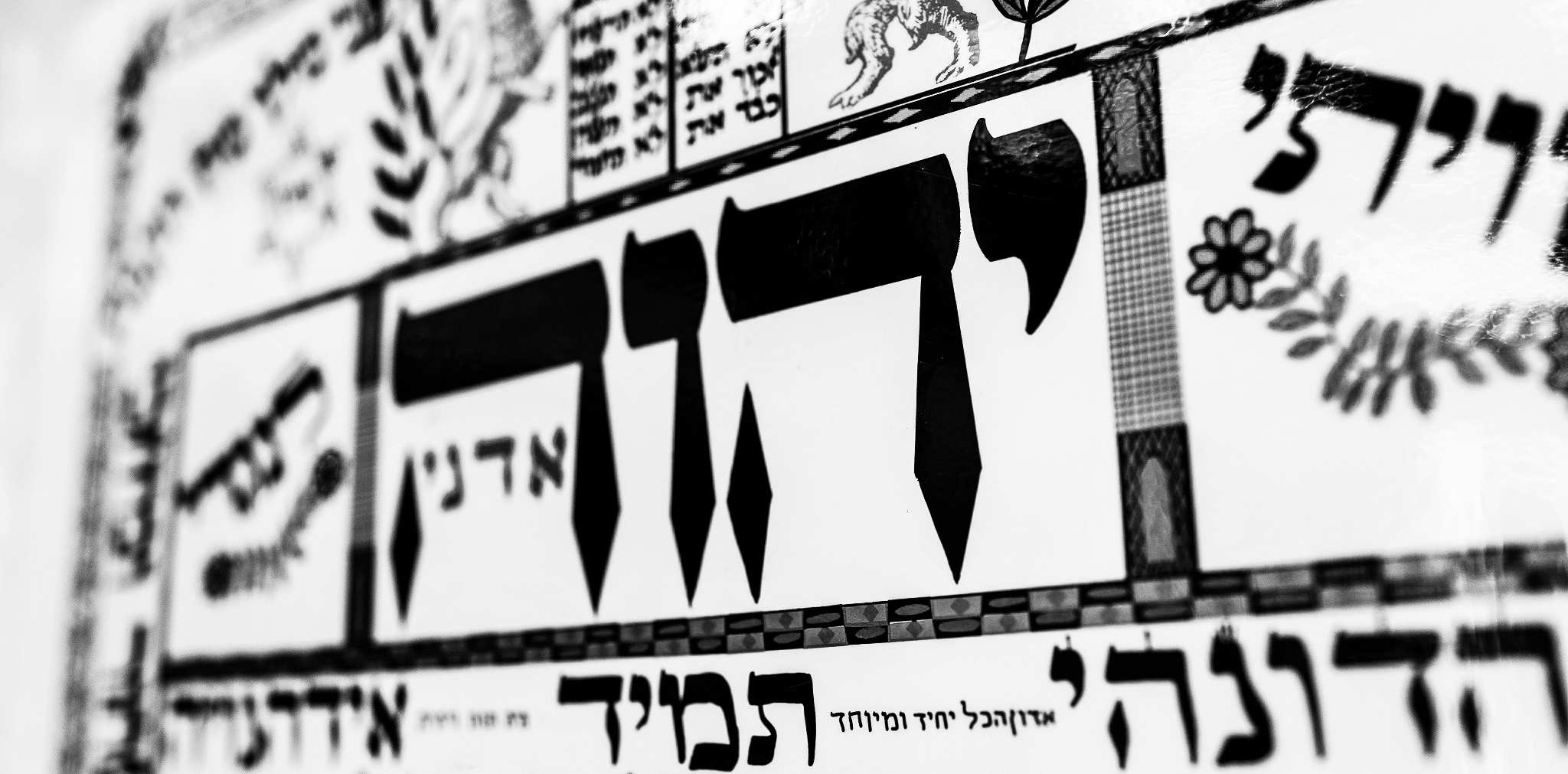
Our Torah reading for this week is Ki Tisa (כי תשא), one of the longest of the Torah. It includes the tragic account of the Sin of the Golden Calf (עֵגֶל מַסֵּכָה) and Moses’ passionate intercession for Israel. After a period of teshuvah (repentance) for Israel’s idolatry, the LORD graciously revealed the meaning of the Name YHVH (יהוה), that is, the thirty-two words that have become known in Jewish tradition as the Shelosh Esrei Middot, or the “Thirteen Attributes of God’s Mercy.” This was the LORD’s own definition of His compassionate character and attributes to Moses after the breaking of the Sinai covenant.
Our Torah reading for this week, parashat Tetzaveh, continues the description of the Mishkan (i.e., “Tabernacle”), though the focus shifts to those who will serve within it, namely the kohanim (i.e., the priests of Israel). First Moses was instructed to tell the Israelites to bring pure olive oil for the lamps of the Menorah which the High Priest was to light every evening in the Holy Place. God then commanded Moses to ordain Aaron and his sons as priests and described the priestly garments they would wear while serving in the Tabernacle. The portion further describes the ordination process for the priests and gives a description of the Altar of Incense (ketoret ha’mizbe’ah).
In this audio broadcast presentation I provide a verse-by-verse reading of the Torah portion (in English), providing Hebrew insights throughout, and linking the truths of Torah to the glory of Yeshua our Messiah, the Light of the World. I hope you find it helpful, chaverim.
“Let them make me a mikdash (“holy place,” “sanctuary”), that I may dwell in their midst” (Exod. 25:8). Though this verse refers to the physical mishkan (i.e., “Tabernacle”), it more deeply refers to the duty of the heart to sanctify the Name of God and bring a sense of holiness to the inner life. This requires that we focus the mind and heart to honor the sacredness of life, taking “every thought captive” to the truth of God in Messiah (2 Cor. 10:5).
Since our minds and hearts are gateways to spiritual revelation, we must be careful to not to abuse ourselves by indulging in sloppy thinking or unrestrained affections. God holds us responsible for what we think and believe (Acts 17:30-31), and that means we have a duty to honor moral reality and truth. There is an “ethic of belief,” or a moral imperative to ascertain the truth and reject error in the realm of the spiritual.
Since God holds us responsible to repent and believe the truth of salvation, He must have made it possible for us to do so (“ought” implies “can”). And indeed, God has created us in His image and likeness so that we are able to discern spiritual truth. He created us with a logical sense (rationality) as well as a moral sense (conscience) so that we can apprehend order and find meaning and beauty in the universe He created. All our knowledge presupposes this. Whenever we experience anything through our senses, for example, we use logic to categorize and generalize from the particular to the general, and whenever we make deductions in our thinking (comparing, making inferences, and so on), we likewise rely on logic. We have an innate intellectual and moral “compass” that points us to God.
Since we all necessarily must think in order to live, we should value clear thinking. This should be obvious enough, though people often make various errors and misjudgments because they devalue the effort required to carefully think through a question. As William James once said, “A great many people think they are thinking when they are merely rearranging their prejudices.” When it comes to questions about the gospel, however, God regards such carelessness to be blameworthy. Again, the LORD holds us accountable for what we think and believe, especially when it comes to the reality and mission of His Son.
The truth about God is always available to human beings, if they are willing to look for it. The Divine Light that was created before the sun and the stars represents God’s immanent presence that “lights up” all of creation – including our minds (Gen. 1:3). As Paul stated, “the invisible things of Him from the creation of the world are clearly seen so that people are without excuse” (Rom. 1:19-20). The heavens are constantly attesting to the reality of God’s handiwork (Psalm 19:1). All of creation “shouts out” that there is a God. Since an infinite series of causes is impossible, the Cosmological argument for the existence of a First Cause is intuitively known to be warranted…
The witness of God’s truth is foundational to all of our thinking as well. If you regress far enough in a chain of reasoning, you will always encounter first principles, intuitions, axioms, and “apprehensions” of the laws of thought. This is how language works, or rather, how our mind necessarily discovers truth about reality. For example, the law of contradiction (or identity) is not discovered in experience, but is brought to experience by the operation of the mind. All reasoning is ultimately grounded on foundational first principles that are regarded as self-evident and that are known through the light of the mind itself. Even the pagan Greeks understood this. For instance, Aristotle said that both deduction and induction ultimately were based on the “intuitive grasp” of first principles of thinking itself.
It’s important to realize that no one “invented” the rules of logic (such as the law of identity, the law of contradiction, valid rules of inference, etc.); no, these are self-evident and presupposed in all forms of intelligible thinking about anything at all. In other words, God created the mind so that true thinking is possible. If you are reading these words, you are presently using logic. You are identifying and combining letters, interpreting their meaning, making connections and comparisons, and therefore making inferences. There is no way to argue that logic is “artificial” or culturally relative. No one can consistently use logic to argue against its universal validity. The revelation (not the invention) of logical first principles is part of God’s “signature,” if you will, of how the mind is wired to correspond to reality. Reason discovers order in the universe but does not create it ex nihilo. If you deny this, you have opted out of the realm of thought altogether and entered the realm of the absurd.
Likewise we have intuitive awareness regarding the existence of moral truth (i.e., the standard of justice and moral law), aesthetic truth (i.e., ideals of beauty, goodness, worth, and love), metaphysical truth (i.e., cause and effect relationships), and so on. Even scientific truth is based on principles that transcend the discipline of science itself (for example, the assumption that knowledge is “good” and should be obtained is not an empirical statement). The human mind naturally uses these sorts of categories in its thinking all the time, but each of these are ultimately derived from the rational mind of God Himself.
God created people so that they could discern truth about reality. The mind functions according to logical laws because it is made in the image and likeness of God Himself… God Himself is the ground of all logic, since He created reality and structured the world to be knowable according to its laws. As it is written: “In the beginning was the word/logic (ὁ λόγος), and the λόγος was with God, and the λόγος was God” (John 1:1). God created a world that exhibits order and great beauty. And since human beings were created b’tzelem Elohim, in the image of God, our thoughts (and the words used to formulate our thoughts) as well as our actions are likewise intended to exhibit order and beauty. “For the fruit of light (καρπὸς τοῦ πνεύματος) is found in all that is good and right and true” (Eph. 5:9). Therefore “whatever is true… think on these things” (Phil. 4:8).
Followers of Yeshua are commanded to love the truth and to think clearly about their faith. The ministry of reconciliation itself is defined as “the word of truth, by the power of God, through weapons of righteousness” (2 Cor. 6:7). Indeed, the word of truth (τὸν λόγον τῆς ἀληθείας) is a synonym for the “gospel of salvation” itself (Eph. 1:13; Col. 1:5; James 1:18). We are saved by Yeshua, who is the “way, the truth, and the life” (John 14:6). God commands all people to believe this truth (Acts 17:30-31; 1 Tim. 2:4). People perish because “they refuse to love the truth and so be saved” (2 Thess. 2:10-12). Therefore we see that the issue of truth is central to salvation itself….
The goal of the Sinai revelation was not only the giving of the Ten Commandments to the Israelites but enshrining the Divine Presence within their hearts… In our Torah portion for this week (i.e., Parashat Terumah), we read how God asked the people to offer “gifts from the heart” to create a “place” for Him: “Let them make for me a sanctuary that I may dwell in their midst” (Exod. 25:8).
The Hebrew word for “sanctuary” is mikdash (מִקְדָּשׁ), which comes from the root word kadash (קָדַשׁ), “to be set apart as sacred.” A mikdash is therefore a “set apart space,” or a “holy place” that represents something profoundly treasured – a place of beauty and worship, a refuge, a place of rest. Other words that share this root idea include kedushah (holiness), kiddushin (betrothal), kaddish (sanctification), kiddush (marking sacred time), and so on. When God said, “Let them make for me a mikdash,” then, he was inviting the people to make a sacred place within their hearts for His Presence to be manifest…. The “materials” required to make this place – gold, silver, brass, red and purple yarns, fine linens, oils, spices, precious stones, etc. – were ultimately from the heart, expressed in free-will offerings given to God.
In this audio broadcast I step through the Torah portion and add Hebrew insights to help you better understand the Jewish roots of your faith in Yeshua, the Jewish Messiah. I hope you will find it helpful.
In this audio podcast I discuss the role of tradition in our understanding of the Torah and the Holy Scriptures. Though this is a somewhat complex subject, it is comprehensible if we take the time to carefully think through some of the issues. Among other things I consider the philosophical idea of the “Tao” as described by C.S. Lewis in relation to human conscience, the intuitive idea of the moral law as empirically expressed in various world cultures, and the argument that objective values are implied in any statement of right and wrong. I also consider the role and influence of tradition regarding the revelation of the law of God given at Mount Sinai, the subsequent preservation and transmission of the written words of Scripture, the creation of the biblical canon, and how both Yeshua and the Apostle Paul accepted and ministered in the context of the theological traditions of their day. I hope you might find it helpful…
 In this shorter audio podcast I provide an introductory overview of Sefer Vayikra (the Book of Leviticus) as well as a brief introduction to parashat Vayikra. For more information about the details of the Torah portion, see the audio podcast for parashat Vayikra….


 This week we have a “double portion” of Torah:
 Our Torah reading for this week is
 Our Torah reading for this week,

 “Let them make me a mikdash (“holy place,” “sanctuary”), that I may dwell in their midst” (Exod. 25:8). Though this verse refers to the physical mishkan (i.e., “Tabernacle”), it more deeply refers to the duty of the heart to sanctify the Name of God and bring a sense of holiness to the inner life. This requires that we focus the mind and heart to honor the sacredness of life, taking “every thought captive” to the truth of God in Messiah (2 Cor. 10:5).


 In this audio podcast I discuss the role of tradition in our understanding of the Torah and the Holy Scriptures. Though this is a somewhat complex subject, it is comprehensible if we take the time to carefully think through some of the issues. Among other things I consider the philosophical idea of the “Tao” as described by C.S. Lewis in relation to human conscience, the intuitive idea of the moral law as empirically expressed in various world cultures, and the argument that objective values are implied in any statement of right and wrong. I also consider the role and influence of tradition regarding the revelation of the law of God given at Mount Sinai, the subsequent preservation and transmission of the written words of Scripture, the creation of the biblical canon, and how both Yeshua and the Apostle Paul accepted and ministered in the context of the theological traditions of their day. I hope you might find it helpful…
