The first Torah portion for the new Biblical New year is parashat Vayikra (“and he called”), the very first section from the Book of Leviticus (ספר ויקרא). In Jewish tradition, Leviticus is sometimes called the “Book of Sacrifices” (i.e., sefer ha’zevachim: ספר הזבחים) since it deals largely with the various sacrificial offerings brought to the altar at the Mishkan (i.e., Tabernacle). Indeed, over 40 percent of all the Torah’s commandments are found in this central book of the Scriptures, highlighting that blood atonement is essential to the Torah. Moreover, since the revelation of the Tabernacle was the climax of the revelation given at Sinai, the Book of Leviticus reveals its ritual significance, as it is written: “For the life of the flesh is in the blood, and I have given it for you on the altar to make atonement for your souls, for it is the blood that makes atonement (kapparah) by the life” (Lev. 17:11).
In this audio broadcast I discuss the Torah’s calendar surrounding the holiday of Passover — Shabbat HaChodesh, Rosh Chodashim, and preparing for the Passover Seder. I also discuss the nature of the Torah’s sacrificial system, the “korban principle” and the healing and restoration we are given in Yeshua the great Lamb of God and Savior of the world.
In this shorter audio podcast I provide an introductory overview of Sefer Vayikra (the Book of Leviticus) as well as a brief introduction to parashat Vayikra. For more information about the details of the Torah portion, see the audio podcast for parashat Vayikra….
We are living in perilous times. It is lawlessness to reject the Torah of the LORD that commands us to follow Messiah and know him in all our ways – including the ways of our struggles, our calls for justice, and so on… Yeshua plainly warned us that those who practice lawlessness and anarchy do not know him and therefore they will be judged as outsiders of the truth of God. In this audio podcast, I discuss the meaning and importance of the “law” in the life of those who purport to be followers of the Messiah.
This week we have a “double portion” of Torah: parashat Vayakhel-Pekudei (ויקהל־פקודי). Much of this material is repeated from the earlier description of the Tabernacle (מִשְׁכָּן) to underscore the importance of the sacrificial system (the altar) and to portend the two advents of Messiah Yeshua. Note that God commanded Moses to assemble the Tabernacle on “the first month in the second year [from the date of the Exodus], on the first day of the month” (i.e., Nisan 1, or Rosh Chodashim, see Exod. 40:17). The new moon of Nisan, then, marks the beginning of month of redemption (chodesh yeshuah), both regarding the Exodus from Egypt (and the establishment of the altar at the Tabernacle), as well as the greater Exodus given through the altar of Messiah as spiritually foretold by this…
In addition to the Torah material I discuss the holidays of Purim and Shabbat Parah, as well as the greater meta-themes of Passover and the Exodus from Egypt.
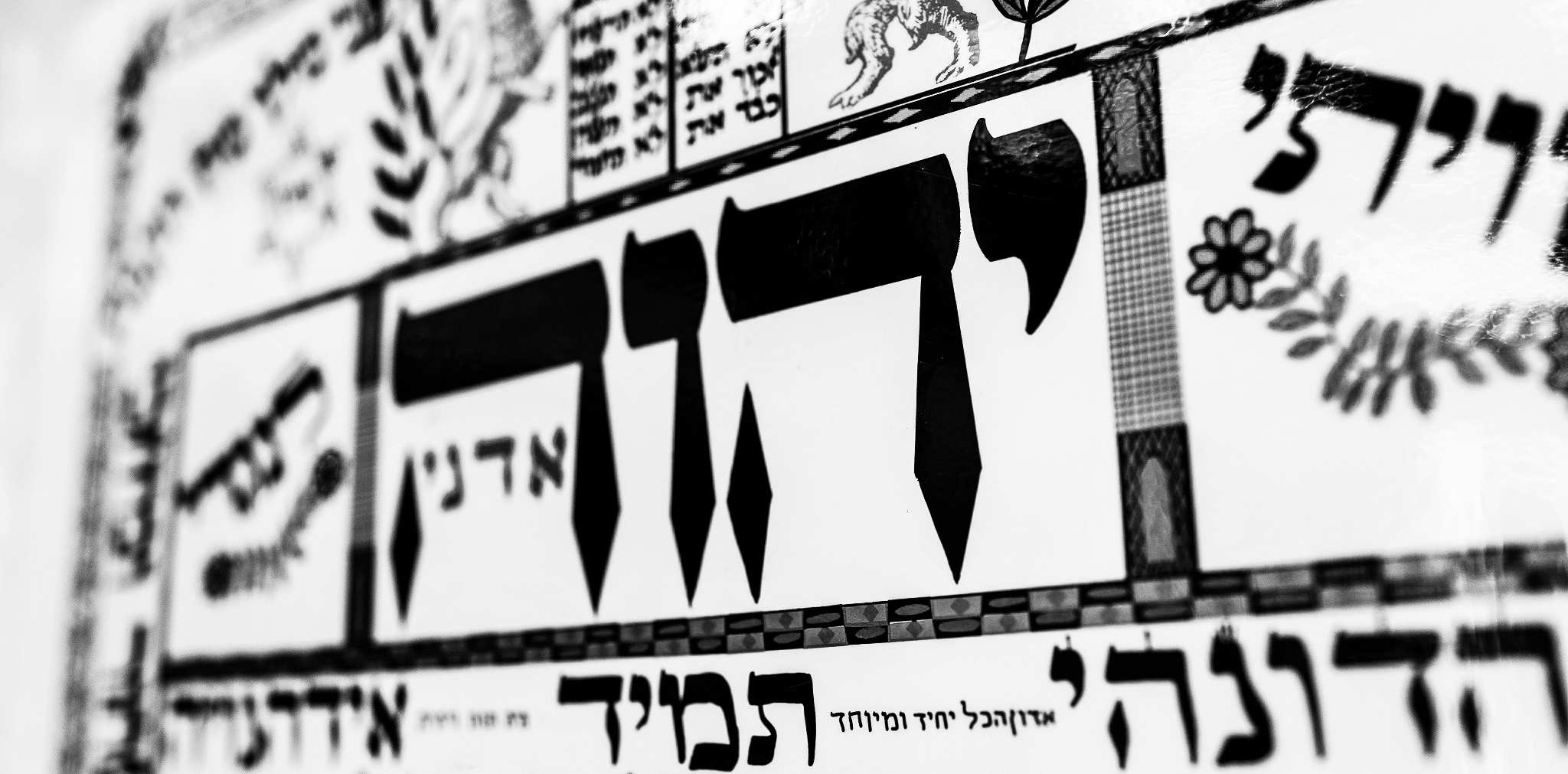
Our Torah reading for this week is Ki Tisa (כי תשא), one of the longest of the Torah. It includes the tragic account of the Sin of the Golden Calf (עֵגֶל מַסֵּכָה) and Moses’ passionate intercession for Israel. After a period of teshuvah (repentance) for Israel’s idolatry, the LORD graciously revealed the meaning of the Name YHVH (יהוה), that is, the thirty-two words that have become known in Jewish tradition as the Shelosh Esrei Middot, or the “Thirteen Attributes of God’s Mercy.” This was the LORD’s own definition of His compassionate character and attributes to Moses after the breaking of the Sinai covenant.
Our Torah reading for this week, parashat Tetzaveh, continues the description of the Mishkan (i.e., “Tabernacle”), though the focus shifts to those who will serve within it, namely the kohanim (i.e., the priests of Israel). First Moses was instructed to tell the Israelites to bring pure olive oil for the lamps of the Menorah which the High Priest was to light every evening in the Holy Place. God then commanded Moses to ordain Aaron and his sons as priests and described the priestly garments they would wear while serving in the Tabernacle. The portion further describes the ordination process for the priests and gives a description of the Altar of Incense (ketoret ha’mizbe’ah).
In this audio broadcast presentation I provide a verse-by-verse reading of the Torah portion (in English), providing Hebrew insights throughout, and linking the truths of Torah to the glory of Yeshua our Messiah, the Light of the World. I hope you find it helpful, chaverim.
The goal of the Sinai revelation was not only the giving of the Ten Commandments to the Israelites but enshrining the Divine Presence within their hearts… In our Torah portion for this week (i.e., Parashat Terumah), we read how God asked the people to offer “gifts from the heart” to create a “place” for Him: “Let them make for me a sanctuary that I may dwell in their midst” (Exod. 25:8). The Hebrew word for “sanctuary” is mikdash (מִקְדָּשׁ), which comes from the root word kadash (קָדַשׁ), “to be set apart as sacred.” A mikdash is therefore a “set apart space,” or a “holy place” that represents something profoundly treasured – a place of beauty and worship, a refuge, a place of rest. Other words that share this root idea include kedushah (holiness), kiddushin (betrothal), kaddish (sanctification), kiddush (marking sacred time), and so on. When God said, “Let them make for me a mikdash,” then, he was inviting the people to make a sacred place within their hearts for His Presence to be manifest…. The “materials” required to make this place – gold, silver, brass, red and purple yarns, fine linens, oils, spices, precious stones, etc. – were ultimately from the heart, expressed in free-will offerings given to God.
In this audio broadcast I step through the Torah portion and add Hebrew insights to help you better understand the Jewish roots of your faith in Yeshua, the Jewish Messiah. I hope you will find it helpful.
In parashat Yitro (last week) we read that exactly seven weeks after the Exodus from Egypt (i.e., 49 days after the first Passover), Moses gathered the Israelites at the foot of Mount Sinai to enter into covenant with the LORD. In a dramatic display of thunder, lightning, billowing smoke and fire, the LORD descended upon the mountain and recited the Ten Commandments to the people. Upon hearing the awesome Voice of God, however, the people shrank back in fear and begged Moses to be their mediator before God. The people then stood far off, while Moses alone drew near to the thick darkness to receive further instructions from the LORD.
In this week’s Torah portion (i.e., Mishpatim) we learn about these additional instructions Moses received on the mountain. The Jewish sages traditionally count 53 distinct commandments in this portion of the Torah, easily making it one of the most “legalistic” (i.e., law-focused) sections of the entire Bible. Civil laws, liability laws, criminal laws, agricultural laws, financial laws, family purity laws, Sabbath laws, and holiday laws are all given in this portion. These various social and civil laws are called “mishpatim” (מִשְׁפָּטִים), a plural word that means “rules” or “judgments.”
The Ten Commandments (i.e., עֲשֶׂרֶת הַדִבְּרוֹת, literally, “the ten declarations”) may be summarized this way: 1) “I AM your only deliverer, the One who loves and chooses you; 2) love me exclusively; 3) regard my love as sacred; 4) rest in me; 5) honor your life and its history. Do no harm to others: 6) forsake anger, 7) abandon lust, 8) respect others, 9) abhor lying, and 10) refuse greed and envy. Know that you belong to me and that you are accepted. Love others as you are also loved.
The “heart of the law” is the Torah of love, just as the “law of love” is the Torah of the Gospel (John 15:12). “Teach me the whole Torah, a heathen said, while I stand on one foot. Shammai cursed and drove the man away. He went to Hillel. Hillel said, What is hateful to you, do not do to anyone else: that is the whole Torah. The rest will follow – go now and learn it.” As the Apostle Paul taught: “For the whole law is fulfilled in one word: Ve’ahavta: “You shall love your neighbor as yourself” (Gal. 5:14). Love does no wrong to a neighbor; therefore love is the fulfilling of the law” (Rom. 13:10).
The sages have said that when the Holy One spoke to the people of Israel, each one felt personally spoken to by God, and thus it says in the singular, ‘I am the Eternal One, your God’” (Midrash Shemot Rabbah). Indeed the very first commandment given at Sinai was to accept the reality of our personal deliverance by the LORD: “I am the LORD your God, who brought you (singular) out of the land of Egypt, out of the house of slavery” (Exod. 20:2). In fact, God used the second person singular (not plural) for all the verbs throughout the Ten Commandments: “you (singular) shall have no other gods beside me”; “you (singular) shall not take the Name of the LORD your God in vain,” and so on. The very first commandment, however, is the starting point for all that follows. Until you are personally willing to accept the LORD as your God and to trust Him as your own Deliverer and King, the rest of the commandments are not likely to be heeded.
Hebrew Lesson:
.
God began the Ten Commandments by saying, “I AM the LORD your God, who brought you out of the land of Egypt, the house of slavery” (Exod. 20:2), rather than saying, “I AM the LORD your God, Creator of heaven and earth” (Gen. 1:1). The LORD refers to himself as our Savior first, since creation is designed to demonstrate His redemptive love given through Yeshua, the “Lamb slain from the foundation of the world” (Rev. 13:8; 1 Pet. 1:18-20; Eph. 1:4; 2 Tim. 1:9). “All things were created by Him (i.e., Yeshua), and for Him” and in Him all things consist (συνεστηκεν, lit. “stick together”) (Col. 1:16-17). Creation therefore begins and ends with the love of God as manifested in the Person of Yeshua our Messiah, the great Lamb of God… He is the Center of Creation – the Aleph and Tav – the Beginning and the End (Isa. 44:6; Rev. 1:17). All the world was created for the Messiah: “For from him and through him and to him are all things. To him be glory forever. Amen” (Rom. 11:36).
At Sinai we heard the voice of God (קוֹל אֱלהִים) speaking from the midst of the Fire (Deut. 4:33), an event that foreshadowed the great advent of the King and Lawgiver Himself, when the Eternal Word (דְבַר־יְהוָה) became flesh and dwelt with us (Phil. 2:6-7; John 1:1,14). Any theology that regards God as entirely transcendent (i.e., God is beyond any analogy with the finite) will have a problem with divine immanence (i.e., God is inherent and involved within the finite), since the highness, holiness, and perfection of God will make Him seem distant, outside of us, far away, and unknown…
Incarnational theology, on the other hand, manifests the magnificent humility and nearness of God to disclose the divine empathy. Indeed, the LORD became Immanuel (עִמָּנוּ אֵל), “God with us,” to share our mortal condition, to know our pain, and to experience what it means to be wounded by sin, to be abandoned, alienated, forsaken.
 The first Torah portion for the new Biblical New year is parashat Vayikra (“and he called”), the very first section from the Book of Leviticus (ספר ויקרא). In Jewish tradition, Leviticus is sometimes called the “Book of Sacrifices” (i.e., sefer ha’zevachim: ספר הזבחים) since it deals largely with the various sacrificial offerings brought to the altar at the Mishkan (i.e., Tabernacle). Indeed, over 40 percent of all the Torah’s commandments are found in this central book of the Scriptures, highlighting that blood atonement is essential to the Torah. Moreover, since the revelation of the Tabernacle was the climax of the revelation given at Sinai, the Book of Leviticus reveals its ritual significance, as it is written: “For the life of the flesh is in the blood, and I have given it for you on the altar to make atonement for your souls, for it is the blood that makes atonement (kapparah) by the life” (Lev. 17:11).

 We are living in perilous times. It is lawlessness to reject the Torah of the LORD that commands us to follow Messiah and know him in all our ways – including the ways of our struggles, our calls for justice, and so on… Yeshua plainly warned us that those who practice lawlessness and anarchy do not know him and therefore they will be judged as outsiders of the truth of God. In this audio podcast, I discuss the meaning and importance of the “law” in the life of those who purport to be followers of the Messiah.
 This week we have a “double portion” of Torah:
 Our Torah reading for this week is
 Our Torah reading for this week,
 The goal of the Sinai revelation was not only the giving of the Ten Commandments to the Israelites but enshrining the Divine Presence within their hearts… In our Torah portion for this week (i.e.,

 In
In  The
The 

 (Originally published Dec. 20, 2020)
