 Yeshua said: “I am the vine; you are the branches. Whoever lives in me and I in him, he it is that bears much fruit, for apart from me you can do nothing” (John 15:5). We cannot create the new birth by means of moral reformation, since the divine life is a miracle from above and not the result of human agency or aspiration (John 1:13; John 3:6). If we “live in” Yeshua we will bear fruit – our spiritual connection or “union” with him is sufficient for every good work, but only fruit that derives from the life of Messiah will abide (1 John 2:17). Good works are a necessary consequence of regeneration in Messiah, but by themselves they are insufficient and something more is needed (Matt. 7:21-23). Therefore the Scriptures point to the salvation of God and his grace as the efficient cause for the miracle of newness of life: “Not by works of righteousness which we have done, but according to his mercy he saved us…” (Titus 3:5); “for by grace are you saved through faith, and that not of yourselves (τοῦτο οὐκ ἐξ ὑμῶν), it is the gift of God” (Eph. 2:8); “so if it is by grace, it is no longer on the basis of works; otherwise grace would no longer be grace” (Rom. 11:6).
Category: Daily Dvar (דבר יומי)
Daily teaching audios from John Parsons at Hebrew for Christians
Vine and Branches: What’s the Connection?
 Yeshua likened His relationship with his followers in terms using the metaphor of a vine and its branches: “I am the true Vine (הַגֶּפֶן הָאֲמִתִּית), and you are the branches” (see John 15:1-5). We derive our identity, life and strength from being made part of His life… The purpose of the branch is to be a conduit of the life of the vine. Vine branches by themselves are of little value, apart from the manifestation of fruit; they cannot be used for building things and otherwise are regarded as bramble (Ezek. 15:2-4). Notice further that the vine branch cannot bear good fruit while it remains on the ground: it must “climb” upward and be elevated. And if you look closely at a vine, it is often difficult to see where the vine ends and the branches begin.
The life of the branch becomes “entangled” in God’s love as it bears spiritual fruit from the sustenance of the True Vine (הַגֶּפֶן הָאֲמִתִּית). When we abide in, or are truly connected with, Yeshua as the Source of life, we bear the fragrance and sweet-smelling savor of heaven itself…
“I am the vine; you are the branches. Whoever abides in me and I in him, he it is that bears much fruit, for apart from me you can do nothing” (John 15:5). Note that the expression “apart from me” (χωρὶς ἐμοῦ) means being in a state of separation from Yeshua, which is likened to spiritual death… It is the death of possibility, the absence of power to yield true good to the world, and so on. This is what is meant by “you can do nothing” (οὐ δύνασθε ποιεῖν οὐδέν), that is, you can do nothing of any lasting significance or worth… There is simply no true life apart from the Savior who is the Source of divine life. May you find your life and peace in Yeshua’s heart, friends.

- Matt. 11:28 Hebrew page (pdf)
Breathing God’s Name…
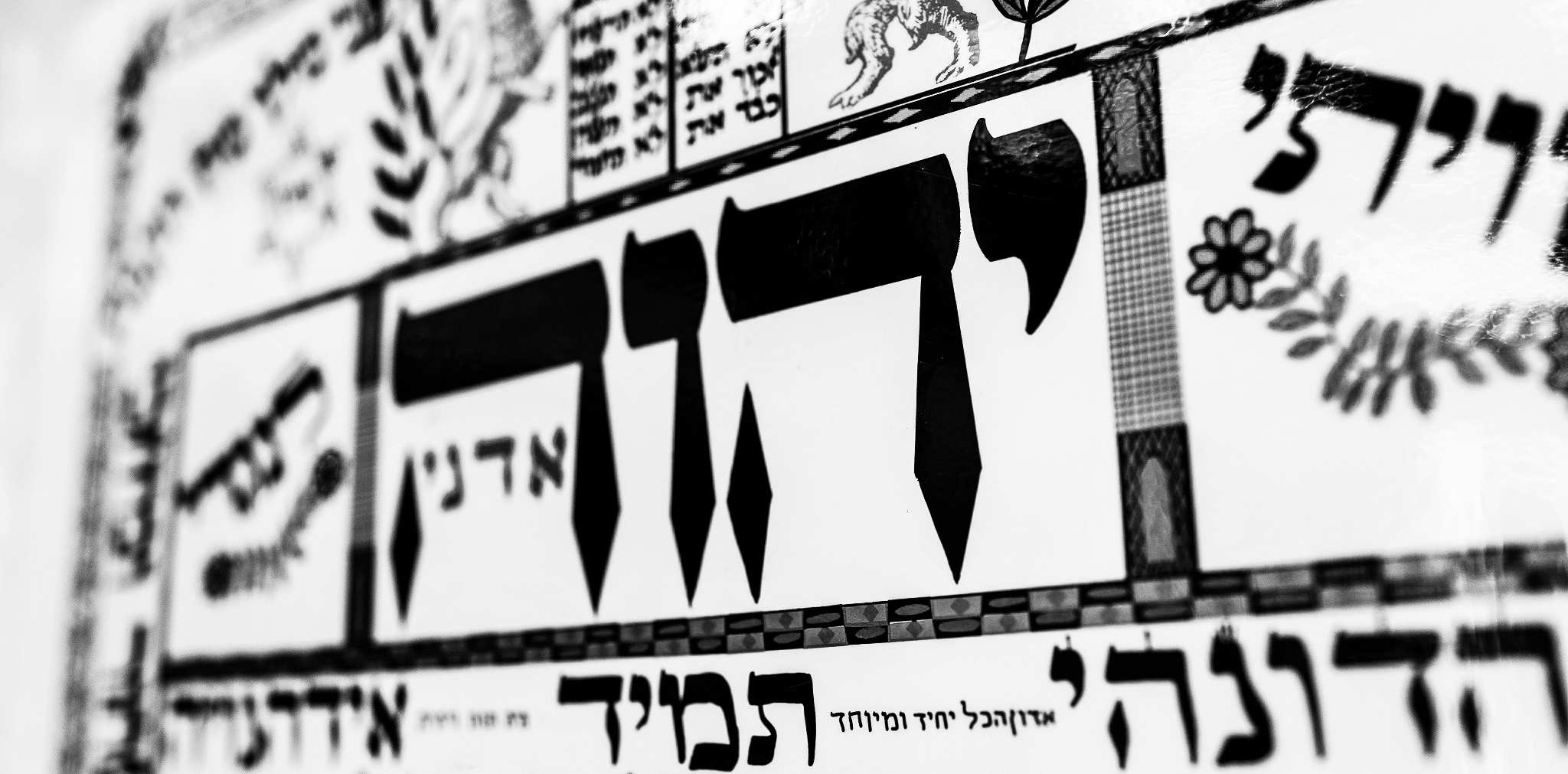
 In the Scriptures God’s Name is revealed as YHVH (יְהוָה), which means “He is Present.” The Name is formed from the words hayah (“He was”), hoveh (“He is”), and yihyeh (“He will be”): הָיָה הוֶה וְיִהְיֶה, indicating God’s omnipresence. Note that all the letters of the Name are “vowel letters,” which mean they evoke breath and life. This is the Name revealed to Moses thousands of years before the advent of other religions (Exod. 3:14), and indeed it is the Name associated with the nishmat chayim (נִשְׁמַת חַיִּים), the “breath of life,” imparted to Adam in the orchard at Eden (Gen. 2:4). It is therefore the original Name of God “breathed out” to mankind. The Name Yeshua (יֵשׁוּעַ) means “YHVH saves.” There is no other Savior beside Him, there is no other Name, there is no other LORD. “For I am the LORD your God, the Holy One of Israel, your Savior.” Only Yeshua the Messiah can deliver you from the wrath to come (1 Thess. 1:10).
Many people live in regret over the past or in dread of the future. The Hebrew name of God, the Tetragrammaton (יהוה), means: “He is Present.” We can only find God now, today, at this hour. Today if you hear His voice… Yeshua said, “The kingdom of heaven is within you” (מַלְכוּת הָאֱלהִים בְּקִרְבְּכֶם), that is, is to be found within the heart of faith (Luke 17:21).
The question is asked why the Torah was written without vowels, punctuation marks, and so on. The lack of vowels implies that we must bring breath (i.e., ruach, spirit) to our reading of the words; the lack of punctuation implies that we must be humble and rely on others to help us read with understanding. In other words, we must bring our heart to the reading and be open-minded to receive revelation.

We need the power of the Holy Spirit to read correctly, and the Holy Spirit reveals the Living Word and glory of Yeshua: “It is the Spirit who gives life; the flesh is no help at all. The words that I have spoken to you are spirit and life” (John 6:63).
Hebrew Lesson
Zechariah 4:6 reading:

- Zech. 4:6b Hebrew page (pdf)
…
The Warning of Korah…
 Our Torah portion this week (i.e., Korach) centers on the rebellion of Korah, a man who questioned God’s authority and who arrogantly sought to “intrude” into the office of the priesthood. It is noteworthy that his rebellion is explicitly mentioned only once in the New Testament – in the Book of Jude – as an example of the fate that awaits those false teachers who likewise spurn God’s law. False teachers within the church are likewise dangerous because they deny the truth of Torah and redefine our duties before God. Jude identifies then as spiritual impostors who “work from the inside” to confound or obscure the truth of what salvation means. Such a charlatan may appear to be a genuine believer, but he or she aims to sow confusion and sin among God’s children; they are the proverbial “wolves in sheep’s clothing” (Matt. 7:15). Jude’s warning is especially important for us in this present hour, because it is foretold that in the time immediately preceding the coming of the Messiah, spiritual deception and unbridled godlessness would greatly increase (2 Tim. 3:1-5). At any rate, test the spirits and seek God’s face always, dear friends. I sincerely hope this audio broadcast encourages you.
Warning of Korah Podcast:

Shelach – Faith and Trust (podcast)
 Since our Torah portion this week (i.e., Shelach) tells the tragic story of how the Exodus generation lost their inheritance by believing the faithless report of the spies, I thought it would be helpful to review the nature of faith so that we might guard ourselves from stumbling in a similar way. After all, concerning the tragic decree of God regarding the fate of Israelites in the desert (see Num. 14:21-35), the New Testament admonishes us to “fear lest any of you should likewise fail to attain the blessing of God’s promise.”
In this short audio broadcast, I discuss what faith is and how we must learn to trust God for our inheritance:

Parashat Ki Tisa Podcast…
 Our Torah reading for this week is Ki Tisa (כי תשא), one of the longest of the Torah. It includes the tragic account of the Sin of the Golden Calf (עֵגֶל מַסֵּכָה) and Moses’ passionate intercession for Israel. After a period of teshuvah (repentance) for Israel’s idolatry, the LORD graciously revealed the meaning of the Name YHVH (יהוה), that is, the thirty-two words that have become known in Jewish tradition as the Shelosh Esrei Middot, or the “Thirteen Attributes of God’s Mercy.” This was the LORD’s own definition of His compassionate character and attributes to Moses after the breaking of the Sinai covenant.

The Ground of our Spiritual Life…
“Take heed therefore how you hear: for whoever has will be given more; but whoever does not have, even what he thinks he has will be taken from him.” – Jesus
 Simply knowing about God is insufficient for a transformed life; something more is needed, namely, receptivity of the heart – a sense of concern, a hunger and a thirst for life, and the willingness to believe in the truth of love. Yeshua taught that the condition of our heart is revealed by how we hear. Without charity and a deep sense of concern, loss will inevitably occur. He warned us: “Take heed therefore how you hear: for whoever has will be given more, but whoever does not have, even what he thinks he has will be taken from him” (Luke 8:18). Just as “the good eye” (הָעַיִן הַטּוֹבָה) looks for what is good, so “the good ear” (הַאֹזֶן הַטּוֹבָה) listens to the word of hope; and just as “the evil eye” (הָעַיִן הָרָעָה) looks for what is evil, so “the evil ear” (הַאֹזֶן הָרָעָה) attends to the message of loss and despair. We receive what seek. As we inwardly receive the truth of Yeshua, more truth is revealed; but if we resist, untruth will take root and grow…
Yeshua often employed parables (משׁלים), or analogical stories, in his teaching because they simultaneously conceal and reveal spiritual truth. A parable obscures the truth to those who don’t really want it, so that “seeing they may not see, and hearing they might not understand” (Luke 8:9-10; Isa. 6:9-10), and yet it reveals truth to the humble of heart. Since Yeshua’s whole life was a parable of sorts – a “disguise” that led to the victory of our deliverance (Phil. 2:7) – it is not surprising that he regularly used “figures of speech” to provoke people to examine their own heart condition and the quality of their faith… In this connection note that Yeshua never explained the “mysteries of the kingdom of God” directly to the crowds, nor did He ever pander to the crowd’s clamor or interests. God’s word is freely “sown” to all, but it is received only by those who are willing to hear. The message is always directed to the individual willing to follow Him — to the one who has “ears to hear.”
For example, the famous “Parable of the Sower” (Luke 8:4-8) teaches us that God is like a farmer who sows seed upon the “soil” of the human heart, the quality of which may be hard, shallow, choked, or good:
- A “hard heart” (לב קשה) is likened to impenetrable soil that repels the “seed” of the promise of God (ὁ λόγος τοῦ θεοῦ, Luke 8:11). Because of bitterness, a person can become indifferent and numb inside, and this heart condition enables the devil to snatch the seed of hope from the heart like a ravenous bird (Luke 8:12).
.
.
- A “shallow heart” (לב רדוד) is likened to topsoil that overlays bedrock. At first the soil receives the seed and quickly begins to grow, but since there is no depth of soil, the growth fails to take root and the growth withers for lack of nutrients and moisture. When tested, the shallow heart reveals its lack of commitment and does not persevere (Luke 8:13).
.
.
- A “choked heart” (נחנק לב) is likened to weedy soil that hides other roots that exhibit “thorns,” namely worldly fears, the desire for riches, and the pursuit of comfort or pleasures. Such people are double-minded and their spiritual life becomes obstructed, throttled by busyness, distracted by desires for comfort, security, and worldly vanities. They are full of inner conflict and despair and consequently become stunted in their growth (Luke 8:14).
.
. - Finally, a “good heart” (לב טוב) is likened to tilled and receptive soil that receives the seed to yield an abundant harvest: “yielding thirty, sixty, or a hundredfold.” Because the righteous honor the seed and nurture its presence, the hidden power of the Life is powerfully released (Luke 8:15). They are also likened to a tree planted by rivers of living water that bring forth fruit in their season (Psalm 1:3). In this connection it is helpful to remember that fruit does not immediately crop up but requires time and its own season… The process of spiritual growth is ultimately mysterious and divine: “The kingdom of God is like someone who spreads seed on the ground. He goes to sleep and gets up, night and day, and the seed sprouts and grows, though he does not know how. By itself (αὐτομάτη, “automatically”) the soil produces a crop, first the stalk, then the head, then the full grain in the head. And when the grain is ripe, he comes in with his sickle because the harvest has come” (Mark 4:26-29). With God all things are possible, and the life of God is a miracle that comes from God’s own source of Life. It is the fruit of the Spirit, after all, and not the result of human effort or moral reformation…
.
So the “parable of the sower” teaches us that how we hear will determine the quality of the ground of our spiritual life. If we are honest with ourselves, we will see our own hardness, shallowness, and selfishness in contrast to the fruitfulness marked by the good heart, and this should provoke us to seek God for help… Again, only a new heart (לב חדש) created by power of God’s Spirit can possibly yield the fruit of the Spirit (פרי הרוח). “Take care then how you hear, for to the one who has, more will be given, and from the one who has not, even what he thinks that he has will be taken away” (Luke 8:18).
Believers are likened to earthen vessels that hold the treasure of God’s truth, and therefore they are in constant need of God’s grace to persevere. Therefore Yeshua told his disciples: “I am the true vine, and my Father is the gardener. Every branch in me that does not bear fruit he takes away, and every branch that does bear fruit he prunes, that it may bear more fruit” (John 15:1-2). Note that it is the healthy branch that will be cut back – not the withered one that will be altogether removed – and this purging process may be painful at times. The heavenly Gardener’s goal is for the fruitful branch to reveal more and more the connection to the heart of the Vine, so that God is glorified (see John 15:8). The end here is the beatific vision: “Blessed are the pure in heart, for they shall see God” (Matt. 5:8). The goal of “purging” is fruitfulness and blessing, but the agency is not the will of man but the power of God. You are made “clean” through the word of God spoken within your own heart (John 15:3). This is the acceptance of the Messiah’s life within you. Your sanctification, however, depends on your communion with God, staying connected to what is real, central, vital, the core truth of God’s Presence and love, the ultimate Reality of Life itself.
In light of these things I hope we might better appreciate and understand Yeshua’s admonition: “Abide in me, and I in you. As the branch cannot bear fruit by itself, unless it abides in the Vine, neither can you, unless you abide in me. I am the vine; you are the branches. The one who remains in me – and I in him – bears much fruit, because apart from me you can accomplish nothing” (John 15:3-5). Our connection to Yeshua is intended to bear fruit that glorifies God, but if we refuse to find life in him, we would wither and die (John 15:6). We find sustenance and healing only as we remain connected to the Source and Conduit of life, who is the Messiah, the Savior and LORD. True life grows out a heart connection with Him, and without that connection our lives become vain and yield no eternal significance. Nevertheless we must remain encouraged, friend, since God calls us to Himself. This is “the work of faith.” Look to heavenly reality and not to the vanity and deceits of this world (Col. 3:1-4). Find life in connection with Yeshua, drawing strength and vitality from your relationship with Him. The fruit of the Spirit is produced as we open our hearts and yield ourselves to the love and presence of the Lord. May you grow in grace and be fruitful in God’s love. Amen.
In light of these things I hope we might better appreciate and understand Yeshua’s admonition: “Abide in me, and I in you. As the branch cannot bear fruit by itself, unless it abides in the Vine, neither can you, unless you abide in me. I am the vine; you are the branches. The one who remains in me – and I in him – bears much fruit, because apart from me you can accomplish nothing” (John 15:3-5). Our connection to Yeshua is intended to bear fruit that glorifies God, but if we refuse to find life in him, we would wither and die (John 15:6). We find sustenance and healing only as we remain connected to the Source and Conduit of life, who is the Messiah, the Savior and LORD. True life grows out a heart connection with Him, and without that connection our lives become vain and yield no eternal significance. Nevertheless we must remain encouraged, friend, since God calls us to Himself. This is “the work of faith.” Look to heavenly reality and not to the vanity and deceits of this world (Col. 3:1-4). Find life in connection with Yeshua, drawing strength and vitality from your relationship with Him. The fruit of the Spirit is produced as we open our hearts and yield ourselves to the love and presence of the Lord. May you grow in grace and be fruitful in God’s love. Amen.

Preparing for Eternity….
 The ancient Greek philosophers sought for “salvation” (Σωτηρία), which they generally understood as freedom from the fear of death… Therefore Socrates sought to dispel mythical superstition by regarding philosophy as the “practice for death,” by which he meant that reflecting upon this “shadowy world” would instill a profound hunger for the eternal (and ideal) world, and he therefore advised that, since we all must die, we ought to prepare ourselves now for eternity, by focusing the mind on what is most essential, real, and beautiful.
The Jewish sages likewise later affirmed, “This world is like a corridor before the World to Come; prepare yourself in the corridor, that you may enter into the hall” (Avot 4:21), which implies that the great commandment is דִּרְשׁוּנִי וִחְיוּ – “Seek Me and live” (Amos 5:4), as the prophet Isaiah (7th century BC) cried out, “Seek the LORD while he may be found; call upon him while he is near” (Isa. 55:6).
Therefore Yeshua (יֵשׁוּעַ) is justly named “our salvation” (יְשׁוּעָתֵנוּ), since it is by his hand that we are delivered from bondage to the fear of death (Heb. 2:14-15). The resurrection of Yeshua utterly overthrows the power of death (i.e., the devil), and eternally secures our welcome in the world to come.
Do not let your heart be troubled; have faith in God, for he “prepares a place for you” on the other side of the veil of this temporal world (John 14:1-3). “Whoever is born of God conquers the world (νικᾷ τὸν κόσμον), and this is the overcoming power that conquers the world, even our faith” (1 John 5:4).
As Yeshua testified: “I AM the resurrection and the life (אָנכִי הַתְּקוּמָה וְהַחַיִּים). The one who trusts in me will live, even though he dies; and whoever lives and believes in me will never, no, not ever, die (οὐ μὴ ἀποθάνῃ εἰς τὸν αἰῶνα). Do you believe this?” (John 11:25-26).
Yeshua’s words indicate there are two distinct senses of the word “death,” namely physical death (temporal) and spiritual death (eternal). Though we may indeed die physically, that does not imply that we will die spiritually, since we are given eternal (spiritual) regeneration and life by the miracle of God’s love…
We press on in hope, dear friends: “For our light and momentary troubles are achieving for us an eternal glory that far outweighs them all. So we fix our eyes not on what is seen, but on what is unseen. For what is seen is temporary, but what is unseen is eternal. Now we know that if the earthly tent we live in is destroyed, we have a building from God, an eternal house in heaven, not built by human hands. Meanwhile we groan, longing to be clothed with our heavenly dwelling (2 Cor. 4:17-5:1-2).
God our Savior “is able to keep you from stumbling and to present you blameless before the presence of his glory with great joy” (Jude 1:24). May God help us persevere in hope, remembering the glory that lies ahead! Amen.

The Torah of Wrestling… (podcast)
 Yeshua somberly warned those who professed faith: “Not everyone who says to me, ‘Lord, Lord,’ will enter the kingdom of heaven, but the one who does the will of my Father who is in heaven. On that day many will say to me, ‘Lord, Lord, did we not prophesy in your name, and cast out demons in your name, and do many mighty works in your name?’ And then will I declare to them, ‘I never knew you; depart from me, you workers of lawlessness'” (Matt. 7:21-23). Despite the practice and profession of their faith, these people were strangers to God… They had a false sense of assurance, believing that they were “serving God” while they really were not… So the essential question here is whether Yeshua truly knows you. You may know a lot about God, religion, spirituality, and yet you may remain unknown by him… So where do you find life? What are you loving? Where are you going?
“Not everyone who says to me, ‘Lord, Lord,’ will enter the kingdom of heaven, but the one who does the will of my Father who is in heaven” (Matt. 7:21). Yet what is the will of the Father but to trust in Messiah for life (John 6:40)? “What must we do, to be doing the works of God?” Yeshua answers: “This is the work of God, that you believe in the One whom he has sent” (John 6:28-29). The Torah of God centers on trusting the Messiah (Titus 3:5-7).
On that day many will say to me, ‘Lord, Lord, did we not … do many mighty works in your name?’ And then will I say to them, ‘I never knew you; depart from me, you workers of lawlessness’ (Matt. 7:22-23). From this we see that good works – even those done in the name of Messiah – are insufficient for life, and that something more is needed… That “something more” is the reality of relationship with him. However, even Yeshua’s sacrifice on the cross can’t bring you into relationship with him apart from receiving it for your healing… By faith you encounter Yeshua clothed in your flesh, your sin, and suffering death for you. “As long as Christ remains outside of us we are separated from him.”
Some people feel frightened when they consider all this, but fear arises only if we miss Yeshua’s point… Good works can’t save you, even those performed in the Savior’s name… What saves you is trusting in God’s great love for your life: “This is the work of God, to trust in the One whom God has sent [for you]” (John 6:28-29). Genuine salvation is “from the LORD,” that is, comes as a result of his loving intervention on your behalf (Titus 3:5-7; Eph. 2:8-10). This is the will of the Father, the true Torah of the LORD, namely, to honor the Messiah and know him by faith… You trust him for eternal life, you believe that he bears your sins, you seek to know his heart, and you desire to share your life with him. It is lawlessness to reject the Torah of the LORD that commands us to follow Messiah and know him in all our ways – including the ways of our struggles, our fears, and so on… Each of us must wrestle alone, in the dark places of fear, to find our new name from God (Gen. 32:24). Is the blessing for you or not? The essential thing is to know (and more importantly) to be known by Yeshua…. It is a matter of trust, of sharing your heart, being real with him, walking with him, loving him… “This is the work of God, to trust in the One whom God has sent [for you].” Trusting in the Lord means accepting that you are truly loved (and made safe) because of who God is…
The gospel is “the power of God for salvation to everyone who believes, to the Jew first and also to the Greek” (Rom. 1:16). It is a miracle of being in a right relationship with God. We are pursued by his love, and he haunts us until we surrender to his will… Like Jonah we first must be “swallowed up” in consciousness of our own rebellion before we realize we are undone, that we are without remedy apart from God’s intervention and deliverance. We start there – in the “belly of the fish” – and later are resurrected to go forth by God’s mercy and grace. As we look to Yeshua, as we lean on him, he reveals more of himself to us. He gives us the grace and strength we need; he is always enough…
Whether Yeshua is living in you (and you are living in Him) is the most important question of your life upon which everything else turns. The great mystery is “Christ in you, the hope of glory” (Col. 1:27). As Ravenhill once said, “I don’t ask people if they’re saved anymore; I look them straight in the eye and say, “Does Christ live inside you?” Indeed, He is present right now — for you — in this very moment… Are you connected with Him in the truth? Are you drawing life from His life? Do you really live in Yeshua? “God is making his appeal through us. We implore you on behalf of Messiah, be reconciled to God” (2 Cor. 5:20).
Each of us must wrestle alone, in the dark places of fear, to receive our new name from God (see Gen. 32:24). Again I ask: Is the blessing for you or not? Are you willing to be loved and accepted by him? What is your name? What do you call yourself? You cannot know God apart from his love, yet for some people that is exactly where the struggle lies… Look within your heart; test yourself; do you believe God cares for you? Take hold of the promise and do not let go until you know who you are in his love. “To the one who conquers I will give some of the hidden manna, and I will give him a white stone, with a new name written on the stone that no one knows except the one who receives it” (Rev. 2:17).
Affirmations of Faith
Repeat these affirmations from the Scriptures:
.
- I am a beloved child of God (John 1:12; Eph. 5:1; Rom. 8:15)
. - I am fully known by God and he accepts me unconditionally (Eph. 1:6)
. - Yeshua died so I could live (2 Cor. 5:21)
. - I am safe because of God’s love for me (John 5:24; 10:28-30; Rom. 15:7)
. - God is always with me (Isa. 41:10; Matt. 28:20; John 6:37; Heb. 7:25)
. - The Lord will never leave me nor forsake me (Heb. 13:5; Deut. 31:6; Psalm 23:6)
. - Nothing can separate me from God’s unfailing and invincible love (Rom. 8:35-39)
. - I am not condemned (John 3:18; 5:24; Rom. 8:1)
. - I have crossed over from death to life (John 5:25; John 8:51; John 10:28)
. - I am saved and will not come to shame (Rom. 10:9-13; Psalm 27:1)
. - I am forgiven and declared righteous (2 Cor. 5:21; Rom 1:17; Rom. 3:24)
. - I am chosen by God to know him (John 15:16; Col. 3:12; Eph. 1:11; Rom. 8:29-30)
. - I am secure by the power of God (Jude 1:24-25; Rom. 8:29-30; 16:25; Phil. 1:6)
. - God hears my prayer and meets my needs (Psalm 4:3; Phil. 4:19; 1 John 5:14-15)
. - I have peace with God (Rom. 5:1; Rom. 16:20; 1 Cor. 1:3; Phil 4:7)
. - God cares for me and doesn’t want me anxious (1 Pet. 5:7; Phil. 4:6; John 14:1)
. - God himself prepares a place for me (John 14:1-4)
. - I am welcome at God’s table (Matt. 22:1-14)
. - God delights to hear my voice (Matt. 7:7-8; Luke 11:9; Heb. 4:16; Psalm 33:1)
. - I am no longer a slave to fear or to sin (Rom. 6:6; Gal. 5:1)
. - I am set free to love; I am healed of my hardness of heart (John 8:36; Col. 2:11)
. - I am a new creation, subject to the law of the Spirit of life (2 Cor. 5:17; Rom. 8:2)
. - I am a vessel of the Holy Spirit, a messenger of grace (1 Cor. 3:16; John 14:17)
. - I am blessed with every blessing in Messiah (Eph. 1:3)
. - God imparts to me wisdom and light (Eph. 5:8; John 8:12; Col. 1:13; Psalm 27:1)
. - Even if I physically die, I will live forever with God (John 11:25-26)
. - I can do all things through Messiah who strengthens me (Phil. 4:13)
. - and so on and on… l’olam va’ed … forever and ever!
.
The blessing is there for you, though you might need to wrestle in faith to fully take hold of your identity in Christ. May God help you answer to the new name he calls out to you…

Torah of Wrestling Podcast:

Irrepressible Creation Podcast…
 There is rational, intuitive, and empirical evidence to believe that the universe was created in time by a transcendental power that is the source of all value, meaning, purpose, and so on. Martin Heidegger asked, “Why is there something rather than nothing,” which is not a question about a possible cause for an observed effect, but is a question about the underlying cause of any possible existence at all. The Scriptures reply: “For God’s invisible attributes, namely, his eternal power and divine nature from the creation of the world, have been clearly perceived, because they are understood through what has been made, so people are without excuse” (Rom 1:20).
Podcast:
 …
…
For more on this see:
…
Hebrew Lesson:

…
…