 Recall that our Torah portion last week centered on the rebellion of Korah, a man who questioned God’s authority and arrogantly sought to “intrude” into the office of the priesthood. It is noteworthy that his rebellion is explicitly mentioned only once in the New Testament – in the Book of Jude – as an example of the fate that awaits those false teachers who likewise despise God’s moral law. Unfortunately, Jude’s warning is often neglected today, probably because people feel uncomfortable over the prospect of God’s judgment. After all, in our “politically correct” age, people have been indoctrinated to regard “tolerance” as the greatest of virtues and “intolerance” (especially of moral evil) as the greatest of vices…. Most unbelievers don’t mind hearing the “good news” of God’s love, but they take exception when they are confronted with their personal duty to live according to the moral truth revealed in the Torah. Everyone wants to go to heaven though they don’t want to find a Holy LORD when they get there… False teachers within the church are dangerous because they feed on this sense of discomfort and attempt to rationalize or compromise it away. Jude identifies them as spiritual impostors who “work from the inside” to confound or obscure the truth of God. Such a charlatan may appear to be a genuine believer, but their hidden agenda is to sow confusion and sin among God’s children. They are proverbial “wolves in sheep’s clothing” (Matt. 7:15). Jude’s warning is especially important for us to heed today, because in the time immediately preceding the coming of the Messiah, spiritual deception and unbridled godlessness will greatly increase (2 Tim. 3:1-5).
It is important to see that the primary characteristic of a false teacher is that they “deny our only Master and LORD, Yeshua the Messiah” — that is, they deny His moral authority and identity as the LORD God (Jude 1:4). Since Jude is writing to those who are “beloved by God,” that is, to sincere Jewish believers, he is careful to remind us that it was Yeshua Himself who saved the people from Egypt — but afterward destroyed those who did not believe (Jude 1:5). In other words, Jude wanted to ensure that we fully understand that it was Yeshua who was the thunderous “Voice of the Living God speaking from the midst of the fire” at Sinai (Deut. 5:26), and therefore to regard Him as none other than the great Lawgiver Himself (Matt. 5:17-7:29). That is why he is called “our only Master and LORD,” and to esteem him as anything less is to deny the reality and truth of God.
 A common characteristic of false teachers (like Balaam) is that they are inwardly covetous, though they carefully cloak themselves as godly and pious… Of such the Apostle Peter says, “in their greed they will exploit you with ‘plastic words’ (πλαστοῖς λόγοις) to make merchandise out of you” (2 Pet. 2:3). This suggests they “mold” their speech to exploit (or to suit) their listeners, plastering over what they really believe, and using words with elastic meaning to deceive others… Such teachers therefore appeal to the flesh, to human pride, by scratching the “itch” people have to feel superior toward others, and therefore they often find their audience among the insecure, the weak, and the vulnerable… Because they are covetous – always wanting more – they invariably seek positions of power, authority, fame, and of course they crave wealth to fund their “entitled” lifestyle. Peter says such false teachers make “merchandise” out of you, that is, they regard you as a commodity, an article of exchange, a coin in their pocket… They are not really there for you, though they appeal to you to be there for them, or for the sake of the “little children” or some other cause they will exploit for their advantage.


 “And he opened his mouth and taught them, saying… ‘Blessed are those who mourn, for they shall be comforted’ (Matt. 5:4). Mourning is the expression of care, the voice of pain, the sorrow of a broken heart. Those who mourn care deeply; they feel the weight of loss; they grieve over sin. Such sorrow expresses the longing to be released from inner sickness of evil, as Yeshua said: “from within, out of the heart of man, come evil thoughts…” (Mark 7:21). Our own evil desires convict us of the truth… Here there is no place left to hide, no rationalization, no vain hope for self-reformation – just the raw revelation of our fatal condition and the sincere appeal for God’s mercy in Yeshua. Mourning over our sins draws us to God, to the Comforter (παράκλητος) who “comes alongside” to bind up the broken heart. The danger remains, however, for those who deny their sin and refuse to mourn, since they are made blind to God’s forgiveness and comfort (John 9:41). How shall God be able in heaven to dry up your tears when you haven’t wept?

 Every one of us is a teacher of sorts, proclaiming through our personal choices what we believe to be true. False teachers are those whose choices “teach” that there is no God, no eternal life, no meaning to life, and ultimately, no real hope… It cannot be any other way, for we all teach by our choices; we communicate by our assumptions of what we regard is of “ultimate concern.” Postmodern philosophy never answered any of the haunting existential questions of life, such as: What is reality? Why is there something rather than nothing? What is the purpose of life? What happens when we die? Who am I? Do moral choices matter? and so on, but instead merely reinterpreted the hunger for meaning to be about power and control… Nonsense! People may evade the great questions of life by pretending they are unknowable, but Scripture attests that all people are created in God’s image and are intuitively aware of God’s reality and power: “For His invisible attributes, namely, his eternal power and divine nature, have been clearly perceived, ever since the creation of the world, in the things that have been made; so they are without excuse” (Rom. 1:20). We have a sacred duty to honor God’s truth and that implies we bear a sacred animosity toward lies and false teaching. “Do not be deceived: associating with false teaching corrupts good character” (1 Cor. 15:33). We hate sin because it wounds and kills the soul. Think straight; awaken to the holiness of life; turn away from vain thoughts and lies; embrace the truth of God’s salvation.
 As followers of the God of Truth (אלוהי האמת), we are responsible to “do truth” (עשה את האמת) and to reject what is false (1 John 4:6). As Yeshua said, “For this purpose I was born and for this purpose I have come into the world — to testify to the truth. Everyone who is of the truth listens to my voice” (John 18:37). This means that we have a moral and spiritual duty to think clearly and not to abuse our minds (Phil. 4:8; Rom. 12:2). The LORD will help us to do this, as Yeshua said: “I will ask the Father, and he will give you a Helper (παράκλητος, someone “called to one’s side”), to be with you forever, even the Spirit of Truth (i.e., ruach ha’emet: רוח האמת), whom the world cannot receive, because it neither sees him nor knows him” (John 14:16-17). The Spirit of Truth helps us “discern what is the will of God, what is good, acceptable, and perfect” (Rom. 12:2) and empowers us to take “every thought captive” to the reality of God’s Presence (2 Cor. 10:4-5). Truth is connected to memory – both in our personal histories as well as the history of God’s redemptive actions performed on our behalf. Truth is described as “a-letheia” (ἀλήθεια), literally meaning “not forgetfulness…” Hence we are constantly commanded to remember what God has done for us and to “diligently repeat” (ושׁננתם לבניך) the truth to our children (Deut. 6:4-9). Similarly, the Spirit of Truth brings to remembrance the words of Yeshua to our hearts (John 14:26).
 In the Gates of Repentance it is written: ”I hereby forgive all who have hurt me, all who have wronged me, whether deliberately or inadvertently, whether by word or by deed. May no one be punished on my account. And as I forgive and pardon those who have wronged me, may those whom I have harmed forgive me, whether I acted deliberately or inadvertently, whether by word or by deed.” Amen…
 The commandments of God are usually divided between the rational laws (i.e., mishpatim) and the divine decrees (i.e., chukkim), though this distinction is somewhat artificial, since all of the commandments of Torah (and that includes the Torah of the New Covenant) are grounded in the mystery of God’s will, which is to say that we are to obey them simply because they derive from the Divine Authority itself… When the people gathered before Moses to receive the covenant at Mount Sinai, they said all the LORD has spoken “we will do and we will hear” (na’aseh ve’nishmah: נַעֲשֶׂה וְנִשְׁמָע). Note the order: first comes faith in God expressed in the decision to act (na’aseh), and then comes understanding (ve’nishmah). As Yeshua said, “If anyone’s will is to do God’s will, he will understand” (John 7:17). The heart of faith is willing to do what God asks before hearing (or understanding) what is required. Many people operate the other way round, sitting in judgment of God’s word, demanding to understand why they should obey. You cannot understand apart from faith, however, and that is categorically true of all forms of knowledge, which is usually defined as “justified true belief.” We are to be “doers of the word and not hearers only, deceiving ourselves” (James 1:22). The Greek verb used in this verse is emphatic: “Be doers!” (γίνεσθε) means “be born!” “Come alive!” “Do, live, and exist before God!” This is a call to creative action, to newness of life…
 King Solomon wrote, “The fear of the LORD adds days [to life], but the years of the wicked will be cut short” (Prov. 10:27). The sages have said that these “added days” of life include the appointed times and seasons (i.e., the moedim) when the veil of “everydayness” is lifted and we can glimpse the sacred. Living in dissonance with God’s will yields days that are shortened – by vanity, by dissipation, and by despair. And what good are length of days when they are filled with emptiness and illusion? As Solomon also concluded in his great scroll of Kohelet, fearing God and keeping his commandments is the “end of the matter” (סוֹף דָּבָר) and the “whole duty” of our lives (Eccl. 12:13).

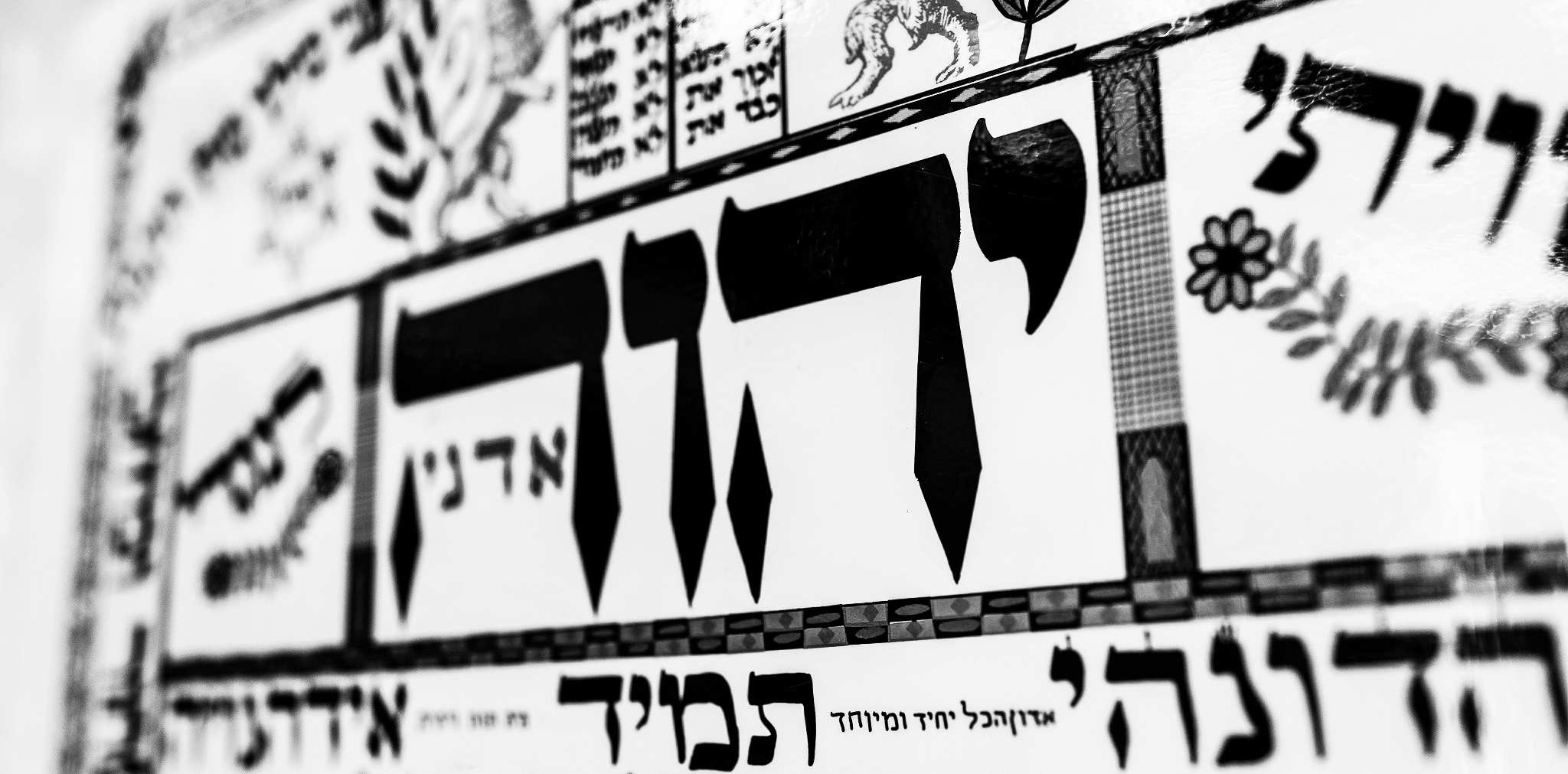
 Reflecting on the role of suffering in the heart of faith, Dietrich Bonhoeffer once wrote: “Here is the decisive difference between Christianity and all religions. Man’s religiosity makes him look in his distress to the power of God in the world: God is the deus ex machina [i.e., “quick fix”]. The Bible [on the other hand] directs man to God’s powerlessness and suffering: only a suffering God can help” (Letters and Papers from Prison). Bonhoeffer’s comment alludes to the difference between an “Elohim” (אֱלהִים) conception of God as the omnipotent power and Judge of reality, and the “YHVH” (יהוה) conception of God as the compassion Source and Breath of life – the Suffering God who empties himself to partake of our condition – to know our pain, to bear our sorrows, to heal us from the sickness of spiritual death, and to touch us in the loneliness of our exile… The Spirit enables us to “groan” in compassion, directing us away from the impulse to “kill the pain” to accept it as part of our lament and need for connection with God.