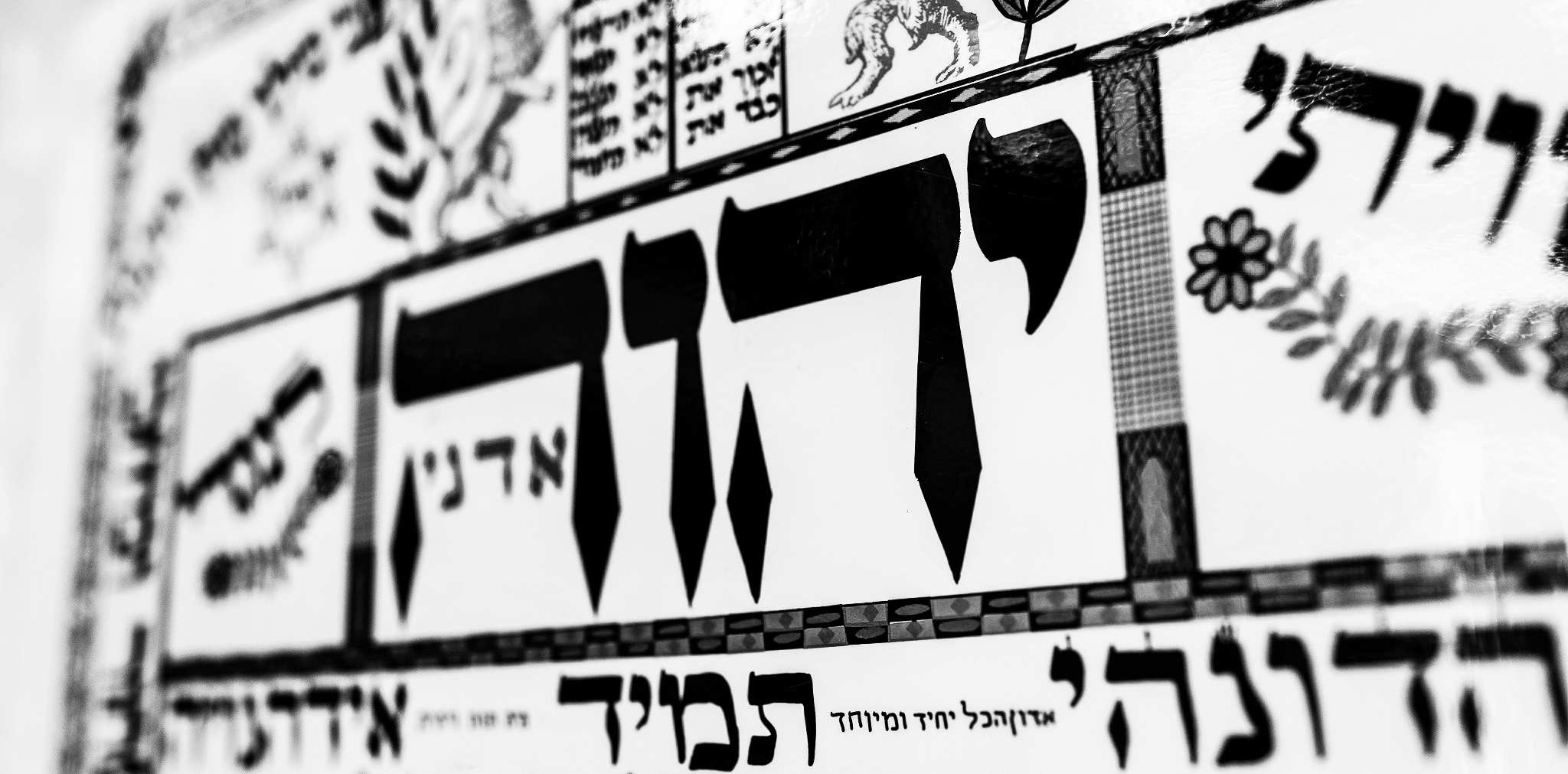

A verse from this week’s Torah portion (Korach) reveals another great Hebrew name for God: Elohei ha-ruchot lekhol basar (אֱלהֵי הָרוּחת לְכָל־בָּשָׂר), which can be translated “the God of the breath of all flesh” (Num. 16:22). The LORD is the Source of your breath, the One who exhales to you nishmat chayim (נִשְׁמַת חַיִּים), the “breath of life” that enables you to live (Job 12:10). The sages use the analogy of a glassblower who creates a glass vessel. Just as the glassblower blows into a tube to form a vessel from molten glass, so the breath (i.e., neshamah: נְשָׁמָה) that comes from the LORD functions as spirit (i.e., ruach: רוּחַ) that forms and fills the human soul (i.e., nefesh: נֶפֶשׁ). Note that the Name YHVH (יהוה) first appears in this connection (Gen. 2:7), a Name that means “God is Present” (Exod. 3:14) and “God is Mercy” (Exod. 34:6-7). Note also that each letter of the Name YHVH represents a vowel sound (i.e., breath), suggesting that God’s Spirit is as close as your very next breath. Like the wind that cannot be seen, so is the spirit the essential part of your identity. Yeshua breathed on his followers and said, “Receive the Holy Spirit” (John 20:22).
The special Name Elohei ha-ruchot lekhol basar appears only one other place in the Torah. After accepting the fact that he would soon die and therefore be unable to finally lead the people into the promised land, Moses prayed: “Let the LORD (יהוה), “the God of the spirits of all flesh” (אֱלהֵי הָרוּחת לְכָל־בָּשָׂר), appoint a man over the congregation who shall go out before them and come in before them, who shall lead them out and bring them in, that the congregation of the LORD may not be as sheep that have no shepherd.” So the LORD said to Moses, “Take Joshua the son of Nun (יְהוֹשֻׁעַ בִּן־נוּן, lit. “son of life”), a man in whom is the Spirit (רוּח), and lay your hand on him” (Num. 27:16-18).
The Talmud notes that the word Nun (נוּן) means “fish,” a symbol of activity and life. Joshua, the chosen one who succeeded Moses and led the people into the Promised Land, was the “Son of Life” – a clear picture of Yeshua our Messiah, the “spirit-filled good Shepherd” who would lay down His life for the sheep (John 10:11). The LORD is indeed the “God of the breath of all flesh.” When Yeshua cried out, “It is finished” and breathed his last breath as He died for our sins upon the cross, the greatest exhalation of the Spirit occurred, the greatest sigh, the greatest utterance was ever declared. The sacrificial death of Yeshua for our deliverance was God’s final word of love breathed out to those who are trusting in Him.
Hebrew Lesson:

 The Book of Lamentations is an acrostic (i.e., alphabetical) poem that begins with the Hebrew letter Aleph (א) in the word “eichah” (אֵיכָה), which also marks the Hebrew name of the book (מגילת איכה). “How (eichah) lonely sits the city that once was full of people!” (Lam. 1:1). The sages note that this word “how” (i.e., eichah) could also be read as “where are you?” (i.e., ayeka: אַיֶּכָּה), God’s first word spoken to Adam after he broke covenant in the Garden (Gen. 3:9). Note that God’s question is often our own: “Where are you God? Are you here, in the midst of this tedious moment? Do you know my loneliness, my ache for love? Do you understand the troubles of my heart? Do you know my pain?” And yet how many people have faith that God’s call is one of comfort and restoration? God uses our loneliness (“how lonely…”) to search our hearts, asking each of us, ayeka – “Where are you?” “Why have you turned away from me and chosen a state of exile?” Our haunting sense of God’s absence impels us to seek for him… God awaits our only possible response, “Hashivenu!” — an imperative (urgent appeal) for the grace to repent: “Turn us back to yourself, O LORD, and we shall be turned; renew our days as of old” (Lam. 5:21).
 Sometimes we seem to forget that we are not home yet… The ancient thinker Socrates argued that philosophy, when done correctly, was “practice for death,” since the passing shadows of this world pointed to an unchanging good, our true end. Likewise Yeshua our Messiah taught us to take up the cross and die daily (Luke 9:23). We are to “set our affections on things above, not on things on the earth,” for we have died and our life is hidden with Messiah in God (Col. 3:2-3).
 Our Torah this week (i.e.,
 “Make every effort to enter through the narrow door, because many, I tell you, will seek to enter but will not be able” (Luke 13:24). The narrow door is the way of humility, assuming a low position, crawling, if you will, and making yourself small… It is the way of the cross of Messiah, confessing the truth of our condition and trusting in God alone for deliverance.. The narrow door is the way of faith – trusting God’s compassion and righteousness given on your behalf. The large, wide-open door is designed for the crowd and its various idols. Beware of the world that seeks to assimilate the soul: beware of becoming part of the crowd! The individual is lost and overwhelmed in the midst of the crowd and its momentum. The crowd assimilates the soul, laughs at the notion of individual responsibility, and abandons itself to the gravity of fallen natural forces… The life of faith, on the other hand, refuses to regard the individual human heart as a triviality. Faith is an individual struggle, a walk into unknowing; it is the way of the sojourner who feels uneasy in this world of shadows… God is always with us and helps us stay strong and resolute, even as we struggle through the darkness of this age. Press on, friend: the day and the hour draw near!
 “We walk by faith, not by sight” (2 Cor. 5:7). This is true for all people, since every soul lives by faith of some kind or another. Our Torah portion this week (Shelach) begins with the episode of the spies and concludes with the warning not to “spy after your heart and after your eyes” (Num. 15:39). The Torah mentions the heart first and then the eyes to indicate that the eyes follow the heart. We see as we believe with our heart: “According to your faith be it done unto you.” When the spies said, “We are not able to go up (לא נוּכל לעלות)… for they are stronger than us” (Num. 13:31), they revealed their unwillingness to believe in God’s promise, or, to put it another way, they revealed their faith in God’s inability to deliver on his word…. Indeed, the Hebrew word for “than us” (i.e, ממנו) can also mean “than Him,” suggesting that the spies believed that even God would be unable to uproot the Canaanites! According to their faith, so it was done; by believing that it was impossible, they lost the possibility of God’s promise…
 Because we are in the midst of a raging spiritual war, it is imperative to gird your mind and heart with truth… Keep yourself armed for the battle and be aware of the common strategies of the enemy of your soul (2 Cor. 2:11). Trust in God’s power to deliver you from evil (1 Cor. 10:13). Be resolute in your convictions, refusing to yield to worldly pressures to compromise your faith in the name of supposed “tolerance.” It is not loving to suppress the truth of Yeshua or to minimize the truth claims of our Messiah’s vision of reality. Fight the good fight of faith, and take hold of those spiritual weapons that are “mighty through God to the pulling down of strongholds” (2 Cor. 10:4). Always be ready to yield every thought to the obedience of your LORD (2 Cor. 10:4). Know that this is the fight for your life, friend. The Prince of Peace (שַׂר־שָׁלוֹם) came to make peace between God and sinners through his sacrificial blood, but he did so by means of a terrible conflict with the powers of darkness, and his message still offends those enslaved by pride and fear… The devil provides weapons for those in his service, namely voilence, the lies of darkness, the impudence of pride, and the vain seductions of this world, and therefore it behooves us to avail ourselves of the weapons of faith received by the agency of the Spirit of God (Eph. 6:11-18). Be sober and vigilant because your adversary (ἀντίδικος) the devil prowls about like a roaring lion, seeking someone to devour. Resist him, firm in your faith, knowing that the same experiences of suffering are being accomplished by your brethren who are in the world” (1 Pet. 5:7-8). Yield yourself to God, resist the devil and he will flee from you (James 4:7). The end of all things draws near: be awake; call upon the Name of the LORD….
 It has been said that grace is getting what you don’t deserve, whereas mercy is not getting what you do… Yeshua said, “Blessed are the merciful, for they shall receive mercy” (Matt. 5:7). This is not a reciprocal law like karma, i.e., you get in return what you first give, since we cannot obtain God’s mercy as reward for our own supposed merit (Rom. 4:4). No, we are able to extend mercy to others when we are made merciful (“full of mercy”), that is, when we first receive mercy from God. After all, you can’t give away what you don’t have, and if we have no mercy for others, it is likely that we have not received it ourselves, as the parable of the Good Samaritan reveals (Luke 10:25-8). Your forgiveness is your forgiveness: as you forgive, so you reveal your heart. What you do comes from what you are, not the other way around… We are first transformed by God’s grace and then come works of love. We are able to judge others mercifully, with the “good eye,” because we come to believe that we are beloved by God.
 “God chose you… from among all peoples” (Deut. 10:15). The idea is repeated several times in Torah (for example, see Deut. 14:2; Exod. 19:5-6; Deut. 7:7-8; Amos 3:2). What a great blessing to be personally selected by God to know his love and forgiveness; what a privilege to be made an heir of the covenant and promises of the LORD! Spiritually understood, being chosen is not the result of simply being born Jewish, but has to do with being in a relationship with the God of Abraham, Isaac, and Jacob in the truth, and therefore Gentiles who trust in God are justified by their faith and chosen as His people. As it is written: “In the Messiah we too have been claimed as God’s own possession, since we were predestined according to the one purpose of him who accomplishes all things according to the counsel of his will” (Eph. 1:11). What an honor, what a mercy, what a joy!
 Life in this evil world can be suffocating at times. And though we may not be under the oppression of a cruel Pharaoh, we are affected by the “princes of this age” who spurn the message of the Messiah’s redemption and love, and we are still subjected to bondage imposed by taskmasters who defy the LORD and who seek to enslave us by means of lies, propaganda, and threats of violence… The devil is still at work in the hearts and minds of many of his “little Pharaohs” that serve the world system. Nevertheless “there is no fear in love” (אין פַּחַד בָּאַהֲבָה), especially since we know that ein od milvado — there is no real power apart from the LORD (i.e., He is the only true Power in the universe). Indeed, Yeshua is elyon lemalkhei-aretz (עֶלְיוֹן לְמַלְכֵי־אָרֶץ) – the “Ruler of the princes of the earth” (Rev. 1:5) – and that means that they will answer to Him (Psalm 2). If you belong to the Messiah you are not part of this world and its matrix of deception but instead serve the King of Kings (Col. 1:13; Acts 26:18; 1 Pet. 2:9). Therefore set your thoughts on things above, not on things of this world (Col. 3:2). In the end all things born of the lie will be exposed and forever put away from us (Eccl. 12:14). ”The great Day of the LORD is near; it is near and hastening quickly” (Zeph. 1:14). “For though the vision awaits its appointed time; it hastens to the end — it will not lie. If it seems slow, wait for it; it will surely come; it will not delay” (Hab. 2:3).