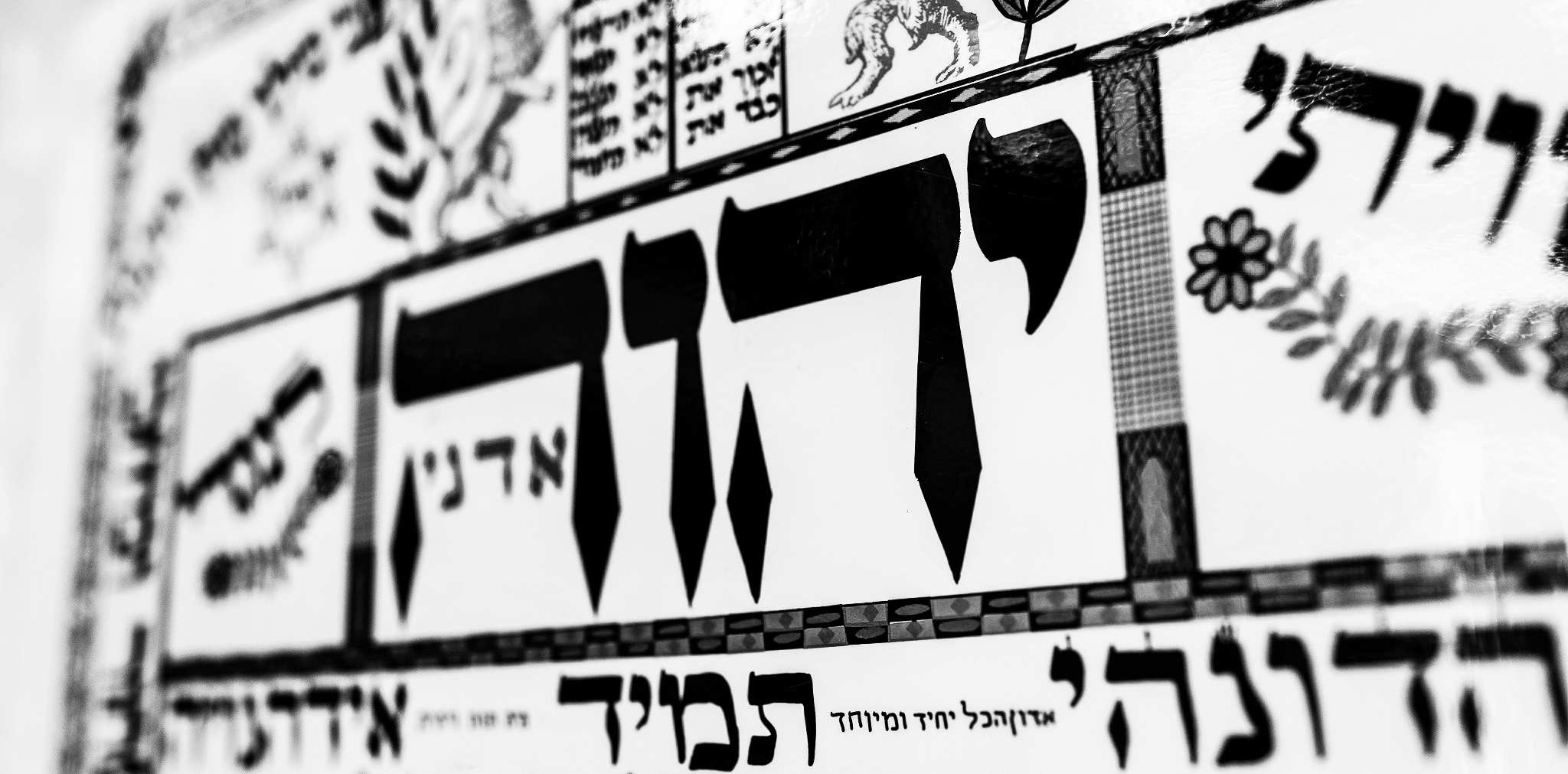
 “Be still and know that I am God…” (Psalm 46:10). This is something you must do; you must quiet your heart to know the Divine Presence. Therefore “set the Lord always before you” (Psalm 16:8) and refuse anxious thoughts that weigh in upon you, creating pressure and “dis-ease.” Quieting your heart allows you to hear the holy whisper: “It is I; do not be afraid…” Once the storm of fear dissipates, you can access the truth of God. As the Spirit says, “In returning and rest you shall be saved; in quietness and in trust shall be your strength” (Isa. 30:15).
Worry is a place of exile and pain. Since God’s Name (יהוה) means “Presence” and “Love,” being anxious is to practice the absence of God’s presence instead of practicing his presence… A divided house cannot stand. Where it is written, “cast all your anxiety on him because he cares for you” (1 Pet. 5:7), the word translated “anxiety” comes from a verb that means to divide into pieces. Bring your brokenness to God – including those distractions that make you ambivalent and afraid – to receive God’s healing for your divided heart.
“Be still…” Note that the verb translated “be still” (i.e., rapha: רפה) means to “let go,” to stop striving, and to surrender everything to the care of God (Rom. 8:28). “Being still” means letting go of your “need” to control the world. Relax your hold and rely on God’s care for your life instead, without “taking thought” for tomorrow and its concerns (Matt. 6:34). The past is gone, after all, and the future is God’s business: all you have is the present moment to call upon our Lord. Be faithful in the present hour, then, asking God for the grace and strength you need to endure yourself and engage the task at hand. In this way you will experience the peace of God “which surpasses all understanding” (Phil. 4:7).
Walking with God isn’t just a matter of “head education,” but also of “heart education,” and these two must always go together as Spirit and Truth (John 4:23). Head education seeks knowledge primarily as a means of defining what you believe (emunah); heart education, on the other hand, centers on fear, or rather, on overcoming your fear by trusting in God’s love and healing grace (bittachon). When you accept that you are accepted despite yourself, you are delivered from the need to defend yourself. You can let go, quit denying who you are, and accept God’s unconditional care for your life – regardless of the state of the world. When your heart learns to “be still,” you can know that the Lord your God reigns over all things!
“Be still and know that I am…” Prayer is a type of listening (shema), a turning back to know the message of God’s love and hope in Messiah. The word “teshuvah” (תְּשׁוּבָה) means an answer or response to a question. God’s love is the question, and the heart’s response is the answer. Some of us may find it difficult to trust, to open our heart to receive grace and kindness. For those wounded by abandonment, it can be a great struggle to hear the voice of God calling you “beloved,” “worthy,” “valued,” and “accepted.” When you find faith to receive God’s word of love, however, your heart comes alive and you begin to heal… Yeshua speaks words of comfort: “Blessed are those who have not seen and yet still believe.”
Hebrew Lesson:

- Psalm 46:10 Hebrew Page (pdf)


 Recall that after Jacob had received the (

 If you have read the gospels, you are surely familiar with a disciple of Yeshua named “Thomas Didymus,” sometimes referred to as “Doubting Thomas.” Recall that when Thomas had first heard the testimony of the other disciples that Yeshua was raised from the dead, he was apprehensive and vowed to suspend his judgment until he had sufficient evidence to believe the matter for himself: “Unless I see the wounds from the nails in his hands, and put my finger into the wounds from the nails, and put my hand into his side,” he said, “I will never believe it!” (John 20:25). You know the rest of the story. When Yeshua later appeared to the disciples and this time Thomas was present, he said to him: “Put your finger here, and examine my hands. Extend your hand and put it into my side. Do not be become faithless, but believe” (John 20:27).
 In our Torah portion for this week,
 All of us have unhealed parts, “hidden faults” (נסתרות) of which we are not fully aware. “Blind spots.” Therefore king David prayed, “Who can discern his errors? cleanse me from secret faults” (Psalm 19:12). We are cleansed by confession, that is, by looking within our hearts to uncover deeper motivations… If we are honest with ourselves we may discover, for example, that we are angry or fearful people, despite how we otherwise wish to regard ourselves. If you find yourself unable to let something go, for instance, some pain or failure of the past, remind yourself that you must do so if you want to move on with your life. Focusing on how things could have been different is to be enslaved to the past. The goal of teshuvah (repentance) is to turn us back to God for life, but to do this, we must be be willing to let go of what makes us sick.
 Heaven and earth touch in innumerable ways. Every day we are given opportunity to turn to God and find life. The sages have said that the sun is red in the morning because it passes by the roses of the garden of Eden, and at sunset because it passes by the gate of Hell (Bava Batra 84a). The tender mercies of the Lord are renewed every morning, and for that reason we should turn to God when we first open our eyes to the light of the new day and say: Modeh ani lefanekha Adonai (מודה אני לפניך יהוה), “thank you, O Lord, for another opportunity to reach out to you for life.” Amen.
 How we choose to deal with trouble and suffering (i.e., tzuris) makes all the difference. We may be tempted to bitterness over our lives, but then what? To paraphrase Soren Kierkegaard, the way of life is “how” more than it is “what.” You may be powerless to control reality, but you are nevertheless responsible for how you respond to it. Check your attitude. Do you chose to live in lament over a healing that has not yet happened, or perhaps regard yourself as a hapless victim? Or will you attempt to justify your suffering as a means of personal atonement, accepting it passively as a “good child” or martyr? Does your suffering stretch your heart, or does it cause you to shrink back in fear or self-pity?
 Part of the meaning of teshuvah (i.e., “repentance”), at least for some of us, is learning to trust and believe in love…. If you were abandoned as a child, for instance, you were deprived of the security, nurture, and basic human connection you needed to partake in love. Instead of acquiring a sense of belonging and acceptance your soul desperately needed, you inherited a sense of shame that taught that you were inherently unlovable and unworthy. Consequently, as you grew up, you may have found it difficult to trust or ask others for help; you might have turned inward, relying only on yourself, protecting yourself from further pain. You may have became lonely, filled with sadness, anger, and fear. Ironically and tragically, as you protected yourself from abandonment you made your heart hard and numb, and that led to the abandonment of yourself….
