From our Torah for this week (i.e., Ki Tavo) we read: “Cursed is anyone who does not uphold the words of this Torah to do them” (Deut. 27:26). This is because God is God, ultimate reality is non-negotiable, and we are entirely and eternally accountable for all that we do (Matt. 12:36; Heb. 4:13). “Each person’s deeds will become manifest, for the Day will disclose it, because it will be revealed by fire, and the fire will test what sort of deeds each one has done” (1 Cor. 3:13). There is a Scroll that attests the reality of all truth, and the life of every soul created by God is recorded therein (Rev. 20:12).
We are forbidden to add or subtract from Torah, since that is to refashion God’s message into one of our own understanding (Deut. 4:2). Reading the tochachah or “rebuke” in our portion (i.e., Deut. 28:15-68) is difficult and painful, though it serves as a bitter medicine to wake us up from our lethal coma. In that sense the tochechah is a great blessing, since it shocks us into experiencing the “gravity of God’s grace.” This is why Yeshua proclaimed grave warnings about the dangers of forfeiting life and thereby “receiving” hell… Sin is a lethal problem, and we must turn to God for healing or we will die.
Should followers of Yeshua observe the festival of Rosh Hashanah? Surely you know my answer, chaverim, but I thought I’d provide a few reasons why we observe this special time for the sake of our Christian friends who might not understand the importance of the moedim(appointed times). What follows is a “short list” of reasons, though a lot more could be said on this topic of course.
First, the LORD God is indeed the King of all the earth, our Creator and Redeemer. He is Melech Gadol al-kol-ha’aretz, (מֶלֶךְ גָּדוֹל עַל־כָּל־הָאָרֶץ), a “great King over all the earth” (Psalm 47:2). Though Christians should acknowledge His righteous rule and Kingship at all times, Rosh Hashanah is a “sanctified reminder” of God’s creative authority in our lives. Yeshua (Jesus) is called the Mashiach (מָשִׁיחַ), a term that denotes His Kingly dignity and royalty (this idea is unfortunately obscured by the Greek word “Christ”). Yeshua is also borei Olam – the Creator and Sustainer of all creation (Col. 1:16). He is coming to rule and reign from Jerusalem (Zion) in the near future. Christians will be judged according to their deeds of service (2 Cor. 5:10) and the world system (and Satan) will be judged during the Great Tribulation period that precedes the Second Coming. Just as the heavenly shofar was sounded from Sinai, so it will be one day sounded from Zion (Isa. 27:13).As the only true King and Judge, God indeed has a Sefer HaChayim (Book of Life) as well as a Sefer Ha-Metim (Book of Death). The Scriptures clearly warn that on the Day of Judgment to come, anyone’s name not found written in the Book of Life will be thrown into the lake of fire (Rev. 20:15). The Kingship of our LORD should be of great interest to those who wish to honor Him…
The Torah divides the calendar into two symmetrical halves: the Spring and the Fall, indicating the two advents of Messiah. The Biblical year officially begins during the month of the Passover from Egypt (called Rosh Chodashim, see Exod. 12:2), and the spring holidays of Passover, Unleavened Bread, and Firstfruits both recall our deliverance from Egypt and also our greater deliverance given by means of the death, burial, and resurrection of the Messiah, the great Passover Lamb of God. Yeshua was crucified on erev Pesach, buried during Unleavened Bread, and was resurrected on Yom Habikkurim (Firstfruits). The holiday of Shavuot (i.e., “Pentecost”) both commemorates the revelation of the Torah at Sinai as well as the revelation of the Ruach HaKodesh (Holy Spirit) at Zion, in fulfillment of the promise given by our Lord….
The intermediate months of summer end with the advent of the sixth month of the calendar, called the month of Elul, which recalls the time Moses interceded on behalf of Israel after the sin of the Golden Calf. To commemorate this time of our history, we likewise focus on teshuvah (repentance) in anticipation of Rosh Hashanah (i.e., Teruah) and especially in anticipation of Yom Kippur, the great “Day of Atonement.” In Jewish tradition the 30 days of Elul are combined with the first ten days of the seventh month (called the “Days of Awe”) to set apart “Forty Days of Teshuvah” leading up to the Day of Forgiveness for Israel. Immediately following Yom Kippur, the mood changes as we begin preparing for a joyous week-long celebration called Sukkot (i.e., “Tabernacles”) that concludes with the holiday of Simchat Torah.
Just as the spring festivals (Passover, Firstfruits, and Shavuot) have been perfectly fulfilled in the first coming of Yeshua as Mashiach ben Yosef, so the fall festivals (Rosh Hashanah, Yom Kippur, and Sukkot) will be fulfilled in His second coming as Mashiach ben David. Since the first advent fulfilled all of the spring mo’edim to the smallest of details, we believe that His second advent portends similar fulfillment as revealed in the fall mo’edim. The fall festivals therefore prophetically foretell the Day of the LORD, the second coming of Yeshua, the great national turning of the Jewish people, and the establishment of the reign of the Messiah upon the earth during the Millennial Kingdom in the world to come.
From our Torah portion for this week (Ki Tavo) we read: “And all these blessings shall come upon you and overtake you, if you hear (shema) the Voice of the LORD your God” (Deut. 28:2). The language here is unusual, as if these blessings would seize you like an army takes an enemy stronghold. The sages comment that God’s blessings can “overtake” you in a way that may hide their true purpose for your good (Rom. 8:28). At such times we do not understand they are a concealed mercy (רַחֲמִים נִסְתָר) designed for our benefit. Therefore king David affirmed his confidence despite being surrounded by trouble. Where it is written, “Surely goodness and mercy shall follow me all the days of my life” (Psalm 23:6), the verb translated “shall follow me” (i.e., יִרְדְּפוּנִי) comes from a root word that means “to pursue,” as a hunter chases after his prey. David was sure that God’s lovingkindness would “hound” him as he made his way through this world – even in the dark places, even in “the valley of the shadow of death” (בְּגֵיא צַלְמָוֶת) – where God’s rod and staff would there comfort him and shepherd his way (Psalm 23:4). Therefore we we pray: “May your love, O LORD, be upon us, as we hope in You.”
…
Whatever the heart seeks, it will find. We are constantly “asking, seeking, and knocking” (Matt. 7:7), even if we are often unaware of our heart’s search. The one who pursues righteousness will find it, just as evil will come to the one who searches after it (Prov. 11:27). As it is written, “Those who worship worthless idols forsake the love (i.e., chesed: חֶסֶד) that could be theirs” (Jonah 2:8). David understood that as he pursued God, God’s love would pursue him; as we seek, so we are sought by God; as we draw near to God, so He will draw near to us (James 4:8).
The prophet Hosea likewise cried out: “Let us know; let us press on to know (i.e., נִרְדְּפָה, “pursue after”) the LORD; His going out is sure as the dawn; He will come to us as the showers, as the spring rains that water the earth” (Hos. 6:3). May God help us pursue him be’khol levavkha – with all our heart – because He has promised, “You will seek me and find me, when you seek me with all your heart” (Jer. 29:13). And may the love of the LORD indeed be upon us, even as we put our hope in Him. Amen.
Perhaps you (like me) once learned Psalm 19:7 as, “The law of the LORD is perfect, converting the soul.” However, the Hebrew text might better be translated as, “The instruction (i.e., Torah) of the LORD is perfect, returning the soul.” This is the message of teshuvah (תְּשׁוּבָה), or “repentance,” of course. We turn away from ourselves to discover that only the love of God given in Yeshua gives life to our dead hearts (Mark 1:15). Teshuvah is therefore first of all a matter of faith, of trusting in the miracle of God. And though it is indeed a great gift from heaven, it requires that we pass through the “narrow gate” of humility by confessing the truth about who we are (Matt. 7:13). We turn away from our pride; we acknowledge our inner poverty, our neediness, and we mourn over the loss and hurt caused by our sin. Teshuvah turns us away from our attempts to defend or justify ourselves and instead turns to God to heal our separation from love (Rom. 8:3-4). The miracle of love buries our old nature and transforms us into a new creation (2 Cor. 5:17).
In this audio podcast I discuss the the 40 day “Season of Teshuvah” or repentance leading up to the Jewish High Holidays as well as the weekly Torah portion, parashat Ki Tavo, which includes instructions for the people to ratify the Sinai covenant in the promised land by means of a special covenant renewal ceremony performed in the valley between Mount Ebal and Mount Gerazim. During this ceremony blessings for obedience and curses for disobedience would be declared, and Moses warned the people by providing a seemingly endless description of terrible consequences that would befall the Jewish people if they disobeyed the terms of the Sinai covenant (Deut. 28:15-68).
When asked how many commandments are in the Torah, most Jews will answer 613, based on Jewish tradition (the number 613 is sometimes called “taryag” (תריג), an abbreviation for the letters Tav (400) + Resh (200) + Yod (10) + Gimmel (3) = 613). Despite several attempts made over the centuries, however, there has never been a definitive list of these commandments, and of those who tried to compile such, no two agree… Some say the number 613 comes from a fanciful midrash that teaches that since there are 365 days in a year (corresponding to the 365 negative commandments) and 248 “parts” of the body (corresponding to the positive commandments), each day we should use our body to serve God. Regardless of the exact count, however, the Talmud followed the Apostle Paul by understanding all the Torah’s commandments to be derived from the Ten Commandments given at Sinai, the most basic of which is the very First Commandment, namely, “I AM the LORD your God (אָנכִי יְהוָה אֱלהֶיךָ) who brought you out of Egypt, out of the house of slavery” (Exod. 20:2). This foundational commandment was later restated by the prophet Habbakuk as: וְצַדִּיק בֶּאֱמוּנָתוֹ יִחְיֶה / “The righteous person will live by faith in God” (Hab. 2:4; Gal. 3:11; Heb. 10:38). Indeed, Yeshua taught us the law of faith in God’s love, which preempts, overrules, and informs all the others…
One of the great Hebrew names of God is El Elyon (אֵל עֶלְיוֹן), often translated as “God Most High.” The name first appears in the Torah regarding the mysterious figure of Malki-Tzedek (מַלְכִּי־צֶדֶק), the timeless king and priest of Zion who served “bread and wine” to our father Abraham – alluding to the sacraments later used to commemorate our redemption (Gen. 14:18). As the timeless king and priest of God, Malki-Tzedek is a “theophany,” or a revelation of the LORD our God Yeshua before He emptied Himself and made his descent to this world (Phil. 2:7; Heb. 7:3). Yeshua is our great King of Kings and High Priest of the New Covenant, a better covenant that restores the kingship and priesthood back to God Himself (Heb. 7:12).
…
Now the Hebrew term “Elyon” itself (עֶלְיוֹן) comes from a root word (עָלָה) that means “to ascend” or “to lift up.” For instance, an “olah offering” (עלָה) is a whole burnt offering that ascends upward to heaven, and “aliyah” (עֲלִיָּה) means “going up” to the land of Israel. The word “Elyon,” then, expresses the truth that the LORD is the Resurrected One who overcame all the powers of hell and utterly vanquished death’s power. In other words, Elyon is a name for the LORD our God Yeshua.
The sages say that Moses wrote Psalm 91 as he dwelt in the secret place (סֵתֶר) of the Most High God, in the “midst of the dark cloud” (Exod. 24:18), a place of sacred and holy concealment. The thick clouds are a “hiding place” for him (Job 22:14). Notice that the one who “abides” in the secret of the Most High dwells in an ascended place of rest – being lifted up above the surrounding madness of this fallen world of flux and shadows. The Hebrew word means to lodge or to “sleep” (לִין), connecting it metaphorically with death and resurrection. By dwelling in the death and resurrection of Yeshua, God will shield you with His Presence and make evil powerless before you.
Since God hides Himself in this world (Isa. 45:15), we must humbly seek His face to enter into the place of His holy concealment in all things. God is Elyon – High above – but He dwells “with the lowly and the broken of heart” (Isa. 57:15). Therefore the LORD our God is called Shaddai (שַׁדַּי) – our Sustainer, Provider, Refuge, and Home. Just as we can be surrounded by the “shadow of death” (tzal mavet), so we can be surrounded by the “shadow of Shaddai” (tzal Shaddai). Like a powerful eagle brooding over her chicks, so Shaddai covers you with wings of protection (Psalm 91:4).
When you “abide” in the secret of Elyon – the Ascended One – you are concealed by the dark clouds of His Glory, and the Presence of Shaddai overshadows you… The LORD will save you from the ensnaring trap and from the devastating pestilence (Psalm 91:3). By abiding in the truth that God’s Presence pervades all things at all times – you become a “stranger” (גֵּר) with the LORD in this world, a “sojourner” (תּוֹשָׁב) who awaits the recompense of the wicked and the healing of the world at the end of the age. “You will tread on the lion and the adder; the young lion and the serpent you will trample underfoot” (Psalm 91:13).
Our Torah reading for this week (i.e., parashat Ki Teitzei) identifies 74 of the Torah’s 613 commandments (more than any other), which again invites the question of whether we are obligated to follow the law code of Moses or not… In this Shavuah Tov broadcast, I explore how we are to understand the law in light of the salvation given in Yeshua the Messiah. I hope you will find it both provocative and helpful.
In last week’s Torah reading (i.e., Shoftim), Moses defined an extensive system of justice for the Israelites and pointed to the coming Messiah who would be the rightful King of Israel: “The LORD your God will raise up for you a prophet like me from among you, from your brothers — it is to him you shall listen” (Deut. 18:15). In this week’s portion (i.e., parashat Ki Teitzei: כי־תצא), Moses returns to the immediate concern of life in the promised land by providing additional laws to be enforced regarding civil life in Israel. In fact, Jewish tradition (following Maimonides) identifies no less than 74 of the Torah’s 613 commandments in this portion (more than any other), covering a wide assortment of rules related to ethical warfare, family life, burial of the deceased, property laws, the humane treatment of animals, fair labor practices, and honest economic transactions.
Of particular interest to us is the law regarding capital offenses and the instruction that one who was executed and “hanged on a tree” (עַל־עֵץ) is under the curse of God (Deut. 21:22-23). According to the Talmud (Nezakim: Sanhedrin 6:4:3), the Great Sanhedrin (סַנְהֶדְרִין גְדוֹלָה) decided that “a man must be hanged with his face towards the spectators” upon a wooden stake, with his arms slung over a horizontal beam. It should be noted that while this is technically not the same thing as the gruesome practice of Roman crucifixion, the reasoning based on this verse was apparently used to justify the execution of Yeshua (Mark 15:9-15; John 19:5-7; 15). The exposed body was required to be buried before sundown to keep the land from being defiled. Besides the shame of this manner of death, the one so executed would be unable to fall to their knees as a final act of repentance before God, thereby implying that they were under the irrevocable curse of God (קִלְלַת אֱלהִים).
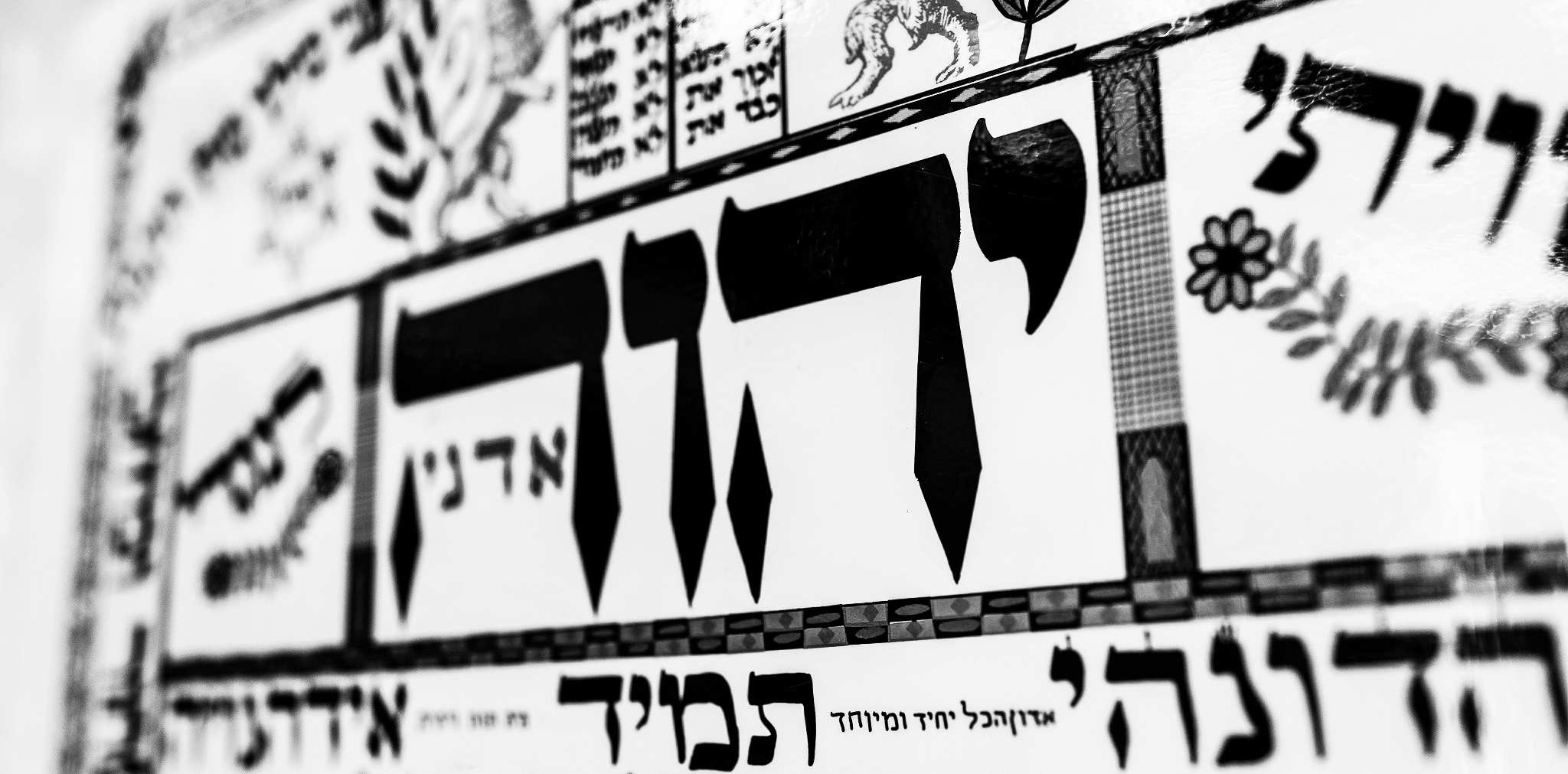
 From our Torah for this week (i.e., Ki Tavo) we read: “Cursed is anyone who does not uphold the words of this Torah to do them” (Deut. 27:26). This is because God is God, ultimate reality is non-negotiable, and we are entirely and eternally accountable for all that we do (Matt. 12:36; Heb. 4:13). “Each person’s deeds will become manifest, for the Day will disclose it, because it will be revealed by fire, and the fire will test what sort of deeds each one has done” (1 Cor. 3:13). There is a Scroll that attests the reality of all truth, and the life of every soul created by God is recorded therein (Rev. 20:12).

 The Torah divides the calendar into two symmetrical halves: the

 Perhaps you (like me) once learned Psalm 19:7 as, “The law of the LORD is perfect, converting the soul.” However, the Hebrew text might better be translated as, “The instruction (i.e., Torah) of the LORD is perfect, returning the soul.” This is the message of teshuvah (תְּשׁוּבָה), or “repentance,” of course. We turn away from ourselves to discover that only the love of God given in Yeshua gives life to our dead hearts (Mark 1:15). Teshuvah is therefore first of all a matter of faith, of trusting in the miracle of God. And though it is indeed a great gift from heaven, it requires that we pass through the “narrow gate” of humility by confessing the truth about who we are (Matt. 7:13). We turn away from our pride; we acknowledge our inner poverty, our neediness, and we mourn over the loss and hurt caused by our sin. Teshuvah turns us away from our attempts to defend or justify ourselves and instead turns to God to heal our separation from love (Rom. 8:3-4). The miracle of love buries our old nature and transforms us into a new creation (2 Cor. 5:17).

 One of the great Hebrew names of God is El Elyon (אֵל עֶלְיוֹן), often translated as “God Most High.” The name first appears in the Torah regarding the mysterious figure of Malki-Tzedek (מַלְכִּי־צֶדֶק), the timeless king and priest of Zion who served “bread and wine” to our father Abraham – alluding to the sacraments later used to commemorate our redemption (Gen. 14:18). As the timeless king and priest of God, Malki-Tzedek is a “theophany,” or a revelation of the LORD our God Yeshua before He emptied Himself and made his descent to this world (Phil. 2:7; Heb. 7:3). Yeshua is our great King of Kings and High Priest of the New Covenant, a better covenant that restores the kingship and priesthood back to God Himself (Heb. 7:12).


 In last week’s Torah reading (i.e.,