Our Torah portion for this week (Vaetchanan) includes some of the most foundational texts of the Jewish Scriptures, including the Ten Commandments, the Shema (the duty to love God and study His Torah), and the commandments of tefillin and mezuzot. In addition, in this portion Moses predicts the worldwide exile and the eventual redemption of the Jewish people in acharit hayamim (the prophesied “End of Days”).
We always read this portion of the Torah on the Sabbath that follows Tishah B’Av, called Shabbat Nachamu (שבת נחמו), the “Sabbath of Comfort,” since the haftarah speaks about God’s future consolation in the coming kingdom of God (“Comfort ye, comfort ye my people [Isa. 40:1]). With the advent of this special Sabbath, we have just seven weeks to prepare for the new year (i.e, Yom Teruah) and the High Holidays – a “jubilee” season that heralds the return of Yeshua… In addition, on the 15th day of the month of Av we will celebrate chag ha-ahavah (חַג הָאַהֲבָה), or “the holiday of love.” Since it marks the “last” festival of the Jewish year, prophetically the 15th of Av (called Tu B’Av) pictures our marriage to the Lamb of God (Seh Elohim), the LORD Yeshua our beloved Messiah. On a soon-coming day those who belong to the LORD and are faithful to follow His ways will be blessed with the unspeakable joy of an eternally intimate relationship with Him. This is heaven itself – to be in the Presence of the LORD and to be regarded as His beloved (Rev. 19:6-9).
Yeshua foretold the destruction of the Second Temple when he lamented: “O Jerusalem, Jerusalem, the city that kills the prophets and stones those who are sent to it! How often would I have gathered your children together as a hen gathers her brood under her wings, and you were not willing! Behold, your house is left unto you desolate. For I tell you, you will not see me again, until you say, Barukh Haba Ba’shem Adonai: ‘Blessed is he who comes in the name of the Lord.’ Yeshua then left the Temple and was going away, when his disciples came to point out to him the buildings of the Temple. But he answered them, “You see all these, do you not? Truly, I say to you, there will not be left here one stone upon another that will not be thrown down.” (Matt. 23:37-24:2). Note well that we are not awaiting the construction of the “Third Temple” which will be hastily erected during the time of Jacob’s Trouble during the Great Tribulation, but we await the “Fourth Temple,” that is, the Temple that will be built by Tzemach Tzaddik (צֶמַח צַדִּיק), namely, the Messiah the Son of David (מָשִׁיחַ בֶּן־דָוִד) who will come again to establish the Kingdom of Zion upon the earth in fulfillment of the promises of God (Zech. 6:12; Jer. 23:5).At that glorious time the mourning of the Jewish people will forgotten, as it is written: “Thus says Adonai Tzeva’ot (יהוה צְבָאוֹת): The fast of the fourth month (Tammuz), and the fast of the fifth month (Tishah B’Av), and the fast of the seventh month (Gedaliah), and the fast of the tenth month (Asarah b’Tevet), will be to the house of Judah for joy and rejoicing and for pleasant appointed seasons. Therefore love truth and peace” (Zech. 8:19). In that coming day, “The LORD will be king over all the earth. On that day the LORD will be one and his name one.”
…
…
As I’ve mentioned repeatedly over the years, the word “Zion” (i.e., tziyon: צִיּוֹן) is mentioned over 160 times in the Scriptures. That’s more than the words faith, hope, love, and countless others… And since Zion is a poetic form of the word Jerusalem, the number of occurrences swells to nearly 1,000! It is therefore not an overstatement to say that God Himself is a Zionist…. “Out of Zion, the perfection of beauty, God shines forth” (Psalm 50:2). Zion represents the rule and reign of God in the earth and is therefore synonymous with the Kingdom of God. The entire redemptive plan of God — including the coming of the Messiah Himself and our very salvation — is wrapped up in the concept of Zion. It is the “historiography” of God — His “philosophy of history,” if you will.
In a sense, the great vision of Zion is the heart of the Gospel message and the focal point of God’s salvation in this world. Zion represents our eschatological future — our home in olam haba (the world to come). Even the new heavens and earth will be called Jerusalem — “Zion in her perfection” (Rev. 21). “This is what Adonai Tzeva’ot says: I am very jealous for Jerusalem and Zion, but I am very angry with the nations that feel secure” (Zech. 1:14-15). “For Zion’s sake I will not keep silent, for Jerusalem’s sake I will not remain quiet, till her righteousness shines out like the dawn, her salvation like a blazing torch” (Isa 62:1). “The builder of Jerusalem is God, the outcasts of Israel he will gather in… Praise God, O Jerusalem, laud your God, O Zion” (Psalm 147:2-12).
We are presently living in the “days of the Messiah,” just before the time of great worldwide tribulation that will lead to the prophesied acharit hayamim (אַחֲרִית הַיָּמִים), or the “End of Days.” This is the age in which the spirit of the Messiah is available to all. These are “days of God’s favor” that are ending soon. According to traditional Jewish sources (Pesachim 54b; Midrash Tehilim 9:2), no one knows the exact time when the Messiah will appear — though there are some hints. The condition of the world during the end of days will be grossly evil (2 Pet. 3:3; 2 Thess. 2:3-4, 2 Tim. 3:1-5). The world will undergo various forms of tribulation, collectively called chevlei Mashiach (חֶבְלֵי הַמָּשִׁיחַ) – the “birth pangs of the Messiah” (Sanhedrin 98a; Ketubot, Bereshit Rabbah 42:4, Matt. 24:8). Some sages say the birth pangs will last 70 years, with the last 7 years as the most intense period — the “Time of Jacob’s Trouble” / עֵת־צָרָה הִיא לְיַעֲקב (Jer. 30:7). Just before the second advent of Yeshua, a period of tribulation and distress for Israel will occur. After this “great tribulation” period, however, Yeshua will usher in Yom YHVH, the “Day of the LORD,” and the sabbatical millennium, the 1000 year reign of King Messiah will commence (Rev. 20:4).
..
…
Although “Day of the LORD” (i.e., yom Adonai: יוֹם יְהוָה) is often associated with Tishah B’Av and the catastrophic destruction of the Jewish Temple, the words of the prophets were only partially fulfilled, and there awaits another Day coming when God will terribly shake the entire earth (Isa. 2:19). “For the great day of their wrath has come, and who can stand?” (Rev. 6:17). The prophet Malachi likewise says: “‘Surely the day is coming; it will burn like a furnace. All the arrogant and every evildoer will be stubble, and that day that is coming will set them on fire,’ says the LORD Almighty. ‘Not a root or a branch will be left to them'” (Mal. 4:1). For those who are godless, the great Day of the LORD is a time of horrific judgment, but for those who belong to the LORD, it represents a day of victory and great blessing. Regarding that day the prophet Malachi said, “Then you will trample down the wicked; they will be ashes under the soles of your feet on the day when I do these things” (Mal. 4:3).
Ultimately the Great Tribulation period is purgative and healing (sometimes called yissurim shel ahavah, or “the troubles of love”). The prophets wrote that Zion will go through labor and then give birth to children (Isa. 66:8). Thus the Vilna Gaon wrote that the geulah (national redemption) is something like rebirth of the nation of Israel. This accords with the prophetic fulfillment of Yom Kippur as the Day of Judgment and time of Israel’s national conversion. In the verse from prophet Jeremiah regarding the “Time of Jacob’s Trouble,” it’s vital to see the goal in mind – “yet out of it he is saved” (וּמִמֶּנָּה יִוָּשֵׁעַ). When Yeshua returns to Zion, all Israel will be saved (Rom. 11:26). The sages note that childbirth is a time of radical transition and struggle for the baby — from the time of relatively peaceful existence within the womb into the harsh light of day — and therefore a similar transition between this world and the Messianic world to come is about to take place…
Our Torah reading for this week (i.e., parashat Devarim) is the very first portion from the Book of Deuteronomy (i.e., Sefer Devarim: ספר דברים), which is always read on the Sabbath that immediately precedes the somber holiday of Tishah B’Av (תשעה באב). In Jewish tradition, this special Sabbath is called “Shabbat Chazon” (שַׁבַּת חַזוֹן), “the Sabbath of Vision,” since the Haftarah that is read (i.e., Isa. 1:1-25) comes from the vision of the prophet Isaiah (ישעיהו הנביא) regarding the destruction of the Holy Temple in Jerusalem. In both Jewish tradition and liturgy, teshuvah (repentance) and viduy (confession of sin) are the themes of this preparatory Sabbath.
From our Torah portion this week (i.e., Masei) we read: “These are the journeys of the people of Israel (מַסְעֵי בְנֵי־יִשְׂרָאֵל) who went out of the land of Egypt…” (Num. 33:1). The sages ask why the word “journeys” (plural) was used here, since only the first journey – from Rameses to Sukkot – literally marked “yetziat mitzrayim,” the going out of Egypt – and the other journeys were outside of Egypt, in the desert. They answer that the journey out of Egypt goes beyond the physical land into the spiritual- an exodus from captivity to the world into the realm of the spirit. As has been said, it took the LORD 40 days to get Israel out of Egypt, but it took 40 years to get Egypt out of Israel… The “journey out of Egypt” is therefore a journey of smaller journeys that leads to deliverance.
Along the way we are repeatedly tested. The “desert experience” reveals what is hidden in our hearts… The murmuring and rebellion of the Israelites in the desert is our own, and our challenge is to find healing from our fears. Anger, doubt, boredom, cravings, and outright rebellion are symptoms of a deeper problem, and to change we must first confess our inner poverty, neediness, and emptiness (James 5:16). When we stop making excuses we can learn to trust in God’s provision for our lives; we will taste of the heavenly manna and be satisfied; we will be delivered from our fears by be filled with God’s love. The impulses that sought to lead us away from God will no longer be able to pretend to be the truth, since God’s peace and love will direct the heart. We will begin to take hold of the promise…
Be encouraged my fellow sojourners walking by faith through the desert of this present world. The Torah uses a repetitious expression, “Sanctify yourselves and you shall be holy” (הִתְקַדִּשְׁתֶּם וִהְיִיתֶם קְדשִׁים) (Lev. 11:44) because when we make an effort — no matter how feeble at times — to draw near to the LORD, He will draw near to us… Indeed the walk of faith is one of ascent and descent and ascent again: It’s often “two steps forward, one step back…” It is a long road, a process, as we learn to obey and seek to grow closer to God. Authentic repentance doesn’t imply that we will never sin or make any mistakes, of course, but rather means that the oscillating pattern of “up, then down, then up” is the basic way we walk. Our direction has changed for good; we have turned to God for life and hope. We now understand our sins in light of a greater love that bears them for us even as we draw ever closer to the One who calls us home…
This week we read a “double portion” of Torah to conclude Sefer Bamidbar, or “the Book of Numbers.” Our first Torah portion, parashat Mattot (מַטּוֹת, “tribes”), begins with the LORD giving laws regarding the making of vows (nedarim). After this, the Israelites were commanded to wage war against the Midianites for seducing the people to sin at the incident of “Baal Peor.” During the ensuing battle, the wicked sorcerer Balaam was killed, as well as five tribal kings of the land of Midian. Our second Torah portion, parashat Masei (מַסְעֵי, “journeys”), provides the boundaries of the land of Canaan that were to be initially occupied by the Israelites. Note that these borders are not the same as those described earlier to Abraham (see Gen. 15:18-21), since that area will be given to Israel only after our Messiah Yeshua returns to establish Zion during the Millennial Kingdom (see Ezek. 47:15-48:35). During that coming time, Jerusalem (i.e., Zion) will be the center of the earth and renamed as “Adonai Shammah” (יְהוָה שָׁמָּה), “the LORD is there.”
The Lord is likened to a potter and we are as clay in his hand (Isa. 64:8). Life on the “potter’s wheel” can be messy, unsettling, and sometimes excruciatingly hard, but it is God’s sovereign work to form your life according to his design and purposes….
Contrary to the assumption that the life of faith should always be triumphant, we all inevitably will experience various setbacks, pratfalls, troubles and sorrows in our lives. This does not mean that God does not care for us however, because on the contrary, this is by his design; a plan supervised by God’s love and blessing, and the afflictions we therefore encounter are part of his work for our good (Rom. 8:28; Heb. 12:6). We descend in order to ascend. It make seem counterintuitive, but the heart of faith gives thanks for all things – the good as well as the evil (see Job 2:10). We affirm: “This too is for the good,” yea, even in the midst of our struggle, no, even more — precisely in the midst of our struggle — for this, too, is for our good. Faith is the resolution to trust in the reality of God’s goodness even during hard times when we feel abandoned or lost (Isa. 50:10). The Lord uses the “troubles of love” (יִסּוּרֵי אַהֲבָה) for our good – to wake us up and cling to him all the more, since this is what is most essential, after all…
The traditional Jewish expectation of the Messiah (מָשִׁיחַ) was that he would be a great king of the line of David who would overthrow Israel’s enemies and establish the Kingdom of God upon the earth. This expectation was founded upon various promises written in the Torah of Moses as well as various oracles of the Hebrew prophets. For example, in the scroll of Isaiah it is written: “For unto us a child is born, unto us a son is given; and the government will be upon His shoulder: and his name will be called Wonderful, Counselor, Mighty God, Everlasting Father, Prince of Peace. Of the increase of his government and peace there will be no end, upon the throne of David and over his kingdom, to order it and establish it with judgment and justice from that time forward, even forever. The zeal of the LORD of hosts will perform this” (Isa. 9:6-7). On the face of it, this prophecy says that the Messiah would establish the Kingdom of David as an everlasting kingdom and that all the promises of Zion would be fulfilled: the Temple would be restored in Jerusalem; the exiles would be regathered; the world would experience peace and the knowledge of God would flow to the nations (for more on the Messianic expectation, see “As the Day draws Near“).
When Yeshua therefore proclaimed “Repent, for the Kingdom of God is at hand,” the Torah scholars and religious leaders of Israel wondered what he meant. Didn’t Moses say that God would one day raise up someone “like him” who would spectacularly lead the people? (Deut. 18:15). Didn’t the prophets say that Messiah would restore Israel to greatness beyond that known in the days of King Solomon? Would he not restore the Holy Temple? Gather in the exiles? Is it not written of the day of Messiah: “God will be King over all the world; on that day, God will be one and His Name will be one” (Zech. 14:9)?
In light of this, it’s understandable that the Pharisees and religious leaders were confused. This shouldn’t scandalize us, for a variety of reasons, not the least of which is that the prophets were regularly misunderstood and persecuted by the sages in Jewish history. Still, the sages missed the coming of Yeshua because there are two distinct pictures of Messiah given in the visions of the prophets. On the one hand, Messiah is portrayed as a great king, a deliverer, and a savior of the Jewish people who comes in triumph “in the clouds” (Dan. 7:13), but on the other he is depicted as riding a donkey, lowly and humble (Zech. 9:9), a suffering servant, born in lowliness, despised and rejected of men (Isa. 53). These two images of Messiah eventually lead to various oral traditions that there would be two Messiahs: “Messiah ben Joseph” (מָשִׁיחַ בֶּן־יוֹסֵף) and “Messiah ben David” (מָשִׁיחַ בֶּן־דָוִד).
When Yeshua said that the Kingdom of God was “at hand,” then, he clarified that this meant something more than the establishment of the kingdom of Zion on earth but further involved the sacrificial ministry of Messiah who would serve in a priestly function to atone for the sins of the people before the kingdom would be realized. This was alluded to in Torah itself with the offering of the Passover Lamb in Egypt as well as the need for blood sacrifices before the covenant was given to Israel at Sinai. In other words, just as Moses enacted the sacrifices before the establishment of the theocratic kingdom of Israel, so Yeshua would offer up himself as the LORD’s Suffering Servant to atone for the sins of his people and to establish the new covenant (Isa. 52:13-53:12; Jer. 31:31-34). “The kingdom of God does not come with observation, nor will people say ‘Here it is!” or ‘there it is!’ because the kingdom of God is to be within you” (Luke 17:20-21). The kingdom is a matter of the heart. The King was now present, at hand; and the LORD had prepared him a body to offer up so that his people would be made whole (Psalm 40:6-8; Heb. 10:5-9; Isa. 53:4-5).
Shalom friends. Our Torah reading this week honors Aaron’s grandson Pinchas (“Phinehas”), who, during the tragic rebellion at Baal Peor, zealously removed evil from Israel by driving a spear through a tribal prince who was brazenly cavorting with a Midianite princess in defiance of God’s law. On account of Pinchas’ zeal for the truth of Torah, God stopped the plague and Israel was delivered from destruction… As we will see, Pinchas reveals great truths about Yeshua the Messiah and how he became the mediator of the New Covenant of the LORD.
In addition to an overview of the Torah portion, I discuss the Three Weeks of Sorrow leading up to the somber holiday of Tishah B’Av as well as the significance of the Jewish holidays (mo’edim).
It’s tragic that many want to retaliate against those who have hurt them, clinging to their wounded pride and allowing bitterness to take root in their hearts. Holding grudges, harboring spite, and seething in anger are common and deadly sins. As psychologist Erich Fromm once astutely observed: “There is perhaps no phenomenon which contains so much destructive feeling as ‘moral indignation,’ which permits envy or hate to be acted out under the guise of virtue.”
Interestingly, the English word “resentment” literally means “feeling again,” alluding to the reliving of an offense, real or imagined, that instills an unforgiving attitude of the heart and mind that refuses to let go… “Anger and resentment are like drinking poisoned waters — and hoping the other person will die.”
Many wounded people live with “scar tissue” that surrounds their heart, making them feel numb and unwilling to open up and trust others. Their affections have become disordered and their ego rationalizes blaming others or seeking various forms of entitlement. “Turning off your heart” can mean suppressing any positive regard for others (empathy) while nurturing anger and self-righteousness, or it may mean withdrawing from others as a lifeless shell (both approaches vainly attempt to defend the heart from hurt). Although Yeshua always showed great compassion, especially to the wounded and broken in spirit (Isa. 42:3), He regularly condemned the “hardness of heart” (“sclero-cardia,” σκληροκαρδία) of those who opposed his message of healing and love.
Yeshua warned that transgressions were inevitable – and he warned of great sorrow that would come to those through whom they come (Luke 17:1) – but he did not fulminate against the deeds of the wicked as much as he focused on our need to forgive others when they sinned against us. Indeed, Yeshua considered our need to forgive to be one of the most crucial matters of life itself, a corollary of the gospel message itself.
Consider Peter’s response to Yeshua’s teaching about correcting a brother who sins against another (Matt. 18:15-20). When he asked how often he should forgive someone who had sinned against him, wondering if “seven times” was sufficient before he could justifiably “excommunicate” him (see Luke 17:3-4), Yeshua corrected him by saying, “not seven times, but seven times seventy times,” in effect saying that forgiveness was an ongoing attitude of the heart, unlimited in its scope and application…
To illustrate what he meant, Yeshua likened the kingdom of heaven to the reign of a king who took account of his servants, discovering one who owed him an enormous sum of money. The debtor was unable to pay so the king then ordered him to be sold, along with his wife, children, and all of his possessions. The servant threw himself to the ground and begged the king for mercy, saying, “O Lord, have patience with me and I will repay you everything.” The king, moved with compassion, then graciously forgave him his debt.
Some time later, however, the selfsame servant found a fellow servant who owed him some money and grabbed him by the throat, saying, “Pay me what you owe me!” In response his fellow servant threw himself to the ground and begged the man, saying, “O have patience with me and I will repay you everything.” But the man refused the appeal and had him thrown in prison until he repaid the debt.
When the king’s other servants understood what had been done, they were grieved and came before the king to tell him what had happened. The king then summoned the man and said, “O you wicked servant! I forgave you all that debt because you pleaded with me. Should you not also have had compassion on your fellow servant, just as I had pity on you?” The king then remanded him to the torturers until he should pay all that was due to him. Yeshua then concluded the parable by saying: “This is how my Heavenly Father will treat each of you unless you forgive your brother from the heart” (see Matt. 18:23-35).
Our Lord was warning us that if we do not forgive our brother “from the heart,” that is, sincerely and without dissimulation, we will hold the fires of resentment within us and consign ourselves to grave suffering. This is the “middah keneged middah” principle, “like for like,” and measure for measure: “as you do unto others, so will be done unto you.” Therefore we see that forgiveness is not “recommended” for a godly life, it is absolutely essential. Forgiving “from the heart” relieves the inner pressure and pain induced by resentment, and the anger will dissipate. Your tension will be gone and you will feel lighter and set free. As it is written: “With the merciful you will show yourself merciful, with the upright you will show yourself upright; with the pure you show yourself pure” (Psalm 18:25-26).
It is important to understand that forgiveness is not an attempt to rationally understand or “explain away” sin; nor does it try to reduce (or “deconstruct”) evil in “naturalistic” terms. No, forgiveness deals with spiritual reality, that is, behavior that violates God’s moral truth and law, and therefore the doer of moral evil is under divine judgment. God’s forgiveness is costly and never cheap. It is a “severe mercy” that cost him the sacrifice of his son to release us from the debt we owe. And it is a gift, a sacrifice freely offered to repay what the sinful person owes. Forgiveness is therefore a conscious decision – an act of the will – that releases the sinful person from their guilt and lets go of any desire for revenge.
Because “we cannot give what we do not have,” the ability to forgive comes from something outside of ourselves, namely, the miracle of God’s life-giving grace accepted within the trusting heart. As we receive forgiveness from God, so we are obligated (and enabled) to practice forgiveness toward others. This is the “divine reciprocity,” the “balance” of a heart that is in genuine communion with Him. How we respond to God is revealed by how we treat others. What we do affects God’s heart, just as what God does affects our hearts.
Your forgiveness is your forgiveness: as you forgive, so you reveal your heart. What you do comes from what you are, not the other way around… We are first transformed by God’s grace and then come works of love. We are able to judge others mercifully, with the “good eye,” because we come to believe that we are beloved by God.
On the other hand, if we refuse to forgive others, we thereby subject ourselves to God’s judgment. Our indignation inwardly appeals to God as Elohim (אלהים), the Judge, rather than as YHVH (יהוה), the merciful Savior. But appealing to God for retribution for another’s sin is to fall under judgment ourselves (see Rom. 2:1-3). Hardening our heart locks us into a torture chamber of our own choosing. “This is how my Heavenly Father will treat each of you unless you forgive your brother from the heart” (Matt. 18:35). Refusing to be merciful to others is self-destructive and deeply painful. “Hurt people hurt people,” and bitterness invariably leads to desolation and hopelessness. “Despair has been called the unforgivable sin – not presumably because God refuses to forgive it, but because it despairs of the possibility of being forgiven” (Frederick Buechner).
Just as God graciously paid the price for our forgiveness, he expects us to pay the price of forgiving others as well. “The discretion of a man defers his anger; and it is his glory to pass over a transgression” (Prov. 19:11). In the parable mentioned above, Yeshua says the refusal to forgive your brother is wickedness: “O you wicked servant! I forgave you all that debt because you pleaded with me. Should you not also have had compassion on your fellow servant, just as I had pity on you?” (Matt. 18:32-33).
The consequences of retaining an unforgiving spirit are dreadful: the prison cell of resentment tortures the heart, extinguishes hope, and ultimately destroys the soul. “See to it that no one comes short of the grace of God, that no one be like a bitter root springing up and causing trouble, and through him many become defiled” (Heb. 12:15).
Deliverance from bitterness requires the miracle of God given in the gospel. What is at stake is the very salvation of your soul. If you find yourself unable to forgive, revisit the cross of Yeshua and behold how he bore your sin and paid for your freedom through his utmost agony and suffering. When we truly receive the miracle of grace it will show up in our interpersonal relationships (as well as in our relationship with ourselves).
Forgiveness is “easy” to those who have little to be forgiven, but the message of the cross is that we are in great need of healing, that our sinful heart is a disaster for us, and that we are desperately ashamed and in need of utmost reconciliation. In your struggle, ask the gracious Lord to increase your faith: “Lord, I believe: help my unbelief.” Go to the cross, with your sin and your need before you, and pour out your heart in confession. Trust your Heavenly Father to fulfill his will in your life. The Lord is able and willing to give you a new heart and a new spirit according to his sure promise. Amen.
The Spirit of God cries out, “choose life that you may live!” (Deut. 30:19), which implies that is our responsibility to believe in the Reality of God, to trust in his providential care, to affirm that “all is well and all manner of thing shall be well,” and to understand that our present struggle is designed by heaven to help us grow in grace and the knowledge of the truth (1 Pet. 3:16).
In this Daily Dvar podcast, I discuss the challenge of faith and how we can draw closer to the Lord despite the ambiguity and challenges we regularly face.
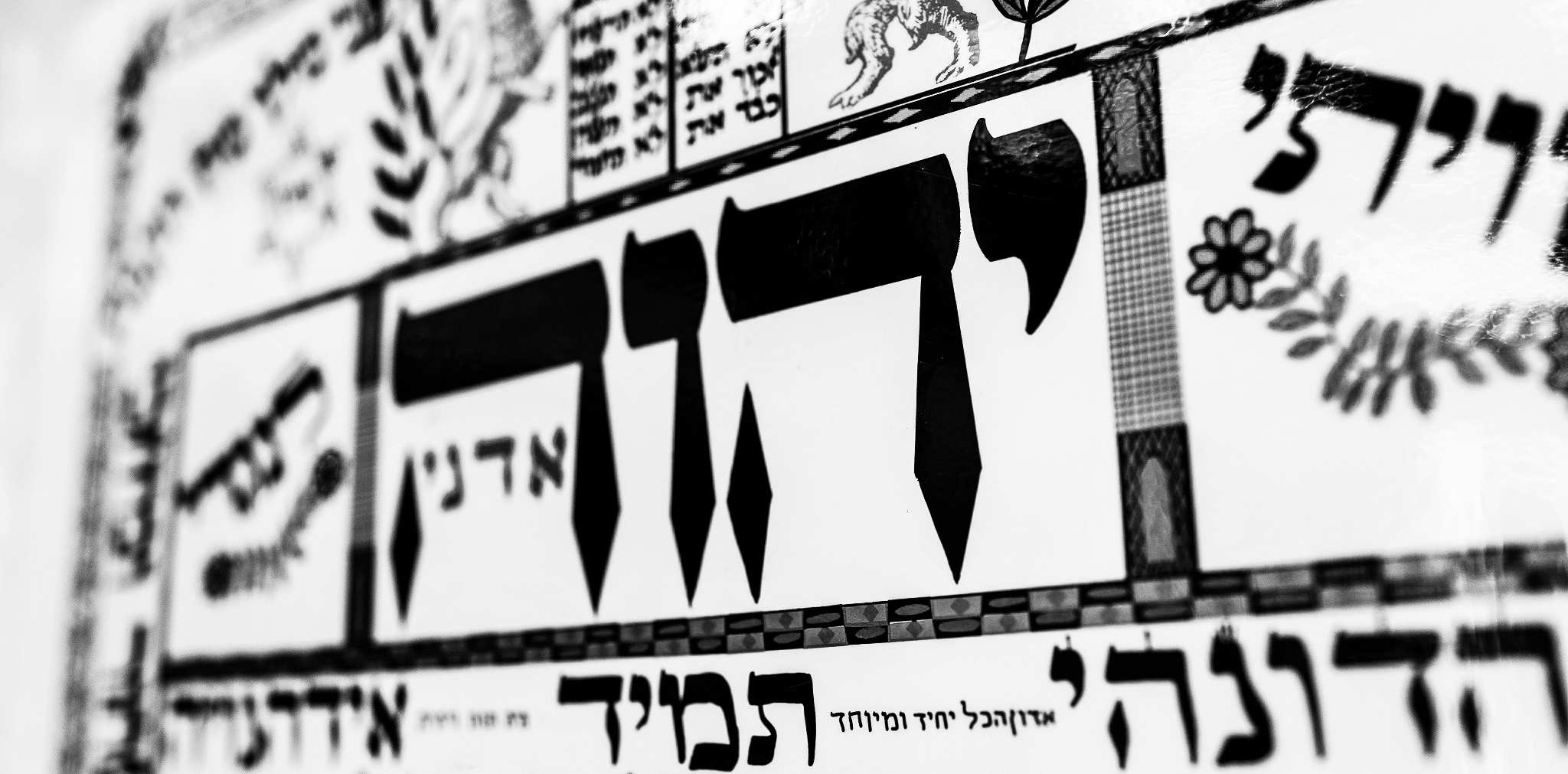
 Our Torah portion for this week (Vaetchanan) includes some of the most foundational texts of the Jewish Scriptures, including the Ten Commandments, the Shema (the duty to love God and study His Torah), and the commandments of tefillin and mezuzot. In addition, in this portion Moses predicts the worldwide exile and the eventual redemption of the Jewish people in acharit hayamim (the prophesied “End of Days”).
 Yeshua foretold


 Our Torah reading for this week (i.e.,
 From our Torah portion this week (i.e.,
 This week we read a “double portion” of Torah to conclude Sefer Bamidbar, or “the Book of Numbers.” Our first Torah portion,
 The Lord is likened to a potter and we are as clay in his hand (Isa. 64:8). Life on the “potter’s wheel” can be messy, unsettling, and sometimes excruciatingly hard, but it is God’s sovereign work to form your life according to his design and purposes….
 The traditional Jewish expectation of the Messiah (מָשִׁיחַ) was that he would be a great king of the line of David who would overthrow Israel’s enemies and establish the Kingdom of God upon the earth. This expectation was founded upon various promises written in the Torah of Moses as well as various oracles of the Hebrew prophets. For example, in the scroll of Isaiah it is written: “For unto us a child is born, unto us a son is given; and the government will be upon His shoulder: and his name will be called Wonderful, Counselor, Mighty God, Everlasting Father, Prince of Peace. Of the increase of his government and peace there will be no end, upon the throne of David and over his kingdom, to order it and establish it with judgment and justice from that time forward, even forever. The zeal of the LORD of hosts will perform this” (Isa. 9:6-7). On the face of it, this prophecy says that the Messiah would establish the Kingdom of David as an everlasting kingdom and that all the promises of Zion would be fulfilled: the Temple would be restored in Jerusalem; the exiles would be regathered; the world would experience peace and the knowledge of God would flow to the nations (for more on the Messianic expectation, see “
 Shalom friends. Our Torah reading this week honors Aaron’s grandson

 It’s tragic that many want to retaliate against those who have hurt them, clinging to their wounded pride and allowing bitterness to take root in their hearts. Holding grudges, harboring spite, and seething in anger are common and deadly sins. As psychologist Erich Fromm once astutely observed: “There is perhaps no phenomenon which contains so much destructive feeling as ‘moral indignation,’ which permits envy or hate to be acted out under the guise of virtue.”

 The Spirit of God cries out, “choose life that you may live!” (Deut. 30:19), which implies that is our responsibility to believe in the Reality of God, to trust in his providential care, to affirm that “all is well and all manner of thing shall be well,” and to understand that our present struggle is designed by heaven to help us grow in grace and the knowledge of the truth (1 Pet. 3:16).
