 In our Torah portion for this week, parashat Vayera, we read the shocking account of how God tested Abraham by asking him to sacrifice his son Isaac as a burnt offering (Gen. 22:1-18). In Jewish tradition, this drama is called the “Akedah” (i.e., “binding”), which is regarded as the supreme test of Abraham’s obedience and faith to God. Many of us are familiar with this great story, of course, though we can learn much if we take some time to reflect about the meaning of Abraham’s ordeal, instead of skipping over the journey and “flying to the top of the mountain” to behold the happy ending.
The Torah’s account of the test begins this way: “Now it came about after these things, that God tested Abraham, and said to him, “Abraham!” And he said, “Here I am.” And he said, “Please take your son, your only son, whom you love, even Isaac, and go to the land of Moriah; and offer him there as a burnt offering on one of the mountains of which I will tell you” (Gen. 22:1-2).
On the face of it, this dreadful request from God was mind-bendingly difficult to understand. Why would God ask Abraham for none other than his promised heir, the miracle child Isaac, to be literally sacrificed as a burnt offering? Was not Isaac specially chosen by God as the promised seed from whom all the nations would be blessed (Gen. 15:4-6)? It made no sense at all…. And why did God want the offering to be made in the “land of Moriah”? According to Rashi, the Hebrew word “Moriah” (מוֹרִיָּה) derives from the word “instruction” (הוֹרָאָה) and God (יהּ), suggesting the teaching of God, a synonym for Torah. According to the sages, Moriah But what sort of teaching is this, for Abraham to be asked to kill his beloved son?
It must have been a terribly sleepless night for Abraham as he agitated over God’s request for him to do the unthinkable act of sacrificing his promised son Isaac. Nevertheless, he wasted no time preparing himself for the journey ahead. At sunrise the very next day he arose, woke two of his servants and Isaac, prepared his donkey, cut wood for the burnt offering, and immediately set off to the place (הַמָּקוֹם) where God told him to go (Gen. 22:3). We have no idea if Abraham had told his wife Sarah of his plans…
We must try to understand and feel the great anxiety and distress of Abraham’s heart as he journeyed for three days, not knowing how to explain what he was doing to Isaac (or to his wife Sarah for that matter). There is terrible suspense in this story, not only in the cloud of unknowing surrounding the entire mission, but because the very thought of sacrificing his son, the sole heir of all that Abraham was promised, was the annihilation of all that he had believed, loved, and hoped. The starry sky of his vision counting the stars suddenly turned to black (Gen. 15:3). Abraham was later called the greatest of the patriarchs and “the father of the faithful,” because he bore the burden of trusting God in the midst of a dreadful contradiction. How could Abraham understand the Lord (יהוה) as the sole Creator and Sustainer of life, the sovereign King and righteous Judge, the one who led him from his homeland, the one who promised that he would be the father of a multitude of people, the covenant-making God who pledged land to his descendants after him into perpetuity; the one who said that Abraham would be “exceedingly fruitful” and from whom nations and kings would descend — how could Abraham understand this LORD to be capable of asking him to go and sacrifice his son as a burnt offering? Was this not a complete shock to all his theology? A temptation? A demonic idea? Did it not threaten the meaning of his visions? Did not God promise him a future and a hope? Had not the LORD renamed him from “Abram” (exalted father) to “Abraham” (father of a multitude) to signify his promise to make his descendants as numerous as the stars in the sky and sand on the shoreline?
Was Abraham perhaps mistaken regarding the nature of the test before him? Why didn’t Abraham argue with God (אֱלהִים) by remembering Him as the LORD (יְהוָה), the Compassionate Source of life? Earlier he had argued with God regarding the destruction of Sodom. So why didn’t he argue to save his own son? Might this have been Abraham’s test, namely, that God wanted Abraham to argue and to challenge the command to perform child sacrifice? Or why didn’t he ask, “Why do you taunt me by giving me a son in my old age only to have him taken away?” Why didn’t Abraham protest that his descendants could never inherit the Promised Land if his heir were killed? Indeed, how could Abraham have been in his right mind during this test? As Soren Kierkegaard reminds us in his book Fear and Trembling, this is yirat Elohim – the fear of God – taken to point of sheer madness. The temptation to elevate blind obedience to an arbitrary deity (אֱלהִים) above the dictates of compassion and conscience had to be overcome. Abraham’s temptation, so to speak, was whether to listen to the voice of God (i.e., Elohim) or to heed the voice of the LORD (for more on this question see the article, “The Temptation of Grace“).
On the other hand, perhaps the nature of the test was indeed whether Abraham would be willing to surrender his rationality (and sanity) to demonstrate his unconditional loyalty to God. If so, Abraham would need to “step outside” of his theology – his understanding of God – to yield in absolute trust in God’s instruction to kill his son. He had to close his eyes to everything he assumed to be true in order to obey God’s commandment….
Keep in mind that Abraham’s trial was not a pretense or charade; he was not given any private assurances from God that he really wasn’t going to have to kill his son… No, for reasons that were beyond his understanding God asked Abraham to slay Isaac, and he was therefore left alone with his resolve whether or not to obey God – even in this terrible darkness…. It didn’t make sense – none of it did – and yet since God had asked, the test would be if he would obey. During the three day journey to Moriah, he was apparently silent. He could not explain the nature of his mission or its justification, even with Isaac.
“On the third day Abraham lifted up his eyes and saw the place from afar… And Abraham took the wood of the burnt offering and laid it on Isaac his son. And he took in his hand the fire and the knife. So they went both of them together” (Gen. 22:4,6). But Isaac wanted to make sure of what was happening. He needed to understand what was being asked of him. “So Isaac said to his father Abraham, “My father!” And he said, “Here am I, my son.” And he said, “Behold, the fire and the wood, but where is the lamb for a burnt offering?” (Gen. 22:7). This is the first word of dialog recorded over the three day journey… It is hard to imagine the pathos during this exchange. Abraham replied ambiguously: “God will provide for himself the lamb for a burnt offering, my son.” So they went both of them together” (Gen. 22:8).
As I’ve mentioned before, notice that Abraham’s words could be understood as: “God will provide the lamb for the burnt offering — my son!” (ירְאֶה־לּוֹ הַשֶּׂה לְעלָה בְּנִי) – making it plain that Isaac was himself to be offered upon the altar. According to midrash, upon hearing this, Isaac put his face between his hands and wept. “Is this the Torah about which you spoke to mother?” he sobbed. When Abraham heard this, he wept also. But Isaac controlled himself and sought to comfort his father: “Do not feel distressed, my father. Fulfill your Creator’s will through me! May my blood be an atonement for the future Jewish people” (Bereshit Rabbah). The Torah then repeats the phrase, “and they both walked on together,” indicating that Isaac had accepted his sacrificial death. He then steeled himself as he carried the wood that would be used to consume him upon the altar.
Isaac could have run away, of course. According to Jewish tradition, Isaac was a 37 year old man at the time who could have easily resisted his father’s will, yet he chose to submit to his father. Therefore Isaac, as much as Abraham, underwent a great test – a passion of the heart to fully surrender to God (for more on this see “The Passion of Isaac”).
The Torah’s narrative continues: “When they came to the place of which God had told him, Abraham built the altar there and laid the wood in order and bound Isaac his son and laid him on the altar, on top of the wood” (Gen. 22:9). Here we are nearing the climax of the incredible drama. Abraham then built the altar on Moriah and “arranged the wood in order.” The aged Abraham then “bound Isaac his son” (וַיַּעֲקד אֶת־יִצְחָק בְּנוֹ) and carefully laid him on the altar, “on top of the wood.” Like the Suffering Servant who would come after him, Isaac “set his face like a flint” to fulfill God’s will (Isa. 50:7).
Isaac kept his eyes directed toward heaven as he lay tightly bound and motionless upon the altar. He awaited the final blow and wanted it to fall with love and obedience within his heart. It was to be a shared sacrifice between the beloved son and his father. Finally “Abraham stretched out (שׁלח) his hand and took the knife to slaughter (i.e., לִשְׁחט, from shechitah) his son” (Gen. 22:10). It must have seemed like a timeless moment – outside the bounds of this world itself – as the knife was lifted up above his son, ready to be plunged into his heart. The midrash says that the two looked at each other, their eyes locked, during this climactic moment, yet they were unafraid at this point – their resolve was so complete that the sacrifice was essentially already done, and now all that remained was this final step… The Talmud says that when Abraham “stretched out” his hand, he briefly examined the knife to determine if it was ritually fit, and this delay was the precise moment when the Angel of the LORD (מַלְאַךְ יהוה) called to him from heaven and said, “Abraham, Abraham! Do not lay your hand on the boy or do anything to him, for now I know that you fear God, seeing you have not withheld your son, your only son, from me” (Gen. 22:11).
And behold Abraham’s faith that “God would provide the lamb” was vindicated when he saw a ram caught in a thicket by its horns, which Abraham then took and offered up in his son’s place. Abraham then called the altar at Moriah, the place of teaching, “Adonai Yireh” (יְהוָה יִרְאֶה), “the LORD will provide” (from re’eh, “see”).
After this the Angel of the LORD pronounced God’s oath of blessing upon Abraham: “By myself I have sworn, declares the LORD, because you have done this and have not withheld your son, your only son, I will surely bless you, and I will surely multiply your offspring as the stars of heaven and as the sand that is on the seashore. And your seed (זַרְעֲךָ) shall possess the gate of his enemies, and in your seed (זַרְעֲךָ) shall all the nations of the earth be blessed, because you have obeyed my voice” (Gen. 22:16-18). Note that the Apostle Paul refers to this passage by saying it does not say, “And to your seeds” (זְרָעֶיךָ) referring to many, but referring to one, “And to your seed” (זַרְעֲךָ) who is the Messiah (Gal. 3:16).
After receiving this consummate blessing from God, Abraham went to Beer-Sheva (בְּאֵר־שֶׁבַע), the “well of the sevenfold oath” where he had earlier planted an orchard, and there had called upon the LORD, the “Everlasting God” (אֵל עוֹלָם). Abraham then received news of the birth of a daughter, Rebekah, to his nephew Bethuel, the future bride of Isaac.
So that is my brief overview of the great test of faith given to Abraham and how he passed the test with God’s blessing. Now apart from the great prophetic truth that God indeed would provide a lamb in the person of His own son – something Abraham also understood (see John 8:56) – what practical applications might we infer as children of Abraham?
Well perhaps the first lesson to apply is that we must trust in God even when we don’t understand what is happening to us. When you do not know what you are doing, what you are suffering, or why things are the way they are, nevertheless take every thought captive and yield your will to the providential purposes of God. “Trust in the LORD with all your heart, and do not rely on your own understanding (ואל־בינתך אל־תשׁען); in all your ways know Him, and He will direct your paths (Prov. 3:5-6).
A second lesson is to ensure that we are regarding the LORD as our utmost concern, our highest good, our heart’s greatest blessing. Yeshua taught that we must value our relationship with God above all else: “Whoever loves father or mother more than me is not worthy of me, and whoever loves son or daughter more than me is not worthy of me. And whoever does not take his cross and follow me is not worthy of me” (Matt. 10:37-38). In other words, we must love God more than anything else – including our most intimate relationships with others. Of course this doesn’t mean that we should not genuinely love our families (and others), but we should rather die than deny our Savior. Indeed, should we be tempted to love someone or something more than our Lord, we must flee – whether that love be of another person, an apostle, or an angel from heaven. “God is love” does not mean “love is God,” and in relation to matters of faith, when our passion is exalted as absolute, we must instead choose faith over our passion. Love is not God, for that is the idolatry of Cupid, after all, and therefore our love must be constrained by the truth of faith. That is the reason why we must at times judge others and turn away from them. For example, if a friend who claims to be a Christian denies that Yeshua was literally raised from the dead, being “tolerant” is forbidden, since it amounts to collusion with their apostasy. Likewise if someone says they follow Christ but live as fornicators, they are to be admonished, and if they do not repent, they are to be shunned (Eph. 5:3; Rom. 1:26-28; Matt. 18:15-17). Though the Scriptures indeed teach us to love the LORD with “all our heart, soul, and strength” (Deut. 6:4-5), it is ungodliness to love anything or anyone else in this way, or to allow another person to love you in this way as well. כי יהוה קנא שׁמו אל קנא הוא – “For the LORD, whose name is Jealous, is indeed a jealous God” (Exod. 34:14).
So the test of Abraham teaches that ought always trust God, no matter our circumstances, and we ought always obey God with every fiber of our being – with all our heart, soul, and strength. That is the example of Abraham, who is called the father of the faithful, who abandoned himself in unreserved love and obedience to God. Now in light of the remarkable faith and obedience of Abraham, is your heart filled with fear and trembling? Are you – who are “of little faith” – really so assured in your relationship with God that you can honestly say that you love the LORD with all your being, and at the expense of absolutely everything? Have you been tested “unto blood, striving against sin”?
“Trying” to love God won’t take us too far, nor will doing good deeds. Something more is needed – something altogether beyond the power of the human will and its aspirations. The first step, then, is to confess your powerlessness, you inability to love God in the truth, and to ask God for the miracle of a new heart. The ability to love God is the result of a spiritual rebirth, not its cause. God chooses us and makes us come alive (John 1:12-13; 1 John 4:19).
Yeshua sets us free – he ransoms us from the prison of sin, that is, the inherent perversity of our fallen human heart, by means of the impartation of a new nature: ” Therefore, if anyone is in Christ, he is a new creation. The old has passed away; behold, the new has come” (2 Cor. 5:17). God’s intervention in our hearts delivers us from the cycle of sin and shame that “binds” us within. The ransom was paid at the cross of Yeshua, where the divine exchange took place: “For our sake he made him to be sin who knew no sin, so that in him we might become the righteousness of God” (2 Cor. 5:21). “For you know the grace of our Lord Jesus Christ, that though he was rich, yet for your sake he became poor, so that you by his poverty might become rich” (2 Cor. 8:9). The cross is the place of “Moriah” – where we are taught by God – as well as the place of “Yireh” – where God’s provision for us is secured. It is the sacred center of existence, the place where God’s truth and his mercy come together (Psalm 85:10). Perhaps a further lesson concerns the journey of faith that we are “bound” to take with the LORD. Notice that the phrase “go to the land of Moriah” uses the same verb that God used to call Abraham to leave his old life behind for the Promised Land (i.e., lekh-lekha: לֶךְ־לְךָ in Gen. 12:1). So the progression of faith is first to depart from the land of your origin (i.e., from the realm of the flesh, of natural human life), and then “go for yourself” to the place of atonement and substitutionary sacrifice (i.e., the realm of the spirit, of eternal life).
Jesus saves us from the place of torment – the hell of a life lived enslaved to sin and turned inward upon itself, forever and ever. It was not the nails driven into the arms and feet of Yeshua that kept him on the cross, but his great love to redeem us from the penalty for our sins. He has redeemed us from our cursed estate by being made a curse for us (Gal. 3:13). Again, the cross is the place where God’s mercy and truth come together, and where righteousness and peace “kiss.” Because of the cross God can be vindicated as both just (in his judgment against sin) and yet the justifier of the one who trusts in his provision for deliverance. Yeshua is our “Ram caught in the thicket” – the one who takes our place in death so that we receive the blessing of the divine life. Consequently, by the agency of the Holy Spirit, we are able to be a “living sacrifice” of praise to God, no longer conformed to this fallen world but transformed by God’s indwelling power to live according to his will.
Abraham believed God and it was accounted to him as righteousness (Gen. 15:6), and he believed in the miracle of redemption and was given the oath of blessing. “Therefore those of faith are likewise the children of Abraham, as the Scripture, foreseeing that God would justify the Gentiles by faith, preached the gospel beforehand to Abraham, saying, “In you shall all the nations be blessed.” So then, those who are of faith are blessed along with Abraham, the man of faith” (Gal. 3:7-9). Amen, and may the Living God, the Faithful One, grant us hearts that are faithful and true like our father Abraham, “who is the father of us all.”
Hebrew Lesson
Proverbs 3:5-6 Hebrew reading:

- Prov. 3:5-6 Hebrew page (pdf)
 Why does God want us to face the truth about death? Why does Moses ask God to teach us to “number of our days?” (Psalm 90:12). The reason is that by nature people deny the reality of death – they hide their eyes from it, ignore it, and pretend it’s not there – so they can continue to live under the illusion that they are in control of their lives, that they are the center, that they are immortal little “gods.” Death threatens the ego and humbles us to confess the truth about life, namely that we are not in control, that we cannot choose to be immortals, that we do not have power to exist in ourselves, and therefore we need life from a different source – spiritual life – wherein we receive a new identity and a new being found in relation to God.
 We are instructed to look for small miracles, everyday “signs and wonders…” In the Torah we read: “And you shall bless the LORD your God for the good land he has given you.” (Deut. 8:10), which the sages say implies that whenever we derive benefit or enjoyment from something we are to bless (i.e., thank) God for his goodness.
 Though it is good to ask questions about what we believe, to seek for understanding, and to study the Scriptures, we must do so using the principle that “faith seeks understanding,” rather than the converse principle that “understanding seeks faith,” since the latter elevates human reason to be the judge and arbiter of the things of God, a role for which it is both incapable and unsuited (Isa. 55:8-9; Job 9:10; 11:7; Psalm 139:6; Rom. 11:33). God is not a “what” but a “Who,” and that affects the means by which we know him (John 4:24). We certainly can know truth about God, though the instrumentality for attaining such knowledge transcends the abilities of unaided human reason (see Deut. 29:29).
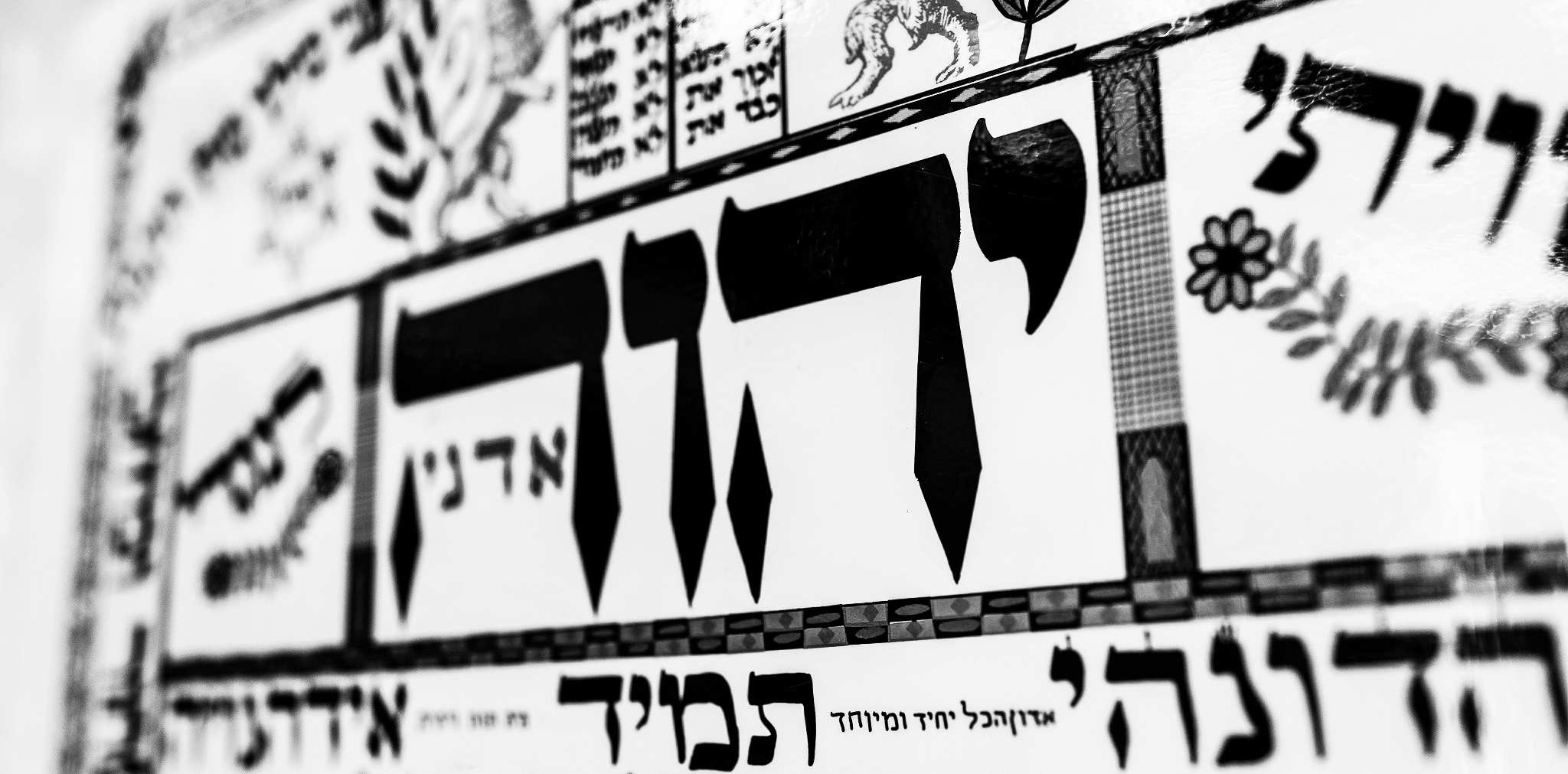
 In the Scriptures God’s Name is revealed as YHVH (יְהוָה), which means “He is Present.” The Name is formed from the words hayah (“He was”), hoveh (“He is”), and yihyeh (“He will be”): הָיָה הוֶה וְיִהְיֶה, indicating God’s omnipresence. Note that all the letters of the Name are “vowel letters,” which mean they evoke breath and life. This is the Name revealed to Moses thousands of years before the advent of other religions (Exod. 3:14), and indeed it is the Name associated with the nishmat chayim (נִשְׁמַת חַיִּים), the “breath of life,” imparted to Adam in the orchard at Eden (Gen. 2:4). It is therefore the original Name of God “breathed out” to mankind. The Name Yeshua (יֵשׁוּעַ) means “YHVH saves.” There is no other Savior beside Him, there is no other Name, there is no other LORD. “For I am the LORD your God, the Holy One of Israel, your Savior.” Only Yeshua the Messiah can deliver you from the wrath to come (1 Thess. 1:10).

 Our Torah portion this week (i.e.,
 In this audio podcast I discuss the role of tradition in our understanding of the Torah and the Holy Scriptures. Though this is a somewhat complex subject, it is comprehensible if we take the time to carefully think through some of the issues. Among other things I consider the philosophical idea of the “Tao” as described by C.S. Lewis in relation to human conscience, the intuitive idea of the moral law as empirically expressed in various world cultures, and the argument that objective values are implied in any statement of right and wrong. I also consider the role and influence of tradition regarding the revelation of the law of God given at Mount Sinai, the subsequent preservation and transmission of the written words of Scripture, the creation of the biblical canon, and how both Yeshua and the Apostle Paul accepted and ministered in the context of the theological traditions of their day. I hope you might find it helpful…

 People tend to underestimate the radical nature of their sinful condition, which truly is a “sickness unto death.” However, even the metaphor of lethal sickness itself is not strong enough, since the spiritual condition of the natural man is the state of being spiritually dead… Apart from direct divine intervention on behalf of the individual soul, a person is literally unable to respond to God and receive the gift of eternal life. That is why Yeshua taught that we need a spiritual rebirth in order to see the Kingdom of God (John 3:3).


 The Scriptures define “man” as the creation of God, a union of body and soul, that is, a unity of physical and spiritual elements, as it is written: “Then the LORD God formed the man from the dust of the ground (adamah: אֲדָמָה) and breathed into his nostrils the breath of life (nishmat chayim: נִשְׁמַת חַיִּים), and the man became a living soul” (Gen. 2:7). The miracle of creation means that God imparted his own neshimah (נְשִׁימָה), his own “breath,” to give life to the man, who was named “Adam.”