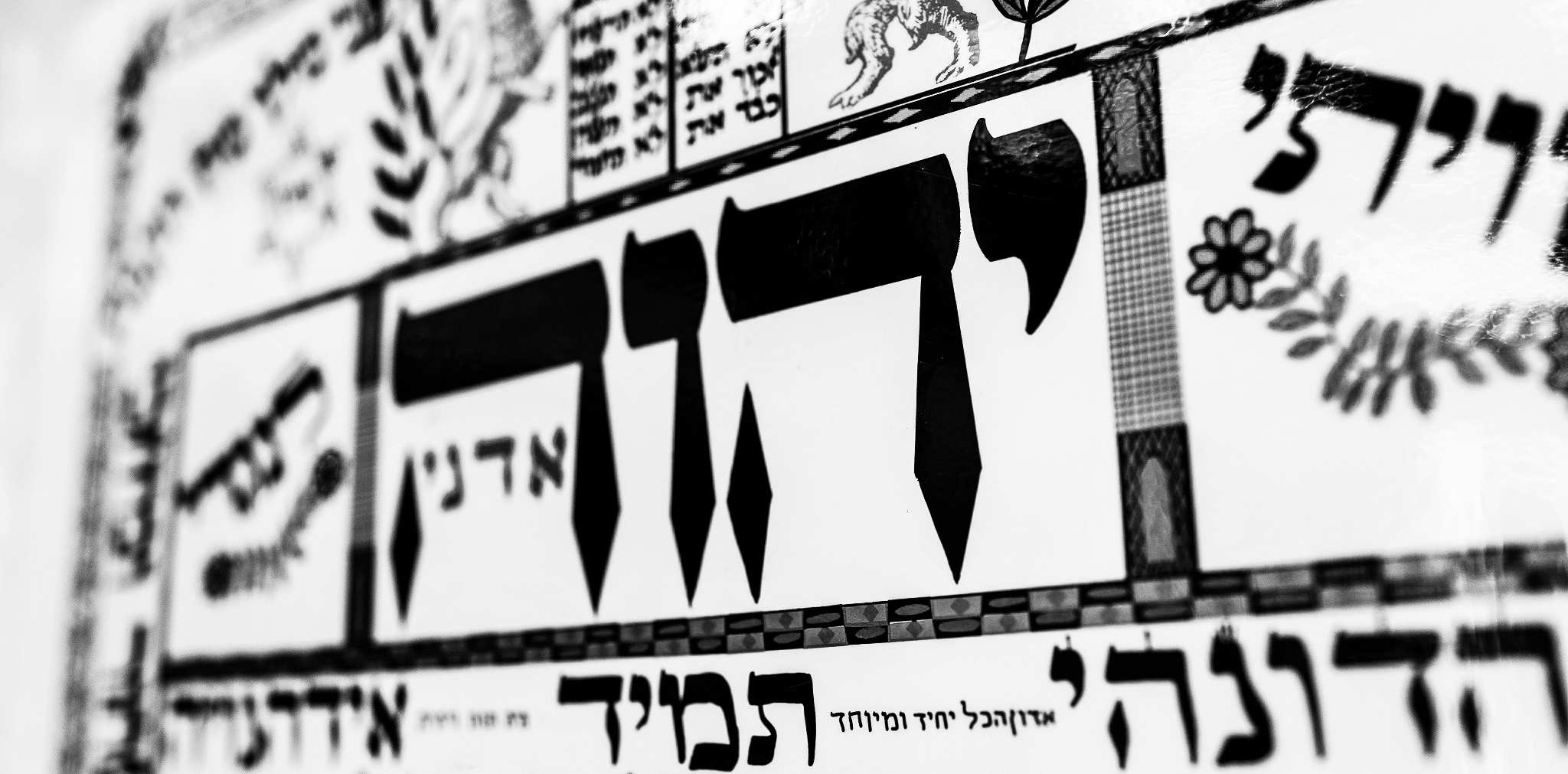
 Since Rosh Hashanah is known as the “Day of Judgment” (i.e., yom ha’din: יום הדין), it is customary to offer additional prayers of supplication (selichot) before the advent of the holiday. These prayers appeal to God’s compassion and often include the recitation of “shelosh esrei middot rachamim,” that is, the thirteen attributes of God’s mercy (Exod. 34:6-7). The thirteen attributes reveal the inner meaning of God’s Name YHVH (יהוה) disclosed to Moses after the people had committed the dreadful sin of the worshiping the golden calf (עגל זהב) at Sinai. God is not only our Judge and Lawgiver (Elohim), but our Savior and our Healer (Moshia). In his great mercy He restores what we have broken; He overcomes our judgment by means of his abounding love given to us in Yeshua (Psalm 85:10). We therefore appeal to YHVH as the Source of Compassion, the “breath of life” (נִשְׁמַת חַיִּים) that was imparted to Adam on the day he was first created (Gen. 2:7).
Category: Holidays
Seeking and Finding…
 “Seek the LORD while he may be found, call upon him while he is near: Let the wicked forsake his way, and the unrighteous man his thoughts: and let him return unto the LORD, and he will have mercy upon him; and to our God, for he will abundantly pardon” (Isa. 55:6-7). But how will we seek if we do not believe? And how will God be found unless God makes it possible for us to find Him? Hashivenu. We first believe the invitation to return is for us, and the moment we believe we draw near, which is to say God reveals himself to the heart of faith. If you feel devoid of God’s presence, heed David’s words to “set the LORD” before you (Psalm 16:8). Ask God for help to truly know Him and have confidence that he will indeed heal you. No prayer offered according to his heart will ever go unanswered (1 John 5:14-15). “The greatest honor we can give to the Almighty is to live gladly because of the knowledge of his love” (Julian Norwich). As Yeshua promised: “Whoever has my commandments and keeps them, he it is who loves me. And he who loves me will be loved by my Father, and I will love him and manifest myself to him” (John 14:21). Note that the Greek word translated “manifest” means to “shine inside” (i.e., ἐμφανίζω, from ἐν, “in” and φαίνω, “shine”), indicating that the revelation would be inward light of the Presence of Messiah himself (Χριστὸς ἐν ὑμῖν, ἡ ἐλπὶς τῆς δόξης, Col. 1:27). God calls you so that you might find him to be the greatest love of your life, and as you receive that love, as you embrace it as your own, the love of Messiah will become inwardly visible to you. This comes from a place of surrender and acceptance. As Paul Tillich said, “Sometimes in a moment of weakness light breaks into darkness, and it is as though a voice says, ‘You are accepted; you are accepted… Do not seek for anything; do not perform anything; do not intend anything. Simply accept the fact that you are accepted.’ If that happens to you, then you experience grace, and everything will be transformed.” Ultimately teshuvah is about salvation and transformation – beauty from ashes – and the love of God…
Rosh Hashanah and the Lamb…
 In the Torah we find that the word “love” (i.e., ahavah) first appears regarding Abraham’s passion for his son: “Take your son, your only son Isaac, whom you love (אֲשֶׁר־אָהַבְתָּ), and go to the land of Moriah, and offer him there as a burnt offering on one of the mountains of which I shall tell you” (Gen. 22:2). After journeying to the place, Abraham told his child that God would provide a lamb (אֱלהִים יִרְאֶה־לּוֹ הַשֶּׂה), and then bound Isaac, laid him upon an altar, and raised his knife to slay him (Gen. 22:8-10). At the very last moment, the Angel of the Lord called out: “Abraham! Abraham! Do not lay your hand on the lad or do anything to him, for now I know that you fear God, seeing you have not withheld your son, your only son (בֵּן יָחִיד), from me” (Gen. 22:11-12). Abraham then “lifted up his eyes” and saw a ram “caught in a thicket” which he offered in place of his son. Abraham then named the place Adonai-Yireh (יהוה יִרְאֶה), “the LORD who provides” (Gen. 22:14). The sacrifice of the lamb for Isaac portrayed the coming sacrifice of Yeshua, the great “Lamb of God” (שֵׂה הָאֱלהִים) who would be offered in exchange for the trusting sinner (John 1:29). Indeed the story of how God provided the lamb at Moriah (and later during the Passover in Egypt) foreshadowed the greater redemption given in Messiah at the “Passover cross,” and may be understood as the “Gospel according to Moses” (Luke 24:27; John 5:46). Therefore, Rosh Hashanah, or the Day of Judgment (יוֹם הַדִּין), is all about our Messiah, and the sound of the shofar reminds us of the Lamb of God who was offered in our place…
Vayeilech Shavuah Tov Podcast
 In this “Shavuah Tov” audio broadcast I discuss both the Jewish High Holidays — and how they relate to us as followers of Yeshua the Messiah — as well as the weekly Torah portion we will read for Shabbat Shuvah, namely parashat Vayeilech. I hope you will find it helpful. L’Shanah Tovah u’Metukah b’Yeshua Meshicheinu, chaverim! – “to a good and sweet year in our Messiah Yeshua, friends.”
Waking Up to Reality…
 It’s vital to remember that one of the main tactics of the devil is to cast a spell over you to induce a sense of forgetfulness and apathy… The devil wants you to forget that you are a child of the King. The entire venture of teshuvah (repentance) presupposes that you are created b’tzelem Elohim – in the image of God – and therefore you have infinite value and dignity. This is all the more evident in light of the awesome ransom that Yeshua paid to reconcile your soul with God. So what is the greatest sin you can commit in your life? To forget what God has done for you… Remaining asleep, unmindful of your true identity is one of the most tragic things of life. Therefore Rosh Hashanah is sometimes called Yom Ha-Zikaron – the “Day of Remembrance” (Lev. 23:24). The blast of the shofar is meant to jolt us from our sleep… We are to remember who we really are — to remember that God is our King. The person who says, “Tomorrow I will do teshuvah” really is saying, “Not now.” And then tomorrow comes and he says, “Not now.” And in this way his entire life passes by, saying, “Not now.” Finally one day he wakes up only to find himself already dead. May God help us wake up to the Reality that is set before us.
Why Celebrate Rosh Hashanah?
Should followers of Yeshua observe the festival of Rosh Hashanah? Surely you know my answer, chaverim, but I thought I’d provide a few reasons why we observe this special time for the sake of our Christian friends who might not understand the importance of the moedim (appointed times). What follows is a “short list” of reasons, though a lot more could be said on this topic of course.
First, the LORD God is indeed the King of all the earth, our Creator and Redeemer. He is Melech Gadol al-kol-ha’aretz, (מֶלֶךְ גָּדוֹל עַל־כָּל־הָאָרֶץ), a “great King over all the earth” (Psalm 47:2). Though Christians should acknowledge His righteous rule and Kingship at all times, Rosh Hashanah is a “sanctified reminder” of God’s creative authority in our lives. Yeshua (Jesus) is called the Mashiach (מָשִׁיחַ), a term that denotes His Kingly dignity and royalty (this idea is unfortunately obscured by the Greek word “Christ”). Yeshua is also borei Olam – the Creator and Sustainer of all creation (Col. 1:16). He is coming to rule and reign from Jerusalem (Zion) in the near future. Christians will be judged according to their deeds of service (2 Cor. 5:10) and the world system (and Satan) will be judged during the Great Tribulation period that precedes the Second Coming. Just as the heavenly shofar was sounded from Sinai, so it will be one day sounded from Zion (Isa. 27:13).As the only true King and Judge, God indeed has a Sefer HaChayim (Book of Life) as well as a Sefer Ha-Metim (Book of Death). The Scriptures clearly warn that on the Day of Judgment to come, anyone’s name not found written in the Book of Life will be thrown into the lake of fire (Rev. 20:15). The Kingship of our LORD should be of great interest to those who wish to honor Him…

…
The 2020 Fall Holidays…
 The Torah divides the calendar into two symmetrical halves: the Spring and the Fall, indicating the two advents of Messiah. The Biblical year officially begins during the month of the Passover from Egypt (called Rosh Chodashim, see Exod. 12:2), and the spring holidays of Passover, Unleavened Bread, and Firstfruits both recall our deliverance from Egypt and also our greater deliverance given by means of the death, burial, and resurrection of the Messiah, the great Passover Lamb of God. Yeshua was crucified on erev Pesach, buried during Unleavened Bread, and was resurrected on Yom Habikkurim (Firstfruits). The holiday of Shavuot (i.e., “Pentecost”) both commemorates the revelation of the Torah at Sinai as well as the revelation of the Ruach HaKodesh (Holy Spirit) at Zion, in fulfillment of the promise given by our Lord….
The intermediate months of summer end with the advent of the sixth month of the calendar, called the month of Elul, which recalls the time Moses interceded on behalf of Israel after the sin of the Golden Calf. To commemorate this time of our history, we likewise focus on teshuvah (repentance) in anticipation of Rosh Hashanah (i.e., Teruah) and especially in anticipation of Yom Kippur, the great “Day of Atonement.” In Jewish tradition the 30 days of Elul are combined with the first ten days of the seventh month (called the “Days of Awe”) to set apart “Forty Days of Teshuvah” leading up to the Day of Forgiveness for Israel. Immediately following Yom Kippur, the mood changes as we begin preparing for a joyous week-long celebration called Sukkot (i.e., “Tabernacles”) that concludes with the holiday of Simchat Torah.
Just as the spring festivals (Passover, Firstfruits, and Shavuot) have been perfectly fulfilled in the first coming of Yeshua as Mashiach ben Yosef, so the fall festivals (Rosh Hashanah, Yom Kippur, and Sukkot) will be fulfilled in His second coming as Mashiach ben David. Since the first advent fulfilled all of the spring mo’edim to the smallest of details, we believe that His second advent portends similar fulfillment as revealed in the fall mo’edim. The fall festivals therefore prophetically foretell the Day of the LORD, the second coming of Yeshua, the great national turning of the Jewish people, and the establishment of the reign of the Messiah upon the earth during the Millennial Kingdom in the world to come.

…
For more information:
Ki Tavo Shavuah Tov Podcast…
 In this audio podcast I discuss the the 40 day “Season of Teshuvah” or repentance leading up to the Jewish High Holidays as well as the weekly Torah portion, parashat Ki Tavo, which includes instructions for the people to ratify the Sinai covenant in the promised land by means of a special covenant renewal ceremony performed in the valley between Mount Ebal and Mount Gerazim. During this ceremony blessings for obedience and curses for disobedience would be declared, and Moses warned the people by providing a seemingly endless description of terrible consequences that would befall the Jewish people if they disobeyed the terms of the Sinai covenant (Deut. 28:15-68).