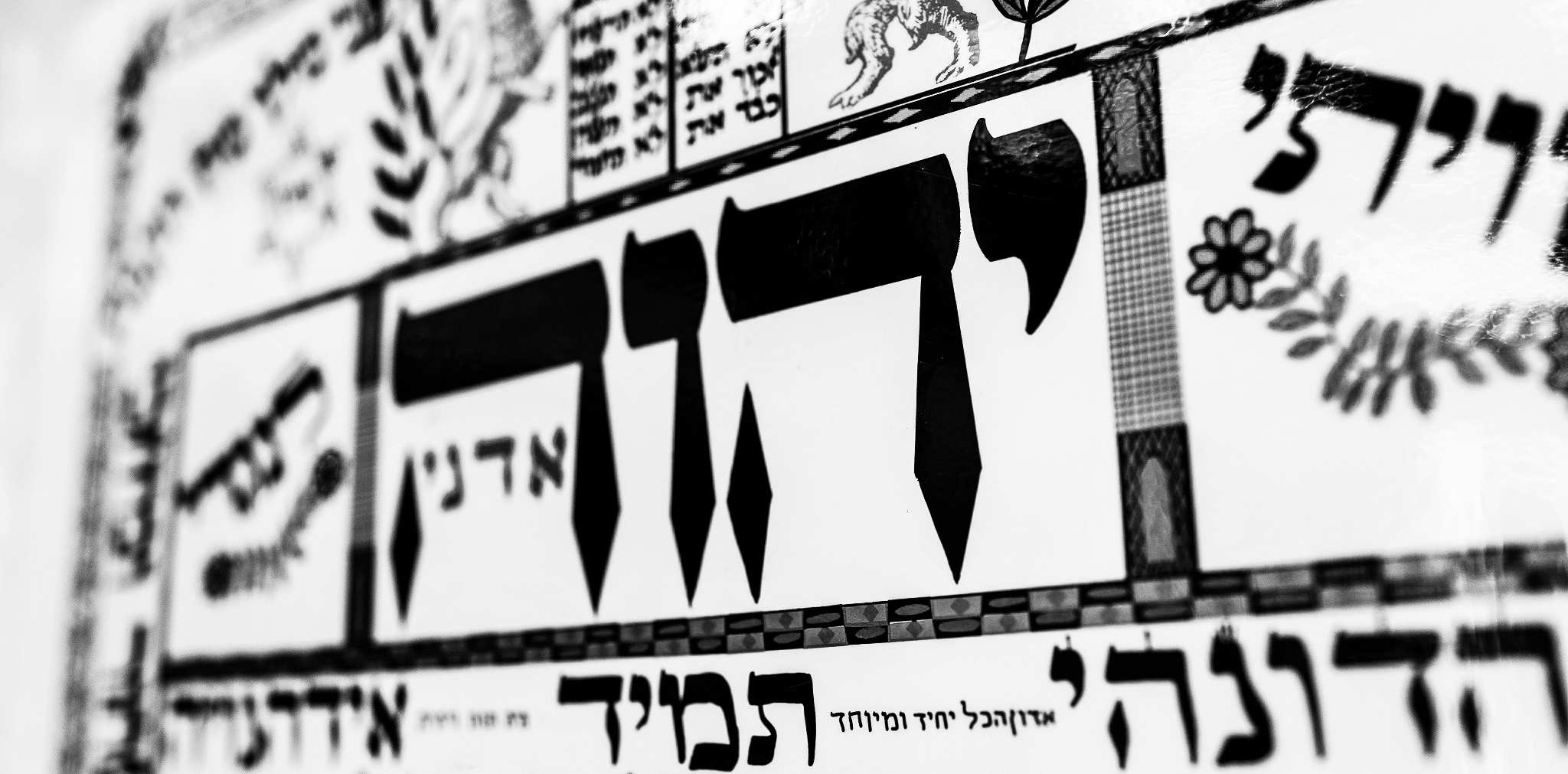
 The receiving of the Torah (מתן תורה) must take place each and every day, as it says, “Trust in the LORD ‘bekhol libekha’ (בְּכָל־לִבֶּךָ) – with all your heart; and know Him ‘bekol derakhekha’ (בְּכָל־דְּרָכֶיךָ), in all your ways” (Prov. 3:5-6). The giving of the Torah is described as a “loud and never-ending voice” (Deut. 5:22), though it is our constant responsibility to shema – to receive the invitation of God’s heart.
“Trust in the LORD with all your heart… know Him in all your ways” (Prov. 3:5-6). The Hebrew word for trust is “bittachon” (בִּטָחוֹן), from a root word (בָּטָח) that means “to lean upon,” to feel safe and secure (Psalm 31:19). Bittachon describes emotional acceptance of the goodness of the LORD. Some of the sages have said that while “emunah” (אֱמוּנָה), or “faith,” represents a state of cognitive or intellectual understanding (בִּינָה) that God is involved in all the events of the universe, bittachon means emotionally trusting that the Lord is present in every situation for your good…. Rabbi Bechaya put the distinction this way: “Everyone with bittachon has emunah, but not everyone with emunah has bittachon.” Bittachon is an intuitive awareness of the personal love of God for your life, coupled with complete trust that He deeply cares for you (Rom. 8:28). It is an expectation that the love of God is “I-AM-always-with-you,” too.
“Know Him in all your ways,” and that means whatever way you find yourself in, which of course includes the way of your struggles, your transgressions, your fears, and your heartaches, as well as the way of your deepest longing and hope… Amen.
Hebrew Lesson:

 We read in our Scriptures: “You shall keep my decrees and my judgments, the pursuit of which man shall live: I am the LORD” (Lev. 18:5). The Kotzker Rebbe advised reading this verse as “You shall keep my decrees and judgments to bring life into them,” meaning that we should bring all our heart, soul, and strength into the teaching of Torah. The commandments nourish the soul as food does the body. Just as we seek to season our food to make it flavorful, so we seek to observe the truth with conviction and joy. “May the beauty of the LORD our God be upon us: and establish the work of our hands upon us; yea, establish the work of our hands” (Psalm 90:17).
 In the Sermon on the Mount Yeshua warned that our righteousness should exceed that of the religious leaders of his day (Matt. 5:20), and he went on to say: “be perfect, as your heavenly Father is perfect” (Matt. 5:48). Here we note that the Greek word translated “perfect” (τέλειος) may mean “mature” or “fully developed” more than morally flawless, though regarding moral and spiritual practice this distinction is not clear cut, especially if by “mature” we mean godly in character, as the context of Yeshua’s statement clearly implies (see Matt. 5:1-48). The Hebrew word translated as “perfect” (תָּמִים) can also mean “complete,” but it can connote being “wholehearted,” “sound,” or even healed (שָׁלֵם). So the question arises, does the word “perfect” mean “flawless” or “healed” — or perhaps both?
 God’s people are always “strangers” in this world; they are literally “e-stranged” — living here, yet not here. We are outsiders and pilgrims, not at home in this world, and our faith therefore is both a type of “protest” against any interpretation of reality that excludes, suppresses, denies, or minimizes the Divine Presence as well as a longing for the place where we truly belong…. If you feel crazy in an insane situation, then you are really quite sane… The world will feel oppressive and strange once you have been awakened from its madness and refuse to be moved by the delusions of the crowd… Life in olam hazeh (this world) is a place of passing that leads to the world to come. Our faith affirms that underlying the surface appearance of life is a deeper reality that is ultimately real and abiding. It “sees what is invisible” (2 Cor. 4:18) and understands (i.e., accepts) that the “present form of this world is passing away” (1 Cor. 7:31).
 We “sanctify” our hearts whenever we consciously focus on what is sacred, awesome, wonderful, and glorious about Reality, and in particular, on the Living God, oseh shamayim va’aretz (עשֵׂה שָׁמַיִם וָאָרֶץ), the Maker of Heaven and Earth, and the great salvation we have in Yeshua. In our Torah portion this week (
 “Because you are his children, God has sent the Spirit of his Son into your hearts, crying, “Abba! Father!” (Gal. 4:6). Note here the Spirit does not cry out using “esoteric” or magical names for God, nor does the Spirit refer to one of God’s many titles based on the divine attributes, but instead uses a term of intimacy and profound trust. After all, the word “abba” (אַבָּא) is not so much a name for God as it is a claim about who you are — it is a confession that you belong to the Lord as his beloved child…
 It is written in our Scriptures: “As a man thinks in his heart, so is he.” We often see what we want to see more than what is really there. That’s called wishful thinking. We overlook much, and we often ignore what might challenge our own preferred interpretations. For example, we may think that we are trusting God for our lives, but we worry, we attempt to control others, we get angry, and so on. We have a blind spot regarding the question whether we really trust God, perhaps because seriously investigating what we really believe seems too threatening (John 16:31-32). After all, what if we don’t really know what to believe? What if we struggle to believe? What if we are confused? What does that say about who we are? So we ignore the real problem (namely, our lack of truth and our little faith in God) and continue to think we are something we are not. We fool ourselves and trade a sense of “satisfaction” at the expense of truth. This is a common failing of human nature. During the Nazi years, many ordinary Germans refused to investigate reports of atrocities at the death camps because it was too costly to discover the truth (the same might be said about any patriotic citizens who rationalize the actions of their government regardless of the moral issues involved). By willfully hiding from the facts, we pretend we are not responsible, and therefore we justify passivity in the face of injustice and evil.
 The
The 
 Though it is true that God will never leave nor forsake us, he nevertheless allows trouble in our lives so that we will learn to call upon him and know his heart… For how else will we understand the truth of our great need for him, and how else his great provision? “Blessed are the poor in spirit,” describes the poignant awareness of our inner poverty, our bankruptcy of heart, the destitution of our condition (Matt. 5:3). We cry inwardly, “Forsake me not, O LORD: O my God, be not far from me” (Psalm 38:21) because we realize our need for deliverance from ourselves; we understand that we cannot take a step in his way apart from his upholding. “Hold thou me up, and I shall be safe: and I will have respect unto thy statutes continually” (Psalm 119:117). “Do not forsake me, O LORD, is the mantra in our darkness, the antiphon of God’s promised Presence; it is the cry of the heart that knows that only God can get us through the next moment and its temptation to despair. “Do not forsake me, O LORD, lest I be swallowed up by my pain, my fear, my sadness, my anguish of heart; do not forsake me, for I am nothing but the anguish of the moment, the sorrow of loneliness, the fear of my own heart as I tremble before you in my desperation…
 We all struggle with sin in our lives, and each of us needs deliverance from various attachments and fears that keep us from the deeper life… The problem is within ourselves, that is, the contradiction of heart we experience in our double-mindedness, our ambivalence, and our unbelief (Jer. 17:9). We may recite the Shema every day and say that we love God with all our being, but in the ordinary moments of daily life we are drawn to other concerns, alien affections, other “gods.” Indeed, whatever matters most to us, whatever consumes our attention, time, resources, and our interest, is something we “worship,” that is, something we esteem as worthy and valuable…