 (Originally published Dec. 19, 2020)
At Sinai we heard the voice of God (קוֹל אֱלהִים) speaking from the midst of the Fire (Deut. 4:33), an event that foreshadowed the great advent of the King and Lawgiver Himself, when the Eternal Word (דְבַר־יְהוָה) became flesh and dwelt with us (Phil. 2:6-7; John 1:1,14). Any theology that regards God as entirely transcendent (i.e., God is beyond any analogy with the finite) will have a problem with divine immanence (i.e., God is inherent and involved within the finite), since the highness, holiness, and perfection of God will make Him seem distant, outside of us, far away, and unknown…
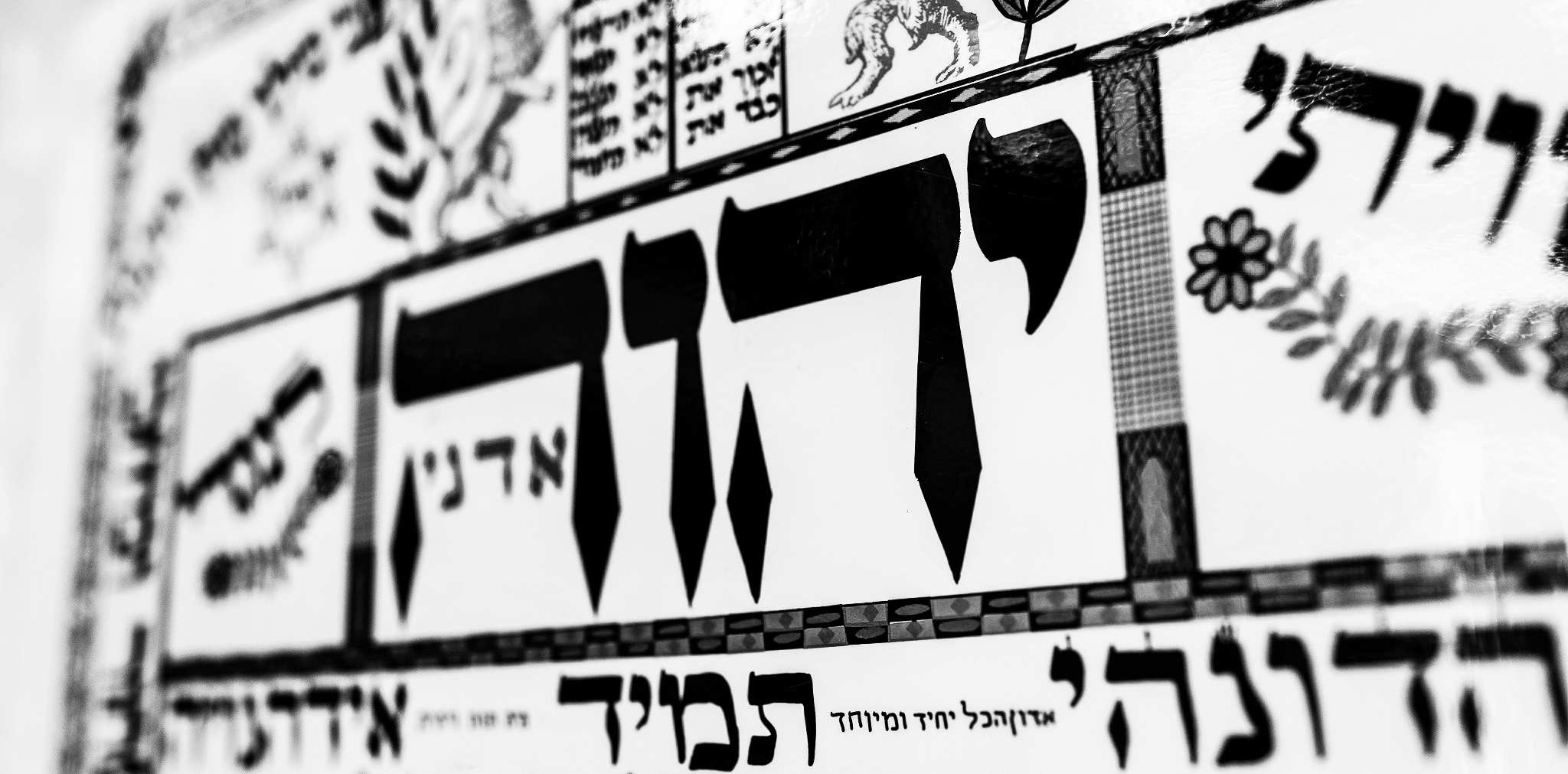
Incarnational theology, on the other hand, manifests the magnificent humility and nearness of God to disclose the divine empathy. Indeed, the LORD became Immanuel (עִמָּנוּ אֵל), “God with us,” to share our mortal condition, to know our pain, and to experience what it means to be wounded by sin, to be abandoned, alienated, forsaken. It is God’s own bittul hayesh (בִּטּוּל הַיֵּשׁ) – his self-nullification for the sake of love and truth. The “Eternal made flesh” bridges the gap between the realm of Ein Sof (אין סוף), the infinitely transcendent One, and the finite world of people lost within their sinful frailty. Of course we believe Adonai Echad (יְהוָה אֶחָד) – that the “LORD is One” – both in the sense of being exalted over all things but also in the sense of being compassionately involved in all things (Rom. 11:36). We therefore celebrate the giving of the Torah both at Sinai and especially at Bethlehem with the birth of Messiah. We celebrate that God is indeed the King and Ruler over all, but we further affirm that God’s authority and rule extends to all worlds – including the realm of our finitude and need…
As I’ve mentioned elsewhere, the climax of Sinai was the revelation of the Sanctuary. The two tablets of the law, summarizing the Ten Commandments, were stored inside the famous Ark of the Covenant (אֲרוֹן בְּרִית־יְהוָה), a sacred “three-in-one” box placed in the innermost chamber of the Tabernacle called the Holy of Holies (קדֶשׁ הַקֳּדָשִׁים). As such, the Ark served as kisei ha-kavod (כִּסֵּא הַכָּבוֹד), the Throne of Glory itself. Upon the cover (or crown) of the Ark (i.e., the kapporet) were fashioned two cherubim (i.e., angel-like figures) that faced one another (Exod. 25:17-18). According to the Talmud (Succah 5b), each cherub had the face of a child – one boy and one girl – and their wings spread heavenward as their eyes gazed upon the cover (Exod. 25:20). It was here that God’s Voice would be heard during the Yom Kippur service, when sacrificial blood was sprinkled upon the crown to symbolize the atonement of sin secured through Messiah, the Word that became flesh for us… In the very heart of the Sanctuary, then, we see the Word of God and the sacrificial blood.
The LORD God Almighty was clothed with human skin: our flesh, our bones… The miracle of the incarnation is the Absolute Paradox, as Kierkegaard said, wherein the infinite and the finite meet in mystery of the Divine Presence. Here God “touches a leper,” eats with sinners and prostitutes, sheds human tears, and suffers heartache like all other men… The gloriously great God, the very Creator of the cosmos, has “emptied Himself” to come in the form of a lowly servant (δοῦλος) – disguised to the eyes of the proud and hardhearted, but is revealed as High Priest to those who are genuinely broken and in profound need. The LORD God is God over all possible worlds, and that includes both the celestial realms of the heavens but also the world of the fallen, the ashamed, the alienated, and the lost… God’s infinite condescension reveals and augments the majesty of His infinite transcendence. There is no world – nor ever shall there be such – where the LORD God Almighty does not reign and have preeminence.
Do not suppose for a moment that the Torah of Moses does not teach “incarnational” theology. Since God created human beings in his image and likeness, the “anthropomorphic language” of Scripture is meaningful. The LORD reveals himself in human terms – using human language, expressing human emotions, and so on, as it says: Moses spoke to God panim el panim – “face to face” (Deut. 34:10). The Torah always has to take on human form – the Word made flesh – for the sake of human beings who live in flesh and blood reality…
The greatest expression of God’s word is found in the Presence of Yeshua. This is the Word of God that “tabernacles” with us, full of grace and truth (John 1:14). Yeshua is the “Living Torah,” Immanuel (עִמָּנוּ אֵל), “God with us,” who enters our world to rescue us from death. Our Scriptures state that “in these last days God has spoken to us by his Son, whom He appointed the Heir of all things, through whom also He created the worlds” (Heb 1:2). Note that the Greek construction for the phrase translated, “by his son” is ἐλάλησεν ἡμῖν ἐν υἱῷ, which literally means “he spoke to us in Son” — that is, in the language or voice of the Son of God Himself… God speaks the language “of Son” from the midst of the fire revealed at Zion. “Therefore, since we are receiving a kingdom that cannot be shaken, let us be thankful, and so worship God acceptably with reverence and awe (μετὰ αἰδοῦς καὶ εὐλαβείας) – for our God is Esh Okhelah – a Consuming Fire” (Heb. 12:28-29).
Hebrew Lesson
Isaiah 7:14b Hebrew reading:

- Isaiah 7:14b Hebrew page (pdf)
Addendum: Consider further the metaphorical and anthropomorphic language of the Scriptures: God “sees,” God “hears,” the “hand of the LORD” saves, etc. Without an implied incarnational theology, there would be no language that we could comprehend about God who is the Infinite One that transcends all things… God gets angry; God feels sorrow; God is jealous; God is a lover, etc. all these metaphors bring the language of heaven into the world of humanity… The Spirit that imparts revelation does so inside a human brain and is translated into human apprehension. Yeshua is the Substance of the shadowy talk of analogical language; he embodies God-life before us…. Yeshua is the Word of God made flesh — able to touch us, know us, share in our suffering, heal us of our sin-sickness, etc.
 In our Torah portion for
 In our Torah portion for this week (i.e.,
 Yeshua somberly warned those who professed faith: “Not everyone who says to me, ‘Lord, Lord,’ will enter the kingdom of heaven, but the one who does the will of my Father who is in heaven. On that day many will say to me, ‘Lord, Lord, did we not prophesy in your name, and cast out demons in your name, and do many mighty works in your name?’ And then will I declare to them, ‘I never knew you; depart from me, you workers of lawlessness'” (Matt. 7:21-23). Despite the practice and profession of their faith, these people were strangers to God… They had a false sense of assurance, believing that they were “serving God” while they really were not… So the essential question here is whether Yeshua truly knows you. You may know a lot about God, religion, spirituality, and yet you may remain unknown by him… So where do you find life? What are you loving? Where are you going?
 In our Torah portion this week (
 Do you sometimes feel out of control with your emotions? Have you ever felt overwhelmed by fear, anger, or inordinate desire? Yeshua said “out of the heart come evil thoughts” (i.e., διαλογισμοὶ πονηροί, literally, evil “dialogs”) that result in bad feelings, wicked actions, and despair, and therefore we must understand the connection between how we think (and what we believe) and the emotional condition of our inner life. Have you ever heard the saying, “Hurt people hurt people?” The word for “evil” in Hebrew (i.e., ra’: רע) comes from a verb (רעע) that means to injure or harm others, though the word also connotes a despair of the heart that gives up and chooses to turn “hard” and difficult (קשה). Evil is also connected with cowardice, since the conscience (i.e., moral awareness) reveals judgment for sin, and therefore evil thinking leads to rationalizations, self-deception, and a running away from the truth about who we are…
 Though it is good to ask questions about what we believe, to seek for understanding, and to study the Scriptures, we must do so using the principle that “faith seeks understanding,” rather than the converse principle that “understanding seeks faith,” since the latter elevates human reason to be the judge and arbiter of the things of God, a role for which it is both incapable and unsuited (Isa. 55:8-9; Job 9:10; 11:7; Psalm 139:6; Rom. 11:33). God is not a “what” but a “Who,” and that affects the means by which we know him (John 4:24). We certainly can know truth about God, though the instrumentality for attaining such knowledge transcends the abilities of unaided human reason (see Deut. 29:29).
 In
In