|
Jewish Holiday Calendar
For October 2025 site updates, please scroll past this entry....
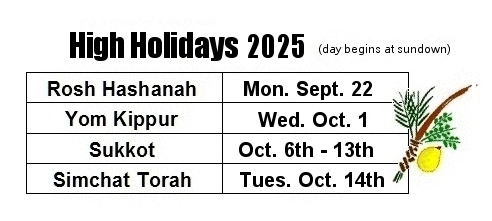
The Torah divides the calendar into two symmetrical halves: the Spring and the Fall, indicating the two advents of Messiah. The Biblical year officially begins during the month of the Passover from Egypt (called Rosh Chodashim, see Exod. 12:2), and the spring holidays of Passover, Unleavened Bread, and Firstfruits both recall our deliverance from Egypt and also our greater deliverance given by means of the death, burial, and resurrection of the Messiah, the great Passover Lamb of God. Yeshua was crucified on erev Pesach, buried during Unleavened Bread, and was resurrected on Yom Habikkurim (Firstfruits). The holiday of Shavuot (i.e., "Pentecost") both commemorates the revelation of the Torah at Sinai as well as the revelation of the Ruach HaKodesh (Holy Spirit) at Zion, in fulfillment of the promise given by our Lord....
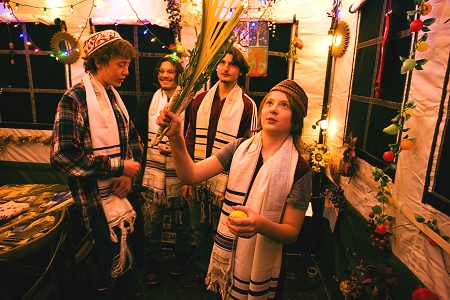
The intermediate months of summer end with the advent of the sixth month of the calendar, called the month of Elul, which recalls the time Moses interceded on behalf of Israel after the sin of the Golden Calf. To commemorate this time of our history, we likewise focus on teshuvah (repentance) in anticipation of Rosh Hashanah and especially in anticipation of Yom Kippur, the great "Day of Atonement." In Jewish tradition the 30 days of Elul are combined with the first ten days of the seventh month (called the "Days of Awe") to set apart "Forty Days of Teshuvah" leading up to the Day of Forgiveness for Israel. Immediately following Yom Kippur, the mood changes as we begin preparing for a joyous week-long celebration called Sukkot (i.e., "Tabernacles") that concludes with the holiday of Simchat Torah.
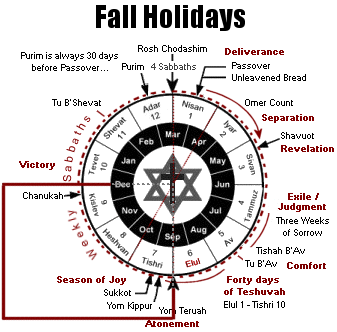 |
The Fall Holidays:
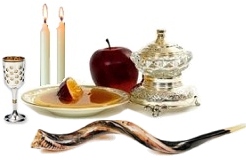
The fall festivals prophetically indicate the Day of the LORD, the second coming of Yeshua, the great national turning of the Jewish people, and the establishment of the reign of the Messiah upon the earth during the Millennial Kingdom in the world to come.
Note that in accordance with tradition, holiday dates begin at sundown. Moreover, some holidays may be postponed one day if they happen to fall on the weekly Sabbath:
1. Month of Tishri (Mon. Sept. 22nd [eve] - Tues. Oct. 21st [day]) - Fall holidays begin
2. Month of Cheshvan (Tues. Oct. 21st [eve] - Thurs. Nov. 20th [day])
- Four Sabbaths: Noach, Lekh-Lekha, Vayera, Chayei Sarah
- Yom Ha'Aliyah - Honoring Israel's immigrants (Mon. Nov. 5th; Cheshvan 7)
- Sigd - 50th day after Yom Kippur; Ethiopian Jewish holiday (Tues. Nov. 26th)
3. Month of Kislev (Thurs. Nov. 20th [eve] - Fri. Dec. 21st [day])
- Four Sabbaths: Toldot, Vayetzei, Vayishlach, Vayeshev
- Winter Solstice: Fri. Dec. 21st Kislev 23)
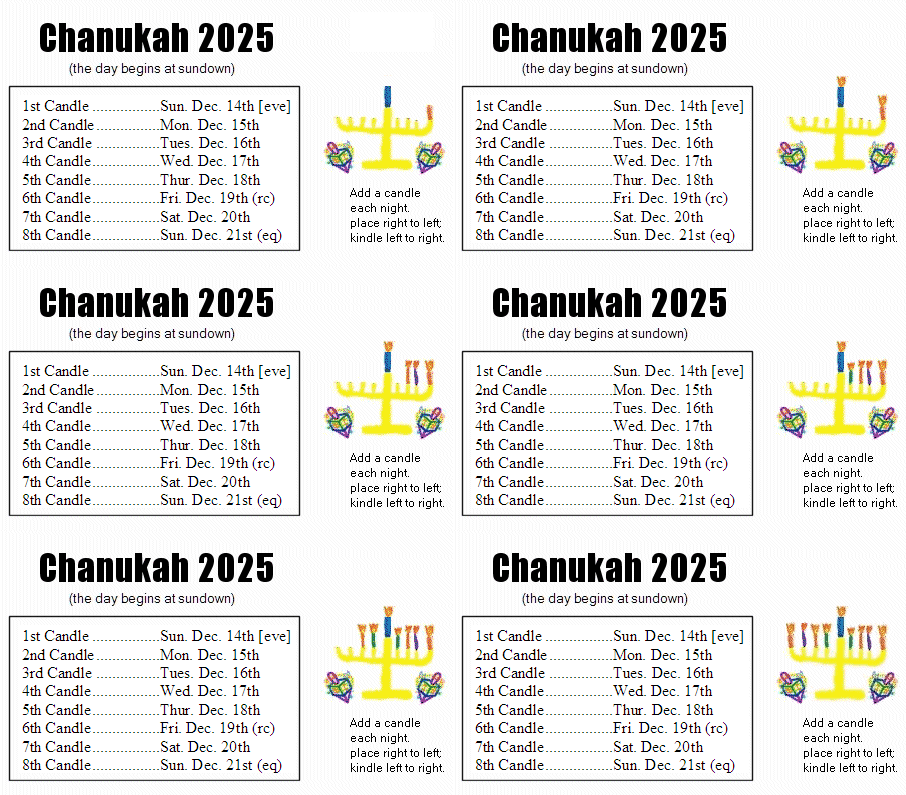
- Dates for Chanukah 2025 (5786):
- 1st Chanukah candle - Sun. Dec. 14th [i.e., Kislev 25]
- 2nd Chanukah candle - Mon. Dec. 15th [i.e., Kislev 26]
- 3rd Chanukah candle: Teus. Dec. 16th [i.e., Kislev 27]
- 4th Chanukah candle: Wed. Dec. 17th [i.e., Kislev 28]
- 5th Chanukah candle: Thurs. Dec. 18th [i.e., Kislev 29]
- 6th Chanukah candle: Fri. Dec. 19th [i.e., Kislev 30] (Chodesh Tevet)
4. Month of Tevet (Fri., Dec. 19th [eve] - Sun. Jan. 18th [day])
- Four Sabbaths: Miketz, Vayigash, Vayechi, Shemot
- Dates for Chanukah (continued):
- 7th Chanukah candle: Sat. Dec. 20th [i.e., Tevet 1]
- 8th Chanukah candle: Sun. Dec. 21st [Tevet 2] Zot Chanukah
- Winter Solstice: Sun. Dec. 21st (Tevet 2)
- Christmas - Mon. Dec. 25th (Tevet 5, 5786)
- Asarah B'Tevet - Tues. Dec. 30th (dawn), fast for Jerusalem
- Secular New Year: Mon. Jan. 1st, 2026 (Tevet 12, 5786)
 |
Note: For more about the dates of these holidays see the Calendar pages....
October 2025 Updates
Note: If any page content appears to be missing, please refresh the page...
His Surrounding Presence...
"The grace of God is something you can never get but can only be given. There's no way to earn it or deserve it or bring it about... People are saved by grace, yes, but like any other gift, it is yours only if you'll reach out and take it..." - Buechner
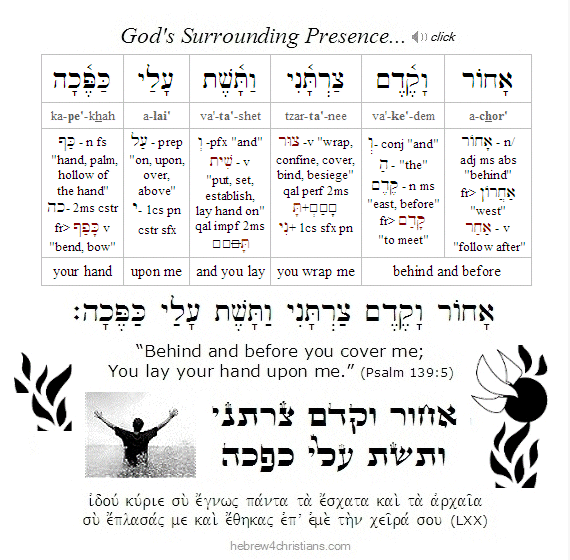
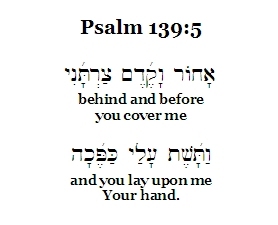
10.31.25 (Cheshvan 9, 5786) The Name of God, YHVH (יהוה), means "Presence" (Exod. 3:13-14), "Breath" (Gen. 2:7; Num. 16:22), "Life" (Deut. 30:20), and "Love" (Exod. 34:6-7), but it also means "I-AM-WITH-YOU-ALWAYS" (אני תמיד איתך), teaching us that God is an ever-present help for us (Psalm 46:1). The Name YHVH means that "God was (i.e., hayah: היה), God is (i.e., hoveh: הוֶה), and God always will be (i.e., veyihyeh: וְיִהְיֶה)," which implies that He is ever present and not restricted by time or space. Moreover, God is called havayah (הֲוָיָה), which means He is continually sustaining creation by the Word of His power: "In Him we live, move, and have our being" (Acts 17:28; Heb. 1:3). As it is poetically expressed in the Psalms, "Behind and before you cover me; You lay your hand upon me" (Psalm 139:5).
Note that in the wonderful verse the word "behind" translates the adjective achor (אָחוֹר), a word related to the word acharon (אַחֲרוֹן), "west," though it also refers to something later (אַחֲרֵי), such as a later place or time (אַחֲרִית). In Hebrew, the word generally means "backward" (לאחור) or "behind" (מאחור). God's got your back, friend... Note further that the word translated "before" is kedem (קֶדֶם), a preposition that means "east" but also refers to the primordial beginning, or the dawn. The root verb kadam (קָדַם) means to "meet" in initial contact. God is always present for you, friend, and that includes times and days that lie ahead, in the distant future... "As far as the east is from the west," so far does God's compassion and love cover you, surround you, and sustain you (Psalm 103:12).
Hebrew Lesson:
Psalm 139:5 Hebrew reading (click):
"You cover me." The verb tzartani (צַרְתָּנִי) comes from the root tzur (צור) that means to encircle, to press upon, to "pressurize," as by relentlessly attacking a stronghold. The image is that God "hems us in," that is, He surrounds us and shelters us with His Presence – so that we cannot escape: You are under God's supervision and protection, friend... And while the root tzur can imply tzuris (trouble, affliction), in this context it is used to picture the Lord securing our station, preserving, protecting, and defending our way. "You lay your hand upon me." God's personal and providential hand is at work in your life – He is HaMashgiach hagadol (הַמָּשְׁגִיחַ הַגָּדוֹל) - the Great Overseer of the universe, and that means your way is as sure and secure as the very power that God's own will affords. Amen.
Vanity of the Wicked...

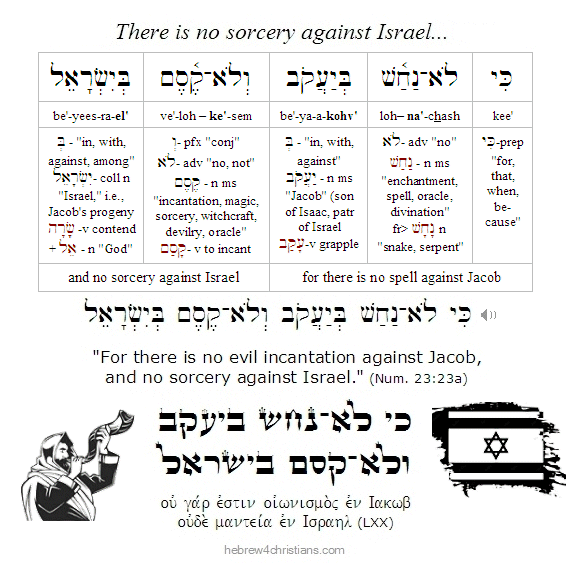
10.31.25 (Cheshvan 9, 5786) Regarding the pagan holiday of "Halloween," remember that there is no "spell" or evil incantation (i.e., nachash: נַחַשׁ) effective against Jacob, there is no sorcery (i.e., kesem: קֶסֶם) against Israel. At this time it must be said of Jacob and of Israel, 'Look at what God has done (מַה־פָּעַל אֵל)' [Num. 23:23]. No weapon formed against God's people shall prosper (Isa. 54:17), and the curse of the wicked is powerless against the tzaddikim (Prov. 26:2). Ein od milvado (אֵין עוֹד מִלְבַדּו) - God is the only true Power (Deut. 4:35; 1 Chron. 29:11; Rev. 4:11). Satan is an impostor and a foiled usurper. As Yeshua told his followers, "Behold I give to you authority (ἐξουσία) to tread on serpents and scorpions and over all the power of the enemy (καὶ ἐπὶ πᾶσαν τὴν δύναμιν τοῦ ἐχθροῦ), and nothing shall by any means hurt you" (Luke 10:19). Like Balaam and Haman, all who curse God's people or attempt to foil His plans will be upended... Hallelujah and Amen.
Hebrew Lesson
Numbers 23:23a reading (click):
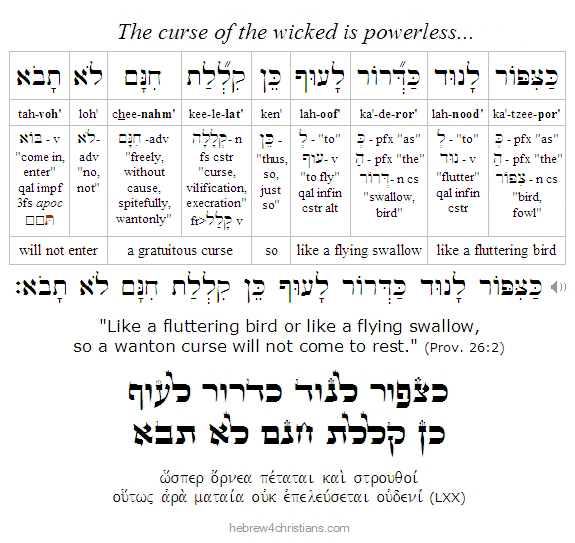
"No weapon that is formed against you shall prosper; And every tongue that accuses you in judgment you will condemn. This is the heritage of the servants of the LORD, And their vindication is from Me," declares the LORD (Isa. 54:17). The wicked gnash their teeth and accuse the godly, but their words are vain and their end is certain... "Like a fluttering bird or like a flying swallow, so a wanton curse does not come to rest" (Prov. 26:2).
Hebrew Lesson
Proverbs 26:2 reading (click):
Walking by Faith...
10.31.25 (Cheshvan 9, 5786) Each of us has been created by God for a sacred purpose. There is a deep reason why you were born. This explains why we sometimes feel lost and alone in this life. Our discontent, the fracture we sense both within and around us, our sorrows, suffering, and inevitable losses, all of it together, presents a "message" to our souls, a "basso profundo" groan of the heart, a visceral yearning for healing, for eternal life, for heaven... God has created us for himself, yet we find no lasting peace apart from him (Eccl. 3:11). Or as Augustine of Hippo famously put it: "Thou hast made us for thyself, O Lord, and our heart is restless until it finds its rest in thee" (Confessions). Therefore our Lord cries out to those who are hurting, troubled, and afraid: "Come to me, all who labor and are heavy laden, and I will give you rest. Take my yoke upon you, and learn from me, for I am gentle and lowly in heart, and you will find rest for your souls" (Matt. 11:28-29).
Our Torah portion for this week is called "Lekh-Lekha," which can be translated as "come to yourself," that is, turn and reconnect to your spiritual essence, your identity, your heart (Luke 15:17). We have to start the journey there, because ultimate reality is intensely personal, being grounded in the "who-ness" of God. It is within the consciousness of our own "I am," our deepest identity as a personal, thinking, and feeling being, that we are able to relate to the person and heart of the great "I AM" of the LORD.
Abram is the exemplar of faith for us; indeed he is called the "father of faith" (Isa. 51:1-2; Rom. 4:16; Gal. 3:29). Abram courageously searched for God in his emptiness, and God graciously answered the cry of his heart. He left everything behind as he journeyed into the realm of promise - regarding himself as someone chosen to know God's blessing and grace. Abram was able to walk by faith because he stopped listening to the voices of the ego - the worldly and unbelieving parts of himself - and therefore was able to hear God's truth.
According to the classical sages, Abram was tested ten separate times in the course of his life. In the first test, Abraham was asked to "go to a land that I will show you" only to find it a place of famine and trouble. In the very of the tests, Abraham was asked to "go to the land of Moriah, to the place that I will show you," and there to offer up his promised son Isaac as a burnt offering... In each case the temptation was to give up hope in God's promise, since at the time of each test Abram did not know the outcome as a foregone conclusion. Nevertheless Abram walked in faith, in fear and trembling, yet fear contextualized by the deeper strength found in God's love and presence. Abraham had to close his eyes to this world and walk in the darkness of faith to see the divine light that transcends this realm; he had to "believe to see" that God's promise was sure.
So the journey is one of faith and the inner transformation that comes from trusting in God (בִּטָּחוֹן). "Go from your country and your kindred and your father's house to the land that I will show you" is the call of teshuvah - turning away from enslaving habits that deaden our consciousness - and to come alive by believing that which transcends own understanding. The Greek word for repentance, "metanoia" (μετάνοια) describes the process well, since it means going beyond ("meta") the habitual categories of the mind ("nous") to believe and apprehend the miracle of God. Faith discerns the unseen good that is at work behind the realm of appearances. God is the "Father of Lights" who supervises the ebb and flow of creation. He is always working to direct all things according to his purposes and will. This is the "land that I will show you," that is, the realm of blessing and eternal life.
Hebrew Lesson
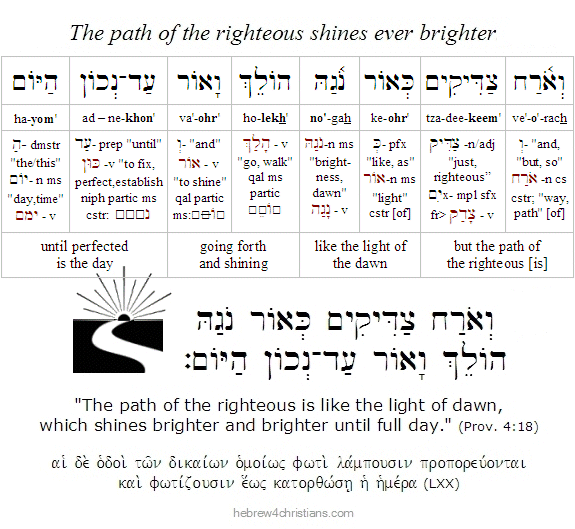
Proverbs 4:18 reading (click):
The Divine Presence...
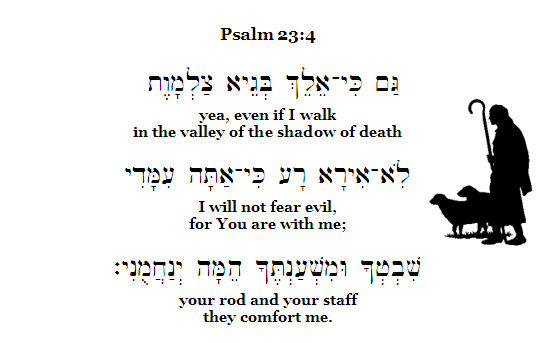
10.31.25 (Cheshvan 9, 5786) God told Moses that his Name means that He is Present (הֹוֶה) in every moment - past, present, and future (הָיָה וְהוֶה וְיָבוֹא). The Name YHVH (יהוה) is "shorthand" for "I AM with you always" (אָנכִי אֶהְיֶה עִמָּכֶם). There is no moment in time, just as there is no place, where God is not "there" for you. This includes times of testing, darkness, and even death itself (Psalm 23:4).
The LORD our God does not abandon us, even when He may seem hidden, powerless, or unwilling to intervene. Faith trusts that He is present just then - in moments when we are vulnerable, weak, afraid, and seemingly all alone, and yet affirms that somehow all things are bound up in his love and good will toward us... Faith receives God as near to us in our struggles, the loving One who is always with us, and the substance of all our hope for true healing and eternal life. Amen.
The Meaning of "El Shaddai"...
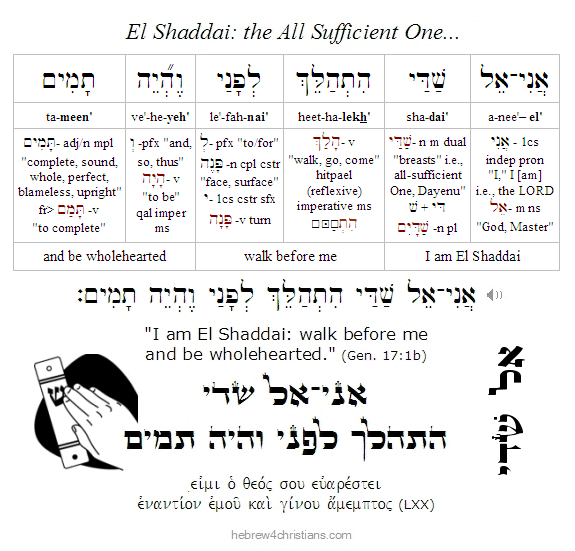
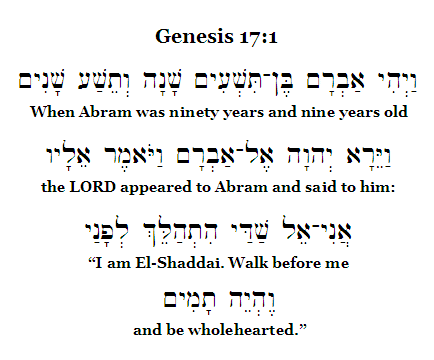
10.30.25 (Cheshvan 8, 5786) Shalom chaverim. In this week's Torah reading (i.e., Lekh-Lekha), the LORD referred to himself as "El Shaddai" (אֵל שַׁדַּי), often mistranslated as "God Almighty." In Genesis 17:1, YHVH said to Abram: "I am El Shaddai. Walk before me and be perfect." But why did the LORD choose to reveal Himself to Abram using this distinctive name? And what can we learn about what that name means for us today?
Most English translations render El Shaddai as "God Almighty" because the translators of the Septuagint (i.e., the ancient Greek translation of the Old Testament) thought the Hebrew word "Shaddai" came from a root verb (shadad: שָׁדַד) that means "to overpower" or "to destroy." The Latin Vulgate likewise translated Shaddai as "Omnipotens" (from which we get our English word "omnipotent"). In other words, the translators regarded this term to suggest that God is so overpowering that He is considered "Almighty."
אֲנִי־אֵל שַׁדַּי
הִתְהַלֵּךְ לְפָנַי וֶהְיֵה תָמִים
"I am El Shaddai:
walk before Me and be wholehearted." (Gen. 17:1)

Hebrew Lesson
Gen. 17:1b reading (click):
According to the Jewish sages, however, Shaddai is a contraction of the phrase, "I said to the world, dai (enough)" (as in the famous word used in the Passover Haggadah, Dayeinu -- "it would have been sufficient"). God created the world but "stopped" at a certain point. He left creation "unfinished" because He wanted us to complete the job by means of exercising chesed (love) in repair of the world (tikkun olam).
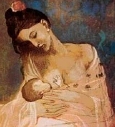
Jacob's blessing given in Genesis 49:25, however, indicates that Shaddai might be related to the word for breasts (shadayim), indicating sufficiency and nourishment (i.e., "blessings of the breasts and of the womb" (בִּרְכת שָׁדַיִם וָרָחַם)). In this case, the Name might derive from the contraction of sha ("who") and dai ("enough") to indicate God's complete sufficiency to nurture the fledgling nation into fruitfulness. Indeed, God first used this Name when He referred to multiplying Abraham's offspring (Gen. 17:2). Understood in this light, the name El Shaddai provides a picture of God's nurturing love for our lives: God sustains us and loves us, like a mother loves her newborn child...
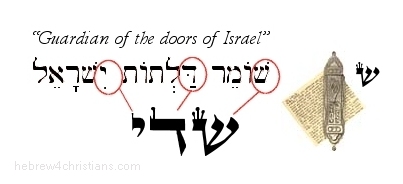
El Shaddai is used almost exclusively in reference to the three great patriarchs: Abraham, Isaac, and Jacob, and (according to Exodus 6:2-3) was the primary name by which God was known to the founders of Israel (the name YHVH given to Moses suggests God's absolute self-sufficiency, whereas the name Elohim suggests God's soverign power). The word "Shaddai" (by itself) was used later by the prophets (e.g., Num. 24:4; Isa. 13:6, Ezek. 1:24) as well as in the books of Job, Ruth, and in the Psalms. In modern Judaism, Shaddai is also thought to be an acronym for the phrase Shomer (שׁוֹמֵר) Daltot (דַּלְתוֹת) Yisrael (יִשְׂרָאֵל) - "Guardian of the doors of Israel" - abbreviated as the letter Shin (שׁ) on most mezuzot:
 |
In connection with the Name El Shaddai (אֵל שַׁדַּי), we note that Abraham has more identifiable descendants than any other person in history... From the line of Isaac would come the twelve tribes of the Jewish people (as well as all those Gentiles who have been grafted into the covenantal blessings of Israel, i.e., the "church"), and from Ishmael would come the twelve tribes of the Ishmaelite people. Abraham also later married Keturah who bore him six more sons that became founders of six other nations of the Arab world, including the Midianites. To signify Abram's status, God changed his name from Avram ("exalted father" [from אָב, "father," + רָם, "exalted"]) to Avraham ("father of a multitude," a homonymic wordplay from אָב, "father" + המוֹן, "crowd"). Notice that some regard Avraham's name to mean "father of mercy" (from אָב, "father" + רחם, "womb").
Finally let me add that while the name El Shaddai can present a "feminine image" of the LORD, this is assuredly appropriate, since God created both genders as a reflection of His image, as it is written: "God created man in his own image, in the image of God he created him; male and female (זָכָר וּנְקֵבָה) he created them (Gen. 1:27). However, some people have made the dubious suggestion that El Shaddai should further be translated as "the many breasted One," even though such language suggests the abominable practices and idols common in various ancient fertility cults - customs that were later subject to the most severe judgment of God upon the seven Canaanite nations. It should be clear, in light of the overall context of the revelation given in the Torah, that the name El Shaddai is directly connected with the sanctity of the promise given to Abraham regarding the future growth of his family, and ultimately of the coming of the promised Seed, the Messiah...
 |
Reasons of His Heart...
"God is too good to be unkind, and He is too wise to be mistaken. And when we cannot trace His hand, we must trust His heart... The sweetest prayers God ever hears are the groans and sighs of those who have no hope in anything but his love." - Charles H. Spurgeon
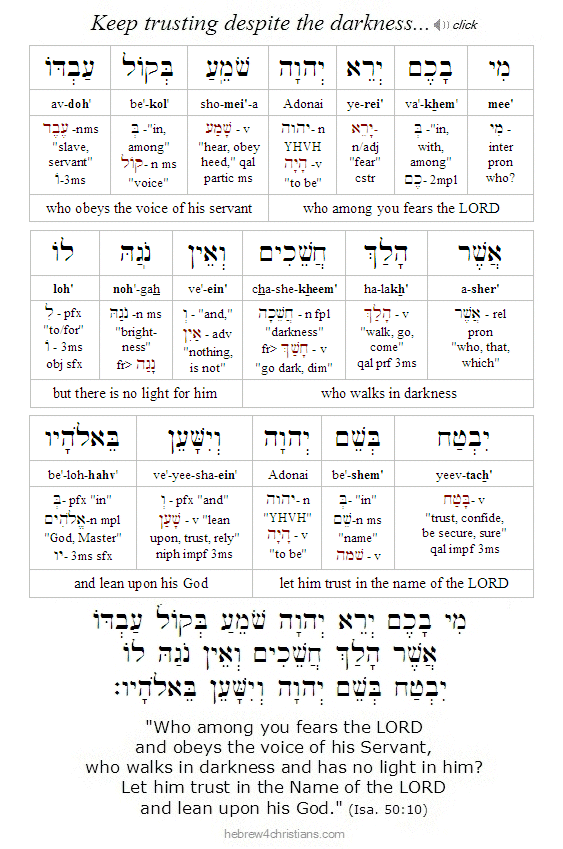
10.30.25 (Cheshvan 8, 5786) When I don't understand why God sometimes allows troubles to occur, I'm careful to review who God is before surrendering to feelings of despair. After all, when you are convinced that the Lord is your Good Shepherd who faithfully guides your way, you can trust in his good will for your life, even if you are in darkness and have no light (Isa. 50:10; Prov. 3:5-6).
Who before why... First know God's heart and then (perhaps) you will be able to seek understanding. In cases of great tragedy and loss, however, no rationalization or explanation will likely suffice, and we are therefore left with the raw decision of whether we will trust in God, even in our darkness, and in our sorrows, and apart from understanding...
Thomas Aquinas once wrote: "To one who has faith, no explanation is necessary; to one without faith, no explanation is possible." This is because, as Blaise Pascal said, "the heart has its reasons that reason knows not. " Amen, seek first the Kingdom of God and then you will know. We must believe in God's heart first of all...
Hebrew Lesson
Isa. 50:10 reading (click):
Midst of the Whirlwind...
"Here is the world. Beautiful and terrible things will happen. Don't be afraid."- Frederick Buechner
10.30.25 (Cheshvan 8, 5786) For reasons not explicitly explained in Scripture, God chose to begin creating the world in apparent chaos: תֹהוּ וָבֹהוּ וְחֹשֶׁךְ עַל־פְּנֵי תְהוֹם / tohu va'vohu ve'choshekh al-penei te'hohm: "formlessness and emptiness and darkness was upon the face of the deep" (Gen. 1:2a). The Torah commentator Rashi here notes that the word tohu (תֹהוּ) signifies amazement, for a person would be utterly astonished were he present at that moment, whereas the word bohu (בֹּהוּ) signifies the inconceivable void surrounding the face of the watery depths. But note that the Spirit of God (רוּחַ אֱלֹהִים) was hovering over the depths: וְרוּחַ אֱלֹהִים מְרַחֶפֶת עַל־פְּנֵי הַמָּיִם (Gen. 1:2b) "The throne of Divine Glory was standing in space, hovering over the face of the waters by the breath of the mouth the Holy One, blessed be He, and by His command, even as a dove hovers over its nest" (Rashi).
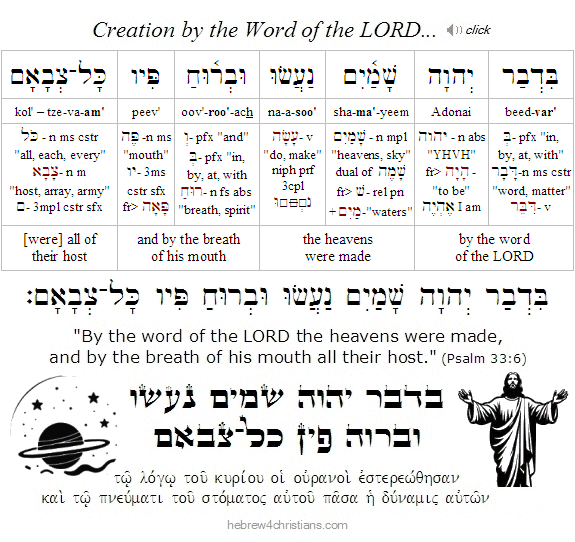
From such mystery and depths of darkness God speaks and calls forth divine light, the first of all God's creations evoked by the Word of God (דְּבַר אֱלֹהִים). "And God said: יְהִי אוֹר וַיְהִי־אוֹר - yehi ohr, vayhi-ohr -"Let there be light, and there was light" (Gen. 1:3). God's handiwork in creation, then, first involved demonstrating His creation and mastery of the primordial and elemental forces: earth, water, wind, and light.
One thing we note from these dramatic opening words of Torah is that God our blessed Creator (בּוֹראֵנוּ המְבוֹרך), speaks from the midst of inscrutable winds (סְעָרָה, "tempest"), demonstrating that He is the Sovereign over the seemingly chaotic world (Job 40:6, John 3:8). "Greek-minded" theology is often more comfortable with the idea of "Apollo" (that is, the pagan ideal of "harmony and order") than the apparently obscure and inexplicable ways of the LORD God of Israel. The rational mind wants some sort of "systematic theology" so that God may be explained in an orderly and logical way. The idea of mystery and equivocal language is considered problematic. There is danger here that we forget that God is called Esh Okhlah (אֵשׁ אכְלָה), "Consuming Fire" (Deut. 4:24, Heb. 12:29). His thoughts are not our thoughts, neither are His ways our ways (Isa. 55:8-9). As the prophet Isaiah also said: "I form light and create darkness (יוֹצֵר אוֹר וּבוֹרֵא חֹשֶׁךְ), I make peace and create woe (עֹשֶׂה שָׁלוֹם וּבוֹרֵא רָע); I the LORD do all these things (אֲנִי יְהוָה עֹשֶׂה כָל־אֵלֶּה)" (Isa. 45:7).
We live in fearful times, chaverim. People are afraid of losing their money, their health, their freedom, and so on. But we must be careful here. The fear of "losing control" can move us to anger, yet the sages liken anger to idolatry since it denies the providence of God in our lives (i.e., hashgacha partit: השגחה פרטית). Anger over the apparent chaos of life implies that we don't really believe (or accept) that God is in control -- that He is speaking "from the midst of the whirlwind" -- and therefore we feel aggrieved and even embittered by what might happen to us. We must look to God as the Master of the storms of life and draw closer to Him in trust. The Scriptures affirm that for those who love God "all things work together for good" -- even if the present hour seems incomprehensible and even dangerous (Rom. 8:28-39).
Yeshua warned us not to live in fear of man, but rather to live in awe of the love and glory of God (Matt. 10:28). The worst that man can do is "kill the body" but he has no real power over the soul... Tribulation - the "squeezing of grapes" - is part of the life of faith, but we are invited to come "boldly" before the Throne of Grace (παρρησίας τῷ θρόνῳ τῆς χάριτος) to find help for our lives (Heb. 4:16). Note that the word translated "boldly" in this verse (παρρησίας) means that we can speak freely to God from the center of the chaos of our own hearts -- without fear or shame. We don't need to conceal ourselves from the Divine Light, since this is the very Light that overmasters the "tohu va'vohu" chaos of creation! Those who accept that God is in complete control of their lives are set free from the terrible burdens of fear and outrage. Abiding in ahavah shlemah (אַהֲבָה שְׁלֵמָה, God's "perfect love") means that you can let go.
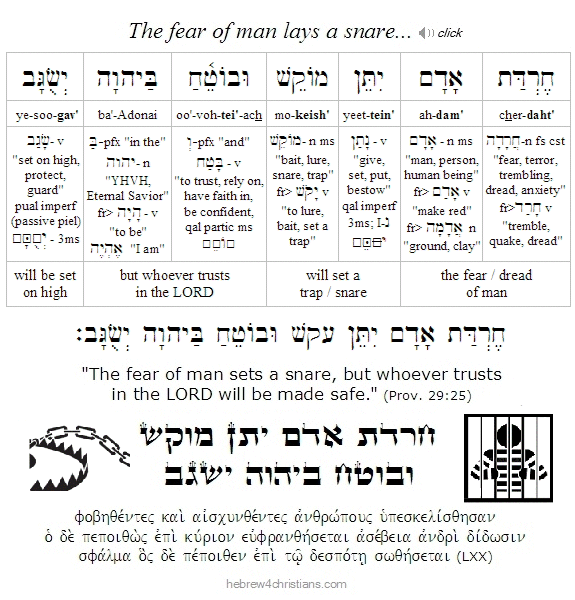
May God help us all remember: חֶרְדַּת אָדָם יִתֵּן מוֹקֵשׁ וּבוֹטֵחַ בַּיהוה יְשֻׂגָּב / "The fear of man lays a snare, but whoever trusts in the LORD will be made safe" (Prov. 29:25). Note that this "fear of man" is not just the fear of external dangers but more deeply is the fear we embrace within our hearts - our own insecurity that undermines our faith.... May the LORD help us abide in His perfect love, free from the ravages of fear, anger, and anxiety. Amen.
Hebrew Lesson:
Proverbs 29:25 Hebrew Lesson (click):
Deliver us from Anger...
10.29.25 (Cheshvan 7, 5786) Anger is a volatile passion that can sometimes overwhelm even the best of us, adrenalizing the body into an intoxicating frenzy that deranges the mind and makes clear thinking impossible. Indeed, a fit of rage is a moment of insanity, a break with reality where rationality is lost and the soul is overcome with destructive impulses.
Feelings of anger do not arise in a vacuum, of course, but are usually aroused by interpreting certain things to be a threat, an injustice, a personal insult, a matter of frustration, and so on. Uncritically accepted, these interpretations physiologically affect the body as stress hormones are released and an adrenaline rush begins to impair our ability to form accurate judgments. When someone feels threatened or abused, they often get angry and prejudge the actions of others to be blameworthy, unjustified, and deserving of retribution. Consider how "road rage" occurs because one driver initially assumes that another driver maliciously wanted to harm him...
Unleashing anger does not provide "catharsis" or relief, however, but actually tends to make matters worse. When people "act out" their rage, they do things they later will deeply regret, and some even suffer from "derealization" by denying what they did. Left unchecked anger can destroy our relationships with others and undermine our physical and spiritual health....
Since unbridled anger "possesses" the heart, soul, and mind of a person, some of the sages say it indicates "self-worship." Oh let God be the master of the universe, but the inner domain of the heart, soul, and mind are matters of my own sovereignty and control! And that is the core problem - that you want to be the "god" of your own life and its domain - and your anger often expresses that your will has been violated, on earth at least (and maybe also in heaven).
We are warned not to destroy ourselves by allowing bitterness, anger, or fear to consume our hearts. In the Torah we read: "And you shall not bring an abominable thing (תּוֹעֵבָה) into your house and become attached to destruction as it is" (Deut. 7:26). The sages of the Mishnah said that yielding to rage is equivalent to idol worship and should never be brought into the home. Indeed, rage is linked with "avodah zarah" because it confesses that the Lord can't (or won't) help you in the moment of your testing or need. The Scriptures are clear, however, that "there is no test given to you that you cannot handle with God's help" (1 Cor. 10:13), and we are invited to come boldly before the Divine Presence to find just such help in our time of need (Heb. 4:16). Believing that you can't overcome your fear or anger problem is therefore a form of idolatry.
"Lo yiheyeh vekha el zar" (לֹא־יִהְיֶה בְךָ אֵל זָר) -- "there shall be no foreign god within you" (Psalm 81:9), which means that we must expressly deny the ego's demand to have its will be done. Being full of a sense of entitlement and self-importance is to be enslaved to vanity and to have a foreign god "within you." God and human arrogance cannot coexist - since the inner world of the arrogant person denies God's rightful place as King. As it is written in our Scriptures: "The wrath of man (כַּעַס אָדָם) does not work the righteousness of God" (James 1:20). God will indeed help us if we ask according to his will (1 John 5:14-15), and being free of godless rage assuredly is his will. "Blessed is the LORD who delivers us from self-destruction."
Anger is ultimately rooted in fear, and that fear is a form of faithlessness. We may find ourselves angry or depressed because we feel powerless or we believe that God will not take care of us. "Submitting" your life to God in humility means trusting that he will never leave nor forsake you. Therefore we are delivered from anger by faith in His love. When we truly surrender our will to his care, we are delivered from bondage to our anxious feelings and anger. As it is written: "Submit yourselves therefore to God. Resist the devil, and he will flee from you. Draw near to God and he will draw near to you. Cleanse your hands, you sinners, and make your hearts pure, you double-minded. Lament and mourn and weep! Let your laughter be turned to mourning and your joy to gloom. Humble yourselves in the sight of the Lord, and He will lift you up" (James 4:7-10). Amen, when we let go of our will and unquestioningly trust that God is in control of all that happens to us, he will impart "shalom shalom," the peace of his everlasting peace... Amen.
Hebrew Lesson
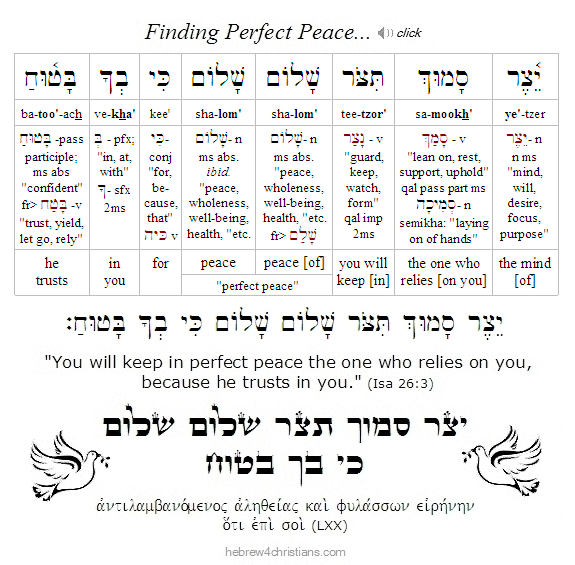
Isaiah 26:3 reading (click for audio):
Righteousness of Heart...
10.29.25 (Cheshvan 7, 5786) From our Torah reading for this week (i.e., Lekh-Lekha) we learn about the resolute faith of Abram who, despite his old age, trusted that God would make his descendants as numerous as the stars in the night sky: "And the LORD brought him outside and said, "Look toward heaven and count the stars, if you are able to number them." Then the LORD said to him, "So shall your offspring be. And he trusted in the LORD, and He regarded it to him as righteousness" (Gen. 15:6).
Abram "staggered not" at the promise of God, and therefore God imputed to him righteousness (צְדָקָה), a term understood here to be divine esteem and grace. After all, what could Abram do in the face of seeming impossibility? There was nothing he could do to bring about such a miracle. The New Testament comments: "He did not weaken in faith when he considered his own body, which was as good as dead (since he was about a hundred years old), or when he considered the barrenness of Sarah's womb" (Rom. 4:19). It was in a state of utter powerlessness and complete helplessness that Abram retained hope and thereby received the promise by faith. "For he was beyond hope, yet in hope he trusted that he would indeed become a father to many nations, in keeping with what he had been promised, 'so shall your offspring be'" (Rom. 4:18).
Understand that 400 years before the law was given at Sinai, the LORD regarded the faith of Abram as the essence of the righteousness later prescribed by the laws of Torah. Therefore the very First Commandment of the Ten Commandments is simply: Anochi Adonai Elohekha (אָנכִי יְהוָה אֱלהֶיךָ): "I AM the LORD your God" (Exod. 20:2), which repeats the call to trust God before everything else, since it is complete surrender to the love and grace of God that justifies us, as it is written: "to the one who does not work but trusts in the One who justifies the ungodly (i.e. the helpless), his faith is counted as righteousness" (Rom. 4:5).
Where the LORD says "Look toward heaven and count the stars, if you are able to number them," we note the Hebrew word "count" (סָפַר) may also mean "recount," "interpret," or "explain"... This is the same word used in the famous verse, "The heavens declare (מְסַפְּרִים) the glory of God" (Psalm 19:1). The idea here would be not merely that Abram would have lots of descendants, but they would shine in brilliance against the backdrop of the darkness. Abram's children would be lights upon the earth, declaring the truth of God and enlightening the darkness of mankind. "And those who are wise shall shine like the brightness of the sky above; and those who turn many to righteousness, like the stars forever and ever" (Dan. 12:3). In the same way, Yeshua said: "let your light shine before others, so that they may see your good works and give glory to your Father who is in heaven" (Matt. 5:16; 13:43).
O precious LORD, may your light shine within us always.... Amen.
Hebrew Lesson
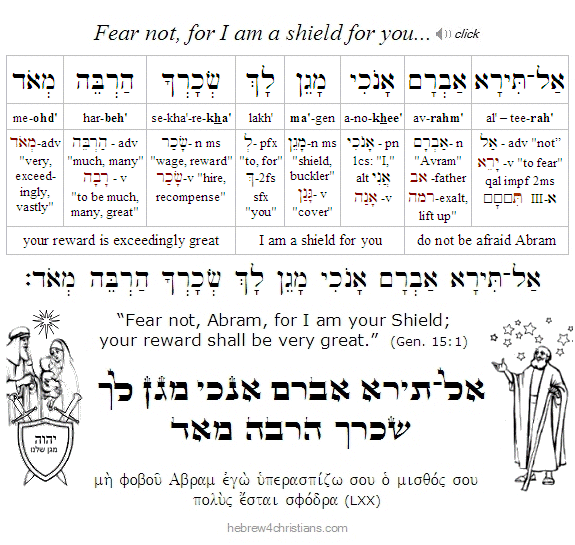
Genesis 15:1b reading (click for audio):
Heeding the Call...
10.29.25 (Cheshvan 7, 5786) I had mentioned earlier that "lekh-lekha" (לך־לך) can be understood as a command to "come to yourself," that is, to turn and reconnect to your spiritual essence, though it can also be understood as a command to "go out of yourself," that is, to escape from the bondage of your carnal ego... This corresponds to teaching in the New Testament where we are commanded to both "put on" our new spiritual identity as God's beloved, and to "put off" the old self by being revived in our minds (Eph. 4:22-24). Both "movements" are the heart are necessary: we must turn to the Lord and receive his blessing (inward), and we must turn away from what has previously defined us (outward). We die to ourselves and come back to life; we cross out the old and walk into the new...
The Jewish philosopher Emmanuel Levinas (1906-1995) said that the reason it is hard to "go out of yourself" has to do with an overwhelming sense of inertia that collapses into passivity of the soul. We get "comfortably numb" and resist waking up. When the heart miraculously becomes "elected," however, as when Abraham heard and believed God's promise, it comes alive before the Divine Presence, and by extension, it is empowered to go out of itself in blessing others. The process of sanctification puts away the old self that is lost within itself by consciously turning to spiritual reality and truth.
There has to be a starting point, however, a "conversion" of the heart that marks the transition from old to new. Abraham is our model. He did not simply make a journey away from home that eventually circled back to what he knew before - the security and history that had defined him. No, his break from his former life was radical and changed his direction forever. It was a "crossing over" into newness of life. Beyond the dimension of the physical world, Abraham's journey was one of inner transformation, and therefore it was a journey into the unknown. He was made a "stranger" and a sojourner in this world. Unlike the Aristotelian view that sees an "end" or telos (purpose) embedded within natural processes, God revealed to Abraham the glory of the transcendental world, incalculable in its beauty, depth, goodness, and holiness. Being "elected" or "chosen" by God is to bear witness of the sanctity of life by "forgetting what lies behind and straining forward to what lies ahead," striving to attain the high calling of God in the Messiah.
Hebrew Lesson
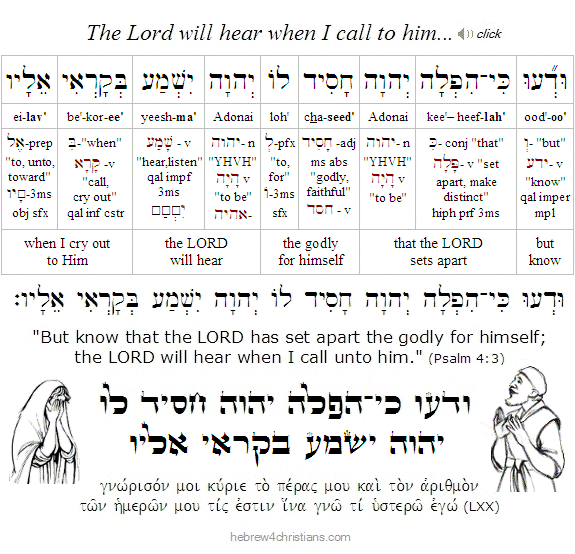
Psalm 4:3 reading (click):
The Father of all who believe...
The following is related to this week's Torah reading, parashat Lekh-Lekha....
10.29.25 (Cheshvan 7, 5786) Abraham is traditionally regarded as the first Jew, but understand that he began life as a "Gentile," the son of an idolater (Josh. 24:2), who later heard God's voice and then began his pilgrimage of faith into the realm of promise (Heb. 11:8-11). Moreover, God personally chose Abraham and promised to make him into a blessing while he was yet uncircumcised, and it was only later, after he sacrificed his beloved son Isaac (i.e., the Akedah) that he was promised that in his Seed (זֶרַע) would all the nations of the earth be blessed (Gen. 22:18).
It was the faith of Abraham - especially as demonstrated by the Akedah - that prefigured the justification of the nations through faith. This is the "Gospel of Moses" which Yeshua alluded (John 5:46). Therefore we read: "And the Scripture, foreseeing (προοράω) that God would justify the nations by faith, proclaimed the gospel beforehand to Abraham, saying, "In you shall all the nations be blessed" (Gal. 3:8-9). In other words, God's great plan of salvation was from the beginning for all the nations of the earth to be redeemed. Abraham is therefore rightly called the "father of all those who believe."
If you understand Jewish thinking on the subject (as opposed to Gentile thinking), Abraham is regarded as the first Jew because he received the rite of brit millah (circumcision). That was the Apostle Paul's understanding as well, as well as the point he made that Abraham was the father of faith for both the Jew and the non-Jew: "He [Abraham] received the sign of circumcision as a seal of the righteousness that he had by faith while he was still uncircumcised. The purpose was to make him the father of all who believe without being circumcised, so that righteousness would be counted to them as well, and to make him the father of the circumcised who are not merely circumcised but who also walk in the footsteps of the faith that our father Abraham had before he was circumcised" (Rom. 4:11-12). As Paul further said regarding this topic, "For no one is a Jew who is merely one outwardly, nor is circumcision manifest in the flesh (φανερῷ ἐν σαρκὶ). But a Jew is one inwardly (κρυπτός), and circumcision is a matter of the heart, by the Spirit, not by the letter. His praise is not from man but from God" (Rom. 2:28-29). "For neither the rite of circumcision counts for anything, nor does uncircumcision - but בְּרִיאָה חֲדָשָׁה - a new creation" (Gal. 6:15).
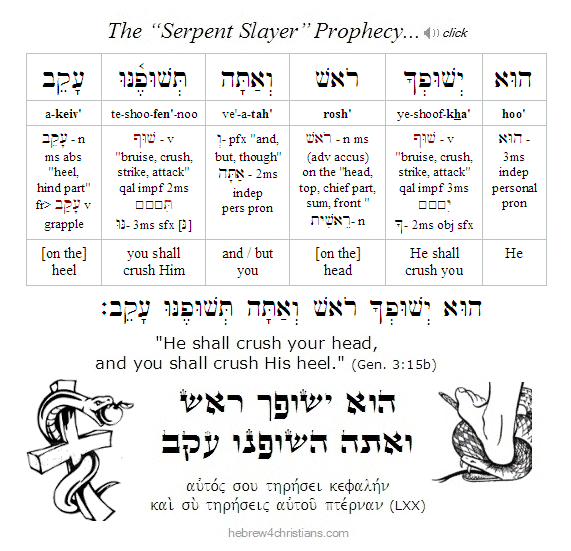
In this connection it is helpful to remember that the word "Jew" (יְהוּדִי) comes from a root (יָדָה) that means to "thank" or to "praise" (see Gen. 29:35). The Apostle Paul alluded to this by saying that a Jew whose heart has been circumcised by the Spirit is "one who is praised by God," not by men (Rom. 2:29). Being a Jew therefore means that you are "chosen" to receive blessings and grace to live in holiness for the glory of God and for the welfare of the world. The performance of various commandments are for the greater purpose of tikkun olam, the "repair of the world," in order to reveal God's goodness and love. Doing so makes someone a Jew, not some external rite of brit milah (circumcision). God is the source and the power of what makes a true tzaddik. After all, Israel was meant to be a "light to the nations" (Isa. 42:6; 60:3), and God had always planned for all the families of the earth to come to know Him and give Him glory through Abraham (Gen. 12:3). "Jewishness" is therefore not an end in itself but rather a means to bring healing to the nations... Indeed, the entire redemptive story of the Scriptures centers on the cosmic conflict to deliver humanity from the "curse" by means of the "Seed of the woman" who would come. The gospel is Jewish because it concerns God's great redemptive plan for the whole world...
The first shall be last, and vice-verse (Mark 10:31; Matt. 8:11). "And Yeshua called them to him and said to them, "You know that those who are considered rulers of the Gentiles lord it over them, and their great ones exercise authority over them. But it shall not be so among you. But whoever would be great among you must be your servant, and whoever would be first among you must be slave of all. For even the Son of Man came not to be served but to serve, and to give his life as a ransom for many" (Mark 10:42-45). May it please the LORD to give us all Jewish hearts, full of His praise and the desire to help others in His Name.
Hebrew Lesson
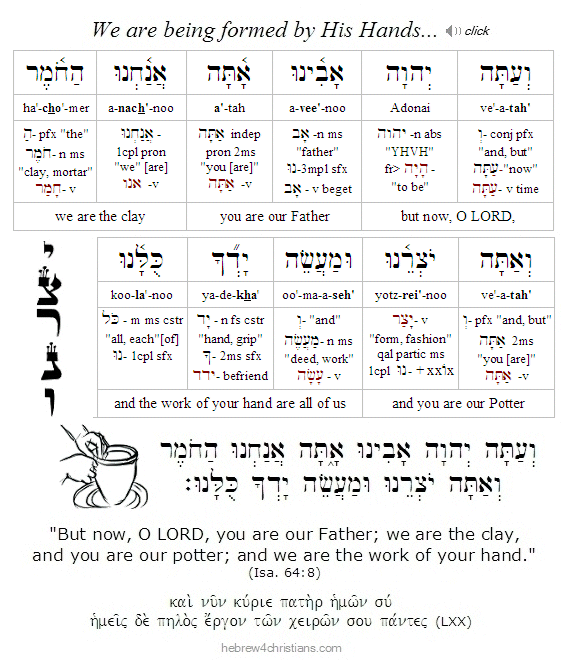
Isaiah 64:8 reading (click for audio):
Note: You are a new creation who has "crossed over" from death to life in Yeshua... Therefore you have been circumcised inwardly by the Spirit and are grafted into the covenant promises given to ethnic Israel. You are no longer a stranger but a fellow heir and member of God's household (Eph. 2:11-13). In the end of days, "all Israel will be saved," which implies that the Jewish people will be restored to God in Messiah. The great day of Zion comes!
The Original Priesthood...
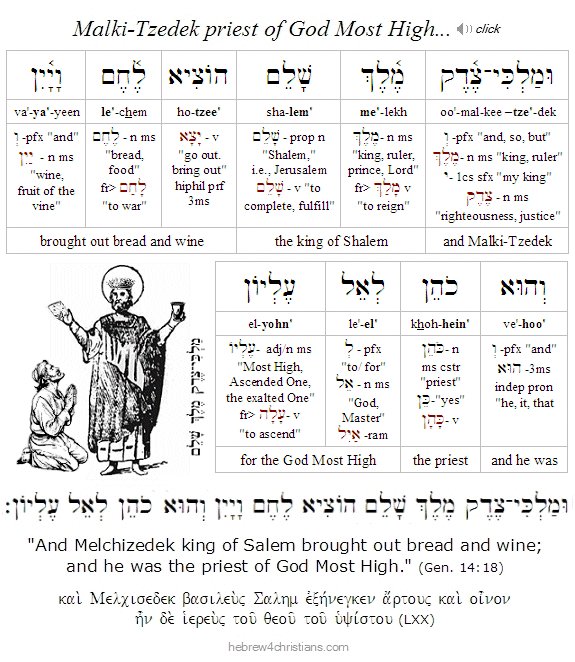
10.28.25 (Cheshvan 6, 5786) Our Torah reading for this week (Lekh-Lekha) reveals that the very first "priest" of the LORD (i.e., kohen: כּהֵן) was neither a Jew nor a Levite nor a descendant of Aaron, but rather Someone who is said to have "neither beginning of days nor end of life" but was made like (ἀφωμοιωμένος) the Son of God, a priest continually (Heb. 7:3). This priest, of course, was Malki-Tzedek (מַלְכִּי־צֶדֶק), the King of Shalem (מֶלֶךְ שָׁלֵם) to whom Abraham offered tithes after his victory over the kings (see Gen. 14:18).
The author of the Book of Hebrews makes the point that the priesthood of Malki-Tzedek is greater than the Levitical priesthood and is therefore superior to the rites and services performed at the Mishkan, or "Tabernacle" (Heb. 7:9-11). It was to Malki-Tzedek that Abraham (and by extension, the subsequent Levitical system instituted by his descendant Moses) gave tithes and homage -- and rightly so, since Yeshua is the great High Priest and Mediator of the ultimate covenant based on God's eternal life (see Heb. 8:6).
Hebrew Lesson
Genesis 14:18 reading (click):
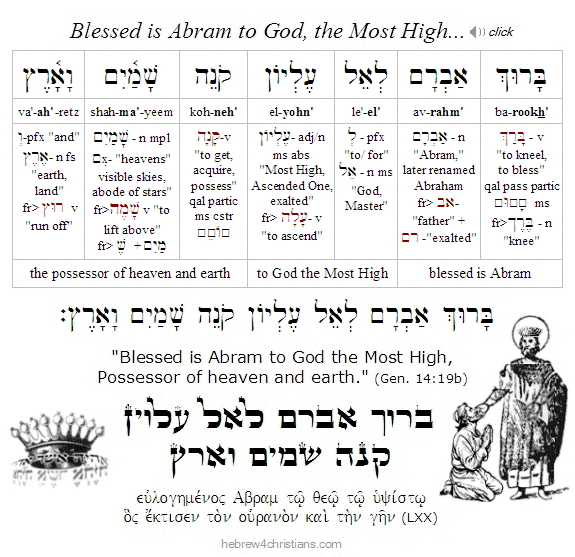
In a sense, Malki-Tzedek revealed the perfected or "Final Adam" (אדם האחרון) because just as Adam's original priesthood was to mediate God's Presence on the earth, though he failed, Yeshua was born to "undue the curse" resulting from the transgression by means of the greater priesthood given in his own body and blood. Yeshua offered up a far better sacrifice upon the altar of the Cross in Jerusalem (1 Cor. 15:45). He is humanity's great High Priest (Kohen Gadol) of the New Covenant with God, and like Malki-Tzedek, his priesthood was ordained and abides forever- unlike that given through the Levitical rites. Our Lord Yeshua "ever lives to make intercession for those who trust Him as their Advocate" (Heb. 7:25).
Hebrew Lesson
Gen. 14:19b reading (click):
For more on this subject, see the article, "Exploring the Identity of Malki-Tzedek."
Be not afraid of their faces...
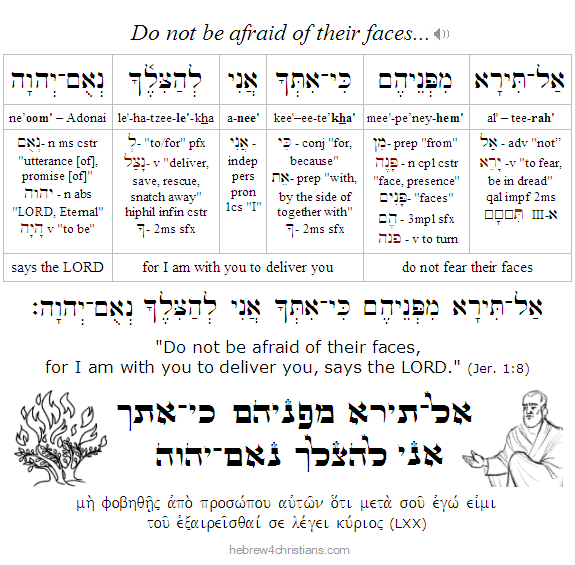
"Do not be afraid of their faces, for I am with you..." - Jeremiah 1:8
10.28.25 (Cheshvan 6, 5786) Instead of backing away from hell, turn your eyes toward heaven. A classic call to wake up to God's Presence is: "Da lifnei mi attah omed," meaning "Know before Whom you stand!" As the prophet Elisha said to his servant Gehazi, "Do not be afraid, for those who are with us are more than those who are with them" (2 Kings 6:16).
We are surrounded by an innumerable multitude of angels, with the LORD of Hosts who rules over all. Ask the LORD God Almighty to give you the "strategic advantage" over the enemy -- for you to see his wiles, but not for him to see you.... Ask God for the armor of light that blinds eyes accustomed to darkness (Rom. 13:12). How else can we fight this archenemy of our souls? We cannot fight "fire with fire," but we can appeal to the One who fills heaven and earth "with horses and chariots of fire all around" (2 Kings 6:17).
"Kadosh, kadosh, kadosh, Adonai Tzeva'ot" (Holy, holy, holy is the LORD of the armies of heaven); "melo khol-ha'aretz kevodo" (the whole earth is filled with His glory" (Isa. 6:3).
God admonished the prophet Jeremiah, "Do not be afraid of their faces, for I am with you to deliver you, declares the LORD" (Jer. 1:8). Likewise Yeshua says to us, "Behold, I have given you authority to tread on serpents and scorpions, and over all the power of the enemy, and nothing shall hurt you" (Luke 10:19).
We need the courage and boldness that comes from the Holy Spirit to overcome the "giants in the land." We need the confidence of young David who beheaded Goliath in the Name of the Living God. Ask God to empower you to serve Him now... Just as salvation is "of the LORD," so is the very battle of faith: "Not by might, nor by power - but by my Spirit, says the LORD of hosts" (Zech. 4:6).
Hebrew Lesson
Jeremiah 1:8 reading (click):
The Passage to Life...
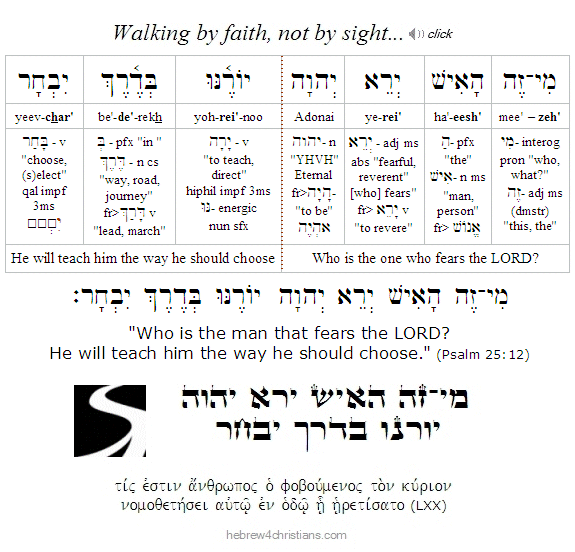
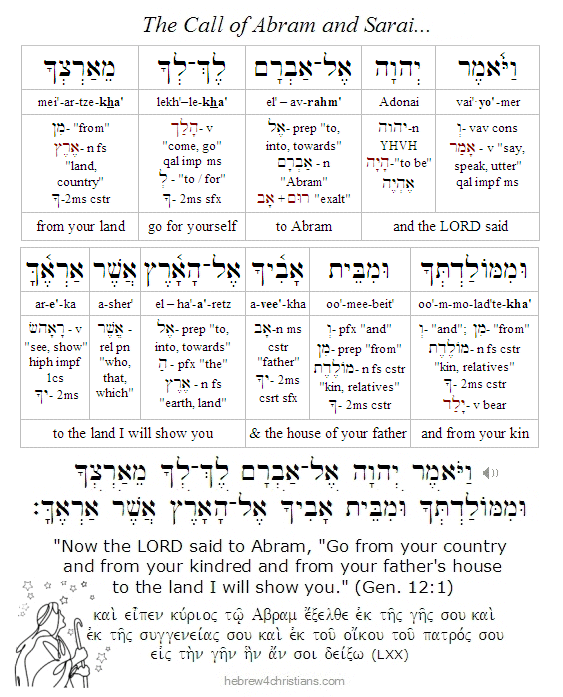
10.28.25 (Cheshvan 6, 5786) Our Torah portion for this week (i.e., Lekh-Lekha) begins: "Now the LORD said to Abram, "Go (לֶךְ־לְךָ) from your country and your kindred and your father's house to the land I will show you" (Gen. 12:1). The Book of Hebrews comments, "By faith Abraham obeyed when he was called to go out to a place that he was to receive as an inheritance, and he went out, καὶ ἐξῆλθεν μὴ ἐπιστάμενος ποῦ ἔρχεται - "not knowing where he was going" ... for he was looking forward to the city that has foundations, whose designer and builder is God" (Heb. 11:8,10).
Abraham closed his eyes to this world and was given the inner light of truth that would reveal his way to God. The Sefat Emet says that every person of faith is likewise commanded daily to "lekh-lekha," to "go for yourself" by crossing over from the world and its deadening habits to live as an exile with God.
Paradoxically, we find ourselves when we lose ourselves - when we leave behind the labels, roles, ideologies, and identities this world foists upon us and instead resolve to seek the promise of God's Kingdom. As Yeshua said, "For whoever will save his life shall lose it, but whoever will lose his life for my sake shall find it" (Matt. 16:25).
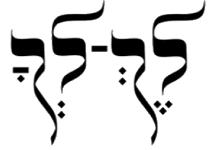
In a sefer Torah (i.e., a handwritten Torah scroll), Hebrew words are written without vowels, so "lekh lekha" (לך־לך), often translated as "go forth," could be read as "go, go!" - emphasizing the importance of the mitzvah: Get moving! Start walking! Begin your journey!
Hebrew Lesson
Psalm 25:12 reading (click):
Shadows and Reality...
"Whether evil or good events betide, let it be the same to you, since you are a stranger and sojourner on this earth. Why have anxiety over a world that is not yours?" - Sassover
10.27.25 (Cheshvan 5, 5786) Sometimes we seem to forget that we are not home yet... The ancient thinker Socrates argued that philosophy, when done correctly, was "practice for death," since the passing shadows of this world pointed to an unchanging good, our true end. Likewise Yeshua our Messiah taught us to take up the cross and die daily (Luke 9:23). We are to "set our affections on things above, not on things on the earth," for we have died and our life is hidden with Messiah in God (Col. 3:2-3).
It is difficult for us to die, to let go, however, because we are deeply attached to this world, and we often abide under the worldly illusion that we will live forever, that tomorrow will resemble today, and that heaven can wait... History is littered with crumbling monuments offered to the idols of this world. The Scriptures are clear, however: "The present form (τὸ σχῆμα) of this world is passing away" (1 Cor. 7:31), and the heart of faith seeks a city whose Designer and Builder is God Himself (Heb. 11:10). "So we do not lose heart. Though our outer self is wasting away, our inner self is being renewed day by day... For the things that are seen are turning to dust, but the things that are unseen endure forever (2 Cor. 4:16-18). Because of our sin, creation was made "subject to vanity," though God has overcome the dust of death by giving us an unshakable hope (Rom. 8:20).
But what is the substance of this hope, really? Do you desire heaven because it will be a place of unending pleasure or because you will finally be with God who is your true Father? Of course we all want to be free from our fears and sorrows, but we must be careful not to worship the gift more than the One who gives the gift. Indeed, life itself presents a sort of question or test to see what we decide is most important of all: "I, the LORD, search the heart, I test the mind, to give every person according to his ways, according to the fruit of his doings"(Jer. 17:10). Likewise King David said, "One thing I have desired of the Lord, that I will seek after" (Psalm 27:4). Could some of our idealizations about heaven be a form of vanity or even idolatry itself? Do you envision heaven to be a place of merriment where you will endlessly and sumptuously feast to your heart's content? Chas v'shalom! That sort of heaven might appeal to barnyard animals but there is something more for the child of God, and that is personal relationship with LORD Himself. I don't care about streets of gold or matters of satiety: I want to be with Yeshua who loved me and gave himself for me.
Hebrew Lesson
Psalm 144:4 reading (click):
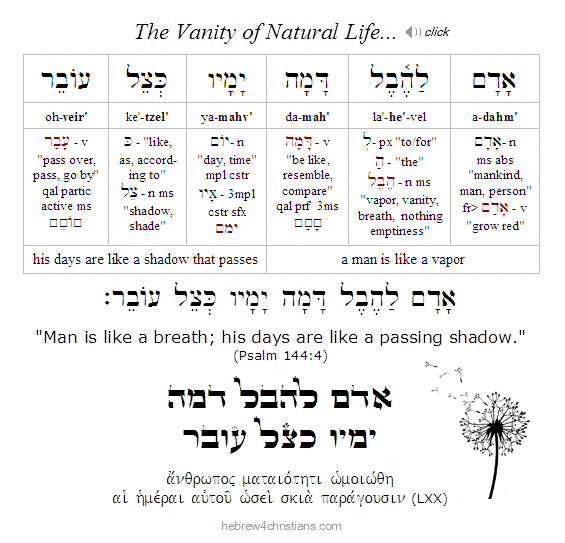 |
The metaphysical truth that "ha'kol oveir" (הַכּל עוֹבֵר), "everything passes" like a shadow, admonishes us to keep a godly perspective regarding the various moments of testing we all face in this life. As Nachman of Breslov once said, "The whole earth is a very narrow bridge, and the important thing is never to be afraid" (כָּל־הָעוֹלָם כֻּלּוֹ גֶּשֶׁר צַר מְאד וְהָעִקָּר לא לְפַחֵד כְּלָל). Yeshua is the Bridge to the Father, the narrow way of passage that leads to life. He has overcome the meretricious world and its vanities. He calls out to us in the storm saying, "Take heart. It is I; be not afraid" (Matt. 14:27). When Peter answered the call and attempted to walk across the stormy waters, he lost courage and began to sink, but Yeshua immediately took hold of him, saying, "O you of little faith, why did you doubt (lit., think twice)?" Resist the meretricious assumptions that surround common worldly consciousness: Keep focused on the reality of Yeshua and the way he reveals... His life is heaven itself.
 |
The Meaning of "Hebrew"...

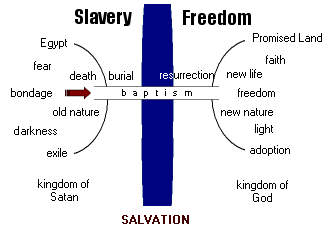
10.27.25 (Cheshvan 5, 5786) In our Torah for this week (Lekh Lekha) Abram, the great patriarch of faith, is called ha-ivri (הָעִבְרִי) - "the Hebrew," a term that means "one who has crossed over" (עָבַר) from another place. Rashi literally identifies this "other place" as Ur Kasdim (אוּר כַּשְׂדִים), located east of the Euphrates River, though the midrash (Genesis Rabbah) spiritually identifies it as the realm of idolatry: "The whole world stood on one side, but Abram crossed over to the other." Abram separated himself from a world steeped in idolatry and polytheism by worshiping One God who is the sole Creator of all things.... Understood in this way, being "Hebrew" means being regarded as an "other," a "stranger," or an "outsider" to idolatrous worldly culture. That's the true meaning of the word...
Various midrashim tell the story about how Abram came to understand the truth that there is only one God who is Creator of all. For instance, when he was born, Abram's mother hid him in a cave. She was afraid that the evil king Nimrod would kill her son because prophets had warned that he would triumph over Nimrod. Guarded by the angel Gabriel, young Abram first worshiped the stars as gods until they were obscured by the Sun. Then he declared that the Sun was god until it set and the Moon took its place. Clouds then covered the Moon, showing Abram that the Moon was not a god either. At last, Abram understood that there was one supreme God would ruled over all the forces of the universe. (Later, after the danger had passed, young Abram rejoined his family.)
A midrash relates that Abram's father Terach sold idols for a living in the city of Haran. But Abram had long since realized that idol worship was foolishness. One day when he was asked to watch his father's store, Abram took a hammer and smashed all the idols - except for the largest one. His father came home and demanded to know what happened. Abram explained that the idols all got into a fight and the biggest idol won. When his father objected that this was impossible, Abram said, "Aha! So you agree with me that idols are powerless! My father, there is only one true God, and this God cannot be shaped with human hands..." Terach was angry but understood that his son had discovered the great truth of ethical monotheism.
Lekh lekha (לך־לך) literally means "go for yourself" (lit. "walk [הָלַךְ] for yourself [לְךָ]"). Rashi states that it means "Go for your own benefit," though the Chassidic teachers interpret it as "Go to yourself" (i.e., begin your own journey back to God). At any rate, it's clear that the phrase is an invitation by God to venture ahead -- to go forth in faith... Go forth and risk everything for the sake of God's promise.
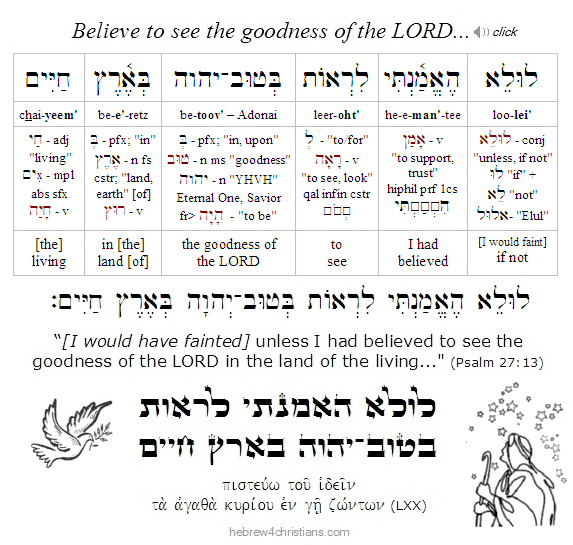
"Go forth ... I will show you" (Gen. 12:1). Note that the LORD spoke to Abram and invited him to forsake his ancestral homeland for the promise of God. But note further that it was only after Abram made the long journey to the unknown land of Canaan that God appeared to him to him by the oaks of Mamre saying, "To your offspring I will give this land" (Gen. 18:1). Abram did not believe the promise because he saw God; he was only able to see God after he had walked in faith. First Abram heard the message, and later -- after he acted on his faith -- was he enabled to see more... מַעֲשֵׂה אֲבוֹת סִימָן לַבָּנִים / ma'aseh avot siman labanim: "The deeds of the fathers are signs for the children." The pattern is therefore given: First Abram heard the message, and later - after he acted on his faith - was he enabled to see more. This is the deeper meaning of being "Hebrew," one who crosses over from the realm of the dead to the realm of the Living God...
 |
As a matter of textual gematria, regarding the promise to make Abraham's name great (Gen. 12:2), the sages note that the total number of Hebrew letters in the names of the three patriarchs Abraham (אברהם), Isaac (יצחק), and Jacob (יעקב) is 13. Likewise the total number of letters in the names of the three matriarchs Sarah (שׁרה), Rebecca (רבקה), Leah (לאה), and Rachel (רחל) is 13. Furthermore 13 is the numeric value for the word echad (אחד), a word that means "unity" and represents the 13 attributes of God's Mercy (Exod. 34:6-7). The combined letters of the patriarchs and matriarchs therefore totals 26, the same numeric value (in gematria) as that for the Name of God (i.e., YHVH: יהוה).
Hebrew Lesson:
Psalm 27:13 reading (click):
The call of Abram:
Parashat Lekh-Lekha...
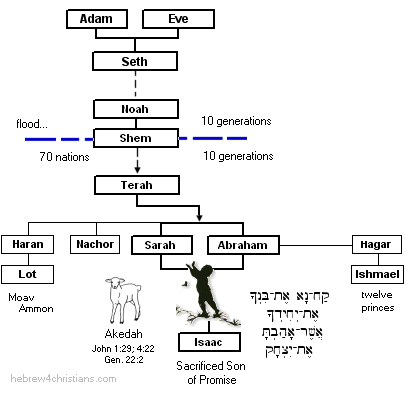
10.26.25 (Cheshvan 4, 5786) Shavuah tov, chaverim. Last week's Torah portion (i.e., parashat Noach) introduced us to Abram (אַבְרָם), the descendant of Noah's son Shem, who was the great-grandson of the patriarch Methuselah - a man who who personally knew Adam and Eve and upheld the original promise of redemption given in the Garden of Eden. Just as there were ten generations from Adam to Noah, so there were also ten generations from Noah to Abram (see Gen. 11:10-32). And just as Noah became the father of 70 nations, so Abram (through Shem) would become the father of the Jewish people, through whom the Promised Seed - the Messiah and Savior of the world - would eventually come.
In our Torah portion for this week (Lekh-Lekha), we read that Abram was 75 years old, married to (his half-sister) Sarai, and guardian of his nephew Lot (his deceased brother Haran's son) when he received the promise of divine inheritance: "And the LORD said to Abram, "Go from (i.e., lekh-lekha: לך־לך) your country and your kindred and your father's house to the land that I will show you. In Hebrew, the phrase lekh lekha means "go for yourself" (lit. "walk [הָלַךְ] for yourself [לְךָ]"), though it can be interpreted it to mean "go to yourself," that is, "look within yourself" in order to begin walking out your own journey into the promises. The realm of divine promise is only attained when we venture out in faith. Like our father Abraham, we are called to "cross over," leave everything behind, and take hold of God's glorious promise for our lives.
 |
Hebrew Lesson:
Genesis 12:1a reading (click):
Strength Made Perfect...
10.24.25 (Cheshvan 2, 5786) Many of us are hurting, clinging to hope with our last breath... I know a wonderful lady who is bedridden and completely incapacitated. She quite literally can do nothing by herself. Despite this, every day she opens her eyes and find her heart in the presence of Yeshua. She is full of the gratitude and joy that overcomes death.
God's love for us is not based on what we can do but on who He is. Our trials and struggles are designed (or allowed) to teach us how fragile we are and how much we need God for life. Our powerlessness calls out to God as a prayer that is answered in his sufficiency. As Paul once wrote of his affliction: "We were so utterly burdened beyond our strength that we despaired of life itself. Indeed we had the sentence of death in ourselves so that we should not trust in ourselves but in God who raises the dead" (2 Cor. 1:8-9).
When I am weak, then I am strong. As God later said to Paul: "My grace is sufficient for you (דַּי לְ חַסְדִּי), for my strength is made perfect in weakness (כִּי גְּבוּרָתִי בַּחֻלְשָׁה תֻּשְׁלַם)."
"And then the spirit brings hope, hope in the strictest Christian sense, hope which is 'hoping against hope.' For an immediate hope exists in every person; it may be more powerfully alive in one person than in another; but in death every hope of this kind dies and turns into hopelessness. Into this night of hopelessness (it is death that we are describing) comes the life-giving spirit and brings hope, the hope of eternity. It is against hope, for there was no longer any hope for that merely natural hope; this hope is therefore a hope contrary to hope" (Kierkegaard: For Self Examination, 1851).
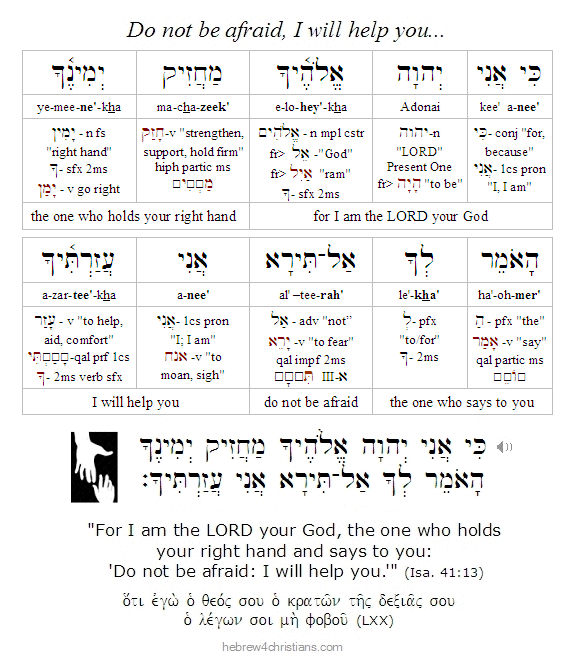
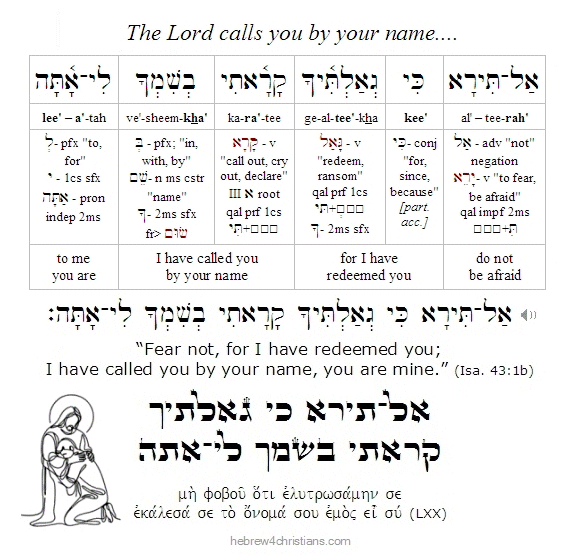
Over and over again the Spirit says: "Fear not, for I am with you..." אַל־תִּירָא כִּי עִמְּךָ־אָנִי. What we need most of all is right here, present in this hour, whether we're conscious of it or not. God is with you, even if you feel alone, lost in darkness, dying, powerless, unclean, afraid... "Dear Lord Jesus, I don't know who I am, I don't know where I am, and I don't know what I am, but please love me" (prayer of a sufferer from Alzheimer's disease). And that's what we need most, to find our heart in God's love. Amen.
Hebrew Lesson
Isaiah 41:13 Hebrew reading (click):
Noah and Yeshua...
10.24.25 (Cheshvan 2, 5786) The name Noah (Noach) comes from the shoresh (root) nacham (נָחַם), meaning to comfort. Other Hebrew words that use this root include nichum (compassion), nuach (rest), and menuchah (rest from work). Noach's very name foreshadowed the coming of Yeshua. His father Lamech (meaning "powerful one") regarded Noach as a deliverer who would comfort us from the ravages of the curse (Gen. 3). In like manner it was prophesied that Yeshua would give us everlasting rest: "His rest shall be glorious" (Isa. 11:10), and He offers rest to the weary (Matt. 11:28, Heb. 4:9). His sacrifice on the Cross at Moriah undoes the kelalah (curse) over the children of Adam. Indeed, His life, sacrifice, and resurrection was like a "magic spell" that "spoke backwards" the sin of the "First Adam" - and by means of His deliverance the power of the curse was forever broken (Gal. 3:13, John 3:14, 2 Tim.1:10; Heb. 2:14; Heb. 9:27-28; 1 John 3:8, Rev. 22:3). By means of His Spirit we are given an everlasting comfort (John 14:16).
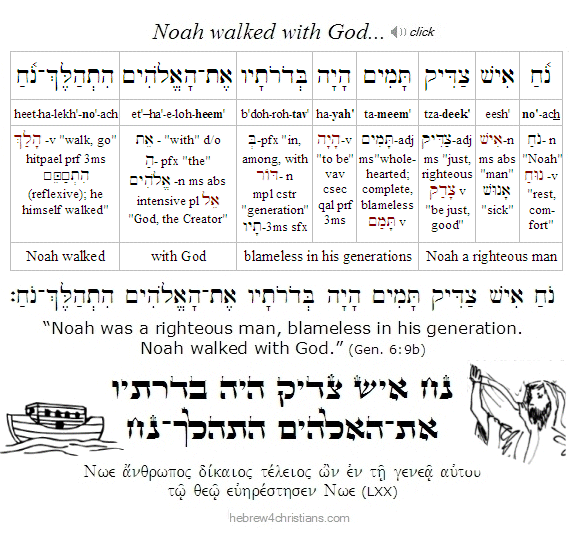
In the days of Noach "all flesh had corrupted his way upon the earth" (Gen. 6:5, 11), but Noach "found grace in the eyes of the Lord" (Gen. 6:8). This is yet another foreshadowing of the Father's choice of Yeshua as the uniquely Righteous Deliverer of the world (Matt. 3:17). Noach was from the godly line of Seth of whom would descend the Promised Seed of the Woman (see the Gospel in the Garden and the Seed of Abraham). Of Noach it was said that he was ish tzaddik (a righteous man) who was tamim (blameless) in his generation: Et-haElohim hithalekh-noach - "Noah walked with God" (Gen. 6:9). Likewise Yeshua was entirely tzaddik (Rom. 5:19, Heb. 4:15, 1 Pet. 3:18; 1 John 2:1), blameless (Heb. 4:15, 1 Pet. 3:18), and One who walked with God (John 5:19, John 8:28, etc.). For this reason the New Testament calls Noah a "herald of righteousness" (2 Pet. 2:5).
Just as Noach's obedience to God saved a remnant from all the earth, so did Yeshua's obedience result in "the saving of his house" (Heb. 11:7). And just as God "blessed Noach and his sons" (Gen. 9:1) and with them established His covenant, so in greater measure was this fulfilled in the Person of Yeshua, who provides all spiritual blessings to those whom He calls his brethren (Eph. 1:3, Heb. 13:20; Heb 2:11). Yeshua is indeed the "righteous man" who saves us in the true teivah (ark), the shelter of God's grace.
Eschatologically, the "days of Noach" are a picture of the idolatrous conditions of the world that prevail just before the calling up of the followers of the Mashiach Yeshua before the time of Great Tribulation upon the earth: "As were the days of Noah, so will be the coming of the Son of Man" (Matt. 24:37). The seven day warning given to Noach suggests the seven year tribulation period to come (Daniel's 70th week). The Spirit of God will be removed from the earth (Gen. 6:3, 2 Thess. 2:7) before the great and terrible "Day of the LORD." But please note that "the LORD shut him in" (Gen. 7:16).
"Everyone then who hears these words of mine and does them will be like a wise man who built his house on the rock. And the rain fell, and the floods came, and the winds blew and beat on that house, but it did not fall, because it had been founded on the rock. And everyone who hears these words of mine and does not do them will be like a foolish man who built his house on the sand. And the rain fell, and the floods came, and the winds blew and beat against that house, and it fell, and great was the fall of it." - Yeshua (Matthew. 7:24-27)
Noach's teivah ("ark") had God Himself as its designer (Gen. 6:15f), and salvation in Yeshua is by God's design (Jonah 2:9; Eph. 1:9, 1:11). Noach's ark contained only one door (Gen. 6:16), just as Yeshua is the only door to salvation (John 10:9). Noach's ark contained three levels (Gen. 6:16) and salvation has three own experiential levels (2 Cor. 1:10): past, present, and future. In the past (at Moriah) Yeshua delivered us from the penalty of sin; in the present, He is delivering us from the power of sin; and in the future He will deliver us from the very presence of sin. From Noach's hand was given the sign of the dove, a symbol of peace and the abiding presence of the Spirit of God.
Trust in Affliction...
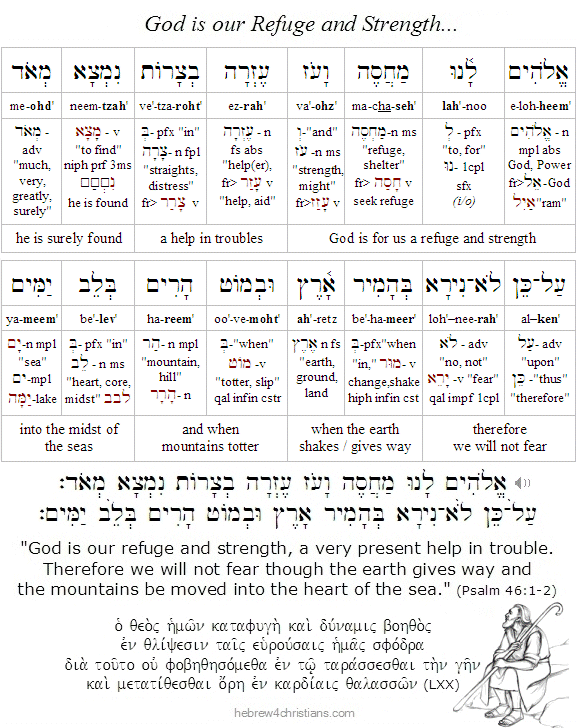
10.23.25 (Cheshvan 1, 5786) Some of us seek "mountain top" experiences of God, but more often than not we learn "down in the valley," where the daily cares of life encroach upon our ideals and visions. Yet it is precisely there, in the "desert of the everyday," in the "testing of the tedious," in the "hazards of hopelessness," that we are enabled to elevate our consciousness to realize that God is "ezra ve'tzarot nimtza me'od" (עֶזְרָה בְצָרוֹת נִמְצָא מְאד) - a "very present help in our troubles" (Psalm 46:1).
Amen, God is aware of our frustration, our lowliness, our fear, our suffering... When God delivered his people by the miracle of splitting the sea (קריעת ים סוף), he closed off any way of escape apart from his direct intervention. The Egyptian army was behind them, the mountains hemmed them in, and the vast horizon of the sea loomed before their way. The only way of deliverance was from above, in the midst of our struggle, by God's own hand. Trust in God's healing and deliverance is the first step... The LORD is the Rock and all his ways are perfect (Deut. 32:4), and this must be affirmed especially if we cannot fathom the testing of our present circumstances...
Hebrew Lesson:
Psalm 46:1-2 Hebrew reading (click):
Olam Malei - An Entire World...
10.23.25 (Cheshvan 1, 5786) Jewish tradition says that God created Adam alone as "olam malei" (עוֹלָם מָלֵא), "an entire world," to teach that each individual is of great value and significance. "Thus anyone who sustains one individual has sustained the world; and anyone who destroys one individual has destroyed an entire world" (Sanhedrin 37a). In addition, God created man as a solitary creation to remind all people that they descend from a common source: No one has a greater or better lineage or "pedigree" than anyone else.
Each of us is created with a sense of "aloneness," a built in "hunger" for relationship and especially for God's presence. "Our hearts are restless until they find their rest in Thee," said Augustine. Therefore the very first commandment to Adam and Eve comes in the form of a blessing: "And God blessed them and said, פְּרוּ וּרְבו / pru urvu: "be fruitful and multiply" (Gen. 1:28). People were created to be in fellowship with others and with God, and when this is lacking, there is a sense of incompletion, a profound soul hunger and need....
When you feel discouraged or anxious because of difficult times, remember how the LORD God created the world and sustains it for the sake of the revelation of his love for you... You may not understand the present moment, though you can assuredly trust that God's salvation given in the Messiah Yeshua heals you forever and ever (John 5:24). Declare at all times, then: "The world was created for my sake, though I am but dust and ashes." God is faithful, the great Amen of the human heart's cry. Your inner being is redeemed by God for you to experience and know the blessing of eternal life (John 17:3). Amen.
Hebrew Lesson
Isaiah 43:1b Hebrew reading (click):
Alphabet and Creation...
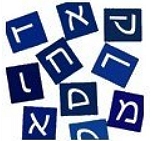
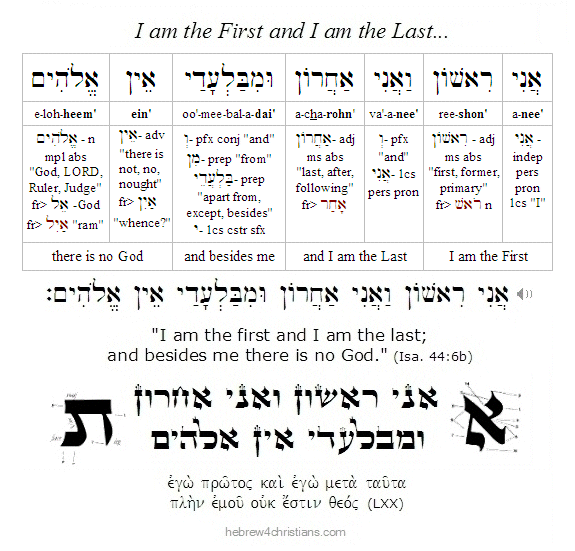
10.23.25 (Cheshvan 1, 5786) The Torah begins with the letter Bet (בּ) rather than the letter Aleph (א) to denote God's humility. The letter Aleph is the first letter, the king of the alphabet, and the letter that begins "I AM" (i.e., אנכי) - the first word of the Ten Commandments. The letter Bet, on the other hand, is the second letter that means "house" or "home" (בּית). This suggests that the Torah begins with the focus not on the "I" but on creation, the household of God. And though God did not wish to be the center of attention, so to speak, Aleph and Bet together spell the word "father" (אב), that is, the One who oversees the household of the world in love. As it is written, "Every good gift and every perfect gift is from above, coming down from the Father of lights (אֲבִי הַמְּארוֹת) with whom there is no variation or shadow due to change" (James 1:17).
Aleph is a silent letter, representing God in His ineffable glory and life (אֶהְיֶה) that forever precedes all things (Isa. 44:6, cp. Rev. 22:13). Yeshua described Himself as the "Aleph and the Tav, the First and the Last" (הָאָלֶף וְהַתָּו הָראשׁ וְהַסּוֹף), the One who encompasses all Reality and gives out its strength (Aleph) before the house (Bet) of creation in sacrificial love.
Hebrew Lesson:
Isaiah 44:6b reading (with comments):
 |
It may be wondered why we would say that God is humble... Well, it is certainly true that the LORD is self-effacing, self-forgetting, utterly unselfish, absolutely noble of heart, and so on. Moreover we are commanded to emulate God, who is merciful, gracious, slow to anger, abounding in steadfast love, etc. (Exod. 34:6-7). Most of all we are to follow the example of Yeshua, YHVH in the flesh, who willingly "emptied Himself" (κενόσις) and took the role of a humble servant (Phil. 2:6-7). Yeshua himself said, "Take my yoke upon you, and learn from me, for I am gentle and lowly in heart, and you will find rest for your souls" (Matt. 11:29).
The Power to Change...
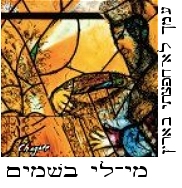
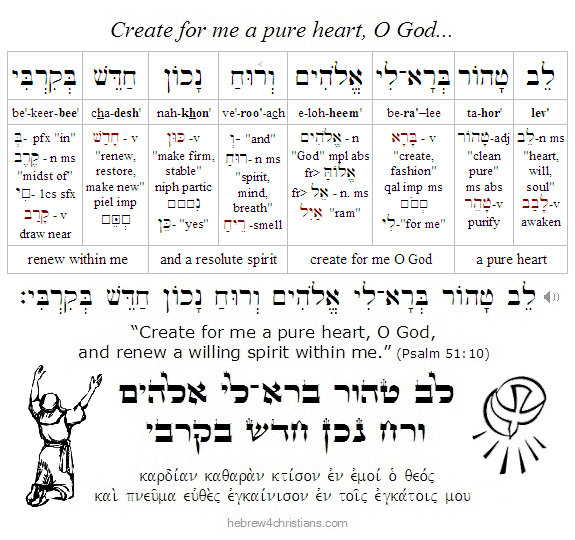
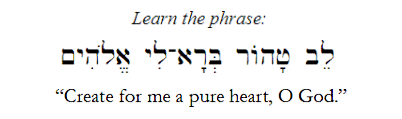
10.22.25 (Tishri 30, 5786) When King David cried out in prayer saying, lev tahor bera-li, Elohim, that is, "create in me a pure heart, O God" (Psalm 51:10), he did not use the Hebrew word yatzar (יָצַר), which means to "fashion" or "make" something from preexisting material, but he instead used the word bara (בָּרָא), a verb exclusively used to refer to God's creative power that brought forth the universe (Gen. 1:1). David understood that no amount of reformation of his character would be enough, and therefore he appealed to that very power of God that created the world and everything in it "yesh me'ayin" (יֵשׁ מֵאַיִן), "out of nothing." Such was the nature of the remedy he realized that he so desperately needed...
Yeshua taught, "Blessed are the pure in heart, for they shall see God" (Matt. 5:8). The Greek word translated "pure" is katharos (καθαρός), sometimes used describe the cleansing of a wound (catharsis), or to describe the unalloyed quality of a substance revealed through refining fire. Metaphorically, then, purity of heart refers to separation from the profane - singleness of vision, wholeheartedness, passion, and focused desire for the sacred. As we center our affections on Yeshua, we become pure in heart -- i.e., unified, made whole, and healed of our inner fragmentation. We see the Lord both in this world, through his effects, and then panim el-panim (פָּנִים אֶל־פָּנִים), "face to face," in the world to come. Our hope purifies us for that coming great day of full disclosure (1 John 3:2-3; Heb. 12:14).
If we are impure of heart, we will be inwardly divided, unfocused, fragmented, filled with destabilizing anxiety, envy, unresolved hurt, anger, and so on. More tragically, because we seek to escape ourselves, we will be devoid of a true center, without a focal point or abiding purpose, and therefore we will be lost to ourselves, wandering and without rest...
Hebrew Lesson
Psalm 51:10 Hebrew reading:
Blessing of Surrender...
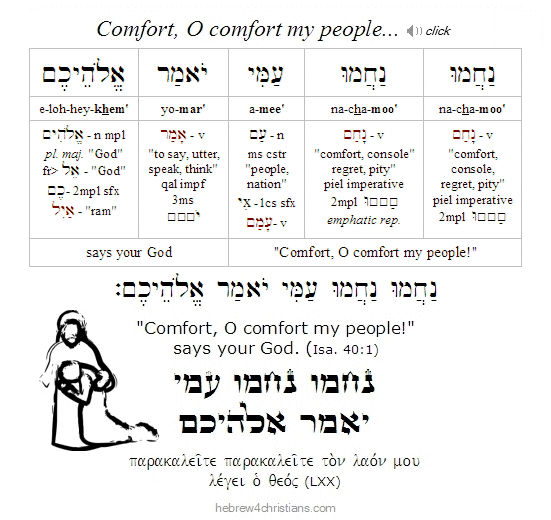
10.22.25 (Tishri 30, 5786) When we pray to God, "Thy will be done," are we willing to forego our desire and accept whatever might happen? Do we truly believe what we pray? "Thy will be done -- over this wish, this sorrow, this fear, this dear hope? Are we actually trusting in hte Lord's care for our lives? The prophet cries out: "Who has directed the Spirit of the LORD, or being his counselor has taught him?"(Isa. 40:13). He is our God, and we are sheep in his pasture, if we obey his voice (Psalm 95:7).
If we find ourselves habitually complaining or murmuring about the course of our lives, are we not belying our prayers? Nay, are we not resisting his will? Is not our sullenness or disappointment an oblique accusation that God is not to be trusted with whatever happens, whether it be good or bad? Is not such a complaint, in its essence, tantamount to the demand: "I want it my way"?
C.S. Lewis warned: "Hell begins with a grumbling mood, always complaining, always blaming others... but you are still distinct from it. You may even criticize it in yourself and wish you could stop it. But there may come a day when you can no longer. Then there will be no 'you' left to criticize the mood or even to enjoy it, but just the grumble itself, going on forever like a machine. It is not a question of God "sending us" to hell. In each of us there is something growing, which will BE hell unless it is nipped in the bud" (Great Divorce). "Perhaps my bad temper or my jealousy are gradually getting worse - so gradually that the increase in seventy years will not be very noticeable. But it might be absolute hell in a million years!"
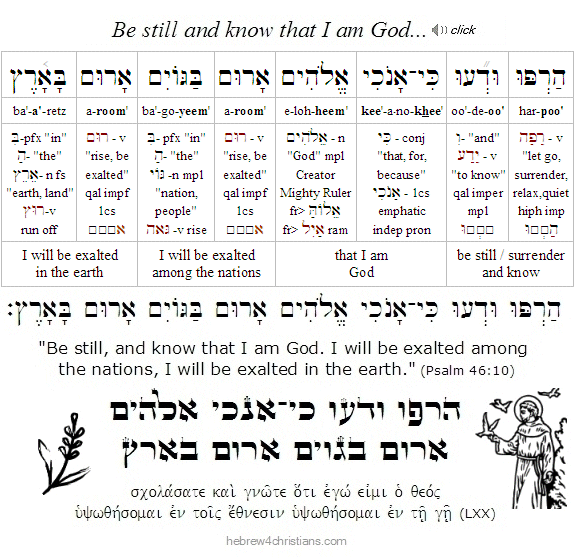
There is a Torah of surrender we must offer: "Be still and know that I am God..." (Psalm 46:10). The Hebrew means to be inwardly silent, to let go of your desire to control... This is something you must do; you must shush your heart to know the Divine Presence. Therefore "set the Lord always before you" (Psalm 16:8) and refuse any anxious thought to weigh in upon you, creating pressure and "dis-ease." Let go of your will. Give up. Confess your ambiguous desires; abandon the insanity of your self-rule. Quieting your heart allows you to hear the holy Spirit's whisper: "It is I; do not be afraid..." Once the sibilance of fear dissipates, you can access the truth of God. The Spirit asks us to do teshuvah: "In returning and rest you shall be saved; in quietness and in trust shall be your strength" (Isa. 30:15).
So much of life is beyond our control, and it exhausts us when we try to wrestle against the Angel. When we let go of our will, surrendering to God, we find peace as our circumstances and destiny are carried into the "heavenly flow" of God's providential design. "The LORD shall fight for you, and you shall be made silent" (Exod. 14:14).
Are we not often at odds within ourselves? There is an inner antagonism that we experience, ambivalence, double-mindedness, and even despair. We may tend to regard life as a challenge to be conquered, but when we fail (as we assuredly will), anxiety arises over our losses. We should be shaken to our core, for only God's power can deliver us from ourselves.... It's a matter of utmost significance. Find God or die.
Worry is a place of exile and pain. Since God's Name (יהוה) means "Presence" and "Love," being anxious is to practice the absence of God's presence instead of practicing his presence... A divided house cannot stand. Where it is written, "cast all your anxiety on him because he cares for you" (1 Pet. 5:7), the word translated "anxiety" comes from a verb that means to divide into pieces. Bring your brokenness to God – including those distractions that make you ambivalent and afraid – to receive God's healing for your divided heart.
"Be still and know that I am God..." (Psalm 46:10). The Hebrew verb translated "be still" (i.e., rapha: רפה) means to "let go," to stop striving, stop conniving, and to surrender absolutely everything to the care of God (Rom. 8:28). "Being still" means letting go of your supposed "need" to control the world. Therefore telax your hold and rely on God's care for your life instead, without "taking thought" for tomorrow and its concerns (Matt. 6:34). The past is gone, after all, and the future is God's business: all you have is the present moment to call upon our Lord. Be faithful in the present hour, then, asking God for the grace and strength you need to endure yourself and engage the task at hand. In this way you will experience the peace of God "which surpasses all understanding" (Phil. 4:7).
Walking with God isn't just a matter of "head education," but also of "heart education," and these two must always go together as Spirit and Truth (John 4:23). Head education seeks knowledge primarily as a means of defining what you believe (emunah); heart education, on the other hand, centers on fear, or rather, on overcoming your fear by trusting in God's love and healing grace (bittachon). When you accept that you are accepted despite yourself, you are delivered from the need to defend yourself. You can let go, quit denying who you are, and accept God's unconditional care for your life – regardless of the state of the world. When your heart learns to "be still," you can know that the Lord your God reigns over all things! As Yeshua said: "Come unto me, all ye that labor and are heavy laden, and I will give you rest. Take my yoke upon you, and learn of me; for I am meek and lowly in heart: and ye shall find rest unto your souls. For my yoke is easy, and my burden is light" (Matt. 11:28-30).
"Be still and know that I am..." Prayer is a type of listening (shema), a turning back to know the message of God's love and hope in Messiah. The word "teshuvah" (תְּשׁוּבָה) means an answer or response to a question. God's love is the question, and the heart's repose is the answer. Some of us may find it difficult to trust, to open our heart to receive grace and kindness. For those wounded by abandonment, it can be a great struggle to hear the voice of God calling you "beloved," "worthy," "valued," and "accepted." When you find faith to receive God's word of love, however, your heart comes alive and you begin to heal... Amen. Yeshua speaks words of comfort: אַשְׁרֵי אֱלוּ שֶׁלֹא רָאוּ וְעַדַיִין מָאֲמִינִים - "Blessed are those who have not seen and yet still believe" (John 20:29).
Hebrew Lesson:
Psalm 46:10 reading (click):
 |
As in the days of Noah...

"Above all, don't lie to yourself. The man who lies to himself and listens to his own lie comes to a point that he cannot distinguish the truth within him, or around him, and so loses all respect for himself and for others. And having no respect he ceases to love." - Fyodor Dostoevsky
10.21.25 (Tishri 29, 5786) "For as were the Days of Noah (ימֵי נחַ), so will be the coming of the Son of Man. For as in those days before the flood they were eating and drinking, marrying and giving in marriage, until the day when Noah entered the ark, and they were unaware until the flood came and swept them all away (οὐκ ἔγνωσαν ἕως ἦλθεν ὁ κατακλυσμὸς καὶ ἦρεν ἅπαντας). Likewise, just as it was in the days of Lot - they were eating and drinking, buying and selling, planting and building, but on the day when Lot went out from Sodom, fire and sulfur rained from heaven and destroyed them all - so will it be on the day when the Son of Man is revealed" (Matt. 24:37-9; Luke 17:26-30).
But what were these "Days of Noah" like? What can we say about dor Ha-Mabul, the "Generation of the Flood"? Yeshua explained that the "days of Noah" were marked by people who were asleep, blind, and unaware (ἔγνωσαν, "agnostic"). They went about their business willfully ignorant of the spiritual reality around them. For ten consecutive generations -- from the creation of Adam until the generation of Noah -- people progressively became more and more ignorant of spiritual reality and truth. Eating and drinking, romantic intrigue and marriage, buying and selling, and other worldly affairs were the preoccupations of the day. In short, people lived their lives oblivious to the spiritual reality all around them. They "forgot" who God was, who they were, why they existed, and where they were going. In short, they were "unaware."
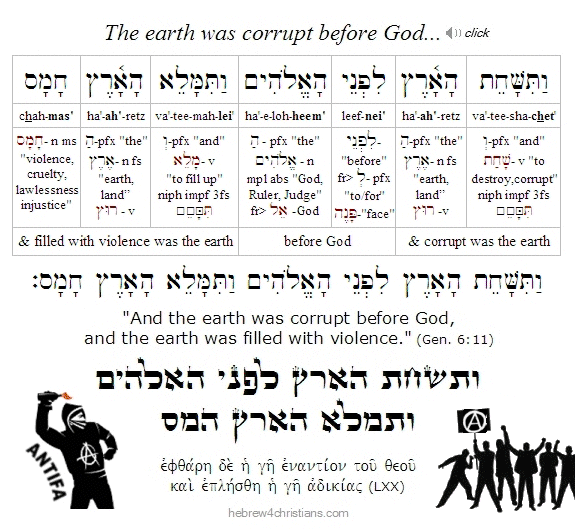
The deadening effects of sin leads to moral and spiritual blindness that leads to corruption and unthinking brutality and violence. Of Noah's generation it was written "The LORD saw that the wickedness of man was great in the earth, and that every intention of the thoughts of his heart was only evil continually. And the LORD regretted that he had made man on the earth, and it grieved him to his heart... the whole earth was corrupt before God, and filled with violence" (Gen. 6:5-6, 11). Rashi understood the word "corrupt" (i.e., shachat: שָׁחַת) to primarily refer to sexual immorality (i.e., idolatry) and "violence" (i.e., chamas: חָמָס) to primarily refer to theft and robbery. In general, however, the sages regarded the word chamas to refer to lawlessness, that is the denial of moral reality, and consequently the benighted condition of living without yirat ha-shamayim (the fear of heaven). When people are spiritually dead, they are unconscious of the wonder of God; they are oblivious to what is real; and consequently they are debased into animals... We see that in our world today.
 |
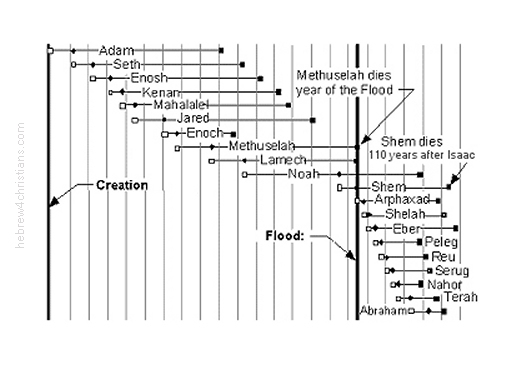
The classical Jewish commentators note that God's judgment came in progressive "stages." The Great Flood was preceded by four successive generations of prophets that warned of the coming cataclysmic judgment: Enoch, Methuselah, Lamech, and finally Noah. It is fascinating to understand that Adam himself was alive when Noah's grandfather Methuselah was born, so the original message of teshuvah (repentance) was a resonant echo that came from Eden itself! Moreover, consider that Abraham personally knew of Noah (Abraham was 58 years old when Noah died), and undoubtedly Noah's son Shem told him of his grandfather Lamech, who had seen and spoken with Adam who was directly created by God alone. Later, Abraham's son Isaac also came to know Shem, Noah's firstborn son, and the legacy of the "gospel of the garden" was thereby passed on...
 |
The first stage was the rejection of the dignity people created in the image and likeness of God. This negation of the divine characteristics of others led to sexual promiscuity that became rampant upon the earth: "The sons of God saw the daughters of man that they were fair, and they took for themselves wives, whomsoever they chose" (one midrash claims that the Dor HaMabul, the generation of the flood, would regularly exchange marital partners). God then gave mankind 120 years to repent from his sexual corruption or be faced with apocalyptic destruction (Gen. 6:3). Despite Noah's 120 year public building project and the preaching of his grandfather Methuselah, God's patience finally ran out (1 Pet. 3:20). God then "saw that the wickedness of man was great in the earth and that every imagination of the thoughts of his heart was only evil continually" (Gen. 6:5). Mankind refused to repent and turn to God....
There is a tragic progression at work here. The practice of "casual" acts of lawlessness eventually led to the acceptance and practice of sexual promiscuity. This, in turn, resulted in the loss of mankind's sanctity (kedushah), since this comes from man's ability to subordinate his instinctual/emotional desires to his intellectual/spiritual life.
Genuine sanctity refuses to exploit others as means to an end. Disregarding truth cheapens and impairs a sense of self, causing disintegration of spiritual life and depersonalization of others. As humanity became more and more fractured and stupefied, God's "like for like" judgment resulted in "giving them over" (paradidomi) to the lusts of their hearts (Rom. 1:26). (In our culture of unbridled pornographic expression and sexual immorality, we mirror such an antediluvian world view. Indeed, it is a mark of our age to be enamored with "degrading passions," with gender confusion and regularly practiced idolatry (i.e., fornication, adultery, homosexual relationships, trans-identitiy madness, and so on)).
The final verdict of this practiced chamas (lawlessness) was the bestowal of a "depraved mind" (αδοκιμον νουν), a condition of being unable to reason properly at all. Since truth is essentially (and necessarily) grounded in a sense of value, and value is a function of conscience, a depraved mind is literally insane from a spiritual perspective... People who are devoid of conscience are unable to reason along the lines of ethical truth at all. This promoted a cultural collusion to suppress the truth, to silence the truth-tellers, to kill the prophets, and to gag advocates for justice. Lawlessness squelches the inward voice of right and wrong within the human heart.
Our culture today is surely as "the days of Noah." It is a culture rife with violence, madness, and untold depravity. And yet it is perhaps best exemplified by chamas -- the theft of trivial amounts. As we pilfer and filch, making compromises with the duty to pursue justice and practice the truth, we become progressively deadened, insensate, and devoid of conscience. We deny that each of us is created be'tzelem Elohim and thereby degrade our own humanity.
"Everyone who hears these words of mine and does them will be like a wise man who built his house on the rock. The rain fell, the floods came, and the winds blew and beat on that house, but it did not fall, because it was founded on the rock. And everyone who hears these words of mine and does not do them will be like a foolish man who built his house on the sand. The rain fell, the floods came, and the winds blew and beat against that house, and it fell -- and great was the fall of it." - Matt. 7:24-27
May the LORD Yeshua help us to take refuge in Him. Amen.
The Light of Conscience...
"For when the Gentiles, who have not the law, do by nature the things contained in the law, these, having not the law, are nevertheless a law unto themselves. They show that the work of the law is written in their hearts, as their conscience bears witness..." - Rom. 2:14-15
10.21.25 (Tishri 29, 5786) In the Torah we discover a special verse that identifies the struggle we all have with sin in our lives. It appears early in the book of Genesis concerning God's appeal to Adam and Eve's firstborn son Cain, who was envious of his brother Abel. When Cain was upset because God had "looked upon" (i.e., accepted) Abel's offering of a lamb but had overlooked his own offering of fruit, he was angry and became "downcast." We then read: "So the LORD said to Cain, 'Why are you angry? and why is your face fallen? If you do well, will you not find acceptance? But if you do not do well, sin lurks at the door; its desire is for you, yet you must rule over it" (Gen. 4:6-7). Sadly Cain did not learn how to rule over the anger that lurked at the door of his heart, and he later murdered his brother Abel...
God makes the same appeal to each of us: "Why are you so angry? Why are you downcast? If you do well, will you not find acceptance? But if you do not do well, sin lurks at the door; its desire is for you, yet you must rule over it." Amen, we say, but how are we to understand this admonition? How can we to overrule anger and sin within our own hearts?
Let's think this through a bit. First we know that sin is doing what is contrary to God's will (1 John 3:4), and we also know that God has endowed the soul with a "conscience" that convicts us when we do something wrong (Rom. 2:15). When we realize that we have sinned we feel down, or have a "fallen face" (פָּנִים נָפלוֹת). When we feel ashamed if we do something wrong, we should understand that this painful feeling is meant to correct us and turn us back to the good.
The conscience is a great gift from heaven because it serves as an intuitive or inner guide that instructs us about what is right and what is wrong -- and how we should live our lives. Indeed, both the Hebrew word for "conscience" (i.e., matzpun: מַצְפוּן) and the word for "compass" (i.e., matzpen: מַצְפֵן) come the root idea of a hidden source of guidance (צפן) that will direct the way we should go. The Greek word for "conscience" used in the New Testament is "sun-eideisis" (συνείδησις), a word that means perceiving something in relation to a known standard of measurement, particularly knowing the rightness or wrongness of an action in light of God's moral law that is intuitively disclosed within the heart (Rom. 2:15). Conscience is the awareness of moral truth; it is part of the image of God within us that is grounded in divine logic and reason. The Apostle Paul testified that he relied upon the "inner light" of conscience to guide his behavior. He wrote: "And herein do I exercise myself, to have always a conscience void of offence toward God and toward men" (Acts 24:16). The conviction of the conscience bears witness to the Spirit of Truth (Rom. 9:1).
Conscience serves as an inner witness (עֵד פְּנִימִי) of the LORD God our Creator, who demands that we live as righteous people according to the direction (i.e., torah) of his moral authority. All people intuitively know they are morally accountable for what they do, but not everyone lives consciously before the divine Presence, in dialog with his or her conscience. Disregarding the voice of conscience is to disregard God, and conversely listening to its voice is to related to him. In this connection Kierkegaard said: "To have a conscience is to have a relationship in which you, as a single individual, relate yourself to yourself before God," by which he meant that our consciousness of moral reality, and our inner dialog within ourselves, is the mode by which we come to know ourselves before God.
When moral truth is suppressed or denied, however, or when conviction for sin is dismissed or ignored, a terrible thing begins to happen. The soul itself goes into exile and becomes deranged. If one good deed leads to another, so one sin leads to another, but a life of ongoing sin that is repeatedly denied or suppressed produces a spiritually lethal state wherein God may "give the soul over" to its godless desires and its chosen inner darkness (Rom. 1:28). A "seared conscience" is one that is no longer able to detect the prompting of the inner voice of moral truth. Such a conscience is "cauterized" and made dead to the truth.
Tragically we see the effect of a seared conscience in our world every day. Hatred, rage, acts of murder; anarchy, mass shootings, sexual perversion and violence, addictions, obsessions, and so on, are all prevalent in a godless world that has lost its ability to know what is right and what is wrong. The unbridled practice of sin is a life of insanity. The ongoing deception of political, educational, scientific, and other leaders inevitably evokes divine judgment on cultures that scorn the need for godly virtue. It is hardheartedness and inner depravity that seeks to justify the extinguishment of shame at the price of honesty and truth... The Bible warns us of false teachers who are mouthpieces of evil, and the world system is filled with such teachers who suppress the truth for the violence of the lie. Think of the deceptive mass media and its systematic practice of disseminating lies... Since they implicitly refuse the truth of God in their thinking," they are false teachers who deceive others.
Sin "lurks at the door" waiting for the heart to open to its lying seductions. In Jewish thinking, the inner urge to sin, what Christians sometimes call the carnal "sin nature," is personified as an alien force that desires access to your soul. This evil impulse to do what is wrong is called the "yetzer ha'ra" (יֵצֶר הַרַע), or the imagination of evil. The sages came up with the term as they discussed the phrase "the imagination of the heart of man [is] evil" (יֵצֶר לֵב הָאָדָם רַע) during Noah's generation (Gen. 6:5, Gen. 8:21). The phrase "yetzer lev" is a general term that refers to the imagination that inclines the will, whether to do good or to do bad. For instance, yetzer lev can refer to both the imaginative urge of a potter before he forms a vessel, and it can refer to the form of a graven image or idol. The Jewish concept of yetzer ha'ra is often thought to be a weakness of the soul that is liable to the urge to do something evil. This is similar to the Christian idea regarding our inherited "sin nature," or the indwelling desire to sin, that must be "mortified" by faith in God's deliverance.
In the New Testament, however, the struggle with evil goes beyond the Jewish idea of inner wrestling with the yezer ha'ara, for therein we learn that the devil (השטן) walks about as a roaring lion, seeking to "devour" human souls (1 Pet. 5:8), and this picture goes beyond the idea that evil is the result of fallen sinful nature alone. Recall that our verse reads: "sin lurks at the door; its desire is for you, yet you must rule over it," and this personification suggests that there exists an alien force that seeks access to the human heart in order to entice its sinful nature in contempt of God's moral law. "It's desire is for you" can also be read as "his desire is for you" (אֵלֶיךָ תְּשׁוּקָתוֹ), and that is what the devil does, after all: he "devours souls" -- he hungers for them to join him in his lost estate of perdition...
The Lord promises us victory over both our own inclination to sin as well as the outright temptations of the devil if we will sincerely yield to him: "Submit yourselves therefore to God. Resist the devil, and he will flee from you. Draw near to God, and he will draw near to you" (James 4:7-8). Put on the armor of God (Eph. 6:11-18). "No temptation has overtaken you that is not common to man, but God is faithful, who will not permit you to be tempted above what you are able to bear; but will with the temptation also make a way to escape (τὴν ἔκβασιν), that you may have strength (i.e., δύναμις) to endure it" (1 Cor. 10:13).
If a "seared conscience" is one that is unfeeling and dead to moral truth, a godly conscience is one that is tender, sensitized, and fully alive to moral reality. We can learn to heighten our awareness of moral truth by means of the study of Scripture, as it says "All Scripture is given by the breath of God (i.e.,θεόπνευστος) and is profitable for teaching, for conviction, for correction, and for instruction in righteousness" (2 Tim 3:16). Of course Yeshua is our Lord, our Master and our guide, and therefore we should study his words about the righteousness of the law, the rule of the kingdom, our duty to practice works of love, and so on. The traditional study of Jewish ethics, called "musar," can also provoke us think about how to live our lives as tzaddikim, or righteous people (Psalm 1:1-3).
The Hebrew word "chinukh" (חִנּוּךְ), "education," shares the same root as the word "chanukah" (חֲנֻכָּה), meaning "dedication." Unlike the Greek view that regards education as a pragmatic process of improving one's personal power or happiness, the Jewish idea implies dedication to God and the willingness to be partners with Him on the earth. Disciples of Yeshua are therefore called "talmidim" (תַּלְמִידִים) -- a word that comes from "lamad" (לָמַד) meaning "to learn" (the Hebrew word for teacher is "melamad" (מְלַמֵּד) from the same root). In the New Testament, the word "disciple" is μαθητής, a learner or a pupil of a διδάσκαλος, or a teacher. I mention all this because true education is foundational to being a disciple of the Messiah, and moral education is a large part of that education.
Let us go back to where we started: "If you do well, will you not find acceptance?" The Hebrew for "do well" here (i.e., yahtav: יָטַב) means to be glad or joyful, to have inner peace and confidence because our conscience attests that we are approved of God. We will then find "acceptance," or she'eit (שְׂאֵת), a word that comes from the verb "nasa" (נָשָׂא) meaning to be lifted up or elevated. When we honor God's truth, we will experience true self-acceptance because God himself will lift up our hearts. And that is the source of our power to withstand temptations of sin, namely knowing that God has accepted us and gives us his shalom. We turn to God and know Him as the "friend of sinners" who loves us with everlasting love and calls us to live in the truth of that love...
O precious Lord, "cause me to me hear your lovingkindness in the morning, for in You do I trust; cause me to know the way I should go, for I lift up my soul to you." Amen.
Hebrew Lesson
Psalm 143:8 Hebrew reading:
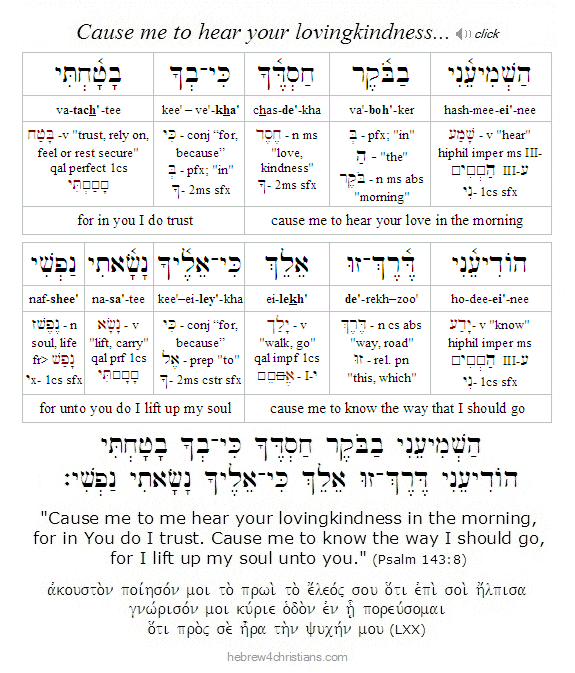 |
Seeing God's Promise...
10.21.25 (Tishri 29, 5786) Just as Noah foresaw the great cataclysm to come, so we are to understand that the world above our heads and under our feet is destined to destruction, as we likewise await the promised world to come: "Lift up your eyes to the heavens, and look at the earth beneath; for the heavens vanish like smoke, the earth will wear out like a garment, and they who dwell in it will die in like manner; but my salvation will be forever (וישׁוּעָתִי לְעוֹלָם תִּהְיֶה), and my righteousness will never be dismayed" (Isa. 51:6).
This idea is repeated in the New Testament: "For as were the days of Noah, so will be the coming of the Son of Man" (Matt. 24:37). "But the Day of the LORD will come like a thief, and then the heavens will pass away with a roar, and the heavenly bodies will be burned up and dissolved, and the earth and the works that are done on it will be exposed. Since all these things are thus to be dissolved, what sort of people ought you to be in lives of holiness and godliness, waiting for and hastening the coming of the Day of God, because of which the heavens will be set on fire and dissolved, and the heavenly bodies will melt as they burn? But according to his promise we are waiting for new heavens and a new earth in which righteousness dwells. Therefore, beloved, since you are waiting for these, be diligent to be found by him without spot or blemish and at peace" (2 Pet. 3:10-14).
In light of all this, we look not to the things that are seen but to the things that are unseen. "For the things that are seen are transient, but the things that are unseen are eternal... For the invisible things of Him from the creation of the world are clearly seen, being understood by the things that are made, even his eternal power and Godhead. Therefore we are strangers and exiles on the earth, looking forward to the city that has foundations, whose designer and builder is God" (2 Cor. 4:18; Rom. 1:20; Heb. 11:10,13).
Faith sees the invisible... Our father Abraham was promised descendants as numerous as the stars in the sky or sand on the seashore, despite the fact that he was an old man and his wife had long past the age of bearing children. Abraham believed in the One who gives life to the dead and calls into existence the things that do not exist: "He staggered not at the promise of God through unbelief but was strong in faith, giving glory to God; and being fully persuaded that, what He had promised, He was able also to perform: And therefore it was imputed to him for righteousness" (Rom. 4:19-22).
Hebrew Lesson
Genesis 15:6 Hebrew reading:
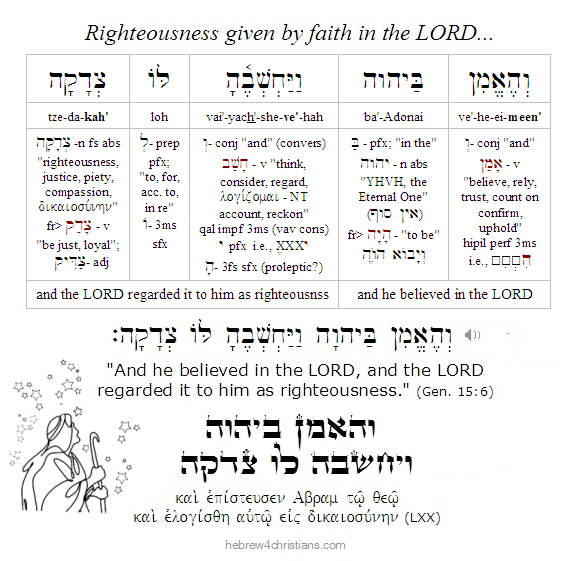 |
The Gospel in the Garden...
We always read Bereshit at the beginning of the Jewish year. Right at the outset of the Torah we read the "first gospel" message about God's redemption to be given through the Promised Seed of Eve. I would be remiss if I did not repost this content here for the current year...
10.20.25 (Tishri 28, 5786) The very first prophecy of the Torah concerns the promise of the coming "Seed of the woman" who would vanquish the serpent (nachash) that had originally tempted and deceived Eve (Gen. 3:15). This prophecy is sometimes called the proto-euangelion ("first gospel"), since it is the starting point of all subsequent prophecy and redemptive history revealed in the Scriptures. Indeed, since the mystery of the Incarnation of God the Son (the "Son of Man") is foreshadowed here, this prophecy is linked to the original woman, Eve. Just as Eve became a carrier of the corruption of human nature by heeding the voice of the tempter, so she would be the carrier of God Himself for the deliverance of mankind through the advent of the Redeemer. In the tragic aftermath of the transgression of the first man and woman, then, God first announced His unfailing redemptive love for the human race that would culminate in the birth, sacrifice, and resurrection of Yeshua our Savior and Deliverer - the One who was "born of a woman, born under the law" (Gal. 4:4).
Our restoration begins with God's love and passion. God's first question to Adam after he broke covenant was: "Where (אַיֶּכָּה) are you?" - the voice of a loving Father in search of his son (Gen. 3:9). Of course God knew exactly how his son was attempting to hide, though He almost acted as if He was unwilling to believe that he would betray his love by disobeying His commandment. Therefore God's poignant question was directed to Adam's heart: "Oh my son, how did you get to this place?" God was giving Adam an opportunity to turn back to Him, to confess the sin, to undergo teshuvah, to become reconciled... This is the necessary prelude to any honest relationship with God.
Recall that the original promise of the coming Savior was given within the context of the curse and judgment upon Satan: "I will put enmity between you and the woman, and between your seed and her seed; he shall crush your head, and you shall crush his heel" (Gen. 3:15). That God's promise was first directed to Satan is surely by design, since he "left his first estate" by becoming the "monster in the garden" and was therefore primarily responsible for the transgression of Adam and Eve in the first place (Ezek. 28:13-15,19). The promise delivered to Satan was therefore one of coming retribution and divine judgment: Evil would not have the last word in the matter of mankind, and therefore Satan's schemes would be avenged by God in the fullness of time (Gal. 4:4-5). Notice, however, that Adam and Eve were not yet judged for their sin when the LORD God gave the promise of the coming of the Redeemer. Before a word of judgment was directed toward them, God's love and light was already revealed. Indeed, immediately after their judgment was pronounced, "the LORD God made tunics of skin for Adam and his wife and clothed them" (Gen. 3:21) - a clear picture of being compassionately "robed in righteousness" imparted by an innocent sacrifice. The very first sacrifice recorded in the Torah - performed by God Himself - prefigured the coming redemption by the "seed of the woman" who would die as a substitutionary sacrifice for their sins, and therefore Yeshua is rightly called "the Lamb slain from the foundation (or beginning) of the world" (Rev. 13:8). This further explains why Eve's son (Abel) offered a blood sacrifice that was accepted by the LORD, whereas Cain's offering the "fruit of the earth" was rejected.
The very first prophecy of Torah therefore describes - in the most succinct form - the coming of the Savior and the great conflict of the ages. First, God declares that He would put enmity (אֵיבָה) between Satan and the woman. This enmity, or "hostile hatred," was based on the memory of Eve's misguided trust she evidenced in the garden. When Eve first sympathetically listened to the lies of the nachash (serpent), she immediately began her descent into exile and became a temptress herself. Her first step toward sin was a gullibility or openness that ultimately resulted in a lack of trust of God (which is part of the reason why we must be saved by trusting, as a "like-for-like" reversal of the original sin). At the very dawn of human history, then, we see that "truth" (אֱמֶת) apart from God (א) leads to death (מֵת). Eve was deceived because of Satan, but Adam deliberately chose to disobey God (2 Cor. 11:3; 1 Tim 2:14). In response to her teshuvah (repentance), God blessed Eve before He judged her by imparting to her a God-given hatred for Satan and his lies, as well as the promise that she would take part in the birth of the Savior of mankind. The first promise of the gospel, then, focused on the woman and her role in the coming redemption. Notice that Adam later renamed his wife Eve (i.e., Chavah: חַוָּה, the "mother of life") as an expression of his faith that the promised seed would come through her.
וְאֵיבָה אָשִׁית בֵּינְךָ וּבֵין הָאִשָּׁה
וּבֵין זַרְעֲךָ וּבֵין זַרְעָהּ
הוּא יְשׁוּפְךָ רֹאשׁ
וְאַתָּה תְּשׁוּפֶנּוּ עָקֵב

I will put enmity between you and the woman,
and between your offspring and her offspring;
he shall crush your head, and you shall crush his heel."
(Gen. 3:15)
Hebrew Lesson:
Genesis 3:15b Hebrew reading (click):
Eve might have initially believed that her firstborn son Cain (קַיִן) was the promised Seed himself. After all, the miracle of birth surely came as a great shock to her, and Eve's faith in God's promise that through her seed would come the deliverer was doubtlessly upon her heart at this time. When Eve called her son "Cain" (wordplay from the verb kana (קָנָה), "to get"), she was expressing her faith in God's promise: קָנִיתִי אִישׁ אֶת־יהוה / kaniti ish et-Adonai, "I have gotten a man - namely, the LORD" (Gen. 4:1). Eve's faith was obscured by the translators, however, who rendered the Hebrew as "I have gotten a man with the help of the LORD" (i.e., they inserted the idea of "help" and translated the particle et (את) as "with" rather than as the direct object marker for the verb). The ancient Jewish targums, however, agree with the original Hebrew. For example, Targum Yonatan reads: "I have gotten a man - the Angel of YHVH." Surely Eve, the first mother of humanity, was endowed with great wisdom from God, especially after she turned to Him in repentance after her disobedience. The straightforward reading of her words, then, expressed her hope that the LORD Himself would be made a man...
Despite her hope that Cain was none other than the God-Man and promised Deliverer, Eve's hopes were dashed when it became clear that her son was of the seed of Satan (1 John 3:12). His younger brother Abel (הֶבֶל) was a shepherd who evidenced faith in the promise of the coming redeemer by offering blood sacrifice (Gen. 4:3-5). Abel was persecuted and finally murdered by his brother Cain "because his own deeds were evil and his brother's righteous." Their spiritual conflict is indicative of the ongoing warfare between the "sons of darkness" and the "sons of light."
The murder of Abel necessitated that the coming seed would descend through another child, and therefore the Torah describes the birth of Seth (שֵׁת, lit. "appointed"), the third son of Adam and Eve. The Scriptures further state that it was the descendants of Seth who "began to call upon the Name of the LORD" (לִקְרא בְּשֵׁם יהוה), indicating that they had faith in God (אֱלהִים) as the Compassionate Covenant Keeper (יהוה) who would redeem humanity by means of the coming seed. Seth called his firstborn son Enosh ("man"), perhaps in the hope that his child would be the promised Savior (interestingly, bar enosh (בַּר אֱנָשׁ), or "Son of Man," is the name for the Savior (Dan 7:13).
To continue reading see:
"The Gospel in the Garden: Further thoughts on parashat Bereshit."
Shavuah Tov Audio Podcast:
The Gospel in the Garden...
Manny and Judah reading Sukkot blessings...
The Blessing of Divine Rest...
10.20.25 (Tishri 28, 5786) Our Torah reading for this week (from Bereshit) includes the famous words recited every Friday night at the outset of the Kiddush ceremony: "Thus the heavens and the earth were finished, and all the host of them. And on the seventh day God completed his work which he had made; and he rested on the seventh day from all his work which he had done. And God blessed the seventh day, and called it holy, because on it God rested from all his work which He created and made" (Gen. 2:1-3).
The phrase "on the seventh day God completed his work" bothered the Torah commentator Rashi, since it says in another place that all the work of creation was completed during the first six days (Gen 1:31). Rashi then asks, "What was lacking at the end of the sixth day?" And he answers: menuchah (מְנוּחָה), a word that means "rest" (from a root [נוּחַ] that means to repose, comfort, etc.). In other words, God created rest as the consummation of the creative process. Rest is something more than the cessation of activity; it is a means of renewal and reconnecting with what is most important, namely, the goal, purpose, and reason for our lives. Instead of focusing on doing things ("work"), we focus on our being and what we mean before the eyes of heaven. And that is why we "sanctify" the Sabbath day -- to set it apart as a time we attune ourselves to God and to recover the meaning why he created us in this world.
The Sabbath is therefore not a time of passive rest but rather the climax of God's creation itself. It is a picture of heaven itself, the rest and blessing of eternal life. All creation is for the sake of Messiah, which is to say, is for the sake of our salvation and union with God given through him. When Yeshua cried out "It is finished!" he signified that the work for our salvation was complete. There is a therefore a "Sabbath rest" for the people of God, for those who have entered His rest have also ceased from their works as God did from His (Heb. 4:9-10). And that's the deeper principle, or essence, of Sabbath, after all: to cease from our works and to be sustained by God's grace in our Lord...
The weekly Sabbath Kiddush is like a "mini-Passover seder" for us -- as we recall the blood of Yeshua shed for us as the Lamb of God and eat broken matzah in remembrance of Him...
Hebrew Lesson
Exodus 20:8 audio commentary:
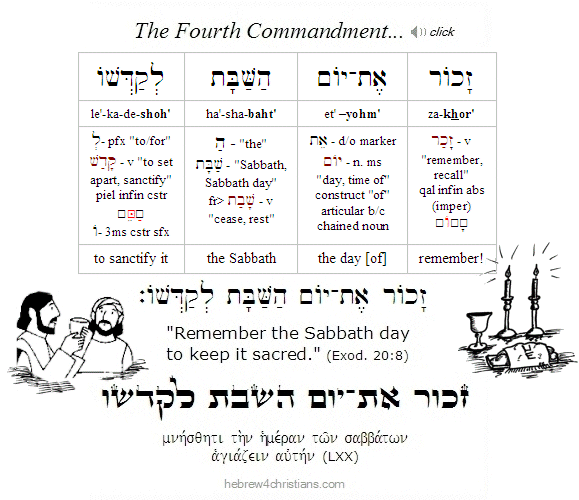 |
The Day of Yeshua...
10.20.25 (Tishri 28, 5786) Regarding Creation we may wonder why the Sun, the Moon, and the stars were created on the fourth day, but God created light (and darkness) on the first day? As it is written "And God said, 'Let their be light (יְהִי אוֹר) and there was light" (Gen. 1:3). This is to teach us that the Divine Light (אור האל) was separated ("sanctified") from the very beginning. And why does the Torah call the first day "yom echad" (יוֹם אחד), using the cardinal number, meaning "the day of the one," rather than using the ordinal number, "yom ha'rishon" (יוֹם הראשׁון), meaning "the first day"? This is to indicate its special sanctity as the day of "the one and only one" (האחד והיחיד), the utter uniqueness and glory of the One who brought forth the wonders of universe.
"Yom Echad," therefore is Yom Yeshua (יוֹם ישׁוע), the day of Yeshua, because everything that exists came into being by his hand, and through him all things consist. As it is written: "For by Him all things were created, in heaven and on earth, visible and invisible, whether thrones or dominions or rulers or authorities -- all things were created through Him and for Him. And he is before all things, and in him all things hold together (συνεστηκεν, lit. "stick together," Col. 1:16-17). Yeshua is the "Magnetic Center" and Logic of reality, the greatest Artist who sang forth the story of universe into being... πάντα δι᾽ αὐτοῦ ἐγένετο, καὶ χωρὶς αὐτοῦ ἐγένετο οὐδὲ ἓν ὃ γέγονεν: "All things were made through him, and without him was not any thing made that was made" (John 1:3). All of creation is being constantly upheld by the word of His power (Heb. 1:3).
Just as there are two kinds of light, the spiritual and the physical, so there are two kinds of darkness, that of the mind and heart, and that of eyes (Psalm 104:20; Isa. 6:10). Spiritual blindness is the deepest darkness, as Yeshua said: "The light of the body is the eye: if therefore your eye is single (ἁπλοῦς, "focused"), your whole body shall be full of light. But if your eye is evil, your whole body shall be full of darkness. If therefore the light that is in you be darkness, how great is that darkness!" (Matt. 6:22-23).
Note the connection between the spiritual and the physical. There is a fundamental dualism that is metaphysically part of God's creation. In the beginning "darkness was on the face of the deep" (חֹשֶׁךְ עַל־פְּנֵי תְהוֹם), that is, God used darkness as the "background of his canvas" as he "extinguished" the darkness with the creation of light. These two cannot "blend" or be syncretized but are mutually exclusive (John 1:5; 1 John 5:2). This is true of our spiritual life as well - the light that enables us to see God's truth is in conflict with the darkness that is "tohu va'vohu," unreality and vanity that hides the view of the depths (Gen. 1:2).
Yeshua is the Center of Creation - it's beginning and end. As it is written: אָנכִי אָלֶף וְתָו רִאשׁוֹן וְאַחֲרוֹן ראשׁ וָסוֹף / "I am the 'A' and the 'Z,' the First and the Last, the Beginning and the End" (Rev. 22:13). Indeed, Yeshua is מֶלֶךְ מַלְכֵי הַמְּלָכִים / Melech Malchei Hamelachim: The "King of kings of kings." He is LORD of all possible worlds -- from the highest of celestial glories to the very dust of death upon a cross... יְהִי שֵׁם יהוה מְברָךְ / yehi shem Adonai mevorakh: "Let the Name of the LORD be blessed" forever and ever (Psalm 113:2).
Hebrew Lesson
Psalm 113:2 reading (click for audio):
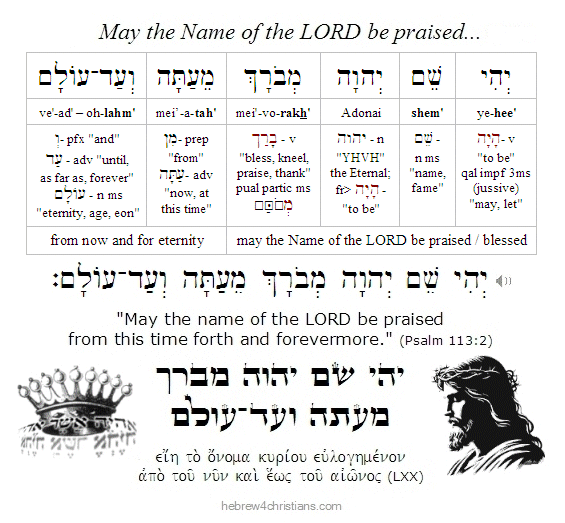 |
During Sabbath kiddush we remember God as both our Creator and our Redeemer. The central point of all true Torah, then, is the redemptive love of God demonstrated in the "first and last" principle of sacrificial life. This was prefigured in the original paradise when Adam and Eve were clothed by the lamb sacrificed for their transgression (Gen. 3:21), and the theme continues throughout the Torah, for example, in the account of the sacrifice of Isaac (we blow the shofar on Rosh Hashanah to recall the Lamb of God given in his place), in the visions of Jacob, in the commissioning of Moses, in the redemption from death by the blood of the sacrificed lamb in Egypt, and by the climactic revelation of the altar given at Sinai (i.e., the Tabernacle). Just as the "korban tamid" of the Temple (i.e., the continual sacrifice of the lamb upon the altar) recalled the original Passover and foretold of the Lamb of God to come, so Yeshua, the "Living Torah," embodied the Sacrificial Life itself, the true Lamb of God that was offered upon the stigma of the cross, to demonstrate God's infinite condescension, mercy and love that redeems the world from sin and death. Just as there is no Passover apart from the Lamb, so there is no "Rosh Hashanah" or "Yom Kippur" apart from God's atoning love given in the Messiah... Now that is reason to blow the shofar and make a "teruah," or a "joyful noise" in praise to our God! Amen!
Hebrew Lesson
Revelation 4:11 reading (click for audio):
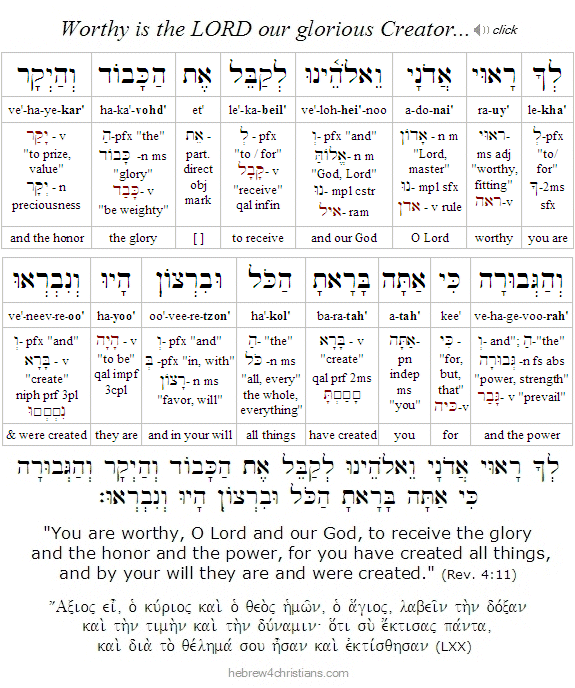 |
Nothing is trivial...
"There is a loss that is eternally irreparable; thus eternity — even more frightful — far from wiping out the recollection of what is lost, is an eternal recollection of what is lost!" - Kierkegaard
10.20.25 (Tishri 28, 5786) "And this is the judgment: the light has come into the world, and people loved the darkness rather than the light because their deeds were evil. For everyone who does wicked things hates the light and does not come to the light, lest his works should be reproved. But whoever does what is true comes to the light, so that it may be clearly seen that his works have been carried out in God" (John 3:19-21).
It is a "sobering glory" to truly understand that life is a miracle and nothing is trivial. In the world to come you will be shocked to understand that everything you thought, everything you said, and everything you did was given to you from above, and therefore has tremendous significance (Matt. 12:36-37). Everything matters. Your life matters. Your choices echo with the ring of eternity. May it please the Lord to open our hearts and eyes to truly come alive...
If you belong to the Messiah you are not part of this world and its deceptive matrix but instead serve the "King of Kings" (Col. 1:13; Acts 26:18; 1 Pet. 2:9). Therefore set your thoughts on things above, not on things of this world (Col. 3:2). In the end all things born of the lie will be exposed and forever put away from us (Eccl. 12:14). The great Day draws near. "For though the vision awaits its appointed time; it hastens to the end -- it will not lie. If it seems slow, wait for it; it will surely come; it will not delay" (Hab. 2:3). Amen.
Hebrew Lesson
Ecclesiastes 12:14 reading (click):
This week's Torah:
Parashat Bereshit-Noach...
10.19.25 (Tishri 27, 5786) According to tradition, this week's Torah portion is parashat Noach. However, since we just finished the Sukkot holiday and Simchat Torah last week, we have had only a few days to read and study the vitally important parashat Bereshit - the foundational portion of the entire Torah - and therefore we will extend our time with Bereshit this week by including it with parashat Noach to have a sort of ad hoc "double portion" of Torah. In other words, in addition to discussing Noah and the great flood, I will be continue to write and share topics regarding last week's Torah portion. I hope that makes sense.
The Blessing of Existence...
As I mentioned last week, the Hebrew word "Bereshit" can refer to either the very first Torah portion of the Bible (i.e., Gen. 1:1-6:8) or to the first book of the Torah itself (i.e., the book of Genesis). When it is used to refer to the Torah portion, it is called "parashat Bereshit," and the text covers the creation of the universe, including Adam and Eve, the subsequent transgression of Adam and Eve, the murder of Abel by humanity's firstborn son Cain, and the increasing depravity of the generations until the time of the calling of Noah. When it is used to refer to the book, however, it is called "sefer Bereshit," or the "Book of Bereshit," and the text covers everything from the creation of the universe to the descent of Jacob's son Joseph into Egypt in anticipation of the great Exodus. Note that the ancient Greek translation of the Bible (i.e., the Septuagint) called this book "Genesis," (Γένεσις: "birth", "origin"), a name that was carried over in subsequent Latin and English translations.
The first Torah part of Bereshit opens with this succinct statement about the creative activity of God: "In the beginning (i.e., "bereshit") God (i.e., Elohim) created the heavens and the earth." Note immediately that the Scriptures therefore begin - not from the first person perspective of some man's understanding of God - but from an omniscient third person perspective, a Voice that reveals the Glorious Power that created the entire cosmos by means of His Word. The very first verse of the Bible, then, alludes to the triune nature of God, as further indicated by the use of the plural form of the name Elohim with the singular verb bara (he created). Indeed, the word bereshit itself includes the root idea of "head" (i.e., rosh), which suggests the "head of all things," that is, to the Messiah, the Creative Word of God who is the "head of all beginning and authority" and through Whom and for Whom all things were created (Col. 1:16; 2:10).
Genesis 1:1 Hebrew reading (click):
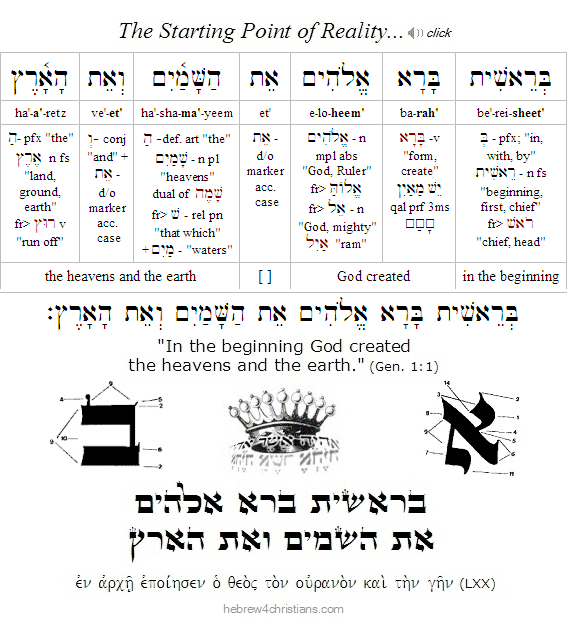 |
After this grand opening line, shrouded as it is in mystery, the Torah describes how God created the universe yesh me'ayin - out of nothing (Heb. 1:3) over a six "day" period. On the first day God created darkness and light; on the second day He created the atmosphere, dividing the "upper" from the "lower" waters. On the third day He set the boundaries of land and sea and seeded the earth with trees and vegetation. On the fourth day He fixed the position of the sun, moon and stars as timekeepers and illuminators of the earth. Fish, birds and reptiles were created on the fifth day; and land animals, and finally the human being, on the sixth. God ceased from His creative work on the seventh day, and sanctified it as Sabbath, a day of rest.
In addition to this general, "day by day" account of the creation of the universe by God, the Torah provides a more focused account about how God formed Adam's body from the dust of the earth and blew into his nostrils the "breath of life" so that he became a "living soul." Notice that the more detailed account includes reference to the LORD God, the first time the name YHVH is used in the Scriptures. Interestingly, in this second account the earth is described as a sort of "desert." The earth was barren of vegetation, no rain had yet fallen upon the earth, and the LORD formed the man from the "dust from the ground." After breathing into him so that he became a living soul, God planted a garden in Eden, "in the east," and there caused every tree that was pleasant to the sight and good for food to spring up from the ground. In the very midst of this orchard were two special trees: the "Tree of Life" and the "Tree of the knowledge of good and evil" (עֵץ הַדַּעַת טוֹב וָרָע). God then instructed the man to tend the orchard and to eat from whatsoever tree he desired, though he was warned not to eat from the tree of knowledge of good and evil, "for in the day that you eat of it you shall surely die" (Gen. 2:17).
Further summary of parashat Bereshit may be found here:
The Curse of Sin...
Now the mutiny of Adam and Eve caused humanity to plunge into idolatrous chaos, and the subsequent generations lost sight of the LORD and became progressively steeped in moral anarchy and bloodlust, so that "every intention of the thoughts of man's heart was only evil continually" (Gen. 6:5). After just nine generations, the LORD had grown so weary of humanity that he "regretted" (i.e., yinchem: יִּנָּחֶם) creating man and "his heart was grieved" (Gen. 6:6). However, God recognized Noach (from the godly line of Seth) as a tzaddik (צַדִּיק), a righteous man of faith, and graciously made provision to save him from the wrath to come....
Noah's father Lamech (לֶמֶךְ, "powerful one") regarded his son as a deliverer who would comfort humanity from the ravages of the original curse. Noach would give rest (נוּחַ) from the toil and vexation of life (Gen. 5:29). Symbolically Noah was a "type" of the Savior to come who would rebirth the world by giving lasting comfort and rest (for more on this, see the article "Noah and Jesus"). In like manner it was prophesied that Yeshua would give us everlasting rest: "His rest shall be glorious" (Isa. 11:10), just as He offers rest to the weary (Matt. 11:28, Heb. 4:9). His sacrifice on the Cross at Moriah undoes the kelalah (curse of work) over the children of Adam. Indeed, His life, sacrifice, and resurrection was like a "magic spell" that "spoke backwards" the sin of the "First Adam" - and by means of His deliverance the power of the curse is forever broken (see Gal. 3:13, John 3:14, 2 Tim.1:10; Heb. 2:14; etc.). Yeshua is Adam ha-Sheni (האדם השני) - the "Second Adam" - the promised Son of Man. By means of His Spirit we are given an everlasting comfort (John 14:16).
Eschatologically, the "days of Noah" (יְמֵי נֹחַ) present a picture of the idolatrous conditions of the world that will prevail just before the calling up of the followers of Yeshua before the time of Great Tribulation upon the earth: "As were the days of Noah, so will be the coming of the Son of Man" (Matt. 24:37). The generation of the Flood was said to be "filled with violence" (i.e. chamas: חָמָס) caused by ignorance -- literally the "state of ignoring" moral and spiritual truth (see Gen. 6:13). Because people willingly disregarded God from their midst, they arrogated to themselves divine prerogatives: אִישׁ הַיָּשָׁר בְּעֵינָיו יַעֲשֶׂה - "every man did what was right in his own eyes." The resulting moral corruption and spiritual anarchy led to divine and catastrophic judgment: the world returned to its primordial state of tohu va'vohu v'choshekh: "confusion and emptiness and darkness" (Gen. 1:2). Notice, however, that despite the godlessness and lawlessness that prevailed, the "days of Noah" were not marked by great "tribulation," since people were eating and drinking, marrying and giving in marriage, until the day that Noah entered into the ark, "and they were unaware" (καὶ οὐκ ἔγνωσαν) until the flood came and swept them all away -- so will be the coming of the Son of Man (see Matt. 24:38-39). In other words, the "end of the world" judgment fell suddenly and took them by surprise...
The seven day warning given to Noah further suggests the seven year tribulation period to come (i.e., Daniel's 70th week), and also the supernatural gathering of the people of God who will be carried above the prophesied worldwide cataclysm. Just as God protected Israel during the time of judgment upon Egypt, so He will protect His people from the wrath of the "great Day of the LORD" (וֹם־יְהוָה הַגָּדוֹל). But please note that "the LORD shut him in" (Gen. 7:16). Noah's teivah (ark) had God Himself as its designer (Gen. 6:15), just as salvation in Messiah is exclusively by God's design (Jonah 2:9; Eph. 1:9, 1:11). It contained only one door (Gen. 6:16), just as Yeshua is the only door to salvation (John 10:9; 14:6). Noah's ark contained three levels (Gen. 6:16) and salvation has three own experiential levels (2 Cor. 1:10): past, present, and future. In the past (at Moriah) Yeshua delivered us from the penalty of sin; in the present, He is delivering us from the power of sin; and in the future He will deliver us from the very presence of sin. Baruch Hashem - may that day come soon!
Hebrew Lesson:
Genesis 6:9b Hebrew reading (click):
Addendum:
Historicity of the Great Flood
Secular scholars often scoff at the story of Noah and the great flood (המבול הגדול), suggesting it is a myth, but several ancient documents reveal striking parallels to the account given in the Torah (the most famous of these is the Babylonian "Gilgamesh Epic"). Moreover, sea archaeologists have discovered numerous ancient "submerged cities" throughout the world that lend credibility to the description found in parashat Noach..
Moreover, the Torah describes the "floodgates of the deep" that broke and overwhelmed the surface of the earth -- the "fountains of the depths" (מַעְיְנֹת תְּהוֹם רַבָּה) from underground oceans (Gen. 7:11) that today have been confirmed to exist.
Tethered by His love...
10.17.25 (Tishri 25, 5786) In solitary moments you may wonder if your life has any significance and purpose, especially when you consider the infinite sweep of the cosmos, the vast diversity of life in this world, the epochs of human history which have preceded you, and your place in the grand scheme of things. Does your life matter?
You believe the Lord God is real and the Scriptures are true, but you are unsure of how to live in the ambiguity of the moment. You are not yet in heaven but groan as you await the redemption of this world. You find yourself between the real and the ideal, between the transient shadows of this life and the abiding substance of hope.
You find yourself a bystander at the graveside of the material world. You have one eye on the grave and the other on your heavenly home. But in light of this dualism or "two-tiered" metaphysic, how are you meaningfully connected with both? We live but we die: we die but we live...
The Scriptures clearly teach that each of us are part of the "divine idea," that is, part of God's overarchingly glorious story of the meaning and purpose of life. It cannot be conceived otherwise once you understand that God is the Lord over every moment of everything in every possible world, that He is the great Sovereign of the universe, the One who upholds all things by the word of His power. "In Him we live and move and have our being," as the ancient poets rightly said (Acts 17:28).
This means, among other things, that everything has eternal significance, that nothing is trivial, and that the Lord is here now, fully present — even if you may feel lonely or overwhelmed... This is because God personally upholds whatever exists by his invincible will (Heb. 1:3). "By him were all things created, that are in heaven, and that are in earth, visible and invisible, whether they be thrones, or dominions, or principalities, or powers: all things were created by him, and for him, he is before all things, and by him all things consist (Col. 1:16-17). The Lord cares for the birds of the air and tends to the hidden lilies of the field...
The heart of faith makes the audacious claim that we are seen, known, and upheld by the Living God. The cross of Yeshua is the intersecting point, because the meaning of the cross is reveals that God is always here for us always our redeemer, our healer, and our deepest need... We are tethered to God in this world.
The great Apostle Paul wrote: "I have been crucified with Messiah, nevertheless I live (ζῶ δε), yet not I (οὐκέτι ἐγώ) but Messiah lives in me (ζῇ δὲ ἐν ἐμοὶ χριστός). And now the life I live in my mortal flesh (ὃ δὲ νῦν ζῶ ἐν σαρκι) I live by the faith of the Son of God (ἐν πίστει ζῶ τῇ τοῦ υἱοῦ τοῦ θεου) - the One who loved me and who gave himself for me" (Gal. 2:20). This breathtaking statement defines the essence of our relationship with God given in Yeshua the Lord and Messiah. Among other things this teaches that my true self - that is, the self redeemed by God's love - is the "Christ-in-me" self, the "I" that I am in relationship with Christ, and this life is founded upon the reality of Yeshua who personally mediates my life with the life of God.
It is the faith of Yeshua that enables the heart to trust that your life has great significance and value. When he "gave himself for me," he believed that his intercession would redeem my life and impart to me a new type of existence, a new "I" that would forever be healed by his mercy and love. Indeed and shockingly wonderful is the truth that our lives are so important to God that he took the curse of our shame upon himself and overcame it with his compassion and blessing... Your life is redeemed by God's love, held fast by the bonds of his outstretched arms for you upon the cross as he says your name and knows your deepest need for love. "I am crucified with Christ" means Christ is crucified for me. My "being with" Christ on the cross is based on his "being with" me during his crucifixion.
In light of this amazing and outrageous truth we know that we can never be truly alone, for God upholds every moment of our lives and there never is a time or place where the Lord is not present (יהוה). Yes, we may sometimes feel alone, forgotten, angry, afraid, and so on, but these thoughts and feelings are "vestiges" of the ignorance, illusion, and unreality of our former life, memories of the "living dead," and therefore they are derived from the false life of demonic despair. If we cling to our fears and sorrows we lose sight of what is real and distance ourselves from God. We then become "double minded" (δίψυχος, "two-souled") and unstable in our lives and risk falling away from the blessing of the new life God gives to us. We risk this because we have denied being the "I" in dialog with the truth of God's love, and that means we relapse back to be the lost "I" of faithlessness.
If you have trouble believing you are really loved, that your life has value and meaning and eternal significance, go back to the cross. Consider the faith of God that yielded his life so that you could live; meditate upon the passion of Yeshua who suffered in the dark cloud, utterly forsaken while groaning in intercession that you would be healed of your despair. Faith dares to believe that Yeshua saw you then, that he knew your name before you were born and he came for you - crying out in anguish for you to be delivered from your deepest fear - that you are really nothing, that you are unlovable, that you are forever cursed...
Beloved friend, you are seen, you are loved, you are wanted, and you truly have peace with God because of the one who loved you and gave himself for you. Amen.
"I am crucified with Christ." This is the end of your "alone-in-me" self, the lost self of despair, the seeming "life" you lived apart from the intervention of the divine love that delivers you from the nightmare of bondage to yourself. This "I" died in judgment as it was carried and borne by the grace of God that suffered on your behalf. "Nevertheless I live." This is the new life, regenerated to be in relationship with the truth of God's love, the "I" that is known and healed by God's overcoming power that raises undoes the curse, raises the dead to life, and gives you an everlasting inheritance as the beloved of God. Hallelujah!
Hebrew Lesson
Jeremiah 31:3 reading (click for audio):
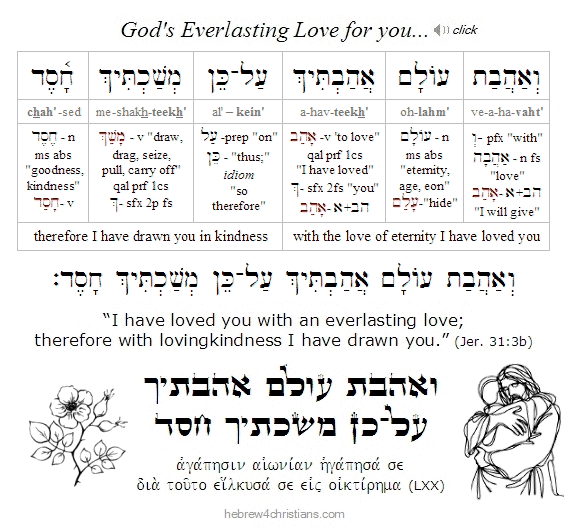 |
Seedbed of Creation...
10.17.25 (Tishri 25, 5786) The Scroll of Genesis (סֵפֶר בְּרֵאשִׁית) is truly the "beginning," the "root," and the "seedbed" of all the subsequent Scriptures - including the message of the gospel and the revelation of the New Testament. In Genesis we see the creation and ruin of man through sin, but we take hold of the promise of deliverance through the coming Seed of the woman; in the Book of Exodus (שְׁמוֹת) we see God's powerful redemption secured through the blood of the Lamb; in the Book of Leviticus (וַיִּקְרָא) we encounter communion and atonement in the holy sanctuary; in the Book of Numbers (בַּמִדְבַּר) we experience the leading of God through desert places, and in the Book of Deuteronomy (הַדְּבָרִים) we are renewed by God's faithfulness before we take hold of our inheritance. Ultimately, the concluding book of the Bible, the Book of Revelation, serves as a climactic "final chapter" of the story of Torah begun in Genesis, where the Tree of Life (עֵץ הַחַיִּים) is restored to the midst of the paradise of God, and the presence of sin and death have been forever eradicated....
Everything begins with the foundational truth that Almighty God is our personal Creator (הַבּוֹרֵא). This is the first principle and axiom of all rational thinking: "In the beginning (בְּרֵאשִׁית), God created the heavens and the earth" (Gen. 1:1). Notice that the word "beginning," i.e., bereshit, comes from the word reishit (רֵאשִׁית), meaning first or best (Psalm 111:10), which does not necessarily mean "the beginning" in a temporal sense (הַרִאשׁוֹן), but rather primacy or rulership over all that exists. Indeed, the word includes the root idea of "head" (ראשׁ), which suggests the "head of all things," that is, to the Messiah, the Creative Word of God who is the "head of all beginning and authority" and through Whom and for Whom all things were created (Col. 1:16; 2:10).
Many of the traditional sages state that "in the beginning" (בְּרֵאשִׁית) refers to the wisdom of the Torah. Quoting Proverbs 8:22, these sages actually say that God created the world for the sake of Torah, what they call "reshit darko" (רֵאשִׁית דַּרְכּוֹ). In other words, wisdom (i.e., chokhmah: חָכְמָה) is personified as the Torah, the Agency of Power that created the universe. In light of the New Testament, we understand the divine wisdom personified as Yeshua our Messiah - the expression of God's will in creation... the manifestation of the "strong arm" of the LORD and his mighty power that created the enormous complexity of the universe yesh ma'ayin, "out of nothing..." Indeed, Yeshua is the "Living Torah" (ha'Torah ha'chayim: התורה החיה) and the Lamb slain before the foundation of the world - the One revealed before creation as its source and end. As it says in the New Testament: בְּרֵאשִׁית הָיָה הַדָּבָר - "in the beginning was the Word," וֵאלהִים הָיָה הַדָּבָר - and God was the Word... הַכּל נִהְיָה עַל־יָדוֹ - All things were made by Him, and without Him was not anything made that was made (John 1:1,3). Followers of the Messiah Yeshua do not worship a book, though the LORD our God is indeed the faithful Lawgiver, the Source of all truth and therefore he can never contradict the perfections of his own inner nature. Only the LORD God Almighty receives the glory of creation forever and ever (Rev. 4:11).
God "emptied himself" by freely choosing to create the universe in order to share his wisdom, glory, and love with other beings he created... All this was for the sake of the Messiah, who built the world in chesed (חֶסֶד) and who forever reigns as the King of eternal life and love.
Hebrew Lesson
Prov. 8:22 Hebrew reading (click):
Creation and Faith...
"It is absurd for the Evolutionist to complain that it is unthinkable for an admittedly unthinkable God to make everything out of nothing and then pretend that it is more thinkable that nothing should turn itself into everything." - G.K. Chesterton
10.17.25 (Tishri 25, 5786) The idea that a personal God created the universe "out of nothing" (i.e., yesh me'ayin: יֵשׁ מֵאַיִן ) is a matter of special revelation that is not directly known through the operation of unaided natural reason. Of course human reason may (rightly) infer that since "every effect requires a cause," and since the universe itself is an effect, there must be a cause sufficient in power and greatness to effect the existence of the universe. Likewise, human reason may again (rightly) infer that the universe itself must have had a beginning, since it is impossible to traverse an infinite number of causes to arrive at a present effect, and therefore there must have been an immensely powerful and transcendental "First Cause" that started the chain of causation itself. (This "First Cause" answers the metaphysical question, "Why is there something [at all] rather than nothing?") However, human reason, by itself, can only take us so far, and something more is needed to apprehend the nature of reality.
In philosophical theology, an argument that God is the Cause of the universe is sometimes offered to invoke the possibility that the God of the Jewish Scriptures exists, though strictly speaking this inference is not warranted given the premises and logic of "cosmological" arguments alone. Indeed, the ancient Greek philosophers used this kind of reasoning to justify their own speculations about the cosmos (e.g., Plato's Form of the Good, Aristotle's Unmoved Mover, etc.), and yet their philosophical systems never connected the First Cause with a morally perfect personal Creator (אֱלהִים) who made mankind in His image and who therefore requires loving trust to know Him. The Greek conception of God (θεὸς) was abstract, impersonal, and essentially a theoretical construct employed to make sense of the physical cosmos. Nowhere in their speculations will you find the idea that the First Cause has revealed Himself as the author of all moral truth in the universe and who therefore functions as mankind's Eternal Judge. And nowhere in their thinking will you find the Covenant-Making God (יהוה) who redeems humanity from sin and judgment by means of the atoning sacrifice of Yeshua on the cross... Beyond the abstract awareness that the universe is the effect of an immensely powerful and transcendental First Cause, unaided human reason has precious little to say. As the French philosopher and mathematician Blaise Pascal once wrote, "The God of the philosophers is not the God of Abraham, Isaac, and Jacob."
To the Hebrew mind, reality is the handiwork of a single all-knowing, all-powerful, and morally perfect Creator who has personally revealed Himself to key individuals in the drama of human history. As such, reality is intensely, overwhelmingly, and even hauntingly personal... Truth therefore is a matter of trust -- not abstract knowledge -- whereas "knowledge" is primarily about practical ethics, moral obligation, and cult practices (i.e., Temple worship). For the Hebrew mind, truth is more akin to moral fidelity than it is to propositional correspondence; it is more a matter of the heart than of the head (see: "Theology and the Greek Mindset").
A Roman emperor once asked Rabbi Joshua if the universe had a ruler. The sage answered, indeed, the LORD is the Creator of all things, as it is written, "In the beginning, God created the heavens and the earth." The emperor then asked, "Why then is God not like the emperor of Rome, who is seen twice a year so that people may know and worship him?" Rabbi Joshua said that unlike human kings, the LORD was too powerful for people to see; as it is written in the Torah: "No person shall see Me and live." The emperor was skeptical, however, and insisted that unless he could physically see God, he would be unable to believe. Rabbi Joshua then pointed to the sun high in the sky: "Look into the sun and you will see God." The emperor tried to look into the sun, but was forced to cover his eyes to keep them from burning: "I cannot look into the sun," he said. Rabbi Joshua then replied: "Listen to yourself: If you cannot look into the sun which is but one of God's creations, how can you expect to look at God?" (adapted from Sefer HaAggadah)
The New Testament affirms that knowing that the First Cause of the universe is the personal God revealed in the Jewish Scriptures is the result of faith in God's direct revelation: "By faith (בָּאֱמוּנָה) we understand that the universe [lit. "worlds"] were created by the utterance of God (בִּדְבַר אֱלהִים), so that what is seen [i.e., the "effect" of the universe] did not come into being out of existing phenomena [i.e., was made yesh me'ayin - 'out of nothing']" (Heb. 11:3). Again, this is a matter of special revelation directly imparted by God's grace so that the soul may apprehend the Divine Light that preceded the creation of the worlds. Faith "looks not to the things that are seen but to the things that are unseen. For the things that are seen are transient, but the things that are unseen are eternal" (2 Cor. 4:18). This "collision" with the world of everydayness creates a restlessness or homesickness for our true home in heaven... (May God help each of us persevere.)
The very first phrase of the Scriptures, "In the beginning God created..." (Gen. 1:1), is therefore the starting point of all true and right thinking about the universe itself. Everything else follows from this revealed truth which natural (i.e., human) reason can merely approximate. God alone can create yesh me'ayin - "out of nothing" (the Hebrew verb bara (בָּרָא) is used exclusively to refer to God's power in this way), and therefore God stands exaltedly apart from the universe as its unique Creator and personal Master. This is the guiding thought that overshadows all that follows in the pages of Scripture. God is holy - separate - and entirely unique. He is the Personal God who loves, wills, speaks, intends, etc., and to whom human beings owe their allegiance and life. The God of Israel is not some indifferent deity that functions as a theoretical construct to explain the universe: He is the Source of all life, the personal Judge and Redeemer of all people. Bless His great name.
Hebrew Lesson
Psalm 95:6 reading (click for audio):
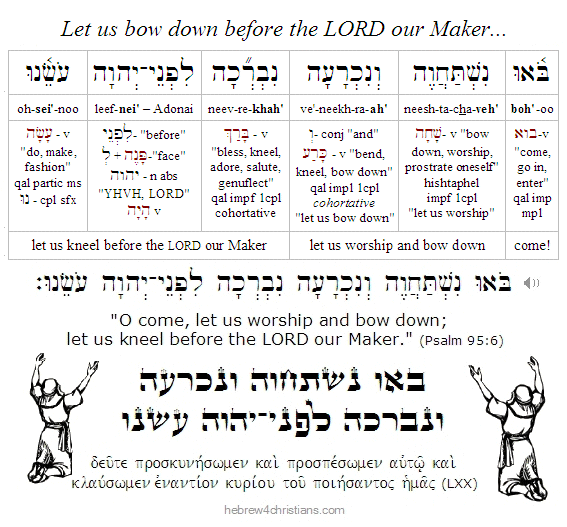 |
Spelling out "Bereshit"...
The following is related our Torah portion for this week, parashat Bereshit...
10.17.25 (Tishri 25, 5786) The 18th century Torah sage Vilna Gaon taught that the Hebrew word "bereshit" (בְּרֵאשִׁית), which is the very first word of the Bible, may be thought of as an acronym for meaningful spiritual life. The first letter, Bet (בּ), stands for bittachon (בִּטָּחוֹן), a word that means complete trust in God's love for your life; the next letter, Resh (ר), stands for ratzon (רָצוֹן), or the desire to live according to God's will; the central letter Aleph (א) stands for ahavah (אַהֲבָה), which is the love for God and for our fellow man (Deut. 6:5; Lev. 19:18); and the letter Shin (שׁ) is for shetikah (שְׁתִיקָה), or "keeping silent," which is the cardinal virtue of godly self-control and wisdom (James 1:26; 3:1-18; Psalm 34:13; Prov. 13:3, etc.). The letter Yod (י) is for yirah (יִרְאָה), or reverence for God's authority and dignity; and finally, the letter Tav (ת) is for Torah (תּוֹרָה), the study of which brings transformation and sanctity to your life (Psalm 19:7; 119:105; Prov. 6:23; Matt. 5:17-19; 2 Tim. 2:15-16).
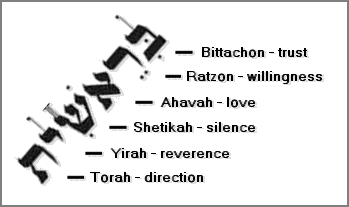 |
Torah begins with the word 'bereshit' (בְּרֵאשִׁית), which may also be homiletically understood to say 'God created the world for the sake of the beginning.' All the Creator asks is that you make a beginning, that you turn in the right direction." Repent and believe -- what? Believe that you are loved, you need God's compassion and healing in your life... Indeed, we never really get past the first steps made in earnestness toward God. In that sense we are "always beginning," since we never get beyond the need of the heart to turn to God. We are all incomplete, awaiting the end for which we were created, and therefore we are always calling on the LORD, always abiding in Him, always seeking His face... We begin, we end, and in everything Yeshua is the Center of our hearts...
Hebrew Lesson
Psalm 33:6 reading (click for audio):
The Reason for Creation...
The following is related our Torah portion for this Shabbat, parashat Bereshit...
10.17.25 (Tishri 25, 5786) Why did God create the universe? What is its ultimate purpose and end? In the Scriptures we read: "The heavens declare the glory of God, and the firmament shows forth his handiwork" (Psalm 19:1). The vast expanse of the unending cosmos mirrors the greatness of the Creator; its innumerable wonders constantly proclaim the infinite glories of God. Indeed all of creation is filled with God's glory (Isa. 6:3). So the manifestation of the glory of God is "the meaning of life, the universe, and everything in it."
But there is something deeper still, namely, the glory of God as the Redeemer and Savior of lost humanity. "Fear not: for I have redeemed you; I have called you by your name; you are mine" (Isa. 43:1). "Bring my sons from afar and my daughters from the end of the earth, everyone who is called by my name, whom I created for my glory, whom I formed and made" (Isa. 43:6-7). We were created for God's glory, yet we became lost and in the darkness of exile. The highest manifestation of the glory of God is therefore revealed in Yeshua our Savior, the gracious healer and lover of our souls.
The Bible begins: "In the beginning God created the heavens and the earth" (Gen. 1:1). It then recounts how God created man by breathing a part of his own spirit into him: "Then the LORD God formed the man from the dust of the ground (adamah: אֲדָמָה) and breathed into his nostrils the breath of life (nishmat chayim: נִשְׁמַת חַיִּים), and the man became a living soul" (Gen. 2:7). The miracle of creation means that God imparted his own neshimah (נְשִׁימָה), his own "breath," to give life to the man, who was named "Adam."
When Adam first opened his eyes and human consciousness was born, he immediately understood that the LORD created all things, including himself. According to midrash, Adam's first words were, יהוה מֶלֶךְ עוֹלָם וָעֶד / Adonai malakh olam va'ed: "The LORD is King for ever and ever." God then said, "Now the whole world will know that I am King," and He was very pleased. This was the "tov me'od" (טוֹב מְאד) moment of creation, when God saw all that He had made "and found it very good" (Gen. 1:31). The whole universe was lit up with God's glory, from the furthest star to the dust used to form Adam's heart.
However it was not long afterward that God tested Adam, perhaps to prove his love for his Creator (John 12:15; Deut. 13:3). God wanted Adam and Eve to make up their minds by choosing whether they would honor his will or not. He commanded Adam not to eat from the forbidden tree, without any rational explanation, though he warned that disobedience to his commandment would result in death: "Of every tree of the garden you may freely eat; but of the tree of the knowledge of good and evil you shall not eat, for in the day that you eat of it you shall surely die" (Gen. 2:16-17).
Paradoxically, the LORD constrained Adam and Eve to make the decision one way or another. They were forced to be free! The forbidden tree was therefore encountered, and the nachash (devil) appeared questioning God's will for them: "Did God really say...?" (Gen. 3:1). Like the patriarch Job, the showdown between good and evil would be played out within the heart of man. And all of this was by divine design and counsel, of course. God created this tree to test the man's faith; He foresaw the transgression; and He graciously planned for its remedy in Yeshua, the "Lamb slain from the foundation of the world."
We know what happened, of course. Eve took fruit from the tree and gave some to Adam, and together they chose to disobey God. Because the transgression arose from the desire to act autonomously, the remedy was to be realized by its reversal - that is, by yielding in personal trust of God's sacrificial love. That was the primary message God gave to Adam and Eve when he covered them with the skin of a sacrificed lamb in the garden and promised them future redemption from the curse of death. Though Adam was first created to mirror God and serve as the steward of creation, his image was marred by unbelief and therefore he needed the miracle of regeneration to be perfected. This "new man," despite being plagued by various troubles and confusion, was destined to overcome the fallenness of the world by faith, and it was for such people that the LORD God created the world.
And so God created the world for the sake of the manifestation of his glory both as our Creator but also as our personal Redeemer and Savior. Yeshua is the revelation of the glory of God who reveals the divine heart of mercy and compassion. Yeshua is the "direct object" of creation; He is the central character of reality, the depth of all that is ultimately real.
"In the beginning was the Word" (John 1:1,14). Yeshua is the Source of all life in the universe: "All things were made by Him (John 1:3). The "Word made flesh" is the "image of the invisible God" and the "radiance of the glory of God and the exact imprint (χαρακτήρ, 'character') of his nature" (John 1:14, Col. 1:15). All of creation is being constantly upheld by the word of His power (Heb. 1:3): "All things were created by Him (i.e., Yeshua), and for Him" and in Him all things consist (συνεστηκεν, lit. "stick together") (Col. 1:16-17).
Creation begins and ends with the redemptive love of God as manifested in the Person of Yeshua our Messiah... He is the gravitational center of creation - it's beginning and end. As it is written: אָנכִי אָלֶף וְתָו רִאשׁוֹן וְאַחֲרוֹן ראשׁ וָסוֹף / "I am the 'Aleph' and the 'Tav,' the First and the Last, the Beginning and the End" (Rev. 22:13). Indeed, Yeshua is מֶלֶךְ מַלְכֵי הַמְּלָכִים / melech malchei ha'melachim: The "King of kings of kings." He is LORD of all possible worlds -- from the highest celestial glory to the dust of death upon a cross... יְהִי שֵׁם יהוה מְברָךְ / yehi shem Adonai mevorakh: "Let the Name of the LORD be blessed" forever (Psalm 113:2).
So why you were born into this world? What is your purpose, destiny, and end? The Torah states that you were personally created by Almighty God, who breathed out the breath of life (נִשְׁמַת חַיִּים) into you, and then redeemed your life so you could know the glory of God and spiritual reality. As it is written: "Worthy are you, our Lord and God, to receive glory and honor and power, for you created all things, and by your desire they existed and were created" (Rev. 4:11). God creates all things for his glory and purposes, which indeed is the first blessing recited over the bride and groom in a traditional Jewish wedding: בָּרוּךְ אַתָּה יְהוָה אֱלהֵינוּ מֶלֶךְ הָעוֹלם שֶׁהַכּל בָּרָא לִכְבוֹדו / "Blessed are you Lord our God king of the universe, who has created all things for his glory." The purpose of life is to know and to love God, to walk in His light and truth, and to glorify his compassion and grace forever...
At a traditional Jewish wedding the groom places the ring on his bride's finger and says: Harei, at mekudeshet li (הרי את מקודשׁת לי): "Behold, you are sacred to me." Love and holiness are interconnected, since the beloved is set apart as sacred and treasured. May God help us see the wonder of His love for our lives: "Do not be conformed to the passions of your former ignorance, but as he who called you is holy, you also be holy in all your conduct, since it is written, "You shall be sacred, for I am sacred" (1 Pet. 1:14-16).
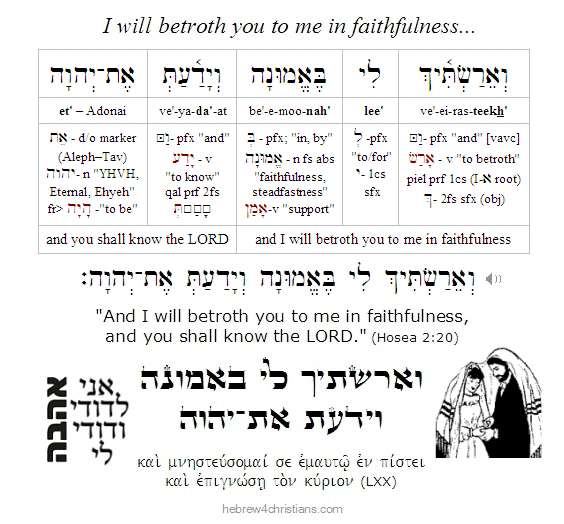 |
The Great Beginning...
10.17.25 (Tishri 25, 5786) The Book of Genesis (i.e., Sefer Bereshit [סֵפֶר בְּרֵאשִׁית]) is concerned with beginnings: the creation of the universe and the origin of humanity. It quickly moves from universal history (Adam, Noah, Babel) to the history of Abraham, the first Hebrew (אַבְרָם הָעִבְרִי). The remainder of the book focuses on the lives of the Jewish patriarchs, and especially the story of Joseph. The book ends with the entire family of Israel migrating to Egypt to escape famine through the auspices of Joseph.
There are fifty chapters in Genesis divided into twelve weekly readings. This week we are reading the very first portion, "Parashat Bereshit" (i.e., Gen. 1:1-6:8). Among other things we will read about the creation of the universe, and particularly about the creation of Adam and Eve and how they forfeited their honor to serve God through their disobedience. We then learn about the first sacrifice for sin and the great prophecy of God's redemption that through the Seed of the woman, the promised deliverer would come.
We further read about the how the first child born to Adam and Eve, Cain, later murdered his brother Abel, and how the subsequent generations from Adam to Noah became more and more corrupt, leading to God's judgment upon the world through the flood...
It is a breathtaking portion of Scripture that is absolutely foundational to all that follows, and indeed without it in our Bibles we would not know how we came into the world, who we are, why we are sick and sinful, and how we are healed by the LORD our Creator and Savior...
Hebrew Lesson:
Psalm 102:25 reading (click for audio):
Returning to the beginning:
Shabbat Bereshit...
The Sabbath that immediately follows Simchat Torah is called Shabbat Bereshit... We return to the beginning of the Bible, chaverim.
10.16.25 (Tishri 24, 5786) The fall holidays are always a whirlwind of activity. First there is Rosh Hashanah, followed by the Days of Awe leading up to Yom Kippur, and then comes the week-long holiday of Sukkot that is followed by the holiday of Simchat Torah when we read the very last Torah portion and rewind the scroll to the begin reading again for the new year, and all that happens in the first few weeks of the month! Wow. The Sabbath that immediately follows Simchat Torah is called "Shabbat Bereshit" when we are finally able to slow down a bit and begin (re)reading the very first portion of the Bible...
In Jewish tradition, the word "Bereshit" can refer to either the first Torah portion of the Bible (i.e., Gen. 1:1-6:8) or to the first book of the Torah itself. When it is used to refer to the Torah portion, it is called "parashat Bereshit" (פָּרָשַׁת בְּרֵאשִׁית) and the text covers the creation of the universe, including Adam and Eve, the subsequent transgression of Adam and Eve, the murder of Abel by humanity's firstborn son Cain, and the increasing depravity of the generations until the time of the calling of Noah. When it is used to refer to the book, however, it is called "sefer Bereshit" (סֵפֵר בְּרֵאשִׁית) or the "Book of Bereshit," and the text covers everything from the creation of the universe to the descent of Jacob's son Joseph into Egypt in anticipation of the great Exodus. Note that the ancient Greek translation of the Bible (i.e., the Septuagint) called this book "Genesis," (Γένεσις: "birth", "origin"), a name that was carried over in subsequent Latin and English translations.
The first Torah portion of Bereshit opens with this succinct statement about the creative activity of God: "In the beginning (i.e., "bereshit") God (i.e., Elohim) created the heavens and the earth." Note immediately that the Scriptures therefore begin - not from the first person perspective of some man's understanding of God - but from an omniscient third person perspective, a divine "Voice" that reveals the Glorious Power that created the entire cosmos by means of His Word. The very first verse of the Bible, then, alludes to the triune nature of God, as further indicated by the use of the plural form of the name Elohim with the singular verb bara (he created). Indeed, the word bereshit itself includes the root idea of "head" (i.e., rosh), which suggests the "head of all things," that is, to the Messiah, the Creative Word of God who is the "head of all beginning and authority" and through Whom and for Whom all things were created (see Col. 1:16; 2:10).
Hebrew Lesson:
Genesis 1:1 reading (click for audio):
After its astounding opening line, shrouded as it is in mystery, the Torah describes how God created the universe yesh me'ayin (יֵשׁ מֵאַיִן) - "out of nothing" (Heb. 1:3) over a six "day" period. On the first day God created darkness and light; on the second day He created the atmosphere, dividing the "upper" from the "lower" waters. On the third day He set the boundaries of land and sea and seeded the earth with trees and vegetation. On the fourth day He fixed the position of the sun, moon and stars as timekeepers and illuminators of the earth. Fish, birds and reptiles were created on the fifth day; and land animals, and finally the human being, on the sixth. God ceased from His creative work on the seventh day, and sanctified it as a day of rest: the very first Shabbat...
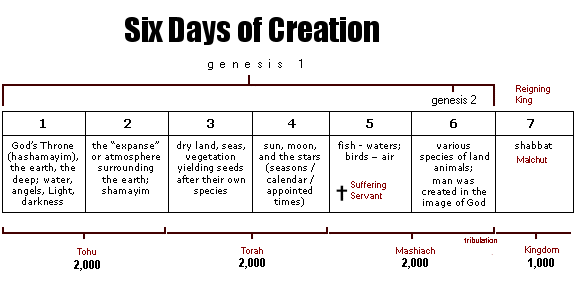 |
In addition to this general, "day by day" account of the creation of the universe by God, the Torah provides a more focused account about how God formed Adam's body from the dust of the earth and blew into his nostrils the "breath of life," or nishmat chayim (נשׁמת חיים) so that he became a "living soul" (נֶפֶשׁ חַיָּה). Notice that the more detailed account includes reference to the LORD God, which is the first time the name YHVH (יהוה) is used in the Scriptures. Interestingly, in this second account the earth is described as a sort of "desert." The earth was barren of vegetation, no rain had yet fallen upon the earth, and the LORD formed the man from the "dust from the ground." After breathing into him so that he became a living soul, God planted a garden (or orchard) in Eden, "in the east," and there caused every tree that was pleasant to the sight and good for food to spring up from the ground. In the very midst of this orchard were two special trees: "the Tree of Life" (עץ החיים) and "the Tree of the knowledge of good and evil" (עֵץ הַדַּעַת טוֹב וָרָע). God then instructed the man to tend the orchard and to eat from whatsoever tree he desired, though he was warned not to eat from the tree of knowledge of good and evil, "for in the day that you eat of it you shall surely die" (Gen. 2:17).
For more information about this reading, visit the following links:
Becoming His Child...
10.16.25 (Tishri 24, 5786) I recently cleaned out a closet in my house and chanced upon a journal I had written several years before. Upon opening it, I began to have a strange encounter with my past self -- revisiting my struggles, concerns, and wanderings at that time....
As I read some of the entries I recognized poignant cries of the heart for God's intervention and blessing; I reconnected with prayers for people who are now past, such as my father, some childhood friends, and others. I marveled both at how much I had changed and how I have retained the old struggles. The same old pain still haunts me; the interminable questions; the hope I have long sought for deep healing in Yeshua.
It's a bit odd to revisit your past like this, like looking at an old photograph of yourself from years ago. It's a bit like seeing a phantom of yourself that now, in hindsight, you wish that you could have spoken to, encouraged, and offered some wisdom about the days to come. Halevai...
There is ambivalence in all this. Self-reflection is a bit of a dead-end, really. We can only live one day at a time, and therefore we seek the Lord in our time of sojourning with an eye to what lies ahead, to the time of promise, the inexpressible joy of hope that will be fulfilled.
Yeshua said "the truth shall set you free," a statement that has notoriously been taken out of context to justify all sorts of ridiculous things. In the context from which this statement was lifted, however, we discover that the truth Yeshua spoke of was not some about human enlightenment but was a call to come into personal relationship with him for healing.
Recall that Yeshua was teaching a group of people at the Temple when some scribes and Pharisees interrupted him by dragging a woman "taken in adultery" before him, demanding that he pronounce judgment upon her according to the law of Moses (John 8:1-5). The motives of these religious leaders ostensibly was not to honor the law of God, but rather to find occasion to accuse Yeshua of being a lawbreaker if he were to show the woman mercy. Interestingly Yeshua responded to them by writing with his finger on the ground, which recalled the account of how God wrote the Tablets with his finger at Sinai (Exod. 31:18). We can only speculate what Yeshua wrote down, though it was likely an indictment against his accusers for their sins and therefore it pointed to their need for God's mercy as well. Despite this the scribes and Pharisees kept demanding an answer, so he finally stood up again and said, "All right, but let the one who has never sinned throw the first stone!" And then he stooped down and wrote in the dust again.
We know the rest of the story. Each of the woman's accusers, being "convicted of their own conscience," went out one by one, starting with the older ones, until the woman was standing before Yeshua alone. He then looked at the woman and said to her, "Where are your accusers? Didn't even one of them condemn you?" She replied, "No, Lord," and then Yeshua said, "Neither do I. Go and sin no more" (see John 8:6-11).
Yeshua then offered his own explanation of what the people had witnessed by saying, "I am the light of the world. If you follow me, you will not walk in darkness, because you will have the light that leads to life" (John 8:12). The Pharisees then denounced him as a liar, saying that he had no right to make such claims, though Yeshua affirmed that he both spoke and lived the truth, and that this attested to the veracity of his claims. The proof of his miracles also bore witness that God was with him, and that the reason they did not believe him was because they did not truly know God. Later Yeshua said to them again, "I am going away. You will search for me but will die in your sin... for unless you believe that I am who I claim to be, you will die in your sins."
In the midst of these exchanges between Yeshua and the religious leaders, many of the people began to believe in him. Yeshua then said to them, "If you live in my word, then you will be my disciples indeed, and you will know the truth, and the truth will set you free" (John 8:31-32). Some of the people were confused and said, "But we are descendants of Abraham, and we have never been slaves to anyone. What do you mean, 'You will be set free'?" Yeshua then explained to them that everyone who sins is a slave of sin. He then said that a slave is not a permanent member of the family, though a son is a member of the family forever. If a slave is set free by the Master of the house, however, he will be accounted as a member of the family as well.
The truth is that sin operating within our hearts makes us slaves to our lower nature, and the "law of sin and death" inexorably works to hold us in grave bondage. We are slaves to sin and cannot set ourselves free from its ironclad grip over our souls. Sin creates separation from God, the verdict of spiritual death. We need healing and deliverance from bondage to our condition.
So how are we set free? Only by the power of Yeshua: "As many as receive him, to them he gives the right (ἐξουσία) to be children of God, namely, to those who believe in his name" (John 1:12). However, there is a necessity of the heart to experience this transformation, a miracle, really, and that is the confession that we are indeed enslaved to our sins and cannot escape, despite our best intentions. Indeed the power of sin is so seductive that our religion can be nothing but a godless passion, a "form of godliness" that regards the Almighty as a slave master who demands ruthless adherence to the letter of the law... If you do not know the LORD God as your heavenly father, you are still bound to your slavery, even if that slavery finds expression in the rituals and deeds that express faith in God.
Yeshua imparts the power to be children of God by freeing us from our bondage to sin. Only the One with greater power than the captor of the slave can set the slave free (Mark 3:27). Being set free does not mean to simply being forgiven of our infractions of God's law but to be released from the more radical bondage of being alienated and lost - enslaved - within the depths of your soul. Being set free therefore creates a new "who," and new identity that personally relates to God as his cherished child rather than as a hired hand or a slave.
Still, this is a process. It is a paradoxical change that develops over time, as the inner conflict between the old and new natures works itself out. The old must be reckoned as "dead," and the new must be reckoned as "alive." There is "mortification" of the flesh which strips us away from our old identity and there is "sanctification" that draws us into the life of God's beloved child. Yeshua gives us the power to be sons and daughters of God, though we might not recognize what this means in the flux and temptations of this life.
The struggle is intense and very personal, hidden from view. The son or daughter of God is at war with the slave within them as they agonize to know God as their heavenly father. This is the experience of the desert generation as they learned to shed their Egyptian way of thinking and to come to believe that they were the chosen people of God. It is an ongoing dialog of the heart, a recurring question or argument about who you really are, an inner wrestling to respond to the Father when he calls you his beloved.
Regarding the heart of the one struggling to believe despite themselves, George MacDonald wrote: "Such are not slaves; they are true though not perfect children; they are fighting along with God against the evil separation... They are children - with more or less of the dying slave in them; they know it is there, and what it is, and hate the slavery in them, and try to slay it." This is why Soren Kierkegaard once noted that the opposite of sin is not virtue but faith, because it is faith in the work of God alone that delivers and transforms the heart (Rom. 4:16; Eph. 2:8-10 ).
The deepest place of the struggle is the heart itself, and whether you will continue to receive the truth that you are beloved and healed in the midst of your weakness, brokenness, and even the dissolution of the body through physical death itself. For the believer, however, mortal death is a "shadow" that leads to the reality of glorification in the Lord.
As many as receive him he gives power to become the children of God, even to those who "believe on his name," that is, to those who believe that he is the promised Savior who alone heals us from the death of our sin, who restores our separation from God, and who reunites us to his heart forever and ever. Believing in his name is to "receive him," that is, to trust in his promises and to live our lives in light of his presence and his vision for our destiny. We confess that he is who he said he is. By faith we take his promises to ourselves; we cleave to his word of blessing for who we truly are; and therefore we know God as our loving heavenly Father. Amen.
The power to be a child of God is an "already-not-yet" reality and therefore the task at hand is to walk in faith of who God says you are in relation to the truth of his great love.... Let us then live within His house in full confidence of his heart for us. Amen.
Hebrew Lesson
Isaiah 63:16 reading (click):
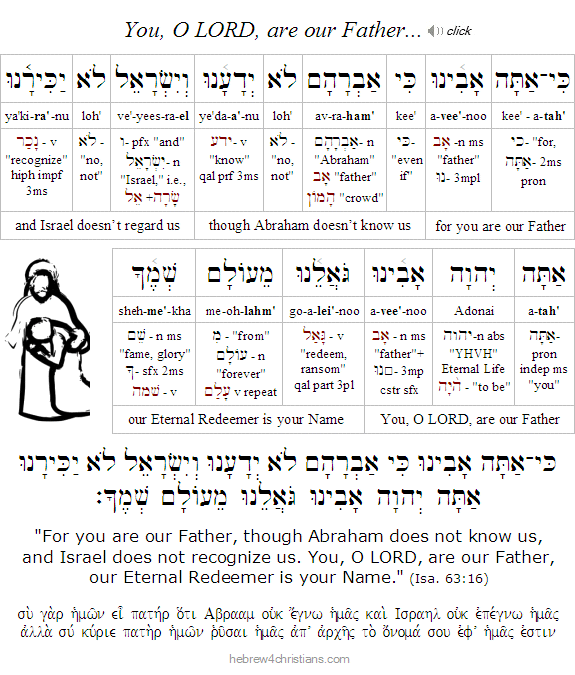 |
Delighting in the Torah...
On Simchat Torah we celebrate the blessing of the Torah for our lives...
10.15.25 (Tishri 23, 5786) The Scriptures declare: "Blessed is the man who ... delights in the Torah of the LORD (בְּתוֹרַת יְהוָה); all that he does shall prosper" (Psalm 1:1-3). However, considering the implicit lack of delight for the Torah expressed in many "mainline" churches today, you would almost think that this "blessed state" avowed by the Holy Spirit has somehow been annulled and no longer applies to the Christian... Then again, just as a veil remains over the eyes of unbelieving Jews regarding the message of the new covenant, so a veil remains over the eyes of many Christian theologians regarding the message of the older covenant (2 Cor. 3:14-16). The careful distinctions made by the Apostle Paul regarding the nature of the Torah are often overlooked, with the unhappy result that "antinomialism" (literally, "anti-law-ism") has been inculcated as proper Christian doctrine today. Sadly, for many Gentile Christians today, the Torah is erroneously regarded as an enemy of faith (i.e., "legalism") and therefore is no longer a matter of much delight...
It is important to remember, however, that while we are no longer 'under' the legal constraints of the covenant given at Sinai (Rom. 3:20-28), we are nevertheless repeatedly instructed to delight 'in' the Torah and to meditate on its precepts day and night (Josh 1:8, Psalm 1:2; 19:8; 119:15, 47, 97; Neh. 8:12, etc.). As it is written in Proverbs: "If you seek it [i.e., the wisdom revealed in the Torah] like silver and search for it as for hidden treasures, then you will understand the fear of the LORD and find the knowledge of God" (Prov. 2:4-5). If worldly men seek money and riches for life in this world, should we be less earnest in our pursuit of true and eternal riches?
Where it is written, "all Scripture is breathed out by God (θεόπνευστος / עַל־פִּי רוּחַ אֱלהִים) and is profitable for teaching, for reproof, for correction, and for training in righteousness, that the man of God may be complete, equipped for every good work" (2 Tim 3:16-17), it is evident that the Scriptures referred to here are the Jewish Scriptures (i.e., the Torah, the Prophets, and the Writings), since they are the foundation, the context, and the overarching matrix for the later New Covenant revelation... These were the Scriptures Yeshua used to contextualize and explain his ministry to his followers: "And beginning with Moses and all the Prophets, he interpreted to them in all the Scriptures the things concerning himself" (Luke 24:27; John 1:45). In other words, the Torah has both a logical, a linguistic, and a theological priority regarding our understanding of the New Testament Scriptures, and the failure to read in context invariably leads to faulty interpretations and doctrinal errors of various kinds. "To the Jew first, and [then] to the Greek" (Rom. 1:16) is a principle not only of how the gospel message would transcend ethnic Israel to be offered to all the nations, but also about how we should approach the subject of Biblical hermeneutics.... God "breathed out" (θεόπνευστος) his revelation in order, and the message itself must be understood in light of that order (Gal. 4:4-5).
The Holy Spirit still speaks to the heart of those who love Yeshua, the everlasting King of the Jews: "Oh how I love your Torah (תּוֹרָה); it is my meditation all the day."
Hebrew Podcast
Psalm 119:79 reading with comments (click):
 |
This verse begins the "Mem section" of the Psalm 119 acrostic. Mem is the letter of "water" (mayim), symbolizing the "spring" of the Torah. In traditional soferut (scribal arts), the letter Mem (מ) is formed from two parts: a Vav (ו) and a Kaf (כ), the gematria of which equals 26, the same value for the sacred Name YHVH (יהוה). The Torah (תּוֹרָה) is central to the revelation of the LORD, just as Yeshua is forever "the Voice of the Living God speaking from the midst of the fire" (Deut. 5:26, Matt. 17:1-3).
The Circle of Torah...
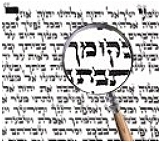
Today is Simchat Torah - a time to "rewind the scroll" and to renew our commitment to seeking God's truth for our lives...
10.15.25 (Tishri 23, 5786) Each week in synagogues across the world a portion from the Torah (called a parashah) is studied, discussed, and chanted. Jewish tradition has divided the Torah into 54 of these portions - roughly one for each week of the year - so that in the course of a year the entire Torah has been recited during services. The final reading of this cycle occurs on the holiday of Simchat Torah ("Joy of the Torah"), which immediately follows the holiday week of Sukkot. On Simchat Torah, we celebrate both the completion of the year's Torah Reading cycle as well as the start of a brand new cycle. Each Jewish year, then, we "rewind" the scroll and begin again. The sages have wisely said that you cannot compare studying Torah for the 49th time to studying it for the 50th time....
Our spiritual inheritance is bound up with the Torah: it is part of our story, our history, our heritage (Gal. 3:7; Rom. 4:16; Luke 24:27). The stories of Torah serve as parables and allegories that inform the deeper meaning of the ministry of Messiah: "Now these things happened to them as an example, but they were written down for our instruction, on whom the end of the ages has come (1 Cor. 10:11). "For whatever was written in former days was written for our instruction, that through endurance and through the encouragement of the Scriptures we might have hope" (Rom.15:4). "All Scripture is inspired by God..." which refers first of all to the Torah, the Writings, and the Prophets which attest to the Messiah (2 Tim. 3:16-17). You are therefore no longer a stranger or outsider to the heritage of the LORD but a partaker of the covenantal blessings (Eph. 2:12,19). Disciples of Yeshua are called talmidim (תַּלְמִידִים) -- a word that comes from lamad (לָמַד) meaning "to learn." Among other things, then, following the Messiah means becoming a student of the Scriptures He loved and fulfilled (Matt. 5:17-18; Luke 24:44-45). Only after learning from Yeshua as your Teacher will you be equipped to "go to all the nations and teach" others (Matt. 28:19).
We read V'zot HaBerakhah ("this is the blessing") at the end of Simchat Torah, which is the final portion of the entire Torah itself... After reading this portion, we "rewind the scroll" back to the beginning to begin reading parashat Bereshit. We do this every year because Talmud Torah - the study of Torah - is an ongoing venture in the life of a Jew. In this connection, it is interesting to note that the very first letter of the Torah is the Bet (בּ) in the word bereshit (בְּרֵאשִׁית), and the very last letter of the Torah is the Lamed (ל) in the word Israel (יִשְׂרָאֵל). Putting these letters together we get the word lev (לֵב), "heart," suggesting that the entire Torah - from the first letter to the last - reveals the heart and love of God for us... Moreover, the first letter of Scripture is a Bet (בּ), as explained above, and the last letter is a Nun (ן) in the word "Amen" (אָמֵן), so the whole Bible - from beginning to end - reveals the Person of God the Son (בֶּן) for us...
Since we are about to begin the Torah again for a new year, it is worthwhile to remind ourselves about how the Torah itself begins... In this connection we note that it speaks from an omniscient, "third person" perspective. When we read, "In the beginning, God (אֱלהִים) created the heavens and the earth," we must ask who exactly is speaking? Who is the narrator of the Torah? The very next verse states that the Spirit of God (רוּחַ אֱלהִים) was hovering over the face of the waters (Gen. 1:2), followed by the first "direct quote" of God Himself: i.e., "Let there be light" (Gen. 1:3). The creative activity of Elohim (God) and the presence of Ruach Elohim (the Spirit of God) are therefore narrated by an omniscient Voice or "Word of God." Obviously the Spirit of God is God Himself (who else?), just as the Word of God is likewise God Himself, and therefore the first verses of the Torah reveal the nature of the Godhead. God is One in the sense of echdut, "unity," "oneness," and and so on, though not "one" in the monistic sense of a solipsistic mind (νοῦς). God is beyond all predications: there can be no sense of "person" apart from relationship, and therefore God's Personhood entirely transcends all our finite conceptions - and yet God forever is One....
Hebrew Lesson
Psalm 19:17 Hebrew reading (click):
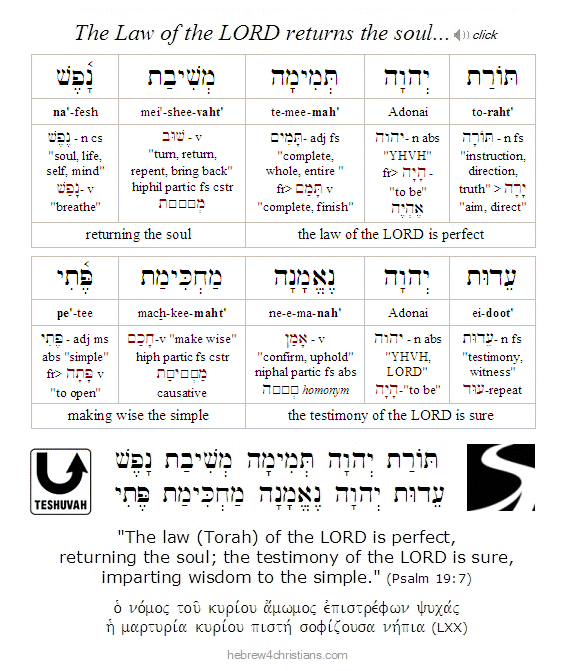 |
The Vale of Tears...
10.15.25 (Tishri 23, 5786) The walk of faith refers to trusting in the Presence and love of God for your soul, even though you will suffer and experience various hardships in your life. Yes, we receive comfort from heaven and consolation through the Spirit of God, and yes we are given heavenly wisdom to know the truth that sets us free in Yeshua, however in this life we "see through a glass darkly," which literally means "in a riddle" (ἐν αἰνίγματι). A riddle is an analogy given through some resemblance to the truth, though quite often the correspondences are puzzling and obscure. Hence, "seeing through a glass darkly" means perceiving obscurely or imperfectly, looking "through" something else instead of directly apprehending reality. We see only a reflection of reality, and our knowledge in this life is indirect and imperfect. This is contrasted with the "face to face" (פָּנִים אֶל־פָּנִים) vision and clarity given in the world to come, when our knowledge will be clear and distinct, and the love of God will be fully manifest to us and no longer hidden. Realizing this should make us humble whenever we consider our faith. "Now we know in part, but then shall we know in whole" (1 Cor. 13:12). We often do not have the "answers" for suffering, though "seeing through a glass darkly" means we have the means to trust God despite the present hour.
We must train ourselves to see beyond the realm of appearances, especially regarding matters of the heart. The "outer self" is perishing yet the "inner self" is renewed day by day. Moreover "our momentary affliction is preparing for us an eternal weight of glory beyond all comparison, as we look not to the things that are seen but to the things that are unseen. For the things that are seen are transient, but the things that are unseen are eternal. For we know that if our earthly house, the "tent" we live in, is dismantled, we have a building from God, a house not built by human hands, that is eternal in the heavens" (2 Cor. 4:17-5:1). Amen. Like father Abraham we sojourn in a "land of promise" as "strangers" to this world, looking for a "city that has foundations, whose designer and builder is God" (Heb. 11:9-10). "For here we have no lasting city, but we seek the city that is to come" (Heb. 13:14).
Yeshua is the greatest and most worthy tzaddik of all, yet he terribly suffered throughout his life as the "man of sorrows (אִישׁ מַכְאֹבוֹת) acquainted with grief" (Isa. 53:3). O consider how our beloved Messiah suffered and died while feeling forsaken by his heavenly Father (Matt. 27:46; Psalm 22:1). A modern day faith-healer might have wanted to "save" him from the pain he was undergoing, but that would have been a deal made with the devil (see Matt. 16:21-23). "We walk by faith, not by sight," abiding in the grace of God and believing in his acceptance for us even in the midst of the desert of this world. Do not be fooled by specious appearances. Contrary to those who teach that Yeshua came to give us our "best life now," being healthy or materially prosperous does not indicate spiritual blessing. In the world to come we will be surprised to see people like Lazarus the beggar in the "bosom of Abraham" while others who seemed successful in this world languishing in hell (Luke 16:20-31).
The truth of God can be found, not by means of carnal reasoning, but by special revelation and encounter with the Truth of God. This is sometimes called "argumentum spiritus sancti," or the argument from the Holy Spirit. Kierkegaard wrote in his journals: "In 1 John 5:9 we read: 'If we receive the testimony of men' (this is all the historical proofs and considerations) 'the testimony of God is greater' -- that is, the inward testimony is greater. And then in verse 10: 'He who believes in the son of God has the testimony in himself.' Therefore genuine faith is more than a creed or "doctrine"; it is existence itself, a matter of spirit, wherein new life is expressed in relationship to God through Yeshua the Savior.
Hebrew Lesson:
Isaiah 53:3a reading (click):
Made Whole by Faith...

10.14.25 (Tishri 22, 5786) It says in our Scriptures: "A double-minded man is unstable in all his ways" (James 1:8). It is common to meet people who have acquaintance with the teachings of Yeshua but who hesitate when it comes to making the decision to believe in him... They may show some interest in matters of faith; they may even read the Bible and occasionally pray, and yet they continue on as before, even growing old without resolving whether or not to embrace the Lord. Sadly many remain unresolved as long as they live...
It is not easy to trust God in the midst of affliction, temptation, and sorrow. It may be easy to "profess" faith, but it's quite another to truly live it. On the other hand, it's harder still to be skeptical, to withhold the decision to believe, and to live in the chaos of being "two-souled" (δίψυχος) - a life of contradiction and instability. Indeed the "double-minded" person is lost to himself, uncertain of who he really is, why he was created, where he is going, and whether he is ultimately to find peace at the end of his wandering. Such a life is never at rest, "ever learning but unable to come to the full knowledge of the truth." As Soren Kierkegaard once wrote: "There are two ways to be fooled. One is to believe what isn't true; the other is to refuse to believe what is true."
The Lord is not far from any of us. "Draw near to God (ἐγγίσατε τῷ Θεῷ) and he will draw near to you; purify your hearts, you double-minded" (James 4:8). As it is written: "The LORD is near to all who call on Him, to all who call on Him in truth" (Psalm 145:18).
Hebrew Lesson
Psalm 145:18 reading (click):
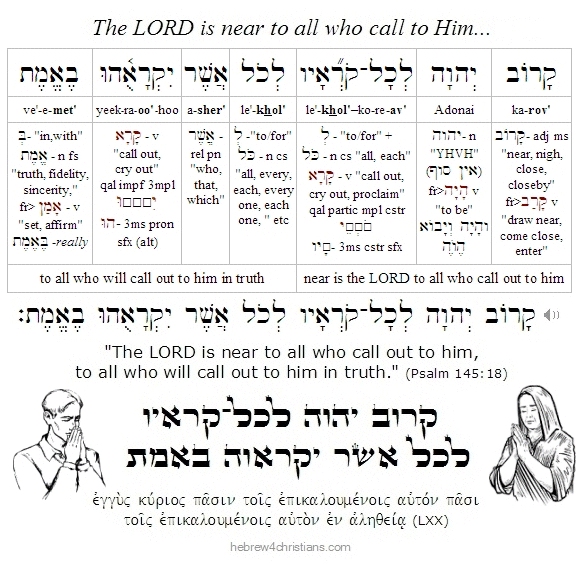 |
Heeding the Father's Voice...
Though the giving of the Torah to Israel is connected with the holiday of Shavuot ("Pentecost"), during Simchat Torah we celebrate the start of the Torah reading cycle for the new year. Thank God for the Torah and how we better understand Yeshua's ministry in its light (Matt. 5:17-19).
10.14.25 (Tishri 22, 5786) Recall that God promised that his people would experience a heart change by the advent of His Spirit: "Behold, the days come, says the LORD, that I will make a new covenant (ברית חדשׁה) with the house of Israel, and with the house of Judah, not according to the covenant that I made with their fathers in the day that I took them by the hand to lead them out of the land of Egypt, My covenant which they broke, though I was a husband to them, says the LORD. But this is the covenant that I will make with the house of Israel after those days, says the LORD: I will put My law (i.e., Torah) in their minds, and write it on their hearts; and I will be their God, and they shall be My people" (Jer. 31:31-33). Recall also that it was on the appointed time of Shavuot (i.e., "Pentecost"), 50 days after the resurrection of our Lord, when the disciples of Yeshua received the promise of the Holy Spirit and the Torah of God was written upon their hearts (see Acts 1:7-8; 2:1-4).
Just as the advent of Messiah signified the time of God's redemption of his people, so the advent of the Holy Spirit (רוּחַ הַקּדֶש) signified the time of their regeneration as God's children. Among other things, the role of the Spirit is to convict people of sin, to reveal the truth of salvation in Yeshua, and to empower believers of Yeshua to bear fruit that glorifies God.
Surely our great need is to have heart, to find strength and steadfast determination to walk boldly during these confounded and depraved days (2 Tim. 3:1-5). We are not without God's help, of course. Yeshua told us that the Ruach HaKodesh (רוּחַ הַקּדֶשׁ) would be "called alongside" (παράκλητος) to comfort us on the journey. The English verb "comfort" literally means "to give strength" (from com- ["with"] and fortis ["strong"]), an idea similarly expressed by the verb "encourage," that is, to "put heart [i.e., 'core'] within the soul." In Hebrew, the word courage is expressed by the phrase ometz lev (אמֶץ לֵב), meaning "strong of heart," denoting an inner quality of the will rather than of the intellect. Ometz lev means having an inner resolve, a passion, and a direction. The sages say "the mind is the eye, whereas the heart is the feet." May God be our Light and Salvation through the surrounding darkness...
During Simchat Torah, let's revisit God's appeal for us to honor his word:
"Dear child of mine, do not forget my Torah (תורתי), but let your heart keep my commandments (מצותי). Doing so will add to you length of days (ארך ימים), long life, and peace (שׁלום).
Do not abandon the heart of Your Father by losing sight of mercy and truth (חסד ואמת); No! Tie them around your neck; inscribe them upon the table of your heart (לוח לבך), that is, make them part of your inner being and will. Doing so will reveal my grace (חן) and good understanding (שכל־טוב) before the eyes of God and others.
Trust in your heavenly Father with all your heart (בטח אל־יהוה בכל־לבך) and don't seek to be in control, trying to figure everything out on your own (ואל־בינתך אל־תשען). Listen for your Father's voice in everything you do; in all your ways know His heart (בכל־דרכיך דעהו), and then your ways will be directed in the truth.
Don't assume that you know it all; abandon your self-conceit: Revere your heavenly Father (ירא את־יהוה) and flee from what you know is self-destructive and evil! Doing so will impart healing (רפאות) to you: your body will glow with health, your very bones will vibrate with life!
Honor your Heavenly Father with everything you own; give him your first and the best of what you have (מראשׁית כל־תבואתך); then your barns will burst with plenty, and your wine vats will be overflowing" (Prov. 3:1-10). Amen.
Hebrew Lesson:
Proverbs 3:1 reading (click):
Celebrating God's Provision...
10.13.25 (Tishri 21, 5786) Chag Sukkot Sameach, friends... Though the LORD is forever enthroned in heaven as our Creator, our King, and our loving Deliverer, and though the heavens shout out his praise and the whole earth is filled with His glory (Isa. 6:3), nevertheless we must make a dwelling for His Presence within our hearts. As it is written in Torah: "Let them make a sanctuary for me that I may dwell within them" (Exod. 25:8). In great humility the LORD stands at the door and knocks (Rev. 3:20). Where does God dwell but where He is given a place, a sanctuary, a throne within the heart?
Torah states, "On the first day [of Sukkot] you shall take to yourselves the fruit of the goodly tree (etrog), branches of palm trees (lulav), boughs of leafy trees (hadassim) and willows of the brook (aravot), and you shall rejoice before the Lord your God seven days" (Lev. 23:40). In Jewish tradition, after reciting the Hebrew blessing and shaking the bouquet around, it is customary to recite (or sing) the following antiphon from Psalm 136: ""Give thanks to the LORD, for he is good, for his steadfast love endures forever" (Psalm 136:1).
Hebrew Lesson
Psalm 136:1 reading (click for audio):
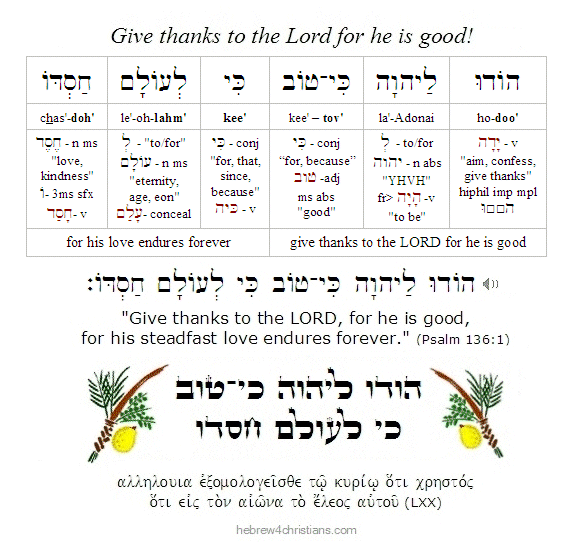 |
Indeed, is there any better reason to give thanks to the LORD than because of His steadfast love, i.e., His chesed (חֶסֶד)? Is there anything greater than God's love? Can anything overcome it? Even the hardness of our own hearts cannot veto or negate it's purposes... It was because of His great love that God himself (יהוה) "emptied Himself" of heavenly glory, clothed himself in human flesh and came to us, disguised as a lowly servant. God performed this act of "infinite condescension" in order to "sukkah" with us as our "hidden King" (John 1:1,14, Phil. 2:7-8). Your neshama (soul) is likened to the "Shulamite woman" he came to woo so that you might "come into His tent" -- willingly, from a heart that comes from trust (Song of Solomon).
When we know who we are in the passion of Yeshua, we abide in the hope of love that awaits future consummation in the world to come... Meanwhile, we are "suspended between worlds," though the veil of this present age has been rent asunder and we may now appear before the LORD in the realm of the spirit by faith. We can come "boldly" before the Throne of Grace (παρρησίας τῷ θρόνῳ τῆς χάριτος) to find help for our lives (Heb. 4:16). Note that the word translated "boldly" in this verse (παρρησίας) comes from πᾶς (all) + ῥέω (to utter), suggesting that we can speak freely to God and share everything within our heart without fear or shame. We do not need to conceal ourselves from Divine Light -- any more than we need to perform religious rituals or offer any "prescribed prayers" to access Him.
Those who are trusting in God's sheltering love understand the LORD to be our compassionate Savior and Redeemer. In our brokenness we can bare our souls before Him without fear ("there is no fear in love" - אין פַּחַד בָּאַהֲבָה). We can express "all our heart" to the LORD and be assured that He will help us in our hour of need (Heb. 4:16). As it says, "Trust in him at all times, O people; pour out your heart to him; God is a refuge for us" (Psalm 62:8). Amen, and let us rejoice in the Lord for his great kindness.
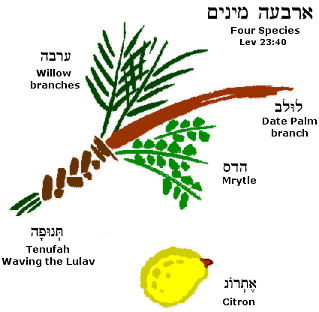 |
|
Hoshana Rabba:
Yeshua Sets us Free...
Today marks "Hoshana Rabba," the climactic "Great Salvation" day of Sukkot...
10.13.25 (Tishri 21, 5786) Yeshua understood the human condition. He knew the basic problem with people, how sin and death destroyed their lives, and he declared himself to be the divine solution: "If the son makes you free, you will be free indeed" (John 8:36). By nature we are slaves to ourselves and alienated from the life of God. To be set free means being brought into the life of God, receiving a new identity, life from the dead, and attaining the blessing of knowing God as his beloved child.
The Father knows us as truly are and provides the remedy for our condition, but the struggle is to live the truth in our daily lives, and that means confessing that we belong to God's heart. In our weakness and smallness of faith, we must resist the temptation to despair of our hope, however. We must fight ourselves "within ourselves" by surrendering to the truth and confessing who God says we are, despite the turmoil of our inner life. "The flesh (i.e., sinful nature) lusts against the spirit, and the spirit against the flesh; and these are contrary to one another, so that you do not do the things that you wish" (Gal. 5:16). We are pulled in different directions; we are ambivalent and filled with inner conflict, and the result is that we are prevented from acting freely. As Paul said, "For I do not understand what I do. For what I want to do I do not do, but what I hate I do" (Rom. 7:15). Paul understood that we cannot deliver ourselves from what we are - only God can do the miracle - and yet, even after the miracle takes place there abides a distinction between the former, "carnal self" that is enslaved to sinful desire and the redeemed or "real self" that has been recreated by the power of God.
The slave within does not want to be set free but complains and make excuses for its condition. The slave is an inveterate liar who blames others and refuses to accept responsibility. The "slave-self" draws back because he does not want to be in relationship with God, surrendering his life. It's all the slave has known and therefore he clings to his sickness and complains that God is unfair to him. He does not grumble about his slavery to sin but is quick to complain about God's call for him to let go of his sickness and be healed...
"Not until a person has become so wretched that his only wish, his only consolation, is to die - not until then does Christianity begin" (Soren Kierkegaard). Such is the "severe mercy" of God to break the resolve of the sinner, to enclose his way in thorns, and to bring him to the end of himself. We can only be set free if we are willing to give up our slavery, and afflictions are meant to reveal the truth of our condition. We must choose to be free, and God promises to help us along the way.
The sages comment that God's blessings can "overtake" you in a way that may hide their true purpose for your good (Rom. 8:28). At such times we do not understand they are a concealed mercy (רַחֲמִים נִסְתָר) designed for our benefit. Therefore king David affirmed his confidence despite being surrounded by trouble. Where it is written, "Surely goodness and mercy shall follow me all the days of my life" (Psalm 23:6), the verb translated "shall follow me" (i.e., יִרְדְּפוּנִי) comes from a root word that means "to pursue," as a hunter chases after his prey. David was sure that God's lovingkindness would "hound" him as he made his way through this world - even in the dark places, even in "the valley of the shadow of death," where God's rod and staff would there comfort him and shepherd his way (Psalm 23:4).
It is hard to die to yourself, it's impossible, really. "In my flesh (i.e., slave-self) there is no good thing." We are powerless to change without God's intervention in our lives. "Do you want to be healed?" (John 5:6). We have to be willing to give up our sickness and that means losing yourself to find yourself by God's grace. The miracle begins by the sincere desire to become free. This is the call. You want to be transformed and that requires "turning" to become a child of God. Coming into relationship with God as his child is the end or goal that arises beyond the death of the slave-self. But the initial problem is with ourselves. "O wretched man that I am! Who shall deliver me from this body of death?" Thank God that the miracle comes through Yeshua who imparts a new way of being (i.e., "Christ-life," "son-self") that is delivered from the sinful nature ("slave-self") as that which ultimately defines who we really are. Indeed, that is why Yeshua died for us. To save us from ourselves. To free us from our slavery so we would live as he lives, as cherished sons and daughters of God.
Above all, to be made free means being changed in your inmost being. It is to live as a child of your heavenly Father who calls you his beloved. It is to know yourself in God's love, to receive it as your own and to have confidence that God's love is unconditionally for your good. Yeshua shows us the heart of the Father through his great love for us. "I and the Father are one." This shows up in our daily thinking and feeling, in our relationship with God and with others. Our fears will dissipate and be replaced by inner peace and joy as we continue to trust, honor, and love the Lord with all our heart. "The one who says he has life in him will walk as he walked."
Does this seem ideal to you? Unattainable? Remember that in your flesh there is no good thing, which means that this is a matter of the spirit and God's power, not your own. "Salvation is of the LORD," and that means that it is a gift from above, not the result of your own efforts. Recall a quote I have shared with you from Kierkegaard that says "the opposite of sin is not virtue but faith," which is another way of saying that we are saved by trusting in God's grace for our lives. As C.S. Lewis said, "the Christian thinks any good he does comes from the Christ-life inside him. He does not think God will love us because we are good, but that God will make us good because He loves us."
Theology, as important as it is, can only take us so far, because it serves as a pointer or sign to what is truly signified about God. The renowned medieval theologian Thomas Aquinas' most significant work was his Summa theologiae or 'Summary of Theology,' a massive book that attempted to carefully "systematize" all of Christian theology. He worked on it for many years, but when he was nearly finished he underwent a spiritual experience that, as he himself explained, made everything he had written "seem like straw." He thereafter gave up writing about "theology" after he encountered the Reality itself. You may perfect doctrine and exist untruthfully, whereas you might not have perfect doctrine, but exist truthfully. The devil knows how to quote Scripture, and often does so, but is a devil still; likewise a simple saint may not plumb all the theological depths, but is a saint nevertheless.
It is the Reality that is important. We do not become God's children "inside our heads" but within our hearts, that is, in covenant with God as expressed by God's willingness to redeem our lives and our acceptance of his willingness. Test yourself. Examine what is most real about who you truly are. Does Christ live within you and you within Christ? Does that relationship define who you really are? Are you a child of God with a "son-self" or are you still living as a slave? If you struggle with your slave-self, are you mortified and tortured by the sting of you sin, do you abhor your faithlessness, or do you excuse yourself and blame others?
Yeshua said "come unto me, all you who labor and are heavy laden, and I will give you rest." This is the shalom that passes all your understanding, that transcends even our inner conflicts, because the need for understanding often keeps us from the blessing. Being made free by Yeshua delivers us from the heavy burden of ourselves, from the labor of our illusions, and allows us to surrender all of whatever we are to God's blessing and care.
When we turn to the light of God and away from the slavery of who we have habitually believed we are, and when by the miracle of God's intervention we are transformed, we begin to live as Yeshua lived, full of grace and truth, with inner peace and freedom from despair. Remember that Yeshua did not die simply to forgive our sins but to save us from ourselves. He died to empower us to know God's heart and to live in full confidence of that love. That is the starting point of our faith, for without this we lose sight of who we really are as God's children and thereby subject ourselves again to slavery. If we do not die to ourselves, we cannot live unto God, for life is only found in relationship with him. Thank God that we have been crucified together with Yeshua, so that when he died we also died, and that when he was raised up into newness of life, so we were raised up as well. "It is finished" and therefore we can find our rest in Him. Amen.
Hebrew Lesson
Jeremiah 31:3 reading (click for audio):
|
This is the Blessing...
10.12.25 (Tishri 20, 5786) From our Torah reading for the Sukkot holiday season (i.e., V'zot Haberakhah: "this is the blessing") we read the following: "Moses charged us (צִוָּה־לָנוּ) with the Torah as the heritage (מוֹרָשָׁה) of the congregation of Jacob" (Deut. 33:4). Note, however, that for the Torah to become part of our heritage as the people of God, it must be seriously studied, wrestled over, and earnestly engaged... This is a happy task we are given, as it is written: "the righteous one delights in the Torah of the LORD (בְּתוֹרַת יְהוָה) and in his Torah he meditates (יֶהְגֶּה) day and night" (Psalm 1:2).
Commenting on this verse Rashi noted that God's Torah rightly belongs to the one who labors in it and groans (הָגָה) over its meaning, for only then may it be meaningfully said to be "his Torah" (תּוֹרָתוֹ). However the converse is also true: the one makes no effort to study Torah will soon be without godly direction.
We are admonished to be "doers of the word, and not hearers only," since merely assenting to truth without practicing it leads to self-deception (James 1:22). As the Messiah said, "If you know these things, happy are you if you do them" (John 13:17).
Let us take hold the Scriptures and cherish the revelation of God's truth. Remember that the "chief advantage" of the Jewish people was that they were entrusted with the "oracles of God" (Rom. 3:1-2). Loving Torah and the rest of the Scriptures is essential to knowing our heritage as both the children of Abraham and as the children of God.
Hebrew Lesson
Psalm 119:111 reading:
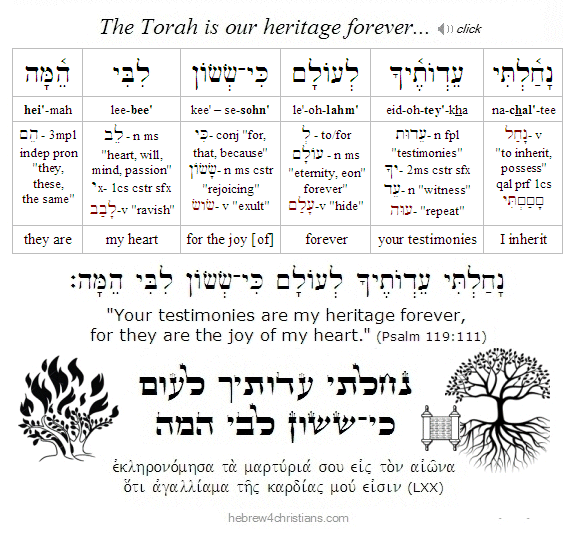 |
Yeshua and Sukkot...
Yeshua celebrated Sukkot ("Tabernacles") and on the last day (called Hoshana Rabbah) cried out, saying, "If anyone thirsts, let him come to Me and drink. The one who believes in Me, as the Scripture has said, out of his heart will flow rivers of living water."
10.12.25 (Tishri 20, 5786) The Aramaic word "ushpizin" (אוּשְׁפִּיזִין) refers to the seven "guests" whom we remember and honor during the weeklong festival of Sukkot, namely: Abraham, Isaac, Jacob, Joseph, Moses, Aaron, and King David, respectively (שבעה אושפיזין). According to tradition, on each night a different guest (i.e., ushpiz: אוּשְׁפִּיז) enters the sukkah, and we are to symbolically welcome them by offering them a place at our table (this is similar to the tradition of Elijah's Cup during Passover). On the first night comes Abraham; on the second night, Isaac, and so on. Though the origins and date of this tradition are disputed, the Zohar says that the custom of welcoming each ushpiz was practiced during the Second Temple period (i.e., during the time of Yeshua).
In the Gospel of John we read that just before the Sukkot holiday began, Yeshua's brothers suggested that he go up to Jerusalem to impress his followers there by performing additional miracles and to gain greater fame among the Jewish people (see John 7:1-5). Yeshua told his unbelieving brothers, "My time has not yet come" (John 7:6-8), which may allude to the idea that he would visit the people "in secret" (ἐν κρυπτῷ), like an ushpiz, some time later during the holiday (see John 7:10). It is interesting that the religious leaders "were looking for him" at the festival, and there was much "muttering about him" among the common people as they fellowshiped in their sukkahs (John 7:11-13).
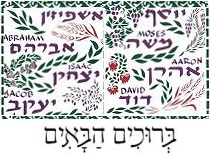 |
During the "middle of the festival," perhaps on the fourth day (i.e., the "Day of Joseph" as ushpiz), Yeshua went to the Temple and began teaching the people (John 7:14). When the people marveled at his teaching, Yeshua explained that he was sent by God, and that if anyone wanted to do the will of God they would know his authenticity (John 7:15-18). He then rhetorically asked the people: "Has not Moses given you the law? Yet none of you keeps the law. Why do you seek to kill me?" (John 7:19). When the people said he was crazy for thinking this way, Yeshua alluded to the murderous intolerance of the religious leaders who wanted to kill him for healing a man on the Sabbath day (see John 5:9). He then turned the tables on his accusers: "If circumcision is done on the Sabbath so that the law of Moses would not be broken, then for all the more reason should something be done to fulfill the weightier intent of the law, namely, the giving of life and healing (John 7:23). He then admonished the people to "judge righteous judgment" (מִשְׁפַּט צֶדֶק שִׁפְטוּ), that is, to look beyond appearances to find the heart of the matter. If the people would do that, they would understand the truth of who was "tabernacling" with them (John 1:1,14).
On the last great day of Sukkot, called "Hoshana Rabbah" (הושענא רבה), the High Priest led a final procession to the pool of Shiloach (Siloam) where he would fill a golden pitcher with water and then return to the courtyard of the Temple. When the High priest poured out the water, shofarim would be sounded and the crowd of people would wave their lulavot while loudly singing out: "Hosanna! Blessed is he who comes in the name of the LORD!" (Psalm 118:25-26). This joyous ritual was known as Simchat Bet Ha'shoeivah (שמחת בית השואבה) "the Celebration of the Water-Drawing," an eagerly anticipated party celebrated with music, dancing and singing throughout the night. The Mishnah describes how the Priests kindled fires on a four great menorahs, lighting up Jerusalem as if it were the middle of the day (Sukkah 5:2). The entire ceremony was in keeping with the Torah's commandment, "You shall rejoice on your holiday" (see Deut. 16:14).
Hebrew Lesson
Psalm 118:25-26 reading (click for audio):
 |
It was during this climactic day of Hoshana Rabbah - literally this time of "great salvation" (הושענא רבה), that Yeshua cried out: "If anyone thirsts, let him come to me and drink. Whoever believes in me, as the Scripture has said, 'Out of his heart will flow rivers of living water'" (John 7:2, 37-38). He further explained that this water would spring forth within the heart as a result of trusting in Him (John 7:38). Likewise today Yeshua cries out, "To all who are thirsty I will give the springs of the water of life freely" (see Rev. 21:6 and Isa. 55:1).
Finally, on the day following the festival of Sukkot, called "Shemini Atzeret" (שמיני עצרת), Yeshua returned to the Temple and spoke to the crowd that had assembled to watch the famous "Illumination of the Temple," a spectacular light show performed at the close of the holiday, saying "I am the light of the world. Whoever follows me will not walk in darkness, but will have the light of life" (John 8:12), recalling the words of the prophets: "On that day there shall be no light... and living waters shall flow out of Jerusalem; and the LORD will be king over all the earth. On that day the LORD will be one and his name one" (Zech. 14:6,9; Isa. 13:10; 30:26). In this connection we remember that Yeshua later used the very water from the pool of Siloam (used during the water libation ceremony) to heal the man born blind, thereby miraculously enabling him to see the Light of the World (John 9:5-11).
Hebrew Lesson
John 8:12 Hebrew reading:
 |
Note: The apocryphal "Book of Jubilees" says that the first sukkah, on which the holiday of Sukkot is based, was built by Abraham after he greeted the three angels who came to tell him his wife Sarah would at last bear a child (Gen. 18:1-10). This is significant, because it links Sukkot with the Akedah (i.e., the sacrifice of Isaac). Indeed, the very first time the word "love" appears in the Scriptures refers to Abraham's passion for his son Isaac, whom he was commanded to offer as a sacrifice on an altar on Mount Moriah. The message of a father's love for his "only" son who was offered as a sacrifice clearly prefigures the greater "Akedah message" of the Gospel (John 3:16).
Manny waves the Lulav for Sukkot...
Concluding the Torah:
V'zot HaBerakhah...
10.12.25 (Tishri 20, 5786) Each week in synagogues across the world a portion from the Torah (called a parashah) is studied, discussed, and chanted. Jewish tradition has divided the Torah into 54 of these portions - roughly one for each week of the year - so that in the course of a year the entire Torah has been recited during services. The final reading of this cycle occurs on the holiday of "Simchat Torah" ("The Joy of Torah"), which immediately follows the holiday week of Sukkot. On Simchat Torah, we celebrate both the completion of the year's Torah Reading cycle as well as the start of a brand new cycle. Each Jewish year, then, we "rewind" the scroll and begin again. The sages have wisely said that you cannot compare studying Torah for the 49th time to studying it for the 50th time....
Yeshua loved the Torah and told his followers: "Do not think that I have come to abolish the Torah or the Prophets; I have not come to abolish them but to fulfill them. For truly, I say to you, until heaven and earth pass away, not the smallest stroke of the smallest letter Yod (קוֹצוֹ שֶׁל יוֹד), will pass from the Torah until all is accomplished. Whoever therefore breaks one of the least of these commandments, and teaches men so, shall be called least in the kingdom of heaven; but whoever does and teaches them, he shall be called great in the kingdom of heaven" (Matt. 5:17-19). Heaven and earth have not passed away, and therefore we understand that the Torah has something to say to us today...
Our spiritual inheritance is bound up with the Torah: it is part of our story, our history, our heritage (see Gal. 3:7; Rom. 4:16; Luke 24:27). The stories of Torah serve as parables and allegories that inform the deeper meaning of the ministry of Messiah: "Now these things happened to them as an example, but they were written down for our instruction, on whom the end of the ages has come (1 Cor. 10:11). "For whatever was written in former days was written for our instruction, that through endurance and through the encouragement of the Scriptures we might have hope" (Rom.15:4). "All Scripture is inspired by God..." which refers first of all to the Torah, the Writings, and the Prophets which attest to the Messiah (2 Tim. 3:16-17). You are therefore no longer a stranger or outsider to the heritage of the LORD but a partaker of the covenantal blessings (Eph. 2:12,19). Disciples of Yeshua are called talmidim (תַּלְמִידִים) -- a word that comes from lamad (לָמַד) meaning "to learn." Among other things, then, following the Messiah means becoming a student of the Scriptures He loved and fulfilled (Matt. 5:17-18; Luke 24:44-45). Only after learning from Yeshua as your Teacher will you be equipped to "go to all the nations and teach" others (Matt. 28:19).
This week's Torah portion (for Simchat Torah) is called Vzot HaBerakhah ("this is the blessing"), which is also the last portion of the entire Torah. After reading this portion, we will "rewind the scroll" back to parashat Bereshit to begin reading the scroll all over again. We do this every year because Talmud Torah - the study of Torah - is a cyclical venture that equips us to better understand the Scriptures - including the New Testament.... In this connection, it is interesting to note that the first letter of the Torah is a Bet (בּ) in the word bereshit (בְּרֵאשִׁית), and the last letter of the Torah is a Lamed (ל) in Israel (יִשְׂרָאֵל). Putting these together, we get the word lev (לֵב), "heart," suggesting that the entire Torah - from the first letter to the last - reveals the heart of the LORD God for us.
Indeed, the first letter of the Bible is the letter Bet (בּ), as just explained, whereas the last letter is a Nun (ן), found in the word "Amen" (אָמֵן) at the end of the Book of Revelation, so the whole Bible - from beginning to end - reveals the Person of God the Son (בֶּן) for us...
 |
During the concluding verse of each book of the Torah it is customary for the congregation to stand as the final words are recited. Then, in a dramatic manner, the Torah reader signals to the congregation who then begin chanting: Chazak, chazak, ve-nit chazek (חָזַק חָזַק וְנִתְחַזֵּק) - "Be strong, be strong, and let us be strengthened!" This is a cry of encouragement to continue with the reading of the next book, and to return to this one again in due course. Torah study is an "unending circle" in which we hopefully discern more and more of God's revealed truth... May God help each one of us...
Studying the Torah is a great joy, chaverim, since it reveals the truth to us and helps us understand the LORD of Glory. Amen, the Torah is the foundation for the New Testament as well. As King David said, "You make known to me the path of life (ארַח חַיִּים); in your presence there is fullness of joy (i.e., simchah: שִׂמְחָה); at your right hand (i.e., with a fire of knowledge (אֵשׁ דָּת) at His right hand) there are pleasures forevermore" (Psalm 16:11). These wonderful words of promise find their fulfillment in the heart and life of Yeshua our Lord.
Hebrew Lesson
Psalm 16:11 reading (click):
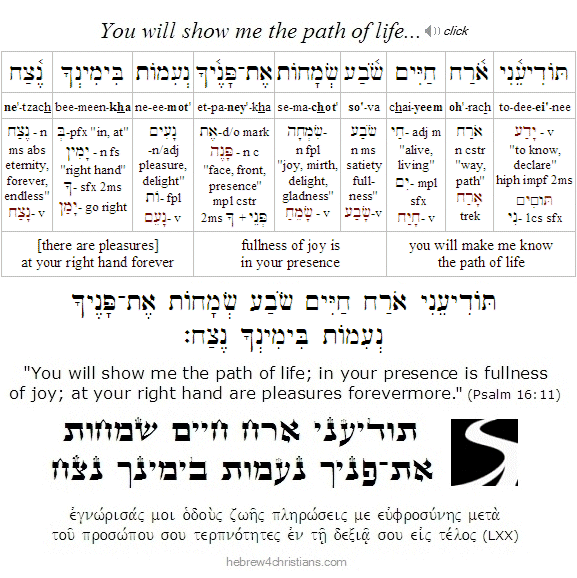 |
Shavuah Tov Audio Podcast:
The Final Portion of Torah...
10.12.25 (Tishri 20, 5786) V'zot HaBerakhah ("this is the blessing") is the very last portion of the Torah, recording Moses' last words to the people just before his death. It is always read just after the festival of Sukkot on the holiday called "Simchat Torah." After reading this portion, we will "rewind the scroll" back to Parashat Bereshit to begin reading the Torah all over again. We do this every year because Talmud Torah - the study of Torah - never ends! A true student of Scripture cannot claim to have completed the study of the Torah, for the implications of such study extend forever. And so the cycle continues, over and over in a continuous chain of study, ever widening, and all encompassing.
|