|
|
 |
|
|
|
Introduction to Sukkot
|
|
|
|
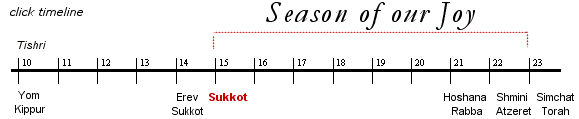
The seventh (and final) festival given to Israel is called Sukkot (סֻכּוֹת) or the "Feast of Tabernacles." Sukkot is observed in the fall, from the 15th to the 22nd of Tishri. During this time many Jewish families construct a sukkah (סֻכָּה), a small hastily built hut in which meals are eaten throughout the festival. The sukkah is used to remember the huts [plural: sukkot] Israel lived in during their 40 year sojourn in the desert after the exodus from Egypt.
|
|
|
|
|
|
Later, after Israel entered the land of promise, Sukkot was associated with the fall harvest and came to be known as Chag ha-Asif (חַג הָאָסִף), the "Festival of Ingathering" (of the harvest) at the end of the year. Certain customs were incorporated into the observance of Sukkot, including decorating the sukkah, performing special "wave" ceremonies of the "Four Species" (i.e., the lulav), circling the synagogue in a processional while singing hymns (hakkafot), and reciting various Hebrew blessings to sanctify the festival.
While the Torah states that Sukkot is a seven day holiday (Lev. 23:34; Deut. 16:13), an additional day called "Shmini Atzeret" is also included (Lev. 23:36; Num. 29:35). And since Sukkot marked the end of the agricultural year, a further holiday called Simchat Torah was added to celebrate the end of Torah reading cycle for the year as well.
Sukkot is celebrated for eight days in Israel and nine days in the Diaspora. In Israel the eighth day of Sukkot combines both Shmini Atzeret and Simchat Torah, whereas in the Diaspora, the eighth day of the holiday is Shmini Atzeret and the ninth day is Simchat Torah. During the first and last days of Sukkot no normal "work" (melakhah) is permitted (see Lev. 23:39). The intervening days of Sukkot are called Chol Ha-Mo'ed, half-holidays during which usual work activities are permitted. Since it is an eight day festival, there will always be at least one Sabbath that occurs during the festival.
Because we are commanded to rejoice during the holiday of Sukkot for the blessing of God's provision and care for our lives (Deut. 16:14-15), it is considered especially important to give tzedakah (charity) during this time of year.
|
|
|
|
From Yom Kippur to Sukkot
|
|
|
|
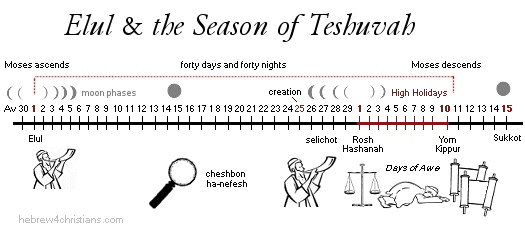
Recall that preparation for the High Holidays began back at the start of Elul, when Moses was said to have ascended Mount Sinai the third time and stayed there 40 days until Tishri 10 (the original Yom Kippur). After this period of teshuvah (repentance), Moses descended the mountain and gave instructions regarding the building of God's sukkah (called the Mishkan [Tabernacle]). According to Jewish tradition, the material for the Mishkan was collected during the days before Sukkot (though the Tabernacle itself was not actually assembled until Nisan 1 (Exo. 40:2)). Later King Solomon is said to have dedicated the Temple during the festival of Sukkot (1 Kings 8:2,65).
 |
Since it immediately follows the Days of Awe and Repentance, Sukkot represents the time of restored fellowship with the LORD. In fact, the Mishkan (and later, the Temple) represents God's Presence dwelling among His redeemed people (Exod. 29:44-45).
The modern observance of Sukkot allows just a few days -- from the time Yom Kippur ends on Tishri 11 to Tishri 15 -- to begin assembling and decorating the sukkah for the festivities. If the High Holidays focus on the LORD as our Creator, our Judge, and the One who atones for our sins, the festival of Sukkot is the time when we celebrate all that the LORD has done for us. Prophetically understood, the seven days picture olam haba, the world to come, and the 1,000 Millennial Kingdom age. If Yeshua was born during Sukkot (i.e., conceived during Chanukah), then another (and prophetic) meaning of the "word became flesh and 'tabernacled with us" (John 1:14) foretells the coming Millennial kingdom, when King Messiah will again "tabernacle with us" during his reign from Zion.
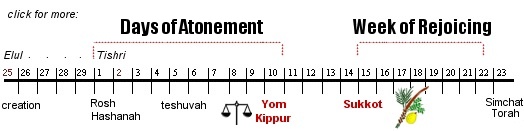 |
The holiday of Sukkot therefore represents a time of renewed fellowship with God, remembering His sheltering provision and care for us as we travel in the desert, surrounded the Clouds of Glory... In practical terms, the festival is celebrated for eight days (i.e., from Tishri 15-22) during which we are commanded to "dwell" in a sukkah - a structure of temporary construction - with a roof covering (schach) of branches, bamboo, etc. The sukkah itself symbolizes our dependence upon God's care and sustenance. We eat meals in the sukkah and recite a special blessing (leshev Ba-Sukkah) at this time.
In light of the work of Yeshua as our Kohen Gadol (high priest) of the New Covenant, we now have access to the Heavenly Temple of God (Heb. 4:16). We are now members of the greater Temple of His body; we are now part of His great Sukkah!
|
|
|
|
|
|
The Great Fall Harvest Festival
|
|
|
|
Sukkot is the conclusion of the Jewish fall holidays and the last of the three Shelosh Regalim [the three annual pilgrimage festivals: Pesach, Shavu'ot, and Sukkot (Deut. 16:16)]. It is interesting to compare the use of words relating to simchah [joy] in the description of these three festivals. Regarding Pesach, the word simchah does not appear at all (Deut. 16:1-8); regarding Shavuot, it appears only once (Deut. 16:11); but, regarding Sukkot, simchah appears several times:
You shall keep the Feast of Sukkot seven days, when you have gathered in the produce... You shall rejoice in your feast... because the LORD your God will bless you in all your produce and in all the work of your hands, so that you will be altogether joyful. (Deut. 16:13-15)
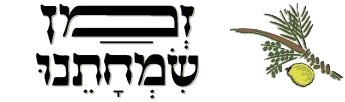
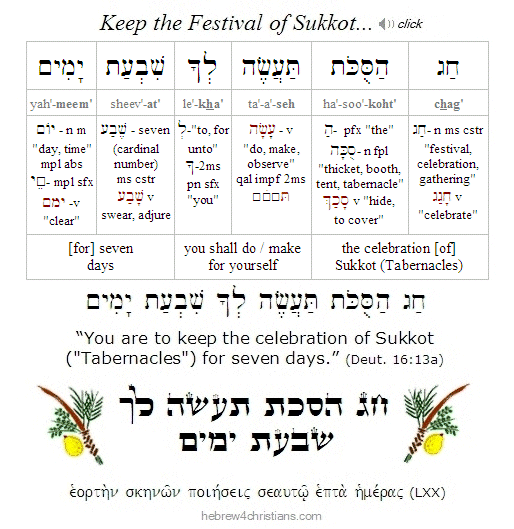
In fact, in ancient Israel, the joy of Sukkot was so great that it became known simply as "the Feast" (1 Kings 12:32). Later it was known as z'man simchateinu (זְמַן שִׂמְחָתֵנוּ), the "season of our joy." It was a time of many sacrifices (Numbers 29) and a time when (on Sabbatical years) the Torah would be read aloud to the people (Deut. 31:10-13).
 |
From an agricultural perspective in ancient Israel, Pesach [Passover] corresponded to the planting season, Shavuot [Pentecost] corresponded to the grain harvest, and Sukkot corresponded to the fruit harvest. When you planted your crops in spring, you do not yet rejoice because you were uncertain about how the harvest will turn out. And when you harvested your grain at the start of summer, you might have rejoiced that you now had bread in hand, but you would still be uncertain about the success of your fruit crops. Total joy would come after you had harvested all of your crops in the fall, and thereby received sustenance and provision for the coming year from the LORD. For this reason, Sukkot is sometimes referred to as Chag Ha-asif (חַג הָאָסִף), or "the Feast of Ingathering."
From a spiritual perspective, Sukkot corresponds to the joy of knowing your sins were forgiven (during Yom Kippur), and also recalls God's miraculous provision and care after the deliverance from bondage in Egypt (Lev. 23:43). Prophetically, Sukkot anticipates the coming kingdom of Yeshua the Messiah wherein all the nations shall come up to Jerusalem to worship the LORD during the festival (see Zech. 14:16). Today Sukkot is a time to remember God's Sheltering Presence and Provision for us for the start of the New Year. In light of the work of Yeshua as our Kohen Gadol (high priest) of the New Covenant, we now have access to the Heavenly Temple of God (Heb. 4:16). We are now members of the greater Temple of His body; we are now part of His great Sukkah!
 |
|
|
|
Sukkot in the Scriptures
|
|
|
|
|
In Biblical times, Sukkot was considered the most important of all the holidays, referred to simply as "the Feast" (1 Kings 12:32). It was a time of many sacrifices (Num. 29:12-40) and a time when (on Sabbatical years) the Torah would be read aloud to the people (Deut. 31:10-13). It is one of the three required festivals of the LORD (Exod. 23:14; Deut. 16:16).
The Torah explicitly commands three things regarding the festival of Sukkot:
- To gather the "four species" (Lev. 23:40)
- To rejoice before the LORD (Deut. 16:13-14; Lev. 23:40)
- To live in a sukkah (Lev. 23:42)
|
|
|
|
Building your Sukkah
|
|
|
|
It is considered a mitzvah for every Jew to participate in the building and/or decoration of a sukkah before the holiday begins. To build a sukkah, you first select a site that has nothing hanging above it -- i.e. a roof or a tree (so you can see the stars through the roof of the structure). The sukkah floor space must be large enough to accommodate a person who can sit with a small table.
The three letters of the word "sukkah" (סֻכָּה) are said to depict the kind of dwelling that is permitted. The letter samekh (ס) has four sides, so the booth my be entirely enclosed on all sides; the letter kaf (כּ) has three sides and one large opening, and this also is acceptable. Finally, the letter hey (ה) has two "walls" and a little more, which led the sages to say that a "kosher" sukkah must have at least two walls and a small part of a third wall. The walls themselves can be of any material, as long as they are sturdy enough to withstand a normal wind (note: You can use the sides of a building for a wall).
The roof of the sukkah (called a sikhakh or schach, from the same root as the word sukkah) must be covered with material that grows from the ground -- such as branches or leaves. The schach must be sufficiently covered so that it gives more shade than sun during the daytime but should allow stars to be visible through the roof at night.
A sukkah may be built in a yard, a roof, or even a balcony. Some people purchase prefabricated "sukkah kits" to make the project easier. Those who live in apartments or in locations where it is impossible to build a sukkah, or those who are unable to build their own sukkah for health reasons, may help their congregation or another family decorate their sukkah during this time.
|
|
|
|
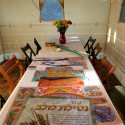
Since the sukkah is intended to serve as your "home" for the next eight days, it is customary to decorate it with hanging fruits, flowers, popcorn wreaths, ornaments, etc., from the ceiling, and tape posters of various Jewish themes on the walls. Some people even string Christmas tree lights on the outside of their sukkah!
|
|
|
|
|
|
Hiddur mitzvah (הִדּוּר מִצְוָה) is a phrase that means "making a commandment beautiful," and we want to make our sukkah a place of beauty, to represent our "personal mishkan" or "tabernacle." The Jewish sages note that the idea behind hiddur mitzvah comes from the great Song of Moses: "This is my God and I will enshrine (נָוָה) Him" (Exod. 15:2). Since we are surrounded by God's clouds of glory - and also by a "great cloud of witnesses" who watch as we walk in faith (Heb. 12:1) - it is only fitting to do our best to enshrine the LORD, especially in light of the great atonement he secures for us!
|
|
|
|
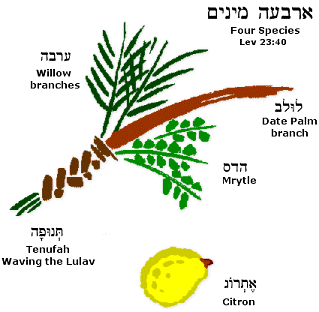
In addition to the sukkah, the most prominent symbol of Sukkot is the Arba'at Ha-minim (אַרְבַּעַת הַמִּינִים) - "the Four Species," or the four kinds of organic products mentioned in the Torah regarding the festival of Sukkot: "On the first day you shall take the product of goodly trees, branches of palm trees, boughs of leafy trees, and willows of the brook, and you shall rejoice before the LORD your God for seven days" (Lev. 23:40). Since these four items pertain to produce from the land of Israel, you will need to purchase them through a Judaica reseller to have authentic "species" from the promised land.
On the afternoon before Sukkot begins, it is customary to "assemble" the four species into a "bouquet" while standing inside your sukkah. Collectively the four items are sometimes called the "lulav," since the palm branch occupies the central position in the grouping of the four elements:
The Four Species:
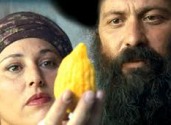
- Etrog (אֶתְרוֹג), a lemon-like citrus fruit (citron) referred to as pri etz hadar ["the product of goodly trees"] that is minimally the size of a hen's egg. An etrog with an intact pitam (stem) is considered especially valuable.

The etrog is said to symbolize the heart. The sages say the word "etrog" is an acronym for "faith (אֱמוּנָה), repentance (תְּשׁוּבָה), healing (רְפֻאָה), and redemption (גְּאֻלָּה)." Also, the initials of the words "Let not the foot of pride overtake me" (Psalm 36:12) - אַל־תְּבוֹאֵנִי רֶגֶל גַּאֲוָה - spell the word "etrog," suggesting that the fruit of the humble heart is most beautiful in the eyes of heaven...
Note: Some people keep their etrog long after Sukkot to make a sugared fruit soup from it that is eaten on the holiday of Tu B'shevat.
- Lulav (לוּלָב), a ripe (i.e., green) date palm frond ["branches of palm trees"]. The lulav must be sturdy and straight, with whole leaves that lay closely together and are not broken at the top. Be careful when you wave your lulav, since the leaves can become frayed, bent, or even broken if you hit something!

If the etrog represents the heart, the lulav is said to represent the spine or backbone of a person. Notice that the word lulav (לוּלָב) can be broken down as לוֹ ("to him") and לֵב ("heart"). A person who loves the LORD bekhol levavkha, with all his heart, will be given "spiritual backbone," real conviction and strength.
Note: The term "lulav" also refers to the combination of all three types of branches that are bound together for ceremonial waving (see below).
- Hadas (הֲדַס) three myrtle branches ["boughs of leafy trees"]. The leaves of the hadas grow in tiers of three leaves each. You will need three hadasim to create the lulav bundle.
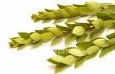
The leaves of a myrtle branch resemble the shape of eyes, and therefore the sages associate them with seeing and vision.
- Aravah (עֲרָבָה), the leafy branch of a willow tree ["willows of the brook"]. The branches grow long and are lined with long, narrow leaves. Two aravot are needed for the lulav bundle. Aravot need lots of water or they dry out. Often they are wrapped in a moist towel during Sukkot.
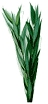
The leaves of the willow are used based on the Scripture: "Extol Him who rides on the clouds [i.e., aravot: עֲרָבוֹת], the LORD is His name" (Psalm 68:4).
Note: Aravot are also used for a separate ceremony on Hoshanah Rabba (the last day of Sukkot) when the branches are beaten against the ground until many of the leaves fall out. This ceremony, called the "beating of the willows," is intended to symbolize ultimate victory over our enemies.
The Sefer Ha-Chinuch states: "Etrog refers to the heart, the place of understanding and wisdom; lulav refers to the backbone, uprightness; myrtle corresponds to the eyes, enlightenment; and willow represents the lips, the service of the lips (prayer)." These four items are held together in a fragrant bouquet that is waved during a ceremony called na'anuim (נענועים) for each day of Sukkot. The usual practice is to recite the blessing (al netilat lulav) and then wave the lulav three times in six directions: forward, to the right, to the back, to the left, up, and down (to proclaim God's omnipresence). Since the four items are said to represent the tetragrammaton (יהוה), they are held together while waving.
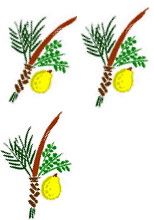
You can purchase Israeli arba minim (אַרְבַּע מִינִים) at most good Judaica stores. Usually, each of the four items is packaged separately. The following photo series shows you how we assembled ours for this Sukkot (from left to right):
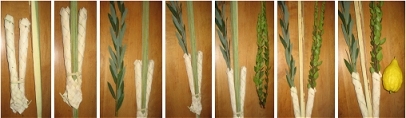 |
First you take the bundle holder and insert the palm branch (lulav) into the center (tighten using the bundle bands as needed). Take the two willow branches (aravot) and insert them into the left chamber, and the three myrtle branches (hadasim) and insert them into the right chamber. Finally, you take the "fruit of the goodly tree" (i.e., etrog) and get ready to recite the blessing...
|
|
|
|
|
|
According to the principle of hiddur mitzvah [beautifying the commandment], most Jews will seek excellent specimens for their "four species." At any rate, the lulav and etrog should be keep in good condition throughout the festival, since they are needed every day (except on the Shabbat that occurs during Sukkot) to perform various ceremonies. Some people purchase ornamental "etrog holders" and lulav cases to ensure that their lulavot stay fresh and beautiful...
|
|
|
|
|
|
How to Celebrate Sukkot
|
|
|
|
The festival of Sukkot is celebrated for seven days (i.e., from Tishri 15-21) during which we "dwell" in our sukkah by reciting various blessings, eating meals there, singing songs, and waving our lulavs.
|
|
|
|
|
|
Preparations for the Holiday
We begin preparing for Sukkot immediately following the Yom Kippur holiday. The following things help us to get ready for the holiday:
- Build and/or decorate a Sukkah (see above).
- Obtain lulav (see above).
- Make yourself happy. We are commanded to rejoice during the holiday of Sukkot for the blessing of God's provision and care for our lives (Deut. 16:14-15).
- Give tzedakah. Since the festival of Sukkot is a time of great thanksgiving to God for his provision in our lives, giving tzedakah (charity) to those in need is highly recommended. Giving tzedakah is connected with praying for the holiday - that it will be a time of great blessing and joy in the Presence of God.
- Plan Sukkot parties and meals. It is especially important to celebrate this season with family and friends. Sukkot is all about showing hospitality toward others (hachnasat orechim). If you have a sukkah, plan on inviting some people over to be your "ushpizin." If you do not have a sukkah, try to find someone who is celebrating the holiday and be ushpizin for them!
- Read the Torah portions - and the Book of Ecclesiastes (Kohelet) for the Sabbath that occurs during the festival of Sukkot.
Steps for Celebrating Sukkot
On the evening before Sukkot begins, we will do the following:
- Light the Holiday Candles
To sanctify the occasion, we light the holiday candles just before sundown (i.e., on Tishri 14). As the celebration begins, we will move into the "new day," that is, the first day of Sukkot. Note that unlike Shabbat, we first say the blessing and then light the candles. You can download the Hebrew blessing to recite here.
- Thank God for the Season
After sundown on the first night of Sukkot (only) we recite the "Shehecheyanu" blessing ("Who has given us life") to thank God for bringing us to this season in our lives. You can download the Hebrew blessing to recite here. You may also want to thank the LORD for the holidays as a revelation of Yeshua at this time, too (you can download the blessing for the festivals here).
- Say Kiddush
Before eating the holiday meal in the sukkah, we recite kiddush. Normally this is the "full kiddush" (as performed on Shabbat), though you can substitute the shorter blessing over the wine at this time. You can download a Messianic version of the blessing here.
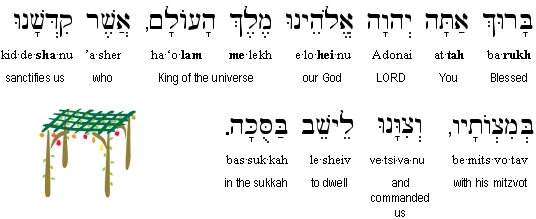
- Recite the Sukkah Blessing
After reciting the holiday kiddush, we (joyfully!) recite the traditional blessing over the Sukkah (leshev bashukkah). You can download the blessing here.
- Recite Ha-Motzi
Before partaking of our meal in the sukkah, we recite ha-motzi (the blessing over the bread). You can download a Messianic version of the blessing here. After this we enjoy our meal together in the sukkah. Traditional foods include stuffed cabbage and kreplach containing fruit or fall harvest vegetables; dishes made with honey and pastries.
- Wave the Lulav
We face east while holding the lulav bundle in our right hand and the etrog in the left hand. We then lift them together with the etrog pointing downward and recite the netilat lulav blessing (you can download the text here).
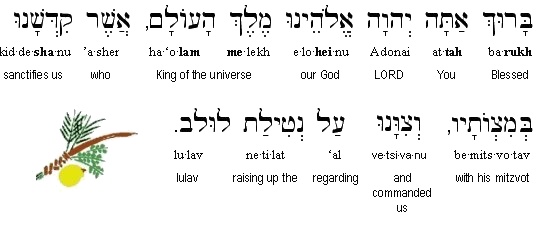
After reciting the blessing, we turn the etrog right-side up, put both hands together, and then "shake" the lulav (i.e., reach out then draw in) three times in each direction: front, right, back, left, up and down. These six directions indicate the surrounding presence of God. Note that it is entirely appropriate to recite the blessing and "wave the lulav" at any time during the festival of Sukkot, day or night.
- Sing praise to the LORD
After reciting the Hebrew blessing and shaking the lulav around, it is customary to recite (or sing) the following antiphon from Psalm 136: "Give thanks to the LORD, for he is good, for his steadfast love endures forever." You can download the Hebrew study card for this verse here.
- Celebrate in the Sukkah
Perhaps more than any other Jewish holiday, Sukkot has an atmosphere of celebration and delight. The Torah explicitly mentions that we are to rejoice during this festival, and we do so by listening to festive music, talking about the meaning of the holiday, praying together, eating holiday food, and just relaxing inside the sukkah with family and friends....
During the subsequent days (and nights) of Sukkot we will perform these same steps, though we skip reciting the Shehecheyanu blessing after the first night. Note that part of the Shabbat Torah reading for Sukkot is the book of Ecclesiastes (Kohelet), which reminds us of the transitory nature of life....
Note: Please see the Sukkot Blessings Pages for the Hebrew text, audio clips, and PDF downloads for the various Hebrew blessings mentioned above. You can also download a simplified Sukkot seder here: Sukkot Blessings Quick Sheet.
|
|
|
|
The Torah Reading Cycle is suspended for the holiday week of Sukkot as well as for Shemini Atzeret (sometimes referred to as the eighth day of Sukkot). CH"M means Chol haMo'ed, an interim day.
- Sukkot, Hoshana Rabba, and Shemini Atzeret Torah readings are from Leviticus 22-23, Numbers 29, and Deuteronomy 14-16. These readings detail the laws of the mo'edim or "appointed times" on the Jewish calendar and include the mitzvot regarding the festival of Sukkot.
- On Simchat Torah ("Celebration of the Torah") we conclude, and begin anew, the annual Torah-reading cycle. First we read the Torah section of V'zot Haberakhah, and then we read the first chapter of Genesis (the beginning of next Shabbat's Torah reading).
Detailed readings are as follows. Note that when one of the intermediate days of Sukkot (Chol Ha-Mo'edim) falls on Shabbat, the book of Kohelet (Ecclesiastes) is read before the reading of the Torah. To ensure accuracy, always consult a good Jewish calendar that includes the holiday Torah reading for the current year:
|
|
|
|
|
|
|
|
|
Waving Lulav at Services
|
|
|
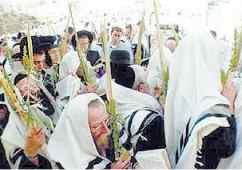
In the synagogue, lulav are shaken during the Hallel (praise psalms sung right after the Amidah in the morning service) as well as during the Hoshanah - a hymn that begins with Hosha' na [save us] that is sung during the service. Normally the Torah is taken from the Ark and set on the bema and the congregation circles it in a processional (called hakafot) while shaking their lulavot and carrying their etrogim.
|
|
|
|
|
|
|
Yeshua and the Water Ceremony
|
|
|
|
During the seven days of Sukkot a sacrificial pouring out of water (called a "water libation") was performed at the Temple (Sukkah 51a-b). In a ceremony called nisuch ha-mayim, the High Priest would lead a procession to the pool of Shiloach (Siloam) where he would fill a golden pitcher with water and then return to the courtyard of the Temple. When the High priest would pour out the water, the great crowd of people would wave their lulavot and sing out:
אָנָּא יְהוָה הוֹשִׁיעָה נָּא
אָנָּא יְהוָה הַצְלִיחָה נָּא
בָּרוּךְ הַבָּא בְּשֵׁם יְהוָה
בֵּרַכְנוּכֶם מִבֵּית יְהוָה
ah·nah Adonai hoh·shee·ah nah
ah·nah Adonai hatz·lee·chah nah
bah·rookh ha·bah be·sheim Adonai
be·rakh·noo·khem mee·beit Adonai

"Save us, we pray, O LORD!
O LORD, we pray, let us thrive!
Blessed is he who comes in the name of the LORD!
We bless you from the house of the LORD."
(Psalm 118:25-26)

Hebrew Study Card
|
|
|
|
Psalm 118 was regarded as a Messianic Psalm, and when Yeshua the Messiah later appeared during His triumphal entry into Jerusalem (Matt. 21:8-9; Luke 19:38; John 12:13), He was initially greeted with shouts of "Hosanna!" and waving lulav as the Messiah King come to deliver the people of Israel (see also Rev. 7:9-10).
On a spiritual level, note that water represents that which nourishes our hearts. In Jeremiah 2:13 it is written, "For my people have committed two evils; they have forsaken me the fountain of living waters, and hewed them out cisterns, broken cisterns, that can hold no water." How often have we sought for "water" from sources other than God? How often have we "hewed out our own cisterns," only to find them to be broken, leaking, and ultimately unsatisfying? How often do we find ourselves thirsting for that which will truly nourish our hearts? It was during the last day of Sukkot that Yeshua cried out, "If anyone thirsts, let him come to me and drink. Whoever believes in me, as the Scripture has said, 'Out of his heart will flow rivers of living water'" (John 7:2, 37-38).
Yeshua spoke of the "living water" that He would give to those who ask Him. This "water," He said, would truly satisfy the thirsty heart and provide everlasting nourishment for life (John 4:14). He further explained that this water would spring forth within the heart as a result of trusting in Him (John 7:38). The Apostle John calls this living water the Holy Spirit (John 7:39). And today Yeshua says, "To all who are thirsty I will give the springs of the water of life freely" (see Rev. 21:6 and Isa. 55:1).
The Temple Light Show
After the water ceremony, during the evening, special festivities called Simchat Bet Ha'Shoevah ["happiness of the house of the water-drawing"] occurred. During this time the four towering menorahs were lit up and the priests would put on a "light show," performing "torch dances" while the Levites sang and played music. These shows would occur every night of Sukkot, all through the night. These festivities were apparently so spectacular that the Jewish sages have said, "He who has not seen the rejoicing at the Simchat Bet HaShoevah, has never seen rejoicing in his life" (Sukkah 5:1).
In this connection we remember that Yeshua revealed Himself to be the Light of the world (John 8:12). Indeed, Yeshua used the very water from the pool of Shiloach (Siloam) to heal the man born blind, thereby miraculously enabling him to see the Light of the World (John 9:5-11). Truly Yeshua is the Substance and inner meaning of this holiday....
|
|
|
|
The festival of Sukkot has a prophetic dimension awaiting fulfillment. As the "Day of Ingathering" of the harvest, Sukkot prefigures the gathering together of the Jewish people in the days of the Messiah's reign on earth (Isa. 27:12-13; Jer. 23:7-8). Indeed all of the nations of the earth that survived the Great Tribulation will come together to worship the LORD in Jerusalem during the Feast of Sukkot (Zech. 14:16-17). Sukkot, therefore is a vision of olam haba, the world to come...
Sukkot also foreshadows the LORD's sheltering Presence over Israel in the millennial kingdom. No longer will Israel be subject to the oppression of the ungodly nations of the world, but God Himself will place His sanctuary in her midst (Ezek. 37:26-28).
Yeshua the Messiah did indeed come to "sukkah" (or "tabernacle") with us (see John 1:14) in order to purge away our sins and to redeem us to Himself. Yes, by the eye of faith we see the revelation of the true Shekhinah of the LORD God Almighty in the Person of Yeshua our beloved Mashiach. Nevertheless, we still eagerly await His return to establish His Kingdom and therefore to "tabernacle with us" again. At that time Yeshua will set up His everlasting Sukkah with us -- so that that we may know, love, and abide with Him forever! Maran ata, LORD Yeshua!
|
|