|
October 2025 Updates (continued)
Note: If any page content appears to be missing, please refresh the page...
The Battle is for your Mind...
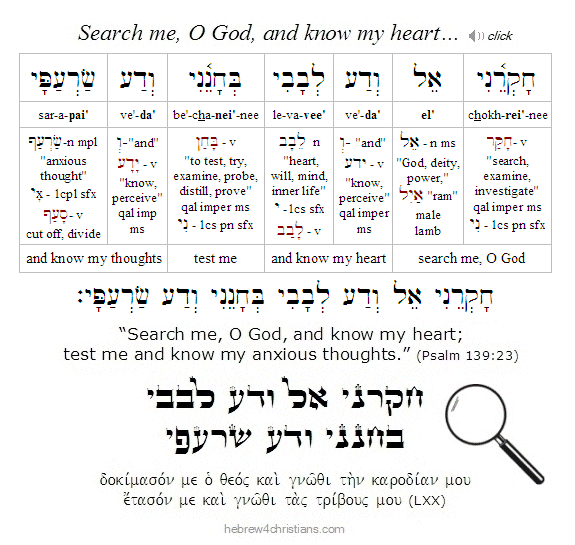
10.10.25 (Tishri 18, 5786) We may entertain simplistic ideas about "temptation." For instance, we may think that it means being "enticed" to indulge the lusts of the flesh or to acquiesce to the desires of our lower nature... A more mature view of temptation, however, understands that it begins within our minds and is justified by means of our faulty thinking.
The practice of managing and testing our "thought life" (i.e., our attitudes, the assumptions behind our choices, etc.), is therefore crucial for our spiritual well-being. Examine yourself, then, to see if you are living the faith (2 Cor. 13:5). Be careful not to fool yourself by rationalizing godless thinking in the name of "prudence" or "wisdom" or "self-pity."
The devil disguises his appeals as "sympathetic," "reasonable" and "justified," though his assumptions are grounded in the despair that comes from the denial of God's Reality and Presence... Friend, listen to the dialog happening within you; wake up to what you really are believing. Then repent and ask the Lord for your daily deliverance.
Yeshua avowed before Pontius Pilate: "For this reason I was born, and for this reason I came into the world – to testify to the truth. Everyone who belongs to the truth listens to my voice" (John 18:37). Therefore his "followers," that is, those who genuinely believe in Him, will likewise be truth-focused people who will "walk in the truth" of His revelation.
Walking in the truth requires the discipline of clear thinking and self-awareness -- defining terms, testing truth claims for soundness, exposing fallacious reasoning, distinguishing good from evil, and so on. "We cast down arguments and every lofty opinion raised against the knowledge of God, and we take every thought captive to obey the Messiah" (2 Cor. 10:5).
It is written that "God has not given us a spirit of fear (πνεῦμα δειλίας), but of power, and love, and a sound mind" (2 Tim. 1:7). Note that the Greek word for "sound mind" (σωφρονισμός) comes from a verb (i.e., sodzo: σῴζω) that means being made "safe" (i.e., soas: σωός) or healed because of the power and grace of the Living God.
Understand, then, the connection between fear and confusion, and note further the connection between having a sound mind and a heart of peace and courage. "The work of righteousness shall be peace; and the service of righteousness shall bequietness and confidence for ever (Isa. 32:17). A fearful or shameful attitude, weakens your resolve, quells your love, and introduces pain to your thinking.
It is the old trick of the enemy of our souls to lead us unto despair, the exile of shame, and cruel bondage to untruth. As always the answer is the same: namely, teshuvah, turning to God and embracing the grace and love given in Yeshua as our deepest reality, our power, our heart, and our mind.
The Name of the LORD (יהוה) means "Presence" and "Love" (Exod. 3:14; 34:6-7). Yeshua said, "I go to prepare a place for you," which means that his presence and love are waiting for you in whatever lies ahead (John 14:1-3; Rom. 8:35-39). To worry is to "practice the absence" of God instead of practicing His Presence... Trust the word of the Holy Spirit: "For I know the plans I have for you, declares the LORD, plans for healing peace and not for evil, to give you a future and a hope (Jer. 29:11).
Chag Sameach, Shabbat Shalom, v'chazak v'ematz, chaverim!
 |
Turning to God's Heart...
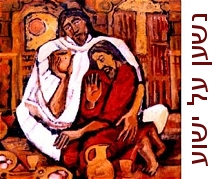
10.10.25 (Tishri 18, 5786) Turning to God in teshuvah, or "conversion," is not something you accomplish in your own strength or will. No, it is an act of grace wherein God touches you to make you alive (John 1:11-12). After all, how could it really be otherwise? From our perspective, teshuvah is a matter of trust - first trusting that God loves you and redeems you from the curse of your life, and second, that he will guide you by means of his spirit to know him. Sanctification, then, is the practice of attending to God's presence, seeking him in your heartache and in your hope, walking with him in your sorrows and in your joys....
Doubts may sometimes arise, however. You may hear questions within your soul asking where you are really going, or questions about the choices you have made. You may feel anxious or uncertain about your relationship to God. When this occurs, you must remember who you truly are. You must recall God's personal love for you, even when you feel afraid or lost inside. God's everlasting love in Yeshua is the foundation, the solid rock, and the place where you will find your shelter. It is the very "ground of your being."
God's heart is the place where you are never left nor forsaken, even if you have wandered into painful byways of regret, sinfulness, and loneliness. Like the prodigal, when we "come to ourselves," when we remember where we really belong, we will rediscover our Father's outstretched arms welcoming us back home (Luke 15:17-24).
Hebrew Lesson
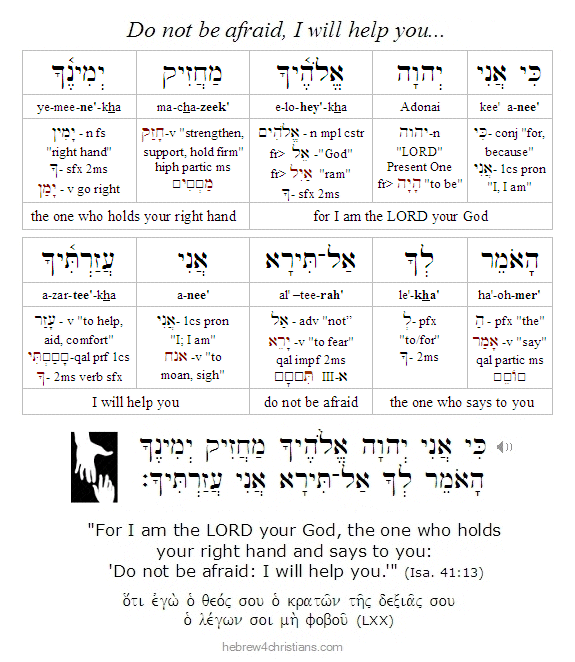
Isaiah 41:13 Hebrew reading (click):
 |
Sukkot and Freedom...
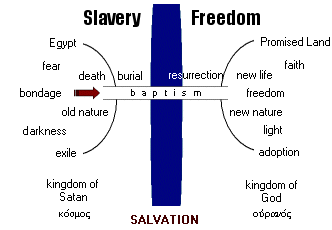
10.10.25 (Tishri 18, 5786) It's been said that while it took the LORD 40 days to get Israel out of Egypt, it took 40 years to get Egypt out of Israel.... When Israel first left Egypt, they took with them only enough food and water to last for a few days. When these provisions ran out, so did their trust in God. Therefore Sukkot recalls the miracles that God provided to keep His people from returning to Egypt. These miracles - the water from the rock (i.e., "Miriam's Well"), the manna from heaven, the Clouds of Glory - were surely as great as the judgments upon Egypt and the splitting of the Sea of Reeds, and yet the exodus generation never took hold of their new identity as God's redeemed (and therefore free) children... Tragically, the Israelites regularly vacillated between fear and rebellion and thereby forfeited the promises of God. They could not take hold of God's blessing because of their unbelief.
Sukkot remembers the journey of the redeemed people of God - first from Egypt, then to Sinai, and then into the void of the desert places.... The repeated failures of the Israelites in the wilderness was meant to reveal the insufficiency of "Egyptian thinking" by demonstrating God's faithful love and ongoing care. The entire ordeal in the wilderness was a "Sukkot experience" that pointed beyond Sinai....
The Torah instructs us to symbolize the journey of this life by means of erecting a sukkah - a flimsy shelter that we are to "live in" for seven days. The sukkah is meant to help us ask ourselves: Where is the true home we seek? Where is the true shelter of our lives? The first Jew (Abram) was called ha-ivri (הָעִבְרִי) - "the Hebrew," a term that means "one who has crossed over" (עָבַר) from another place. When he heeded the call Lekh lekha (לך־לך), "go for yourself," it was Abram's walk of faith that made him into a Jew.... He left the comforts of Ur to become a tent dweller who became a "stranger and sojourner" with God. Similarly, the Jewish people as a whole were forced to leave the "security" of Egypt and journey into the unknown in order to realize the promises of God. Sukkot ultimately reminds us that our security is neither found in political power structures nor in the concrete walls of our homes, but solely in the Presence of God. Our freedom as God's children is at stake in the matter of redemption, and God takes it very seriously when we seek to exchange any supposed source of security for the venture of true faith....
So where is the true home you seek? Are you clinging to hope in this world and its counterfeit security? Are you willing to sacrifice your dignity as a child of God for the protection of the "State"? When God redeemed Israel from Egypt, it was a rebirth experience. Passover represented the means of redemption (the blood of the lamb), Shavuot represented the revelation of the holiness of God (the Sinai experience), and Sukkot represented the walk of faith as reborn and redeemed children. God took Israel out of Egypt (i.e., out of the world) in order to reveal to them who He is -- and who they were in relationship with Him.... The pattern remains the same. The world system is a form of slavery, and Sukkot reveals how God bypasses the world to care for His people...
 |
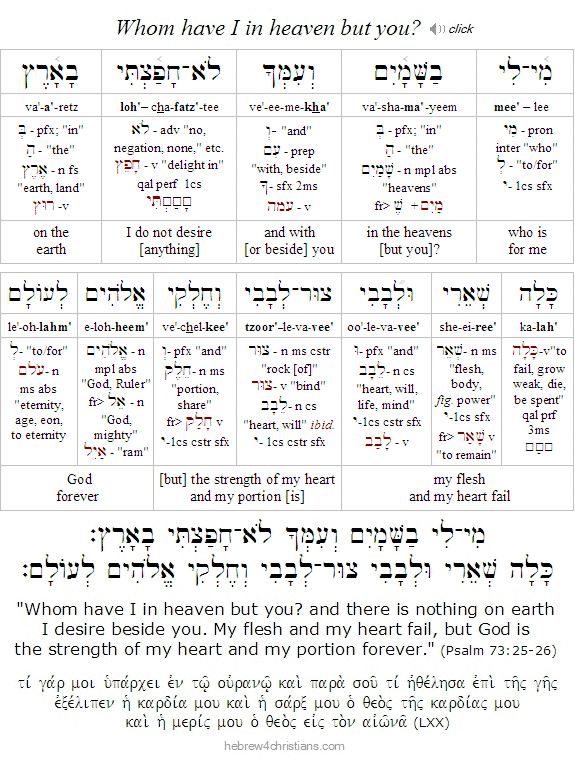
The holiday of Sukkot reminds us that slavery is not an option for the redeemed people of the LORD. God wants us to be free from the bondage of our past. We must leave behind our old identities and forswear our sense of victimization and dependency on anything other than God himself. That is the wilderness experience of faith. God calls us to walk in the Presence of His love, not in the fear of man. We are new creations in the Messiah, reborn to take possession of the promises God has given to us. "For our citizenship (πολίτευμα) is in heaven, from which also we eagerly wait for a Savior, Yeshua the Messiah our LORD (אֲדנֵינוּ יֵשׁוּעַ הַמָּשִׁיחַ), who will transform the body of our humiliation (τὸ σῶμα τῆς ταπεινώσεως ἡμῶν) to be like his glorious body, according to the working of His power that enables Him even to subject all things to Himself" (Phil. 3:20-21).
Hebrew Lesson
Psalm 73:25-26 reading (click):
 |
Note: The midrash says that the etrog (i.e., the citron fruit, sometimes called the "Persian Apple") was the fruit in the orchard of Eden that Adam and Eve ate in disobedience, resulting in exile from paradise... It is significant, then, that during Sukkot we reclaim and sanctify the very means of our downfall and greatly rejoice that our sin has been atoned through Yeshua the Messiah! Shalom and Sukkot Sameach, chaverim....
Sukkot and Vanity...
10.09.25 (Tishri 17, 5786) Though Sukkot is called the "Season of Our Joy" (z'man simchateinu), it might surprise you to learn that the somber scroll of Ecclesiastes (קהֶלֶת) is traditionally recited on the Sabbath of the festival. According to midrash, this custom arose during the First Temple period, when the Jews would visit King Solomon to pay their respects during the holidays: "And all the men of Israel assembled to King Solomon at the feast in the month Ethanim, which is the seventh month [i.e., Tishri]" (1 Kings 8:2). On that occasion the King taught the nation Kohelet (Ecclesiastes) as a countermeasure to the lightheartedness and gaiety that had become associated with the festival of Sukkot.
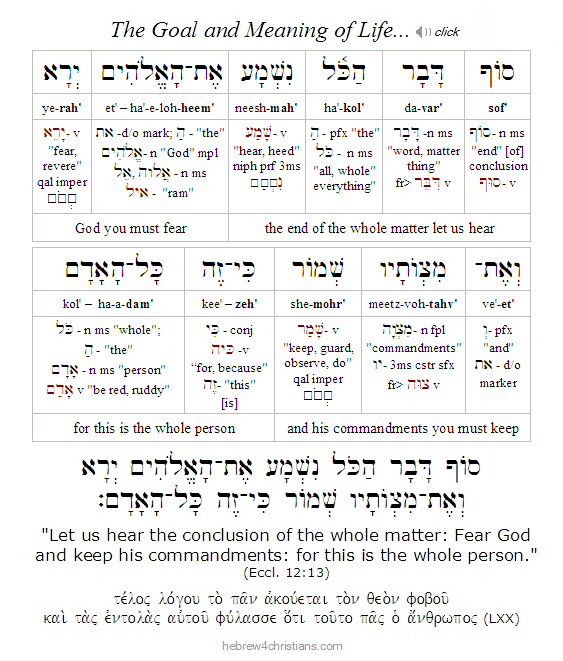
"Vanity of vanities, says Kohelet, vanity of vanities! All is vanity" (Eccl. 1:2). In light of the inevitability of death and decay, praiseworthy is the man who accepts the passing shadows of his days, and who realizes the emptiness of pleasures, wealth, and worldly ambition. Like the sukkah itself, Kohelet reminds us of the transitory nature of life in olam ha-zeh (this world). Therefore Solomon admonishes us to soberly remember God our Creator and Judge: "Fear God and keep his commandments, for this is the whole duty of man. For God will bring every deed into judgment, with every secret thing, whether good or evil" (Eccl. 12:13-14).
It is to their credit that the Jewish sages finally decided to include Ecclesiastes as part of the Bible, however, since it takes humility to admit that we must continue to seek God, despite our uncertainty in this world. After surveying the emptiness of "life under the sun," Solomon concludes his reflection by admonishing us to find healing and peace with God.
Hebrew Lesson
Ecclesiastes 12:13 reading:
The Holiday of Sukkot also recalls the "Clouds of Glory" that surrounded Israel during the Exodus. The commandment, "You shall dwell in booths for seven days" (Lev. 23:42) therefore commemorates the sheltering Presence of the Shekhinah - not simply to recall that the people lived in temporary structures in the desert. God commanded the observance of this holiday "so that future generations will know that I had the children of Israel live in booths when I brought them forth from Egypt" (Lev. 23:43). The miracle is the sheltering Presence of God - not the booths themselves. The sukkah therefore serves as a sign that God loves us, that He delights in our well-being, and that He protects us from hardship. Were it not for God's constant care, we would perish in the wilderness of this world...
Trusting in the love of God enables us to behold His surrounding presence and glory. Thus says the LORD, "I remember the devotion of your youth, your love as a bride, how you followed me into the wilderness, to a land not sown" (Jer. 2:2). Rashi notes that the goal of the Exodus (i.e., redemption) was to "bring the beloved into the King's chambers" (Song 1:4). The beloved was to be ready to receive God's embrace. Therefore, when the LORD delivered Israel from bondage in Egypt, He did not take them on the "fast track" to the Promised Land (though He certainly could have done so). No, there was a circuitous route to take, a divinely appointed wandering, a Divine "stroll of betrothal," if you will.
God led people directly into the desert to reveal Himself to them. He sheltered them in Clouds of Glory. He embittered waters to make them sweet once again; He let stomachs growl to provide the Bread of life; He parched mouths to give Living Water from the "Rock that was struck" (1 Cor. 10:4). God did all this to reveal to his newly redeemed people that He is the satisfaction of all their longings. He rescued his bride from the house of slavery and now wanted to refine her to receive greater revelation to come. He was "wooing" or "courting" her to bring her beneath a canopy of stars at Sinai, and He needed them to dwell as strangers with Him in the desert for them to take hold of His love...
Receiving Salvation...
How do we get "saved" or are made right with God? Is it by means of religious rituals, or by doing good deeds, or by believing certain things about God, or perhaps all of these?
10.09.25 (Tishri 17, 5786) Do you really understand how you are "saved" or made right with God? Do you "get" the message of the gospel? I once read from a Christian devotional book that said that in order to receive God's salvation you must do the following: 1) believe in Jesus' substitutionary death and resurrection; 2) turn away from your sins, and 3) ask him to be the Lord and Savior of your life. The author then went on to explain that "this means you have to renounce and turn away from everything in your life that is contrary to what God wants: you must give up your sinful self-centeredness and turn to God."
Now at first glance this appeal may sound Biblical, but it implicitly assumes that your own goodness and self-effort will save you. After all, if you really could turn away from your sins and from "everything in your life that is contrary to what God wants," and if you really could simply "give up your sinful self-centeredness," then there really would be no need for the miracle of spiritual rebirth, no need for the power of God to impart a new nature to you, and therefore no need for the cross of Messiah to save you from the verdict of the moral law.
Some people tend to think that to be "crucified with Messiah" means that we must totally surrender our lives to God by denying ourselves and mortifying every passion apart from the Spirit of Messiah living within us (Gal. 2:20). But again, if we could do this - if we really could crucify ourselves, deny ourselves, and completely yield our hearts to God in absolute surrender, we wouldn't need the miracle of salvation, would we? We'd be back at the religious game, attempting to please God through our own "best efforts," and endeavoring to affect spirituality by means of our own merit. As Jonathan Edwards wrote: "If there be ground for you to trust in your own righteousness, then, all that Christ did to purchase salvation, and all that God did to prepare the way for it is in vain."
Yeshua said that no one is able to come (οὐδεὶς δύναται ἐλθεῖν) to him for life unless God Himself "drags him" (John 6:44). The flesh is scandalized by this, of course, since the ego plays no part. Eternal life is found in the righteousness of Yeshua, and self-denial means to quit thinking about yourself (from α-, "not," + ῥέω, "to speak") by accepting what he has done for you. We have been (already) crucified with Messiah (the verb συνεσταύρωμαι is a perfect passive form), and just as we are identified with him in his death, so we are identified with him in his resurrected life. This is a matter of faith, trusting that God's love for your soul overcomes the law's powerlessness and your own inability to save yourself...
Contrary to the vain hope that "God helps those who help themselves," we must emphasize that God helps precisely and only those who cannot help themselves... Indeed the teaching of the New Covenant is clear: God will perform a miracle by putting his Torah within your will, writing it on your heart, and recreating you into his child (Jer. 31:33; Ezek. 36:26; John 3:3; 2 Pet. 1:4). All this comes from the power of God alone, however, not by human aspiration or resolution or good works (John 1:12-13; 6:44; Rom. 10:9-12; Titus 3:5). Like father Abraham, we are "justified" (i.e., made right) with God by believing in his power, relying on his Spirit, and trusting in his promise of love (Hab. 2:4; Rom. 4:13-25).
Yeshua did not come to set up a "new religion" but to give life to the dead. Therefore it is no longer "I" who live but Messiah in me, which is to say that we do not possess the miracle but the miracle possesses us... You are made into a new creation (בְּרִיָּה חֲדָשָׁה); your former life is passed and now all things become new (2 Cor. 5:17). But again you are not saved by "reforming" your character or by becoming a "promise keeper," but trusting in God's power and character. This is the way to receive the blessing. You come to God just as you are - acknowledging the truth of your raw and desperate need for deliverance from the corruption of your sinful condition, pressing past the verdict of the law in your desire for God's compassion (Psalm 85:10; Rom. 4:25). That's the heart of the gospel, after all. All you can do is bring is your brokenness and need to God for healing and then to respond to God's love by receiving it with humility and gratitude. Being made right with God is the gift of accepting that you are accepted despite your unacceptability because of God's great mercy for your life. This is indeed a miracle, for we need God to even know that we need God! As Yeshua said: "Blessed are the poor in spirit, for theirs is the Kingdom of God" (Matt. 5:3).
It is carnal pride to think that we can pledge to be perfect before we can come to the Lord for salvation. Can you imagine a person who has suffered for years as an alcoholic or addict of some kind being told that in order to be made right with God, they must believe that Yeshua died for their sins and that they therefore must turn away from all their sins, be perfect in their resolve, and pledge never to sin or be selfish again? For those of you who have suffered from addiction or struggled with chronic "character defects" in your lives, you know that empty promises to change mean nothing when it comes to turning away from what holds you in bondage... עָקב הַלֵּב מִכּל וְאָנֻשׁ ה֑וּא מִי יֵדָעֶנּו - "The heart is deceitful above all things and incurably sick: Who can know it?" (Jer. 17:9). God is not impressed with our promises and pledges; he understands that we are bankrupt and powerless; he knows that what we need is nothing less than the miracle of raising a dead person to newness of life.
None of this is meant to impugn the importance of living your faith and making godly choices, of course... "Faith without works is dead," but note that such "works" come from the Spirit of God, as the truth that is worked into us is worked out in our experiences (Isa. 26:12). The "work" of God is to believe in Yeshua (John 6:29) and true faith will "show up" in our lives (Eph. 2:10). As Kierkegaard said, the opposite of sin is not virtue, but faith. Therefore we must test the spirits, and most importantly our own: Do you really believe, even when you are tempted to judge yourself or others?
There's nothing "easy" about really believing in God (though it is easy enough to say you believe when in fact you don't). The pattern remains: unless a seed "falls to the ground" and dies it abides alone; but if it dies, it brings forth much fruit (John 12:24). We first encounter the risen Lord and connect with the truth, and then we get off our crazy road to Damascus... Our subsequent life of sanctification is a "slow motion" catching up with the miracle and reality of the new birth wherein we "become who we are" in the Messiah (Col. 1:27; 3:1-4). In this connection, however, please remember that all the commandments of the New Covenant are directed to the new nature, not the old "Adamic" nature that is mortified and buried away from the life of the child of God.
Hebrew Lesson:
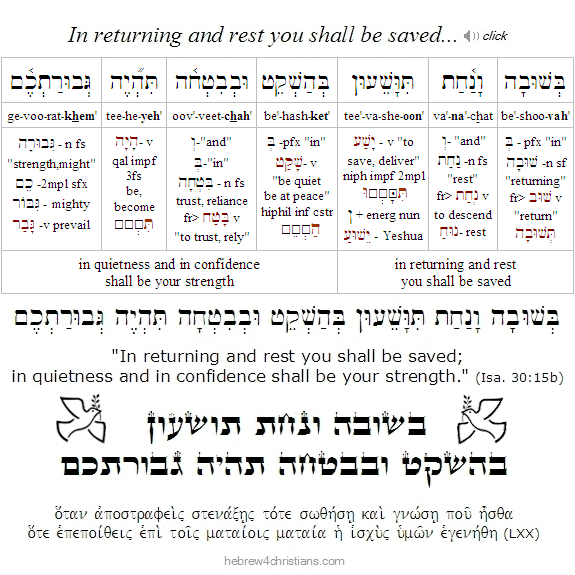
Isaiah 30:15b Hebrew reading:
 |
Broken and Remade...
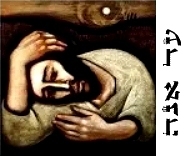
10.08.25 (Tishri 16, 5786) In the 2004 Israeli movie "Ushpizin," a poor baal teshuvah (returning Jew) named Moshe Belanga and his wife Mali pray to have enough money to build a sukkah in order to observe the holiday of Sukkot ("Tabernacles"). Their prayers were answered when they received a mysterious gift of money, though the blessing initiated a sequence of mishaps that tested their patience to the breaking point...
Upon building their sukkah and purchasing an exceptionally beautiful etrog (one of the four species required for the holiday), Moshe and Mali got ready for their first meal of Sukkot. However, they were unexpectedly visited by a pair of escaped convicts, one of whom had known Moshe in his old days, when Moshe was not practicing the faith. The convicts become guests (ushpizin) in the sukkah, creating a "balagan" (mess) and straining Moshe and Mali's relationship. After making a noisy scene in their neighborhood one day during the holiday, Mali discovered that the two men were escaped convicts wanted by the police, and she decided to leave Moshe, despite his heartfelt appeals for her not to go.
After his world had fallen apart, Moshe went to see his rabbi who listened to his plight and then offered him counsel by reading to him from a holy book: "When a man changes something within himself he progresses, right? He thinks he has earned some rest. But it's just then that he's given a harder test.... There is no rest in this world, no rest..." He then goes on to say, "Above all, Moshe, don't get angry! Don't get angry. Ribbono shel olam (Master of the universe), save us from anger! Save us from anger!"
After this meeting with the rabbi, Moshe was tested yet again when he learned that his two guests had unwittingly destroyed his beloved etrog - a symbol of his hope. Moshe then began to burn with anger, but ran away groaning and in agony of heart.
When he finally reached an isolated place, he began frenetically pacing back and forth, repeating crying out to God: "Ani loh mavin!" I don't understand! I don't understand! He then asked God: "What do you want from me? I just don't get it! Have mercy; explain it to me! I don't want to be angry, God Almighty, I don't want to be angry! Have mercy upon me..." In brokenness of soul he repeatedly muttered "have mercy upon me..." Moshe left the place in silence, shattered, broken, a "klume" (nothingness), empty, devoid of everything.
And it is then, in this place of utter helplessness that his wife Mali returned to him and told him that she was pregnant with his child. This was their deepest hope, symbolized by the etrog which was thought to portend fertility and blessing, and it was realized despite all their troubles. Paradoxically it was from the loss of his hope that his hope was found, and God brought good out of all his suffering (יִסּוּרִים שֶׁל אַהֲבָה). It's a happy ending. Moshe is delivered from his pain when he surrendered everything to God. His wife Mali also is restored to her love and would bear the blessing of an heir for the family.
Yes, it's a happy ending. God works all things for the best: "gam zu l'tovah!" We get angry, then, when we lose sight of the big picture. What we sometimes interpret as evil or suffering is a means to the greater end of happiness and fulfillment. That sounds good, but let's ask a serious question: Do we need an explanation to "exorcise" our anger? Does "understanding" why suffering and troubles occur deliver us from the inner rage of our hearts? Or put another way, is evil really a form of ignorance of the hidden good?
Psychologically considered, we may experience anger when we do not get our own way, especially when we believe we have a right to our expectation... We are treated unfairly; someone deliberately hurts us; we are abused, and so on, and our anger cries out for justice to be done and for the vindication of our will. Sometimes such anger may be justified, but often it goes astray because it is centered on the ego. Understood this way, anger becomes a form of idolatry: "My will be done; My kingdom come." Sin makes fools of us all, for the fool says in his heart there is no God (Psalm 14:1).
How do we overcome anger then? How can we escape from our own inner torment of heart? Only by a miracle. When we turn away from ourselves in brokenness, when we deny ourselves in surrender to God, we are transformed, and we are set free.
And yet it is a struggle to truly surrender. Though we have faith that God is somehow for us and with us in all things, there are moments, perhaps born of temptation, in which we feel utterly alone, lost in the abyss of sorrow, and haunted by profound regret over our lives. In our frailty we wonder how we will make it to our heavenly home, especially when the dark moment in the desert arises - this wilderness of temptation - so that even if we were to shout over the whole world, we fear no voice would answer to comfort us...
And should we seek solace from others, we soon realize the private language of our pain; we sense that others ought not be roused by our grief, for they are powerless to balm our wound, and therefore we drift away into inner silence, alone with the groan of our heart. In a moment of grace we may "come to ourselves" and realize there is nowhere to go but to God who is always present, and it is God alone who can comfort us in the depths of our hearts. His assurance comes as we turn to him, away from the pain of our lonely exile.
All of us suffer in this life; each experiences heartache that is unique to their own personal story. But what is the meaning of our pain? What are we to learn from it? For some, the lesson is that they were wronged and they seek restitution for their suffering. Focusing on the specific circumstances of the hurt, however, leads to anger and vindictive feelings.
Healing comes when we begin to understand that our personal pain connects us to the suffering inherent in the human condition. It then becomes a matter of indifference regarding the reasons for our wounds when we begin understand that we all bear woundedness that affects the lives of others. "Hurt people hurt people" -- until they learn to surrender their sickness of heart. "Father forgive them, for they know not what they do," said Yeshua from the cross (Luke 23:34). Yeshua suffered the weight of the greater wound of sinful humanity, and it is through his suffering we are made whole.
When you feel oppressed by sorrow or fear, say with assurance "the Lord cares for me." Cast your burden on him and he will sustain you. Refuse to stagger beneath the weight of earthly fear... Yes, God cares for you. This is the message of the gospel, after all; this is the heart of the cross: God himself cares for you. Consider the one who personally bore your shame and sin and suffered such anguish for you to be healed. He will never leave nor forsake you; he ever lives to make intercession for you (Heb. 7:25).
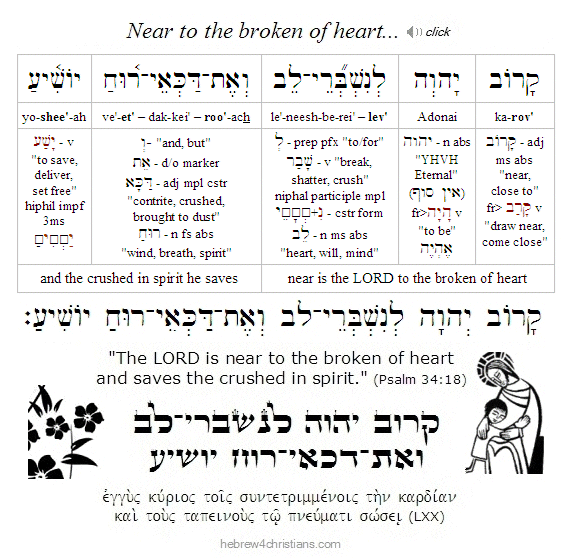
The Lord has not forgotten you who mourn and are poor of spirit. He who feeds the sparrows and tends the lilies of the field will provide for your needs. Resist the whispers of despair: affirm again the greatness of God who tenderly watches over you as a good shepherd cares for his sheep. Even if you are in distress, affirm the greatness of God. Trust that he will bind up your wounds and make whole your broken heart. Do not countenance the thought his grace is not sufficient for all your troubles. God is forever faithful; he promises are sure; the one who has begun a good work in you will complete it. Press on in the confidence of God's unfailing love given to you in Yeshua. Amen.
Hebrew Lesson
Psalm 34:18 reading (click for audio):
God's Sheltering Love...
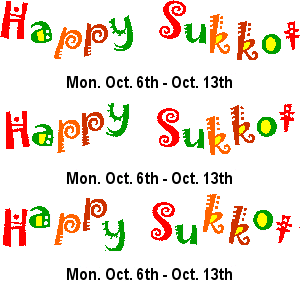
The week-long holiday of Sukkot began Monday, Oct. 6th and ends on Monday Oct. 13th...
10.08.25 (Tishri 16, 5786) The Torah describes Sukkot (i.e., "Tabernacles") as a holiday of joy and gladness: "You are to rejoice in your festival (וְשָׂמַחְתָּ בְּחַגֶּךָ).... for seven days you shall keep the festival (שִׁבְעַת יָמִים תָּחֹג)... so that you will be altogether joyful" (Deut. 16:14-15). Nevertheless we may wonder how we can celebrate in a world filled with suffering, death, political tyranny, and misery? Since God commands us to be joyful, however, we must understand this joy to be something more than temporal elation or fleeting pleasure, but rather as the result of the decision to believe in healing despite the appearances of this realm. It is a joy and peace that "passes all understanding..." (Phil. 4:7).
"The world to come, the perfect world, we at least believe in; but this material world, this one here and now, how can anyone believe in it? The only thing to do is to run to the refuge of God" (Rebbe Nachman). The joy of the season of Sukkot, then, is the joy of hope, the conviction that "all shall be well, and all manner of thing shall be well" (Julian of Norwich). Darkness will be overcome by the light; evil will become undone; all that is untrue shall be made true; and every tear shall be wiped away... The sukkah symbolizes the "Clouds of Glory" that surround our way in the desert – the "Divine Presence" beheld in faith. We find joy as we choose to believe in the deeper reality of God's sheltering love. Amen.
Hebrew Lesson
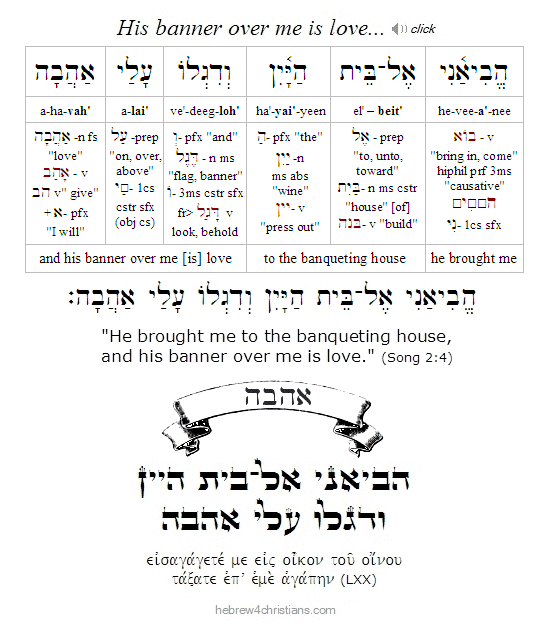
Song of Songs 2:4 reading (click):
 |
The Torah states: "You shall dwell in sukkot (booths) for seven days. All native Israelites shall dwell in booths, that your generations may know that I made the people of Israel dwell in booths when I brought them out of the land of Egypt: I am the LORD your God" (Lev. 23:42-43). The sages say that the booths commemorate the Clouds of Glory (עַנְנֵי תְּהִילָה), seven clouds that encompassed and protected the people during their sojourn in the desert (Sukka 11b). We recall the Clouds of God's glory as the gift of his sustaining love and care during our journey to freedom. Indeed the clouds represent the holy Shekhinah (שְׁכִינָה), the ruach Hakodesh and indwelling presence of God that protects us and gives us comfort. Just as the ruach fell on the generation of Moses' advent, so with the generation of Messiah: the Spirit brings strength to heart, protection from evil, and guidance for our way (John 14:26).
All of Torah is grounded in emunah (faith), as the very First Commandment of Torah is to trust that the LORD is God for you (אָנכִי יְהוָה אֱלהֶיךָ). Moreover Scripture also says: "All your commandments are emunah" (כָּל־מִצְוֹתֶיךָ אֱמוּנָה); and, "you are near, O LORD, and all your commandments are faithul" (Psalm 119:86; 151). Indeed faith is the "substance" (i.e., ὑπόστασις, reality, essence) of hope, the conviction of the unseen good (Heb. 11:1); and without emunah it is impossible to please God (Heb. 11:6). We celebrate Sukkot because God calls us to know our heritage and to believe in the light of His surrounding Presence.
 |
 |
Why Sukkot Matters...
10.05.25 (Tishri 13, 5786) We learn about God through the witness of His Spirit as preserved in the Holy Scriptures; however, to properly interpret the Scriptures we must read in context, and therefore we must endeavor to understand the New Testament in light of the Torah, not the other way around... Without the background of the Torah and the history of the Jewish people, the meaning and terms of the New Testament will be obscure and subject to misunderstanding (see John 4:22; Rom. 9:4).
It is written in our Scriptures: "Yeshua the Messiah became a servant to the circumcised to show God's truthfulness, in order to confirm the promises given to the fathers" (Rom. 15:8). He came from heaven, "tabernacling with us," as Israel's promised Redeemer and the manifest revelation of God (John 1:14; 1 Tim. 3:16), his mother Miriam (Mary) being miraculously conceived by the power of the Holy Spirit, Yeshua was he was born the "King of the Jews" in Bet-Lechem (Bethlehem), "born under the law" as the "Second Adam" (or "Son of Man"); and was circumcised according to the Torah on the eighth day, being given the Hebrew name "Yeshua," God's Salvation.
Yeshua grew up as a faithful Jew, fluent in Torah reading and study (Luke 4:16-21; John 4:22). He observed all the Torah holidays as prescribed by the law of Moses (Lev 23). When he began his public ministry, he was baptized to identify himself as "the on of Man" (בֶּן־הָאָדָם), calling out to the lost sheep of the house of Israel to repent and believe the message of God's redemption revealed in him (Matt. 15:24).
Yeshua repeatedly taught that the Scriptures foretold of his coming and born witness of Him (John 5:39). He foretold his sacrificial death for our sins and his resurrection from the dead (Mark 10:32-34). After his crucifixion and resurrection, he told his disciples that he is the central meaning of all the Jewish Scriptures: "And beginning with Moses and all the Prophets, he interpreted to them in all the Scriptures the things concerning himself" (Luke 24:27; John 5:39; 8:58). He then instructed his followers to go to Jerusalem to receive the Holy Spirit on the very day of Shavuot ("Pentecost"), in fulfillment of the Scriptures. Later, when he miraculously called out to the Apostle Paul to follow him, Yeshua identified himself as the Jewish Messiah by using the Hebrew (not Aramaic) language (Acts 26:14).
We study Torah to know Yeshua, the "Living Torah" better, as he said: "Therefore every scribe who has been trained for the kingdom of heaven is like a master of a house, who brings out of his treasure what is new and what is old" (Matt. 13:52). Our Lord observed Sukkot (and all the holidays of Torah), and he wanted his followers to understand why he did so (Luke 24:27; Luke 24:44; John 1:45; John 5:46; Gal. 4:4-5; etc.). After all, Yeshua taught his followers to understand his ministry, but to do so, we must understand its context in Jewish history and tradition. "Every jot and tittle" of the Torah (i.e., kotzo shel yod ha'Torah: קוֹצוֹ שׁל יוד התּוֹרה) has its voice and its place in his mission (see Matt. 5:17-18). Sukkot, or "Tabernacles" is part of our heritage as those who trust in the LORD God of Israel and his salvation given in Yeshua. Amen.
Hebrew Lesson
Psalm 119:97 reading (click for audio):
 |
Some Sukkot 2025 photos
Here are a few Sukkot family photos. For more visit the H4C Facebook page:
Making our Sukkah...

Judah and Manny helping out...

Getting the scach on the Sukkah...
Smitten of Grace...
The most important questions probe the depths... "Out of the depths I cry out..." In your struggle to understand, allow faith its space. If your conclusion leads you to obvious error (e.g., God failed me), then back up and get your thinking right about your assumptions...
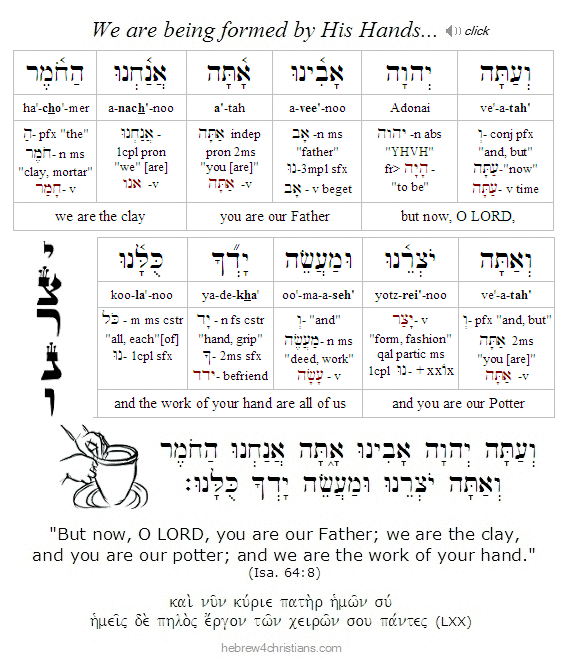
10.03.25 (Tishri 11, 5786) The Lord is likened to a potter and we are as clay in his hand (Isa. 64:8). Life on the "potter's wheel" can be messy, unsettling, and sometimes excruciatingly hard, but it is God's sovereign work to form your life according to his design and purposes... (I am on that wheel; it sometimes feels like a whirlwind within my heart as I close my eyes, trusting His hands are somehow shaping me into his design and pleasure...
Contrary to the assumption that the life of faith should always be triumphant, we all inevitably will experience various setbacks, pratfalls, troubles and sorrows in our lives. This does not mean that God does not care for us however, but on the contrary, this is by his design; a plan supervised by God's love and blessing, and the afflictions we therefore encounter are part of his work for our good (Rom. 8:28; Heb. 12:6).
A principle of spiritual life is that we descend in order to ascend, or the "the way up is the way down." It may seem counterintuitive, but the heart of faith gives thanks for all things - the good as well as the evil (see Job 2:10). We affirm: "This too is for the good," yea, even in the midst of our struggle, no, even more -- precisely in the midst of our struggle -- for this, too, is for our good. Faith is the resolution to trust in the reality of God's goodness even during hard times when we feel abandoned or lost (Isa. 50:10). God uses the "troubles of love" (יִסּוּרֵי אַהֲבָה) for our good - to wake us up and cling to him all the more, since this is what is most essential, after all...
The difficulty of personal suffering is intensely intimate: how do you keep hope in the midst of this tension? "Lord I believe; help my unbelief" (Mark 9:24). How do you affirm that your heavenly Father will heal you but at the present hour you must endure suffering? Do you devise a "soul-building theodicy" seeking to explain your struggle – providing an answer about the "why" of your suffering – or do you attempt to sanctify suffering as a means of healing others by the grace of the Messiah (Col. 1:24)? Or do you wither in your despair? As Soren Kierkegaard said, "It is one thing to conquer in the hardship, to overcome the hardship as one overcomes an enemy, while continuing in the idea that the hardship is one's enemy; but it is more than conquering to believe that the hardship is one's friend, that it is not the opposition but the road, is not what obstructs but what develops, is not what disheartens but ennobles" (Four Upbuilding Discourses, 1844).
When Yeshua victoriously proclaimed, "It is finished" just before he died on the cross, he foreknew that his followers would experience a "purging process," a "refining fire," and time on the "potter's wheel" to perfect their sanctification. At the cross of Yeshua death itself was overcome – and all that it implies – and yet it is nevertheless true that we will suffer and die and that death would persist an enemy (1 Cor. 15:26). While we celebrate the reality of the final redemption, the "instrumentality of our sanctification" needs to be willingly accepted and endured. I say "endured" here because I don't think we will ever have a complete answer to the question of "why" we undergo the various tests we face in this life. Our disposition in the midst of this ambiguity, in the midst of seemingly unanswered prayers, is where our faith is disclosed: will we despair of all temporal hope or not? Will we console ourselves with the vision of a future without tears and loss – a heaven prepared for us? Will we trust God with our pain and submit to his will, or will we "curse God and die" inside – losing hope and despairing of all remedy?
God forbid we should give up now, friends! Faith "sees the unseen" and believes that the day of our ultimate healing draws near. You are in good hands as the Lord forms your soul for the glory of his purposes... Stay strong and keep your hope alive (Psalm 27:14).
Hebrew Lesson
Isaiah 64:8 Hebrew reading:
 |
Getting Ready for Sukkot...
The week-long holiday of Sukkot begins Monday, October 6th at sundown this year...
10.03.25 (Tishri 11, 5786) On the Torah's calendar, there is a quick transition from the somber themes of the Jewish High Holidays (Rosh Hashanah through Yom Kippur) to the week-long celebration of Sukkot (called "Tabernacles" in the Christian tradition). If the High Holidays focus on the LORD as our Creator, our Judge, and the One who atones for our sins, then Sukkot is the time when we joyously celebrate all that He has done for us. Prophetically understood, the seven days of Sukkot picture olam haba, the world to come, and the Millennial Kingdom reign of Mashiach ben David. If Yeshua was born during Sukkot (i.e., conceived during Chanukah, the festival of lights), then another meaning of the "word became flesh and 'tabernacled with us" (John 1:14) extends to the coming kingdom age, when He will again "sukkah" with his people during the time of his reign from Zion.
Since it represents the time of ingathering of the harvest, Sukkot prophetically prefigures the joyous redemption and gathering of the Jewish people during the days of the Messiah's reign on earth (Isa. 27:12-13; Jer. 23:7-8). Indeed all of the nations that survived the Great Tribulation will come together to worship the LORD in Jerusalem during the Feast of Sukkot (Zech. 14:16-17). The holiday season therefore provides a vision of the coming Kingdom of God upon the earth, when the Word will again "tabernacle with us."
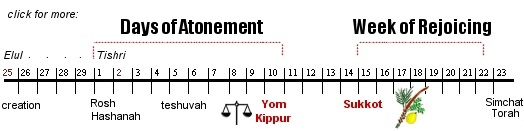 |
This year Sukkot begins just after sundown on Monday, Oct. 6th (i.e., Tishri 15 on the Jewish calendar). The festival is celebrated for seven days (i.e., from Tishri 15-21) during which we "dwell" in a sukkah -- a tent or "booth" of temporary construction, with a roof covering (schach) of raw vegetable matter (i.e., branches, bamboo, etc.). The sukkah represents our dependence upon God's shelter for our protection and divine providence. We eat our meals in the sukkah and recite a special blessing (leshev Ba-Sukkah) at this time.
The Lulav Bouquet...
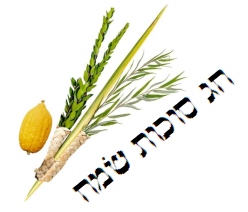
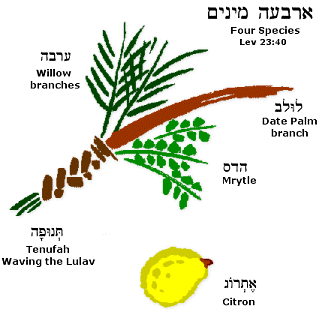
In addition to the Sukkah (tent), the most prominent symbol of Sukkot is the Arba'at Ha-minim (אַרְבַּעַת הַמִּינִים) - "the Four Species," or four kinds of plants explicitly mentioned in the Torah regarding the festival of Sukkot: "On the first day you shall take: 1) the product of goodly trees (etrog), 2) branches of palm trees (lulav), 3) boughs of leafy trees (hadas), and 4) willows of the brook (aravot), and you shall rejoice before the LORD your God for seven days" (Lev. 23:40). We wave the "four species" (held together as a bouquet with the etrog) and recite a blessing (netilat lulav) to ask God for a fruitful and blessed year.
 |
Sukkot marks the conclusion of the Jewish Fall Holidays and is the last of the three Shelosh Regalim (שלוש רגלים, i.e., the three annual pilgrimage festivals: Pesach (Passover), Shavuot (Pentecost), and Sukkot (Tabernacles) (Deut. 16:16). It can be argued that Sukkot is the climax of all the festivals in Scripture: Everything leads to it as a culmination in God's prophetic plan. It is interesting to compare the use of words relating to simchah [joy] in the description of these three festivals. Regarding Pesach, the word simchah does not appear at all (Deut. 17:1-8); regarding Shavuot, it appears only once (Deut. 17:11); but, regarding Sukkot, simchah appears several times. For instance:
You shall keep the Feast of Sukkot seven days, when you have gathered in the produce... You shall rejoice in your feast (וְשָׂמַחְתָּ בְּחַגֶּךָ אַתָּה)... because the LORD your God will bless you in all your produce and in all the work of your hands, so that you will be altogether joyful. (Deut. 16:13-15)
Sukkot is called "z'man simchateinu," the "season of our joy." Indeed, in ancient Israel, the joy of Sukkot was so renowned that it came to be called simply "the Feast" (1 Kings 12:32). Sukkot was a time when sacrifices were offered for the healing of the nations (Num. 29:12-40), and it was also a time when (on Sabbatical years) the Torah would be read publicly to all the people (Deut. 31:10-13).
From a spiritual perspective, Sukkot corresponds to the joy of knowing your sins were forgiven (during Yom Kippur) and also recalls God's miraculous provision and care after the deliverance from bondage in Egypt (Lev. 23:43). Prophetically, Sukkot anticipates the coming kingdom of the Messiah Yeshua wherein all the nations shall come up to Jerusalem to worship the LORD during the festival (see Zech. 14:16). Today Sukkot is a time to remember God's Sheltering Presence and Provision for us for the start of the New Year.
Hebrew Lesson
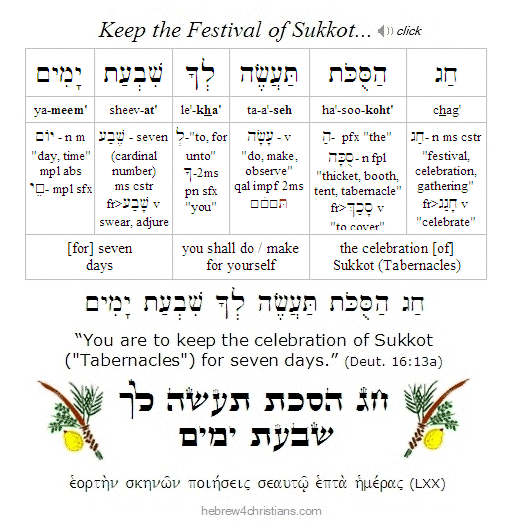
Deut. 16:13 reading (click):
The Way of our Healing...
10.03.25 (Tishri 11, 5786) Yom Kippur is now over, but the call to do teshuvah (or repentance) is an ongoing disposition of life in our Messiah, since it rightly relates us to God. Indeed, teshuvah is the way of our healing (דֶּרֶךְ הָרִפּוּי שֶׁלָּנוּ). First we encounter our incurable sickness - the inner contradiction and bondage of soul that both loves and hates sin - and then we seek God's saving power in Yeshua. As the Apostle Paul asked: "Who can save me from the misery of myself? – and answered: God alone, through Jesus (Rom. 7:18-25). This is the first step, to know the "miserable creature that I am," that is, the slavery of your will to sin, and the second is to be willing to give this sickness of your soul to God's care in Yeshua. As he said, "Those who are well have no need of a doctor, but those who are sick. I have not come to call the 'righteous,' but sinners to repentance" (Luke 5:31-32). Yeshua regarded forgiveness of your sins as essential to finding inner healing, even more important than health, prosperity, or religious observance.
But teshuvah is also an ongoing process of sanctification, as the Spirit of God reveals our need for to develop spiritual maturity. We discover "hidden faults," we discern our tendency to self-deception, or to vanity, fearful thinking, or any number of other character defects. We learn that regularly confessing our sins is the way of attaining peace and growth.
Above all, however, repentance means returning to love, finding your heart's desire in God... As Yeshua said, "Repent, for you have lost your first love..." (Rev. 2:4-5). Our Lord appeals to you like an ardent lover standing outside in the cold, calling out your name, and knocking for you to open the door to let him inside (Rev. 3:19-20). Open the door of your heart! Return to him now! "Lord, help me turn to receive your love..."
Hebrew Lesson
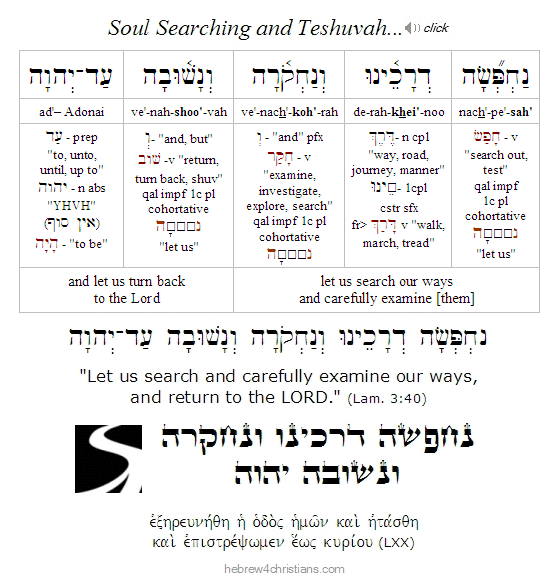
Lamentations 3:40 reading (click):
 |
Yom Kippur and Jonah...
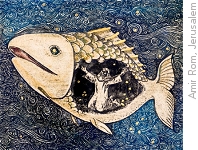
10.02.25 (Tishri 10, 5786) During the afternoon service of Yom Kippur, the Book of Jonah is recited to awaken the heart to "Arise, call out to your God" (Jonah 1:6). Like Jonah we first must be "swallowed up" in consciousness of our own rebellion before we realize we are undone, that we are without remedy apart from God's direct intervention and deliverance. We start there - in the "belly of the fish" - and later are resurrected to go forth by God's mercy and grace. Likewise we first see ourselves as undone and go to the cross, finding pardon and given the power of the ruach HaKodesh to live unto God according to the truth. But note that the imperatives of the New Testament are directed to the new nature given to us by God, and not to the old nature that has been crucified and done away. We are admonished to live in accordance with the truth of what God has done for us through the Moshia', the Savior. You are a new creation, therefore be who you are in the Messiah!
It is noteworthy that Yeshua mentioned the "sign of Jonah the prophet," that is, Jonah's miraculous deliverance after being entombed in the belly of the fish for three days, to authenticate his own claim to be Israel's Redeemer. "Just as Jonah was three days and three nights in the belly of the great fish, so will the Son of Man be three days and three nights in the belly of the earth" (Matt. 12:40). "This is an evil generation. It seeks a sign, and no sign will be given to it except the sign of Jonah the prophet (אוֹת יוֹנָה הַנָּבִיא). For as Jonah became a sign to the Ninevites, so also the Son of Man will be to this generation" (Luke 11:29-30).
In other words, the story of Jonah foreshadowed the atoning sacrifice of the Messiah, that is, his death, burial and especially his miraculous resurrection on the third day. Just as God brought Jonah back to life after three days in the belly of the earth, so the resurrection of Yeshua from the dead would vindicate his claim to be the Savior and Redeemer of the world. In this way the "Sign of Jonah" and the sacrificial and atoning work of Yeshua as our High Priest of the new covenant are connected.
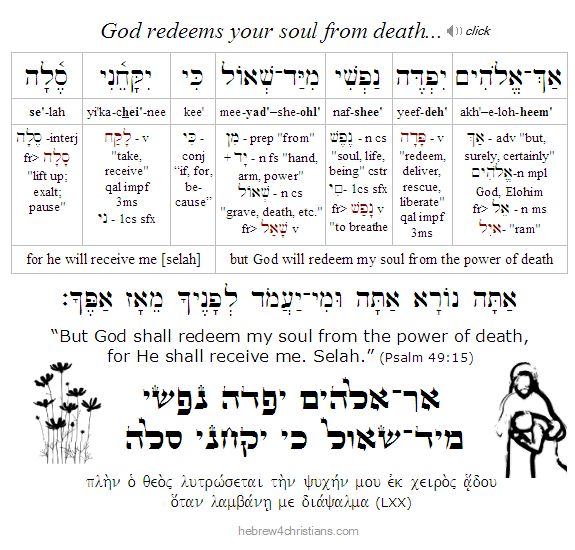
"We we were so utterly burdened beyond our strength that we despaired of life itself, yes, we felt that we had received the sentence of death; but that was to make us rely not on ourselves, but on God who raises the dead" (2 Cor 1:8-9). This marks the end of carnal hope, when we realize we are but "dead men walking," and from this extremity of inner desperation and clarity we learn to rely solely on God for what we need. Here we abandon ourselves to God's care, despite the despair, darkness, and fear. We rely on "God who raises the dead," because all other remedies have been vanquished. It is a great gift to be so afflicted, for these "troubles of love" teach us to trust God alone for all we need. The only way out is through. We don't seek an easy way of life, but only that the LORD be with us throughout our troubles...
Hebrew Lesson
JoPsalm 49:15 reading (click):
 |
The Heart of Atonement...
Today is Yom Kippur, or the "Day of Atonement."
10.02.25 (Tishri 10, 5786) Many of our deepest anxieties come from the fear of death, whether we are conscious of this or not... Death represents fear of the unknown, fear of being abandoned, fear of being rejected, fear of being separated from others, and so on. I am so glad Yeshua gives us eternal life, which for me is not so much about immortality of the soul as it is being loved and accepted by God... That is what "at-one-ment" must mean, after all (John 17:22-23). Because God loves and accepts us, we trust Him to be present for us, even in the darkest of hours, on the other side of the veil, where he there "prepares a place for us" (John 14:2). As Yeshua said, "I tell you the solemn truth, the one who hears my message and believes the One who sent me has eternal life (חַיֵּי עוֹלָם) and will not be condemned, but has passed (i.e., μετά + βαίνω, lit., "crossed over" [עָבַר]) from death to life" (John 5:24). God's love "crosses over" from death to life and now forever sustains me.
The Torah (in parashat Acharei Mot) provides instructions about Yom Kippur, or the "Day of Atonement," and the elaborate day-long "purification service" that was intended to express God's forgiveness and love. As I've explained before, the word for love (i.e., ahavah: אהבה) equals the number thirteen (1+5+2+5=13), but when shared it is multiplied: 13 x 2 = 26, which is the same value for the Sacred Name (יהוה), i.e., (10+5+6+5=26). Likewise the Hebrew word for "life" is chayim (חַיִּים), is written in the plural to emphasize that life cannot be lived alone but must be shared. Notice that within the word chayim are embedded two consecutive Yods (יי), representing unity in plurality (Yod-Yod is an abbreviation for YHVH, also indicating the "deep Akedah" of Father and Son). God gave up His life so that we can be in relationship with Him, that is, so that we can be "at-one" with His heart for us.
Whatever else it may mean, then, the Hebrew word for "atonement" (i.e., "kapparah," "covering," "protection," "purification," "cleansing," "forgiveness," and so on) is ultimately about accepting God's heart for you - being unified in his love - and if you miss that, you've missed the essential point of the Torah's teaching. Accept that you are accepted in God's heart today.... Thank God we are "sealed" in the book of life by the love of Yeshua!
Hebrew Lesson
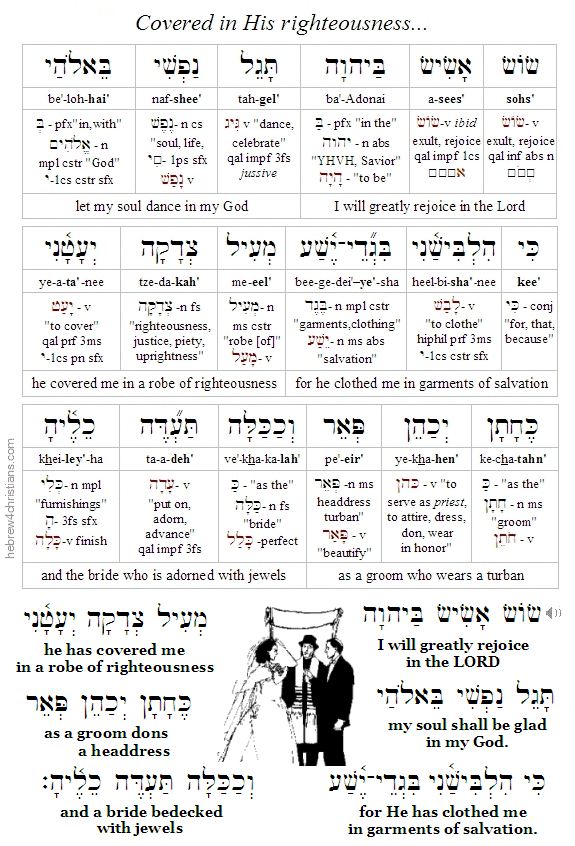
Isaiah 61:10 reading (click for audio):
 |
Yom Kippur by Heart...
The following is related to Yom Kippur, the "Day of Atonement"...
10.01.25 (Tishri 9, 5786) The story is told of a simple farmer who traveled to attend Yom Kippur services but got lost in the woods. As sunset approached, the man was tempted to despair, but he remembered that true service to God is marked by joy and faith, regardless of the present circumstances. He decided, then, to turn his eyes toward heaven.
'Dear God,' he said. 'I've never learned to pray like others have. I have no prayer book, and I am unable to attend a Yom Kippur service... All I really know is the Hebrew alphabet. So I will recite the letters for You, and You put them together to make the proper words!" He then began reciting 'Aleph, Bet, Gimmel, Dalet...' He did this over and over again, full of faith. Later he made his way out of the woods and explained what happened to a sage, who reassured him that above all God prefers sincerity of the heart. מִפִּי עוֹלְלִים וְיֹנְקִים יִסַּדְתָּ עֹז - "Out of the mouth of babes and sucklings You have ordained strength" (Psalm 8:2).
I relate this story to encourage those of us who - for any number of reasons - are unable to attend a Yom Kippur service or to read the Hebrew text from a machzor (מחזור), that is, a traditional High Holiday prayerbook. God sees your heart and knows all about you. Rejoice that your atonement is complete in Yeshua, then, and ask God to make "words" from the simple groaning of your spirit. Shalom.
Hebrew Lesson
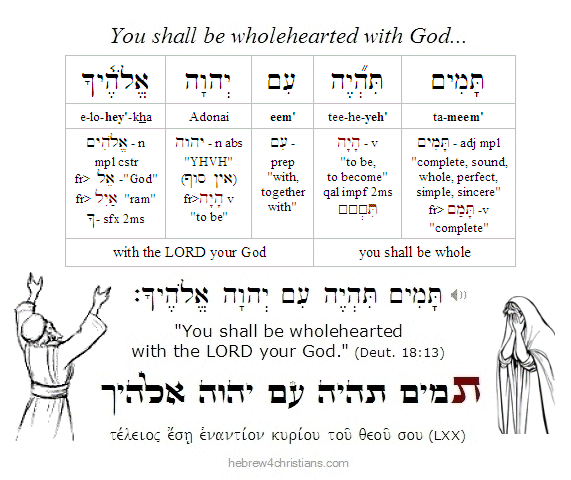
Deut. 18:13 reading (click for audio):
Why we celebrate Yom Kippur...
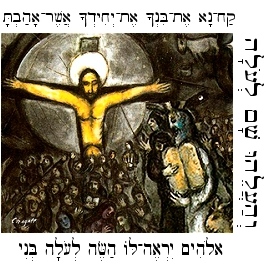
This evening at sundown marks Yom Kippur, the Day of Atonement...
10.01.25 (Tishri 9, 5786) After the destruction of the Second Temple it has become customary for Jews to wish one another g'mar chatimah tovah (גְּמַר חַתִימָה טוֹבָה), "a good final sealing" during the Days of Awe (i.e., the ten days running from Rosh Hashanah until Yom Kippur). The reason for this is that according to Jewish rabbinic tradition the "writing of God's verdict" (for your life) occurs on Rosh Hashanah, but the "sealing of the verdict" occurs on Yom Kippur. In other words, God in His Mercy gives ten days for us to do "teshuvah" before sealing our fate, and it is up to us to do teshuvah and save ourselves from God's decree of death. Our personal merits (mitzvot) are the key: וּתְשׁוּבָה וּתְפִלָּה וּצְדָקָה מַעֲבִירִין אֶת רעַ הַגְּזֵרָה / "Teshuvah, prayer, and charity deliver us from the evil decree."
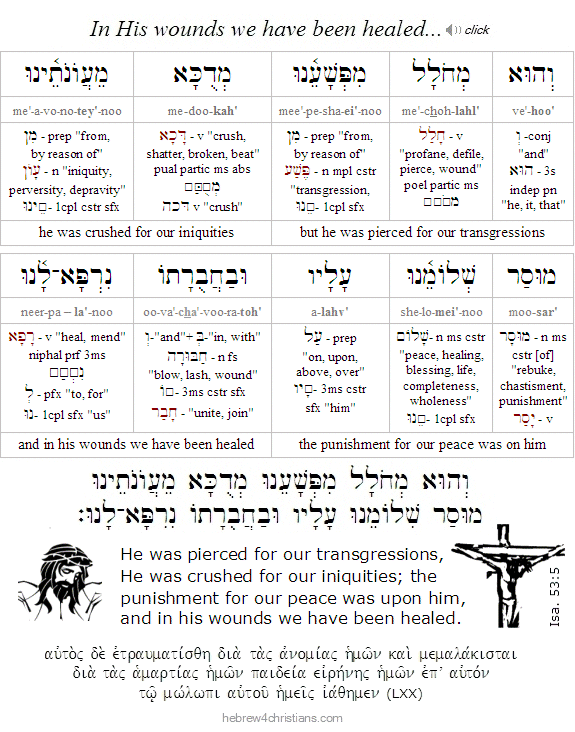
C.S. Lewis once said that "what you see and what you hear depends a great deal on where you are standing." And I would add that it also depends on what you are believing. Followers of Yeshua see and hear the truth of Torah by believing his message of God's redeeming love. This is the essential meaning of the atonement. We trust that we attain a permanent "sealing" for good by the grace and love of God given to us in the merits of the Messiah, God's appointed Suffering Servant (see Isa. 53; Eph. 1:13, 4:30; 2 Cor. 1:21-22).
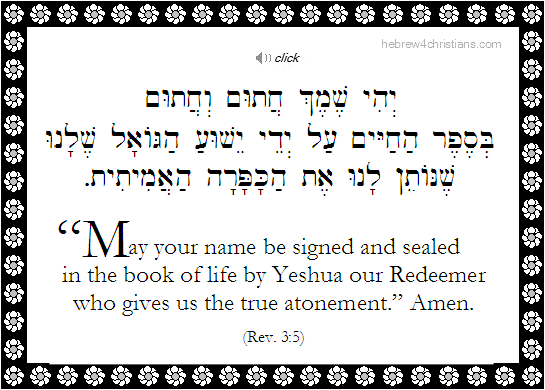
The Torah's statement that sacrificial blood that was offered upon the altar to make atonement (כַּפָּרָה) for our souls (Lev. 17:11) foretells the life of Yeshua as the High Priest of the New Covenant given at Moriah (Rom. 5:11). The substitutionary shedding of blood, the "life-for-life" principle, is essential to the true "at-one-ment" with God. The ordinances of the Levitical priesthood were just "types and shadows" of the coming Substance that would give us everlasting atonement with God (see Heb. 8-10). Because of Yeshua, we have a "Kohen Gadol" (High Priest) of a better Covenant, based on better promises (see Heb. 8:6; Jer. 31:31-32). For all these reasons it is entirely appropriate to celebrate Yom Kippur and give thanks to the LORD for the permanent "chatimah tovah" given to us through the salvation of His Son. Amen. יהי שמך חתום וחתום בספר החיים של ישוע הנותן לנו את הכפרה - "May your name be signed and sealed in the book of life of Yeshua who gives us the atonement."
Therefore though we appreciate the symbolism of the sacrificial system of the Torah of Moses, we understand it to be a "parable" that foretold the coming sacrifice of the great "Lamb of God" who would finally save us from our sins. Yeshua "entered once for all into the most holy place not by the blood of goats and calves but by his own blood He entered the holy place once for all, having obtained eternal redemption (i.e., פְּדוּת עוֹלָמִים, Heb. 9:12). To correctly "cut through" (ὀρθοτομέω) to discern the essential intent of the Word of Truth" (2 Tim. 2:15) we must consistently remember that the word "Torah" (תּוֹרָה) refers to God's will, and its particular application is constrained in light of the covenantal acts of God. As the author of the Book of Hebrews makes clear: "When there is a change in the priesthood (הַכְּהוּנָּה), there is necessarily (ἀνάγκη) a change in the Torah as well" (Heb. 7:12). The Levitical priesthood expresses the Torah of the Covenant of Sinai (בְּרִית יְשָׁנָה), just as the greater priesthood of Yeshua expresses the Torah of the New Covenant (בְּרִית חֲדָשָׁה).
Nevertheless, while we celebrate theblessing our our atonement given in Yeshua, there remains a bit of ambivalence about this holiday, perhaps more than any other of the Jewish year. Part of this ambivalence comes from the "already-not-yet" aspect of the New Covenant itself. Already Yeshua has come and offered Himself up as kapparah (atonement/propitiation) for our sins; already He has sent the Ruach Hakodesh (Holy Spirit) to write truth upon our hearts; already He is our God and we are His people. However, the New Covenant is not yet ultimately fulfilled since we await the return of Yeshua to restore Israel and establish His kingdom upon the earth... Since prophetically speaking Yom Kippur signifies ethic Israel's atonement secured through Yeshua's sacrificial avodah as Israel's true High Priest and King, there is still a sense of groaning and affliction connected to this holiday that will not be removed until finally "all Israel is saved" (Rom. 11:26).
So, while on the one hand we celebrate Yom Kippur because it acknowledges Yeshua as our High Priest of the New Covenant, on the other hand we feel "great sorrow and unceasing anguish in our hearts" for the redemption of the Jewish people and the atonement of their sins (Rom. 9:1-5; 10:1-4; 11:1-2, 11-15, 25-27). In the meantime, we are in a period of "mysterious grace" (yemot ha-mashiach) wherein we have opportunity to offer the terms of the New Covenant to people of every nation, tribe and tongue. After the "fullness of the Gentiles" is come in, however, God will turn His full attention to fulfilling His promises given to ethnic Israel. That great Day of the LORD is close and is assuredly coming soon, chaverim..
<< Return
|
|