|
Whenever I can, I try to catch a glimpse of the moon. The other night I had the privilege of seeing its thin silver crescent riding upon the winter night's black horizon - a moment of wonder and beauty. Three stars appeared, a new day...
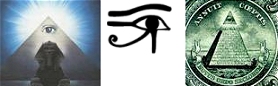
The calendar of ancient Egypt, like our present Gregorian calendar, followed the course of the sun. The sun symbolized the power of the Egyptian sun god Ra (Re) who was also considered the creator and giver of life in some Egyptian myths. As far back as 2700 BC, Ra was regarded as the great god of heaven, King of all the gods, and lord of the resurrected dead. The daily rising sun was a symbol of creation (or the "eye" of Ra), and the shape of the pyramid is thought represent the descending rays of the sun. The Pharaoh, like the sun, was sometimes called the "son of Ra" and said to oversee everything upon the earth (note: the name "Ramses" can mean "Ra bore him," though it is more likely that Amenhotep II [a name based on the merging of the gods Amun and Ra] was the Pharoah of the Exodus). Interestingly, the Hebrew word for evil or bad is ra' (רַע), and the ayin ha-ra, or "evil eye," might derive from this association. From a "macro" perspective, the call of Abraham out of Mesopotamia (Shinar-Babylonia) can be thought of as the beginning of God's judgment of the religion/mythology of ancient Egypt...
The very first word of Torah indicates the awareness of the significance of time - בְּרֵאשִׁית - "in the beginning..." (Gen. 1:1), and according to Jewish tradition, the very first commandment given to the children of Israel (as a whole) was that of Rosh Chodesh (ראש חודש), or the declaration of the start (or head) of the "new month," particularly with regard to the first month of their redemption (Exod. 12:2).
Hebrew Lesson
Exodus 12:12 Hebrew reading (click):
הַחֹדֶשׁ הַזֶּה לָכֶם רֹאשׁ חֳדָשִׁים
רִאשׁוֹן הוּא לָכֶם לְחָדְשֵׁי הַשָּׁנָה
ha·choh·desh · haz·zeh · lah·khem · rohsh · choh·dah·sheem
ree·shohn · hoo · lah·khem · le·chohd·shei · ha·shah·nah

"This month shall be for you the beginning of months;
it shall be the first month of the year for you." (Exod. 12:2)

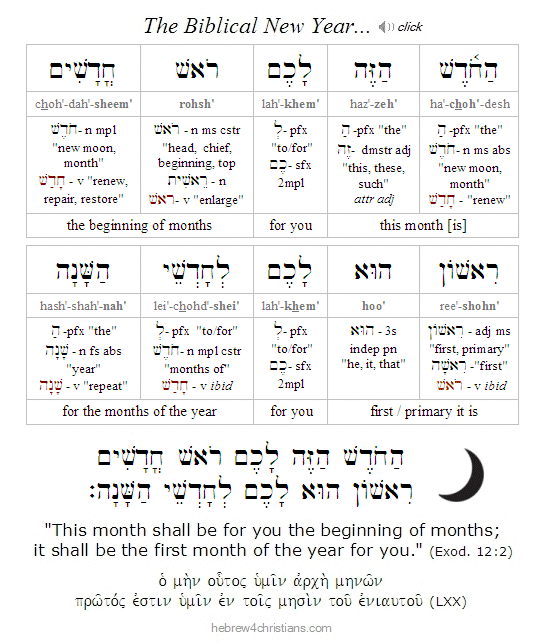
In other words, Passover month was to begin Israel's year (i.e., Rosh Chodashim). Note that the word for month (i.e., chodesh) comes from the root chadash (חָדָש), meaning "new," and therefore the Passover redemption (chodesh yeshu'ah) was intended to mark a "new beginning" for the Jewish people. And indeed, God marks the start of our personal redemption as the beginning of our life as a new creation (2 Cor. 5:17), just as Yeshua is the "first of the firstfruits" of God's redeemed humanity (1 Cor. 15:45-49). God wanted Israel to look to the moon as their timepiece. Just as the moon wanes and disappears at the end of each month, but returns and waxes again to fullness, so we suffer until the return of our beloved Messiah Yeshua, who will restore the glory of God fully on the earth.
In Jewish tradition, the sages call the observation of the new moon the "first-born" commandment given to the Jewish people. According to midrash, God himself showed Moses the various phases of the moon so that he could understand what the moon should look like when it is to be sanctified ("reborn").
 |
After the Israelites entered the Promised Land, the sighting of the new moon was established on the basis of eyewitness testimony in a bet din (religious court). When the testimony was accepted, the court declared the new moon as "sanctified." The first day of the new month (or the last day of the previous month together with the first day of the new month) was called Rosh Chodesh ("head of the month") and additional sacrifices were offered at the Mishkan/Temple (Num. 10:10). Regarding the Temple, David said, "Behold, I am about to build a house for the name of the LORD my God and dedicate it to him for the burning of incense of sweet spices before him, and for the regular arrangement of the showbread, and for burnt offerings morning and evening, on the Sabbaths and the new moons and the appointed feasts of the LORD our God, as ordained forever for Israel" (2 Chron. 2:4). Since the destruction of the Second Temple, Rosh Chodesh is considered a minor holiday, and the sighting the new moon is sometimes celebrated with "Kiddush Levanah," an evening blessing that sets apart the new moon and petitions God for prosperity in the month ahead.
The Rosh Chodesh Blessing:
יְהִי רָצוֹן מִלְּפָנֵיךָ יהוה אֱלהֵינוּ
וֵאלהֵי אֲבוֹתֵינוּ שֶׁתְּחַדֵּשׁ עָלֵינוּ חדֶשׁ טוֹב
בַּאֲדנֵינוּ יֵשׁוּעַ הַמָּשִׁיחַ אָמֵן
ye·hee · rah·tzon · meel·fah·ne'·kha · Adonai · E·lo·hey'·noo
vei·lo·hey · a·vo·tey'·noo · she·te·cha·deish · ah·ley'·noo · choh·desh tohv
ba'a·do·ney'·noo · Ye·shoo'·a' · ha·mah·shee'·ach · ah·mein

"May it be Your will, LORD our God and God of our fathers,
that you renew for us a good month in our Lord Yeshua the Messiah. Amen."

Download Study Card
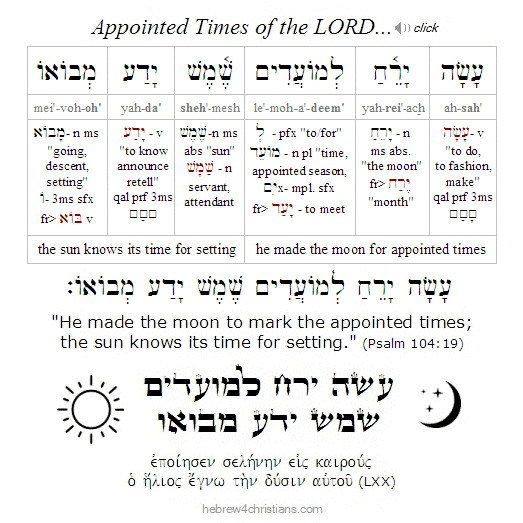
The moon's regular repetition of cycles suggests both change and renewal, wonder and mystery. As mentioned above, the Hebrew word for "month" (chodesh) is related to the word for "new" (chadash) as it the word for "renewal" (chidush). God wanted Israel to look to the moon as their timepiece. Just as the moon wanes and disappears at the end of each month, but returns and waxes again to fullness, so we suffer until the return of our beloved Mashiach Yeshua, who will restore the glory of God fully upon the earth.
Hebrew Lesson
Psalm 104:19 Hebrew reading (click):
 |
Should We Observe the "New Moon"?
In Colossians 2:16-17 the Apostle Paul, a quondam student of Rabbi Gamaliel who was a grandson of Hillel the Elder wwrote, "Therefore let no one pass judgment on you in questions of food and drink, or with regard to a festival or a new moon or a Sabbath. These are a shadow of the things to come, but the substance belongs to Messiah." But what does verse 17 mean? The Greek text reads: ἅ ἐστιν σκιὰ τῶν μελλόντων, τὸ δὲ σῶμα τοῦ Χριστοῦ, but note that the shadow (i.e., skia: σκιὰ) is of the things to come (τῶν μελλόντων) - which was written in reference to the future at the time of Paul's writing. The word translated "substance" (i.e., soma: σῶμα) is perhaps better rendered as "body," and may refer to the body the Messiah, i.e., the followers of Yeshua... In light of this these statements, we may wonder whether we ought to concern ourselves with the "new moon" - and the Torah's calendar - or not?
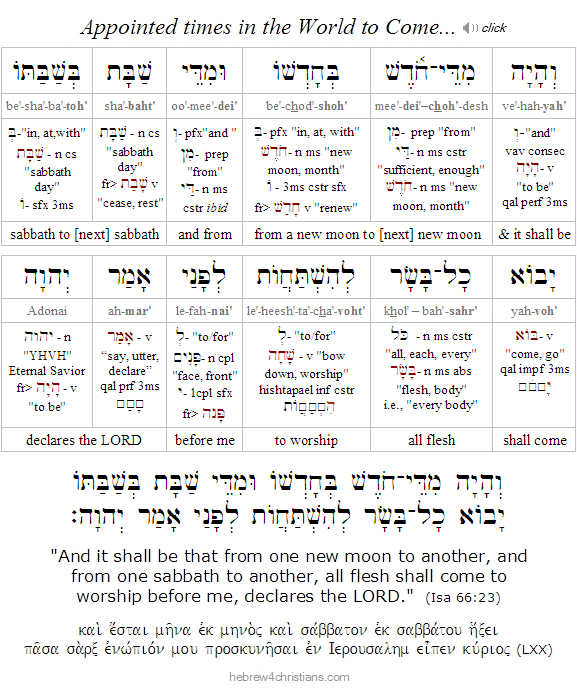
To attempt an answer, we first must reaffirm that we are not under the terms of the Sinai covenant but the New Covenant, and therefore we are not technically obligated to observe the appointed times of the Torah's calendar any more than we are obligated to keep kosher, or to sacrifice an unblemished sheep during Passover, or to elevate the weekly Sabbath above other days of the week (Rom. 14:5-6). However - and this is significant - according to the prophet Isaiah, in the Millennial Kingdom to come people will indeed observe Rosh Chodesh and the weekly Sabbaths: "It shall be that from one new moon to another, and from one sabbath to another, all flesh shall come to worship before me, declares the LORD" (Isa. 66:23). Moreover, the prophet Ezekiel further mentions that Rosh Chodesh will be observed in the future Millennial Temple of Zion (see Ezek. 46:1-7).
וְהָיָה מִדֵּי־חֹדֶשׁ בְּחָדְשׁוֹ
וּמִדֵּי שַׁבָּת בְּשַׁבַּתּוֹ
יָבוֹא כָל־בָּשָׂר לְהִשְׁתַּחֲוֹת לְפָנַי
אָמַר יְהוָה
ve·hah·yah mee·dei-choh'·desh be·chod·shoh
oo·mee·dei sha·bat be·sha·ba·toh
yah·voh khol-bah·sahr le·heesh·ta·cha·voht le·fah·nai
ah·mar Adonai
"And it shall be that from one new moon to another,
and from one sabbath to another,
all flesh shall come to worship before me
declares the LORD." (Isa. 66:23)
Download Study Card

Hebrew Lesson
Isaiah 66:23 reading and commentary (click):
 |
So these verses indicate that there is an eschatological (i.e., future) dimension to Rosh Chodesh and therefore it is part of our future heritage with the LORD God of Israel. And while we are certainly not "legalistically" obligated to observe the Sabbath or the new Moon, we nonetheless recognize that they are part of the divine calendar that the LORD God Himself instituted, and that they therefore have spiritual application to our lives as believers living under the terms of the New Covenant (Gal. 4:4). Never forget that it was Yeshua who was the Rock that followed the people out of Egypt and who led them to the revelation at Sinai; it was Yeshua who spoke the Torah to Moses! And later Yeshua told his followers that he did not come to do away with the Torah and the words of the prophets, but said on the contrary that every "jot and tittel" of the Torah, that is, every letter and stroke of each letter (קוֹצוֹ שֶׁל יוֹד), was to be fulfilled "until heaven and earth passed away (see Matt. 5:17-18), but since heaven and earth have not yet passed, the Torah has its place in our theology and practice. As members of the remnant and household of Israel (Eph. 2:12-20), we don't "have to" observe the moedim (holidays, appointed times) - but it surely is an honor and great joy to do so, especially when we appreciate how the glory of Yeshua is revealed in each of them. He is "the same yesterday, today, and forever" (Heb. 13:8).
|