|
The korban Pesach (Passover sacrifice) must be roasted and eaten with unleavened bread (i.e., matzah) and maror (bitter herbs). The maror is a reminder of the bitter slavery in Egypt. Anything left over from the meat is to be burnt in the morning. On the night of Nisan 14 the sacrifice was eaten (see John 6:53). The Passover meal was to be consumed "in haste" since the Israelites must be ready to begin their exodus the following day. The LORD also instituted the feast of Unleavened Bread at this time, wherein only unleavened bread was to be eaten for seven days (the first and seventh days of which were to be days of holy assembly on which all work is forbidden). Since the Passover Lamb was the first sacrifice that Israel (as a nation) was commanded to make, the LORD further ordained that it should be commemorated annually as a reminder of the great deliverance the LORD effected for Israel ("you shall observe this rite as a statute for you and for your sons forever (ad olam)" (Exod. 12:24)).
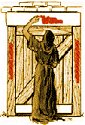
At (exactly) midnight the LORD killed all the firstborn males of those who did not put the blood of the lamb upon their doorposts. Interestingly, unlike the earlier plagues directed against Pharaoh and Egyptians, the Israelites likewise were subject to this final judgment, the only difference between them being the presence (or absence) of the sacrificial lamb's blood upon the doorposts of their respective houses). Since most of the Egyptians did not heed the words of Moses (except for the eirev rav, see Exod. 12:38), Pharaoh and most of Egypt arose in the middle of the night, lamented the loss of their children, and begged the Israelites to leave Egypt.
The great Exodus from Egypt finally began! The Israelites left in such haste that their leavened bread didn't have time to rise (as a result, we eat matzah on Passover). 600,000 adult males, along with their wives and children, left Egypt along with a wealth of gold and silver which the Egyptians had given them.
The LORD then commanded the Israelites to bring an offering every year on the 14th of Nisan to redeem their firstborn males (Pidyon Haben), and to wear Tefillin "for a sign on your hand and a memorial between your eyes" as a reminder of their salvation from Egypt.
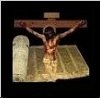
Drash: The first place the word love (ahavah) appears in the Scriptures is in the story of the Akedah - the binding of Isaac (Gen 22:2). In a Jewish midrash, the blood of the Passover lamb was said to symbolize the sacrifice of Isaac, making atonement for Israel. The LORD is said to have remembered Isaac's sacrifice when he saw the lamb's blood, and in the merit of Isaac's self-sacrifice, He decided to spare a blood-marked house from wrath. Of course, this is merely a midrash, whereas we believe that the blood of the LORD's only begotten Son, Yeshua, is the means of teshuat olamim - everlasting atonement (Hebrews 9:12). The LORD's sacrifice of Yeshua was clearly prefigured in both the Akedah and in the Exodus from Egypt. When by faith we apply the blood of the Lamb upon the "doorposts of our hearts," we experience deliverance from the wrath of the LORD, and salvation from cruel bondage to the devil. Blessed be the LORD God of Israel for Yeshua and His shed blood for us! (Recite the blessing here.)
The Plagues of Egypt...

The plagues of Egypt (i.e., makot Mitzraim: מַכּוֹת מִצְרַיִם) refer to the calamities that befell Egypt by the hand of the God of Israel as recounted in the Book of Exodus. Since there were a total of ten distinct plagues delivered upon Egypt, they are also called the "Ten Plagues" (i.e., eser ha-makot: עֶשֶׂר הַמַּכּוֹת). These plagues are also mentioned in Psalm 78:44-51 and Psalm 105:23-39. In parashat Va'era, the first seven of the ten plagues are described.
- Makat Dam (מַכַּת־דָם): Water turned to blood (Exod. 7:14–25)
- Makat Tzefarde'a (מַכַּת־צְפַרְדֵּעַ): Frogs from the Nile (Exod. 7:25–8:11)
- Makat Kinim (מַכַּת־כּנִּים): Gnats (or lice) from the dust (Exod. 8:12–15)
- Makat Arov (מַכַּת־עָרוֹב): Swarms of flies (or wild animals) (Exod. 8:20–32)
- Makat Dever (מַכַּת־דֶבֶר): Pestilence (Exod. 9:1-7)
- Makat Shechin (מַכַּת־שְׁחין): Boils (Exod. 9:8-12)
- Makat Barad (מַכַּת־בָּרָד): Hail and Fire (Exod. 9:13-35)
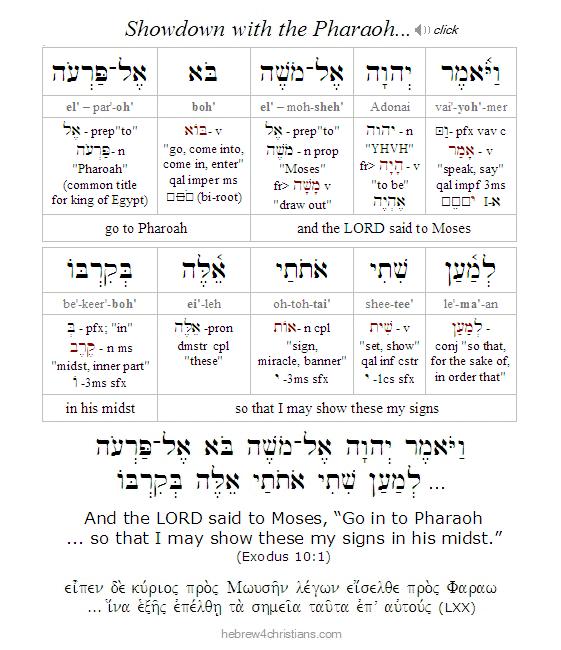
- Makat Arbeh (מַכַּת־אַרְבֶּה): Locusts (Exod. 10:1-20)
- Makat Choshekh (מַכַּת־חוֹשֶׁךְ): Darkness (Exod. 10:21-29)
- Makat Bechorot (מַכַּת בְּכוֹרוֹת): Death of the firstborn (Exod. 11:1-12:36)
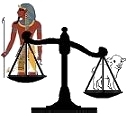
Exodus 12:12 God says, "... on all the gods of Egypt I will execute judgments." Thus the plagues are thought to be symbolic of the defeat of various gods venerated in ancient Egyptian mythology (and occultism in general):
- Water turned to blood - Hapi and/or Khnum (god of the Nile)
- Frogs from the Nile River - Heket (goddess of fertility and water)
- Gnats from the dust - Geb (god of the Earth)
- Swarms of Flies - Khepri (god of creation, lord of flies or beetles)
- Death of Livestock - Apis (goddess of animals depicted as a bull); Osiris
- Ashes to boils - Isis (goddess of nature, healing and peace)
- Hail and Fire - Nut (sky goddess and sister of Geb)
- Locusts sent from the winds - Set (god of storms, darkness, and disorder)
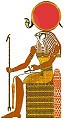
- Three days of darkness - Ra (the Sun god) and Set (god of darkness)
- Death of the firstborn - Pharoah ("son of Ra"); Khnum/ Amon (ram god)
Note: Some ask whether the "signs and wonders" of the plagues were intended more for the Israelites than for the Egyptians, since the Israelites had been oppressed by the powers of Egypt to the point of being "without the breath of hope."
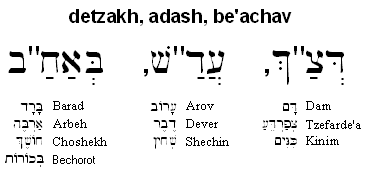
Ten Plagues Acronym
During (the Maggid portion of) the Passover Seder, we spill from the second cup while reciting the names of the ten plagues. A tradition arose to recite three acronyms ("detzakh, adash, be'achav") while spilling from the cup three times:
Midrash about Moses' Staff
Where did Moses get the mateh (מַטֶּה) - "staff' - he used to perform the various signs and wonders? According to Pirke Avot 5:6, the staff was one of the ten things that were created on the very first erev Shabbat at twilight. There were Hebrew letters engraved on the staff which formed an acronym for the ten plagues (i.e., detzakh, adash, be'achav).
The staff was given to Adam in the garden of Eden, and he passed it on to Enoch. Enoch gave it to Noach, who in turn gave it to Abraham. Abraham gave it to Isaac, and Isaac gave it to Jacob, who brought it with him to Egypt. After Jacob died, Joseph took the staff, and when he later died, it was put in Pharaoh's palace. Yitro, who was one of Pharaoh's advisers, later acquired it, and planted it in his garden in Midian. No one was able to remove it from there until Moses came and removed it. When Yitro saw this, he was convinced that Moses would be the one God would use to redeem Israel from Egypt, so he gave him his daughter Tzipporah as a wife. (Notice the similarity to the "King Arthur" legend of the sword of in the stone.)
The Centrality of the Exodus
The Exodus is perhaps the most fundamental event of Jewish history. In addition to being commemorated every year during Passover (Exod. 12:24-27; Num. 9:2-3; Deut. 16:1), it is explicitly mentioned in the first of the Ten Commandments (Exod. 20:2), and it is recalled every Sabbath (Deut. 5:12-15). The festivals of Shavuot and Sukkot likewise derive from it (the former recalling the giving of the Torah at Sinai and the latter recalling God's care as the Exodus generation journeyed from Egypt to the Promised Land), as well as the Season of Teshuvah (repentance) culminating in Yom Kippur (the Day of Atonement). Indeed, nearly every commandment of the Torah (including the laws of the Tabernacle and the sacrificial system) may be traced back to the story of the Exodus. Most importantly, the Exodus prefigures and exemplifies the work of redemption given through the sacrificial life of Yeshua the Messiah, the true King of the Jews and the Lamb of God.
As important as Moses was to the Exodus story, it is important to remember that only the LORD may be called the Deliverer or Redeemer of Israel. The LORD - not Moses - is rightly the focus of the story of the Exodus (indeed, the traditional text of the Passover haggadah does not even mention Moses' name). When Moses acted in his own strength by killing the Egyptian taskmaster, he was a "failed Messiah" of sorts, who needed to be humbled in the desert before he could discern the Divine Presence.... It was only after meeting Yeshua - the "Angel of the LORD speaking out of the midst of the fire" of the thornbush - that he was enabled to function as God's ambassador and mediator.
One additional thought. It is evident that the central purpose of God's redemption is to bestow freedom and dignity upon his people. As the story of Pharaoh reveals, God does not take kindly to oppressors, dictators, and other megalomaniacal world leaders who deny the truth and who therefore seek to enslave human beings created in His image and likeness. Just as God judged Egypt for its oppression and violence, so He will one day break the "rulers of this world" with a rod of iron and dash them in pieces like a potter's vessel (Psalm 2:9-10).
It's important to remember that the LORD redeems us so that we may become His children and therefore be clothed with everlasting dignity... Our redemption makes us heirs of the Kingdom of God and citizens of heaven. We must never regard ourselves as slaves - not to the State, not to banks, not to fear, and not to religious rituals or propaganda (Gal. 5:1). God gave up His Son for us so that we could be made free to live as his dearly loved children.... All the threats of the world system - economic, religious, social, etc. - are made empty and vain by the glorious redemption given to us in Yeshua our Savior.
The purpose of God's redemption is for us to be recreated in freedom and dignity as God's beloved children... We are saved for the sake of God's love and honor... To paraphrase C.S. Lewis: God doesn't love us because we are good, but God will make us good because He loves us...
|